2027 Best AI Courses for Analytics Engineers

Co-Founder and Chief Data Scientist
Analytics engineers face growing pressure to integrate advanced AI tools into data workflows without traditional programming backgrounds. Many professionals struggle to find flexible, accredited courses that build relevant skills while accommodating busy schedules. This gap limits career advancement in a rapidly evolving job market where hands-on knowledge of AI techniques is critical.
The article examines top AI courses tailored for analytics engineers, focusing on practical learning paths that enable a seamless transition into the AI industry. It highlights programs recognized for quality, accessibility, and alignment with current market demands to guide readers toward informed educational choices.
Key Things You Should Know
- Top AI courses for analytics engineers in 2026 integrate hands-on projects with cloud computing, reflecting a 45% growth in demand for AI-driven data analysis skills since 2024.
- Programs emphasize proficiency in machine learning, data engineering, and ethical AI use, addressing industry needs for responsible and scalable analytics solutions.
- The most effective courses offer updated curricula aligned with 2025 job market trends, with over 60% of graduates securing roles in top tech firms within six months.
Advance Your Career with AI Online Courses
Artificial Intelligence: Implications for Business Strategy
This program provides an introduction to Artificial Intelligence and their implications for business strategy. Earn an official digital certificate.

Oxford Artificial Intelligence Programme
Explore this Oxford Artificial Intelligence programme offered in a flexible learning environment and explore topics like machine learning, automation, and robotics.

Implementing Agentic AI: Building Your Organizational Playbook
This online MIT Agentic AI course offers a practical approach to deploying AI agents in your organization, including a custom playbook. 3 weeks, exclusive launch price.

AI Adoption: Driving Business Value and Impact
This online MIT AI Adoption: Driving Business Value and Impact offers practical frameworks to close the gap between AI potential and business reality.

Artificial Intelligence in Pharma and Biotech
Discover the applications and limitations of artificial intelligence in pharma and biotech with this MIT online short course.

What does an analytics engineer do, and why are AI skills now essential?
Analytics engineers play a critical role in designing, building, and maintaining data pipelines that convert raw data into actionable insights. This role bridges data science and data engineering by ensuring data is clean, reliable, and optimized for analysis. Their responsibilities include developing scalable ETL processes, managing data warehouses, and creating tools to support efficient data exploration. Proficiency in SQL, data modeling, and cloud platforms is essential.
The importance of AI skills for analytics engineers has grown significantly. Incorporating intelligent automation and predictive modeling into data workflows helps manage increasing data complexity. For instance, AI-driven automation of anomaly detection or customer behavior forecasting within data pipelines accelerates decision-making and improves accuracy.
LinkedIn's Global Skills Index reported a 146% increase in demand for analytics engineer roles with AI skills, highlighting the expanding need for AI-driven analytics in business. Companies seek engineers skilled in tools like TensorFlow, PyTorch, or AutoML frameworks to build intelligent data products.
Practical AI proficiency includes:
- Designing data pipelines that integrate machine learning inference.
- Deploying models in production for continuous automated analysis.
- Optimizing workflows with AI-powered automation.
For students and professionals aiming to enhance their value, mastering AI alongside traditional analytics engineering is vital. Pursuing relevant coursework can equip candidates to contribute immediately to data teams focusing on predictive, actionable insights. Those interested in advancing their education may consult the data science master degree ranking for credible programs.
Advance Your Career with AI Online Courses
Artificial Intelligence: Implications for Business Strategy
This program provides an introduction to Artificial Intelligence and their implications for business strategy. Earn an official digital certificate.
Oxford Artificial Intelligence Programme
Explore this Oxford Artificial Intelligence programme offered in a flexible learning environment and explore topics like machine learning, automation, and robotics.
Implementing Agentic AI: Building Your Organizational Playbook
This online MIT Agentic AI course offers a practical approach to deploying AI agents in your organization, including a custom playbook. 3 weeks, exclusive launch price.
Which types of AI courses are best for current and aspiring analytics engineers?
The best ai courses for analytics engineers emphasize practical skills in data manipulation, machine learning, and automation using large language models (LLMs). Combining SQL expertise with AI-driven analytics workflows is crucial, as SQL remains vital for efficient database querying. Mastery of LLMs and natural language processing enables new automation capabilities that 80% of data professionals plan to adopt for analytics and reporting, emphasizing the need to include LLM training in ai training programs for data analytics professionals.
Key course topics typically include:
- Advanced SQL for complex data extraction and transformation
- Machine learning algorithms targeting predictive analytics and classification
- Hands-on experience with LLMs such as GPT variants to automate report generation and query synthesis
- Data engineering basics for managing and preprocessing large datasets
- Integration of AI tools with business intelligence platforms
Programs featuring project-based learning with real-world datasets prepare students to build end-to-end workflows. This includes extracting data with SQL, applying predictive models, and using LLMs to generate narrative insights, aligning well with industry demands.
Ethical AI use and data privacy awareness are also vital due to evolving regulations. Prospective students seeking affordable education options can explore the cheapest online masters in artificial intelligence to gain both technical depth and applied practice in emerging AI technologies.
How do AI certificates, bootcamps, and degree programs compare for analytics engineers?
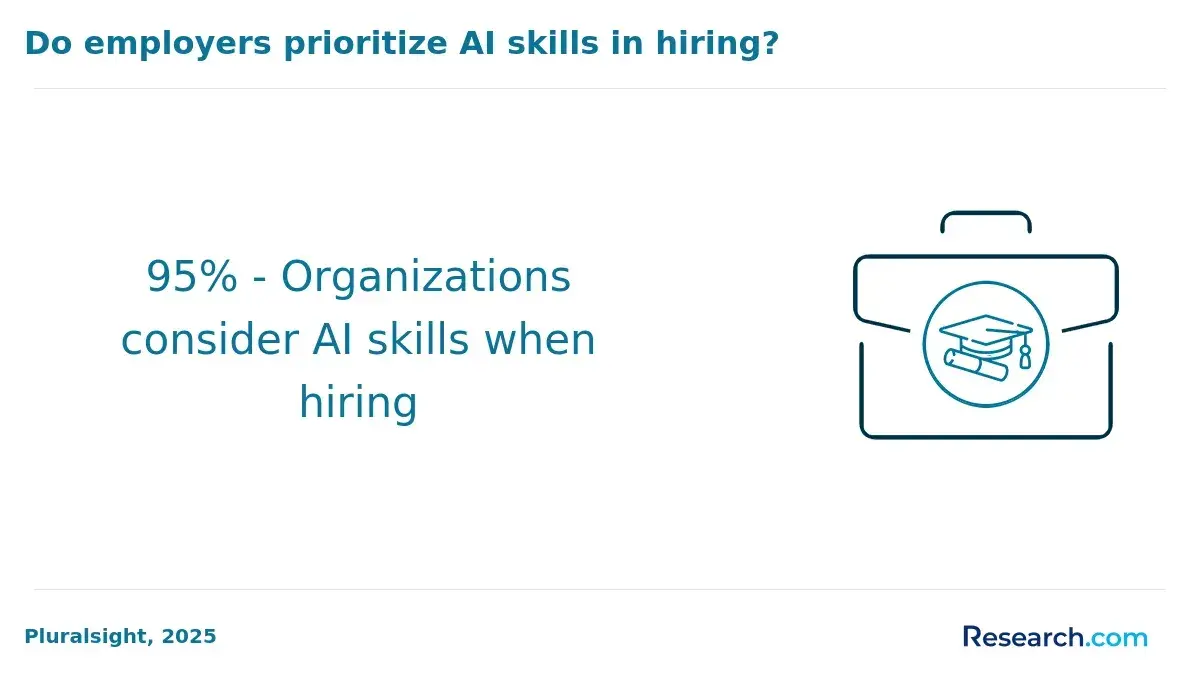
AI certificate programs versus bootcamps for analytics engineers serve distinct purposes depending on career goals. Certificates offer focused, short-term training on specialized skills such as machine learning or data modeling, typically lasting a few months. They are ideal for professionals seeking rapid upskilling or validating expertise in specific AI tools. Bootcamps, in contrast, emphasize hands-on, project-driven learning that aligns with Gartner's prediction that by 2025, half of organizations will utilize generative AI in analytics. These intensive programs help students build portfolios with real-world projects, making them well-suited for immediate job readiness.
Degree programs in AI and analytics engineering compared to certificates and bootcamps provide extensive curriculum over several years, covering theory, mathematics, programming, and ethics. These degrees are suited for those pursuing deep expertise or research-focused positions but require a longer commitment and may lack exposure to the latest AI tools without internships or applied experiences. Many students combine a foundational degree with bootcamps or certificates to stay current with evolving industry demands.
For those considering educational options in related fields, an online cyber security degree can complement AI skills by broadening technical knowledge in data protection and systems security. Ultimately, practical experience through project-based learning is essential as employers increasingly prioritize demonstrable skills in generative AI and analytics engineering, which bootcamps excel at providing over purely theoretical education.
What AI skills and tools should the best courses teach analytics engineers?
The best AI courses for analytics engineers equip learners with practical skills focused on data-driven decision-making. Core areas include expertise in machine learning algorithms, data preprocessing, model evaluation, and deployment techniques. Mastery of supervised and unsupervised learning methods such as regression, classification, clustering, and dimensionality reduction is essential.
Top AI tools taught in analytics engineering courses often include Python programming alongside popular AI libraries like TensorFlow, PyTorch, and scikit-learn. Knowledge of no-code or low-code AI platforms enhances agility for rapid model prototyping and cross-team collaboration. Hands-on experience with SQL and cloud services such as AWS SageMaker or Azure ML supports scalable, efficient analytics pipelines.
A firm grasp of data ethics, bias mitigation, and explainable AI principles ensures responsible system design that meets regulatory standards and maintains transparency. Foundational understanding of statistics and probability helps analytics engineers interpret results accurately and provide sound recommendations.
Spending on AI training is increasing sharply, with global investment expected to reach $8.3 billion by 2026, up from $1.7 billion in 2022, reflecting growing demand for foundational AI skills, especially in no- and low-code solutions that drive practical usage. For professionals considering expanding AI capabilities, pairing courses with an accelerated cyber security degree online can offer complementary technical strengths. Mastering these best AI skills for analytics engineers enables them to solve complex business problems, optimize workflows, and advance strategic data initiatives across industries.
How can you evaluate the quality and accreditation of AI programs in the U.S.?
Verifying program accreditation through recognized agencies like the Accreditation Board for Engineering and Technology (ABET) or regional accreditors endorsed by the U.S. Department of Education ensures AI programs meet rigorous academic and industry standards. Hands-on experience with real-world datasets and tools such as Python and SQL is essential; job postings requiring both have risen significantly, with hybrid roles earning 12-20% more than SQL-only positions, based on analysis by the Burning Glass Institute.
Faculty expertise and industry partnerships are crucial indicators of program quality. Collaborations with leading tech companies or research institutions often provide valuable internships, project opportunities, and mentorship. Review course content carefully to confirm coverage of machine learning foundations, data engineering, and the ethical use of artificial intelligence.
Student outcomes offer key insights: check graduation rates, job placement statistics, and alumni success stories to assess if graduates attain relevant analytics engineering roles with competitive salaries. Programs with recognized certifications or professional endorsements add credibility and improve career prospects. Flexibility options, including online or part-time formats, can be important for working professionals seeking to upskill without career interruptions.
What are the pros and cons of online versus on-campus AI courses for analytics engineers?
Online AI courses for analytics engineers offer essential flexibility and cost savings. Professionals managing work and study appreciate asynchronous lessons and remote access. These programs often update curricula to include topics like large language models (LLMs), retrieval-augmented generation (RAG), and agents, which is vital since over 60% of enterprises using generative AI rely on RAG, as noted in McKinsey's 2024 State of AI report. Additional savings come from avoiding commuting and housing costs.
Despite this, online courses may lack hands-on collaboration and instant expert interaction, which can limit networking and soft skill development needed in cross-functional analytics roles. On-campus courses provide immersive learning with direct faculty access, peer interaction, and well-equipped labs, enhancing practical skills in complex AI systems, including RAG-based analytics.
However, on-campus programs tend to be costlier and less flexible, often requiring relocation or commuting, which can challenge working adults or remote learners. These programs may also struggle to keep pace with AI's rapid changes unless strongly connected to the industry. Choosing between formats depends on priorities: flexibility and up-to-date content favor online learning, while guided, collaborative experiences suit on-campus options. Hybrid programs may offer benefits from both but are not yet widespread.
What are typical admission requirements and preparation steps for AI courses in this field?
Admission to AI courses for analytics engineers typically requires a bachelor's degree in computer science, engineering, mathematics, statistics, or a related quantitative field. Applicants should have foundational programming skills in Python or R, along with a basic understanding of data structures and algorithms. Advanced courses often expect prior experience with machine learning or data analytics tools. Transcripts demonstrating strong academic performance in quantitative areas are commonly required.
Building programming expertise in Python is essential, including hands-on experience with data manipulation libraries like pandas and machine learning frameworks such as TensorFlow or PyTorch. Completing certifications or online courses in machine learning fundamentals helps prepare candidates for rigorous coursework. Practical knowledge of data engineering, including data pipelines and model deployment, is equally important as productionizing AI solutions gains emphasis.
Familiarity with cloud platforms and containerization technologies like Docker and Kubernetes aligns with current industry demands. Deloitte's State of AI in the Enterprise survey highlights that organizations with mature MLOps practices are significantly more successful at moving AI models from pilot to production. This underscores the importance of applied skills beyond theory.
Candidates should also demonstrate problem-solving ability and a commitment to continuous learning, often assessed through technical interviews or coding challenges. Engagement in AI competitions, internships, or research projects further strengthens applications by showcasing practical AI experience.
How long do AI programs for analytics engineers take, and what do they cost?
AI programs for analytics engineers range from short-term courses lasting 4 to 12 weeks to more extensive professional development lasting several months. Bootcamps and certificate courses focus on practical skills like machine learning, data modeling, and algorithm deployment, while advanced programs integrate foundational AI concepts with hands-on projects tailored to real-world challenges.
Costs vary widely by program type and depth. Free or low-cost MOOCs are popular and accessible, often priced under $100 or free, covering essential AI principles. Accredited certificates and bootcamps typically cost between $1,000 and $10,000, reflecting curriculum quality and career support. Degree-level specializations usually exceed $10,000 depending on the institution and format.
Survey data indicates that nearly 60% of data professionals primarily use free or affordable AI courses for skill growth, valuing flexibility and budget-friendly options. Employer-sponsored training, although more costly and time-intensive, accounts for about 18% of AI learning.
When choosing a program, consider timeline, budget, and career objectives. Rapid upskilling favors MOOCs or bootcamps, while deeper expertise requires investing in longer, more comprehensive programs with recognized certification. This approach helps align AI education with your professional goals.
What careers, job titles, and industries do AI-trained analytics engineers work in?
AI-trained analytics engineers play a vital role across sectors such as technology, finance, healthcare, and retail, applying data processing and machine learning skills to influence key business decisions. Common job titles include Analytics Engineer, Data Scientist, Machine Learning Engineer, and AI Specialist, with responsibilities centered on building data pipelines, developing predictive models, and integrating AI algorithms that enhance operational efficiency and strategic planning.
Finance professionals may create fraud detection systems and algorithmic trading models, while those in healthcare support diagnostic analytics and patient outcome forecasting. These professionals often expand into roles like Data Architects or AI Product Managers, bridging technical execution with business objectives. Manufacturing and telecommunications industries increasingly rely on analytics engineers to optimize supply chains and improve customer experience through AI-driven insights.
AI skills are in strong demand, leading to notable salary increases. According to Coursera's 2024 Learner Outcomes Report, individuals completing structured online AI and data certificates typically see a median salary increase of 20-25% within a year. This demonstrates the high value employers place on AI-augmented analytics capabilities and the excellent return on investment for those pursuing upskilling.
Key competencies include data modeling, cloud platforms, and tools such as Python and SQL. Organizations also prioritize the ability to interpret AI results to address real-world challenges, offering diverse and dynamic career pathways for AI-trained analytics engineers.
What salary ranges and job outlook can AI-skilled analytics engineers expect?
AI-skilled analytics engineers in the U.S. enjoy competitive salaries that reflect their expertise. Entry-level roles typically start around $85,000 annually, with mid-career professionals earning between $110,000 and $140,000. Senior positions or those combining analytics engineering with advanced AI or machine learning skills can command salaries exceeding $160,000. Variations depend on company size, industry, and location, with tech hubs like San Francisco and New York offering higher pay.
Job growth combining data engineering, analytics, and AI/ML skills is strong. PwC's 2024 Global AI Jobs Outlook forecasts a 27% annual growth rate for these roles through 2030, outpacing the general tech sector and highlighting rising demand.
Employers seek professionals who integrate AI-driven models, automate complex data workflows, and extract insights from unstructured data. Analytics engineers with AI expertise often transition into strategic data science or hybrid roles influencing product development and business strategy.
For those preparing to enter this field or upskill, focus on:
- Gaining experience with AI/ML frameworks and cloud data platforms alongside analytics fundamentals.
- Developing skills in Python, SQL, model deployment, and data pipeline integration.
- Obtaining certifications or courses that emphasize AI applications in analytics workflows.
Aligning analytics engineering with AI enhances salary potential and career upward mobility within the fastest-growing tech segments.
Other Things You Should Know About Artificial Intelligence
The primary challenges include handling data quality and integration issues, ensuring model interpretability, and managing computational resources efficiently. Analytics engineers must also address ethical concerns such as bias in training data, which can affect AI outcomes. Overcoming these requires a combination of technical skills and awareness of AI governance principles.
Top AI courses for analytics engineers in 2027 include Coursera’s “AI for Everyone” by Andrew Ng, edX's “Professional Certificate in Data Science” from Harvard University, and Udacity’s “AI Engineer Nanodegree Program.” These courses cover essential AI skills tailored for analytics engineers.
Python is the most widely used programming language due to its extensive AI libraries like TensorFlow, PyTorch, and scikit-learn. Other important tools include SQL for data manipulation, Jupyter notebooks for interactive development, and cloud platforms such as AWS or Google Cloud for scalable AI deployment. Familiarity with these technologies is vital for effective AI application in analytics engineering.
While AI automates many data processing and modeling tasks, it is unlikely to fully replace analytics engineers. These professionals provide critical insights, guide AI model design, and ensure ethical use of AI. The collaboration between humans and AI will continue to evolve, with analytics engineers focusing on higher-level problem-solving and strategy.
References
- Best AI Courses for Data Analysis in 2026 https://mljar.com/blog/best-ai-courses-for-data-analysis/
- AI pricing: how much does AI cost in 2025? | Future Processing https://www.future-processing.com/blog/ai-pricing-is-ai-expensive/
- Analytics Engineer Salary: The Ultimate 2026 Guide https://www.peopleinai.com/blog/analytics-engineer-salary-guide
- Artificial Intelligence Course Guide: Eligibility, Admission Process, Scope & Careers https://www.tmu.ac.in/blog/artificial-intelligence-course-details-admission-scope-and-eligibility-criteria
- Accreditation and AI: Ensuring Quality in an Era of Smart Learning https://www.qahe.org/article/accreditation-and-ai-ensuring-quality-in-an-era-of-smart-learning/
- The 5 Best AI Engineering Bootcamps in 2026 - tripleten.com/blog https://tripleten.com/blog/posts/best-ai-engineering-bootcamps
- AI & Data Science Courses – Beginner to Advanced — AI Tech Institute https://www.aitechinstitute.com.au/all-courses
- What Makes For A Successful Analytics Engineer? https://www.sigmacomputing.com/blog/successful-analytics-engineer-career
- New: AI Tutor AI Engineering Track – Support | DataCamp https://support.datacamp.com/hc/en-us/articles/38685186910871-New-AI-native-AI-Engineering-Track
- Group https://www.datacamp.com/category/artificial-intelligence