2027 Best AI Courses for Energy Forecasting Teams

Co-Founder and Chief Data Scientist
Energy forecasting teams often struggle to accurately predict demand due to volatile market conditions and rapidly evolving technologies. This challenge hampers efficiency and leads to costly errors in resource allocation. Many professionals lack specialized training needed to leverage advanced predictive models and machine learning techniques effectively.
Gaining up-to-date skills in AI can bridge this gap and enhance forecasting accuracy. This article outlines the best AI courses available, focusing on flexible, accredited programs designed to equip energy professionals with practical expertise to transform forecasting capabilities and improve operational outcomes in their organizations.
Key Things You Should Know
- Energy forecasting teams increasingly rely on AI courses teaching machine learning algorithms that improve prediction accuracy by up to 25% compared to traditional statistical methods, based on 2025 industry reports.
- Top courses in 2026 emphasize practical skills in time series analysis and neural networks, crucial for handling complex energy consumption and generation data.
- Certification in AI for energy forecasting enhances career prospects, with 40% of U.S. energy companies prioritizing candidates with relevant AI credentials for data-driven decision roles.
Advance Your Career with AI Online Courses
Artificial Intelligence: Implications for Business Strategy
This program provides an introduction to Artificial Intelligence and their implications for business strategy. Earn an official digital certificate.

Oxford Artificial Intelligence Programme
Explore this Oxford Artificial Intelligence programme offered in a flexible learning environment and explore topics like machine learning, automation, and robotics.

Implementing Agentic AI: Building Your Organizational Playbook
This online MIT Agentic AI course offers a practical approach to deploying AI agents in your organization, including a custom playbook. 3 weeks, exclusive launch price.

AI Adoption: Driving Business Value and Impact
This online MIT AI Adoption: Driving Business Value and Impact offers practical frameworks to close the gap between AI potential and business reality.

Artificial Intelligence in Pharma and Biotech
Discover the applications and limitations of artificial intelligence in pharma and biotech with this MIT online short course.

What are the best AI courses for energy forecasting teams and who are they right for?
The best AI courses for energy forecasting teams emphasize applied machine learning, time series analysis, and energy-specific data modeling. Leading programs cover demand forecasting algorithms, neural networks, and reinforcement learning designed for energy markets. Notable examples include specialized offerings from Stanford University, MIT, Coursera's "Machine Learning for Time Series Data," and edX's "AI for Energy Systems."
These ai training programs for energy sector professionals suit data scientists and engineers in utilities, grid management, and renewable energy fields. Professionals with backgrounds in statistics or computer science benefit from courses integrating real-world energy datasets and case studies to enhance forecasting accuracy.
Early-career researchers gain foundational skills through Python programming and AI basics, preparing them for complex forecasting tasks. More experienced practitioners often focus on advanced techniques, such as LSTM networks and attention-based models, which capture temporal dependencies in consumption data effectively.
The urgency to upskill relates to projections that AI-related data center electricity use could reach 945 TWh by 2030, about 3% of global consumption, according to the International Energy Agency and Ember. Energy forecasting teams should prioritize scalable AI methods, cloud computing, and ethical training to balance computational costs and environmental impacts. Prospective students interested in advancing their expertise can explore a data science degree to build a solid foundation in analytics, which complements these specialized courses.
Advance Your Career with AI Online Courses
Artificial Intelligence: Implications for Business Strategy
This program provides an introduction to Artificial Intelligence and their implications for business strategy. Earn an official digital certificate.
Oxford Artificial Intelligence Programme
Explore this Oxford Artificial Intelligence programme offered in a flexible learning environment and explore topics like machine learning, automation, and robotics.
Implementing Agentic AI: Building Your Organizational Playbook
This online MIT Agentic AI course offers a practical approach to deploying AI agents in your organization, including a custom playbook. 3 weeks, exclusive launch price.
How do AI courses in energy forecasting differ for beginners, data scientists, and power-system engineers?
AI courses tailored for beginners in energy forecasting typically cover foundational concepts such as basic machine learning principles, introductory statistics, and simple forecasting models. These courses often emphasize practical skills using popular tools like Python and focus on understanding energy demand patterns without delving deeply into complex mathematics or electrical engineering.
Advanced AI training for power system engineers and data scientists involves more specialized content. Data scientists focus on algorithm development, feature engineering, and model optimization using time series analysis and deep learning methods such as LSTMs. They also work with large-scale grid data and scalable AI solutions, which are increasingly important given projections that US data center electricity demand could rise from 183 TWh in 2024 to 793 TWh by 2030. Practical experience in cloud computing and explainability techniques is critical in this area.
Power-system engineers receive AI education that links domain-specific knowledge with operational constraints. Their coursework covers hybrid AI-power flow models, anomaly detection for grid reliability, and scenario analysis incorporating AI forecasts. Skills in integrating AI outputs into energy management and planning systems are essential, especially as load prediction complexity is expected to increase up to fourfold within a decade.
Choosing the right program depends on your career goals and background. For those exploring options, consider the best online AI degree programs that offer tailored pathways for diverse professional needs.
What skills and tools should top AI energy forecasting courses teach for real-world projects?
Top AI energy forecasting courses emphasize advanced skills in time series analysis, machine learning model development, and handling domain-specific data. Mastering statistical techniques like ARIMA and Prophet, alongside deep learning models such as LSTM and transformers, enables precise renewable generation predictions. Strong data preprocessing capabilities, especially for noisy, high-frequency weather and grid sensor data, are essential.
Proficiency in programming languages like Python and R, coupled with experience in libraries such as TensorFlow, PyTorch, and Scikit-learn, supports development of effective energy demand prediction tools and machine learning skills. Practical training with real-world datasets integrating meteorological inputs with historical power outputs prepares students for forecasting solar, wind, and hydroelectric production.
Knowledge of grid dynamics, electrical constraints, demand-response mechanisms, and storage integration is crucial for load balancing and operational decision-making in utility companies. Courses often introduce cloud computing platforms and containerization (e.g., Kubernetes, Docker) to facilitate scalable AI model deployment and real-time monitoring.
Analytical skills to evaluate models using RMSE, MAE, and uncertainty quantification must be emphasized. Ethical AI use, data privacy, and sustainability align forecasts with global energy transition goals. Global AI-related electricity consumption is estimated at around 415 TWh in 2024, highlighting the strategic importance of accurate forecasting.
For those seeking advanced study, an online PhD in artificial intelligence USA offers in-depth expertise applicable to AI energy forecasting techniques for utility companies.
Which U.S. universities and online platforms offer leading AI programs focused on energy forecasting?
Leading U.S. universities with AI programs for energy forecasting in US universities include Stanford University, Massachusetts Institute of Technology (MIT), and Carnegie Mellon University. Stanford's Energy Resources Engineering department merges machine learning with power grid dynamics, enabling students to develop models predicting energy supply changes driven by weather. MIT's Energy Initiative combines AI with numerical weather models to enhance energy market trading, while Carnegie Mellon focuses on practical AI for renewable energy, emphasizing probabilistic forecasting and real-time demand response.
Several online platforms offer energy forecasting AI courses in the US designed for professionals seeking flexible learning. Coursera's "Machine Learning for Energy Forecasting" covers neural networks applied to wind and solar power predictions. EdX provides micro-degrees like "AI Applications in Climate and Energy," addressing grid integration and climate analytics. Udacity's nanodegree on AI for smart grid optimization is tailored for working professionals.
These programs tackle challenges such as managing large meteorological data and lowering computational costs. According to the Jua 2026 AI Weather Forecasting Guide, AI-based models match or surpass traditional numerical weather prediction accuracy with significantly less computational expense, allowing more frequent forecast updates crucial for energy trading and grid management. For those exploring career options, opportunities such as AI trainer jobs show growing demand in the energy sector and beyond.
How do online, hybrid, and on-campus AI programs for energy forecasting compare?
Online, hybrid, and on-campus AI programs for energy forecasting serve distinct learner needs and professional goals. Online formats offer flexibility, ideal for working professionals who want to develop AI skills without relocating or changing schedules. These programs often include self-paced modules focusing on complex topics like demand forecasting models or load prediction algorithms, though limited immediate feedback can be a challenge when tackling real-world energy grid issues.
Hybrid programs blend online learning with in-person sessions, supporting collaboration and hands-on experience using tools like Python frameworks for energy data analytics. This approach also encourages networking and mentorship, which are vital for understanding grid reliability and AI-enhanced operations-important as data center consumption of AI-specific servers may reach 165-326 TWh by 2028, greatly impacting US electricity demand.
On-campus programs provide immersive environments with access to cutting-edge research and faculty focused on AI applications in grid flexibility and resilience. They suit students seeking in-depth technical expertise or academic careers but require full-time commitment and geographic flexibility.
Prospective students should evaluate their career stage, learning preferences, and availability. Working engineers might prefer online or hybrid paths, while recent graduates aiming for research roles could benefit from on-campus immersion that addresses the growing role of AI in energy forecasting with practical and rigorous training.
What accreditation and industry standards should AI energy forecasting courses and certificates meet?
AI energy forecasting courses and certificates should be accredited by respected bodies like ABET to ensure a robust curriculum covering data science, machine learning, and energy systems integration. This accreditation guarantees that graduates develop skills aligned with industry requirements.
Programs must adhere to standards set by organizations such as the IEEE Standards Association, which offers guidelines for smart grid technologies and AI applications in energy management. Compliance with ISO 50001 for energy management systems also demonstrates commitment to sustainable practices.
Certificates focused on practical skills like AI model deployment, error reduction, and grid optimization provide tangible ROI. This is vital given that US data centers currently consume about 4.4% of national electricity, with AI-driven growth potentially increasing demand. Utilities using accurate AI forecasting can impact national load planning and pricing, according to data from IEA and LBNL.
Industry validation through partnerships with utility companies adds real-world relevance. Key competencies covered should include time-series forecasting, anomaly detection, and decision support under uncertainty.
Alignment with continuing education units (CEUs) or professional development hours (PDHs) supports ongoing career growth and licensing in the energy sector, making these credentials essential for professionals aiming for both technical expertise and advancement.
What are the typical admission requirements and prerequisites for AI energy forecasting programs?
Admission to AI energy forecasting programs typically requires a strong background in quantitative fields such as electrical engineering, computer science, data science, applied mathematics, or energy systems engineering. Applicants should ideally have coursework or experience in statistics, machine learning, and programming languages like Python or R. Many graduate programs ask for a minimum GPA around 3.0 and proof of skills in calculus, linear algebra, and probability theory.
Beyond formal education, practical knowledge of energy systems, grid operations, or renewable energy technology is highly valued. This may include familiarity with power system modeling or internships related to energy forecasting. Non-technical professionals often need foundational courses or certifications in AI or energy analytics before applying.
Skills in data management and algorithm development are essential, as hands-on projects are core components of these programs. Candidates are usually required to submit a statement of purpose outlining their career goals along with letters of recommendation that emphasize technical skills and relevant experience.
According to Hitachi Energy's 2026 industry outlook, specialized AI programs focused on load and renewable forecasting significantly reduce forecast errors, leading to multi-million-dollar savings for utilities. This highlights the importance of solid AI proficiency combined with energy sector knowledge to prepare students for impactful careers.
How long do AI energy forecasting certificates and degrees take, and what do they cost?
AI energy forecasting certificates usually require 3 to 6 months of study, with programs tailored for working professionals who want to gain specialized skills quickly. These certificates often come as part-time online courses or intensive bootcamps and typically cost between $1,000 and $5,000 depending on the provider. In contrast, bachelor's or master's degrees focusing on AI applications in energy forecasting take 2 to 4 years and offer more comprehensive training on AI, data science, and energy systems.
Degree costs vary widely: public universities charge $10,000 to $30,000 per year for in-state students, while private institutions may exceed $50,000 annually. These programs cover both theoretical foundations and practical methods for forecasting energy demand and integrating renewables. Certificates are ideal for rapid upskilling and immediate application, whereas degrees provide broad expertise and research opportunities essential for long-term roles in decarbonizing energy systems.
With global AI electricity consumption expected to more than double from 415 TWh to 945 TWh by 2030, according to the International Energy Agency, acquiring education in AI energy forecasting is increasingly crucial. Professionals trained in this field will help optimize AI-driven renewable integration, making both certificate programs and degree paths valuable investments.
What careers, roles, and industries can AI energy forecasting training prepare you for?
Training in ai energy forecasting equips professionals to excel at the crossroads of energy, data science, and technology. Key roles include data scientists and machine learning engineers who develop forecasting models customized for energy demand and supply. Energy analysts working with utilities and grid operators apply these models to optimize system performance and ensure reliability.
MLOps specialists build scalable infrastructure to deploy and monitor forecasting systems, essential amid the expected rise in US data center electricity consumption from about 180 TWh today to an estimated 400-600 TWh by 2030 (LBNL, IEA, EPRI synthesis).
Experts in energy consulting and renewable energy integration use these skills to evaluate how intermittent sources like solar and wind impact grid stability. Careers in smart grid technology focus on creating adaptive systems that respond in real time to forecasting results. Industries benefiting include utility companies, grid operators, data center managers, and software firms specializing in energy management.
Training supports tasks such as:
- Developing predictive models for load, generation, and price forecasting across various sectors.
- Constructing reliable data pipelines and infrastructure for scalable model performance.
- Automating monitoring and updates to adapt to changing energy patterns.
- Balancing computational efficiency with forecast accuracy to lower data center energy use.
Graduates are prepared to tackle system-level challenges in sustainability, grid modernization, and energy efficiency while adapting to evolving regulations and technological change in the coming decade.
What salary ranges and job outlook can AI energy forecasting professionals expect in the U.S.?
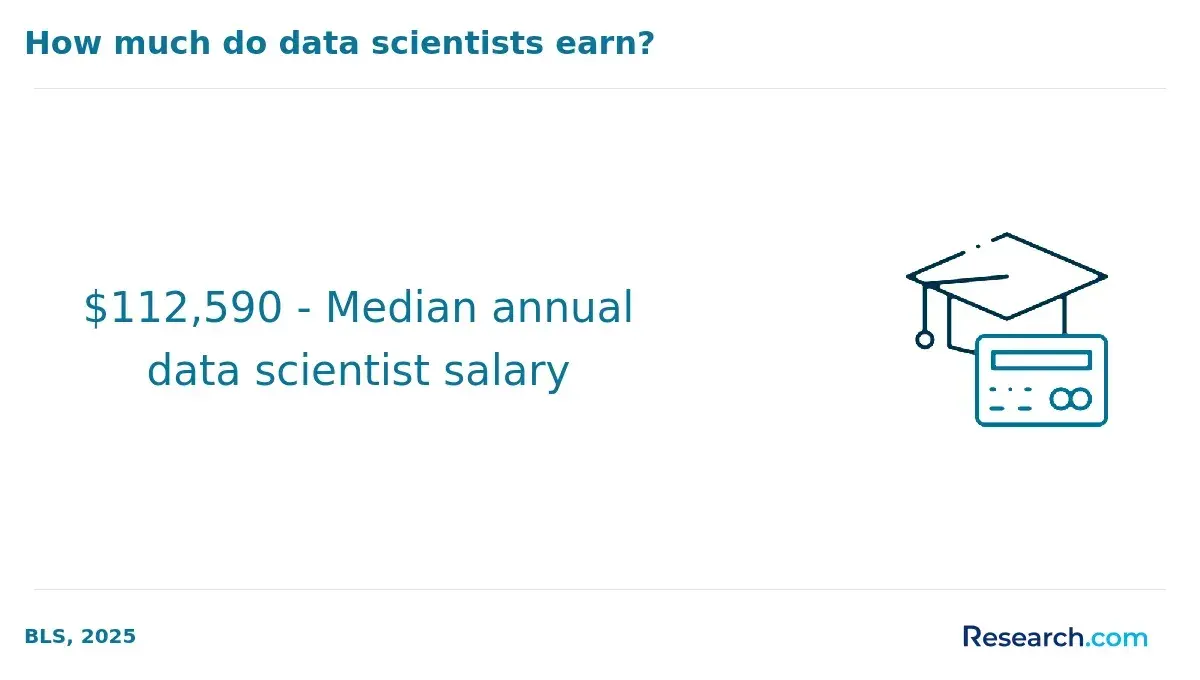
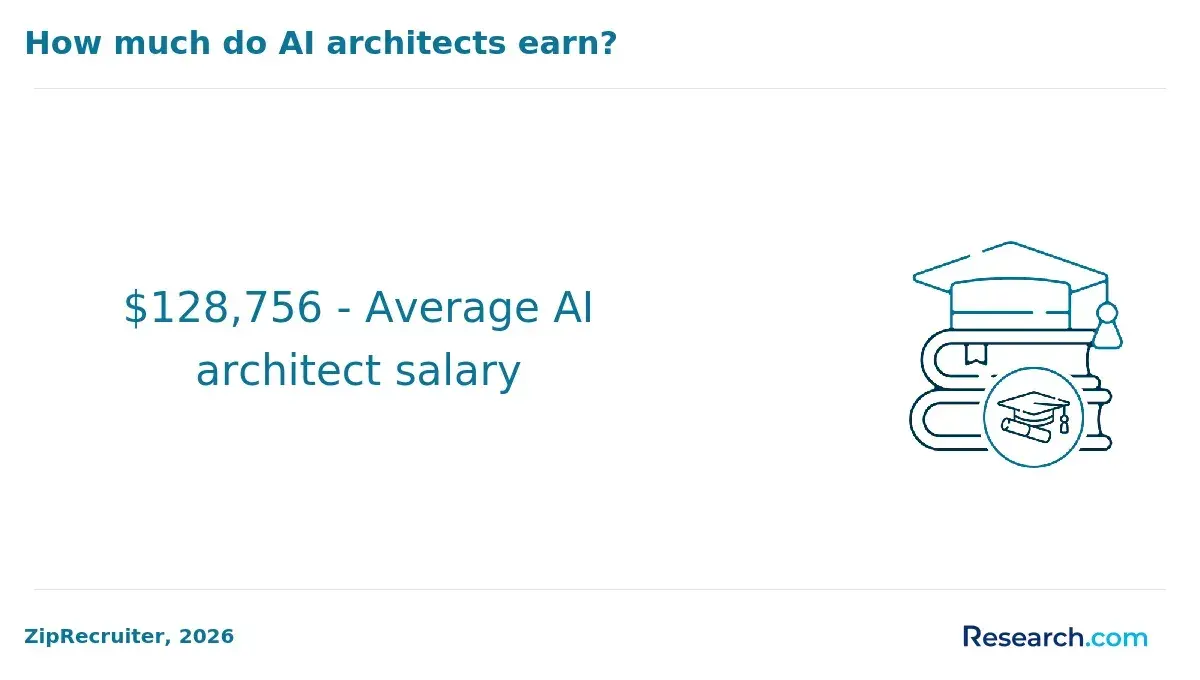
AI energy forecasting professionals in the U.S. typically earn between $90,000 and $150,000 annually, with entry-level roles starting near $85,000 and senior positions exceeding $160,000. Expertise in foundation models and energy systems, along with skills in optimizing machine learning models to improve energy efficiency and reduce carbon footprints, can increase earning potential. Demand is strong for those skilled in balancing accurate forecasting with sustainable AI practices.
Employment in this field is projected to grow faster than the national average for tech jobs through 2030, reflecting the priority organizations place on reducing operational emissions. For context, generating 1,000 AI images with large language and foundation models releases carbon emissions comparable to driving a standard gasoline car about 4.1 miles, highlighting the importance of energy-efficient algorithm design.
Key roles include machine learning engineers focused on sustainable AI, data scientists modeling grid demand, and research analysts optimizing agentic AI workflows. Salaries tend to be higher in tech hubs such as California, Texas, and the Northeast, while academic or nonprofit positions may offer lower pay but valuable experience.
Other Things You Should Know About Artificial Intelligence
Artificial intelligence in energy forecasting primarily relies on historical energy consumption data, weather patterns, and generation output from renewable sources. Sensor data from smart grids and IoT devices also contribute to more accurate real-time predictions. Combining these diverse datasets allows AI models to identify trends and optimize energy distribution effectively.
AI improves forecast accuracy by leveraging machine learning algorithms that can analyze large volumes of complex data and learn from patterns over time. These algorithms adjust dynamically as new data emerges, reducing errors caused by traditional statistical methods. This adaptive capability helps in predicting energy demand and supply fluctuations more precisely.
In 2027, energy forecasting teams can benefit from AI courses like "AI for Energy Transition" by MIT, "Data-Driven Energy" by Stanford, and Coursera’s "Deep Learning for Predictive Energy Analytics." These courses focus on cutting-edge techniques and tools essential for accurate energy forecasts.
Yes, AI is particularly effective in managing the variability of renewable energy sources like solar and wind. By analyzing weather forecasts and past generation data, AI models can predict short-term fluctuations in renewable output. This enables better grid stability and resource planning despite the intermittent nature of renewables.
References
- AI for Energy | Your Guide https://www.enverus.com/what-you-should-know-about-ai-for-energy/
- Data science & AI for energy engineers https://mastersplus.innoenergy.com/about-us/data-science-ai-for-energy-engineers/
- Automated Energy Forecasting Workflows: Complete Guide https://jua.ai/articles/automated-energy-forecasting-workflows/
- AI for Energy Sector: Complete Implementation Guide https://www.tommasomariaricci.com/blog/ai-for-energy-sector-guide
- Data Science and AI for Energy Engineers - Summer School 2025 https://community.innoenergy.com/events/178048
- Renewable Energy Forecasting with Machine Learning Training Course | Armstrong Global Institute https://www.armstrongglobalinstitute.com/course/renewable-energy-forecasting-with-machine-learning-training-course
- The Workforce of Tomorrow: Skills Needed for the Solar + AI Energy Revolution https://dev.to/fozlurrayhan98/the-workforce-of-tomorrow-skills-needed-for-the-solar-ai-energy-revolution-6eg
- Artificial Intelligence (AI) in renewable energy forecasting and optimization https://wjaets.com/content/artificial-intelligence-ai-renewable-energy-forecasting-and-optimization
- The five careers you should study according to AI - ENEB https://eneb.com/the-five-careers-you-should-study-according-to-ai/
- AI Governance in Energy: Certification Challenges https://blog.naitive.cloud/ai-governance-in-energy-certification-challenges/