2027 Best Stanford Online AI Courses for AI Governance

Co-Founder and Chief Data Scientist
As AI technologies rapidly integrate into various sectors, ensuring ethical oversight and transparent decision-making becomes a critical challenge. Professionals without a technical background often struggle to understand governance frameworks that ensure responsible AI deployment. This gap risks ineffective policies and potential misuse of AI systems. Navigating the evolving landscape of AI governance requires accessible, expert-led education tailored for those transitioning from unrelated fields. This article examines the best Stanford online AI courses designed to equip learners with foundational knowledge and practical governance skills, enabling informed leadership and stewardship of AI technologies.
Key Things You Should Know
- Stanford's 2026 AI governance courses emphasize ethical frameworks, regulatory policies, and risk management for emerging AI technologies, reflecting the latest global discourse on responsible AI deployment.
- More than 60% of these online courses incorporate case studies involving real-world AI applications, preparing students to address governance challenges in diverse sectors like healthcare and finance.
- Stanford's AI governance curriculum integrates interdisciplinary insights, combining law, computer science, and social sciences to equip professionals for evolving compliance and oversight roles effectively.
Advance Your Career with AI Online Courses
Artificial Intelligence: Implications for Business Strategy
This program provides an introduction to Artificial Intelligence and their implications for business strategy. Earn an official digital certificate.

Oxford Artificial Intelligence Programme
Explore this Oxford Artificial Intelligence programme offered in a flexible learning environment and explore topics like machine learning, automation, and robotics.

Implementing Agentic AI: Building Your Organizational Playbook
This online MIT Agentic AI course offers a practical approach to deploying AI agents in your organization, including a custom playbook. 3 weeks, exclusive launch price.

AI Adoption: Driving Business Value and Impact
This online MIT AI Adoption: Driving Business Value and Impact offers practical frameworks to close the gap between AI potential and business reality.

Artificial Intelligence in Pharma and Biotech
Discover the applications and limitations of artificial intelligence in pharma and biotech with this MIT online short course.

What are the best Stanford online AI courses focused on AI governance today?
Stanford's online courses on AI governance address the critical need for frameworks managing the ethical, legal, and societal impacts of artificial intelligence. Among the best Stanford ai governance programs online is the "AI Ethics and Governance" course, which offers a thorough overview of regulatory challenges and policy design essential for responsible AI deployment. This course is ideal for professionals seeking a clear understanding of compliance with global AI standards.
The "Responsible AI: Building Ethical Systems" course focuses on practical design issues such as transparency, fairness, and accountability. It integrates technical AI knowledge with governance concepts, enabling learners to develop solutions aligned with ethical and operational goals.
Another key offering, "Policy and Governance of Artificial Intelligence," provides an interdisciplinary perspective incorporating law, economics, and social sciences. It equips students to critically assess AI's influence on governance and formulate actionable policy recommendations.
These courses suit recent graduates and working professionals aiming for roles in compliance, regulatory affairs, policymaking, or ethics advisory. Given the rapid $252.3 billion investment growth in AI, expertise in this area meets rising market demands. Prospective students should review prerequisites, as some courses require familiarity with AI or machine learning basics.
For those considering broader technology education, exploring an accelerated bachelor's degree computer science can complement AI governance knowledge effectively.
Advance Your Career with AI Online Courses
Artificial Intelligence: Implications for Business Strategy
This program provides an introduction to Artificial Intelligence and their implications for business strategy. Earn an official digital certificate.
Oxford Artificial Intelligence Programme
Explore this Oxford Artificial Intelligence programme offered in a flexible learning environment and explore topics like machine learning, automation, and robotics.
Implementing Agentic AI: Building Your Organizational Playbook
This online MIT Agentic AI course offers a practical approach to deploying AI agents in your organization, including a custom playbook. 3 weeks, exclusive launch price.
How do Stanford's online AI governance offerings compare to full degree programs?
Stanford online AI governance courses offer a focused, flexible alternative to traditional multi-year degree programs such as master's or PhD tracks. These courses emphasize practical skills in policy, ethics, and risk management within artificial intelligence, targeting professionals who want immediate expertise in AI oversight and regulatory environments rather than extensive theoretical study. This approach aligns well with the growing demand for governance and oversight roles identified by the World Economic Forum's Future of Jobs Report 2025, which highlights AI and machine learning specialists as rapidly expanding occupations.
Unlike most full degrees requiring prerequisites in computer science or statistics, Stanford's online AI governance classes often welcome participants from diverse backgrounds with interests in policy analysis, law, and social impacts. This broad accessibility helps those focused on shaping AI's ethical dimensions without needing deep technical proficiency. From a career perspective, these certificates prepare students for roles in compliance, ethics boards, and regulatory agencies, complementing technical skills gained elsewhere.
When comparing Stanford AI governance certificates with full academic degrees, consider your professional goals: degrees provide deep technical training and research opportunities, while these courses deliver timely applied knowledge for leadership positions in AI ethics and policy. Additionally, for those exploring cost-effective education pathways, review options like the cheapest engineering degree programs to balance budget and career ambition.
Who should take Stanford's online AI governance courses, and what are the prerequisites?
Stanford's online AI governance courses are tailored for professionals involved in policymaking, compliance, and ethical oversight of artificial intelligence systems. Ideal candidates include government regulators, legal experts, AI ethics officers, and corporate risk managers who need to navigate the expanding regulatory landscape. AI researchers and developers who want to grasp the broader societal and legal impacts of their work will also benefit significantly.
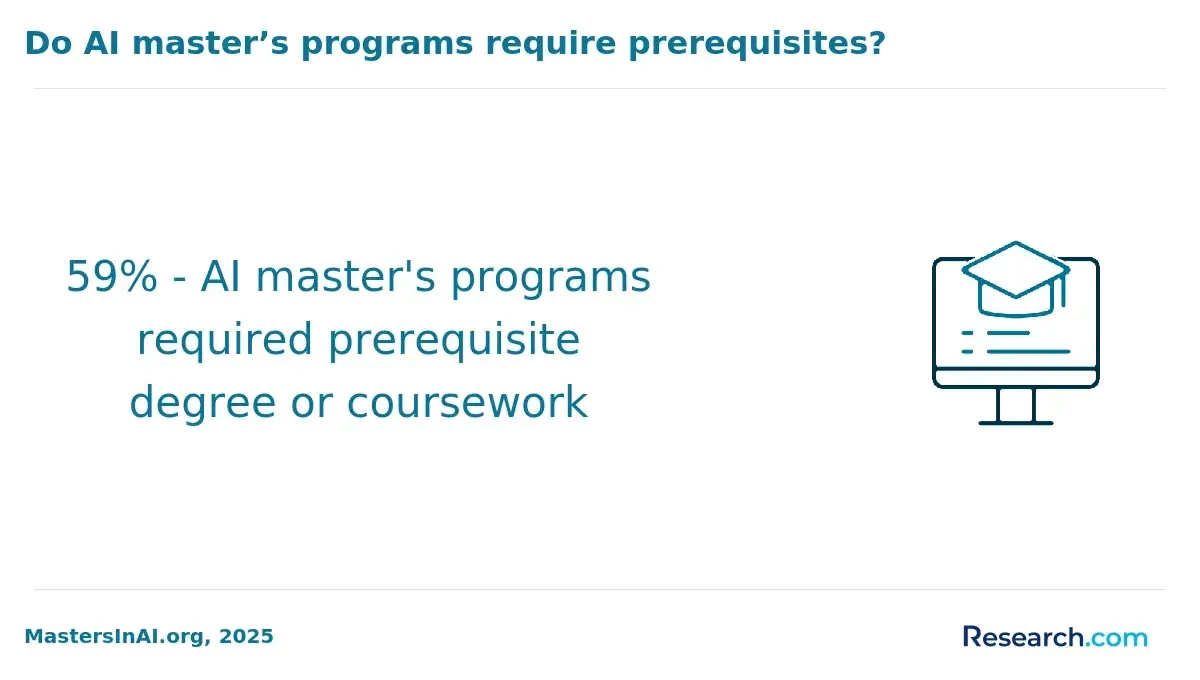
Prerequisites for Stanford AI governance programs generally include foundational knowledge of AI technologies and practical experience with AI systems or data science. A background in law, public policy, or technology management enhances understanding of governance frameworks. Courses often assume familiarity with technical concepts like machine learning models, data privacy, and algorithmic bias to engage deeply with compliance strategies and ethical issues.
A mid-level policy analyst working on technology regulation may find particular value in exploring global AI policy trends. Similarly, a software engineer moving into AI ethics needs to understand governance beyond coding. The intense growth of AI regulations is notable: by 2025, the OECD AI Policy Observatory tracked over 2,400 AI policy initiatives worldwide, reflecting rising compliance demands on AI leaders.
Students should be ready to engage with interdisciplinary material covering law, ethics, and technical standards. Knowledge of international regulatory environments is recommended, as courses address cross-border governance challenges. These offerings attract learners aiming to lead AI governance in multinational corporations or public institutions. For those interested in cybersecurity alongside AI governance, exploring cyber security schools online can be a complementary pathway.
What core topics and skills do Stanford's online AI governance courses cover?
Stanford's online AI governance curriculum and essential skills focus on managing the rapid development and deployment of AI systems within legal and ethical frameworks. Core subjects cover regulatory policies, ethical frameworks, risk assessment, and compliance mechanisms to ensure safe and accountable AI operation. The courses emphasize governance challenges such as bias mitigation, transparency, accountability, and data privacy.
Students develop the ability to analyze case studies of AI failures, enhancing skills in identifying systemic weaknesses, such as algorithmic discrimination and autonomous vehicle accidents. Practical application of quantitative methods like model auditing and bias measurement supports a scientific assessment of AI systems. Core topics in Stanford AI governance online courses also include interdisciplinary training, combining technical knowledge with legal and social science perspectives.
These programs prepare students to design effective AI policies, interpret emerging legislation, and apply ethical reasoning. The curriculum directly responds to the urgent need identified by Stanford HAI's AI Index 2025, highlighting a rise in AI incidents and the consequent demand for governance experts skilled in early detection and corrective protocols.
Practical skills taught include scenario planning, stakeholder engagement, and regulatory compliance across sectors such as healthcare, finance, and national security. Global AI governance trends and international cooperation are also explored. Prospective students interested in advancing their expertise may consider exploring online doctorate data science opportunities to complement this specialized knowledge.
How are Stanford's AI governance courses delivered online, and what is the time commitment?
Stanford's AI governance courses offer a blend of asynchronous learning and scheduled live sessions, providing flexibility alongside real-time interaction. Students can access pre-recorded lectures, case studies, and materials through Stanford's learning platform, enabling them to study at their own pace. Weekly live discussions enhance understanding through collaboration with instructors and peers.
Course durations typically range from 4 to 8 weeks, requiring about 6 to 10 hours weekly for lectures, assignments, and discussions. Some programs use a modular format, letting professionals choose topics such as ethical AI deployment or regulatory compliance to fit their schedules. Others require full enrollment for a more comprehensive governance education.
This focus aligns with industry trends, as highlighted by McKinsey's 2025 global AI survey showing 78% of organizations applying AI across business areas. Governance education is increasingly central to successful enterprise-wide AI strategies rather than isolated pilots.
Prospective students should evaluate course workload and interaction style to match their commitments. Fully engaging with both asynchronous and synchronous components is essential to master AI governance concepts that shape organizational decision-making.
How much do Stanford's online AI governance courses cost, and is financial aid available?
Stanford's online courses in AI governance range from approximately $2,500 for shorter executive modules up to $7,000 for more comprehensive certificate programs or specialization tracks. These prices reflect access to leading faculty, rigorous curriculum, and advanced content designed to address emerging AI governance challenges. Payment plans or installment options can help manage upfront costs, particularly for working professionals.
Financial aid is limited and competitive, primarily offered through need-based scholarships or institutional grants linked to Stanford Law School's executive programs. Some courses also partner with external organizations to provide scholarships targeted at eligible U.S. students or nonprofit professionals involved in governance or policy roles. Direct inquiries with course administrators are advisable to learn about available aid and application deadlines. Employers often benefit from customized billing or group discounts when sponsoring employees' professional development.
Demand for AI governance expertise is strong, supported by a Thomson Reuters survey showing that 63% of legal professionals expect generative AI to have a significant or transformational effect on their work within five years. This highlights the strategic value of investing in such education despite the cost. Prospective students should consider financial aid options early to maximize affordability.
Do Stanford's AI governance courses offer certificates or pathways toward graduate study?
Stanford's AI governance courses typically provide certificates upon completion, serving as formal recognition of the skills gained. These certificates are valuable for professionals looking to demonstrate expertise to employers or clients in a fast-evolving field. While the courses themselves do not guarantee admission into Stanford's graduate degree programs, they can strengthen applications by highlighting relevant knowledge in AI governance and ethics.
Some courses are part of broader certificate programs or professional education tracks, which may align with graduate-level prerequisites and enhance eligibility for advanced study. Prospective students should confirm details about credit transfer or graduate admissions support for specific offerings, as these vary across Stanford's online AI governance courses.
Practical coursework often centers on regulatory frameworks, risk management, and ethical considerations preparing students for leadership roles. For example, course content may include how boards incorporate AI governance into corporate strategy, reflecting that 69% of CEOs plan to allocate 10%-20% of their budgets to AI in the near future, according to KPMG's 2025 CEO Outlook. This signals increasing demand for governance fluency at the executive level.
For working professionals, earning certificates provides a credible milestone that can support career advancement or transitions into AI governance roles. Graduate study may require additional steps, but Stanford's credentials confirm a solid foundational understanding. Combining these courses with degree-focused programs can smooth academic progression for students targeting graduate education.
What AI governance careers can these Stanford courses support, and in which sectors?
Stanford's 2026 online AI courses prepare students for careers in AI governance across sectors such as technology, finance, healthcare, and public policy. Graduates often pursue roles like AI ethics officers, compliance managers, risk analysts, and AI policy advisors. These positions emphasize responsible development, deployment, and monitoring of machine learning models to ensure ethical standards, legal compliance, and organizational policies are upheld.
In technology companies, governance experts address bias mitigation, transparency, and fairness in algorithms. In finance, careers focus on regulatory compliance, fraud detection, and model risk management. Healthcare professionals handle patient data privacy, clinical decision support systems, and equitable AI diagnostics. Public sector roles include crafting policy frameworks, auditing AI systems, and promoting trustworthy AI use within government services.
The Stanford AI Index 2025 highlights the increasing need for scalable governance due to falling costs in training advanced AI models. This demands experts skilled in continuous evaluation and lifecycle management to avoid harmful outcomes.
Stanford's curriculum also tackles challenges like defining accountability in autonomous systems, balancing innovation with regulation, and applying monitoring frameworks to detect model drift or misuse. Students can transition into emerging roles such as AI audit specialists or AI safety engineers, vital in industries adopting AI while managing ethical and operational risks.
What salaries and job outlook can AI governance professionals reasonably expect in the U.S.?
AI governance roles in the U.S. offer competitive salaries, reflecting the rising demand for expertise in ethical, legal, and regulatory aspects of AI deployment. Entry-level salaries start around $90,000 annually, while experienced professionals, especially those with legal or technical backgrounds, can earn upwards of $150,000. Positions related to compliance, risk management, and policy development typically range from $120,000 to $180,000.
The Bureau of Labor Statistics forecasts that jobs in AI policy and governance will grow much faster than the average for all occupations. This trend is driven by the expanding integration of AI systems across industries. Research from Thomson Reuters shows that 80% of law firm professionals expect AI to significantly transform legal work within five years, creating urgent demand for governance-trained specialists in both private and public sectors.
Typical roles include AI ethics officers, compliance directors, risk analysts, and AI policy advisors. Salaries vary by industry and location, with higher pay common in Silicon Valley and major metropolitan areas. Continual education, such as online AI governance courses from Stanford, helps professionals stay updated on evolving regulations and best practices.
Hands-on experience combining governance frameworks with AI projects is highly valuable. Candidates who blend technical knowledge with legal and ethical oversight increase their career potential in this dynamic field.
How should students evaluate Stanford AI governance options against other reputable programs?
When comparing Stanford's AI governance courses to other reputable programs, students should focus on curriculum depth, faculty expertise, industry connections, and opportunities for practical application. Stanford uniquely blends technology, ethics, and policy, preparing learners to tackle governance challenges in finance, healthcare, and government sectors.
Key evaluation points include:
- Curriculum relevance: Courses combine technical AI knowledge with governance frameworks, emphasizing societal impact alongside technology.
- Faculty credentials: Instruction from Stanford's top AI researchers and policymakers offers cutting-edge insights not found elsewhere.
- Industry partnerships: Access to live governance projects, corporate case studies, or internships boosts real-world experience and employability.
- Flexibility and format: Availability of part-time, online, or hybrid options can accommodate working professionals.
LinkedIn's 2025 Work Change Report identifies AI literacy as one of the fastest-growing job skills, underscoring the value of integrated AI governance training like Stanford's. Unlike programs focused narrowly on AI ethics or regulation, Stanford emphasizes regulatory compliance, risk assessment, and strategic decision-making skills sought by employers.
Prospective students should also review job placement rates, alumni career paths, and partnerships with tech firms or regulatory agencies to gauge career advancement potential. Ensuring the course aligns with specific career goals-policy development, corporate governance, or ethical AI design-helps secure relevant expertise.
Other Things You Should Know About Artificial Intelligence
In 2027, Stanford's top AI governance courses include "Ethical and Social Implications of AI," "AI and Society," and "Principles of AI Governance." These courses explore AI's ethical, social, and regulatory aspects, equipping students to understand and manage AI's impact on society effectively.
Artificial intelligence systems are powerful tools for data analysis and pattern recognition but cannot fully replace human judgment. AI can assist decision-making by providing insights and automating routine tasks, but complex ethical, social, and contextual considerations require human oversight. Many AI governance experts emphasize collaboration between humans and AI rather than complete replacement.
Bias in artificial intelligence models is detected through techniques such as fairness testing, auditing datasets for representation imbalances, and evaluating model outcomes across different demographic groups. Mitigation strategies include diversifying training data, applying algorithmic fairness constraints, and regularly updating models to reflect changing real-world conditions. Continuous monitoring is essential to reduce unintended discriminatory effects.
Regulations provide a legal framework to ensure AI is developed and deployed safely, ethically, and transparently. They often mandate standards for data privacy, bias prevention, and accountability for AI-driven decisions. Effective regulation encourages responsible innovation while protecting public interests, which is especially relevant in areas like AI governance where outcomes can impact society broadly.
References
- Market Analysis of 146 AI Governance Job Postings https://axialsearch.com/insights/ai-governance-jobs/
- AI governance salaries 2026: what does the market pay? https://verifywise.ai/blog/ai-governance-salary-report-2026
- Artificial Intelligence Certificate Programs - MastersInAI.org https://www.mastersinai.org/degrees/ai-certificate-programs/
- AI in Finance: Markets, Models and Decision-Making | Stanford Online course https://programs.stanfordonline.global-alumni.com/ai-in-finance
- Best AI Courses for Finance & Business Professionals (2026) https://www.wallstreetprep.com/knowledge/best-ai-courses-for-finance-business-professionals/
- Best AI Graduate Certificates - AIDegreePrograms.org https://aidegreeprograms.org/rankings/best-ai-graduate-certificates/
- Salary and Jobs Report 2025-26: Privacy, AI Governance and Digital Responsibility | IAPP https://iapp.org/resources/article/salary-survey-summary
- AI Governance: The New Profession You Should Know https://governance.aicareer.pro/blog/the-new-profession-of-ai-governance
- AI Governance Salaries 2026: $65K to $400K+ (20 Roles) https://techjacksolutions.com/ai-governance-salary-data/
- A survivor’s guide to Artificial Intelligence courses at Stanford (Updated Feb 2020) https://huyenchip.com/2018/03/30/guide-to-Artificial-Intelligence-Stanford.html