2027 Best Deep Learning Courses Online

Co-Founder and Chief Data Scientist
Many professionals with unrelated undergraduate degrees face challenges breaking into the field of deep learning due to the complex technical knowledge and time constraints of traditional education. They often struggle to find flexible, credible courses that offer comprehensive training without needing prior programming expertise. This gap limits their ability to pivot into AI careers effectively and stay competitive in rapidly evolving job markets.
This article presents a curated list of the best deep learning courses online that balance rigor and accessibility, aiming to help readers identify programs that fit their schedules and career goals while gaining essential skills for the artificial intelligence industry.
Key Things You Should Know
- Deep learning courses in 2026 focus on practical skills, with over 70% offering hands-on projects using popular frameworks like TensorFlow and PyTorch for enhanced job readiness.
- The average course duration ranges from 4 to 12 weeks, accommodating both beginners and professionals aiming to upskill efficiently within industry demands.
- Enrollment in AI-related deep learning courses grew by 45% since 2024, reflecting increasing demand for expertise in sectors like healthcare, finance, and autonomous systems.
Advance Your Career with AI Online Courses
Artificial Intelligence: Implications for Business Strategy
This program provides an introduction to Artificial Intelligence and their implications for business strategy. Earn an official digital certificate.

Oxford Artificial Intelligence Programme
Explore this Oxford Artificial Intelligence programme offered in a flexible learning environment and explore topics like machine learning, automation, and robotics.

Implementing Agentic AI: Building Your Organizational Playbook
This online MIT Agentic AI course offers a practical approach to deploying AI agents in your organization, including a custom playbook. 3 weeks, exclusive launch price.

AI Adoption: Driving Business Value and Impact
This online MIT AI Adoption: Driving Business Value and Impact offers practical frameworks to close the gap between AI potential and business reality.

Artificial Intelligence in Pharma and Biotech
Discover the applications and limitations of artificial intelligence in pharma and biotech with this MIT online short course.

What is deep learning and why take a deep learning course online?
Deep learning, a subset of machine learning, employs neural networks with multiple layers to analyze complex data and make predictions. It is highly effective in recognizing patterns in various inputs such as images, sound, and text.
Enrolling in the best online deep learning courses for beginners helps students and professionals gain the technical expertise required to build and optimize these models. These courses typically cover key concepts like convolutional and recurrent neural networks, transfer learning, and optimization techniques, equipping learners for roles ranging from data scientists to AI researchers.
Advanced deep learning programs with practical applications offer flexible online access to current content, guided by experts from leading institutions and industry. They combine coding exercises and real-world projects suitable for varying skill levels, which enhances hands-on experience and deepens theoretical understanding through interactive learning environments.
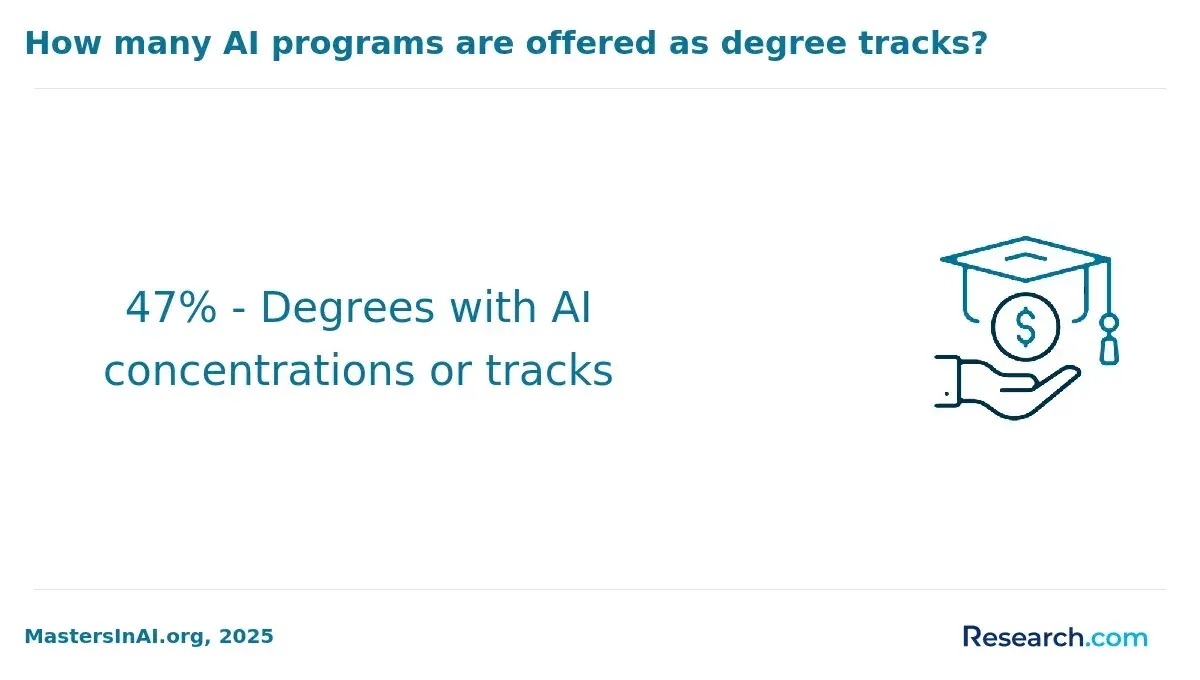
The growing demand for deep learning skills reflects expanded applications in healthcare diagnostics, financial fraud detection, and personalized retail recommendations. Certifications earned from these courses are often recognized by employers, improving job prospects and salary potential in a competitive market. For those considering further education, a 1-year computer science degree online could be a valuable addition to skill development.
Advance Your Career with AI Online Courses
Artificial Intelligence: Implications for Business Strategy
This program provides an introduction to Artificial Intelligence and their implications for business strategy. Earn an official digital certificate.
Oxford Artificial Intelligence Programme
Explore this Oxford Artificial Intelligence programme offered in a flexible learning environment and explore topics like machine learning, automation, and robotics.
Implementing Agentic AI: Building Your Organizational Playbook
This online MIT Agentic AI course offers a practical approach to deploying AI agents in your organization, including a custom playbook. 3 weeks, exclusive launch price.
What are the best online deep learning courses from top universities and platforms?
Top platforms offering deep learning training programs include Stanford University and Coursera. Stanford's "CS231n: Convolutional Neural Networks for Visual Recognition" emphasizes practical applications in computer vision with hands-on Python and TensorFlow assignments. Meanwhile, Andrew Ng's "Deep Learning Specialization" provides a structured curriculum covering neural networks, CNNs, and sequence models, ideal for professionals aiming to advance their skills.
Massive open online course providers like Udemy offer beginner-friendly options, with over 6,000 deep learning courses available and more than 3 million enrolled students, illustrating the growing accessibility of entry-level education for diverse learners. For those seeking advanced topics, MIT's "Deep Learning for Self-Driving Cars" and the University of Washington's "Deep Learning" course deliver specialized content integrating the latest research with practical projects.
Choosing the best online deep learning courses from top universities requires attention to prerequisites, programming languages, and project focus. Beginners benefit from courses with strong Python coding and real-world datasets, while experienced learners should look for classes emphasizing research papers and optimization techniques. Certification from accredited platforms often supports career progress.
Prospective students exploring degrees in AI online can find valuable resources to guide their education paths and career goals.
How do online deep learning courses compare with in-person and bootcamp options?
Online deep learning courses offer significant flexibility and access compared to in-person and bootcamp options, making them suitable for working professionals and self-motivated learners. Unlike bootcamps, which focus on practical skills and job placement over intense, short durations with fixed schedules and higher costs, online courses support self-paced study alongside full-time jobs.
This flexibility addresses common differences between in-person and online deep learning training, such as location constraints and tuition fees, while still providing robust academic content.
Many university-backed online programs, like those led by Andrew Ng on Coursera, attract over 1 million enrollments globally, reflecting the demand for rigorous, self-directed learning. Online courses often blend theory with practice through projects and quizzes, offering deeper understanding of neural networks and architectures than many bootcamps provide.
Students weighing benefits of online deep learning courses versus bootcamps should consider key factors including cost (online options usually cost less), time flexibility, curriculum depth, and the availability of mentorship and networking opportunities. Employers increasingly value certificates from reputable platforms that include verified assessments.
For those seeking affordable and flexible education pathways, exploring affordable cybersecurity programs can provide insights into competitive online learning models and credential recognition.
- Cost differences: online courses generally cost less than bootcamps and universities.
- Time flexibility versus fixed schedules.
- Depth of curriculum versus rapid skill acquisition.
- Networking opportunities and mentorship availability.
What prerequisites and technical skills do you need before starting a deep learning course?
Before enrolling in a deep learning course, mastering foundational programming and math is crucial. Proficiency in Python remains vital, as it powers popular deep learning frameworks like TensorFlow and PyTorch. Key programming skills include understanding data structures, control flow, and object-oriented programming, which help in implementing algorithms and managing datasets.
Essential technical skills for deep learning courses also involve mathematics such as linear algebra, calculus, probability, and statistics. Linear algebra supports neural network computations through vectors and matrices, while calculus explains backpropagation and optimization. Probability and statistics contribute to interpreting model results and estimating uncertainty.
Hands-on experience boosts understanding significantly. Working on supervised and unsupervised learning methods like regression, classification, and clustering provides practical knowledge of deep learning models. Completing at least five hands-on machine learning projects makes learners 2.3× more likely to receive salary increases or promotions within a year, according to DataCamp.
Additional skills, including command-line proficiency, Git version control, and cloud computing platforms, enhance efficiency and collaboration in AI projects. For U.S. students or professionals exploring pathways in AI, exploring the fastest way to get a cybersecurity degree online can complement your technical toolkit.
Building these deep learning prerequisites for beginners lays a strong foundation for success in artificial intelligence education and career development.
What topics and tools are typically covered in an online deep learning curriculum?
Deep learning curricula online cover essential topics such as neural network architectures, including convolutional neural networks (CNNs) for images and recurrent neural networks (RNNs) for sequential data. Students explore fundamentals like backpropagation, gradient descent, and regularization to enhance model accuracy and reduce overfitting.
Advanced subjects typically include unsupervised learning, reinforcement learning, generative adversarial networks (GANs), and transfer learning to apply skills across diverse data types.
Hands-on experience with popular frameworks like TensorFlow, PyTorch, and Keras is a key element. These tools enable learners to build, train, and deploy deep learning models efficiently. Curricula usually integrate coding exercises, real-world datasets, and projects reflecting industry needs for practical skill development.
Additional focus areas include data preprocessing, hyperparameter tuning, evaluation metrics, and ethical deployment of deep learning systems. Many programs also teach parallel computing on GPUs to speed up training - a valuable asset in professional AI environments.
Specializations in natural language processing (NLP) and computer vision introduce techniques such as word embeddings, attention mechanisms, image segmentation, and object detection, bridging foundational theory with real-world applications.
According to Udacity, graduates of advanced AI and Machine Learning Nanodegree programs report an average 24% salary increase within a year, highlighting market demand for deep learning skills. Programs emphasizing deep learning projects provide a pathway to competitive roles in artificial intelligence development and research.
How long do deep learning courses take, and how much do they usually cost?
Deep learning courses vary in duration from a few weeks to several months depending on depth and format. Short programs, usually 4 to 8 weeks, cover fundamental topics like neural networks, backpropagation, and basic model building. More comprehensive courses with hands-on projects and specialization options can last 3 to 6 months or longer. Introductory classes often require 20 to 50 hours, while advanced certifications may exceed 100 hours of study.
Costs range widely based on the provider and credential type. Free courses offer basic knowledge but limited support or certification. Paid modules generally cost between $50 and $300 each. Professional certificates or specialization programs frequently range from $400 to $1,200. University bootcamps or degree programs can reach several thousand dollars, offering in-depth training and career services.
Working professionals should weigh time flexibility and content when choosing a program. Self-paced formats suit irregular schedules but require discipline, while cohort-based courses provide structure and peer engagement, demanding steady weekly commitments. Practical projects using tools like TensorFlow or PyTorch help build strong portfolios.
The computer vision market's rapid growth-from $17.2 billion in 2024 to $51.6 billion by 2030 at a 20.4% CAGR-reflects rising demand for specialized deep learning skills in vision applications. This trend makes investing in comprehensive courses particularly valuable as the field evolves.
How can you evaluate accreditation, instructor expertise, and course quality in deep learning?
When choosing deep learning courses, evaluating accreditation, instructor expertise, and course quality is crucial. Ensure the institution holds accreditation from recognized bodies like ABET or regional agencies, confirming academic rigor and employer recognition. Certifications from notable organizations such as IEEE or the Association for Computing Machinery (ACM) further enhance course credibility.
Assess instructor qualifications by reviewing their academic credentials, publications, and industry experience. Instructors with doctoral degrees in machine learning, computer science, or data science typically offer strong theoretical insights.
Practical experience at leading AI companies or contributions to major open-source projects-such as those related to large language models or NLP-add valuable real-world perspectives. This expertise is especially relevant as the natural language processing market is expected to grow from $29.4 billion in 2024 to $92.7 billion by 2030, with a 20.7% CAGR.
Course quality involves examining curriculum depth, project work, and student success. High-quality courses balance foundational theories-like neural networks and backpropagation-with applied skills, including coding with TensorFlow or PyTorch. Look for comprehensive projects simulating real-world challenges, peer-review opportunities, and capstone experiences.
Platforms that provide student reviews and completion rates can offer transparency about course effectiveness. Partnerships with research institutions or industry leaders often indicate well-updated content aligned with cutting-edge advancements.
What careers can deep learning training lead to, and what roles use these skills?
Deep learning expertise opens doors to various high-demand roles in artificial intelligence. Machine learning engineers design and improve neural networks for real-world uses, while data scientists apply deep learning to analyze large datasets across sectors such as finance, healthcare, and retail.
AI research scientists focus on creating innovative algorithms that advance model capabilities in both academia and industry. Specialized roles in natural language processing and computer vision rely heavily on deep learning to develop technologies like chatbots, image recognition, and autonomous vehicles.
Operational roles, particularly MLOps engineers, are crucial for deploying, monitoring, and maintaining deep learning models in production. By 2025, 80% of enterprises are projected to adopt MLOps platforms, up from less than 20% in 2021, emphasizing growing demand for professionals skilled in both development and operationalization of AI systems.
Additional opportunities include AI product managers overseeing technology deployment in business and AI ethicists addressing societal impacts. Prospective candidates should align their career path with interests in programming, algorithm development, or system operations. Key skills include knowledge of deployment frameworks and automation tools for MLOps roles, and strong coding and theoretical foundations for research careers.
Deep learning training prepares individuals to support the design, development, and scaling of intelligent systems within diverse industries, making it a valuable educational focus for those pursuing careers in artificial intelligence.
What salary ranges and job outlook can deep learning professionals expect in the U.S.?
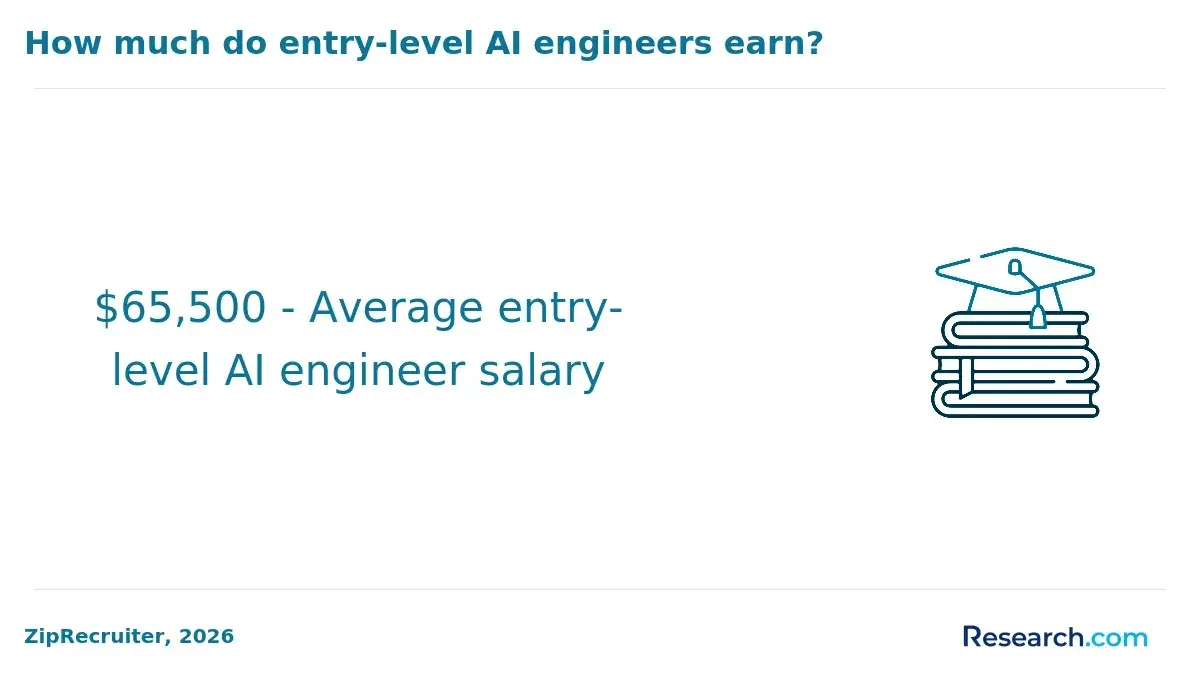
Deep learning roles in the U.S. offer competitive salaries, with entry-level positions earning between $90,000 and $130,000 annually. Mid-career professionals with two to five years of experience typically see salaries from $130,000 to $180,000. Senior roles such as research scientists and AI architects can command $180,000 to over $250,000, especially in technology centers like Silicon Valley and New York.
Employment growth in this field is strong, with the Bureau of Labor Statistics projecting a 21% increase in jobs for computer and information research scientists from 2022 to 2032, a rate much faster than average. Demand is particularly high for specialists in natural language processing, computer vision, and autonomous systems.
Proficiency in frameworks like TensorFlow and PyTorch, along with Python programming skills, significantly boosts job prospects and salary potential. Employers often prefer candidates who pair deep learning expertise with domain knowledge in areas such as healthcare, finance, or robotics.
Free online courses, including Andrew Ng's Machine Learning course, have attracted millions of learners, reflecting both high market interest and competition. Candidates aiming to stand out should build portfolios showcasing real-world projects, contribute to open-source efforts, or engage in research collaborations. Earning certifications from reputable courses can enhance credibility during hiring.
Are there certifications or portfolios that strengthen your resume after a deep learning course?
Certifications and portfolios play a crucial role in enhancing your resume after completing a deep learning course. Certifications from reputable platforms like Coursera, edX, or Udacity provide formal, verifiable credentials that employers highly value. They reflect your dedication to professional growth and confirm your technical skills.
Portfolios add significant value by demonstrating hands-on experience. Showcasing projects such as neural network implementations, computer vision models, or natural language processing applications proves your ability to translate theoretical knowledge into practical solutions. This tangible evidence of skills is particularly important for deep learning roles demanding real-world expertise.
Combining certifications with a strong portfolio improves your employability. Recruiters look for candidates who can validate both knowledge and practical application. Examples include GitHub repositories, Kaggle competition participation, or contributions to open-source deep learning frameworks.
According to a 2024 Coursera learner outcomes report, 77% of learners completing professional AI/ML courses experienced career improvements such as promotions or new jobs within six months, underscoring the impact of recognized training.
When selecting courses, prioritize those offering official certification and project work, especially capstone projects or guided portfolios. These ensure you develop demonstrable expertise essential for hiring decisions in the evolving AI and deep learning job market.
Other Things You Should Know About Artificial Intelligence
A career in artificial intelligence typically requires a strong foundation in mathematics, especially linear algebra, calculus, and probability. Programming skills in languages such as Python and familiarity with machine learning frameworks are essential. Additionally, problem-solving abilities and knowledge of data processing techniques play a crucial role.
Artificial intelligence can be challenging due to its reliance on mathematical concepts and programming. However, many online courses are designed to introduce AI fundamentals in a structured way that is accessible to beginners. With consistent study and practice, learners without prior experience can gain proficiency over time.
Artificial intelligence models use various types of data, including structured data like databases and spreadsheets, as well as unstructured data such as images, text, and audio. The choice depends on the application, with models trained on labeled datasets for supervised learning or on raw data for unsupervised approaches.
Many 2027 online deep learning courses incorporate practical, hands-on projects to enhance learning. Courses on platforms like Coursera, edX, and Udacity often feature projects where students can apply neural networks and model training techniques using real-world datasets, such as image recognition or natural language processing tasks.
References
- 20+ Best Free Machine Learning Courses: Learn from Stanford, MIT and Google Without Paying Tuition – DataTalks.Club https://datatalks.club/blog/free-machine-learning-courses.html
- 7 Best Machine Learning Courses for 2025 (read this first) https://www.learndatasci.com/best-machine-learning-courses/
- Online Courses | Online IT Certification Training | OnlineITGuru https://onlineitguru.com/blog/deep-learning-course-artificial-intelligence-program-syllabus
- AI Courses vs Bootcamps in 2026: What’s Best for Your Career https://agilefever.com/ai-courses-vs-bootcamps-which-one-to-choose/
- Machine Learning Specialization https://www.deeplearning.ai/specializations/machine-learning
- Unlocking Career Opportunities with Deep Learning Courses - High-Demand Landscape of Deep Learning and Artificial Intelligence Roles https://skilldux.com/blogs/high-demand-on-deep-learning-and-artificial-intelligence-courses
- Deep Learning What is it? https://www.oxfordhomestudy.com/courses/ai-courses-online/deep-learning-what-is-it
- Have you ever hired one because of certificates? https://community.deeplearning.ai/t/have-you-ever-hired-one-because-of-certificates/880460
- Online vs in-person coding bootcamp | WBS CODING SCHOOL https://www.wbscodingschool.com/blog/online-vs-in-person-coding-bootcamp/
- Build your career in Machine Learning and Deep Learning https://www.artiba.org/blog/build-your-career-in-machine-learning-and-deep-learning