2027 Best AI Strategy Courses for Content Review Teams

Co-Founder and Chief Data Scientist
Content review teams increasingly face pressure to manage vast volumes of data with accuracy and efficiency. Manual processes often result in inconsistent evaluations and delayed outcomes, undermining decision-making and compliance. The rapid evolution of ai tools demands new strategic skills to integrate technology effectively within review workflows. Teams without targeted training struggle to keep pace with innovations and risk falling behind industry standards. This article examines top ai strategy courses designed specifically for content review professionals. It aims to equip readers with actionable insights to select programs that enhance their expertise and improve operational performance in this dynamic field.
Key Things You Should Know
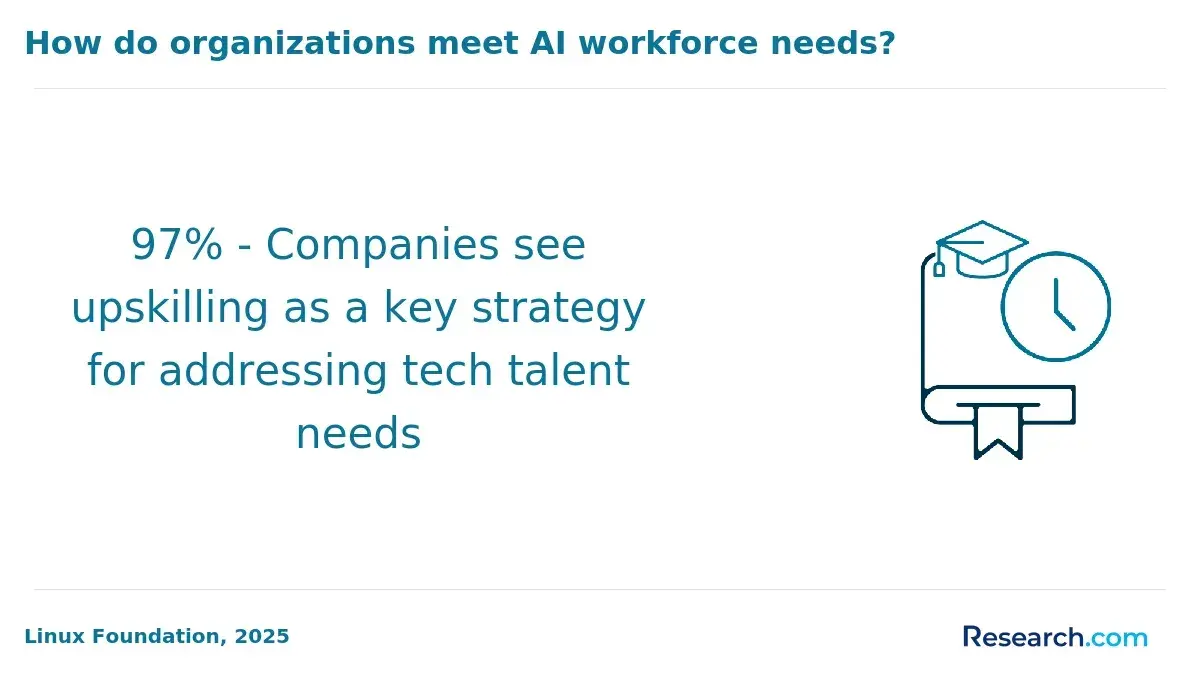
- Top AI strategy courses in 2026 emphasize practical content review applications, with 72% of programs including hands-on training in automation and ethical AI use.
- Emerging curricula integrate advanced data analytics, enhancing content team efficiency by up to 40% according to 2025 industry reports.
- Flexible online and hybrid formats dominate, catering to working professionals seeking to upskill in shorter, modular course structures.
Advance Your Career with AI Online Courses
Artificial Intelligence: Implications for Business Strategy
This program provides an introduction to Artificial Intelligence and their implications for business strategy. Earn an official digital certificate.

Oxford Artificial Intelligence Programme
Explore this Oxford Artificial Intelligence programme offered in a flexible learning environment and explore topics like machine learning, automation, and robotics.

Implementing Agentic AI: Building Your Organizational Playbook
This online MIT Agentic AI course offers a practical approach to deploying AI agents in your organization, including a custom playbook. 3 weeks, exclusive launch price.

AI Adoption: Driving Business Value and Impact
This online MIT AI Adoption: Driving Business Value and Impact offers practical frameworks to close the gap between AI potential and business reality.

Artificial Intelligence in Pharma and Biotech
Discover the applications and limitations of artificial intelligence in pharma and biotech with this MIT online short course.

What is an AI strategy course for content review teams and who should take it?
AI strategy courses for content review teams teach how to integrate artificial intelligence tools and workflows into content evaluation, moderation, and quality assurance. These programs emphasize automating content classification, using machine learning to detect policy violations, and improving team productivity with AI-driven analytics. Participants learn to manage digital content complexity while enhancing decision-making and compliance.
Ideal candidates for this best content review training with AI integration include digital content managers, compliance officers, quality assurance specialists, team leaders, marketing professionals expanding AI skills, and recent graduates interested in digital media roles. A Deloitte CMO survey highlights this need: 75% of CMOs report increased pressure to adopt AI in marketing, but only 30% believe their teams have effective AI skills.
Training delves into real-world challenges such as faster identification of harmful content, reducing manual review times, mitigating bias in AI models, and balancing automation with human judgment. Courses often cover natural language processing (NLP) tools to flag misinformation or hate speech automatically, enhancing both accuracy and consistency.
Beyond operational efficiency, AI strategy courses help align implementations with legal and ethical standards amid evolving regulations. Those seeking guidance on what jobs can you get with an AI degree will find foundational skills here to lead AI adoption initiatives successfully.
Advance Your Career with AI Online Courses
Artificial Intelligence: Implications for Business Strategy
This program provides an introduction to Artificial Intelligence and their implications for business strategy. Earn an official digital certificate.
Oxford Artificial Intelligence Programme
Explore this Oxford Artificial Intelligence programme offered in a flexible learning environment and explore topics like machine learning, automation, and robotics.
Implementing Agentic AI: Building Your Organizational Playbook
This online MIT Agentic AI course offers a practical approach to deploying AI agents in your organization, including a custom playbook. 3 weeks, exclusive launch price.
How do AI strategy courses help content review teams work safely and efficiently with AI tools?
AI strategy courses for content teams provide essential skills to use AI tools safely and efficiently in content review. These courses focus on understanding AI's capabilities and limits, reducing errors like bias, misinformation, and privacy violations. They teach when AI should support human judgment and when manual oversight is necessary, ensuring balanced and effective workflows.
Safe and efficient use of AI tools in content review involves adopting best practices such as defining clear usage protocols and continuously monitoring AI outputs. For example, trained teams conduct consistency checks on automated moderation to prevent inappropriate content from slipping through, avoiding reputational and legal issues.
Growing demand for generative AI skills, reflected by a 450% increase in job postings year over year, highlights the value of these courses. They prepare professionals to handle fast-changing environments by automating routine tasks like content flagging while maintaining human oversight for complex decisions.
Instruction typically covers:
- Data privacy and ethical guidelines relevant to AI use in content review.
- Techniques for evaluating and tuning AI models based on specific content policies.
- Risk assessment methods to anticipate potential AI failures or manipulation.
Mastering these competencies helps teams reduce operational risk and improve accuracy while gaining strategic insight into leveraging AI to enhance workflow without compromising safety or compliance. For those interested in expanding their technical education, options like mechanical engineering degrees online also offer valuable pathways.
What are the best types of AI strategy programs for content review professionals today?
The best types of AI strategy courses for content review professionals focus on practical use of machine learning tools within content workflows. These programs emphasize skills such as AI-powered content moderation, automated quality assurance, and data-driven decision-making. They train professionals to leverage AI systems for detecting policy violations, enhancing semantic analysis, and optimizing review processes.
Programs that include hands-on modules in AI model interpretation and cross-functional collaboration have shown significant impact. According to a 2024 McKinsey global survey on AI in marketing, organizations offering such training achieved a 40% increase in content production speed and a 20-30% cut in manual review time. This highlights the benefits for the best ai programs for content moderation teams.
Key features to seek include:
- Understanding AI ethics and bias mitigation relevant to content moderation
- Training on natural language processing (NLP) models applied for content classification
- Evaluation methods to reduce false positives in AI-generated flags
- Implementing automation tools that balance AI efficiency with human oversight
Courses offering case studies from social media, e-commerce, and digital publishing provide real-world context. There are vendor-specific certifications on platforms like AWS or Google Cloud and broader strategic courses from universities or independent centers. Candidates should prioritize programs with measurable outcomes and skill certification in AI audit and governance frameworks.
For those exploring related fields, the best online cyber security degrees can complement AI strategy knowledge, enhancing content review security aspects.
What should you look for in accreditation and institutional quality for AI strategy courses?
Accreditation is a key factor when choosing AI strategy courses for content review teams, ensuring programs meet established academic and industry standards. Look for courses accredited by recognized bodies such as ABET or reputable universities with dedicated AI ethics departments. These accreditations reflect strong institutional quality indicators for AI strategy programs, signaling rigorous, research-based curricula.
High-quality programs often incorporate interdisciplinary expertise, blending AI technology, policy, compliance, and content moderation to address the complexity of AI strategy. Faculty credentials and their involvement in AI governance discussions further enhance course relevance and depth. Including real-world case studies and compliance frameworks strengthens practical understanding, a vital feature given that firms with formal AI governance experience fewer misinformation incidents.
Effective course design also involves practical components like simulations or project work aligned with content review challenges, helping learners apply their knowledge beyond theory. Institutional reputation within AI and content moderation communities influences career prospects, making program choice crucial for professional growth.
For those seeking flexible options, a veteran friendly online electrical engineering degree may provide relevant technical foundations complementary to AI strategy studies.
How do online AI strategy courses compare with campus-based programs for content reviewers?
Online AI strategy courses offer greater flexibility and affordability compared with campus-based programs, making them ideal for content reviewers balancing work and study. Many online options use modular formats that let learners focus on key AI topics like natural language processing, ethical AI use, and automated moderation techniques. While campus programs provide comprehensive theoretical foundations, they can be slower to adapt to rapidly evolving AI tools in content review workflows.
Cost is a major factor. Online courses usually cost 40% to 60% less than traditional campus tuition. PwC's Global Workforce Hopes and Fears Survey highlights that companies investing in AI upskilling through scalable online training see productivity gains of about 30% at roughly half the cost of hiring external talent. This emphasizes the strong return on investment for both learners and employers opting for online education tailored to AI strategy.
Additionally, online courses integrate practical projects and case studies directly related to content moderation challenges, enhancing applicable skills efficiently. Campus programs, on the other hand, tend to offer stronger networking and mentorship through in-person interactions, benefiting early-career professionals seeking academic rigor and lasting connections.
Consider your immediate goals when choosing between options:
- Online courses: cost-effective, flexible, and focused on current content review technologies.
- Campus programs: deeper foundational knowledge and broader AI research exposure.
What core skills and topics do top AI strategy courses cover for content review teams?
Top ai strategy courses for content review teams focus on key skills that enhance decision-making and team effectiveness. These include understanding the fundamentals of ai, such as machine learning models, natural language processing, and data ethics. Teams must learn how ai algorithms function to fairly evaluate content and detect biases.
Training also covers ai governance and compliance frameworks, enabling content reviewers to align ai tools with legal and ethical standards. This includes privacy laws, transparency, and accountability relevant to automated moderation systems.
Practical skills in managing ai tools are essential. Content teams learn to configure ai moderation platforms, interpret ai-generated flags, and merge human judgment with automated suggestions. Case studies show how to handle ambiguous content, balancing accuracy and efficiency.
Data literacy is another focus, helping reviewers identify dataset biases and monitor ai performance continuously. Techniques for outcome reporting support ongoing improvements.
Soft skills such as critical thinking, communication, and cultural sensitivity further aid collaboration between ai specialists and content teams, improving content decisions through better understanding of user psychology.
According to Lattice's 2024 State of People Strategy report, 62% of HR and L&D leaders plan to increase budgets for ai training, making ai skills the fastest-growing learning category. This trend underscores the importance of courses that equip teams with both technical ai expertise and strategic insight to optimize ai-human workflows.
What are typical admission requirements, time commitments, and completion timelines for these programs?
Admission requirements for ai strategy courses tailored to content review teams usually include a bachelor's degree or comparable professional experience in areas like marketing, communications, or data analytics. Some programs may ask for foundational knowledge of data or prior engagement with ai tools, while others provide beginner-friendly tracks. Time commitments vary by format: cohort-based courses with live instruction often expect 8 to 12 hours weekly for 6 to 10 weeks. Self-paced options offer more flexibility but suggest similar total study hours. Cohort formats have fixed schedules and deadlines, whereas self-paced courses allow completion within 3 months to a year.
A 2024 Coursera for Business report shows learners in cohort-based, instructor-led ai courses are 35% more likely to complete the program and 29% more likely to apply ai skills at work than their self-paced peers. This highlights the benefits of structured learning for retention and practical application. Many programs include workshops or case studies to reinforce skills. Content review professionals should consider their time availability and learning preferences carefully. Those opting for self-paced studies need disciplined study habits, and many providers require proof of relevant credentials or experience during enrollment.
Providers often offer pre-assessment quizzes or interviews to gauge readiness. Structured timelines and interactive elements generally lead to higher completion and better skill use among professionals.
How much do AI strategy courses for content review teams cost, and what funding options exist?
AI strategy courses for content review teams vary widely in cost, typically ranging from $500 to $3,000 based on course depth and the provider's reputation. Online platforms offer short, introductory programs often priced under $700, while more intensive boot camps and university-affiliated courses can exceed $2,500. Specialized training in areas like regulatory compliance for financial services usually commands higher fees due to curriculum complexity.
Several funding options can help reduce these costs. Many employers provide professional development budgets that may cover full or partial tuition. Additionally, government workforce development grants and scholarships aimed at AI skill gaps in compliance and related sectors are increasingly accessible. Some financial institutions partner with educational providers, subsidizing training tailored to domain-specific expertise.
A recent EY financial services AI risk survey found that 71% of compliance leaders identify lack of specialized AI training as a significant barrier to secure AI use in content and communication review. This underlines the value of targeted education for career advancement in high-stakes environments.
To stretch budgets further, learners can combine employer funding with scholarships or pursue modular courses that allow incremental payment. Programs like the Workforce Innovation and Opportunity Act (WIOA) may support eligible candidates. Checking for course accreditation and alignment with industry standards ensures a meaningful investment that advances career goals.
What career paths, job roles, and advancement opportunities can these AI strategy courses support?
AI strategy courses for content review teams prepare professionals for roles such as content strategists, AI integration specialists, and compliance analysts. These programs help learners drive digital transformation in marketing and editorial settings by applying AI tools in content creation, review, and optimization workflows.
Content strategists gain skills to use AI-generated insights for better audience targeting and messaging, positioning them for senior roles managing AI-driven content operations. Quality assurance managers leverage AI to automate compliance checks and maintain brand consistency. HubSpot's 2024 State of Marketing report highlights that 38% of marketers use AI for content review, underscoring the rising importance of these abilities.
Compliance analysts with AI strategy expertise often advance into governance roles that emphasize ethical AI use and regulatory compliance. AI project managers who coordinate teams integrating AI with content systems may progress into digital innovation leadership positions. Additionally, data analysts specializing in content performance can use AI strategy coursework to interpret machine learning data and guide strategic decisions.
Professionals moving from traditional marketing or editorial roles can broaden their skill set with these courses, aligning with the fact that 64% of marketers already use AI tools for content creation and editing. Such hybrid expertise is increasingly valuable in today's interdisciplinary landscape.
Are there industry certifications or internal standards that AI content review teams should align with?
AI content review teams benefit greatly from aligning with recognized industry certifications such as the Certified Artificial Intelligence Practitioner (CAIP) and the AI Ethics Certification. These programs provide essential knowledge on AI processes, bias mitigation, and compliance, which are vital for maintaining transparency and accountability in automated moderation and content evaluation.
Many companies are developing customized internal standards tailored to their unique AI models and content policies. These often include managing false positives, updating fairness criteria, and incorporating human-in-the-loop feedback. Such standards require continuous review and adaptation as AI technologies evolve.
By 2025, 60% of knowledge workers will need AI skills training, with content-focused roles among the most impacted, highlighting the urgency for solid certification and standardization. Prospective students should look for programs combining recognized AI certifications with practical training on domain-specific content policies.
Consider certifications offering case studies on moderation challenges and bias assessment to deepen understanding beyond theory. During job interviews, clarify employer expectations regarding AI compliance frameworks to ensure your skills align with industry demands.
Other Things You Should Know About Artificial Intelligence
In 2027, AI strategies are enhancing content review by leveraging advanced natural language processing and machine learning algorithms. This enables faster detection of harmful content while improving the accuracy of categorizing context-sensitive material. AI tools now empower reviewers to focus on complex cases, improving overall efficiency.
Content review teams must consider issues such as bias in AI algorithms, transparency in moderation decisions, and privacy protections for users. AI systems can inadvertently perpetuate existing biases if not properly designed and audited. Ethical content moderation requires balancing automated detection with human judgment to ensure fairness and respect for diverse perspectives.
No, artificial intelligence cannot fully replace human content reviewers at this time. While AI excels in processing large volumes of data and identifying clear violations, it struggles with nuanced or context-dependent content that requires human interpretation. Effective content review combines AI efficiency with human cognitive skills to maintain accuracy and fairness.
Professionals need strong critical thinking, ethical reasoning, and communication skills alongside technical expertise. Understanding cultural sensitivities and legal frameworks is also important to inform AI-driven decisions appropriately. Additionally, adaptability and continuous learning are essential given the rapid evolution of AI technologies in content moderation.
References
- The best AI productivity tools in 2026 | Zapier https://zapier.com/blog/best-ai-productivity-tools/
- AI Training for Business Teams | Coaley Peak® https://www.coaleypeak.co.uk/training
- 30 best AI marketing tools I'm using to get ahead in 2026 | Marketer Milk https://www.marketermilk.com/blog/ai-marketing-tools
- What to Look for in an AI Training Course for Teams https://tacit-edge.com/post/what-to-look-for-in-an-ai-training-course-for-teams
- How Long Do Graduate School Prerequisites Really Take for Working Adults? A Helpful Timeline Guide (2025-2026) - Prereqcourses https://www.prereqcourses.com/graduate-school-prerequisites/
- The Best AI Training Courses for HR, Managers, and Employees in 2026 | Article | Lattice https://lattice.com/articles/ai-training-courses-for-every-team
- AI in Education: A Practical Guide for Higher Education Leaders https://feedbackfruits.com/blog/ai-in-education-a-practical-guide-for-higher-education-leaders
- AI Compliance Requirements: The Definitive Guide | Mirantis https://www.mirantis.com/blog/ai-compliance-requirements-the-definitive-guide/
- AI Content Creation Course | Learn ChatGPT & AI Image Generation https://www.sda.edu.sg/course/ai-tools-for-content-creation/
- Team AI Training | Lead with AI https://www.leadwithai.co/team-ai-training