2027 Best AI Courses for CIOs Managing AI Adoption

Co-Founder and Chief Data Scientist
Chief information officers face urgent challenges integrating artificial intelligence into complex existing systems while ensuring ethical use and stakeholder alignment.
Many struggle to find education that bridges technical mastery with strategic leadership tailored for decision-makers transitioning into AI management. Without targeted learning, initiatives risk misalignment with business goals or stalled deployment.
This article examines top artificial intelligence courses designed specifically for CIOs, focusing on flexibility, accreditation, and practical outcomes. It aims to guide professionals toward programs that equip them to lead responsible AI adoption effectively within their organizations.
Key Things You Should Know
- AI courses for CIOs in 2026 focus on strategic integration, emphasizing governance frameworks to manage ethical, security, and operational risks effectively.
- Industry demand shows 67% of CIOs prioritize AI upskilling to drive digital transformation, underscoring the significance of technical and leadership knowledge combined.
- Leading programs incorporate real-world applications and data-driven decision-making, enabling CIOs to oversee AI adoption that boosts business agility and competitive advantage.
Advance Your Career with AI Online Courses
Artificial Intelligence: Implications for Business Strategy
This program provides an introduction to Artificial Intelligence and their implications for business strategy. Earn an official digital certificate.

Oxford Artificial Intelligence Programme
Explore this Oxford Artificial Intelligence programme offered in a flexible learning environment and explore topics like machine learning, automation, and robotics.

Implementing Agentic AI: Building Your Organizational Playbook
This online MIT Agentic AI course offers a practical approach to deploying AI agents in your organization, including a custom playbook. 3 weeks, exclusive launch price.

AI Adoption: Driving Business Value and Impact
This online MIT AI Adoption: Driving Business Value and Impact offers practical frameworks to close the gap between AI potential and business reality.

Artificial Intelligence in Pharma and Biotech
Discover the applications and limitations of artificial intelligence in pharma and biotech with this MIT online short course.

What should CIOs look for in AI courses to lead enterprise-wide AI adoption?
CIOs leading enterprise-wide AI adoption should prioritize courses that align with both strategic leadership and technical oversight. Key criteria include comprehensive coverage of AI fundamentals alongside governance, ethics, and change management.
Courses offering clear frameworks for integrating AI with existing organizational processes emphasize scalable deployment rather than isolated use cases. This approach supports CIOs managing AI integration in enterprises by focusing on practical adaptation.
Curricula balancing technical knowledge, such as machine learning, natural language processing, and data management, with management skills like cross-functional collaboration and risk mitigation are essential.
Understanding regulatory compliance and ethical AI use is critical, so programs covering bias reduction, transparency, and accountability are especially valuable. These elements are integral to any robust AI course criteria for CIOs leading enterprise adoption.
Practical application matters. CIOs should seek programs featuring case studies from large enterprises, simulations, or project-based learning reflecting real-world challenges. This helps to anticipate issues such as data silos, talent shortages, and integration roadblocks.
Market dynamics reveal high demand: enrollment in generative AI courses surged to 3.5 million learners within 14 months of ChatGPT's launch, underscoring the urgent need for relevant AI skills and informed leadership.
Additional considerations include the course provider's credibility and opportunities for networking with peers facing similar challenges. CIOs handling AI adoption benefit from programs offering continuous updates to keep pace with evolving AI technologies and standards. Those interested may explore an applied artificial intelligence degree for deeper expertise.
Advance Your Career with AI Online Courses
Artificial Intelligence: Implications for Business Strategy
This program provides an introduction to Artificial Intelligence and their implications for business strategy. Earn an official digital certificate.
Oxford Artificial Intelligence Programme
Explore this Oxford Artificial Intelligence programme offered in a flexible learning environment and explore topics like machine learning, automation, and robotics.
Implementing Agentic AI: Building Your Organizational Playbook
This online MIT Agentic AI course offers a practical approach to deploying AI agents in your organization, including a custom playbook. 3 weeks, exclusive launch price.
Which types of AI training pathways best fit CIOs and senior IT leaders?
CIOs and senior IT leaders benefit from AI training programs for CIOs and senior IT leaders that combine strategic oversight with essential technical knowledge.
These effective AI adoption learning paths for IT executives often focus on applied AI management, data governance, and ethics to ensure responsible integration across enterprises. Executive certifications and short courses in AI strategy provide valuable frameworks without requiring deep coding expertise.
Practical, skills-based courses aligned with business challenges cover AI project lifecycle management, risk mitigation, and vendor evaluation. Such programs, including those from renowned institutions like MIT Sloan and Stanford, emphasize leadership competencies important for guiding AI adoption in complex IT environments.
According to a survey, 26% of CIOs favor skills- and certification-based hiring over traditional degree requirements, underscoring the value of certificates in AI governance, explainability, and compliance over lengthy data science degrees. Training pathways that integrate case studies and change management offer immediate benefits, especially when delivered in blended formats with live workshops and on-demand modules.
Executives looking to expand their expertise may also explore a mechanical engineering online program as an example of flexible, actionable STEM education.
How can CIOs choose between university-based, vendor, and executive AI programs?
CIOs deciding between university-based, vendor, and executive AI programs should consider organizational goals, time constraints, and the desired depth of expertise.
University programs deliver comprehensive, research-backed curricula in machine learning, data science, and ethics, ideal for CIOs seeking a strong technical foundation or building internal AI teams. These programs often feature capstone projects and access to advanced AI research, offering long-term strategic advantages.
Vendor programs provided by companies like AWS, Microsoft, or Google emphasize practical skills tied to specific AI tools and platforms. They suit CIOs prioritizing rapid deployment and operational integration, offering targeted product ecosystem training that meets immediate business needs but provides less theoretical background.
Executive AI programs focus on strategy, governance, and risk management, addressing adoption challenges such as ethics and compliance. Designed for senior leadership, these condensed courses align with busy schedules while balancing technology innovation and business impact.
CIOs exploring how to evaluate ai leadership programs for enterprise success should weigh time availability, learning formats, technical versus strategic focus, AI maturity, and cost-benefit factors including certification recognition and networking opportunities. Often, a hybrid approach combining university rigor, vendor hands-on expertise, and executive-level insights yields the best results for CIOs seeking optimal outcomes.
For those interested in comprehensive postsecondary options, exploring AI degree programs can provide valuable guidance on selecting suitable education paths that fit organizational priorities and learning goals.
What accreditation and institutional quality signals matter for AI programs serving CIOs?
Accreditation standards for AI programs targeting CIOs in North America are essential for ensuring academic rigor and industry relevance. CIOs should focus on programs accredited by recognized bodies like AACSB or ABET, which uphold institutional quality indicators for AI education relevant to CIO leadership.
Such accreditation confirms that the curriculum remains aligned with evolving AI technologies and leadership needs. Institutional reputation is another key factor.
Universities with strong technology research ties and dedicated AI research centers often offer the most current insights. For instance, Stanford's AI-Driven Leadership: Strategies for the Future program, priced at $2,900, combines premium educational quality with access to innovation, illustrating how top-tier institutions maintain their leadership in AI education.
Peer and industry recognition also contribute to program value. CIO-focused AI courses boasting endorsements from technology firms, collaborations with enterprise AI vendors, or faculty with direct CIO experience demonstrate practical relevance. These institutional quality indicators signal that a program prepares students to meet real-world AI leadership challenges.
Transparency in curriculum content offers further assurance. Programs featuring detailed modules on AI strategy, ethics, and case studies, along with opportunities for hands-on learning and peer networking, help CIOs develop essential skills for AI adoption. Prospective students can explore advanced options such as a data science doctorate online to deepen their expertise.
How do online, hybrid, and on-campus AI courses compare for busy technology executives?
Online, hybrid, and on-campus AI courses each offer unique benefits for technology executives balancing learning with leadership duties. Online programs provide maximum flexibility, allowing busy CIOs to study at their convenience without the need for travel.
Many of these courses offer modular formats, enabling focused mastery of areas such as machine learning or AI ethics. However, they often lack the rich peer interaction and real-time networking that enhance executive decision-making.
Hybrid options blend online study with scheduled in-person sessions, offering both adaptability and collaborative experiences. These immersive gatherings foster peer discussions and mentorship, which deepen understanding of AI change management challenges. This format suits executives who have limited availability for campus visits but still want meaningful face-to-face engagement.
On-campus AI courses deliver the most intensive experience, featuring live case studies, faculty access, and team projects. While more demanding timewise, they benefit CIOs supported by their organizations to dedicate focused periods for upskilling, strengthening their competency to lead AI transformation initiatives.
Data from Skillsoft highlights that companies investing in AI-focused change management and continuous learning report up to a 30% higher success rate in AI projects. Prioritizing courses with ongoing learning components helps ensure organizational readiness and maximizes real-world impact.
What core AI topics and competencies should CIO-focused courses cover?
Core AI competencies for CIO-focused courses include machine learning algorithms, natural language processing, and computer vision. These areas help CIOs critically assess vendor solutions and align AI initiatives with strategic goals. Emphasis on data governance, covering data quality, privacy, and ethical AI deployment, is crucial for successful adoption and compliance.
Technical skills in AI infrastructure such as cloud platforms, model training pipelines, and scalable architecture are essential for managing large-scale implementation. CIOs also need expertise in AI project management, including risk assessment, stakeholder communication, and change management, to navigate adoption challenges effectively.
Sector-specific knowledge is increasingly important. Healthcare AI courses might focus on clinical data integration and regulatory requirements, while finance AI education could involve fraud detection models and compliance frameworks.
This enables CIOs to customize AI strategies for industry-specific demands. According to the US Bureau of Labor Statistics data cited by Computerworld in 2025, AI job growth will reach 7.5% in scientific services and 6.5% in the information sector over the next decade, underscoring the value of specialized expertise.
AI ethics, bias mitigation, and explainability are vital components of responsible leadership in AI initiatives. Practical case studies and simulations support the translation of theory into actionable skills, helping CIOs lead innovation while maintaining competitive advantage.
Top Firm Initiatives That Would Encourage Daily GenAI Usage

What are typical admissions requirements and time commitments for executive AI programs?
Executive AI programs generally require applicants to have 5 to 10 years of professional experience in leadership or managerial roles, often in technology or related fields. A bachelor's degree is commonly expected, although some programs may accept equivalent work experience instead.
Admissions focus on demonstrated strategic responsibility for technology adoption, experience managing cross-functional teams, and a clear vision for leveraging AI in business transformation. Top-tier programs might also ask for letters of recommendation and a personal statement outlining the applicant's AI integration goals.
Program formats vary: intensive courses typically last 8 to 16 weeks with part-time schedules demanding 8 to 12 hours per week, enabling professionals to balance learning with work.
Alternatively, some programs offer modular learning over six months to a year, combining online coursework with in-person residencies totaling around 200 to 300 hours. These flexible structures emphasize practical application of AI concepts to real business challenges.
Measuring the return on investment in AI education is important. The 2024 Pearson VUE Value of IT Certification report highlights that 73% of certified IT professionals report increased productivity, and 37% receive salary increases or bonuses following certification.
This data underscores how executive AI programs blend valuable leadership skills with recognized credentials, often outpacing traditional degrees in practical benefits.
How much do high-quality AI courses for CIOs cost, and what funding options exist?
High-quality artificial intelligence courses for CIOs typically range from $1,000 to $5,000, influenced by course depth, provider reputation, and delivery format. Vendor-led training from Microsoft, Google, and AWS frequently falls within this bracket, with AWS offering specialized machine learning certification tracks priced around $2,500.
Executive and leadership programs from universities or professional organizations may exceed $4,000 due to tailored curricula and expert instruction. Many companies provide employer sponsorships or full tuition coverage, recognizing the strategic importance of AI skills for CIOs overseeing adoption initiatives. Bulk discounts and volume licensing are also common for corporate clients enrolling multiple employees.
Additional funding options include government and workforce development grants from agencies like the U.S. Department of Labor. These initiatives help reduce out-of-pocket expenses for professionals pursuing advanced technology training. Self-funded individuals often benefit from provider payment plans and financing options that spread costs over several months.
Scholarships or fellowships focused on technology leadership appear sporadically via industry associations. AWS's 300% year-over-year surge in AI and machine learning enrollment highlights the demand for vendor certifications offering cost-effective pathways to enhance CIOs' AI expertise.
How do AI courses translate into CIO career advancement, salary growth, and board visibility?
AI courses equip CIOs with essential skills for adopting and governing AI technologies, directly accelerating career growth. Expertise in MLOps, AI governance, and responsible AI frameworks positions CIOs to lead complex AI projects and effectively manage risks, increasing their value as senior executives.
Insights from MIT Sloan Executive Education reveal that while most large enterprises are adopting formal AI governance, fewer than 20% assess their maturity as advanced. This gap offers CIOs an opportunity to showcase advanced governance capabilities.
Organizations reward CIOs who deliver clear AI-driven business impact, often with salary increases between 15% and 25%. Skills in translating AI's business implications allow CIOs to communicate AI value compellingly to boards and investors, elevating their leadership presence.
Training also enhances boardroom influence by preparing CIOs to tackle ethical AI use, regulatory compliance, and operational scalability. CIOs versed in responsible AI frameworks frequently serve as trusted advisors during digital transformation initiatives aligned with corporate responsibility.
Practical AI education supports CIOs in addressing real-world challenges such as coordinating diverse AI projects, ensuring transparency in AI decisions, and fostering stakeholder communication. This expertise builds credibility and positions CIOs for top leadership roles in AI-driven organizations.
Which recognized AI certifications and credentials most strengthen a CIO's strategic profile?
Certified AI credentials that blend technical expertise with executive leadership greatly enhance a CIO's strategic value.
The Certified Artificial Intelligence Practitioner (CAIP) from the Global Association for Artificial Intelligence emphasizes practical AI implementation and governance frameworks, helping CIOs manage large-scale adoption effectively. It builds credibility in aligning AI projects with broader business goals and overseeing related investments.
Executive-focused programs like the MIT Professional Certificate in AI Strategy and Leadership deepen understanding of AI's role in organizational change and risk management, essential for CIOs driving digital innovation. This credential prepares leaders to convert AI capabilities into profitable, scalable solutions.
Other notable certifications include the Stanford AI Executive Program, which addresses AI ethics, policy issues, and regulatory compliance, equipping CIOs to anticipate legal challenges and build trustworthy AI systems. The AI for Business Certification by the IEEE focuses on integrating AI with legacy infrastructure and fostering collaboration across teams.
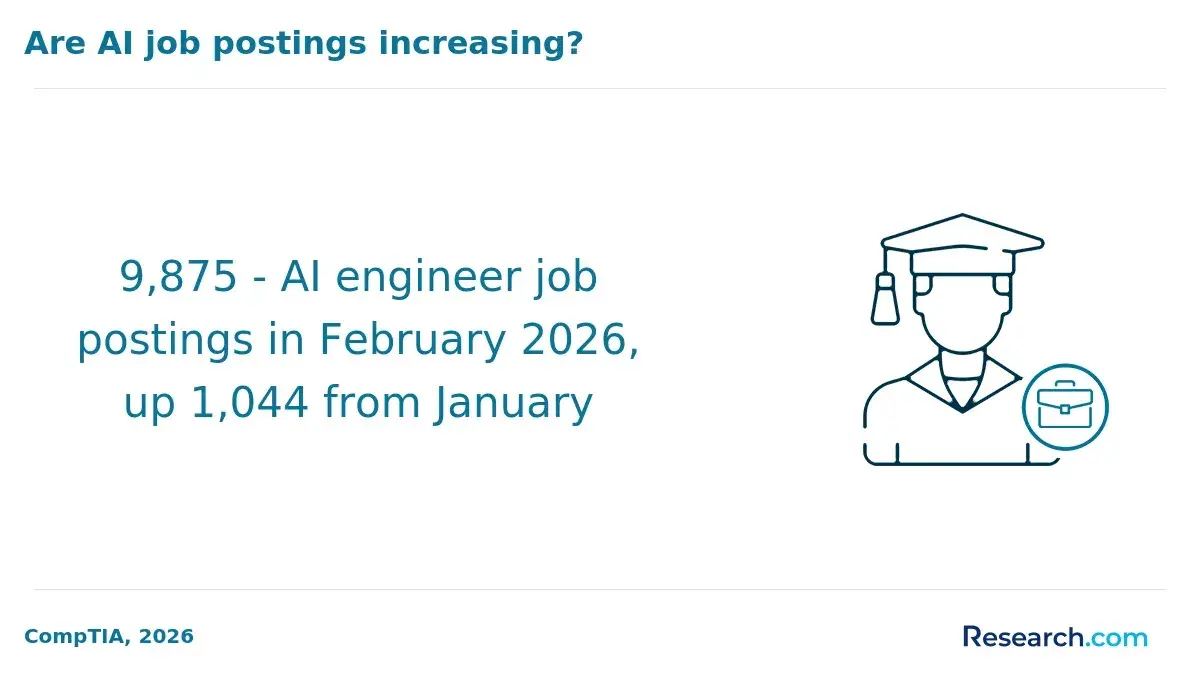
Given the projected surge in AI/ML engineering jobs and over 700,000 U.S. AI roles unfilled, CIOs also benefit from foundational technical certifications to communicate effectively with AI teams and guide vendor decisions.
Combining technical and executive AI certificates provides a comprehensive skill set-technical, strategic, and ethical-necessary to lead AI adoption confidently while maintaining competitive advantage.
Other Things You Should Know About Artificial Intelligence
In 2027, leading AI courses for CIOs include "AI for Leaders" by MIT Sloan, "AI Strategy and Applications" by London Business School, and Coursera's "AI for Everyone" by Andrew Ng. These courses focus on strategic implementation and ethical considerations critical for effective AI adoption.
Data quality is critical for AI success because AI models rely heavily on accurate, complete, and relevant data. Poor data quality can lead to misleading insights, reduced model performance, and increased operational risks. CIOs should prioritize strong data management practices and invest in data cleansing, validation, and monitoring processes.
Explainable AI enables CIOs to understand and communicate how AI models make decisions, which is essential for regulatory compliance and stakeholder confidence. Transparency in AI helps identify errors or biases and supports ethical AI deployment. Incorporating explainability mechanisms improves decision-making and facilitates adoption across the enterprise.
CIOs should foster a culture of continuous learning and collaboration to ease AI integration. This involves educating employees on AI capabilities and limitations, addressing fears around job displacement, and promoting cross-functional teams. Encouraging openness and transparency helps align the workforce with AI-driven business goals.
References
- 6 courses for IT leaders navigating AI change management https://www.cio.com/article/4044424/6-courses-for-it-leaders-navigating-ai-change-management.html
- ADAPT - CIOs will drop vendors who cannot prove outcomes, scale pilots, and build resilience https://adapt.com.au/resources/articles/go-to-market/cios-will-drop-vendors-who-cannot-prove-outcomes-scale-pilots-and-build-resilience/
- AI Certification Costs Explained https://www.ciai.com/post/understanding-the-costs-of-ai-certification
- AI Skills for IT Teams | What is needed? https://www.centranum.com/resources/capability-and-competency/ai-skills-for-it-teams/
- How to upskill in AI: Lessons from a CIO | TechTarget https://www.techtarget.com/searchcio/feature/How-to-upskill-in-AI-Lessons-from-a-CIO
- AI Policies Every Online Institution Should Adopt Before 2027 https://iacde.org/uncategorized/ai-policies-every-online-institution-should-adopt-before-2027/