2027 Best Agentic AI Courses for AI-Powered Customer Support

Co-Founder and Chief Data Scientist
Companies increasingly face challenges in delivering personalized, timely customer support as demand for efficient service grows. Traditional support teams struggle to keep pace with rising inquiries, creating delays and customer dissatisfaction. Agentic AI offers a transformative solution by enabling systems that proactively engage and resolve issues without constant human intervention.
For professionals shifting careers into AI, selecting the right training is critical to mastering these advanced tools. This article reviews top agentic AI courses specializing in AI-powered customer support, helping readers find flexible, accredited programs that build relevant skills for this evolving field.
Key Things You Should Know
- Agentic AI courses for AI-powered customer support in 2026 emphasize practical skills, including natural language processing, automation, and real-time decision-making, with over 60% of top programs integrating hands-on labs.
- Demand for AI customer support specialists is projected to grow by 35% through 2030, with agency-driven AI courses providing targeted training for this expanding job market.
- Leading courses prioritize ethical AI use and data privacy, complying with 2025 regulations, ensuring graduates understand responsible AI deployment in customer-facing roles.
Advance Your Career with AI Online Courses
Artificial Intelligence: Implications for Business Strategy
This program provides an introduction to Artificial Intelligence and their implications for business strategy. Earn an official digital certificate.

Oxford Artificial Intelligence Programme
Explore this Oxford Artificial Intelligence programme offered in a flexible learning environment and explore topics like machine learning, automation, and robotics.

Implementing Agentic AI: Building Your Organizational Playbook
This online MIT Agentic AI course offers a practical approach to deploying AI agents in your organization, including a custom playbook. 3 weeks, exclusive launch price.

AI Adoption: Driving Business Value and Impact
This online MIT AI Adoption: Driving Business Value and Impact offers practical frameworks to close the gap between AI potential and business reality.

Artificial Intelligence in Pharma and Biotech
Discover the applications and limitations of artificial intelligence in pharma and biotech with this MIT online short course.

What are the best agentic AI courses for customer support?
The best agentic AI courses for customer support professionals emphasize practical skills in designing, deploying, and managing AI-powered customer interaction systems. Leading programs from institutions like Stanford University offer online courses on conversational AI, while IBM's AI Engineering Professional Certificate focuses on hands-on experience with tools such as IBM Watson and Google Dialogflow.
Top agentic AI training programs for improving customer service integrate generative AI techniques that boost agent autonomy, allowing AI to resolve complex queries with minimal human input. Platforms like Coursera and edX provide specialized training that helps learners build models anticipating customer needs and personalizing interactions dynamically.
With Gartner predicting that by 2026, 65% of customer service interactions will be handled by generative and agentic AI, up from 35% in 2024, acquiring these skills is critical for workforce readiness. Effective courses cover technical, strategic, and ethical aspects of AI implementation in customer support.
Students and professionals should prioritize programs offering:
- Hands-on projects with current AI platforms
- Training in AI strategy and customer experience optimization
- Knowledge of AI governance and compliance in customer service
For U.S. students aiming to enter this field, exploring the best universities for data science undergraduate offers a valuable foundation to complement AI specialization in customer support roles.
Advance Your Career with AI Online Courses
Artificial Intelligence: Implications for Business Strategy
This program provides an introduction to Artificial Intelligence and their implications for business strategy. Earn an official digital certificate.
Oxford Artificial Intelligence Programme
Explore this Oxford Artificial Intelligence programme offered in a flexible learning environment and explore topics like machine learning, automation, and robotics.
Implementing Agentic AI: Building Your Organizational Playbook
This online MIT Agentic AI course offers a practical approach to deploying AI agents in your organization, including a custom playbook. 3 weeks, exclusive launch price.
How do agentic AI courses teach customer support automation?
Agentic AI courses focus on customer support automation by merging theoretical knowledge with practical skills that prepare students to design and manage autonomous systems. The training covers natural language processing (NLP) to interpret customer intent, decision-making algorithms to automate tasks, and integration methods for smooth workflow within existing platforms. Students develop AI agents capable of independently handling inquiries, resolving issues, and escalating complex cases based on context.
These courses emphasize hands-on projects with real datasets, enabling learners to use conversational AI platforms, chatbot frameworks, and backend API integrations effectively. The curriculum also covers challenges like managing ambiguous queries, maintaining conversational context, and balancing automation with human support. Students might create multi-turn dialogue systems that detect when to involve human agents, enhancing both efficiency and customer satisfaction. This agentic AI customer support automation training equips professionals for advanced roles in AI-powered customer service.
Data from a PwC analysis highlights that jobs requiring advanced generative and agentic AI skills will grow over 22% annually through 2030, significantly faster than most tech roles. Those seeking specialized education to enter this field may consider the cheapest engineering degree online programs as a cost-effective pathway.
Which skills do agentic AI courses require?
Agentic AI courses equip learners with essential skills for AI-powered customer service by focusing on programming languages like Python and machine learning frameworks such as TensorFlow or PyTorch. Mastery of natural language processing (NLP) enables AI agents to understand and address diverse customer inquiries accurately. Data handling, including dataset preprocessing and labeling, is fundamental for effective model training, while expertise in evaluation metrics like precision and recall guarantees reliable performance.
Reinforcement learning techniques are often emphasized to help AI agents improve through ongoing user interactions. Beyond technical skills, knowledge of human-computer interaction and ethical practices, including bias mitigation and data privacy, is crucial for developing responsible AI solutions. Practical experience with cloud platforms like AWS or Azure supports scalable AI deployment within customer support systems.
Project management and collaboration abilities further align AI applications with business goals. According to a McKinsey survey, companies implementing AI agents in customer support see a 30-40% reduction in operating costs within the first year, underscoring the value of mastering these skills. Career-oriented students also benefit from training in scripting, API integration, and real-time data analytics.
Those interested in related tech fields may explore options such as a game development degree to build complementary expertise in software design and interactive systems.
What curriculum do agentic AI courses include?
Agentic AI customer support training modules provide essential knowledge in machine learning fundamentals, natural language processing (NLP), and conversational AI development. These areas focus on how AI understands and generates human language to autonomously deliver efficient support.
Hands-on components include working with chatbot frameworks, fine-tuning AI models, and integrating AI via APIs within existing customer service systems. These training modules emphasize dialog management, intent recognition, and entity extraction, which are key to creating responsive and context-aware agents. This curriculum for agentic ai integration in support services also involves data collection, annotation, and feedback loops to enhance agent performance through supervised learning.
Ethical considerations, bias mitigation, and performance metrics analysis prepare students for responsible AI deployment and system optimization. Many courses feature case studies illustrating how organizations benefit operationally from AI agents. For instance, the 2024 NICE customer-service benchmark shows AI use in first-line support increases self-service containment rates to 60-70% and cuts average handle time by 25-40%, demonstrating tangible impacts.
Advanced modules cover agent autonomy in managing complex queries, maintaining context in multi-turn conversations, and escalation when AI limits are reached. Students learn integration challenges with CRM databases and multi-channel tools, gaining skills to reduce workloads and enhance customer satisfaction. For related education options, consider exploring a veteran friendly online cybersecurity degree to build complementary IT expertise.
Are online or campus agentic AI courses better?
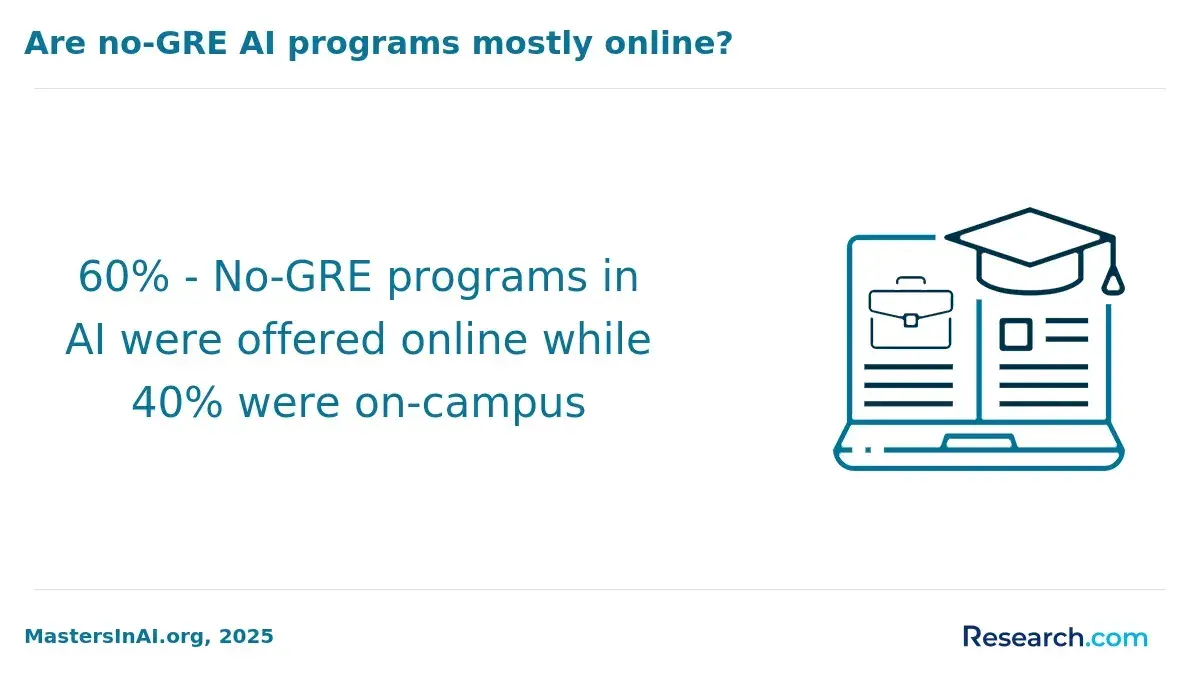
Campus-based agentic AI courses provide immersive learning environments with direct access to experienced faculty, labs, and collaborative projects. This hands-on approach benefits students who excel through experimentation and receive immediate feedback, essential for mastering complex AI orchestration frameworks in customer support. For instance, working with LangChain-type tools in campus labs helps develop problem-solving skills through team activities and real-time debugging.
On the other hand, online courses offer flexibility, catering to working professionals and remote learners who need to study at their own pace. Many online programs now feature live sessions, virtual labs, and interactive AI simulations that closely replicate campus experiences. Notably, usage of AI agent orchestration frameworks grew by over 400% in GitHub projects between early 2024 and early 2025, highlighting the rapid evolution and strong industry demand. Online education can quickly update content to keep learners current with these advancements.
Hybrid models blend the benefits of campus immersion and online flexibility, addressing challenges related to location and time constraints. Selecting the right format depends on your professional goals and the level of engagement desired with cutting-edge agentic AI technologies driving customer support innovation.
How long do agentic AI courses take to finish?
Agentic AI courses tailored for AI-powered customer support vary in length from 4 to 12 weeks, based on the program's depth and delivery method. Intensive bootcamp-style courses typically last 4 to 6 weeks, focusing on practical skills such as configuring AI agents, natural language processing essentials, and integrating these solutions with customer service platforms. More extensive programs, including university or professional training courses, often span 8 to 12 weeks or longer and cover advanced topics like machine learning model training, ethical concerns, and agent performance evaluation.
Flexible study options such as part-time or self-paced formats allow working professionals to balance education with their careers. For example, a 6-week instructor-led program may require 10-12 hours of study weekly, while a 12-week self-paced course usually demands 5-7 hours per week.
Practical competence in agentic AI is increasingly valued by employers, as it significantly influences customer service quality. A 2024 Forrester study found that customer satisfaction (CSAT) scores for interactions handled by well-designed AI agents are 8-10 percentage points higher on average than those with traditional IVR or rule-based chatbots. This highlights the importance of hands-on projects and in-depth training in real-world AI implementation.
When choosing a course, consider your time availability and learning goals, and prioritize programs offering practical experience to maximize customer satisfaction and business impact.
How much do agentic AI courses cost?
The cost of agentic AI courses focused on AI-powered customer support varies significantly by provider, format, and content depth. Entry-level online courses on platforms like Coursera or Udemy generally range from $100 to $200, covering fundamental concepts and tools for applying AI in customer-facing roles.
More intensive professional certifications and bootcamps often fall between $1,000 and $5,000. These options typically include hands-on projects, mentorship, and comprehensive training on integrating agentic AI systems.
For large organizations, enterprise training programs can exceed $10,000 per cohort. These programs usually feature customization, ongoing support, and team-oriented learning tailored to real-world applications. According to Deloitte's 2024 Global GenAI Survey, 49% of large enterprises are expanding training programs to focus on generative and agentic AI in customer support.
When evaluating courses, consider these factors beyond price:
- Curriculum relevance to your career goals
- Expertise of instructors
- Availability of practical tools and resources
- Financial aid, employer sponsorship, or workforce development subsidies
Self-paced online courses offer affordability and foundational knowledge, while advanced bootcamps provide deeper expertise at a higher cost. Aligning course choices with personal objectives can ensure optimal investment and faster career advancement in AI-powered customer support.
What jobs can agentic AI courses prepare you for?
Agentic AI courses develop skills that combine technical knowledge with strategic decision-making to manage autonomous systems in AI-powered customer support. Career options include AI product managers who create and improve AI customer solutions, AI customer experience analysts who optimize service quality, and AI system trainers who refine interaction models. Additionally, AI operations specialists oversee deployment and monitor AI agents during live support.
Graduates often find opportunities in AI integration consulting, helping organizations adopt and enhance agentic AI tools for customer engagement. Other roles include conversational AI developers who program intelligent agents to address customer queries independently, minimizing human involvement.
These jobs frequently involve designing systems that handle complex multi-input workflows and create feedback loops between AI agents and human teams to boost learning and reduce errors.
Tuition for university-backed, short-term agentic AI certificate programs typically ranges from US$3,000 to US$5,000 for 3 to 6 months. According to Coursera's 2024 Learner Outcomes report, 77% of learners recoup their investment within a year through promotions or raises, highlighting strong career benefits. Successful candidates often blend coding expertise with leadership in AI governance and ethical oversight, positioning themselves to lead AI-driven customer support innovation.
What salary can agentic AI customer support roles pay?
Agentic AI roles in customer support offer salaries ranging from $60,000 to over $120,000 annually, largely influenced by experience, location, and job responsibilities. Entry-level positions generally start between $60,000 and $75,000, while mid-level professionals with specialized AI training or certifications earn between $80,000 and $100,000. Senior roles, especially those managing AI-driven teams, can exceed $110,000 in major tech hubs like San Francisco or New York.
Demand for employees skilled in using agentic AI to automate complex customer tasks is growing. A 2024 NICE study found that contact centers implementing agentic AI platforms see a 50-70% increase in automated resolution of multi-step issues such as refunds and account changes. This boost in efficiency raises the value of staff who understand both AI tools and the nuances of customer service.
Technically proficient agents who combine AI expertise with strong customer empathy tend to achieve higher compensation and faster career growth. Skills in managing AI workflows, interpreting AI outputs, and fostering effective AI-human collaboration are particularly valuable. Experience with natural language processing and automation platforms further enhances earning potential.
Industries like telecommunications, finance, and e-commerce actively recruit agentic AI-enabled support professionals, offering competitive pay. Taking dedicated AI courses significantly improves job prospects as employers seek candidates capable of leveraging AI to reduce costs and improve customer satisfaction.
How do you choose an accredited agentic AI program?
Choosing an accredited agentic AI program means verifying official recognition from respected educational authorities or industry bodies. Such accreditation guarantees that the curriculum meets rigorous standards vital for emerging roles like AI supervisors or escalation specialists in customer support.
Prioritize programs recognized by regional or national accreditation agencies or endorsed by reputable professional organizations in AI and technology education. Evaluate the curriculum carefully to ensure it covers core competencies aligned with industry demands, such as agentic AI applications in customer support, machine learning interpretability, human-AI interaction, and ethical considerations.
Faculty expertise and industry partnerships are critical. Programs led by instructors with strong AI research or practical experience in agentic AI deployments better prepare students. Partnerships with tech companies or customer support platforms offer valuable internships and real-world projects.
Flexible delivery formats like part-time, online, or modular courses accommodate working professionals. Review student support services, career placement rates, and alumni feedback to gauge outcomes post-completion. Look for programs explicitly training on AI decision autonomy, escalation workflows, and supervisory tools-skills necessary as forecasts predict up to 40% of tier-1 support roles will shift towards AI-focused tasks by 2030.
Other Things You Should Know About Artificial Intelligence
Agentic AI courses in 2027 stand out for their focus on real-world applications, integrating hands-on projects with the latest AI tools. They emphasize adaptive AI technologies, equipping learners with skills to enhance efficiency and customer satisfaction in support roles.
While agentic AI can automate many routine tasks and improve response speed, it cannot fully replace human agents. Complex issues requiring empathy, nuanced understanding, or creative problem-solving still benefit from human intervention. The most effective customer support models combine AI efficiency with human judgment.
Agentic AI enhances customer experience by providing fast, accurate, and personalized responses around the clock. It can handle multiple interactions simultaneously, reduce wait times, and use data analysis to tailor solutions. This leads to higher customer satisfaction and operational efficiency.
Implementing agentic AI involves challenges such as integration with existing systems, ensuring data quality, and managing change within organizations. Additional hurdles include training the AI on diverse scenarios and maintaining ongoing updates to handle evolving customer needs and potential security risks.
References
- Agentic AI in Customer Support: Beyond Traditional Chatbots - Straive https://www.straive.com/blogs/agentic-ai-in-customer-support-beyond-traditional-chatbots/
- Introduction to Agentic AI https://cognitiveclass.ai/courses/introduction-to-agentic-ai
- Agentic AI https://www.deeplearning.ai/courses/agentic-ai
- Best AI Agent Courses for C-Level Leaders (2026 Guide) https://aiagentsacademy.ai/blog/best-ai-agent-courses-c-level-leaders-2026
- Group https://www.datacamp.com/courses/introduction-to-ai-agents
- Everything You Need to Know About Agentic AI and Its Potential in Customer Service https://www.cxtoday.com/contact-center/everything-you-need-to-know-about-agentic-ai-its-potential-in-customer-service/
- 15 Best AI Agents for Customer Service in 2026 https://fin.ai/learn/best-ai-agents-customer-service
- ADaSci - Association of Data Scientists | AI & Data Science Community https://adasci.org/courses/how-to-become-an-agentic-ai-engineer
- Agentic AI Course with Advanced Training and Certification https://www.edureka.co/agentic-ai-training-course
- 8 best AI agents for customer service in 2026 | Buyer's guide https://www.kore.ai/blog/top-ai-agents-for-customer-service-tested-reviewed