2027 Best AI Courses for Data Science Students With Certificates

Co-Founder and Chief Data Scientist
Many graduate students and professionals with unrelated undergraduate backgrounds face challenges transitioning into the AI field due to its technical complexity and rapid evolution. This gap often limits career growth and access to cutting-edge opportunities.
Finding flexible, accredited courses that provide both practical skills and recognized certification can be daunting. Without proper guidance, learners risk investing time and resources into programs with limited value in the job market. This article highlights the best AI courses tailored for data science students who seek credible certification, offering clear pathways to build expertise and enhance employability in a competitive industry.
Key Things You Should Know
- In 2026, over 70% of AI courses for data science students offer verified certificates, enhancing employability in a field projected to grow 36% by 2030 according to the U.S. Bureau of Labor Statistics.
- Top programs emphasize practical skills in machine learning, natural language processing, and ethical AI, reflecting industry demands for data science roles involving AI integration.
- Many courses provide flexible online formats with collaboration tools, catering to working professionals and students balancing education with career development.
Advance Your Career with AI Online Courses
Artificial Intelligence: Implications for Business Strategy
This program provides an introduction to Artificial Intelligence and their implications for business strategy. Earn an official digital certificate.

Oxford Artificial Intelligence Programme
Explore this Oxford Artificial Intelligence programme offered in a flexible learning environment and explore topics like machine learning, automation, and robotics.

Implementing Agentic AI: Building Your Organizational Playbook
This online MIT Agentic AI course offers a practical approach to deploying AI agents in your organization, including a custom playbook. 3 weeks, exclusive launch price.

AI Adoption: Driving Business Value and Impact
This online MIT AI Adoption: Driving Business Value and Impact offers practical frameworks to close the gap between AI potential and business reality.

Artificial Intelligence in Pharma and Biotech
Discover the applications and limitations of artificial intelligence in pharma and biotech with this MIT online short course.

What makes an AI course high quality for data science students seeking certificates?
AI courses with recognized certificates for data science students typically cover essential elements of a quality artificial intelligence course, such as machine learning algorithms, neural networks, natural language processing, and computer vision. These programs include hands-on projects that simulate real-world scenarios, using tools like Python, TensorFlow, or PyTorch to help learners apply theoretical knowledge effectively.
Certification value is tied closely to the issuing institution's reputation and assessment rigor. Accredited universities and reputable online platforms verify mastery through graded assignments, exams, or capstone projects rather than attendance alone, which employers prioritize in hiring decisions.
Up-to-date content reflecting current AI advances and data science integration is another hallmark. This includes ethical AI practices, model explainability, and scalable deployment, ensuring students are prepared for evolving challenges. Flexible learning formats support various skill levels, from beginner to advanced, with resources like mentorship and career guidance enhancing student outcomes.
Data from Lightcast labor market analytics reveal that job postings requiring both AI and data science skills command median salaries 18% higher than those focused solely on data analysis.
This highlights the importance of selecting AI courses that effectively bridge these fields. Prospective students may also explore the top data science master's programs in the US for further opportunities aligned with these in-demand skills.
Advance Your Career with AI Online Courses
Artificial Intelligence: Implications for Business Strategy
This program provides an introduction to Artificial Intelligence and their implications for business strategy. Earn an official digital certificate.
Oxford Artificial Intelligence Programme
Explore this Oxford Artificial Intelligence programme offered in a flexible learning environment and explore topics like machine learning, automation, and robotics.
Implementing Agentic AI: Building Your Organizational Playbook
This online MIT Agentic AI course offers a practical approach to deploying AI agents in your organization, including a custom playbook. 3 weeks, exclusive launch price.
Which accredited universities offer the best AI certificates for data science majors?
Several top accredited institutions providing AI certification for data science majors offer distinctive programs that combine theory with practical skills. Massachusetts Institute of Technology (MIT) delivers a Professional Certificate in Machine Learning & Artificial Intelligence, focusing on data analytics and predictive modeling.
Stanford University's program emphasizes neural networks and deep learning, suitable for students working on large-scale data science projects. Carnegie Mellon University highlights applied AI techniques by integrating machine learning with statistical data science methods. Columbia University's certificate also includes ethics and policy studies, helping students understand AI's broader societal impacts.
When choosing accredited universities offering the best artificial intelligence certificates for data science, consider factors such as program accreditation, faculty expertise, and partnerships with industry.
Hands-on projects, access to real-world datasets, and updated AI tools like Python or cloud computing platforms enhance learning outcomes and job readiness. Programs offering career support and networking opportunities add value in competitive job markets.
A 2024 Coursera Job Skills report found that 89% of learners completing professional AI or data science certificates experienced positive career outcomes within 12 months, including promotions and salary increases.
For those exploring educational options, resources like the AI degree online provide additional pathways to quality online learning.
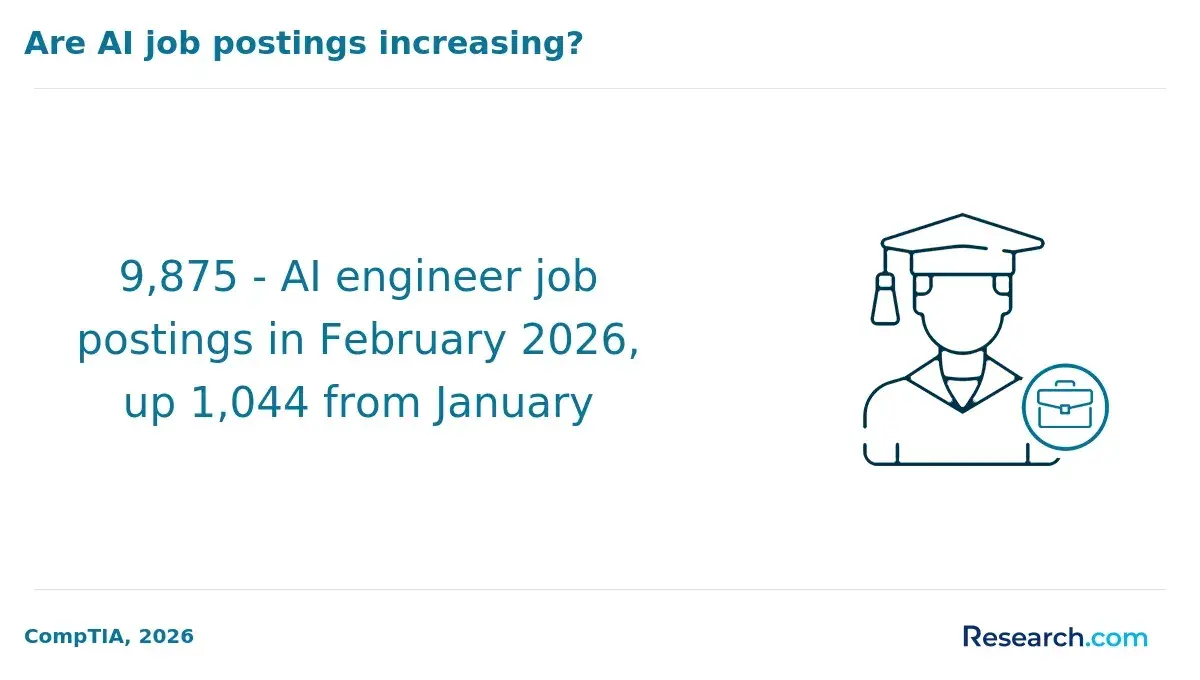
How do online AI certificate programs compare with on-campus options for data science?
Online AI certificate programs provide unmatched flexibility for data science students balancing work or other commitments. These programs allow self-paced study, enabling learners to adjust their schedules around professional or personal responsibilities.
This is particularly beneficial for working professionals seeking to upskill without interrupting their careers. When comparing online AI certificate programs versus on-campus data science courses, the format impacts interaction levels and learning style more than overall quality.
On-campus programs offer direct engagement with faculty and peers, fostering networking and hands-on experiences often involving physical labs or group projects. Such immersive settings promote real-time discussions and collaboration, which many find essential for mastering complex AI concepts.
However, quality and recognition depend largely on the institution rather than delivery mode. Prestigious university-backed certificates, like those from MIT and Harvard, deliver rigorous online curricula emphasizing applied skills.
According to MIT Professional Education, 93% of participants in their Applied Data Science and AI program reported career improvements within a year. This demonstrates that online programs can rival or surpass traditional on-campus benefits.
When evaluating options, students should consider career goals, learning preferences, and networking needs. Online certificates suit flexible, skill-focused training, while campus programs may better support immersive engagement and connections.
Additionally, prospective students can explore online cybersecurity degree programs as complementary pathways. The comparison of online and on-campus AI certification for data science students highlights the importance of institutional reputation, alumni outcomes, and course content regardless of format.
What core AI and machine learning topics should a data science-focused course cover?
Data science courses focusing on core AI and machine learning concepts for data science courses must provide a comprehensive understanding of supervised and unsupervised learning techniques. Students learn key algorithms such as regression, classification, clustering, and dimensionality reduction, essential for managing varied datasets and uncovering valuable insights.
Deep learning fundamentals should cover neural networks, convolutional neural networks (CNNs), and recurrent neural networks (RNNs), which drive progress in critical areas like image recognition, natural language processing, and time series forecasting.
These topics are a staple in data science certification programs aimed at equipping students to tackle complex challenges.
Courses should emphasize practical skills in data preprocessing and feature engineering, including data cleaning, normalization, and transformation. Understanding evaluation metrics like accuracy, precision, recall, F1 score, and ROC curves allows students to critically assess model effectiveness.
Further, probabilistic models, Bayesian inference, and reinforcement learning basics expand capabilities in uncertainty and automated decision-making.
Industry-relevant programming skills with Python, and proficiency in libraries such as TensorFlow and PyTorch, are indispensable. Cloud-based AI tools also play an increasing role in real-world applications.
Certifications from IBM and Google validate these skills; notably, Coursera's surveys show that the IBM Data Science Professional Certificate raised job placement likelihood by 46%. Prospective students interested in technical fields may also explore the best online electrical engineering degree programs for veterans for complementary education.
How long do AI certificate programs typically take and what do they cost?
AI certificate programs generally require three to six months to complete, with many designed for part-time study to accommodate working professionals. Short courses might last as little as eight weeks and cover fundamental concepts, while longer, more in-depth programs extend up to six months or more, including topics like machine learning, neural networks, and natural language processing.
Costs vary based on program length, provider, and depth of content. Entry-level certificates typically range from $300 to $1,500, offering foundational training. More advanced or university-affiliated programs can cost between $1,500 and $5,000.
Bootcamp-style courses averaging $3,500 deliver immersive, project-based study and career support lasting three to four months. Some employers subsidize these costs due to the strong return on investment in AI skills.
A recent study by the Institute for the Future of Work shows workers completing intensive online AI upskilling programs gained an average 14% wage increase within one year, nearly matching a 15% rise seen with in-person programs. This highlights that even shorter, cost-effective online certificates provide meaningful career benefits.
When choosing a program, consider factors beyond price and duration, such as curriculum relevance, format, and support services for optimal value.
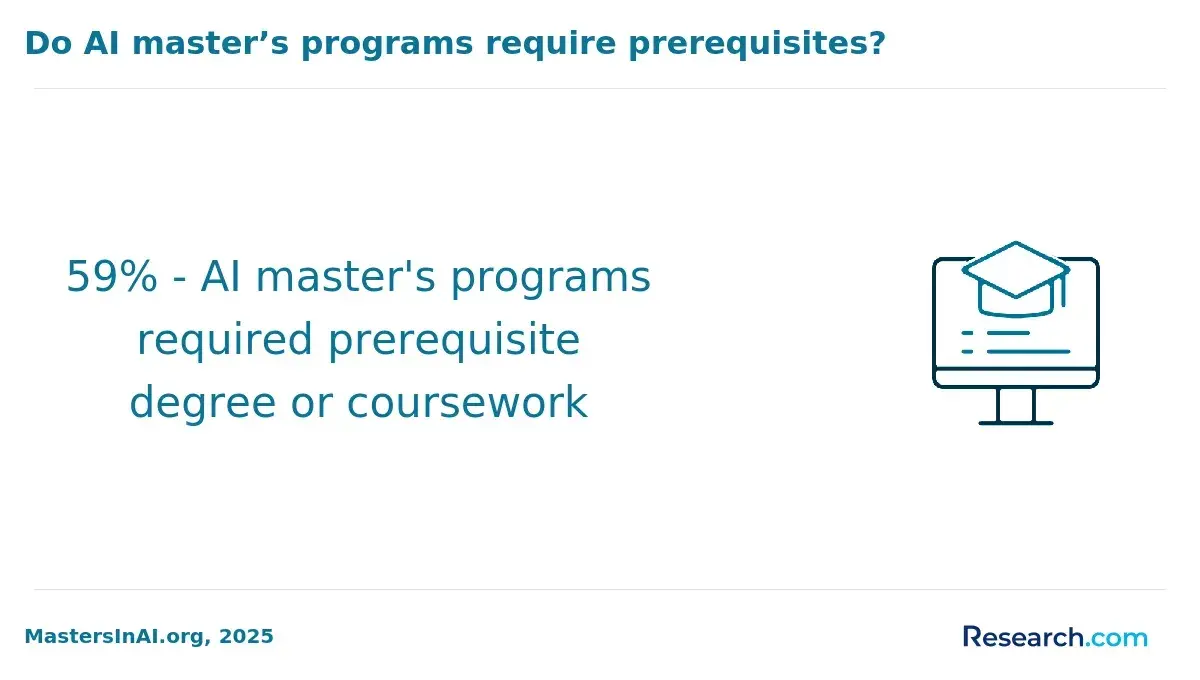
What admission requirements do AI certificate programs for data science usually have?
Admission to AI certificate programs designed for data science students typically requires a solid foundation in programming and mathematics. Proficiency in languages such as Python, SQL, or R, along with knowledge of linear algebra, calculus, and statistics, is often essential.
Many programs ask for evidence of previous coursework or experience in data science, computer science, or engineering to prepare students for specializations like machine learning (ML), generative AI, and MLOps-skills increasingly valued in today's job market.
Applicants may need to submit transcripts or standardized test scores, though the latter is becoming less common. Professional experience and portfolios showcasing data science or machine learning projects can strengthen an application, especially for working professionals pursuing specialization.
Some online programs adopt open enrollment or minimal prerequisites but may require completion of foundational courses before advanced tracks like MLOps, which commands an average 24% higher salary than typical data scientist roles, based on Indeed's salary data.
Additional factors include access to computational resources and a commitment to study schedules. Candidates should verify if programs offer cloud labs or recommend hardware for hands-on learning. Clear documentation of technical skills, relevant experience, and dedication remains crucial for gaining admission into competitive AI certificate programs tailored to data science professionals.
Which AI certificates and microcredentials best strengthen a data science résumé?
Certificates and microcredentials that enhance a data science résumé focus on practical skills in machine learning, deep learning, natural language processing, and data engineering. Credentials from well-known providers like Coursera's AI for Everyone, edX's Microsoft Professional Program in AI, and Google's Professional Machine Learning Engineer certificate enjoy broad employer recognition.
These programs emphasize applied knowledge, including Python programming, TensorFlow, PyTorch, and working with real-world datasets.
Specialized microcredentials, such as NVIDIA's Deep Learning Institute certificates and IBM's AI Engineering Professional Certificate, demonstrate mastery of advanced AI frameworks and model deployment-skills highly valued by industry employers.
Certifications blending AI theory with hands-on projects correlate strongly with improved job placement and salary increases.
Cost is an important factor. A Georgetown University Center on Education and the Workforce analysis showed short, sub-baccalaureate AI certificates typically have median tuition below $8,000 while offering a median annual earnings increase near $9,600. Many online platforms also provide financial aid and scholarships, helping reduce upfront expenses.
When choosing AI certificates, prioritize programs accredited or backed by reputable institutions to maximize résumé value. Look for microcredentials that include portfolio-building projects or capstone experiences, as these offer tangible proof of skills that employers often require.
What AI and data science careers can these certificate programs help you pursue?
Certificate programs in artificial intelligence and data science equip students for a wide range of technical careers in rapidly expanding fields. Graduates often step into roles such as data scientist, machine learning engineer, AI researcher, business intelligence analyst, and data engineer.
These positions involve building AI models, analyzing complex datasets, and refining algorithms to tackle challenges in finance, healthcare, marketing, and technology.
More specialized career paths include natural language processing (NLP) engineer and computer vision specialist, focusing on language comprehension and image or video analysis. Those inclined toward product development can pursue AI product manager roles, which combine technical AI expertise with business strategy.
Programs typically focus on practical skills, emphasizing programming languages like Python, tools such as TensorFlow, and cloud platforms, aligning with employer demands. LinkedIn's 2024 Future of Work report notes a 21-fold increase in members listing "Generative AI" skills since 2017, with professionals possessing AI skills 2.2 times more likely to receive recruiter contacts for technical roles.
Students should prioritize certificates offering hands-on projects or internships to build a robust portfolio, critical as employers value demonstrated skills over theory. Certifications bridging AI and data science open doors to emerging roles involving automated decision-making, AI ethics compliance, and system auditing, reflecting evolving industry needs.
What salary ranges and job outlook can AI-skilled data scientists expect?
Data scientists with expertise in artificial intelligence commonly earn between $95,000 and $160,000 annually in the United States. Entry-level roles usually start near $95,000, while experienced and senior professionals can surpass $150,000.
Salaries vary based on industry, location, educational background, and specific AI skills such as machine learning, natural language processing, or computer vision. For example, tech hubs like San Francisco and New York often offer higher pay due to increased demand and cost of living.
The job outlook for AI-skilled data scientists is strong, with projected growth of 36% through 2031 according to the U.S. Bureau of Labor Statistics. This growth is fueled by expanding AI applications in healthcare, finance, retail, and autonomous vehicles. Employers value candidates who can improve predictive analytics, automate tasks, and enhance decision-making processes.
Research shows that structured certificate programs significantly boost course completion rates-from 9% with standalone courses to 35% with comprehensive program tracks. These programs help learners build practical AI skills that employers seek, increasing both salary potential and job security.
To maximize career opportunities, prospective data scientists should target certificate programs offering applied AI skills and integrated curricula recognized by employers. This approach enhances competence and marketability in a competitive field.
How can students evaluate AI certificate programs for reputation, outcomes, and ROI?
When selecting an AI certificate program, focus on three critical factors: reputation, outcomes, and return on investment (ROI). Reputation hinges on accreditation, faculty expertise, and industry ties. Confirm the program's recognition by established universities or tech groups and check reviews on trusted education platforms.
Graduate success offers insight into program effectiveness. Look for published placement rates and alumni testimonials indicating employment in AI-related roles, ideally within six months of completion. Transparent programs often share this data openly.
Return on investment requires balancing tuition costs against potential salary gains. Entry-level AI specialists typically earn around $85,000 per year, with mid-career salaries exceeding $120,000. Evaluate if program fees and time commitments align with these earning prospects. Programs that provide career services, mentorship, or internships often enhance job placement speed and ROI.
Match curricula with market demand by verifying the inclusion of current tools, programming languages like Python, and practical projects using real datasets. The World Economic Forum's Future of Jobs report projects 39% growth in AI and machine learning roles over the next several years, making hands-on training vital.
Finally, consider program flexibility such as part-time and online options, plus support services like career advising and networking. Check for any hidden fees, refund policies, and whether the certificate is valued in your target industry to avoid surprises.
Other Things You Should Know About Artificial Intelligence
Learning AI can be challenging initially because it requires understanding a mix of programming, mathematics, and data concepts. However, many beginner-friendly courses break down these topics into manageable sections, making AI accessible. Consistent practice and a focus on foundational concepts help ease the learning curve.
Python is the most widely used programming language in AI due to its extensive libraries and community support. Other important languages include R for statistical analysis, Java for large-scale applications, and C++ for performance-critical tasks. Learning Python alongside popular AI frameworks like TensorFlow or PyTorch greatly benefits data science students.
In 2027, top online platforms like Coursera, edX, and Udacity offer highly-rated AI courses for data science students. These platforms provide certificates upon completion, and courses often include hands-on projects and expert instruction, making them ideal choices for students seeking to enhance their AI skills.
Yes, ethical considerations are integral to AI education, focusing on topics like bias, privacy, and transparency in algorithms. Many AI courses now include ethics modules to prepare students for responsible AI development. Understanding these issues is crucial for data scientists working with real-world applications.
References
- Best AI Certifications to Boost Your Career in 2026 – Dataquest https://www.dataquest.io/blog/best-ai-certifications/
- How to Explain AI SEO ROI to University Leadership (Without Overpromising) - UPCEA https://upcea.edu/how-to-explain-ai-seo-roi-to-university-leadership-without-overpromising/
- Pharma AI Training Programs: Curriculum Design & ROI | IntuitionLabs https://intuitionlabs.ai/articles/pharma-ai-training-program-curriculum-roi
- How to Evaluate Generative AI Output Effectively | Clarivate https://clarivate.com/academia-government/blog/evaluating-the-quality-of-generative-ai-output-methods-metrics-and-best-practices/
- Developing an Evaluation Framework – AI in Action: A SUNY FACT2 Guide to Optimizing AI in Higher Education https://aiinaction.pressbooks.sunycreate.cloud/chapter/developing-an-evaluation-framework/
- Data Science Institute Accredited AI & Data Science Courses https://www.datascienceinstitute.net/
- Complete Data Science Learning Roadmap in 2026: What to Learn, When to Learn It, and What Actually Works https://www.mygreatlearning.com/blog/complete-data-science-learning-roadmap-in-2026/
- 11 Best AI Certifications in 2025 to Deepen Your Technical Knowledge | DigitalOcean https://www.digitalocean.com/resources/articles/ai-certifications
- Online vs Campus Artificial Intelligence Degree Programs: Complete Comparison https://hakia.com/compare/artificial-intelligence-online-vs-campus/
- How Long Does It Take to Learn AI Completely? https://blog.nobledesktop.com/learn/ai/how-long-do-ai-courses-take