2027 Best AI Courses for Independent Consultants With Certificates

Co-Founder and Chief Data Scientist
Independent consultants often face challenges breaking into the artificial intelligence field due to a lack of formal credentials and flexible learning options that fit their schedules. Traditional degree programs can prove time-consuming and costly, leaving professionals searching for accredited courses that offer practical skills and recognized certification.
This gap hinders career pivots despite growing industry demand. The article addresses these issues by reviewing top artificial intelligence courses designed with flexibility and certification, helping consultants build credibility and expertise efficiently while balancing existing commitments.
Key Things You Should Know
- Top AI courses for independent consultants in 2026 emphasize practical skills and certification recognized by 65% of U.S. employers to boost freelance credibility and contract opportunities.
- Courses increasingly integrate ethics and AI governance, reflecting a 40% rise in demand for consultants who can ensure compliant and responsible AI deployment.
- Flexible online formats dominate, with over 70% of learners preferring self-paced study to balance consulting work and continuing education.
Advance Your Career with AI Online Courses
Artificial Intelligence: Implications for Business Strategy
This program provides an introduction to Artificial Intelligence and their implications for business strategy. Earn an official digital certificate.

Oxford Artificial Intelligence Programme
Explore this Oxford Artificial Intelligence programme offered in a flexible learning environment and explore topics like machine learning, automation, and robotics.

Implementing Agentic AI: Building Your Organizational Playbook
This online MIT Agentic AI course offers a practical approach to deploying AI agents in your organization, including a custom playbook. 3 weeks, exclusive launch price.

AI Adoption: Driving Business Value and Impact
This online MIT AI Adoption: Driving Business Value and Impact offers practical frameworks to close the gap between AI potential and business reality.

Artificial Intelligence in Pharma and Biotech
Discover the applications and limitations of artificial intelligence in pharma and biotech with this MIT online short course.

What makes an AI course valuable for independent consultants seeking career advancement and credibility?
Value in an AI course for independent consultants centers on tangible career advancement and recognized credibility. Key factors include curriculum relevance to current market demands, practical skill acquisition, and certification respected by industry.
Independent consultants must demonstrate proficiency in applying AI tools to real-world business challenges such as automating workflows, enhancing data analysis, and supporting strategic decision-making.
Courses that offer hands-on projects with current frameworks and platforms like TensorFlow, PyTorch, or cloud-based AI services help ensure practical competence.
AI certification programs for independent consultants are strongest when the certification comes from reputable institutions known for rigorous standards, which also increases client trust and contract opportunities. Certificates from accredited universities or major technology providers serve as important differentiators.
Specialized tracks in fields like natural language processing, computer vision, or AI ethics allow consultants to tailor their skills for niche markets or industries. Deloitte's Global Human Capital Trends report notes that 79% of business leaders will significantly increase their use of AI-enabled external talent by 2026, highlighting the urgent need for consultants to upskill.
Choosing courses with current content, measurable learning outcomes, ongoing support, networking opportunities, and integration of AI strategy and ethics adds extra value. Combining technical ability with strategic understanding prepares consultants to deliver comprehensive solutions.
For those seeking foundational knowledge and credentials, exploring a computer science accelerated degree can offer a strong pathway to career advancement through AI training and certification.
Advance Your Career with AI Online Courses
Artificial Intelligence: Implications for Business Strategy
This program provides an introduction to Artificial Intelligence and their implications for business strategy. Earn an official digital certificate.
Oxford Artificial Intelligence Programme
Explore this Oxford Artificial Intelligence programme offered in a flexible learning environment and explore topics like machine learning, automation, and robotics.
Implementing Agentic AI: Building Your Organizational Playbook
This online MIT Agentic AI course offers a practical approach to deploying AI agents in your organization, including a custom playbook. 3 weeks, exclusive launch price.
How do AI certificates differ from degrees, bootcamps, and microcredentials for consultants?
AI certificates provide targeted, practical skills with shorter completion times compared to degrees, bootcamps, and microcredentials. Unlike degrees, which cover broad theoretical foundations over several years, certificates focus on applied knowledge tailored to consulting demands.
This makes them ideal for consultants looking to upskill quickly without the long academic commitment. For those comparing AI certification vs degree programs for consultants, certificates offer flexibility and immediacy.
Bootcamps deliver intensive, immersive training often requiring full-time dedication over weeks or months, while certificates usually allow part-time study suitable for professionals balancing projects.
Meanwhile, microcredentials target narrow AI topics such as machine learning algorithms or natural language processing; certificates often integrate these into cohesive curricula that enhance versatility for independent consultants.
Importantly, certificates carry recognized industry value tied to employment outcomes. According to Coursera's Global Skills Report, professionals completing an AI certificate see a 23% median pay increase or promotion within 12 months.
Researchers and professionals should also consider how certificate content aligns with market needs, delivery mode, and employer recognition to maximize consulting advantages.
For more comprehensive education, prospective students may explore AI degree programs that offer broader, longer-term study options.
Differences between AI bootcamps and certificates for independent consultants often come down to pace, depth, and flexibility, making certificates a practical balance for many seeking measurable career growth.
Which types of AI certificates are most recognized by U.S. employers and clients?
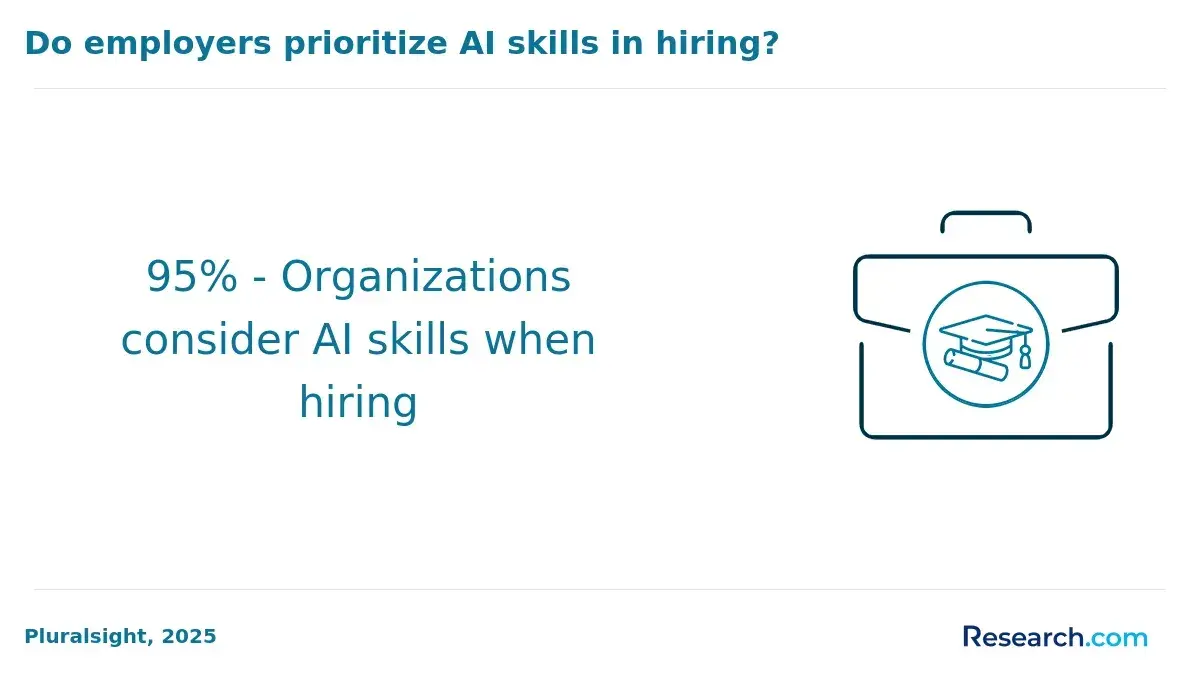
Among the most recognized AI certification programs in the U.S. job market are those that demonstrate practical, role-specific competence, particularly for non-technical professionals. Certifications emphasizing AI fluency for non-technical roles have surged in demand, with learning hours increasing by 65% year over year.
These certificates validate skills such as interpreting AI outputs, managing AI-driven projects, and making data-informed decisions, which are essential for independent consultants working with diverse clients.
More technical certifications in machine learning, deep learning, and data science remain highly regarded, especially when issued by providers like Google, Microsoft, and IBM.
However, these often require prior programming experience and may be less accessible for consultants without deep coding backgrounds. Hybrid certificates that blend AI strategy, ethics, and implementation management offer a valuable alternative.
Most valued AI certificates for independent U.S. consultants typically:
- Include case studies or capstone projects showcasing practical AI applications.
- Cover AI ethics and governance alongside technical expertise.
- Are issued by accredited institutions or reputable industry leaders.
Certificates that focus on integrating AI into business processes and automation, such as those from Microsoft's AI Business School or university AI Strategy programs, help consultants stand out.
For those exploring related fields, consider looking into affordable cybersecurity programs that complement AI knowledge in today's tech landscape.
What admission requirements and prior experience do AI certificate programs typically expect?
AI certificate programs typically require foundational skills in programming and mathematics. Proficiency in Python is common, as it is essential for AI model development and data handling. Key math skills include statistics and linear algebra, often at a level equivalent to college calculus and probability. Admission criteria for AI certificate courses may vary widely depending on program depth and focus.
Beginner certificates usually ask for a high school diploma or equivalent and openness to learning coding basics. More advanced certifications frequently require a bachelor's degree in computer science, engineering, or related fields, alongside experience with software tools like Git and cloud platforms such as AWS or Azure.
Prior experience requirements for AI certification programs often include relevant IT, programming, or data analysis work. Many programs accept portfolios or professional achievements in lieu of formal degrees.
Professionals should look for programs offering prompt engineering training, which OpenAI's data shows can reduce time spent on knowledge work tasks by about 33%.
Verifying specific prerequisites on individual program websites is important due to variation in admission criteria. Those interested in IT security can also explore cybersecurity courses online that offer certificates to strengthen their credentials.
How do online, hybrid, and campus AI programs compare for working consultants?
Online, hybrid, and campus AI programs each present unique benefits and drawbacks for working consultants. Online courses offer crucial flexibility, allowing learners to study asynchronously from anywhere, which suits irregular schedules and client demands.
However, these programs may lack direct peer interaction and real-time networking opportunities. Hybrid programs combine online learning with occasional in-person sessions, balancing flexibility with collaboration-ideal for those wanting structured learning without relocating.
Campus-based programs provide immersive environments with face-to-face mentoring, hands-on labs, and immediate faculty access, fostering deep skill development and strong networking, but require significant time commitment and geographic presence.
Consultants should consider workload, learning style, and networking goals. For example, those focused on strategic consulting might prefer hybrid or campus programs emphasizing applied AI in business, aligning with findings from BCG's Mind the Tech Gap survey.
This research reveals companies integrating GenAI into strategic planning are 2.5 times likelier to exceed 10% revenue growth than those using AI just for operational tasks, emphasizing the value of targeted AI education.
Certification programs that provide recognized credentials and real-world case studies on AI-driven business innovation add credibility. Budget plays a role too: campus programs often cost more due to facilities and faculty availability, online programs tend to be more affordable, and hybrid options strike a balance between cost, flexibility, and engagement.
What core AI topics and tools should the best consultant-focused courses include?
Top AI courses for independent consultants cover essential topics tied directly to business and practical application. Key areas include machine learning fundamentals, data preprocessing, and model evaluation to build a solid technical base.
Natural language processing (NLP) is critical, especially with the rise of generative AI in multiple industries. Ethical AI practices, governance, and bias mitigation prepare consultants for responsible and effective AI deployment.
Courses often focus on practical skills, including Python programming and AI libraries like TensorFlow, PyTorch, and scikit-learn. Familiarity with cloud platforms such as AWS, Azure, or Google Cloud is crucial for scaling AI solutions. Domain-specific tools like robotic process automation (RPA) software also enhance consultants' ability to automate workflows.
Consultants benefit from understanding AI's application in process automation and operations. For example, McKinsey's 2024 generative AI report highlights possible global productivity gains of $2.6 to $4.4 trillion from enhanced operations and back-office automation. Training that includes hands-on projects and case studies tailored to consulting ensures readiness for real-world challenges.
Advanced topics like AI-driven decision-making, time series forecasting, and integration with enterprise systems provide a comprehensive skill set. Combining theory with project-based learning bridges knowledge with effective consulting practice.
How long do AI certificate programs take, and what total costs should consultants expect?
AI certificate programs generally take 3 to 12 months to complete, depending on course depth and goals. Shorter programs of 3 to 4 months focus on foundational concepts and basic tools, making them ideal for consultants seeking quick skill upgrades.
More comprehensive certificates include advanced machine learning methods, ethics, and hands-on projects, often requiring up to a year.
Costs vary widely: self-paced online certificates may start at $300, while instructor-led options typically fall between $1,000 and $3,000. University-backed certificates and bootcamps can range from $5,000 to $10,000 or more, reflecting additional mentorship and recognized accreditation.
Additional expenses to consider include software licenses, cloud computing fees, and proctored exams. Many providers offer flexible payment plans or financial aid. As Gartner's 2024 analytics forecast highlights, by 2026, 70% of organizations will use AI-assisted data analysis, up from less than 20% in 2023, increasing demand for analytics-competent consultants.
When selecting a program, weigh duration, cost, and skill relevance carefully. Programs with project-based assessments better equip consultants for client challenges. Also, verify certificate recognition within professional networks to maximize return on both time and financial investments.
How can independent consultants evaluate accreditation and program quality for AI courses?
Independent consultants evaluating AI course accreditation should focus on respected bodies like ABET, IEEE, or regionally recognized agencies. Accreditation confirms that curricula meet rigorous educational and professional standards, ensuring up-to-date coverage of AI methodologies and ethics.
Faculty expertise is also critical; instructors with published research or active industry roles provide valuable real-world insights.
Key topics to seek include machine learning algorithms, data ethics, AI governance, and risk management. According to PwC's 2024 Global AI Jobs Barometer, 84% of executives view "AI risk and governance" as a leading challenge, emphasizing the importance of ethics and compliance in course content.
Look for programs offering widely recognized certificates endorsed by universities or professional groups, as these improve consulting market credibility.
Consider curricula that validate applied skills through assessments or projects rather than only theory. Alumni success stories and endorsements on LinkedIn offer additional insight into the course's real-world impact. Evaluating program reviews, completion rates, and partnerships with industry leaders can further indicate alignment with current market demands.
Prioritize courses integrating compliance frameworks and ethical AI use, reflecting growing governance needs in deployments. Such criteria help ensure the course supports both professional growth and client advisory competence in evolving AI landscapes.
What AI-related roles, billable services, and income gains can consultants realistically pursue?
Independent consultants in 2026 can pursue roles such as AI strategy advisor, machine learning engineer, data analyst, and AI product manager. These positions offer billable services like AI system design, predictive modeling, data pipeline development, and automation solution implementation. Specializing in niche areas such as natural language processing or computer vision can broaden service offerings and client appeal.
Consultants benefit most by focusing on services that provide direct client value. Examples include developing customized AI algorithms, conducting model audits for bias and accuracy, and delivering training sessions on AI adoption for client teams.
Hourly rates typically range from $100 to $250, influenced by expertise and project complexity. For instance, AI strategy advisors often command higher fees by advising C-suite executives on AI integration roadmaps, while data analysts may secure ongoing contracts for data management.
Certification in AI positively impacts career prospects. According to Coursera's 2024 survey, 74% of certificate holders in AI or data reported improved outcomes within six months, such as new jobs, promotions, or increased responsibilities. Certifications validate essential competencies, helping consultants build client trust and justify premium billing.
Recurring revenue streams also emerge from AI model maintenance, compliance consulting, and data governance advisory. Combining technical expertise with business insight opens opportunities in AI ethics and regulatory consulting, sectors experiencing growing demand. Building a verified AI consultant brand through recognized certificates provides a significant competitive edge in today's evolving market.
How should consultants choose between vendor, university, and professional association AI certificates?
Consultants choosing AI certificates should align their credentials with career goals, technical skills, and client expectations. Vendor certificates from companies like Microsoft or Google emphasize practical, hands-on expertise with specific platforms. These are valuable when clients use the same technologies but may lack in-depth theoretical foundations.
University certificates offer comprehensive AI knowledge rooted in research and theory, appealing to consultants seeking long-term credibility or technical roles.
Such credentials often carry academic prestige and cover foundational subjects including machine learning algorithms and ethics in AI. For example, a certificate from a top-tier university can unlock opportunities in sectors requiring rigorous technical validation.
Professional association certificates, such as those from the Association for Computing Machinery or IEEE, focus on industry standards, ethics, and ongoing professional development. They appeal to consultants prioritizing integrity and adherence to best practices, which is important for corporate clients regulated by compliance requirements.
Dataquest's 2025 "AI Skills & Careers" report reveals independent consultants who combine business-focused AI courses with at least one technical certificate earn 18% higher median project fees than those with only non-technical training. This highlights the value of technical credibility.
Key factors to consider include:
- Client preference for tool-specific skills versus broad AI theory.
- The importance of recognized industry standards.
- Balancing technical depth with business relevance.
- Cost, time investment, and certificate reputation.
Other Things You Should Know About Artificial Intelligence
In 2027, the best AI courses for independent consultants with certificates include Coursera's AI For Everyone by Andrew Ng, Udacity's AI Programming with Python Nanodegree, and IBM's Applied AI Professional Certificate on edX. Each course offers practical knowledge, flexibility, and a recognized certification.
Python is the most widely used programming language in artificial intelligence because of its simplicity and extensive libraries like TensorFlow and PyTorch. Other important languages include R for statistical analysis and Java for large-scale applications. Mastery of Python is especially critical for consultants aiming to implement and customize AI solutions.
Yes, many AI tasks such as data analysis, model deployment, and business application do not require advanced degrees if consultants have practical experience and certifications. Hands-on skills gained through well-structured AI courses enable independent consultants to deliver valuable insights and solutions to clients. Continuous learning and adaptation remain essential in this evolving field.
AI consultants must consider privacy, bias, transparency, and accountability when designing and deploying AI systems. Ensuring data is used responsibly and models do not reinforce discrimination is vital. Ethical AI practice helps build trust with clients and aligns with legal and societal standards, which is increasingly important in consultancy engagements.
References
- 10 AI Tools Every Consulting Firm Should Consider Using https://www.deltek.com/en/blog/ai-tools-every-consulting-firm-should-consider-using
- Micro-Credentials vs. Certifications: Which One Should You Choose? https://certiprof.com/blogs/news/micro-credentials-vs-certifications
- AI Skills | Why AI Skills Are Essential for Career Growth https://www.oxfordhomestudy.com/OHSC-Blog/ai-skills
- AI training for consultants: boost your consulting strategy https://lecercle.ai/en/trainings/ai-consultants/
- Ultimate Guide: How to Choose the Right AI Training Course to Boost Your Career - ONLC https://www.onlc.com/blog/how-to-choose-ai-training-courses/
- Artificial Intelligence Consultant Certification Options https://www.sorenkaplan.com/artificial-intelligence-ai-consultant-certification-options/
- The Complete AI Consulting Certification Guide: From Training to $100K+ Contracts - Cutopia https://www.cutopia.com/the-complete-ai-consulting-certification-guide-from-training-to-100k-contracts/
- AI Consultant Certification https://becomeanaiconsultant.com/
- AI certifications: What employers actually want in 2026 - Spiceworks https://www.spiceworks.com/it-careers/ai-certifications-what-employers-actually-want-in-2026/
- Certifications for consultants: What to take first https://advisera.com/articles/certification-for-consultants/