2027 Best AI Courses for Claims Management Teams

Co-Founder and Chief Data Scientist
Claims management teams often face challenges in efficiently processing large volumes of data while maintaining accuracy and compliance. Traditional methods can lead to delays, errors, and increased operational costs. Integrating AI tools and strategies tailored for claims workflows can transform these processes, enabling faster decision-making and better risk assessment.
This article highlights the most effective AI courses designed to equip claims professionals with relevant skills and knowledge. It aims to guide readers toward flexible, accredited educational paths that facilitate a career pivot into the AI field within claims management, enhancing both expertise and career prospects.
Key Things You Should Know
- Top AI courses for claims management focus on automating workflow, fraud detection, and predictive analytics to improve efficiency and accuracy in insurance operations.
- By 2025, 68% of claims management teams using ai tools report a 30% faster claims resolution rate, emphasizing the growing importance of specialized AI education.
- Leading programs combine technical skills with practical applications, including natural language processing and machine learning tailored for insurance industry challenges.
Advance Your Career with AI Online Courses
Artificial Intelligence: Implications for Business Strategy
This program provides an introduction to Artificial Intelligence and their implications for business strategy. Earn an official digital certificate.

Oxford Artificial Intelligence Programme
Explore this Oxford Artificial Intelligence programme offered in a flexible learning environment and explore topics like machine learning, automation, and robotics.

Implementing Agentic AI: Building Your Organizational Playbook
This online MIT Agentic AI course offers a practical approach to deploying AI agents in your organization, including a custom playbook. 3 weeks, exclusive launch price.

AI Adoption: Driving Business Value and Impact
This online MIT AI Adoption: Driving Business Value and Impact offers practical frameworks to close the gap between AI potential and business reality.

Artificial Intelligence in Pharma and Biotech
Discover the applications and limitations of artificial intelligence in pharma and biotech with this MIT online short course.

What are the best AI courses for claims management teams and who are they for?
The best AI courses for claims management professionals emphasize practical skills in machine learning, natural language processing, and data analytics tailored to the insurance industry. These programs benefit claims adjusters, analysts, and managers focused on improving operational efficiency and decision-making.
According to a 2024 McKinsey report, insurers utilizing AI in claims processing cut claim cycle times by up to 30% and reduced loss-adjustment expenses by 3-5%, leading to better combined ratios.
Top AI training programs for claims teams in the US often feature hands-on instruction with tools for fraud detection, automated damage assessment, and predictive analytics. Platforms such as Coursera and edX provide specialized modules on AI-driven claims triage, which help front-line claims processors prioritize high-risk cases effectively.
Certifications from industry organizations offer claims managers strategic knowledge on AI implementation, focusing on ethical use and compliance without requiring deep coding skills. For data-savvy professionals, courses teaching Python and TensorFlow help build custom AI models designed for specific claims workflows.
Choosing the right course involves assessing curriculum relevance to insurance AI, instructor expertise, and real-world case study opportunities. Professionals aiming to transition to AI-specialized roles should seek programs blending technical skills with domain knowledge to impact operational KPIs significantly. Those exploring related fields might consider a computer science accelerated program to deepen their technical foundation.
Advance Your Career with AI Online Courses
Artificial Intelligence: Implications for Business Strategy
This program provides an introduction to Artificial Intelligence and their implications for business strategy. Earn an official digital certificate.
Oxford Artificial Intelligence Programme
Explore this Oxford Artificial Intelligence programme offered in a flexible learning environment and explore topics like machine learning, automation, and robotics.
Implementing Agentic AI: Building Your Organizational Playbook
This online MIT Agentic AI course offers a practical approach to deploying AI agents in your organization, including a custom playbook. 3 weeks, exclusive launch price.
How can AI courses improve day-to-day workflows in insurance claims management roles?
AI courses for insurance claims workflow optimization equip professionals with skills to automate repetitive tasks, analyze large datasets, and improve decision-making accuracy. Claims staff learn to use tools like natural language processing for faster claims intake, machine learning models to detect fraud, and predictive analytics to estimate outcomes. This training reduces processing times, cuts errors, and raises customer satisfaction.
Training programs to enhance claims management with artificial intelligence prepare claims adjusters to implement automation software that prioritizes claims by risk, enabling focus on complex cases. Underwriters benefit by applying AI models to assess policy eligibility more efficiently, shortening review durations significantly. Education also emphasizes critical interpretation of AI outputs to avoid overreliance without human oversight.
Despite these benefits, 43% of enterprises report limited AI skills as an adoption barrier, while only 34% have broad training for non-technical staff, according to IBM's Global AI Adoption Index. Daily benefits of AI integration include:
- Streamlined claims validation using AI-powered data extraction
- Faster fraud detection through automatic pattern recognition
- Improved customer communication with AI chatbots managing common inquiries
- Enhanced risk assessment via predictive models forecasting claim severity
- Collaborative workflows where staff interpret AI suggestions and adjust processes
Fostering adaptability to emerging technologies, these programs build resilience amid digital transformation. For those exploring education pathways, consider affordable options like the cheapest engineering degree online to gain foundational skills relevant to artificial intelligence applications in insurance.
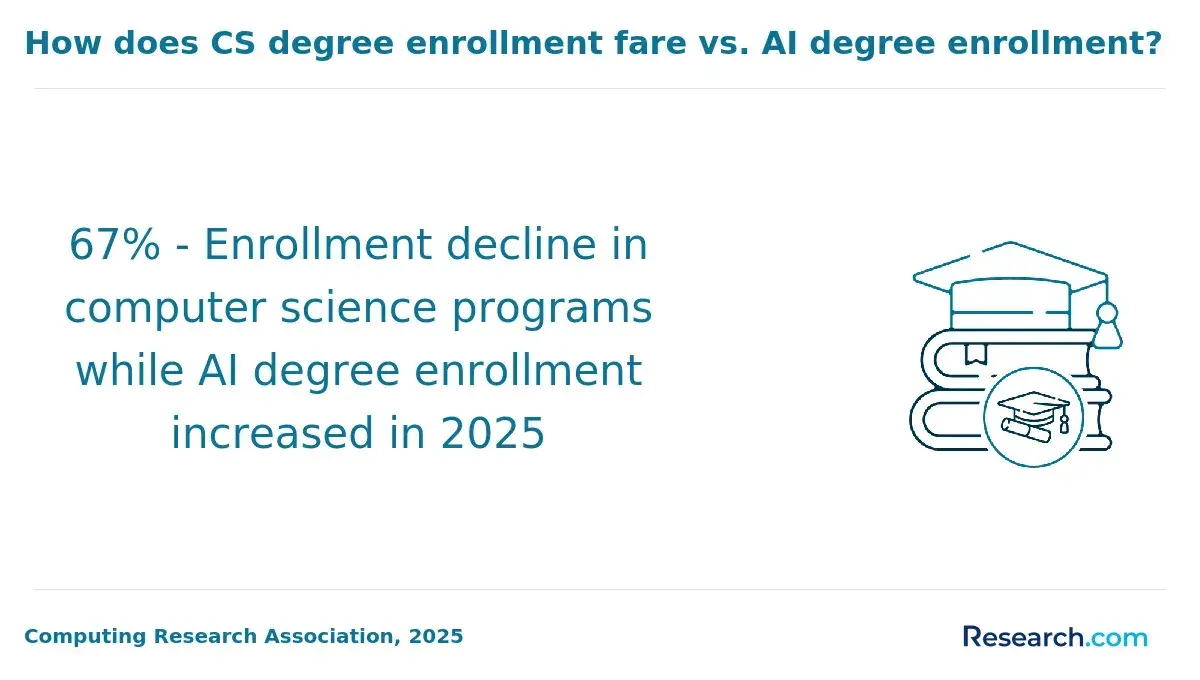
Which types of AI training paths exist for claims professionals (certificates, degrees, bootcamps)?
Claims professionals seeking effective AI training programs for claims professionals typically choose among certificates, degrees, and bootcamps. Certificate programs are short-term and focused, helping working professionals quickly gain skills in machine learning applications, automation workflows, and data analytics tailored to insurance claims. These certificates often highlight how AI reduces manual claims routing errors by 10-15%, as shown by the Capgemini Research Institute.
Degree programs, such as bachelor's or master's degrees in data science, computer science, or AI, offer in-depth theoretical and technical knowledge. They prepare students for leadership in claims management or analytics roles.
Degrees take two to four years and cover algorithm design, AI ethics, and scalable AI systems, contributing to up to a 20% improvement in straight-through processing for P&C insurers using AI triage. For those exploring longer academic paths, a cybersecurity degree online may also be of interest due to overlapping data protection competencies.
Bootcamps offer intensive, hands-on training over weeks to months, focusing on practical skills like AI-driven fraud detection and customer interaction automation. They suit mid-career professionals seeking rapid upskilling without long academic commitments.
When considering certification and degree options in AI for insurance claims, factors like time, budget, and desired expertise depth are crucial. Combining certifications with continuing education often leads to the fastest operational gains.
What should claims teams look for in accredited AI programs and reputable providers?
Claims teams should prioritize accredited AI certification programs for claims management professionals that combine technical expertise with practical industry applications. Trusted providers of artificial intelligence training for insurance teams offer courses specifically designed to enhance claims management through tools such as natural language processing (NLP) for automating correspondence and data analytics for detecting fraud.
It is vital that these programs provide verified credentials accepted by insurance industry bodies or accredited academic institutions to ensure curriculum quality and relevance.
Programs should address real-world claims challenges like reducing adjuster workload and enhancing customer communication via generative AI. Research demonstrates that insurers piloting generative AI for claims correspondence have cut adjuster documentation time by 25-40% while maintaining or improving customer satisfaction, underscoring the importance of efficiency-focused education without sacrificing quality.
Courses offering hands-on projects, case studies, or simulations with current industry data privacy and compliance standards are highly valuable. Understanding AI model explainability and risk management is critical to meet regulatory requirements and prevent unintended biases in claims decisions.
Reputable programs often partner with insurance firms to ensure training remains aligned with industry evolution.
Flexibility is key-options like online versus in-person formats, modular structures, and access to up-to-date AI software tools help professionals fit training into their schedules and technology preferences. Strong post-completion support, including career counseling and networking, enhances the ability of claims professionals to apply AI skills effectively.
Those interested in expanding their expertise may also explore an MS in data analytics to deepen their analytical skills and complement AI training in claims management.
How do online AI courses for claims compare with campus and corporate training options?
Online AI courses tailored for claims management provide flexibility and specialized focus often lacking in traditional campus or corporate training programs. Unlike campus courses with fixed schedules and broad curricula, online options concentrate on AI applications like predictive analytics, fraud detection, and process automation. Corporate training typically targets immediate, proprietary skills but may lack theoretical depth and cross-industry insight.
These online courses offer scalability for teams spread across multiple locations, allowing individual pacing and a unified knowledge base. Conversely, corporate programs can be more expensive per employee and less continuous, limiting long-term skill enhancement.
Deloitte's 2024 insurance outlook highlights that advanced predictive analytics in claims can reduce indemnity costs by 10-15% and improve claim leakage detection by 20% for carriers who adopt these technologies. Courses incorporating case studies and practical projects with real datasets prepare claims teams to implement similar solutions more effectively.
While some professionals benefit from campus programs for comprehensive theoretical grounding or academic credentials, corporate training remains vital for customizing AI to specific platforms and workflows. Many claims management teams find the best results by combining online AI courses for foundational skills with corporate training for practical implementation.
What core AI skills and topics should a claims-focused curriculum include?
A claims-focused AI curriculum should center on skills that improve claims processing accuracy and efficiency. Key subjects include supervised learning for predictive modeling and natural language processing (NLP) to extract essential data from unstructured sources like claim forms and reports. Mastery of data management and preprocessing ensures clean, reliable datasets for AI applications.
Risk assessment and fraud detection algorithms play a crucial role, equipping learners to identify anomalies and reduce financial losses. Ethics and regulatory compliance training is vital, especially considering NAVEX's 2024 AI at Work survey findings showing 61% of organizations lack formal AI ethics training while 74% worry about legal risks associated with AI misuse. This highlights the need for courses on bias mitigation, transparency, and fairness in AI use within claims management.
Additional important topics include automation through AI-driven workflows, reinforcement learning for adaptable decision systems, and explainable AI techniques that offer understandable rationales for AI decisions. Practical case studies and hands-on projects using real-world datasets solidify these concepts.
Students should also gain proficiency in analytics tools and programming languages like Python or R, along with AI frameworks such as TensorFlow or PyTorch. Emphasizing collaboration between AI technologies and human adjusters prepares professionals for hybrid workflows that uphold accuracy, accountability, and compliance in regulatory environments.
What are typical admission requirements, program lengths, and study time commitments?
Admission to AI courses for claims management professionals usually requires a bachelor's degree in business, information technology, insurance, or related fields. Foundational skills in data analysis or programming languages like Python or R are commonly expected. Advanced or executive-level programs often ask for 3-5 years of industry experience to ensure practical relevance, especially in claims processing.
Course durations vary significantly: short workshops last 4-8 weeks, certificate programs range from 3-6 months, and part-time online options span 12-24 weeks for working professionals. Graduate-level degrees focusing on AI in claims management may take 1-2 years. Weekly study commitments range from 4-10 hours for shorter courses to 12-15 hours for intensive or graduate programs.
Blended learning, combining asynchronous modules with live sessions, is popular among employers supporting claims teams to balance education with workloads. According to the 2025 Streamline AI report on claims automation, insurers using AI reduced manual data entry by 60% and operational costs by 15-20% within one year, highlighting the impact of AI knowledge on efficiency.
Prospective students should evaluate their technical baseline and schedule flexibility when choosing programs. Solid preparation in programming and data skills enhances success in AI-focused claims management education.
How much do AI courses for claims management cost, and what funding options exist?
AI courses for claims management vary widely in cost, generally ranging from $500 to $5,000 depending on the provider, format, and depth of instruction. Short online certifications or workshops usually cost between $500 and $1,500, making them ideal for professionals seeking foundational skills without a significant time commitment.
More comprehensive bootcamps or university-affiliated programs, which include advanced lessons and practical projects, typically fall in the $3,000 to $5,000 range. Longer courses with more instructor interaction and content coverage tend to be priced higher.
Several funding options can help reduce these costs. Employers often support employee upskilling through tuition reimbursement or professional development budgets, especially within insurance companies focused on integrating AI technology.
Federal and state workforce grants may also subsidize training expenses, particularly for programs aligned with industry needs. Additionally, some course providers offer scholarships and installment plans to improve affordability.
Choosing the right financial support depends on individual circumstances such as employer policies and location. Insurers that combine structured workforce upskilling with AI implementation report 2.4 times higher ROI on their AI investments, according to Accenture's "Insurance Reinvented with AI" study. This highlights the strategic advantage of investing in relevant AI education to maximize technology adoption.
What AI-related job roles, promotions, and career paths can claims professionals pursue?
Claims professionals can expand their careers by developing expertise in artificial intelligence through roles like AI claims analyst and AI underwriter. These roles leverage data analysis, machine learning integration, and process automation to improve claim outcome predictions and fraud detection.
Leadership opportunities, such as AI program manager or claims automation supervisor, enable professionals to oversee AI-driven workflows and facilitate cross-departmental AI adoption.
Career advancement often involves moving from traditional claims adjusting to hybrid positions that combine claims knowledge with oversight of AI tools. Examples include data-driven claims strategist roles optimizing case management and fraud detection leads employing AI-powered anomaly detection.
Research from Gradient AI highlights that AI reduces litigated claims by up to 20% and enhances subrogation recovery by 10-15%, emphasizing the practical benefits of these career paths.
Additional paths include AI ethics compliance, technical claims consulting, and AI policy development within insurance companies. Gaining certifications in machine learning or data science tailored to insurance improves promotion prospects and access to emerging roles. Building skills in AI-assisted decision-making and automated workflow tools is crucial for staying competitive.
Expertise in AI-driven analytics and claims automation enables professionals to address implementation challenges and collaborate effectively with data scientists and IT teams. Clear competence in AI-related areas opens leadership roles focused on transforming claims performance and minimizing operational risks.
Are there industry-recognized AI or insurance analytics certifications valuable for claims teams?
AI and insurance analytics certifications are essential for claims management professionals aiming to boost their skills and career paths. Highly valued credentials include the Certified Analytics Professional (CAP) and the AI in Insurance certification from the Global Insurance Accelerator.
These certifications confirm expertise in applying artificial intelligence to claims processing, fraud detection, and risk assessment, offering practical methods for integrating AI tools both effectively and ethically.
Available programs vary from foundational courses covering machine learning basics to advanced certifications in predictive analytics and natural language processing for insurance. The Society of Actuaries (SOA), for example, provides specialized credentials in predictive analytics relevant to claims evaluation.
IBM's AI Engineering Professional Certificate equips professionals with essential skills such as data modeling and automation, improving claims accuracy and efficiency.
- LinkedIn reports a 160% year-over-year rise in AI and machine-learning course enrollments among insurance professionals, underlining the growing importance of AI knowledge.
- Claims managers should consider industry-specific relevance, hands-on projects, and compliance alignment with standards like GDPR or HIPAA.
- Continuous training combined with certifications helps maintain proficiency as AI evolves and supports hiring strategies by verifying data-driven competencies.
Other Things You Should Know About Artificial Intelligence
Claims management teams often struggle with integrating artificial intelligence into existing legacy systems, which can be complex and costly. Data quality and availability also pose significant challenges, as AI algorithms require large, accurate datasets to perform effectively. Additionally, there is a need for ongoing training and adaptation to ensure staff can work alongside AI tools efficiently while addressing ethical and privacy concerns related to sensitive claimant information.
For 2027, top AI courses like Coursera's "AI for Business Leaders" and edX's "Artificial Intelligence for Decision Making" are highly recommended. These courses focus on equipping claims management professionals with strategic AI tools and improved decision-making capabilities.
Explainability is critical in claims management AI because stakeholders must understand how decisions are made, especially when rejecting or approving claims. Transparent AI models help build trust among users and claimants by providing clear rationale behind outcomes. This makes it easier to comply with regulatory requirements and improves the adoption of AI technologies within insurance firms.
Yes, ethical considerations include ensuring fairness and avoiding bias in AI algorithms, which can unintentionally discriminate against particular groups. Maintaining claimant privacy and data security is also essential, given the sensitive nature of insurance information. Insurers must implement governance frameworks to monitor AI applications continuously and ensure compliance with legal and ethical standards.
References
- 5 Ways Artificial Intelligence can Boost Claims Management https://www.aon.com/en/insights/articles/5-ways-artificial-intelligence-can-boost-claims-management
- Artificial Intelligence (AI) for Insurance Claims in 2026 https://www.scnsoft.com/insurance/artificial-intelligence/claims
- AI Claims Processing Software for US Carriers - 90-Sec Decisions https://www.decerto.com/us/claimsai
- URAC starts AI accreditation for users and developers of AI https://www.fiercehealthcare.com/ai-and-machine-learning/urac-starts-ai-accreditation-users-and-developers-health-ai
- Why AI Governance Is Essential for Insurance Claims Organizations https://www.claimsjournal.com/sponsored/wisedocs/2026/05/20/337680.htm
- AI Skills for Life and Work: Rapid Evidence Review https://www.gov.uk/government/publications/ai-skills-for-life-and-work-rapid-evidence-review/ai-skills-for-life-and-work-rapid-evidence-review
- 5 Best AI Solutions for Insurance Companies https://neurons-lab.com/articles/best-ai-for-insurance-companies/
- How AI Helps Claims Teams Focus on What Really Matters - Keylane https://keylane.com/how-ai-helps-claims-teams-focus-on-what-really-matters/
- AI Courses vs Bootcamps in 2026: What’s Best for Your Career https://agilefever.com/ai-courses-vs-bootcamps-which-one-to-choose/
- The Role of Artificial Intelligence in Claims and Risk Management https://trainingcred.com/blog/the_Role_of_Artificial_Intelligence_in_Claims_and_Risk