2027 Best AI Courses for Transportation Analytics Teams

Co-Founder and Chief Data Scientist
Transportation analytics teams often face challenges in extracting actionable insights from complex data streams involving traffic patterns, logistics efficiency, and predictive maintenance. Without specialized skills in artificial intelligence, these teams may struggle to optimize routes, reduce costs, or improve safety outcomes. The rapid evolution of AI tools demands continuous education tailored to transportation contexts. This article highlights top courses designed to equip professionals with the necessary expertise in machine learning, data modeling, and AI applications relevant to transportation. It aims to guide readers toward flexible, accredited programs that facilitate a successful career pivot into this growing interdisciplinary field.
Key Things You Should Know
- AI courses for transportation analytics increasingly integrate real-time data processing, reflecting a 35% growth in demand for specialists skilled in predictive maintenance and traffic optimization since 2024.
- Top programs emphasize machine learning applications in route planning and autonomous vehicles, with over 60% of curricula updated in 2025 to include neural network techniques.
- Certification completion boosts employment prospects by up to 40% in transportation sectors adopting AI-driven solutions, highlighting the value of specialized education for career advancement.
Advance Your Career with AI Online Courses
Artificial Intelligence: Implications for Business Strategy
This program provides an introduction to Artificial Intelligence and their implications for business strategy. Earn an official digital certificate.

Oxford Artificial Intelligence Programme
Explore this Oxford Artificial Intelligence programme offered in a flexible learning environment and explore topics like machine learning, automation, and robotics.

Implementing Agentic AI: Building Your Organizational Playbook
This online MIT Agentic AI course offers a practical approach to deploying AI agents in your organization, including a custom playbook. 3 weeks, exclusive launch price.

AI Adoption: Driving Business Value and Impact
This online MIT AI Adoption: Driving Business Value and Impact offers practical frameworks to close the gap between AI potential and business reality.

Artificial Intelligence in Pharma and Biotech
Discover the applications and limitations of artificial intelligence in pharma and biotech with this MIT online short course.

What are the best AI courses for transportation analytics teams and who are they for?
Transportation analytics teams benefit most from AI training programs for transportation data professionals that blend foundational knowledge with practical, sector-specific skills. Ideal courses cover machine learning, data engineering, and predictive analytics tailored for logistics and supply chain challenges. These programs target data scientists, analysts, and operations managers seeking to optimize routing, demand forecasting, and fleet management through AI.
Strong candidates typically possess a working knowledge of statistics and programming languages like Python or R. Hands-on experience with real-world transportation datasets and tools such as TensorFlow or PyTorch is invaluable.
Courses focusing on reinforcement learning for dynamic route optimization or deep learning for traffic pattern recognition equip teams to tackle complex operational problems effectively.
Given regulatory scrutiny, courses that emphasize ethical AI use and explainability are critical. McKinsey reports that AI adoption in transportation and logistics could boost annual profits by up to 13% and revenue by up to 8%, underscoring the significant ROI of skilled AI professionals in this field.
Many programs designed for working professionals offer modular formats to fit tight schedules. Some emphasize integrating AI with Internet of Things (IoT) data for better real-time decision-making in fleet and asset management. For those exploring further, understanding what is applied artificial intelligence can provide deeper insights into the practical applications of these courses.
Ultimately, the best AI courses for transportation analytics teams combine rigorous technical training with industry-specific case studies, ensuring skills can be immediately applied to improve efficiency and profitability in logistics operations.
Advance Your Career with AI Online Courses
Artificial Intelligence: Implications for Business Strategy
This program provides an introduction to Artificial Intelligence and their implications for business strategy. Earn an official digital certificate.
Oxford Artificial Intelligence Programme
Explore this Oxford Artificial Intelligence programme offered in a flexible learning environment and explore topics like machine learning, automation, and robotics.
Implementing Agentic AI: Building Your Organizational Playbook
This online MIT Agentic AI course offers a practical approach to deploying AI agents in your organization, including a custom playbook. 3 weeks, exclusive launch price.
How can AI training specifically improve performance for transportation analytics professionals?
AI training benefits for transportation analytics teams by enhancing their ability to process vast data sets, optimize routing, and predict traffic patterns with greater accuracy. These skills enable professionals to create dynamic models for demand forecasting and real-time decision-making, which boosts efficiency in logistics and public transit systems.
Improving decision-making with AI skills in transportation analytics specifically helps streamline scheduling by analyzing factors like historical ridership and weather events, leading to better resource allocation and cost reduction.
Machine learning algorithms uncover patterns in transportation networks that traditional methods might overlook. Additionally, expertise in natural language processing and computer vision allows analysts to integrate unstructured data such as sensor readings and driver reports. This broadens the range of data inputs used for predictive maintenance and safety improvements.
Core AI competencies also automate routine analysis, freeing professionals to focus on complex problem-solving and strategic planning. Practical knowledge in model validation, deployment, and ethical issues prepares transportation analytics teams to create reliable AI systems while maintaining compliance with regulations.
According to O*NET and BLS, operations research analysts and data scientists in transportation sectors are projected to grow about 23% from 2023 to 2033, which exceeds the average for all occupations. For individuals seeking to advance in this field, pursuing a mechanical engineer degree online can provide valuable technical foundations that complement AI skills.
What skills and prerequisites do transportation analytics teams need before starting AI courses?
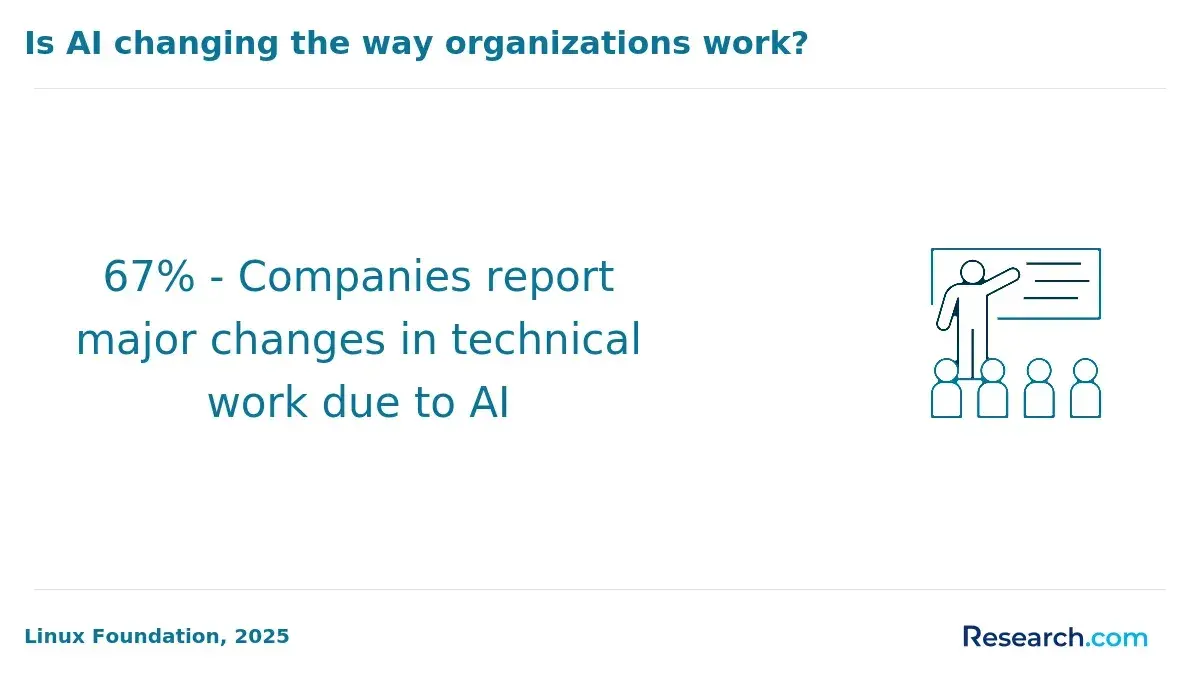
Transportation analytics teams seeking AI course success need a strong foundation in data analysis and statistics to interpret complex datasets and spot key patterns for network optimization. Proficiency in programming languages such as Python or R is vital for preparing data, developing algorithms, and evaluating AI models effectively.
Essential prerequisites for AI training in transportation analytics also include knowledge of machine learning basics, covering supervised and unsupervised learning approaches, along with algorithms like regression, classification, clustering, and reinforcement learning that support logistics decision-making.
Domain expertise in transportation systems-focusing on challenges like traffic flow, delivery schedules, and load balancing-ensures AI applications are realistic and beneficial. Additionally, understanding data infrastructure components such as databases and cloud computing is necessary to handle large datasets and enable scalable solutions.
Experience with geographic information systems (GIS) and spatial data analysis further improves route optimization and fleet management. Familiarity with optimization algorithms aids in refining scheduling and resource allocation.
According to a McKinsey analysis, AI-driven route and load optimization can reduce empty miles by 10-20% and transportation costs by 5-10%, benefiting network performance and margins. Transportation analytics team skills for AI course success underpin these cost-saving advantages and help overcome barriers in applying AI effectively.
Professionals preparing for such roles may consider advancing their education through programs like a data science master online to build necessary technical expertise.
Which degree, certificate, and short-course pathways teach AI for transportation analytics?
Degree pathways teaching AI degree programs for transportation analytics often include master's programs in data science, computer science, and transportation engineering with specialization tracks in AI. These programs cover machine learning, computer vision, sensor data fusion, and predictive modeling. Universities such as Carnegie Mellon and the University of Michigan offer curricula focused on AI applications in traffic safety and smart mobility.
Certificate and short courses teaching AI in transportation analytics provide practical skills for transportation professionals, emphasizing autonomous vehicles, real-time traffic analytics, and sensor integration. Institutions like Stanford and Georgia Tech design these programs to prepare students for industry demands.
Working professionals can also benefit from short courses and professional development workshops offered by platforms such as Coursera and edX, covering computer vision for traffic management and machine learning for accident prediction.
Integrating AI into transportation analytics addresses key challenges like reducing crash rates and enhancing fleet safety. A U.S. DOT review highlights that driver monitoring using computer vision and advanced driver-assistance systems reduce crash rates by 27-50% in commercial fleets, depending on system design and coaching intensity.
Employers seek candidates experienced with AI frameworks capable of handling noisy transportation data and implementing real-time analytics for safety improvements.
Students and professionals looking for flexible learning options may explore military friendly online electrical engineering degree programs, which sometimes include AI-related coursework applicable to transportation analytics.
How do online AI programs for transportation analytics compare with campus-based options?
Online AI programs for transportation analytics provide greater flexibility and accessibility compared to traditional campus-based options. They cater to working professionals and students nationwide, allowing self-paced study without geographic restrictions. This flexibility supports busy schedules while still offering advanced features such as interactive simulations, live sessions, and collaborative projects that mimic in-person learning experiences.
Campus-based programs typically offer more structured environments with direct faculty access, hands-on labs, and real-time teamwork, which benefit deep technical training and research. Additionally, they emphasize networking opportunities, internships, and industry partnerships to improve career placement.
Some online courses also collaborate with transportation firms, providing practical case studies and scenario planning to help students gain relevant skills aligned with industry demands.
Organizations using AI-assisted analytics for transportation planning have cut analysis cycles from weeks to days and reduced manual reporting effort by up to 50%, according to Oracle. Mastery of generative AI applications, accessible through both online and campus formats, significantly boosts operational efficiency in transportation planning.
When choosing between online and campus options, prospective students should consider their learning style, desire for hands-on experience, and available career support services.
What core topics and tools are covered in AI courses for transportation analytics teams?
AI courses for transportation analytics teams focus on key topics vital to advancing urban mobility systems. These include machine learning algorithms for transit demand forecasting, which improve prediction of rider volumes and help balance supply and demand efficiently.
Dynamic dispatch strategies based on reinforcement learning optimize vehicle allocation in real time, enhancing fleet use and reducing passenger wait times. Data integration from sources like GPS, IoT sensors, and public transit schedules supports comprehensive multimodal transportation analysis.
Participants commonly work with Python and libraries such as TensorFlow, PyTorch, and scikit-learn for developing predictive models. Geospatial analysis using GIS tools and spatial data libraries deepens insight into mobility trends. Big data platforms and cloud computing facilitate handling extensive transit datasets, while visualization tools like Tableau and Power BI enable clear data-driven decision-making.
The U.S. Department of Transportation reports AI-driven transit demand prediction and dynamic dispatch raise on-time performance by up to 20% and cut passenger wait times by 15-30% in pilot urban projects. Courses also address challenges like managing real-time data streams, adapting models to evolving travel patterns, and ensuring equity in AI applications.
Transportation analytics AI training offers hands-on experience with predictive modeling, optimization algorithms, geospatial analytics, and scalable computing environments-critical skills for improving public transit efficiency and rider satisfaction.
How can teams evaluate accreditation, instructor expertise, and program quality in this niche?
Transportation analytics programs gain credibility through accreditation by recognized bodies such as ABET or the Distance Education Accrediting Commission. Accreditation confirms that a program aligns with industry standards crucial for career advancement and applied skill development.
Evaluating instructor expertise involves reviewing their professional achievements, including research publications in transportation analytics or applied machine learning, and active industry involvement, which ensures relevant, real-world perspectives.
Strong curricula emphasize key areas like predictive modeling, IoT data integration, and geospatial analytics tailored to transportation systems. Practical learning through hands-on projects or case studies helps solidify these skills. Alumni feedback and outcome data can further indicate program quality and effectiveness.
Prospective students should ask:
- What is the program's accreditation status?
- What credentials and ongoing contributions do instructors have in transportation analytics?
- How integrated are practical applications and real transportation datasets?
- Does the curriculum stay current with emerging AI techniques?
The advantage of structured AI and data analytics training is clear: a corporate learning benchmarking study by Learning Tree highlights that trained teams complete projects 30-40% faster and implement insights more quickly than untrained counterparts.
This underscores the importance of selecting accredited programs with qualified instructors and applied content to accelerate transportation analytics initiatives.
What are the typical costs of AI training for transportation analytics and how can employers fund it?
Costs for AI training in transportation analytics vary widely, ranging from about $1,000 for introductory online courses to over $10,000 for comprehensive, instructor-led programs or bootcamps. Specialized courses in data science and machine learning designed for transportation professionals often charge between $3,000 and $7,000 per participant.
Prices rise further for customized corporate training or certifications that focus on AI tools specific to transit operations, logistics optimization, and predictive modeling.
Employers have several practical options to fund AI training. Many set aside dedicated budgets aligned with workforce digital transformation goals. Federal and state workforce development grants frequently support training in emerging technologies like AI.
Businesses can also utilize Workforce Innovation and Opportunity Act (WIOA) funds when working with approved training providers. Tax incentives such as the Employee Retention Credit or technology modernization credits can reduce the overall investment for upskilling employees.
Financing organization-wide AI learning programs tends to be more cost-effective. According to Lattice's 2024 workplace learning survey, companies with broad AI upskilling initiatives are 1.7 times more likely to achieve significant productivity gains than those with smaller or ad hoc efforts.
Blended learning approaches-combining e-learning, in-person workshops, and project-based training-help balance expenses while meeting diverse workforce needs. Partnering with universities or industry consortia may provide discounted group rates and access to specialized transportation analytics curricula tailored to evolving industry demands.
What career outcomes, roles, and salary ranges can AI-trained transportation analysts expect?
AI-trained transportation analysts hold various roles such as Transportation Data Analyst, Supply Chain AI Specialist, Predictive Maintenance Engineer, and Smart Mobility Consultant. These positions focus on optimizing routes, forecasting demand, improving maintenance schedules, and integrating autonomous vehicle data into transportation operations. Salaries typically start around $65,000 for entry-level roles and can exceed $110,000 annually for experienced professionals in the U.S.
The demand for AI expertise in transportation analytics is rising due to the growing complexity of logistics and the push for automation. According to Georgia Tech Professional Education, completing AI and analytics certificates tailored to transport and supply chain boosts salaries by an average of 8-14% within two years, demonstrating a strong return on investment.
Career paths include AI-driven route optimization, predictive analytics leadership, and incorporating sensor data from connected vehicles to improve safety and efficiency. Candidates with skills in Python, big data tools, and domain-specific knowledge often secure higher pay and faster advancement.
Students and professionals should prioritize specialized AI courses that align with transportation industry needs to enhance their technical skills and accelerate salary growth.
Are there industry certifications or professional standards relevant to AI in transportation analytics?
Industry certifications and professional standards are essential for transportation analytics teams adapting to evolving AI integration demands. The U.S. Department of Transportation's 2024 AI strategy mandates that over 75% of new federally supported transportation AI projects require workforce training on AI ethics, safety, and governance. This makes AI literacy a crucial compliance factor for securing future funding.
Key certifications, such as the Certified Analytics Professional (CAP), validate expertise in data-driven decision-making. Specialized courses in AI ethics also cover important areas like bias mitigation, transparency, and accountability in AI algorithms, meeting federal safety and governance standards.
Training aligned with guidelines from organizations like the Institute of Electrical and Electronics Engineers (IEEE) supports the development of trustworthy AI systems. Certifications in safety management systems (SMS) or transportation cybersecurity complement AI knowledge by addressing integrated risk management.
Meeting these certification requirements signals dedication to compliance and best practices, which is critical for participation in federally funded transportation projects. Professionals should focus on programs combining AI technical skills with regulatory and ethical training to meet sector expectations effectively.
Other Things You Should Know About Artificial Intelligence
Artificial intelligence enhances data security in transportation analytics by identifying patterns indicative of cyber threats or anomalies in real-time. AI-driven systems can detect unauthorized access or data breaches faster than traditional methods, enabling quicker mitigation. However, the complexity of AI models also demands robust security frameworks to protect the algorithms and sensitive transportation data from exploitation.
Transportation analytics teams in 2027 can overcome AI implementation challenges by focusing on data quality, securing expert collaboration, leveraging cloud-based solutions for scalability, and investing in employee training programs that emphasize AI literacy and skills development. Utilizing open-source AI tools can also help mitigate cost challenges.
Explainability refers to how well AI decisions can be understood by humans, which is crucial in transportation analytics for trust and regulatory compliance. Transparent AI models help stakeholders validate outputs and make informed decisions. Lack of explainability may hinder adoption, especially in safety-critical applications like traffic management or autonomous systems.
Continuous learning allows AI models to update themselves using new data to maintain accuracy over time as transportation patterns and conditions evolve. This adaptability is vital for dealing with dynamic environments, seasonal variations, and unexpected events. It helps transportation analytics teams keep predictions and insights relevant without complete retraining.
References
- Artificial Intelligence Courses - Online, TAFE Courses https://www.tafecourses.com.au/courses/artificial-intelligence/
- How AI Cuts Operational Overhead for Businesses https://www.techclass.com/resources/learning-and-development-articles/role-of-ai-in-reducing-operational-overhead-costs
- Adoption of generative AI will have different effects across jobs in the U.S. logistics workforce https://equitablegrowth.org/adoption-of-generative-ai-will-have-different-effects-across-jobs-in-the-u-s-logistics-workforce/
- EU AI Act | Online Training, Exam, Certificate of Completion https://www.artificial-intelligence-act.com/Artificial_Intelligence_Act_Trained_Professional_(AIActTPro).html
- Top 9 AI Tools in Transportation in 2025 https://www.avatarfleet.com/blog/top-ai-tools-in-transportation
- CIHT Membership for Individuals https://www.ciht.org.uk/news/new-online-course-introduction-to-ai-in-transportation/
- The True Cost of Implementing AI in Business in 2026 - Riseup Labs https://riseuplabs.com/cost-of-implementing-ai-in-business/
- Leveraging AI for Roadway Innovations https://www.irf.global/event/ai25-ws-online-training/
- AI-Assisted Transportation Analytics: Turning Cost and Service Challenges into Action https://blogs.oracle.com/analytics/ai-assisted-transportation-analytics-turning-cost-and-service-challenges-into-action
- 16 Artificial Intelligence Career Paths https://www.calmu.edu/news/artificial-intelligence-career-paths