2027 Best AI Courses for CEOs Managing AI Adoption

Co-Founder and Chief Data Scientist
CEOs grappling with how to steer their companies through AI adoption often face a steep learning curve. They must make strategic decisions about technology integration, workforce adjustments, and ethical considerations without specialized knowledge. Many leaders feel overwhelmed by the rapid pace of innovation and the technical jargon clouding actionable insights.
Without targeted education, they risk misinformed investments or stalled projects. This article highlights the best AI courses tailored to executives, focusing on flexible, accredited programs that equip CEOs with practical skills and strategic frameworks. It aims to help leaders confidently manage AI initiatives and drive effective organizational change.
Key Things You Should Know
- CEOs increasingly prioritize AI courses that blend technical understanding with strategic leadership, as 78% of executives acknowledge AI's critical role in business growth by 2025.
- Programs focusing on AI ethics, risk management, and change leadership show a 42% rise in enrollment, reflecting growing awareness of responsible AI adoption challenges.
- Top AI courses integrate real-world case studies and ROI analytics, enabling CEOs to measure AI impact effectively and drive informed investment decisions.
Advance Your Career with AI Online Courses
Artificial Intelligence: Implications for Business Strategy
This program provides an introduction to Artificial Intelligence and their implications for business strategy. Earn an official digital certificate.

Oxford Artificial Intelligence Programme
Explore this Oxford Artificial Intelligence programme offered in a flexible learning environment and explore topics like machine learning, automation, and robotics.

Implementing Agentic AI: Building Your Organizational Playbook
This online MIT Agentic AI course offers a practical approach to deploying AI agents in your organization, including a custom playbook. 3 weeks, exclusive launch price.

AI Adoption: Driving Business Value and Impact
This online MIT AI Adoption: Driving Business Value and Impact offers practical frameworks to close the gap between AI potential and business reality.

Artificial Intelligence in Pharma and Biotech
Discover the applications and limitations of artificial intelligence in pharma and biotech with this MIT online short course.

What should CEOs look for in AI courses designed for executive decision-makers?
CEOs must focus on AI courses for executive decision-makers that bridge technical knowledge with strategic business applications. Emphasizing generative AI's impact on competitive advantage aligns with findings from PwC's 2025 Global CEO Survey, where 70% of CEOs worry about their company's economic viability without AI adoption.
Practical frameworks for AI integration into operations are essential, helping executives assess readiness, manage cross-disciplinary teams, and address ethical and compliance challenges.
Advanced leadership skills for managing artificial intelligence integration include understanding AI governance, risk management, and regulatory considerations. While deep programming expertise is unnecessary, executives need to grasp AI capabilities, limitations, and scalability.
Case studies showcasing successful AI implementations across industries enable more informed decisions on investment and resource allocation.
Effective programs also cover change management and organizational culture, addressing resistance to AI adoption. Interactive modules or peer discussions strengthen leadership during transformation. Additionally, staying current with AI trends and vendor landscapes enables CEOs to anticipate future shifts and innovate proactively.
Prospective learners seeking such expertise may explore accelerated computer science programs that provide relevant knowledge at scale and pace to meet evolving strategic needs.
Advance Your Career with AI Online Courses
Artificial Intelligence: Implications for Business Strategy
This program provides an introduction to Artificial Intelligence and their implications for business strategy. Earn an official digital certificate.
Oxford Artificial Intelligence Programme
Explore this Oxford Artificial Intelligence programme offered in a flexible learning environment and explore topics like machine learning, automation, and robotics.
Implementing Agentic AI: Building Your Organizational Playbook
This online MIT Agentic AI course offers a practical approach to deploying AI agents in your organization, including a custom playbook. 3 weeks, exclusive launch price.
Which AI skills and concepts do CEOs need to lead enterprise AI adoption effectively?
CEOs leading enterprise AI adoption in 2026 must develop a blend of technical, strategic, and ethical skills to stay competitive. Gartner forecasts that 80% of enterprises will deploy generative AI APIs or applications, highlighting the urgency for CEOs to understand key concepts for CEOs managing AI adoption.
Core knowledge includes machine learning models, natural language processing, and generative AI technologies, which are crucial for evaluating vendors and guiding cross-functional teams.
Strategic leadership in this domain involves aligning AI projects with business goals through data-driven decision-making and ROI evaluation. CEOs should interpret AI performance metrics and risks to prioritize scalable initiatives effectively. AI governance and ethics take center stage to address challenges like bias, privacy, and regulatory compliance.
Practical enterprise AI leadership skills for CEOs include:
- Translating technical AI insights into business outcomes for boardroom communication.
- Creating change management strategies to boost AI literacy organization-wide.
- Partnering with AI experts and data scientists to foster innovation.
- Evaluating data quality and integration to assess infrastructural readiness.
Confronting resistance to AI adoption, unclear ROI, and rapid tech shifts requires mastery of ethics frameworks and risk mitigation. CEOs who excel in these areas will drive transformation and maintain advantage.
Professionals interested in advancing their AI and engineering expertise might explore the cheapest engineering degree programs online for a practical path forward.
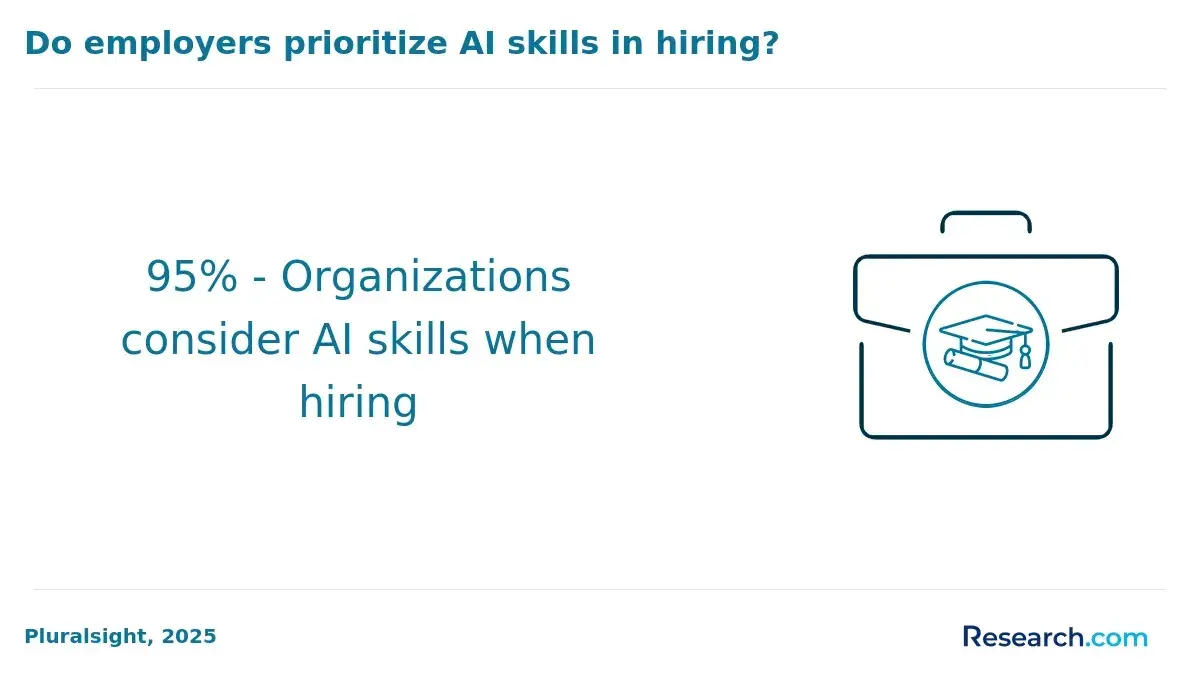
How do top AI executive programs differ across universities, business schools, and tech providers?
Top AI executive programs show notable differences between AI executive programs at universities and business schools, especially in focus and curriculum. Universities typically provide a broad, interdisciplinary foundation that links AI's strategic influence with ethics, economics, and social impact.
For instance, MIT Sloan combines AI strategy with leadership and innovation, equipping CEOs to assess AI investments and governance. Business schools like Wharton and Harvard Business School emphasize leadership and market-driven transformation, using case studies on AI's business and organizational effects rather than deep technical content.
Tech providers design AI leadership courses for executives with a more practical approach. Companies such as Microsoft and IBM offer short, skills-based programs focused on current AI tools and their direct application to business challenges. While these courses may lack comprehensive strategic depth, they excel at translating AI capabilities into operational solutions.
The 2024 IBM Institute for Business Value survey highlights that 79% of CEOs prioritize understanding AI's strategic business impact over hands-on technical skills for workforce upskilling through 2027. This underscores the importance of strategic adoption, risk management, and change leadership in executive education.
CEOs should consider their needs carefully: university programs for a wide AI ecosystem perspective, business schools for leadership and strategy, and tech providers for practical skills. Executive education blending these areas can close gaps and enable leaders to govern AI transformation effectively.
For professionals exploring education options, it's also useful to compare programs with related fields such as video game design degree programs, which share technology and innovation aspects.
What curriculum topics do the best AI courses for CEOs typically cover?
Top AI courses for CEOs focus on building strategic, technical, and ethical skills vital for effective AI adoption. They cover foundational topics like machine learning, natural language processing, and data analytics, enabling executives to grasp AI capabilities without deep programming expertise.
Emphasizing AI strategy development for executive leadership, these programs teach integration of AI into business models to fuel innovation and identify value-creation opportunities.
Managing AI integration and adoption challenges is a key theme, addressing risk management, data privacy, algorithmic bias, and regulatory compliance. CEOs learn to ensure responsible AI deployment aligned with corporate governance through case studies that highlight best practices and common pitfalls.
Leadership training also targets organizational change, helping executives foster an AI-literate culture, reskill workforces, and manage human-AI collaboration.
Guidance on vendor evaluation, project funding, and performance metrics often complements this curriculum. Typical AI executive programs from top universities range between $2,500 and $3,500, with completion rates above 80%, reflecting strong learner engagement.
Those seeking a deeper technical grounding may consider graduate options such as a masters in data analytics, which supports comprehensive understanding to enhance AI-driven leadership in complex business environments.
How do online, hybrid, and on-campus AI programs compare for busy executives?
Programs in artificial intelligence designed for busy executives come in three main formats: online, hybrid, and on-campus. Online programs offer the greatest flexibility, with asynchronous lectures and modular content that allow leaders to learn on their own schedules, even during global travel.
However, these formats may miss out on valuable networking and hands-on experiences important for navigating AI leadership challenges.
Hybrid programs blend virtual coursework with in-person workshops, providing a balance between convenience and engagement. Executives might participate in monthly strategy simulations or practical AI labs, fostering collaboration with peers and instructors. This model suits those who want connection and experiential learning without a full on-campus commitment.
On-campus programs immerse participants in environments rich with resources such as AI research labs, live mentoring, and direct peer interaction. These intensive sessions work well for leaders able to dedicate significant time to mastering the technical and ethical complexities of AI integration at an enterprise level.
According to a 2024 McKinsey survey, companies with senior leaders completing formal AI training are 1.6 times more likely to report revenue growth of 10% or more from AI initiatives. Choosing the right format depends on executives' available time, networking priorities, and desired depth of AI expertise.
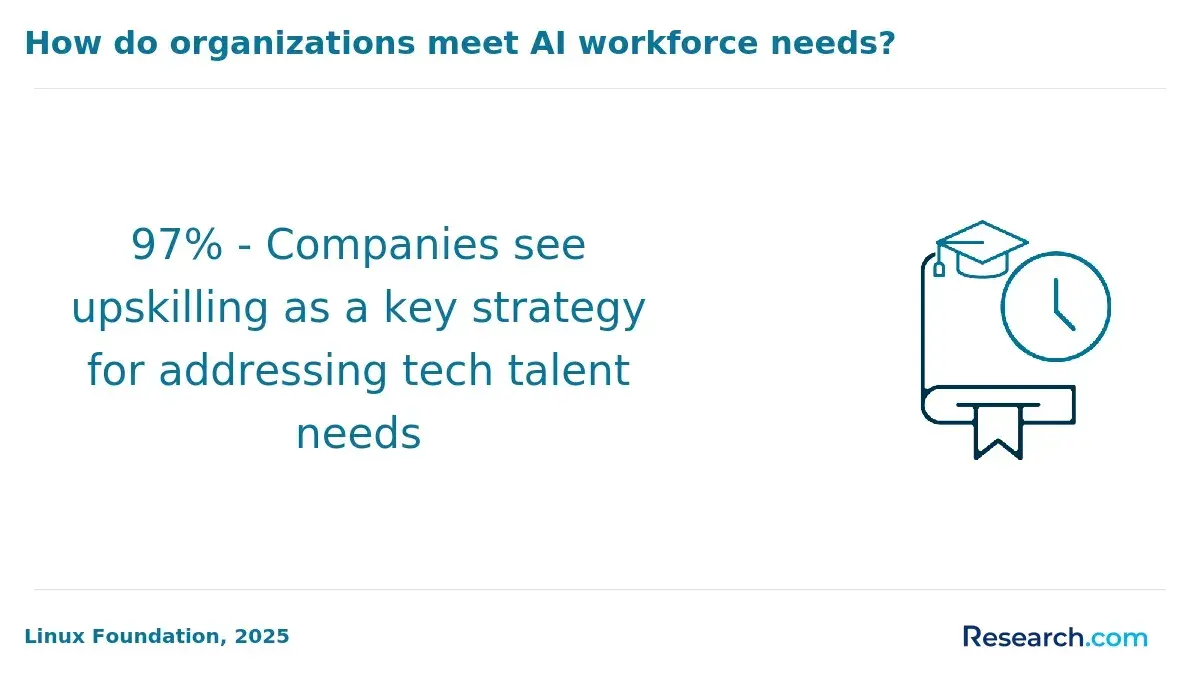
How can CEOs verify accreditation, instructor credibility, and program quality in AI education?
CEOs verifying accreditation should begin by confirming whether the institution is recognized by a reputable accrediting body, such as regional or national education authorities. This validation ensures the course meets established quality standards. Reliable confirmation can be found by checking accreditation databases or the U.S. Department of Education's listings. Instructor credibility depends on their professional background, academic qualifications, and industry experience.
Reviewing instructor profiles that showcase leadership roles in AI adoption, published research, or practical deployments in complex environments is essential. Public credentials on LinkedIn or academic websites offer valuable insights.
Program quality assessment involves examining curriculum transparency, including detailed syllabi and learning outcomes focused on governance, risk management, and ethical AI use. CEO learners benefit most from courses emphasizing real-world applications like case studies on AI success or failure.
Peer reviews and alumni feedback reveal the program's practical impact. Alignment with recognized standards, such as those from the IEEE or the Association for the Advancement of Artificial Intelligence, is another crucial factor.
Financial awareness highlights the importance of this scrutiny. IBM's Cost of a Data Breach report estimates the average cost of a data breach involving AI-enabled systems at $5.7 million, 15% higher than breaches in non-AI environments.
This emphasizes the need for governance-focused AI education to help CEOs avoid costly mistakes. Due diligence in verifying accreditation and instructor credentials supports informed investment in education that mitigates such risks.
What are typical admission requirements and time commitments for AI courses for executives?
Executive AI courses prioritize professional experience, typically requiring five or more years in leadership rather than advanced academic credentials. While some programs ask for a bachelor's degree, extensive industry experience often substitutes academic requirements.
These courses focus on strategic implementation, so prior technical skills or coding knowledge are rarely necessary. Applicants usually submit a statement of purpose explaining their AI adoption goals and leadership vision.
Course formats vary to accommodate executives' busy schedules:
- Part-time programs usually demand 5 to 10 hours weekly over 8 to 16 weeks.
- Accelerated bootcamps require full-day attendance for 3 to 5 consecutive days, providing rapid immersion.
- Hybrid models combine online learning with occasional in-person workshops for flexibility and engagement.
Industry-specific AI applications are increasingly important. For example, Deloitte's AI in Industry report highlights that 62% of financial services and 58% of healthcare executives plan to increase AI education spending soon. This trend reflects growing needs for knowledge on regulatory compliance and market competition.
Executives selecting programs should balance admission demands and time commitments to ensure relevant insights without disrupting their professional duties. Careful program evaluation enables stronger leadership in navigating AI adoption challenges.
How much do AI executive programs cost, and what ROI can CEOs realistically expect?
AI executive programs vary widely in cost, from $2,000 for brief bootcamps to over $20,000 for certificate courses, with degree programs often exceeding $40,000. Choosing the right option depends on your objectives and budget. Intensive programs lasting less than 12 weeks typically cost between $2,000 and $8,000 and deliver focused, practical knowledge suited for rapid AI adoption.
Research shows senior leaders completing shorter programs are 48% more likely to implement new AI initiatives within six months than those in extended degree programs. This highlights the value of quick, actionable learning that generates measurable results.
- Bootcamps offer affordability and rapid insights, perfect for leaders seeking immediate application without heavy academic investment.
- Certificate programs cost $8,000 to $20,000 and balance specialized knowledge with credentialing, appealing to those wanting credibility alongside skills.
- Degree programs are costly and time-intensive but may provide long-term strategic advantage and recognition, though ROI may be slower.
CEOs should weigh program cost against the speed and impact of implementation. For example, a $5,000 bootcamp accelerating AI project launches by six months can yield faster business benefits than a $40,000 degree completed over years. Prioritizing programs proven to boost actionable outcomes optimizes ROI.
This approach aligns with insights from the 2024 LinkedIn Workplace Learning Report and supports executives aiming to integrate AI efficiently and effectively.
What AI-related leadership roles and career outcomes can these programs support for CEOs?
AI leadership programs prepare executives for key roles such as Chief AI Officer, Head of AI Strategy, and AI Transformation Lead. These programs equip CEOs and other leaders with the skills to oversee AI integration, ensuring responsible adoption aligned with business objectives. Leaders also learn to establish AI governance frameworks that address ethical risks and regulatory compliance.
Graduates are trained to drive innovation management and AI-powered decision-making by leading cross-functional teams that blend technical and non-technical expertise. This capability is essential as organizations transition to AI-enabled workflows.
For instance, CEOs can spearhead digital transformation projects that optimize operations and enhance customer experiences using ai solutions.
Career opportunities extend beyond CEOs to roles like Chief Digital Officer or Chief Data Officer. According to the Microsoft and LinkedIn 2024 Work Trend Index, 78% of leaders recognize the need for an AI-ready C-suite, yet only 39% report sufficient AI literacy in their executive teams. This gap highlights the increasing demand for AI strategy skills in leadership.
- Proficiency in AI risk assessment and ethical deployment.
- Ability to achieve competitive advantage through AI.
- Balancing innovation speed with regulatory requirements.
These competencies enable leaders to manage AI adoption with confidence, foster organizational readiness, and navigate shifting market conditions using data-driven insight.
How should CEOs choose between short courses, certificates, and degree pathways in AI?
CEOs deciding among short courses, certificates, and degree pathways in artificial intelligence should align their choice with organizational priorities and time availability. Short courses are designed for executives who need rapid updates on AI trends and strategic uses without deep technical detail.
Typically lasting hours to weeks, these courses offer quick, actionable insights. For instance, a one-week executive AI strategy course equips CEOs to better integrate AI initiatives within their companies.
Certificates serve as a middle ground, combining theory with practical skills over several months. These programs benefit CEOs seeking measurable credentials and a solid foundation in AI technologies and governance. They often address leadership challenges such as ethical considerations and change management, essential for successful AI adoption.
Degree pathways like master's degrees in AI or data science require greater time and financial commitments but deliver comprehensive expertise in AI development and algorithms. These are ideal for CEOs involved in technical leadership or aiming for a long-term strategic advantage through deep AI fluency.
According to BCG's "AI and the CEO Agenda" report, by 2030 companies that invest substantially in executive AI upskilling can realize a 6-10% EBITDA uplift compared to those with minimal investment. This demonstrates the concrete value of prioritizing AI education at the leadership level.
CEOs should assess operational needs, resources, and desired impact to select between quick skill acquisition, intermediate expertise, or profound technical mastery.
Other Things You Should Know About Artificial Intelligence
CEOs must address issues such as bias, transparency, privacy, and accountability when implementing artificial intelligence solutions. Ensuring that AI systems operate fairly and do not reinforce harmful stereotypes is critical. Additionally, companies should establish governance frameworks to oversee responsible AI use and protect user data in compliance with regulations.
Artificial intelligence can automate routine tasks, leading to shifts in job roles and required skills. While AI can increase efficiency, CEOs should plan for workforce reskilling and managing potential displacement. Emphasizing collaboration between AI tools and human employees helps maintain productivity and employee engagement.
Integrating artificial intelligence often requires updating legacy systems, aligning cross-functional teams, and overcoming data quality issues. CEOs also face challenges related to change management, as employees may resist adopting AI-driven workflows. Clear communication and strategic planning are necessary to address these obstacles effectively.
Top AI courses in 2027 for CEOs, like MIT's AI for Business Strategy and Stanford's AI Ethics program, offer frameworks and metrics for evaluating AI success. They focus on ROI, efficiency improvements, and alignment with strategic goals, ensuring CEOs can accurately assess AI impact.
References
- Executive Decision-Making in the Age of AI and Big Data https://www.slaytonsearch.com/2025/02/executive-decision-making-ai/
- Artificial Intelligence and Accreditation: Does It Really Help Us? https://nac-us.org/2025/11/25/artificial-intelligence-and-accreditation-does-it-really-help-us/
- A CEO's guide to envisioning the Generative AI enterprise | Deloitte Canada https://www.deloitte.com/ca/en/services/consulting/perspectives/a-ceos-guide-to-envisioning-generative-ai.html
- The AI Boom In Executive Education: What You Can Study Right Now At The World's Top B-Schools https://poetsandquantsforexecs.com/exec-ed/the-ai-boom-in-executive-education-what-you-can-study-right-now-at-the-worlds-top-b-schools/
- What Executives Really Need to Know about AI https://executiveacademy.at/en/knowledge/digitization/what-executives-really-need-to-know-about-ai-part-1
- How AI is challenging the credibility of some online courses – Future of Good https://futureofgood.co/how-ai-is-challenging-the-credibility-of-some-online-courses/
- AI Cost Statistics 2026: Forecasting, ROI, and Budget Risk https://www.mavvrik.ai/blog/ai-cost-statistics-2026/
- AI in Leadership: Smarter, Faster Executive Decisions https://www.techclass.com/resources/learning-and-development-articles/ai-in-leadership-how-executives-can-use-ai-to-make-smarter-faster-decisions
- The ROI of AI: 75% of projects fail. Build a business case that works https://www.arcastgroup.com/insights/the-roi-of-ai-75-of-projects-fail.-build-a-business-case-that-works
- Professional AI Training: How to Choose the Right Program https://www.strategicaileader.com/professional-ai-training-how-to-choose-the-right-program/