2027 Best AI Courses for Academic Researchers With Certificates

Co-Founder and Chief Data Scientist
Many academic researchers face challenges when transitioning to fields involving artificial intelligence due to a lack of relevant credentials and flexible learning options. This gap limits opportunities to engage in advanced research or industry projects requiring AI expertise. Time constraints and the need for recognized certification further complicate this shift.
Accessible courses that balance rigor with convenience are essential for professionals aiming to build credible skills without disrupting their current commitments. This article reviews the best AI courses offering certificates designed to help academic researchers effectively gain competency and enhance their career prospects within this dynamic field.
The reviewed courses provide a flexible learning environment, allowing researchers to acquire the necessary skills at their own pace. These courses offer recognized certifications, which can help in securing opportunities in the AI field. By completing these courses, academic researchers can expand their expertise and improve their career prospects.
Key Things You Should Know
- Many 2026 best AI courses for academic researchers offer verified certificates recognized by institutions, enhancing career credibility and funding opportunities in research fields.
- Top AI programs focus on practical skills in machine learning, data analysis, and neural networks, with over 65% of courses updated through 2025 to reflect current advancements.
- Increasingly, courses provide interdisciplinary applications, combining AI with biomedical, environmental, and social sciences to meet evolving research demands and improve academic outcomes.
Advance Your Career with AI Online Courses
Artificial Intelligence: Implications for Business Strategy
This program provides an introduction to Artificial Intelligence and their implications for business strategy. Earn an official digital certificate.

Oxford Artificial Intelligence Programme
Explore this Oxford Artificial Intelligence programme offered in a flexible learning environment and explore topics like machine learning, automation, and robotics.

Implementing Agentic AI: Building Your Organizational Playbook
This online MIT Agentic AI course offers a practical approach to deploying AI agents in your organization, including a custom playbook. 3 weeks, exclusive launch price.

AI Adoption: Driving Business Value and Impact
This online MIT AI Adoption: Driving Business Value and Impact offers practical frameworks to close the gap between AI potential and business reality.

Artificial Intelligence in Pharma and Biotech
Discover the applications and limitations of artificial intelligence in pharma and biotech with this MIT online short course.

What are the best AI courses with certificates specifically designed for academic researchers?
Leading programs focused on the best AI courses with certificates for academic researchers emphasize practical machine learning applications and research methodology. For example, Stanford University's Machine Learning for Research and MIT's Introduction to Deep Learning combine algorithmic theory with domain-specific uses like natural language processing and predictive modeling, offering certification recognized across academia and industry.
A survey published by Nature found that 62% of researchers use AI or machine learning, but only 14% have formal training. This highlights a clear need for top online artificial intelligence programs for researchers with certification that integrate technical skills with research practices.
- "AI for Scientific Discovery" from Carnegie Mellon University focuses on integrating AI into experimental design and data interpretation.
- Johns Hopkins University's "Data Science and Machine Learning for Researchers" emphasizes reproducible workflows using AI frameworks.
- EdX's "AI in Research" professional certificate teaches ethical AI use, data management, and advanced statistical methods critical for peer-reviewed studies.
These courses serve diverse fields such as biology, physics, social sciences, and engineering by covering both AI foundations and practical software skills like Python, TensorFlow, and R. Certificates from these programs enhance academic CVs and bolster grant applications.
Flexible, self-paced options with hands-on projects fit well for researchers balancing work and study. Prioritize courses with real research challenges rather than purely theoretical content for immediate applicability and career growth. To explore options ranked for affordability and quality, consult the data science master rank.
Advance Your Career with AI Online Courses
Artificial Intelligence: Implications for Business Strategy
This program provides an introduction to Artificial Intelligence and their implications for business strategy. Earn an official digital certificate.
Oxford Artificial Intelligence Programme
Explore this Oxford Artificial Intelligence programme offered in a flexible learning environment and explore topics like machine learning, automation, and robotics.
Implementing Agentic AI: Building Your Organizational Playbook
This online MIT Agentic AI course offers a practical approach to deploying AI agents in your organization, including a custom playbook. 3 weeks, exclusive launch price.
How do AI certificate programs for researchers differ from standard data science or AI bootcamps?
AI certificate programs for researchers differ substantially from standard data science bootcamps in their focus and instructional approach. Unlike bootcamps, which emphasize fast skill acquisition for broad industry use, these programs prioritize rigorous theory, reproducible methods, and peer-reviewed advancements essential for academic contributions. The differences between academic AI certificates and standard bootcamp training become clear in content depth and instructor qualifications.
Research-oriented courses often feature instructors with strong peer-reviewed credentials. A survey of R&D professionals highlights that 71% see verified academic publications or citations of instructors as a key credibility factor. This ensures the teaching is grounded in verified research rather than anecdotal experience typical of many bootcamps.
Moreover, these programs cover experimental design, statistical rigor, and ethical concerns unique to research. They address reproducibility challenges in AI models and provide guidance for publishing results in scholarly journals, whereas bootcamps focus more on practical tools for commercial applications. Many certificates also include domain-specific training in areas like bioinformatics or social sciences, aligning skills with academic workflows and funding needs.
Prospective students should look for programs offering mentorship from active researchers and peer collaboration opportunities, which are critical for building academic networks and advancing careers. Those seeking flexible education options might explore online mechanical engineering degrees as complementary paths alongside AI training.
Which universities and platforms offer accredited or university-backed AI certificates for researchers?
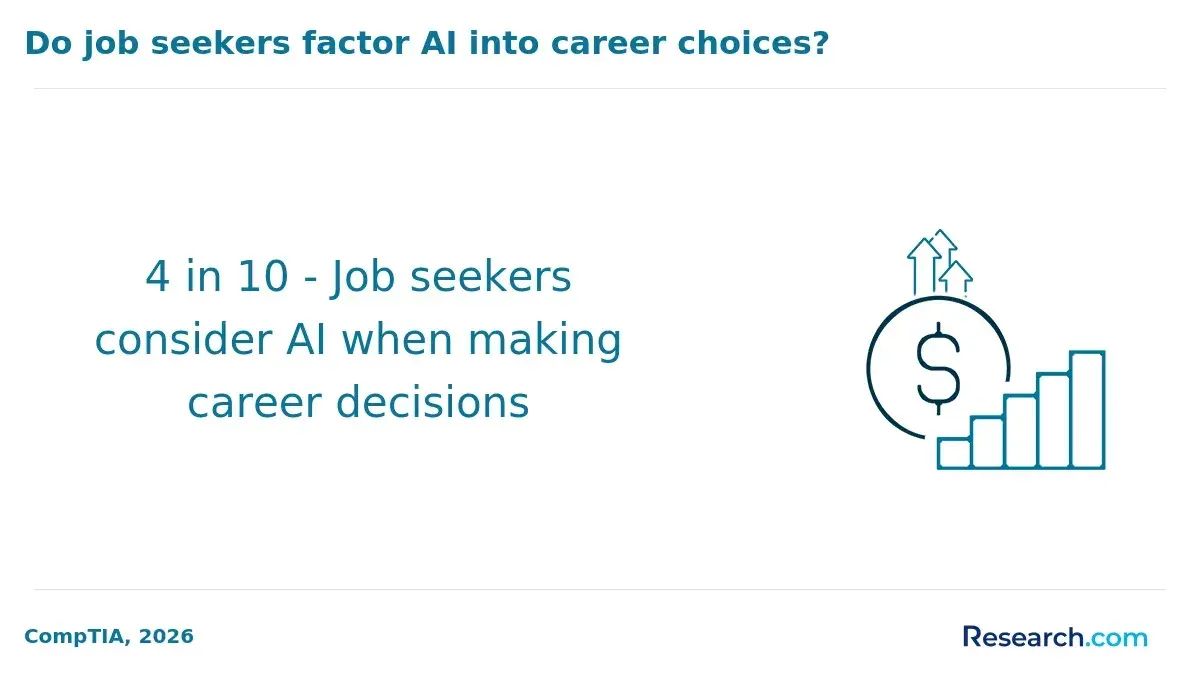
Top universities such as Stanford University, Massachusetts Institute of Technology (MIT), and the University of Washington offer university-backed AI certificate programs for researchers that combine rigorous curricula with formal recognition. These programs are designed specifically for academic researchers seeking accredited AI courses for academic researchers, ensuring a strong foundation in machine learning, deep learning, and ethical AI practices.
Stanford's certificate emphasizes machine learning fundamentals and practical applications, while MIT's professional series integrates a research component suited for scholars. The University of Washington focuses on statistical learning and AI ethics, awarding credentials grounded in its academic standards.
Online platforms like Coursera collaborate with these institutions, hosting university-backed AI specializations that provide flexible yet credible certification. According to Coursera's outcomes report, 77% of those who completed such specializations saw improved career trajectories within 12 months, including new roles or research responsibilities.
For ongoing professional development, institutions like Harvard Extension School and the University of Toronto offer modular AI certificate programs via edX, allowing part-time study without full enrollment. Those exploring further education might consider an online cyber security degree as a complementary path alongside AI credentials.
What curriculum and skills should an AI course for academic researchers cover?
An AI course tailored for academic research must skillfully balance foundational theory with practical applications across key methodologies. Core competencies include machine learning fundamentals, focusing on deep learning, which composed over 88% of new machine learning papers at major conferences. It is vital to master supervised, unsupervised, and reinforcement learning models alongside statistical learning methods and probabilistic graphical models to support diverse research objectives.
Essential ai skills for research professionals also involve practical programming expertise, especially in Python and libraries like TensorFlow, PyTorch, and scikit-learn. These tools enable implementation of algorithms and experimentation with real datasets. Training in data preprocessing, feature engineering, and model evaluation metrics ensures researchers can critically analyze model robustness and generalizability.
Incorporating ai applications for academic research methods into domain-specific contexts, such as natural language processing for humanities or computer vision in medical imaging, fosters interdisciplinary skills. Ethical topics-bias mitigation, data privacy, and transparency-must be embedded to prepare researchers for responsible AI development and publication standards.
Advanced subjects like generative models, explainable AI, and automated machine learning expand research potential. Hands-on projects inspired by current challenges, including replicating published studies or devising novel algorithms, provide real-world research experience. For those exploring careers, AI training jobs offer valuable pathways to apply these skills effectively.
How do online AI certificate programs compare with campus-based options for researchers?
Online AI certificate programs offer flexibility and accessibility, ideal for academic researchers managing multiple commitments. These programs typically allow asynchronous learning, accommodating varied schedules. In contrast, campus-based courses provide in-person networking and interaction but require strict attendance, which may interfere with ongoing research.
Certificates from reputable online providers are often valued equally to campus credentials, especially when including rigorous assessments and real-world projects.
Many online AI courses focus on practical skills in fast-growing fields such as natural language processing (NLP), which has seen a 31% annual increase in published papers according to a Scopus/Elsevier analysis. Researchers targeting high-impact AI subfields can benefit from online programs that rapidly update curricula to reflect current trends.
Online courses usually feature instructors from diverse institutions, offering varied perspectives that smaller campus programs might lack. However, on-campus learning grants immediate access to specialized labs and research groups, essential for experimental AI work.
The choice depends on personal research goals and logistical needs, balancing scalable, updated online education with resource-rich campus experiences.
What are the typical admission requirements and time commitments for AI certificates for researchers?
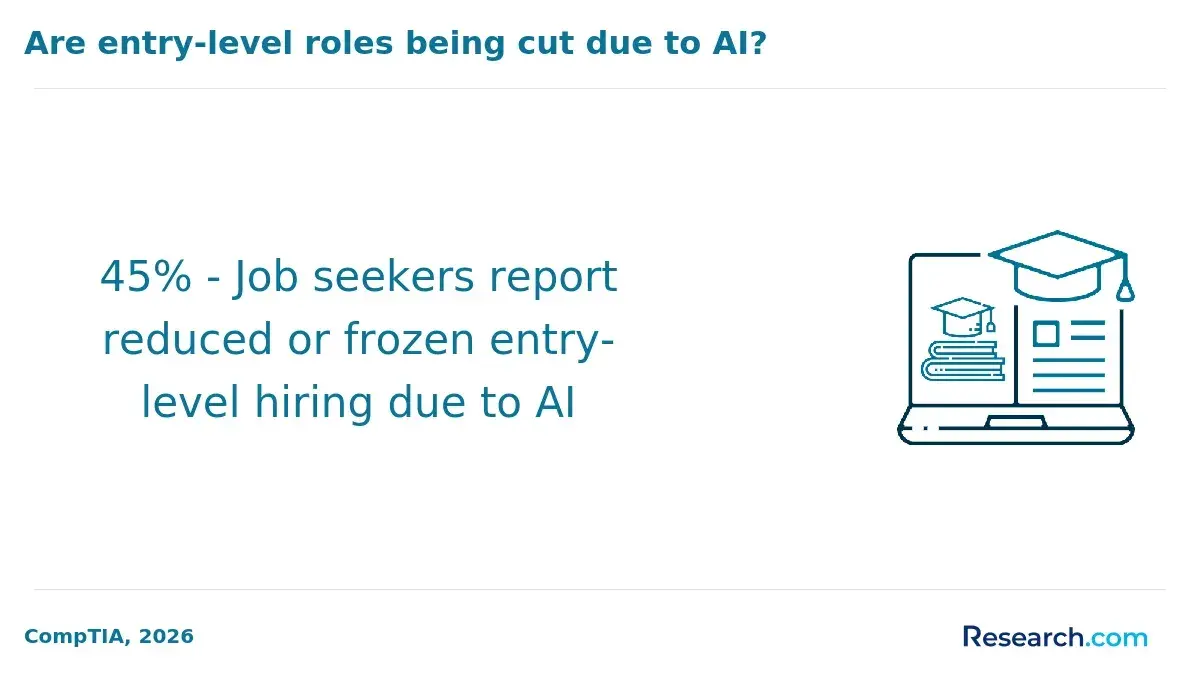
Admission to AI certificate programs typically requires a solid foundation in computer science, mathematics, or related STEM fields. Most applicants hold at least a bachelor's degree, with some programs preferring candidates who have research experience or prior coursework in machine learning, statistics, or programming languages like Python. Advanced certificates might also ask for a statement of purpose describing research interests in AI.
Time commitments vary widely. Part-time certificates often span three to six months, requiring 6 to 12 hours weekly. Intensive full-time programs may last 8-12 weeks. Asynchronous online courses offer flexible pacing, while cohort-based or hybrid models have fixed schedules and deadlines. This flexibility helps researchers balance coursework with teaching or ongoing projects.
Programs emphasizing multimodal AI applications-highlighted by the 2024 AI Index, which noted that 46% of new vision-related benchmarks referenced multimodal models-frequently involve hands-on coding and additional lab hours. Many certificates also include capstone projects or research papers that fuse AI techniques with the student's academic focus. These often demand mentorship and collaboration, increasing required time investment.
Reviewing specific curriculum details and expectations before enrollment is essential to align the program with one's experience and availability.
How much do AI courses with certificates for academic researchers cost, and are there funding options?
AI courses offering certificates for academic researchers vary widely in cost, typically ranging from $200 to over $2,000 depending on factors like program depth, provider, and credential type. Skill-focused programs from platforms such as Coursera or edX generally cost between $200 and $500. More extensive professional certificate programs or graduate-level courses can exceed $1,500, especially those affiliated with universities that include mentorship or academic credits.
Funding options are diverse and can include financial aid, scholarships based on merit or need, employer reimbursement, and research grants. Professional societies and university partnerships sometimes offer discounted access or bundled programs for members. Installment payment plans are another way courses make fees manageable, while open-access courses typically charge a nominal certification fee.
It is important for researchers to verify the recognition and credibility of a certificate within their specific field, particularly in rapidly evolving areas like causal inference in biomedicine. For example, a 2024 Patterns review noted a 140% growth in causal inference research publications from 2018 to 2023, underscoring the demand for rigorous observational study methods. Reliable certification can support researchers in meeting this demand effectively.
How can AI certificates support academic careers, tenure portfolios, and research productivity?
AI certificates strengthen academic careers by showcasing expertise in data analysis, machine learning, and computational modeling-skills increasingly vital in today's research environments. They enhance tenure portfolios by proving continuous professional growth and command of leading-edge tools, highlighting candidates as field innovators. Many institutions prioritize researchers skilled in AI techniques to lead interdisciplinary projects, secure funding, and elevate departmental reputation.
In research productivity, AI certification empowers academics to harness automation, refine experimental design, and efficiently use high-performance computing resources. According to the 2024 NVIDIA State of AI in Research report, 78% of labs training large models rely on GPU clusters or cloud HPC resources, rising sharply from 52% in 2021.
This demonstrates the growing importance of AI literacy for managing complex infrastructure and accelerating data-intensive studies. Skilled researchers apply scalable algorithms that reduce routine analysis time while improving results.
Certification offers practical advantages including:
- Validation of expertise for grant proposals and collaborative projects.
- Access to communities of trained researchers for interdisciplinary exchange.
- Enhanced credentials to develop AI-integrated curricula.
- A competitive edge in hiring and academic promotion.
These certificates build a measurable record of competencies aligning with modern research demands and tenure criteria emphasizing innovation. Early-career researchers benefit by bridging theory and application within resource-intensive domains.
What AI-related roles and salary ranges are realistic for researchers moving into industry?
Researchers moving into industry often find roles as machine learning engineers, data scientists, AI research scientists, or clinical data analysts. Salaries typically range from $90,000 to $160,000 annually for entry to mid-level positions in the U.S. Machine learning engineers earn between $110,000 and $150,000, while AI research scientists can command $120,000 to $160,000. Clinical data analysts with AI expertise usually start around $90,000 to $120,000.
These roles apply advanced algorithms to real-world challenges, especially in healthcare, where AI could generate up to $360 billion annually in value. About 75% of this value is linked to research, diagnosis, and clinical decision-support, showing strong demand for researchers familiar with both their domain and AI technologies.
Important skills for researchers switching to industry include:
- Proficiency in AI frameworks like TensorFlow or PyTorch.
- Experience with large datasets and cloud platforms.
- Skills in model validation and healthcare compliance.
- Understanding AI integration into clinical workflows.
Other relevant roles include AI product management and AI ethics compliance, with salaries ranging from $100,000 to $140,000. Demonstrating project deployment success and earning AI certifications can enhance career mobility and earning potential.
How should academic researchers evaluate the quality and credibility of AI certificate programs?
Academic researchers evaluating AI certificate programs should focus on key criteria that ensure quality and relevance. First, confirm the program's connection to accredited institutions or respected industry organizations, as certificates from well-established universities or credible bodies carry significant academic and professional weight.
Next, scrutinize the curriculum for depth and practical relevance. Effective programs cover essential ai concepts, hands-on applications, and current tools aligned with specific research objectives. Faculty expertise also matters-look for instructors who are active in research or industry to gain up-to-date insights and valuable networking opportunities.
Consider outcomes of past participants, such as publication success, job placement, or grant awards, which indicate the program's real-world impact. Additionally, seek programs that offer financial support or scholarships, especially given the U.S. National Science Foundation's increased budget for ai research funding, emphasizing the growing investment in training qualified academics.
Finally, evaluate the rigor of certification requirements. Programs demanding project completion, peer-reviewed assignments, or practical exams provide stronger credential validation than those based only on attendance. Check that the certificate is recognized in grant submissions or academic portfolios for maximum professional benefit.
Other Things You Should Know About Artificial Intelligence
In 2027, top AI courses offering certificates for academic researchers include Stanford's "Artificial Intelligence: Principles and Techniques," MIT's "Deep Learning for AI," and Coursera's "AI for Everyone" by Andrew Ng. These programs offer comprehensive learning and certification upon completion.
Artificial intelligence is widely used in academic research for data analysis, automation of repetitive tasks, and pattern recognition. AI techniques help researchers manage large datasets, improve the accuracy of predictions, and accelerate discovery in fields such as biology, social sciences, and engineering. This enhances the efficiency and scope of academic investigations across disciplines.
Academic researchers engaging with artificial intelligence projects should have a solid foundation in programming languages like Python, knowledge of machine learning algorithms, and statistical analysis. Familiarity with data preprocessing, model evaluation, and domain-specific applications is also important. Additionally, critical thinking and ethical awareness are essential for responsible AI deployment.
Researchers often face challenges such as data quality and availability, lack of interdisciplinary expertise, and computational resource limitations when integrating artificial intelligence into their projects. Furthermore, staying current with rapidly evolving AI methods and addressing ethical implications can complicate implementation. Overcoming these obstacles requires collaboration, ongoing training, and appropriate infrastructure.
References
- Explore online courses and certificate programs in AI | edX https://www.edx.org/learn/artificial-intelligence
- Top 7 artificial intelligence courses 2025: Comparison of the best online programs https://xd-i.com/en/data-en/ai-courses/
- Digital Education Council | Certificate in AI for Higher Education https://www.digitaleducationcouncil.com/digital-education-council-certificate-in-ai-for-higher-education
- Best AI Courses Online: Free and Paid Options Compared https://hakia.com/news/best-ai-courses-online/
- Google AI Professional Certificate | Become Fluent in AI at Work https://grow.google/ai-professional/
- Understanding AI: AI tools, training, and skills https://ai.google/learn-ai-skills/
- Best AI Certifications to Boost Your Career in 2026 – Dataquest https://www.dataquest.io/blog/best-ai-certifications/
- Why trusted content matters in AI for research https://www.elsevier.com/academic-and-government/ai-in-research-and-higher-education/why-trusted-content-matters-in-ai-research
- Best Artificial Intelligence (AI) and ML Courses Online [2025] - Great Learning https://www.mygreatlearning.com/artificial-intelligence/courses
- Empowering Early-Career Researchers with AI: How Artificial Intelligence is Shaping the Next Generation of Academics https://researchleap.com/empowering-early-career-researchers-with-ai-how-artificial-intelligence-is-shaping-the-next-generation-of-academics/