2027 Best GetSmarter Executive AI Courses

Co-Founder and Chief Data Scientist
Many professionals with degrees outside STEM face challenges entering the fast-evolving artificial intelligence field due to lack of specialized knowledge and credentials. Traditional graduate programs can be time-consuming and inflexible for working adults seeking to pivot careers. This gap often slows advancement or limits opportunities in executive and technical roles. Executive-level online courses offer a practical solution by combining rigorous content with adaptable learning schedules.
This article explores top GetSmarter executive AI programs designed to equip non-technical professionals with the skills and credentials needed to transition effectively into artificial intelligence careers, helping readers make informed decisions about their education paths.
Key Things You Should Know
- GetSmarter's Executive AI courses in 2026 offer advanced skills designed for leaders, focusing on practical applications and strategy integration within diverse industries.
- Programs typically span 6-8 weeks, blending live sessions and self-paced content, with completion rates over 85%, reflecting strong learner engagement.
- Data from 2024-2025 shows a 40% increase in enrollment, driven by growing corporate demand for AI-savvy executives and AI's expanding role in decision-making.
Advance Your Career with AI Online Courses
Artificial Intelligence: Implications for Business Strategy
This program provides an introduction to Artificial Intelligence and their implications for business strategy. Earn an official digital certificate.

Oxford Artificial Intelligence Programme
Explore this Oxford Artificial Intelligence programme offered in a flexible learning environment and explore topics like machine learning, automation, and robotics.

Implementing Agentic AI: Building Your Organizational Playbook
This online MIT Agentic AI course offers a practical approach to deploying AI agents in your organization, including a custom playbook. 3 weeks, exclusive launch price.

AI Adoption: Driving Business Value and Impact
This online MIT AI Adoption: Driving Business Value and Impact offers practical frameworks to close the gap between AI potential and business reality.

Artificial Intelligence in Pharma and Biotech
Discover the applications and limitations of artificial intelligence in pharma and biotech with this MIT online short course.

How do GetSmarter executive AI courses compare to traditional university AI programs?
GetSmarter executive AI courses offer a flexible, accelerated alternative to traditional university AI programs, catering especially to working professionals seeking practical skills without years of study. Their structure emphasizes applied learning through case studies, real-world projects, and current AI tools, providing immediate business relevance.
For example, 72% of high-performing companies had at least one generative AI use case at scale in 2025, according to McKinsey & Company.
Compared to university degrees, GetSmarter programs require no rigid prerequisites and allow for online, self-paced study. This accessibility broadens opportunities for many learners and ensures course content stays current with rapidly evolving AI trends.
The advantages of online executive AI learning compared to university degrees include flexibility, direct applicability, and frequent updates. Traditional programs, by contrast, focus more on theoretical foundations, preparing students for research roles and advanced technical careers with recognized academic credentials and networking possibilities.
GetSmarter courses primarily develop executive skills aimed at leadership and strategic AI integration within business workflows. Those evaluating AI education options can also consider broader factors such as affordability and program quality, as reflected in rankings like the data science rankings. Ultimately, the choice depends on individual career goals, learning preferences, and the desired balance between theoretical rigor and practical impact.
Advance Your Career with AI Online Courses
Artificial Intelligence: Implications for Business Strategy
This program provides an introduction to Artificial Intelligence and their implications for business strategy. Earn an official digital certificate.
Oxford Artificial Intelligence Programme
Explore this Oxford Artificial Intelligence programme offered in a flexible learning environment and explore topics like machine learning, automation, and robotics.
Implementing Agentic AI: Building Your Organizational Playbook
This online MIT Agentic AI course offers a practical approach to deploying AI agents in your organization, including a custom playbook. 3 weeks, exclusive launch price.
Which GetSmarter executive AI courses are best for managers and non-technical leaders?
Several GetSmarter executive artificial intelligence courses for managers stand out for their focus on practical leadership skills rather than deep technical details. The "Artificial Intelligence for Business" course is designed to help executives understand AI applications, ethics, and operational integration, enabling informed decisions about AI adoption. This makes it particularly beneficial for non-technical business leaders who want clear insight into AI strategy without needing to code.
Another key option is "Leading AI-Driven Transformation," which equips managers with the tools to oversee AI projects and drive innovation. It covers change management, collaboration across teams, and ethical considerations, preparing leaders to navigate AI-driven organizational change effectively. These programs use case studies and frameworks to translate AI concepts into actionable business strategies.
These top GetSmarter AI courses for non-technical business leaders address challenges like the impact of AI on workforce dynamics, data strategy, and business models. A retail manager could leverage these skills to improve customer experience through AI, while executives might focus on AI governance and risk management to align with corporate policies.
GetSmarter reports that 94% of executive learners completing AI-related online short courses saw positive career or business impacts within a year. For those exploring further education, consider the best online masters in artificial intelligence to deepen your expertise and career prospects.
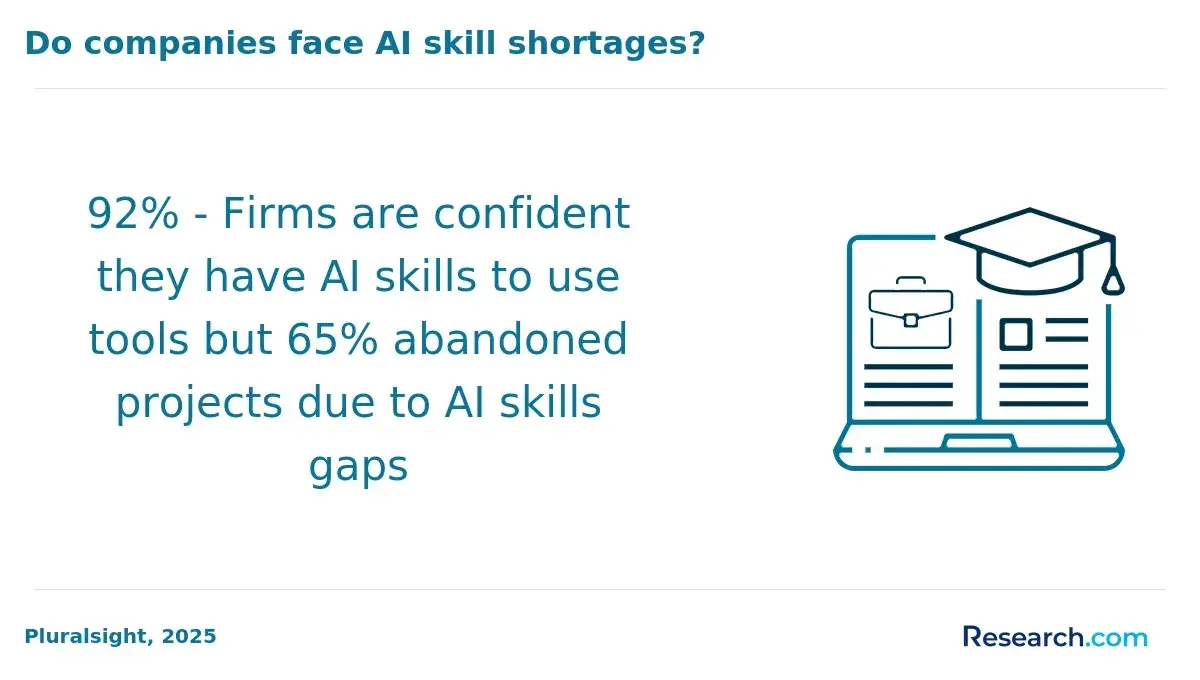
Who should take an executive AI course instead of a full AI degree program?
Executive AI courses provide strategic, business-focused learning tailored to senior leaders, managers, and professionals who prefer concise training over a full AI degree. These programs prioritize AI's practical applications in leadership roles rather than deep technical skills, making them ideal for those integrating AI into company strategy or managing AI adoption across teams.
Professionals seeking practical executive artificial intelligence training often include:
- Business executives aiming to drive innovation and maintain a competitive edge.
- Product managers overseeing AI-enhanced products without a coding background.
- Consultants and strategists advising on digital transformation and AI deployment.
- Operational directors tasked with understanding AI risks, governance, and ethics.
Unlike comprehensive degree programs that cover algorithms and data science, executive AI courses emphasize strategic decision-making and ROI. A C-level leader might focus on selecting AI vendors or managing AI-capable teams rather than developing models directly. Business leaders choosing executive AI courses over full degree programs value this targeted approach for its immediacy and applicability.
Data from the MIT Sloan Management Review reveals companies with AI-trained senior leaders are 2.3 times likelier to see revenue growth of 10% or more from AI. This confirms that strategic AI understanding drives measurable business results without full technical mastery.
Those considering AI education should also explore options such as the cheapest online cyber security degree for complementary knowledge in the growing field of security, which often intersects with AI deployment.
What topics and skills do GetSmarter executive AI courses typically cover?
GetSmarter executive AI courses offer a comprehensive curriculum that covers leadership strategies for artificial intelligence integration and advanced data analytics skills for business decision-making. Core topics include machine learning, neural networks, and data analytics, providing leaders a strong foundation in how AI systems operate. Emphasis is placed on applying AI to real-world business challenges such as natural language processing and predictive modeling.
Key skills include interpreting AI outputs for data-driven decisions, designing implementation strategies aligned with corporate objectives, and managing organizational change driven by AI. Ethical and regulatory considerations are also critical parts of this training, ensuring executives can navigate AI deployment responsibly.
Many programs customize content with industry-specific modules, addressing areas like healthcare AI and financial services automation. Hands-on projects using AI platforms enable executives to gain practical experience with these technologies.
Mastering these competencies is vital, as firms adopting AI may boost labor productivity growth by up to 1.4 percentage points annually over the next decade, according to the University of Oxford's AI in the Economy report. Training also covers data strategy, AI governance frameworks, and cross-functional leadership skills to drive initiatives successfully.
Professionals looking to expand their expertise can explore options such as the best online cybersecurity degree programs for veterans, which complement AI education in securing emerging technologies.
Are GetSmarter executive AI courses recognized by employers and accredited partners?
GetSmarter executive AI courses are widely recognized by employers and accredited partners, providing valuable credentials for professionals. Developed in partnership with leading universities such as the London School of Economics and Political Science (LSE), these programs combine academic rigor with practical industry relevance. Such collaborations boost the credibility and global reputation of the certification.
Employers are increasingly valuing candidates who can leverage AI knowledge for strategic decision-making. According to a 2024 LSE report, organizations that integrate AI into their decision-making are 40% more likely to achieve higher profitability. This highlights the tangible benefits of earning credentials from reputable programs like GetSmarter's.
These courses emphasize practical applications of AI tailored for executives, focusing on measurable business outcomes rather than just theory. Graduates can showcase skills that directly impact organizational success, which is a significant advantage in job searches or promotions.
Prospective candidates should verify the accreditation or university partner associated with their chosen program, as recognized educational bodies and top-tier institutions greatly influence employer acceptance. Additionally, GetSmarter issues globally accepted digital certificates that can be easily shared with employers and on professional platforms like LinkedIn, increasing professional visibility during recruitment.
How much do GetSmarter executive AI courses cost, and what funding options exist?
GetSmarter executive AI courses cost between $3,000 and $6,000 depending on program length and university partnerships. Shorter, skill-focused courses start around $3,000, while comprehensive multi-week programs tied to top universities can reach $6,000. Tuition typically includes full access to course materials, faculty support, and certification upon completion.
Several funding options help reduce these costs: many students receive employer sponsorships, as AI expertise is valuable for companies driving digital transformation. For example, the Cambridge Centre for Alternative Finance's 2024 report found that 86% of financial institutions using AI in risk management saw measurable reductions in credit losses within two years.
Additional payment flexibility may include installment plans and deferred payment options, allowing learners to spread expenses over time. Prospective students should also explore employer tuition reimbursement or professional development budgets.
Scholarships and financial aid are less common but sometimes available, often aimed at underrepresented groups or professionals transitioning into AI roles. Checking specific course pages for funding updates is advisable. Self-funded students should consider the strong return on investment from gaining AI skills, tying into significant cost-saving outcomes in corporate settings.
What are the admission requirements and application steps for GetSmarter AI courses?
Admission to GetSmarter executive AI courses typically requires a bachelor's degree or significant professional experience in management, technology, or related fields. Some courses may ask for proof of basic data analysis or programming skills, especially for technical AI tracks. Applicants should submit an updated résumé showcasing relevant expertise in technology, business, or leadership.
The online application process involves completing a form with personal and academic details, submitting transcripts, degrees, and occasionally letters of recommendation. Payment or financial aid applications must be completed before classes begin. International students need to check visa requirements carefully.
Applicants without formal degrees but with extensive managerial experience may be considered individually if they demonstrate leadership and commitment to AI upskilling. This flexible admission policy reflects industry needs as the World Economic Forum projects 69 million new AI-related jobs by 2028, particularly impacting mid- and senior-management roles globally.
Tips for maximizing acceptance include clearly stating career goals and prior accomplishments in AI or tech and submitting all documents promptly. Prospective students can contact GetSmarter support for help with prerequisites or application materials to avoid common errors.
How do online executive AI courses on GetSmarter work day-to-day for busy professionals?
GetSmarter's online executive ai courses cater specifically to busy professionals, offering flexible, modular formats that fit around demanding schedules. These courses typically require 2 to 4 hours per week, spread across evenings or weekends, allowing executives to learn at their own pace without disrupting their workflow.
The curriculum combines video lectures, interactive assignments, and practical case studies to deepen understanding. For example, an executive might watch a session on AI governance in the morning and later apply concepts through a compliance exercise. This balanced approach promotes retention without long continuous study blocks.
Collaboration is emphasized through asynchronous discussion forums where participants engage with peers worldwide, sharing strategies and ethical considerations as their time allows. This flexible interaction accommodates diverse time zones and work commitments.
Expert tutor support further enhances the learning experience by offering personalized feedback on assignments, bridging theoretical knowledge with real-world leadership challenges. This guidance is crucial for deploying ai responsibly in organizational contexts.
According to PwC's Responsible AI survey, 78% of large organizations faced significant governance issues, yet only 35% of executives had formal training in responsible AI. GetSmarter's courses address this critical gap, focusing on governance, compliance, and ethical AI practices to help leaders manage and mitigate risks effectively.
What executive and technical career paths can GetSmarter AI courses help you pursue?
GetSmarter AI courses provide essential skills for both executive and technical professionals navigating the technology-driven business environment. Executives gain expertise in AI strategy, governance, and ethics, preparing for roles such as chief AI officer, AI program manager, and strategy consultant. This training empowers leaders to effectively manage AI decision-making, risk, and organization-wide implementation while driving innovation within complex regulatory frameworks.
On the technical side, the courses advance the careers of data scientists, machine learning engineers, AI product managers, and researchers by enhancing abilities in algorithm development, model deployment, and AI infrastructure management. These skills help professionals build scalable AI systems and foster innovation in applied technologies.
Key practical skills covered include integrating AI into workflows, securing data, and upholding ethical standards. For example, AI product managers learn to align AI capabilities with business goals and user needs, while executives develop tools to assess AI ROI and lead AI-driven transformations.
According to BCG's 2024 AI at Scale study, companies investing in executive AI upskilling achieve a 3.5x higher ROI on AI initiatives than those without such training. This highlights the value of GetSmarter courses in preparing leaders and practitioners to implement AI successfully and improve business outcomes.
How should professionals choose the right GetSmarter executive AI course for their goals?
Professionals selecting a GetSmarter executive AI course should align their choice with specific career goals and expertise levels. Start by clarifying whether the aim is to build foundational knowledge, enhance strategic decision-making, or lead AI governance efforts. LinkedIn's 2024 Workplace Learning Report highlights a 65% increase in senior leaders dedicating time to AI skills, particularly in strategy and governance, making these areas especially relevant.
Carefully evaluate course content based on your role. Executives involved in policy-making benefit from programs focused on AI strategy and governance, while those needing hands-on skills should prioritize courses with practical modules in machine learning, data analysis, or AI frameworks.
For instance, marketing professionals might choose courses on AI-driven customer insights, whereas CFOs could select ones centered on AI risk management and compliance.
Consider course duration and format to suit your schedule. Options range from intensive short programs to extended series, often available online or part-time, which helps balance learning with work commitments.
Also, assess credential value and instructor expertise. Certifications co-created with leading universities or industry experts improve credibility. Review alumni testimonials to gauge impact and seek courses offering direct expert interaction to address real-world organizational challenges.
Other Things You Should Know About Artificial Intelligence
Artificial Intelligence significantly impacts industries such as healthcare, finance, retail, and manufacturing. In healthcare, it aids in diagnostics and personalized medicine. Finance uses AI for fraud detection and algorithmic trading, while retail leverages it for customer insights and inventory management. Manufacturing benefits from AI through automation and predictive maintenance.
In 2027, GetSmarter Executive AI Courses integrate ethical considerations by offering modules focused on data privacy, bias in AI algorithms, and responsible deployment practices. Participants engage in case studies and debates to understand the implications of AI and develop frameworks for ethical decision-making in AI development.
Artificial Intelligence is automating repetitive tasks, allowing workers to focus on higher-level problem-solving and creative work. It also enables new roles centered on AI development, management, and ethics. However, this shift requires reskilling and adapting to evolving job requirements in diverse sectors.
Key skills for working with artificial intelligence include proficiency in programming languages such as Python, understanding machine learning algorithms, and knowledge of data science principles. Additionally, critical thinking, problem-solving, and familiarity with AI ethics and compliance standards are increasingly important.
References
- One week of Executive Access | edX https://www.edx.org/executive-education-promo
- 16 Artificial Intelligence Career Paths https://www.calmu.edu/news/artificial-intelligence-career-paths
- 200+ GetSmarter Courses [2026] | Learn Online | Class Central https://www.classcentral.com/provider/getsmarter
- Which Course do you recommend after AI For Everyone? https://community.deeplearning.ai/t/which-course-do-you-recommend-after-ai-for-everyone/834556
- Best AI Courses for Business Leaders in 2026 https://whatisai.co.uk/best-ai-courses-for-business-leaders/
- AI Executive Certificate https://esmt.berlin/executive-education/analytics-ai/ai-executive-certificate
- 2U - MITedX Step 1 — Guild Education: School Resource Center https://schools.guildeducation.com/2u-mit-1
- Short Courses With Leading Universities and GetSmarter https://www.getsmarter.com/
- AI-driven Digital Marketing: Admission requirements https://www.rotterdamuas.com/programmes/exchange/AI-driven-digital-marketing/admission-requirements/
- How to Choose the Right AI Course for Your Team https://www.pertamapartners.com/insights/how-to-choose-ai-course-for-team