2027 Best Harvard Online AI Courses for Executives

Co-Founder and Chief Data Scientist
Many executives face challenges keeping pace with rapid advances in artificial intelligence while managing demanding careers. The complexity and technical nature of this field can create barriers for professionals seeking to integrate AI strategies within their organizations. Limited time and lack of prior experience complicate efforts to acquire relevant skills.
This article examines the best Harvard online AI courses designed specifically for executives. It highlights flexible, accredited programs that enable seamless career pivots and practical understanding. The goal is to help readers identify ideal learning paths to build expertise and drive innovation in their industries effectively.
Key Things You Should Know
- Harvard's online AI courses for executives in 2026 integrate the latest advancements, focusing on practical applications in business and leadership, empowering strategic decision-making.
- Courses emphasize ethical AI use, aligning with increasing corporate governance demands and regulatory changes introduced since 2024.
- Program completion rates exceed 85%, supported by interactive content and Harvard's expert faculty, making it a top choice for U.S. professionals seeking career growth in AI fields.
Advance Your Career with AI Online Courses
Artificial Intelligence: Implications for Business Strategy
This program provides an introduction to Artificial Intelligence and their implications for business strategy. Earn an official digital certificate.

Oxford Artificial Intelligence Programme
Explore this Oxford Artificial Intelligence programme offered in a flexible learning environment and explore topics like machine learning, automation, and robotics.

Implementing Agentic AI: Building Your Organizational Playbook
This online MIT Agentic AI course offers a practical approach to deploying AI agents in your organization, including a custom playbook. 3 weeks, exclusive launch price.

AI Adoption: Driving Business Value and Impact
This online MIT AI Adoption: Driving Business Value and Impact offers practical frameworks to close the gap between AI potential and business reality.

Artificial Intelligence in Pharma and Biotech
Discover the applications and limitations of artificial intelligence in pharma and biotech with this MIT online short course.

What makes Harvard's online AI courses for executives different from other executive programs?
Harvard executive online ai course advantages include the rigorous integration of advanced technical knowledge with practical business leadership skills. Unlike many programs focusing solely on theory or strategy, Harvard emphasizes hands-on case studies based on real corporate challenges, enabling executives to turn complex ai concepts into actionable business initiatives.
The curriculum, designed and taught by leading experts actively involved in AI research and business applications, ensures students access cutting-edge developments and methodologies. This dynamic approach keeps the content relevant amid fast-evolving AI technologies and market trends.
Harvard online ai executive leadership programs uniquely prioritize AI fluency critical for decision-makers. According to IBM's Global AI Adoption Index, executives highly knowledgeable about AI are 2.3 times more likely to lead companies achieving significant revenue growth from AI-driven projects. These programs cultivate a strategic mindset that drives measurable business impact.
Flexible learning formats like part-time cohorts, live online sessions, and peer collaboration allow busy professionals to apply knowledge immediately. Key modules cover ethical AI deployment, managing AI-enabled transformation, and leveraging data for competitive advantage. For those exploring educational options, comparing Harvard's offerings with the cheapest data science masters in USA may provide valuable perspective on cost versus program focus.
Advance Your Career with AI Online Courses
Artificial Intelligence: Implications for Business Strategy
This program provides an introduction to Artificial Intelligence and their implications for business strategy. Earn an official digital certificate.
Oxford Artificial Intelligence Programme
Explore this Oxford Artificial Intelligence programme offered in a flexible learning environment and explore topics like machine learning, automation, and robotics.
Implementing Agentic AI: Building Your Organizational Playbook
This online MIT Agentic AI course offers a practical approach to deploying AI agents in your organization, including a custom playbook. 3 weeks, exclusive launch price.
Which Harvard online AI programs are best suited for senior executives and leaders?
Harvard's online AI programs for senior executives focus on strategic applications in business rather than technical coding skills. The Harvard Business School Online's "AI in Business" program is designed for leaders seeking practical AI insights to identify opportunities, manage transformations, and evaluate ethical challenges in real-world scenarios. This makes it especially suitable for executives aiming to enhance decision-making without a deep technical background.
The Harvard John A. Paulson School of Engineering and Applied Sciences also offers advanced courses such as the "Artificial Intelligence Strategy" program. This option blends foundational AI concepts with case studies tailored for C-suite leaders responsible for guiding AI investments and overseeing integration within complex organizations.
Demand for executive education in AI has surged by 37% from 2021 to 2024, highlighting leadership needs in AI risk management, governance, and data-driven strategy. Harvard's curriculum reflects these priorities, providing leadership frameworks to address AI's disruptive potential effectively. Executives interested in ethical AI use and culture transformation can explore shorter certificate courses supplemented with executive coaching modules, including AI governance and bias mitigation.
Choosing the right Harvard online ai courses for senior executives depends on one's prior experience and leadership goals. The offerings range from broad strategic overviews for general management roles to specialized tracks providing deeper exposure tailored to executive needs. Professionals exploring the best Harvard ai leadership programs for executives can also review various flexible options and complementary credentials. For those considering broader education pathways, an online AI degree program offers an additional route to building expertise.
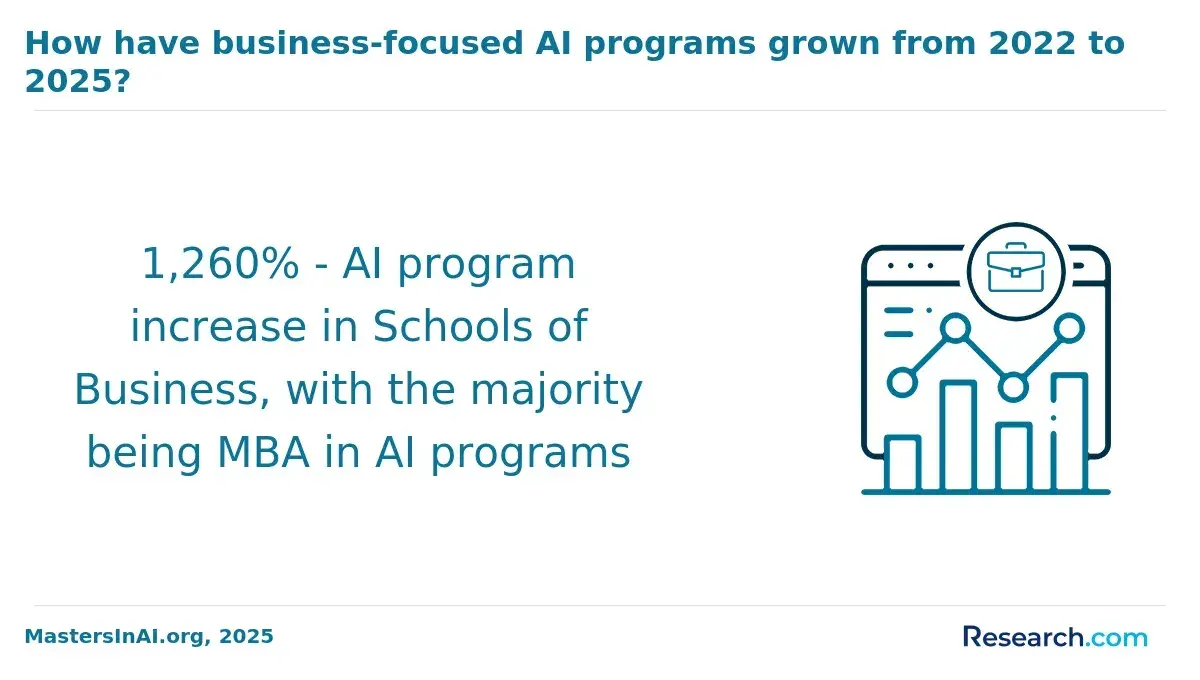
How do Harvard's online AI courses compare with on-campus and hybrid executive options?
Harvard's online AI courses offer busy executives a flexible alternative to traditional on-campus and hybrid executive programs without sacrificing rigor. This approach suits professionals balancing full-time work and other responsibilities by enabling them to learn at their own pace. The curriculum closely aligns with hybrid and in-person formats, emphasizing the practical application of AI in strategic business contexts.
A notable example is the "Competing in the Age of AI" course, which highlights that organizations scaling AI across units experience a median 3.5 percentage-point margin improvement, yet only 12% achieve this level, according to the MIT Sloan Management Review-BCG Global AI in Business Survey. Harvard's online courses provide strategic frameworks that help bridge this performance gap.
When comparing hybrid and online Harvard executive AI courses, the on-campus and hybrid options often provide more direct interaction with faculty and peers, fostering networking and collaboration. Still, the online model incorporates live sessions, case studies, and group work to replicate these benefits virtually, ideal for executives prioritizing geographic independence or demanding flexible schedules.
Executives evaluating Harvard online AI courses vs on-campus executive programs should consider their networking needs and learning styles alongside logistical factors. For those seeking comprehensive business-relevant AI knowledge with measurable outcomes in a flexible setting, the online option stands as a compelling choice. Prospective students may also explore additional AI degree programs to compare opportunities across formats.
What are the typical admissions requirements for Harvard's online AI executive programs?
Harvard online AI program admissions criteria for executives generally emphasize strong professional backgrounds, especially leadership roles in technology, management, or strategic functions. Candidates with at least five years of relevant work experience, preferably in senior management positions that influence digital transformation, are typically favored. A bachelor's degree from an accredited institution is commonly required, but practical experience and proven impact often weigh more heavily than academic prestige.
Applicants should prepare to submit a resume highlighting their achievements in AI-related or technology-driven initiatives. Some programs also request a statement of purpose detailing goals for AI adoption and how the training will support accelerating AI projects. While letters of recommendation are not always mandatory, they can enhance an application by confirming leadership and strategic skills. These components align closely with requirements for executive enrollment in Harvard AI courses.
Technical prerequisites tend to be flexible; deep coding expertise is usually not required. Programs such as AI for Leaders from Harvard Business School Online focus on strategic and managerial competencies to guide AI integration. Familiarity with AI concepts, data-driven decision-making, and business analytics can be advantageous but are not strict prerequisites.
Research shows that companies whose senior leaders complete structured AI training like Harvard's AI for Leaders are 1.8x more likely to move AI projects from pilot to production and 1.6x more likely to see significant financial impact from AI, according to Deloitte's 2024 State of AI in the Enterprise report. For professionals exploring technology education options, including veterans, reviewing military friendly online electrical engineering degree programs could offer valuable alternative pathways to enhance technical and leadership skills.
How are Harvard's online AI courses structured, and how much time do they require?
Harvard's online AI courses for executives are structured to fit demanding professional schedules through modular, flexible learning. These programs typically include short modules lasting 2 to 6 weeks, requiring 20 to 40 hours total. Components such as pre-recorded lectures, interactive assignments, case studies, and live virtual sessions offer a comprehensive, engaging experience.
The "Exploring Technology and Policy" course from Harvard Kennedy School Executive Education highlights the intersection of AI and policy, requiring about 25 to 30 hours over 4 weeks. This hybrid format combines self-paced study with live discussions, ideal for busy executives seeking to integrate AI strategies efficiently. Weekly study time generally ranges from 5 to 10 hours, with some courses demanding strict attendance for live sessions, particularly those emphasizing data science and machine learning fundamentals, which can push the workload near 40 hours.
This educational approach prioritizes flexibility without sacrificing depth, accommodating career demands while incorporating the latest AI research and governance trends. Regular weekly study is essential to maximize learning outcomes.
According to Gartner's 2024 Public Sector AI Forecast, by 2026, 75% of governments worldwide will deploy at least one generative-AI application or policy tool in public services, a sharp increase from 15% in 2023. This trend underscores the importance for executives to understand both AI capabilities and regulatory frameworks through quality programs like Harvard's offers.
What AI topics, tools, and case studies do Harvard executive courses usually cover?
Harvard executive ai courses cover a wide range of topics that connect technical foundations with strategic business uses. They typically include machine learning basics, natural language processing, and computer vision, helping leaders understand essential ai methods. Practical skills are developed through tools like Python programming, ai-driven analytics platforms, and cloud-based ai services.
Case studies are integral, highlighting applications in finance, healthcare, and retail. For instance, executives explore how ai enhances risk assessment in banking or personalizes patient care via predictive analytics. This method enables leaders to transform ai theory into effective business strategies.
Key challenges such as ethical ai deployment, data governance, and scaling within established organizations are addressed. Participants learn frameworks for responsible ai use to reduce bias and comply with regulations. 68% of global executives cite lack of ai skills among leadership as a top barrier to value creation, per PwC's 2024 Global CEO Survey. 61% plan to increase investment in ai leadership development by 2025.
Executives also practice strategic decision-making, assessing whether to build ai capabilities in-house or pursue partnerships and acquisitions. The curriculum prepares leaders to guide cross-functional teams in integrating ai into product innovation, customer experience, and operational efficiency.
How much do Harvard's online AI executive courses cost, and what funding options exist?
Harvard's online executive courses in artificial intelligence typically range from $2,800 to $4,800, depending on the program's depth and length. For instance, the "Data Science: Machine Learning" course costs about $2,800, whereas more comprehensive certificates can cost upwards of $4,500. These prices apply to individual learners without institutional support or group discounts.
Students have several funding options, including employer sponsorships, financial aid via Harvard Online's application, and payment plans that spread tuition over time. Many professionals should explore employer reimbursement programs, as companies frequently invest in employee upskilling in AI and related data science fields.
For those on a budget, Harvard offers free or low-cost alternatives such as CS50's Introduction to Artificial Intelligence and specialized generative AI courses available through Harvard Online and edX. These options provide foundational knowledge without upfront fees, helping learners build skills linked to higher income potential.
- Harvard AI courses vary in cost from $2,800 to $4,800.
- Funding options include employer sponsorships, financial aid, and payment plans.
- Free and affordable courses available for foundational AI skills.
- Certificates correlate with earning 20-25% more than peers without credentials.
Data from Coursera's Learner Outcomes Report shows professionals holding AI or data science certificates earn substantially more, highlighting the value of reputable credential programs like Harvard's. Applicants should evaluate their career goals and budgets, balancing paid comprehensive certificates against accessible free courses to maximize both learning and financial return.
What career outcomes and leadership roles can follow Harvard online AI executive training?
Executives who complete Harvard's online AI executive training often advance to influential leadership roles, including Chief AI Officer, Head of Digital Strategy, and Director of Innovation. These positions demand a strong grasp of ai applications to guide strategy, launch AI-driven initiatives, and lead cross-functional teams in adopting new technologies.
According to the 2024 Global Executive Learner Survey by the Executive Education Consortium, leaders who complete these programs report a 32% increase in ai use cases deployed within one year. This reveals that alumni gain not only theoretical knowledge but also the practical skills needed to translate ai insights into tangible business benefits.
Common responsibilities for graduates include:
- Driving enterprise-wide ai integration to boost operational efficiency and enhance customer experience.
- Leading data governance and ethical ai frameworks to ensure compliance and mitigate risks.
- Developing ai product roadmaps aligned with corporate growth goals.
These roles require combining strategic vision with technical literacy, enabling executives to communicate effectively with ai teams and stakeholders. Harvard's courses prepare leaders to overcome challenges like talent acquisition, deployment scalability, and regulatory compliance.
Many also move into advisory or board roles focusing on ai oversight, helping organizations prioritize ai investments and innovation strategies. This wide range of career pathways highlights the significant impact and advancement opportunities Harvard's online ai training offers to executives competing in a technology-driven economy.
Do Harvard's online AI executive programs provide certificates or pathways to degrees?
Harvard's online ai executive programs provide certificates that validate expertise in areas like ai strategy, governance, and business-focused ai product ownership. These certificates offer valuable credentials for executives aiming to demonstrate skills aligned with enterprise priorities but typically do not grant direct academic credit toward degrees.
For those seeking formal academic advancement, some Harvard certificates can be credited toward graduate degree programs through continuing education or professional tracks. This credit transfer option supports executives balancing skill development with long-term education goals.
Harvard's curriculum aligns closely with market needs. According to McKinsey's 2024 Global AI Workforce Survey, 84% of enterprises prioritize skills in "AI strategy and governance" and "business-oriented AI product ownership" over purely technical abilities. Harvard's programs emphasize these competencies, focusing on executive-level application rather than coding or technical model building.
Executives should consider their objectives carefully:
- Those pursuing strategic ai certification will benefit from Harvard's online offerings.
- Those aiming for formal degrees should verify how certificate credits transfer within Harvard's graduate pathways before enrolling.
How should executives evaluate whether a Harvard online AI course fits their goals?
Executives looking to advance their skills with Harvard online AI courses should focus on aligning course content with their professional goals and industry needs. Courses offering micro-credentials or certificates that emphasize practical skills often provide more value than longer, theoretical degrees. According to the 2024 Global Workplace Learning & Skills Report from LinkedIn Learning, 92% of executives favor concise programs for AI upskilling, and adoption of such courses has grown by 58% between 2022 and 2024, highlighting a clear preference for efficient learning formats.
Key criteria for selecting the right program include:
- Relevance of course modules to your specific role and sector, such as finance, healthcare, or marketing applications.
- Appropriate technical depth aligned with your current knowledge, ranging from foundational concepts to advanced machine learning.
- Flexible scheduling options that accommodate busy executive timelines.
- Practical projects or case studies focused on solving real business challenges.
- Access to expert faculty and Harvard-affiliated mentors ensuring high-quality instruction.
It's also vital to consider how well the credential is recognized in your industry for career growth or influence. For example, certificates emphasizing AI strategy and ethics suit senior managers integrating governance, while data science tracks appeal to technical leaders. Reviewing course syllabi against your job requirements or skills gaps helps find the best fit. Post-course support like alumni networks and continuous learning resources further enhances value.
Other Things You Should Know About Artificial Intelligence
Executives enrolling in online AI courses should have strong analytical and critical thinking abilities, as well as a foundational understanding of data-driven decision-making. Familiarity with basic programming concepts or prior experience with digital technologies can be helpful but is not always required, as many courses provide introductory modules. Effective communication skills are also valuable for applying AI insights within organizations.
AI enables businesses to analyze large volumes of data quickly, uncovering patterns and insights that improve strategic decisions. It supports predictive analytics, automates routine tasks, and enhances customer personalization, which leads to more efficient operations and competitive advantages. Executives trained in AI are better equipped to integrate these technologies into their business models.
Executives need to be aware of ethical issues such as bias in AI algorithms, data privacy, and transparency in AI decision-making. Responsible AI deployment requires adherence to regulations and frameworks that promote fairness and accountability. Understanding these considerations helps leaders mitigate risks and foster trust among stakeholders.
Executives should regularly update their AI knowledge by engaging in industry-relevant courses, ideally every 1-2 years. This helps them stay informed about technological advancements and evolving AI applications in business strategy and decision-making.
References
- AI and machine learning https://hbr.org/topic/subject/ai-and-machine-learning
- World’s Most Popular Online Course Adopts AI: Harvard’s CS50 https://www.onlineeducation.com/features/harvards-popular-online-course-and-ai
- Harvard Business School vs AI ML etc. - Right for Tech Leaders? https://www.aimletc.com/harvard-business-school-vs-ai-ml-etc/
- 50 Exec Ed Courses To Get Smart About AI - USA & Canada - Bluesky Thinking https://bluesky-thinking.com/50-exec-ed-courses-to-get-smart-about-ai-usa-canada/
- edX | Online Courses, Certificates & Degrees from Leading Institutions https://www.edx.org/
- Harvard Data Science Review Agentic AI Intensive https://live.hdsrcourses.org/agentic-ai-intensive
- Best AI for Executives Courses Designed for Busy Senior Leaders - Emeritus Online Courses https://emeritus.org/blog/best-ai-for-executives-courses/
- Best Generative AI Courses for Leaders https://www.flexos.work/learn/best-generative-ai-courses-for-leaders
- The best AI training for executives | The AI Edit https://www.theaiedit.ai/blog/best-ai-training-for-executives
- AI-First Leadership: Embracing the Future of Work - Harvard Business Impact https://www.harvardbusiness.org/insight/ai-first-leadership-embracing-the-future-of-work/