2027 Best AI Courses for Chief Innovation Officers Managing AI Adoption

Co-Founder and Chief Data Scientist
Chief Innovation Officers often face challenges in steering ai adoption amid rapid technological change and complex business demands. Many struggle to identify reliable, applicable training that balances deep technical knowledge with strategic leadership. This gap limits their ability to integrate ai solutions effectively without disrupting existing workflows or missing critical ethical and operational considerations. Understanding which courses offer the right blend of flexibility, accreditation, and practical insight is essential for career pivoters from unrelated fields. This article evaluates top ai courses tailored for innovation leaders, helping readers choose programs that enhance their expertise and guide successful ai integration in dynamic corporate environments.
Key Things You Should Know
- Chief Innovation Officers must focus on courses covering AI strategy, change management, and ethical AI to effectively lead AI adoption in organizations, aligning technology with business goals.
- By 2025, 78% of firms emphasize AI literacy for innovation leaders, highlighting the importance of hands-on AI applications and data-driven decision-making skills in top courses.
- Emerging curricula integrate emerging AI risks, regulatory compliance, and bias management, equipping officers to navigate complex ethical and legal challenges during AI implementation.
Advance Your Career with AI Online Courses
Artificial Intelligence: Implications for Business Strategy
This program provides an introduction to Artificial Intelligence and their implications for business strategy. Earn an official digital certificate.

Oxford Artificial Intelligence Programme
Explore this Oxford Artificial Intelligence programme offered in a flexible learning environment and explore topics like machine learning, automation, and robotics.

Implementing Agentic AI: Building Your Organizational Playbook
This online MIT Agentic AI course offers a practical approach to deploying AI agents in your organization, including a custom playbook. 3 weeks, exclusive launch price.

AI Adoption: Driving Business Value and Impact
This online MIT AI Adoption: Driving Business Value and Impact offers practical frameworks to close the gap between AI potential and business reality.

Artificial Intelligence in Pharma and Biotech
Discover the applications and limitations of artificial intelligence in pharma and biotech with this MIT online short course.

What does a chief innovation officer need from an AI course to manage enterprise adoption?
Chief innovation officers require AI course requirements for enterprise adoption that build strategic, technical, and leadership skills vital for managing AI integration effectively. Courses should emphasize AI capabilities and limitations, including generative AI models, which 67% of organizations regularly use according to a McKinsey Global Survey on AI. This foundational understanding helps CIOs evaluate and align AI solutions with organizational goals.
Effective strategies for managing artificial intelligence integration in enterprises include training in change management and fostering collaboration across departments. CIOs must address cultural resistance, ethical challenges, and improve communication among data scientists, IT teams, and business units. Case studies on overcoming deployment barriers and scaling pilots to enterprise solutions are valuable components of such courses.
Data strategy and governance also play a critical role. Courses should cover how to implement policies that guarantee compliance, security, and quality, ensuring trustworthy AI outputs. Knowledge of relevant regulatory frameworks on data privacy and AI accountability is essential.
Financial skills related to AI investments help CIOs calculate ROI and align projects with business KPIs for budget justification and stakeholder support. Hands-on experience with AI tools bridges theory and practice, deepening leaders' understanding of AI workflows and constraints.
Individuals exploring this field may consider the AI career path for further insight into opportunities linked to these competencies.
Advance Your Career with AI Online Courses
Artificial Intelligence: Implications for Business Strategy
This program provides an introduction to Artificial Intelligence and their implications for business strategy. Earn an official digital certificate.
Oxford Artificial Intelligence Programme
Explore this Oxford Artificial Intelligence programme offered in a flexible learning environment and explore topics like machine learning, automation, and robotics.
Implementing Agentic AI: Building Your Organizational Playbook
This online MIT Agentic AI course offers a practical approach to deploying AI agents in your organization, including a custom playbook. 3 weeks, exclusive launch price.
Which types of AI courses are best for executives leading digital and AI transformation?
Courses designed for executives leading digital and AI transformation address the critical skills gap many companies face. PwC's 2024 Global AI Jobs Barometer highlights that only 13% of companies have sufficient talent to execute their AI strategies. Therefore, ai adoption training programs for chief innovation officers must integrate strategic leadership with practical AI knowledge.
Effective executive ai courses for digital transformation leaders typically focus on key areas such as AI strategy development to align initiatives with business objectives, change management for organizational adoption, and ethical frameworks concerning governance, risk, and compliance. Hands-on case studies covering AI deployment, ROI analysis, and impact assessment prepare leaders to make informed decisions and justify investments.
Course designs vary; some emphasize technical literacy so leaders can collaborate effectively with data scientists by teaching fundamentals like machine learning, natural language processing, and automation. Others concentrate on understanding the broader AI ecosystem, including vendor partnerships, regulation, and workforce reskilling. Many adopt modular curricula updated with AI advancements, often supplemented by peer learning and expert mentorship.
Executives seeking to enhance their skills may also explore related fields or programs, such as a mechanical engineer degree, which can complement AI knowledge by strengthening technical foundations.
This comprehensive approach equips leaders to close talent gaps and accelerate sustainable AI transformation across their organizations.
How do AI courses for innovation leaders differ from general AI and data science programs?
AI courses tailored for innovation leaders focus on strategic application rather than just technical skills like coding or algorithms. These leadership-focused AI adoption training for chief innovation officers emphasize aligning AI initiatives with business goals, managing organizational change, and overcoming integration challenges. They include risk management, ethical considerations, and fostering collaboration across departments.
Such courses prepare innovation leaders to evaluate AI investments based on expected business value instead of solely on model performance metrics. They cover governance frameworks and stakeholder engagement strategies often missing from general AI programs. For example, leaders learn to prioritize AI projects, identify key performance indicators that reflect successful adoption at scale, and address ethical and compliance issues.
By incorporating case studies, scenario planning, and AI portfolio management methods, these programs equip executives to navigate complex organizational dynamics. According to Accenture Technology Vision 2025, organizations that scale AI effectively can achieve 2.4 times higher productivity than those still experimenting. This highlights the importance of tailored strategic education for measurable outcomes.
Those interested in advancing their expertise may explore options such as cyber security degrees to complement their AI knowledge, strengthening leadership capabilities in tech-driven environments.
What admission requirements and professional background are expected for executive-level AI programs?
Executive AI programs often require candidates to bring extensive professional experience, typically 8 to 10 years in leadership roles focused on strategy, innovation, or technology management. A bachelor's degree in business, engineering, computer science, or related fields is usually necessary, although some programs may accept equivalent professional accomplishments instead of formal education. Admission requirements for executive AI programs emphasize both academic credentials and practical achievements.
Strong knowledge of technology trends and prior involvement in digital transformation are key. Professionals serving as chief innovation officers, IT directors, or strategy consultants frequently meet the expectations given their experience driving AI or data-centric projects. These candidates demonstrate competencies essential for managing AI adoption challenges and aligning initiatives with organizational goals.
Since 84% of business leaders identify governance, risk, and compliance as major barriers to enterprise AI adoption, many courses focus heavily on AI governance and risk management. Applicants with expertise in regulatory compliance, risk mitigation, or ethics gain a competitive edge. This aligns well with professional background expectations for chief innovation officers in AI adoption, who must balance innovation with accountability.
Admission may also require essays outlining a strategic vision for AI and senior executive endorsements to demonstrate leadership credibility. Familiarity with emerging AI standards, ethics certifications, or analytics enhances prospects. Those interested in deeper career insights might explore what does an AI trainer do for related professional pathways.
How should chief innovation officers compare online, hybrid, and on-campus AI programs?
Chief innovation officers evaluating AI programs should consider flexibility, networking, and program depth. Online options offer flexible schedules ideal for balancing ongoing responsibilities but can lack immersive peer interaction critical for leadership roles influencing cross-functional teams. Hybrid programs blend online convenience with occasional in-person sessions, supporting collaboration and flexibility. On-campus programs provide intensive, face-to-face engagement, perfect for executives seeking comprehensive leadership development and direct access to faculty and peers.
Course content should focus on AI operating models and accountability, addressing the widespread issue of unclear ownership for AI initiatives-highlighted by the IBM Global AI Adoption Index 2024, where 58% of senior executives cite this challenge. Emphasizing governance structures and decision frameworks is often more valuable than purely technical AI skills.
Additional factors to weigh are real-world challenge simulations, relevant case studies, cost, and time commitment. For example, executives in dynamic tech environments might prefer hybrid programs that offer strategic insights and practical tools within condensed timelines.
- Does the program emphasize AI leadership and decision-making frameworks?
- What networking opportunities with other senior executives are available?
- Are there practical projects or simulations mirroring your industry's challenges?
- How does the program address accountability for AI initiatives?
Which curriculum topics matter most in AI courses for managing strategy, risk, and governance?
Only 31% of organizations have moved beyond pilot projects to fully operational deployments of artificial intelligence, according to the BCG AI at Scale Survey 2024. This gap underscores the importance of curricula that emphasize practical implementation and scaling of AI rather than just theoretical knowledge.
Essential curriculum topics focus on areas such as:
- AI strategy development, including aligning initiatives with business goals and identifying scalable use cases.
- Risk management frameworks that address AI-specific risks like data bias, model interpretability, and regulations such as GDPR and the AI Act.
- Governance structures with cross-functional oversight, transparent reporting, and ethical guidelines throughout the AI lifecycle.
- Change management and stakeholder engagement, focusing on leading organizational transformation and training users.
- Data governance and security, emphasizing data quality, privacy, and access controls tailored for AI projects.
Practical exercises such as simulating boardroom decision-making on AI risk or drafting governance policies based on regulatory scenarios help build leadership skills. Courses that facilitate the transition from concept to deployment while mitigating risks and ensuring compliance are critical for prospective learners seeking advanced AI education.
How can CIOs evaluate accreditation, rankings, and institutional reputation for AI executive education?
Chief innovation officers (CIOs) assessing ai executive education must prioritize program accreditation, institutional reputation, and rankings to ensure quality and practical relevance. Accreditation from respected bodies like AACSB or ABET confirms that curricula adhere to rigorous academic and industry standards. It is essential to verify the recognition of accreditation agencies within both education and business sectors.
Rankings offer useful comparative insights but require deeper analysis of methodologies, including faculty expertise, industry ties, and graduate outcomes. Programs highly ranked for practical AI leadership often maintain strong connections with tech companies and emphasize case-based learning, benefiting CIOs leading AI adoption initiatives.
Institutional reputation impacts career advancement and networking. Evaluating alumni success in senior ai roles, faculty research influence, and endorsements by recognized experts can measure this. Institutions actively publishing influential AI research or collaborating with leading firms showcase leadership in the field, adding value for executive students.
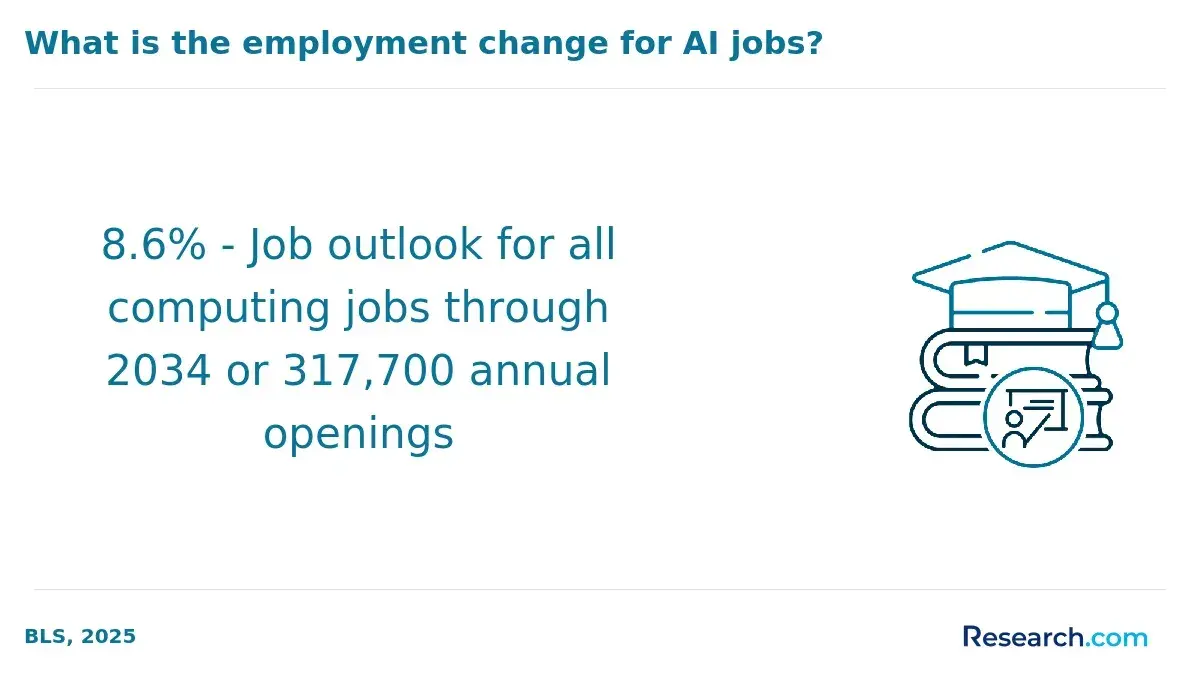
Cost considerations should align with expected returns on investment. Given projected job growth in AI-related roles, investing in executive education that delivers hands-on leadership skills and measurable career improvements is strategic.
- Accreditation ensures academic rigor and alignment with industry standards
- Ranking methodologies highlight programs aligned with CIO objectives
- Reputation reflects program value in industry networks
- Strong job market demand supports AI education investment
What are the typical program length, tuition costs, and funding options for AI courses for executives?
Executive ai courses vary from short, intensive sessions lasting one to four weeks to comprehensive certificate programs spanning three to six months. These formats cater to busy chief innovation officers by combining strategic overviews with practical insights. Short workshops emphasize frameworks and high-level strategy, while longer courses offer hands-on projects and detailed case studies.
Tuition fees depend on the institution's prestige, program duration, and depth. Entry-level workshops start around $4,000, whereas advanced certificate courses at top business schools range from $12,000 to $18,000 for six-month terms. This pricing reflects specialized content designed for senior leadership in innovation and ai adoption.
- Employer sponsorship is a common funding source for executives.
- Scholarships, including merit-based and need-based awards, support qualified candidates.
- Flexible payment plans help spread tuition costs over time.
Enrollment in executive ai programs has grown over 40% annually, according to MIT Sloan Executive Education. This surge encourages expanded offerings and funding options, addressing organizations' urgent need for leaders skilled in ai strategy. Matching program lengths, costs, and financial aid to personal and organizational goals is essential for chief innovation officers aiming to lead in ai-driven environments.
What career outcomes, salary impact, and promotion pathways can AI-trained chief innovation officers expect?
Chief innovation officers (CIOs) skilled in artificial intelligence enjoy accelerated career advancement and higher compensation. Expertise in AI technologies and strategic application boosts their value in companies undergoing digital transformation. According to Deloitte's 2025 Executive Learning Survey, 71% of executives prefer short or modular AI training programs, which enhance practical business use and facilitate impactful learning.
Salary increases ranging from 15% to 30% are common for CIOs with AI proficiency compared to their peers. Many transition to top roles like Chief Digital Officer or Chief Technology Officer within two to four years by leveraging AI-driven innovation and operational improvements.
Promotion often involves expanding responsibilities to areas like data governance, AI ethics, and cross-department collaboration, broadening influence for leadership roles requiring strategic AI insight. However, CIOs face challenges such as integrating AI with legacy systems and managing workforce adaptation. Successful professionals address these by adopting modular learning and agile team development, aligning with current preferences for practical AI education.
Career opportunities also include advisory positions and board memberships focusing on AI-enhanced data strategies. Continuous AI education remains essential to maintain competitiveness as AI adoption grows across industries.
How should innovation leaders assess real-world projects, capstones, and networking in AI programs?
Innovation leaders evaluating artificial intelligence programs should focus on real-world projects and capstones that reflect complex, practical challenges aligned with strategic business goals. Effective programs include projects such as optimizing supply chain logistics, improving customer personalization, or automating decisions, demanding cross-functional teamwork and real data application beyond theory. It's vital these capstones showcase measurable impact or prototype development ready for corporate implementation.
Networking plays a crucial role in AI education. Programs offering structured connections with industry experts, AI researchers, and peers-through mentorship, collaborative projects, or exclusive forums-help learners overcome adoption challenges and stay current with emerging trends. Partnerships with leading AI organizations and corporations enrich these opportunities.
Portfolio-building elements are important, allowing learners to document project outcomes and decision rationales. Transparent team roles and problem-solving processes add credibility when advocating AI adoption within organizations.
According to the IBM Global AI Adoption Index 2025, 72% of companies will increase AI training budgets, highlighting the importance of hands-on experience and professional networking. Prioritizing programs that reflect this investment prepares professionals to navigate complex AI implementation challenges effectively.
Other Things You Should Know About Artificial Intelligence
Artificial intelligence is reshaping a wide range of industries including healthcare, finance, manufacturing, and retail by automating complex processes and enabling data-driven decisions. In healthcare, AI improves diagnostics and personalized medicine, while in finance it enhances fraud detection and algorithmic trading. Manufacturing benefits from predictive maintenance, and retail gains through personalized customer experiences and inventory optimization.
Chief innovation officers must address issues such as algorithmic bias, data privacy, transparency, and accountability when deploying AI solutions. Ensuring that AI systems do not perpetuate discrimination and that user data is handled responsibly is critical. Additionally, CIOs should establish governance frameworks to monitor ethical AI use throughout the enterprise.
Continuous education is essential for leaders to keep pace with rapid advancements in AI technologies and methodologies. For chief innovation officers, staying informed about emerging tools, ethical standards, and best practices enables them to make strategic decisions and adapt organizational workflows effectively. Ongoing learning also supports better communication between technical teams and business units.
References
- AI is reshaping every academic workflow.The question is who governs it. https://falkovia.com/higher-education/
- AI and Digital transformation programs at IMD Business School https://www.imd.org/digital-transformation-programs/
- Chief Artificial Intelligence Officer: London 16th to 18th of March 2027 - e-Compliance Academy https://www.e-compliance.academy/chief-artificial-intelligence-officer-london/
- AI Governance, Risk, and Compliance in Higher Education: A CIO’s Guide - Higher Education Digest https://www.highereducationdigest.com/ai-governance-risk-and-compliance-in-higher-education-a-cios-guide/
- Evaluating the Reputation and Accreditation of Institutions Offering Executive Education Programs https://www.europeanbusinessreview.com/evaluating-the-reputation-and-accreditation-of-institutions-offering-executive-education-program/
- Artificial Intelligence and Data Science for Executives | Making better decisions through machine learning | SDA Bocconi https://www.sdabocconi.it/en/on-campus-executive-education/artificial-intelligence-and-data-science-for-executives-315580/
- Digital, Data & AI https://www.hec.edu/en/executive-education/our-programs-individuals/management-topics/digital-data-ai
- AI pricing: how much does AI cost in 2025? | Future Processing https://www.future-processing.com/blog/ai-pricing-is-ai-expensive/
- AI - Artificial Intelligence | London Business School https://www.london.edu/executive-education/ai
- AI's Impact on Graduate Jobs: A 2025 Data Analysis | IntuitionLabs https://intuitionlabs.ai/articles/ai-impact-graduate-jobs-2025