2027 Physical Education Career Outcomes by Degree Level Report: Pay, Employment, and Advancement Patterns

Co-Founder and Chief Data Scientist
Choosing the right degree level in physical education poses a critical challenge: how to balance time and financial investment against tangible career outcomes in a competitive job market. Recent 2024 research reveals that bachelor's degree holders in physical education experience a 12% higher employment rate within education and sports sectors compared to associate degree completers. This gap reflects not only employer preferences but also differences in career mobility and access to leadership roles.
Understanding these distinctions is vital for transfer students, working professionals, and military-affiliated learners aiming to maximize their career trajectories. This article analyzes pay, employment, and advancement patterns by degree level to support informed decision-making.
Key Things to Know About Physical Education Career Outcomes by Degree Level
- Associate degrees in physical education offer faster entry into entry-level roles but yield limited advancement without further credentialing, highlighting a significant tradeoff between speed and long-term career growth.
- Bachelor's and master's credentials align with higher employer expectations for leadership and specialty roles, reflecting labor data where 68% of advanced positions require at least a bachelor's, shaping upward mobility patterns.
- Graduate and doctoral programs, while costly and time-intensive, provide strategic access to academic and policy-making careers, emphasizing timing and financial investment as critical factors in credential advancement decisions.
- Key Things to Know About Physical Education Career Outcomes by Degree Level Key Things to Know About Physical Education Career Outcomes by Degree Level
- What Career Outcomes Can Students Expect From Each Physical Education Degree Level? Career Outcomes by Degree
- How Much Do Physical Education Graduates Earn by Degree Level? Salary by Degree Level
- Which Physical Education Degree Level Offers the Strongest Employment Prospects? Best Degrees for Employment
- What Entry-Level Jobs Can You Get With a Physical Education Degree? Entry-Level Career Opportunities
- How Do Physical Education Degree Levels Affect Career Advancement and Promotion Opportunities? Career Growth by Degree
- Is a Physical Education Degree Worth It Based on Salary, Employment, and ROI? Salary, ROI, and Value
- How Do Associate, Bachelor's, Master's, and Doctoral Physical Education Degrees Compare? Comparing Degree Levels
- Which Industries and Employers Hire Physical Education Graduates by Degree Level? Which Industries and Employers Hire Physical Education Graduates by Degree Level?
- What Skills, Credentials, and Experience Improve Physical Education Career Outcomes? What Skills, Credentials, and Experience Improve Physical Education Career Outcomes?
- Which Physical Education Degree Level Is Best for Your Career Goals? Choosing the Right Degree
What Career Outcomes Can Students Expect From Each Physical Education Degree Level?
Deciding on the appropriate degree level in physical education shapes both immediate employment access and longer-term advancement in ways that often reflect practical tradeoffs between time investment and career flexibility. Associate degrees commonly prepare candidates for roles such as teaching assistants or community coordinators, yet the limited scope for independent teaching or leadership positions means many must pursue further education to overcome wage ceilings or plateaued job mobility.
Bachelor's degrees serve as the de facto standard for full teacher certification and open entry into K-12 and program management roles, but real-world hiring preferences underscore the importance of embedded internships and state licensure to translate academic credentials into sustainable employment. For adult learners or transfer students, strategic credit transfer and the availability of flexible degree-completion pathways often influence feasibility in reaching this credential efficiently within employment schedules and personal obligations.
At the graduate level, a master's degree distinctly elevates professional standing by focusing on leadership, curriculum design, or higher coaching responsibilities and embodies a competitive credential that supports movement into senior roles with enhanced job stability. Doctoral degrees, though rare in physical education, cater primarily to academic research or policy leadership, entailing extended scholarly commitment but offering autonomy and influence that are unavailable at lower levels.
These higher degrees respond to increasing employer demand for advanced licensure and specialization, notably in districts prioritizing education innovation or collegiate athletics. Trends evident in physical education degree career outcomes in the United States confirm that credential level is a critical determinant not only for entry but also for navigating upward mobility, making a carefully informed degree choice essential to align workforce outcomes with personal circumstances and long-term goals within this field. For those considering the financial and time costs of these paths, options like the cheapest online healthcare administration degree programs may offer valuable models of flexible, affordable credentialing within related educational sectors.
How Much Do Physical Education Graduates Earn by Degree Level?
Earnings for physical education graduates vary notably by degree level, with bachelor's degree holders typically positioned for roles that require licensure and offer more stable salaries around a median of $60,000 annually, according to U.S. Bureau of Labor Statistics data from 2024. Associate degree and certificate holders often fill support roles such as coaching aides or unlicensed fitness trainers, where wages usually range from $35,000 to $45,000 but come with less job security and fewer advancement pathways.
For those pursuing master's or doctoral degrees, wage gains stem largely from specialization and eligibility for leadership or curriculum development positions, where pay premiums may reach 15-25% above bachelor's earnings; however, these gains come with longer completion times and potentially higher educational costs that adult learners must weigh against practical career outcomes. Geographic location and employer expectations, such as certification requirements in urban school districts or private sectors, further complicate how degree investments translate to pay and opportunity across diverse job markets.
Transfer pathways from associate to bachelor's programs remain a crucial consideration for working professionals who prefer incremental upskilling without extended full-time study commitments. Still, each step up the academic ladder entails tradeoffs between time, cost, and potential wage boosts that may not manifest immediately or uniformly across regions and employer types. Unemployment rates tend to improve at higher degree levels due to stronger demand for advanced expertise, but these benefits are closely tied to roles requiring administrative or academic responsibilities rather than frontline instruction. Evaluating degree completion alongside licensure and certification demands provides a clearer lens for how educational choices impact long-term employability and salary trajectory in physical education fields.
A recent physical education graduate shared their experience balancing degree options after noticing that local job postings preferred bachelor's degree candidates with teaching licenses over certificate holders, despite similar job descriptions. Initially hesitant to invest in additional coursework, the graduate considered the time and financial burden of transferring credits from an associate degree but ultimately prioritized meeting licensure requirements to access higher-paying roles with benefits. Conversations with employers reinforced that specialization and certifications significantly influence starting salaries and promotion odds, shaping their decision to pursue a master's degree part-time while working, aiming to bridge practical experience with credentials valued in their region's schools and fitness organizations.
Which Physical Education Degree Level Offers the Strongest Employment Prospects?
Employers and licensing bodies often set clear thresholds in physical education that heavily influence job access and stability, with bachelor's degrees serving as the pivotal credential for most K-12 teaching positions due to state licensure requirements. While associate degrees and certificates can facilitate quicker workforce entry into assistant or support roles, these typically lack the credentials necessary for primary teaching or coaching jobs, leading to higher unemployment rates and more tenuous employment. For example, data from the U.S. Bureau of Labor Statistics in 2024 shows that about 85% of bachelor's graduates in physical education secure relevant employment within a year, a significant advantage over lower-level credentials that seldom meet formal teaching criteria or provide the same level of professional security.
Advancing to graduate studies in physical education, such as master's or doctoral degrees, shifts prospects from entry to specialized or leadership domains, including administration, postsecondary education, or research roles, where salary premiums of 20-30% over bachelor's holders have been documented by the College Scorecard. These advanced degrees respond to a growing employer demand for specialized skills and research expertise but require a considerable additional investment in time and money. The decision to pursue graduate credentials involves weighing immediate earning potential against long-term mobility, and for some working professionals, continuing education while employed may offer the best route to deeper field specialization and enhanced leadership opportunities without sacrificing short-term income.
In practical terms, individuals must balance rapid labor market entry via associate or certificate routes against the restricted occupational access and volatility this entails, versus the broader, more stable pathways afforded by bachelor's and advanced degrees. Regional labor markets and the intensity of credential inflation further complicate this matrix, making it essential for prospective students to align their educational choices with realistic job market demands, licensing standards, and personal capacity for sustained study. Graduates aiming for sustained employment and upward mobility commonly find the bachelor's credential indispensable, while those targeting higher-tier roles must be prepared for the trade-offs associated with graduate-level specialization.
What Entry-Level Jobs Can You Get With a Physical Education Degree?
Entry-level physical education jobs in the United States vary widely depending on educational attainment and credentialing, with bachelor's degree holders often positioned for certified teaching roles in K-12 schools, fitness training, or health education. These positions generally demand state licensure and demonstrable experience through internships or practicums, making preparation during a degree program critical.
Conversely, associate degrees or certificates tend to lead toward roles like recreational workers or fitness assistants, which serve more as initial footholds with limited upward mobility unless supplemented by further training or certification. Many employers prioritize hands-on experience and certifications such as CPR, underscoring the importance of applied skills alongside academic qualifications.
Physical education graduate career opportunities for beginners are influenced by geographic and sector disparities; while urban and suburban districts may offer structured positions with clear advancement, rural areas often have fewer formal openings but more community-based fitness or recreation roles that require adaptability.
According to the National Center for Education Statistics, about 65% of new graduates find relevant jobs within six months, signaling steady demand but also a competitive environment shaped by specific requirements. Students weighing faster entry through shorter programs must consider that these pathways typically necessitate ongoing credentialing to maintain employability and growth, unlike bachelor's degrees, which provide a more direct route to licensed roles with long-term stability.
Those deciding between physical education pathways should evaluate how program length, licensure demands, and internship opportunities align with their career goals and resources. Those interested in quick workforce entry might explore options akin to a health information technology associate degree online for related fields with rapid credentialing, while others should prepare for the investment in time and experience necessary for certified teaching or advanced health educator roles. Understanding these trade-offs can help navigate early career choices that balance immediate job access against future advancement possibilities.
How Do Physical Education Degree Levels Affect Career Advancement and Promotion Opportunities?
In physical education careers, holding a master's degree or higher frequently correlates with faster access to supervisory and administrative roles compared to those with only a bachelor's, reflecting employer preferences for advanced credentials in leadership hires. For instance, many school districts require graduate-level education or additional certification before approving candidates for department chair or curriculum coordinator positions, a gatekeeper effect that can significantly delay advancement for bachelor's-only professionals.
The 2024 Integrated Postsecondary Education Data System report shows that workers with graduate degrees experience greater occupational stability and see promotion opportunities arise within three to five years, whereas bachelor's degree holders often wait closer to five to seven years. This timeline differential highlights the practical tradeoff adult learners face between investing extra time and money in advanced degrees versus slower but sometimes sufficient career mobility with a bachelor's credential and relevant experience.
Choosing to pursue a higher degree also involves weighing how it intersects with licensure rules and employer screening practices, where postgraduate coursework sharpens supervisory skills and strategic thinking critical for leadership readiness. Transfer-credit options and prior work experience can accelerate graduate degree completion, making it a more feasible option for working professionals and military-affiliated learners seeking expedited career advancement. However, an advanced degree does not guarantee promotion; internal promotion pathways often require demonstrating leadership capacity alongside formal credentials, which means practical experience remains indispensable in parallel.
One physical education graduate who initially hesitated to pursue a master's degree recalled how their employer mandated a graduate credential for any vacant coordinator positions. They weighed the cost and time against current job satisfaction and advancement prospects, ultimately deciding to enroll part-time using transfer credits from a prior degree. While initially uncertain if the investment would pay off, the graduate later reflected that completing the master's not only met the licensure requirement but also gave them the confidence and skills to succeed when promotion finally became available, balancing cautious optimism with pragmatic career planning.
Is a Physical Education Degree Worth It Based on Salary, Employment, and ROI?
Entry-level roles for those holding a physical education degree often offer modest starting salaries, typically in fitness training and instruction, but pursuing advanced credentials or graduate education can lead to substantially higher pay, especially in educational administration or specialized coaching. For working adults and transfer students, the decision to invest additional time and money in these credentials hinges on regional demand and the likelihood of meaningful advancement, since states vary widely in funding and opportunity levels. Balancing this against tuition costs and potential debt is critical, as the average borrowing levels can lengthen repayment periods and affect net financial gains, making it essential to factor in the time-to-completion and credential requirements beyond the bachelor's degree.
The return on investment for physical education degrees depends heavily on labor market realities, with many bachelor's degree holders facing underemployment or part-time work initially due to competition and saturation in some regions. Practical experience, coaching certifications, and internships increasingly shape employability and career mobility, often more than degree level alone. Adult learners and military-affiliated students considering additional education must weigh these factors realistically alongside opportunity costs and the possibility of pursuing hybrid ABSN programs or similar flexible options that allow maintaining income while advancing credentials.
Evaluating physical education degree salary and employment outcomes requires a nuanced view of how degree level, certification, and experience interact with local labor demand and career goals. Students aiming for stable employment and long-term growth should carefully assess whether further education aligns with attainable salary improvements and leadership pathways, recognizing that the timeline and financial exposure involved in additional qualifications can outweigh potential gains if job market conditions are unfavorable or entry barriers remain high.
How Do Associate, Bachelor's, Master's, and Doctoral Physical Education Degrees Compare?
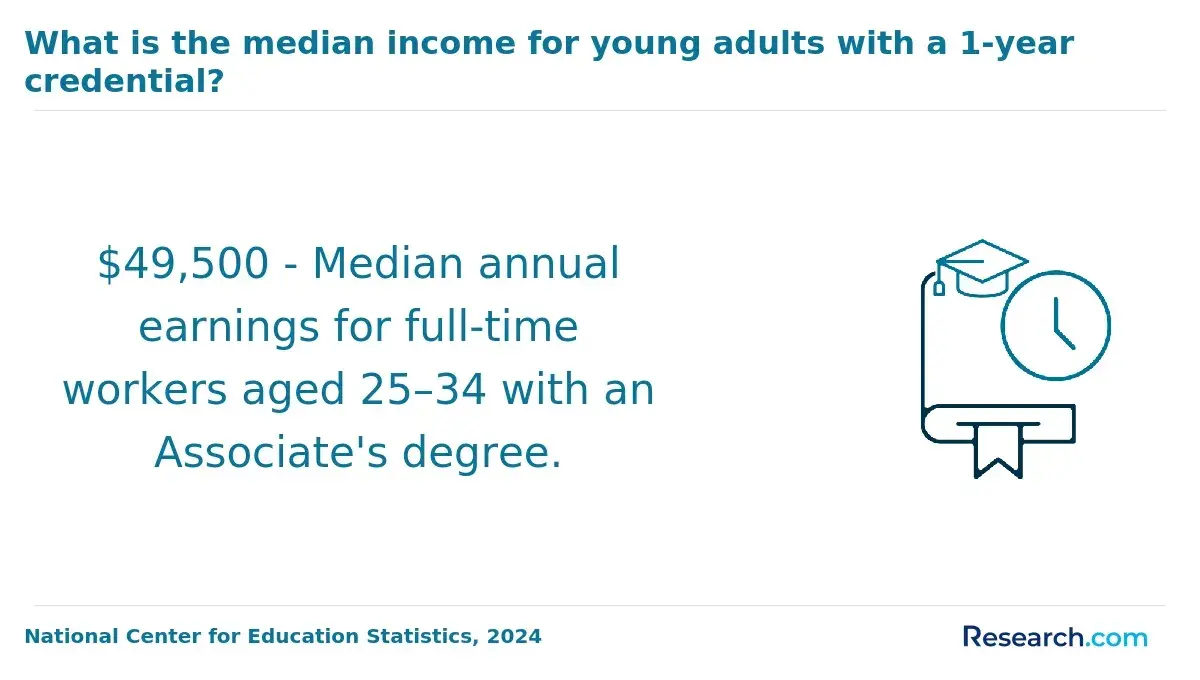
Choosing between associate and bachelor's degrees in physical education often hinges on immediate employment goals versus long-term career flexibility. Associate degrees enable quicker entry into roles like coaching assistance or fitness instruction but tend to restrict upward mobility and often correspond with lower employment stability, as 2024 data from the National Center for Education Statistics reveals.
In contrast, bachelor's degrees are widely recognized by employers, particularly for public school teaching positions requiring licensure, and provide a clearer pathway to leadership roles such as athletic director or program coordinator, with transferable credits from associate programs helping reduce student debt and time spent in school.
Advancing to a master's degree typically targets specialization and administrative readiness, offering improved salary potential and eligibility for collegiate or advanced coaching roles; however, completion rates drop due to longer program duration and higher costs. Meanwhile, doctoral study predominantly serves those pursuing academic research or policy leadership, requiring significant investment with limited practical application outside academia.
This degree level opens doors to faculty positions and grant opportunities but may offer minimal advantage in typical workforce settings. Ultimately, decisions about degree advancement should weigh immediate employment needs, credential stacking possibilities, and the balance between educational investment and realistic professional returns over time.
Which Industries and Employers Hire Physical Education Graduates by Degree Level?
Employers hiring physical education graduates differentiate sharply by credential level, with degree attainment significantly shaping job responsibilities and advancement potential. Associate degree holders mainly find roles in private-sector fitness centers and community recreational programs, where practical coaching or wellness instruction skills are prioritized but leadership opportunities remain limited without further certification or education. In contrast, bachelor's degree graduates are heavily recruited by K-12 schools and youth sports organizations, where state teaching licensure and foundational management abilities are baseline requirements; this level opens doors to more stable public sector roles, yet often demands ongoing credentialing to access supervisory duties or curriculum design positions.
Advancing to a master's degree shifts the career trajectory toward specialized coaching, sports management, and administrative functions in universities or nonprofit health agencies, aligning graduates with positions that combine program oversight and policy influence. According to the National Center for Education Statistics, master's degree holders in physical education are 15% more likely to secure leadership or specialized roles than bachelor's degree holders, reflecting employer preference for advanced training and research acumen. Doctoral graduates enter a narrower but higher-paying job market focused on academic research, faculty appointments, and governmental consulting, where deep expertise in kinesiology and pedagogy outweighs broad teaching experience, but the commitment to extensive scholarly output can limit immediate workforce entry.
Certificates and other nondegree credentials supplement traditional pathways, especially in private-sector wellness and fitness environments, but typically lack the licensure or academic rigor needed for public education or institutional leadership. For prospective students weighing options, stopping at an associate or certificate may yield quicker entry but with ceilings on income and mobility, while investing in a bachelor's or graduate degree better positions candidates for roles demanding licensure, specialized skills, and institutional recognition favored by diverse employers from public schools to research organizations.
What Skills, Credentials, and Experience Improve Physical Education Career Outcomes?
Licensure and certification directly shape employability and upward mobility in physical education roles, particularly for bachelor's and master's degree holders targeting school-based or coaching careers. Employers prioritize candidates who demonstrate mastery in kinesiology and exercise science alongside leadership and communication skills, reflecting the necessity of combined technical and soft competencies.
For instance, bachelor's graduates presenting documented internships or coaching clinic leadership often gain a 15% higher placement rate within the first year, emphasizing the value of applied experience in hiring decisions and career entry. Navigating these skill and credential requirements effectively—especially stacking state teaching certification with specialized credentials like Certified Strength and Conditioning Specialist (CSCS)—defines access to advanced positions and influence within educational settings.
Skills credentials for career advancement in physical education must align closely with specific degree levels and targeted roles, as advanced degrees frequently require additional specialization or research capabilities to support transitions into administrative, curriculum design, or higher education fields. Military and prior industry experience contribute transferable qualities such as discipline and problem-solving, which are increasingly recognized for leadership tracks and help differentiate candidates amid competitive pools.
Consistently, building a professional portfolio that documents certifications, practical achievements, and leadership roles becomes critical at the master's degree level and beyond, as this tangible evidence facilitates promotion readiness and career mobility. Working adults and transfer students must strategically integrate prior experience and new credentials to maximize both initial employment prospects and long-term advancement opportunities.
Work experience through field placements, apprenticeships, or internships forms a keystone for positive employment in physical education, sharpening both technical and interpersonal competencies sought by employers. Combining these experiences with recognized certifications and licensure preparation enhances promotion readiness while also reflecting a thorough alignment with employer expectations.
Adult learners and degree completers contemplating the merits of additional credentials should consider practical tradeoffs in time and resources against the heightened roles and pay scales often attainable post-certification. For a broader perspective on career pathways and compensation trends related to comparable health fields, see the healthcare information management salary overview, which offers insight into similar workforce dynamics and credential value assessments.
Which Physical Education Degree Level Is Best for Your Career Goals?
Choosing a physical education degree level significantly shapes employment access and advancement potential, especially when employer credential expectations and licensure requirements vary by role. For instance, associate degrees facilitate quicker workforce entry with fewer credits and lower debt but often limit career mobility and leadership opportunities, particularly in regulated or certified positions.
Bachelor's degrees, while requiring more time and financial investment, better align with middle- and upper-level roles in teaching and coaching, offering transferable credits that support future graduate study and fulfill many state certification prerequisites. Recent data from the National Center for Education Statistics show about 75% of bachelor's graduates secure work within six months, a distinct advantage over associate degree holders.
Advanced degrees, including master's and doctoral programs, cater to specialized functions like research, higher education, or sports psychology, with the trade-off of increased student debt and longer time to completion. Such credentials also correlate with a roughly 15% higher promotion rate over five years compared to bachelor's degree holders, reflecting employer valuation of advanced specialization.
Adult learners, transfer students, and military-affiliated individuals must weigh opportunity costs and program selectivity, which can influence both credit transferability and perceived workforce readiness. Aligning with realistic employment outcomes, those seeking to pivot within or beyond typical physical education roles sometimes explore interdisciplinary options, such as an online sociology degree bachelors, to expand their skill set and adaptability within related fields.
References
- Employment Placement https://staps.edu.umontpellier.fr/en/formations/debouches/
- Careers in Physical Education: Opportunities, Scope, Skills & Future Growth Guide https://fiteduhub.com/careers-in-physical-education/
- Provincial Directorate of Na https://journals.ap2.pt/index.php/ais/article/download/234/187
- Online Physical Education Degrees: Compare Top Programs https://www.degreesforgood.org/online-degrees/education-teaching-programs/physical-education-pe/
- Sports Science Degree Careers and Salary in Europe - StudyinEurope.eu https://www.studyineurope.eu/sports-science/sports-science-degree-careers-salary-europe/
- Become an Physical Education Teacher: Career Path Guide | Skills U https://skillsu.com/role/physical-education-teacher
- How to Become a P.E. Teacher: Salary and Job Description | Resilient Educator https://resilienteducator.com/teaching-careers/physical-education-teacher/
- What is the Career Outlook in Physical Education? https://www.sports-management-degrees.com/faq/what-is-the-career-outlook-in-physical-education/
- What Can You Do With a Bachelor's Degree in Physical Education? https://www.onlineu.com/resources/college-planning/what-can-you-do-with-bachelors-in-physical-education
- Making the Right Moves: A Guide to Majoring in Physical Education - UNCF https://uncf.org/the-latest/making-moves-as-a-physical-education-major
Other Things You Should Know About Physical Education
As degree levels progress from associate to doctoral, there is a notable shift from hands-on training to research and theory-driven learning. While associate and bachelor's programs emphasize practical skills through internships and fieldwork, master's and doctoral levels prioritize advanced research, program development, and policy analysis. Students seeking immediate workforce readiness may benefit more from lower-degree programs with strong practicum components, whereas those targeting leadership or academic roles should weigh the increased time and effort for research skills advancement at higher levels.
Longer programs beyond the bachelor's level often deliver deeper knowledge and open paths to specialized roles, but they require significant time commitment that can affect employment continuity. Flexibility, such as part-time or online options, is less common at master's and doctoral levels and may result in slower graduation timelines. For working adults or those needing steady income, completing a bachelor's degree with flexible scheduling might offer the best tradeoff between qualification and career momentum.
Employers often expect a bachelor's degree as the minimum credential for most standard physical education roles, especially in schools and community programs. Positions demanding curriculum design, advanced coaching, or research expertise, however, may require a master's or doctoral degree, with employers emphasizing demonstrated competencies over just credentials. Candidates should assess if the additional credential aligns with their targeted job responsibilities, since overqualification can sometimes complicate hiring in entry or mid-level roles.
For individuals focused on stable employment without substantial career shifts, bachelor's or associate degrees generally suffice and provide a quicker return on investment. Advanced degrees bring value primarily for those pursuing specialized positions or higher-level leadership, where competition is stronger and roles more selective. Prioritizing experience, certifications, and networking in addition to degree level often offers more immediate benefits than acquiring a graduate degree strictly for job security.