2027 Physical Education Degree Completion Rates by Format: Online, Hybrid, and Campus Programs Compared

Co-Founder and Chief Data Scientist
A prospective student weighing the decision to pursue a physical education degree faces distinct challenges depending on the format chosen. Online programs offer flexibility but demand high self-discipline, while hybrid formats blend remote learning with some campus engagement, introducing different time-management dynamics. Traditional campus programs provide structured environments and face-to-face interaction but may limit scheduling flexibility, especially for those balancing work or family commitments.
Completion rates vary across these formats, influenced by factors such as student support, engagement, and practical experience opportunities. Understanding how these variables impact success is crucial for aligning educational paths with career objectives in physical education fields. This article compares online, hybrid, and campus physical education degree completion rates, explores key factors affecting student outcomes, and offers insights to help prospective students select the format best suited to their goals.
Key Things to Know About Physical Education Degree Completion Rates by Format
- Online physical education degree programs show a 12% lower completion rate than campus formats, reflecting challenges in maintaining practical skill competency without hands-on supervision.
- Hybrid formats achieve higher completion rates by blending direct instructor interaction and self-paced study, improving skill acquisition critical for physical education careers.
- A 2024 study indicates that campus programs' structured schedules enhance accountability, correlating with 78% completion, which supports sustained engagement in physical activity pedagogy.
// PREVIEW //
- Key Things to Know About Physical Education Degree Completion Rates by Format Key Things to Know About Physical Education Degree Completion Rates by Format
- How Do Completion Rates Compare Across Online, Hybrid, and Campus Physical Education Programs? Completion Rate Comparison
- What Factors Have the Greatest Impact on Physical Education Degree Completion? Degree Completion Factors
- Which Physical Education Degree Format Is Hardest to Complete? Completion Difficulty
- How Does Each Physical Education Learning Format Affect Student Success? How Does Each Physical Education Learning Format Affect Student Success?
- How Does Enrollment Status Affect Physical Education Completion Rates? How Does Enrollment Status Affect Physical Education Completion Rates?
- Can Transfer Credits Improve Physical Education Degree Completion? Transfer Credits
- What Student Support Services Improve Physical Education Completion Rates? Student Support Services
- How Do Physical Education Completion Rates Affect Career Outcomes? Impact on Career Outcomes
- How Should Students Choose the Best Physical Education Learning Format? Choosing the Best Format
- What Are the Long-Term Pros and Cons of Each Physical Education Learning Format? Learning Format Pros & Cons
How Do Completion Rates Compare Across Online, Hybrid, and Campus Physical Education Programs?
Completion rates for physical education degree formats offer insight into student outcomes rather than direct indicators of program quality, as they largely reflect the distinct circumstances and attributes of the enrolled populations. For example, students in online programs may face external pressures like full-time employment or family care that impact persistence differently than those on traditional campuses. Recognizing these underlying factors is crucial before attributing graduation statistics solely to educational delivery methods.
Factors such as work obligations, enrollment intensity, and scheduling flexibility contribute to the disparity in online hybrid campus physical education graduation rates comparison. Online learners often benefit from flexible pacing but grapple with limited hands-on interaction and peer engagement, reducing completion likelihood for some. Hybrid formats provide a balance, combining the convenience of online modules with occasional in-person labs that boost motivation and practical skills. Campus programs usually have more structured support and social integration, which can enhance retention but require greater time commitment and less flexibility.
When evaluating physical education degree completion rates by format, prospective students should align these data with their personal learning preferences, available study time, and career objectives. A working professional with unpredictable hours might find hybrid or online options more feasible despite lower average rates, whereas those relocating to attend campus can leverage strong community support to improve success odds. For those exploring flexible health-related degrees, consulting resources like the best online pharmacy school rankings may also inform program selection beyond physical education alone.
What Factors Have the Greatest Impact on Physical Education Degree Completion?
Degree completion in physical education programs hinges on more than just a student's motivation; it reflects an interplay of personal circumstances, academic support, and program design. Success depends on how well students navigate these factors simultaneously, adapting to challenges unique to each learning format. Recognizing this complexity helps prospective students set realistic expectations and tailor their approach to persistence. The following points highlight the primary influences on whether physical education students complete their degrees.
- Student Engagement and Interaction: The most robust predictor of degree completion is active engagement, especially through meaningful connections with faculty and peers. Data from the National Center for Education Statistics indicates engagement significantly boosts retention rates, particularly for those in campus or hybrid formats where face-to-face contact is prevalent. Students who deliberately seek out interaction and participate fully in class discussions and group activities tend to persist longer and finish their programs more reliably.
- Access to Academic Support Services: Timely advising, tutoring, and mentorship are crucial for overcoming academic and administrative obstacles. Hybrid students often benefit most from this blend of online accessibility and in-person guidance, as noted by the Community College Research Center. Students who proactively utilize campus or virtual support resources early on can mitigate risks of falling behind or becoming discouraged.
- Financial Stability and Aid Availability: Economic factors heavily shape persistence, with campus-based programs frequently providing better access to institutional financial aid and campus employment options. The Center for Postsecondary Success reports that financial strain contributes to dropout rates more among online learners who may have limited aid opportunities. Careful financial planning and early pursuit of scholarships or work-study are important strategies to sustain enrollment.
- Hands-on Skills Development: Physical education requires practical skill acquisition that is difficult to replicate fully through digital platforms. Online-only students must often arrange local facilities or coaching to meet experiential requirements, which can extend timelines and increase costs. Students realistic about this added effort and willing to invest time in practical components improve their chances of completion.
- Program Flexibility and Structure: The balance between flexibility and structure influences persistence differently based on individual learning habits. While online programs offer convenience, they demand high self-discipline, which can challenge students who thrive on more direct accountability. Hybrid programs may strike an optimal mix; however, students should honestly assess their self-management skills before choosing a format.
- Personal and External Responsibilities: Family, employment, and health obligations often impact physical education students' ability to maintain steady progress. Those juggling significant outside commitments must adopt effective time management and seek programs with adaptable pacing. Support networks both within and outside the school play a vital role in sustaining momentum.
- Alignment of Career Goals with Program Outcomes: Students who clearly understand the practical and long-term workforce implications of their chosen path tend to persist through challenges more effectively. Engaging with career services and selecting programs recognized for producing employable graduates can sharpen focus and motivation, reinforcing completion efforts.
For those weighing formats, comparing completion prospects is integral to making an informed decision. Detailed program reviews like those featured in the best accelerated programs can offer additional clarity on how different physical education tracks manage these completion factors.
Which Physical Education Degree Format Is Hardest to Complete?
Completion rates for physical education degree programs reveal significant differences tied to delivery format. Data from the National Center for Education Statistics and the Education Advisory Board in 2024 indicates fully online programs lag behind, with graduation rates near 40-50%, compared to about 65% for hybrid and up to 70% for traditional campus programs. This gap largely reflects the discipline's hands-on demands, where lack of in-person practice and peer interaction in online settings can hinder skill development and motivation necessary for successful completion.
Hybrid programs often strike a middle ground by combining remote coursework with scheduled in-person sessions, preserving vital experiential learning while offering flexibility that can improve persistence. Campus-based formats, while less flexible, provide immersive environments with immediate access to facilities and faculty guidance, which can increase accountability and engagement. For example, a student balancing work and family might find hybrid programs more manageable than the time-intensive campus route but may struggle with the isolation typical of fully online programs, impacting their likelihood of finishing the degree.
One recent graduate recalled initially enrolling in an online physical education program, drawn by its convenience but quickly discovering the challenges of mastering practical skills without on-site instruction. Feeling disconnected during solo fitness assessments and team projects, they switched to a hybrid format mid-course. The blend of virtual lectures and on-campus practical labs improved both their confidence and time management, underscoring how format choice directly influenced their ability to complete the program and enter the workforce prepared.
How Does Each Physical Education Learning Format Affect Student Success?
Student success in a physical education degree program depends less on the learning format itself and more on how well that format suits an individual's learning style, time availability, and life demands. Each mode-online, hybrid, or campus-based-presents different benefits and obstacles, which can either support or hinder degree completion. For instance, a working parent may thrive in a flexible online environment but struggle in a rigid campus schedule. The following points highlight key ways these formats influence student outcomes.
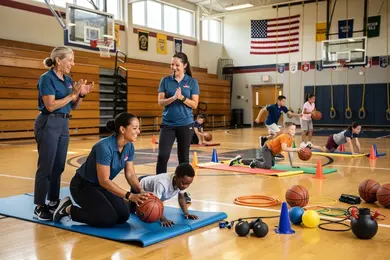
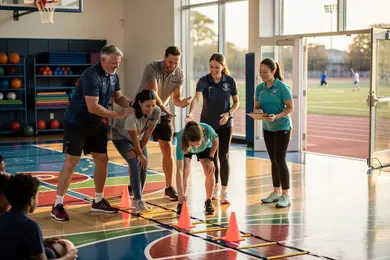
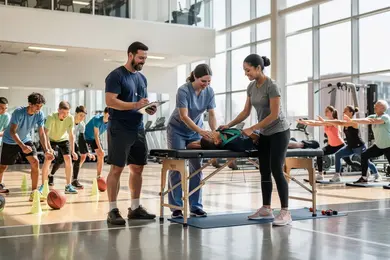
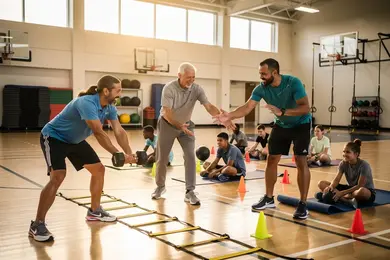
- Engagement Through Hands-On Experience: Campus programs provide direct access to practical, in-person activities vital for mastery in physical education. Students who benefit most are those who learn by doing and need immediate feedback, as this interaction boosts motivation and skill development that purely virtual formats may lack.
- Balancing Flexibility and Accountability: Hybrid formats offer a mix of online convenience and face-to-face structure. This combination suits learners needing schedule adaptability without sacrificing the discipline and peer contact that support persistence, as recent 2024 data from the National Student Clearinghouse Research Center shows hybrid learners often maintain higher completion rates than fully online students.
- Challenges in Online Engagement and Retention: Full online programs provide unmatched flexibility, ideal for students with external obligations like jobs or family. However, limited hands-on practice and reduced real-time peer interaction can decrease motivation and academic persistence, increasing dropout risks unless supplemented with robust virtual support services.
- Access to Academic Support Resources: Campus students generally enjoy immediate assistance from tutors and advisors, which correlates with higher success rates. Online learners' success hinges on the quality and availability of virtual support, which must be proactively integrated to counterbalance the lack of physical presence.
- Alignment with Personal Learning Preferences: Those who are self-disciplined and tech-savvy often excel online, while kinesthetic learners and those needing interpersonal reinforcement perform better on campus or hybrid settings. Recognizing this alignment early helps students choose formats enabling sustained engagement and completion.
- Time Management and Life Commitments: Students juggling work or caregiving responsibilities tend to fare better in online or hybrid programs due to scheduling flexibility. Conversely, those without significant external demands may find campus programs more conducive to immersive learning and networking opportunities.
How Does Enrollment Status Affect Physical Education Completion Rates?
Enrollment status is one of the most important determinants in physical education degree completion, yet its impact varies depending on a student's situation rather than merely the number of courses taken. Full-time enrollment often correlates with higher completion rates, but this advantage depends on individual capacity to manage time, responsibilities, and program demands. In fact, data from the National Center for Education Statistics shows full-time students in physical education programs graduate nearly 20% more often than part-time students across all delivery formats. Below are key ways enrollment status influences degree completion outcomes.
- Consistency in Academic Engagement: Full-time students typically maintain steady interaction with coursework and instructors, enhancing retention and persistence. This is particularly valuable in campus programs where direct feedback and hands-on learning are frequent, but can challenge those balancing external obligations.
- Time Management and External Commitments: Part-time students often juggle employment or family duties alongside studies, which may disrupt academic momentum. Recognizing personal limits helps these students select an enrollment pace that realistically fits within their life context, reducing dropout risk.
- Access to Institutional Resources: Full-time enrollment often grants easier access to support services like advising, tutoring, and peer networks. Part-time students in online or hybrid formats may need to proactively seek these resources to counteract feelings of isolation and maintain motivation.
- Program Format Compatibility: Hybrid physical education programs can provide flexible scheduling combined with periodic in-person sessions, which help part-time students stay engaged without sacrificing flexibility. The format choice should align with a student's enrollment status and learning preferences to support consistent progress.
- Peer Cohort Dynamics: Full-time students generally benefit from cohort cohesion, fostering accountability and shared experience that enhance persistence. Part-time students might face limited opportunities for these connections, requiring deliberate community-building efforts.
- Psychological Momentum and Motivation: Online-only part-time students may experience dips in motivation due to less immediate interaction, impacting completion. Establishing structured routines and institutional support can mitigate this.
- Realistic Goal Setting: Understanding the graduation rate differences between full-time and part-time enrollment helps prospective students set realistic goals. For example, a working parent might opt for part-time study through a hybrid program to balance commitments, mindful that this approach requires greater personal discipline to reach degree completion.
Prospective students comparing online, hybrid, and campus physical education programs should evaluate how their enrollment status aligns with program demands and personal circumstances. Those exploring flexible options might also research pathways such as an online bachelor's degree in biology to understand how accelerated or flexible formats work in related fields, informing their choices in physical education learning models.
Can Transfer Credits Improve Physical Education Degree Completion?
Transfer credits often accelerate degree completion by allowing students to bypass repetitive coursework and reduce total credit requirements. Data from the National Student Clearinghouse Research Center (2024) highlights that students who transfer credits in physical education programs typically shorten their time-to-degree by about 20%. This advantage is especially significant in career-oriented studies where foundational courses are commonly recognized across institutions.
However, the actual impact varies widely depending on credit relevance, institutional policies, and program design. For instance, a student with completed core physical education courses from a community college may find a campus program's strict articulation agreements beneficial, ensuring smooth credit acceptance and clearer progression pathways. Conversely, students in fully online formats might face challenges, as some practical or hands-on physical education components often lack consistent transfer recognition, potentially leading to additional coursework and extended timelines.
Transfer credits may come from prior college study, military training, or professional certifications, but they don't guarantee universal acceleration of degree completion. The key determinant is how well the transferred coursework aligns with the receiving program's curriculum and standards. Prospective students should seek a detailed credit evaluation early, comparing accepted credits to program requirements and estimating remaining coursework. This approach clarifies whether the transfer will meaningfully reduce study time or if any administrative hurdles could offset potential gains.
Consider a student who earned physical education credits during military service and plans to enroll in a hybrid degree program. If the institution formally recognizes their hands-on training and theory credits, the student might advance quickly, needing fewer semesters to graduate. Yet, if policies are unclear or credits only partially apply, the timeline could remain largely unchanged. Thus, evaluating program-specific transfer policies and the alignment of prior coursework is critical to making informed enrollment decisions.
Ultimately, transfer credits can be a valuable factor in improving physical education degree completion rates but represent only one aspect among others like program format, institutional support, and personal study pace. Students aiming to capitalize on transfer opportunities should engage directly with admissions and advising offices to verify credit applicability and optimize their route to graduation.
What Student Support Services Improve Physical Education Completion Rates?
Student support services are critical to navigating the unique challenges that differ by program format in physical education degree completion. While no single resource guarantees success, strategically aligned services improve persistence and graduation rates by addressing academic, social, and mental health needs. Data from the National Center for Education Statistics (2024) shows that programs with integrated advising and tutoring services can increase completion rates by up to 15%. Below are key support elements that make tangible differences across online, hybrid, and campus settings.
- Personalized academic advising: Tailored guidance helps students set realistic goals and proactively address barriers. On-campus advising's in-person contact builds rapport, enabling early interventions that reduce dropout risks, especially when combined with mentoring.
- Accessible tutoring services: Timely academic assistance reinforces concepts and prevents students from falling behind. Online formats benefit particularly from 24/7 virtual tutoring, which supports diverse schedules and counters isolation.
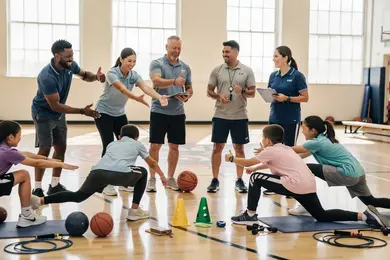
- Peer study groups and labs: Collaborative learning opportunities, such as physical activity labs and peer-led sessions, heighten engagement and experiential retention. These are especially vital on campus to create a hands-on learning environment.
- Virtual advising and check-ins: Frequent synchronous meetings online create accountability and reduce the disengagement common in remote settings, fostering a sense of connectedness and progression.
- Mental health resources tailored to format: Mental wellness support that matches delivery demands-such as stress management for hybrid learners juggling dual modalities-helps prevent burnout and withdrawal.
- Technical support for online students: Reliable tech assistance minimizes disruptions in virtual learning environments, a critical component for maintaining momentum in program completion.
- Flexible scheduling of support services: Hybrid students benefit from adaptable appointment and tutoring options that bridge in-person and online access, smoothing transitions between formats.
One online physical education graduate recalls struggling with motivation during the early semesters when isolated from peers. Initially hesitant to reach out, she found regular virtual advising appointments provided both structure and encouragement, turning vague goals into actionable steps. Access to around-the-clock tutoring reassured her on demanding coursework, while timely mental health check-ins prevented mounting stress from derailing her progress. This blend of discreet yet consistent support proved essential, underscoring how well-integrated services accommodate complex personal circumstances and increase the likelihood of degree completion.
How Do Physical Education Completion Rates Affect Career Outcomes?
Completion rates for physical education degrees significantly affect career outcomes by influencing employability, earning potential, and access to advanced education. Research from 2024 shows that degree completion is a reliable predictor of job stability and promotion prospects. Students considering online, hybrid, or campus formats need to assess how each supports persistence, since completion critically shapes career success. Below are key ways finishing a physical education program impacts your professional trajectory.
- Increased employment stability and earning potential tied to graduation: Completing a physical education degree raises your chances of securing consistent employment and higher wages. A 2024 report found bachelor's degree holders experience lower unemployment rates and median earnings significantly above those without degrees. This matters especially for nontraditional students who weigh online program flexibility against the structured support often found in hybrid or campus settings.
- Greater eligibility for graduate education and leadership roles: Degree completion opens doors to graduate programs focused on education administration, sports management, or health promotion. Persistence through graduation is crucial because many leadership positions require at least a bachelor's degree. Students in hybrid programs often benefit from a balance of interaction and flexibility, making them competitive candidates.
- Employer preference for candidates demonstrating commitment and skill mastery: Employers increasingly value evidence of perseverance, reflected in completion rates, as well as discipline gained through on-campus or hybrid interactions. This can influence workplace promotion and professional development opportunities. Online programs demand strong self-management, favoring students who can independently meet these standards.
For those evaluating program formats, it is useful to compare options with other accelerated offerings such as accelerated RN to NP programs that emphasize completion and career alignment.
How Should Students Choose the Best Physical Education Learning Format?
Choosing the best physical education program format for student success requires analyzing how personal circumstances intersect with academic demands and career aims. Data from the National Student Clearinghouse Research Center in 2024 shows that program completion rates differ significantly among online, hybrid, and campus formats, influenced by students' work commitments and learning preferences. A student working full-time while managing family obligations may thrive online with strong self-discipline but face risks of isolation. Below are critical factors to consider when choosing between online, hybrid, and campus physical education degrees.
- Self-Motivation and Discipline: Online learning demands high autonomy and time management skills. Students who struggle with procrastination or need structured accountability may find campus or hybrid formats better support their persistence.
- Access to Practical Experience: Physical Education requires hands-on practicums. Campus programs typically offer more rigorous and frequent access to these opportunities, directly impacting skill development and employability.
- Flexibility Versus Engagement Balance: Hybrid programs blend in-person interaction with online convenience, serving students who need some schedule flexibility but still benefit from face-to-face engagement.
- Support Networks and Peer Interaction: Students succeed more consistently when they can readily access faculty and peers. Campus formats provide immediate support, while online students must proactively seek virtual communities.
- Work and Family Commitments: Those juggling jobs or caregiving often prefer online options for the flexibility, but should recognize that this requires solid self-organization to avoid lower completion rates reported in recent research.
- Long-Term Career Requirements: Employers in physical education value applied skills. Choosing a program that integrates comprehensive practicums and direct mentorship can improve job readiness after graduation.
- Financial Planning and Costs: Tuition structures vary, so students should evaluate prices and fees carefully. For example, online speech pathology degree tuition analysis highlights how costs differ by format and can influence overall feasibility.
What Are the Long-Term Pros and Cons of Each Physical Education Learning Format?
Long-term pros and cons of physical education degree formats-online, hybrid, and campus-show distinct differences in completion rates, skill development, and career preparation. Campus programs tend to yield higher graduation rates due to immersive learning and access to hands-on facilities, but commuting or relocating can add barriers for some students. Online programs provide flexibility, ideal for working adults, yet often face lower retention due to limited physical practice. Hybrid formats blend both approaches, generally improving persistence by combining flexibility with in-person skill work. Below are key long-term factors to consider when choosing a format.
- Completion Rates and Persistence: Campus students benefit from structured environments leading to higher graduation rates, while hybrids show moderate persistence, and online programs typically experience lower completion due to self-paced challenges.
- Skill Acquisition and Practical Experience: Hands-on training is strongest in campus and hybrid formats, which is critical for physical education careers, whereas online students may encounter skill gaps.
- Flexibility for Diverse Lifestyles: Online formats excel for those balancing work or family, while campus demands fixed schedules and location commitment, with hybrids offering a middle ground.
- Networking and Career Opportunities: Campus and hybrid formats offer better peer and mentor interaction, enhancing job prospects in coaching or therapy fields.
- Logistical Challenges: Hybrids require managing both remote and in-person demands, which can be stressful without strong institutional support.
- Employers' Preferences: Data shows employers favor candidates with demonstrable hands-on experience, often giving campus and hybrid graduates a competitive edge.
- Impact of Technology and Innovation: Recent advancements in online tools improve engagement but cannot fully replicate the physical interaction essential to motor skill development.
References
- Beyond the Classroom: The Impact of Physical Education https://www.inventureacademy.com/blog/beyond-the-classroom-the-power-of-physical-education-in-student-development/
- PE Classroom Formats - Which one to choose and why https://theeverlearner.com/blog/en/the-changing-rooms/pe-classroom-formats-which-one-to-choose-and-why
- Physical Education, Sport and Physical Literacy (Part-time) https://www.uwtsd.ac.uk/programme-courses/postgraduate-pgce/sport-and-physical-activity/physical-education-sport-and
- Exploring the Benefits of Pe A Level Course for Future Academic Success https://www.cisfoshan.com/blog/benefits-of-pe-a-level-course-for-academic-success/
- Research on the Challenges and Solutions for Online Physical Education in the Post-Epidemic Era https://www.scirp.org/journal/paperinformation
- [PDF] online education vs physical education | ijprems https://www.ijprems.com/ijprems-paper/online-education-vs-physical-education
- Online Physical Education Degree | Forest Trail Academy https://foresttrailacademy.com/exploring-an-online-physical-education-degree-and-its-benefits-for-high-school-students/
- Success Driven Physical Education: The New-School Approach - PE Blog https://blog.gophersport.com/success-driven-pe-the-new-school-approach/
- Explore UM | University of Manitoba - Physical Education (BPE) https://umanitoba.ca/explore/programs-of-study/physical-education-bpe
- Physical Fitness May Help to Improve Success at School https://www.hfe.co.uk/blog/physical-fitness-may-help-to-improve-success-at-school/
Other Things You Should Know About Physical Education
Yes, format plays a significant role in hands-on skill acquisition, which is vital in physical education careers. Campus programs typically offer more direct access to facilities, in-person coaching, and real-time feedback, which can accelerate mastery of physical techniques. Online programs may struggle to replicate these experiences fully, potentially leading to gaps in practical competence unless supplemented by local internships or practicums. Hybrid formats can strike a balance, but students should verify how well the program integrates in-person skill-building components into their learning plan.
Online physical education programs require higher self-discipline due to their asynchronous and often solitary nature. Without structured class times and immediate peer or instructor interaction, students might face greater challenges maintaining consistent practice schedules and engagement in physical components. Those considering online formats should prioritize programs with robust mentorship, scheduled live sessions, or collaborative projects to mitigate risks of disengagement and dropout.
Employer perception varies but tends to favor degrees earned through campus or hybrid programs because of their emphasis on experiential learning and supervised practice. Many employers in physical education fields view hands-on experience as indispensable and may question the depth of practical training in purely online programs. Students aiming for careers requiring certification or licensure should confirm that their chosen online program meets industry standards to avoid hurdles in employment.
When completion rates do not strongly favor any format, students should weigh personal learning preferences and lifestyle demands carefully. For those needing flexibility due to work or family commitments, online or hybrid formats can improve completion odds, but only if the student is proactive about engaging with the physical aspects of training. If a structured environment helps maintain accountability and skill development, on-campus programs may ultimately lead to more reliable completion and better preparedness for physical education careers.