2027 Paying for an Online BA in Psychology - General Psychology: Monthly Payments Versus a Term Payment Plan
Audited and Verified:
Our Editorial and Data Verification Process
Research.com uses government datasets, official education statistics and primary institutional information to support its career and degree guides. Our review process checks factual accuracy, occupational definitions, source dates and the requirements associated with the credentials discussed.
How This Article Was Fact-Checked
Our editorial team verifies salary estimates, employment projections, education requirements and program information against original data providers and official organizations. Salary figures are checked against the relevant occupational definitions and reporting periods. Information about licensure, accreditation and required in-person training is reviewed separately.
Fact-checked and verified on:

Co-Founder and Chief Data Scientist
Paying for an online psychology BA is not just a question of whether tuition fits your budget. The due dates, installment fees, and timing of financial aid can make the same degree much easier - or harder - to manage. This guide is for prospective and returning students choosing between monthly payments and a term-based payment arrangement. It explains how to compare the full cost and cash-flow demands of each option, then identifies the program details to confirm before you commit.
Key Things You Should Know
- Compare total cost, not just installment size: add tuition, mandatory fees, books, and any payment-plan enrollment or late fees.
- A useful cash-flow calculation is the balance due after confirmed aid ÷ the number of scheduled installments; check when the first payment is due, because installments may not be evenly spaced.
- Choose monthly payments when they reliably fit your income cycle; choose a larger term payment when you have the funds available and it avoids fees without draining your emergency reserve.
What Is an Online BA in General Psychology?
An online Bachelor of Arts in general psychology is an undergraduate degree covering psychological science rather than training for one licensed occupation. A BA commonly combines psychology courses with general education and electives. Requirements differ by school, and "online" does not establish whether classes are asynchronous, include live meetings, or require an in-person experience.
That variation matters financially. A program with predictable course offerings may let you maintain a steady payment schedule; one with required courses offered less often could extend your enrollment. When comparing schools for an online psychology major, request both a degree plan and the billing calendar for your expected course load.
How Much Does an Online Psychology Bachelor's Degree Cost?
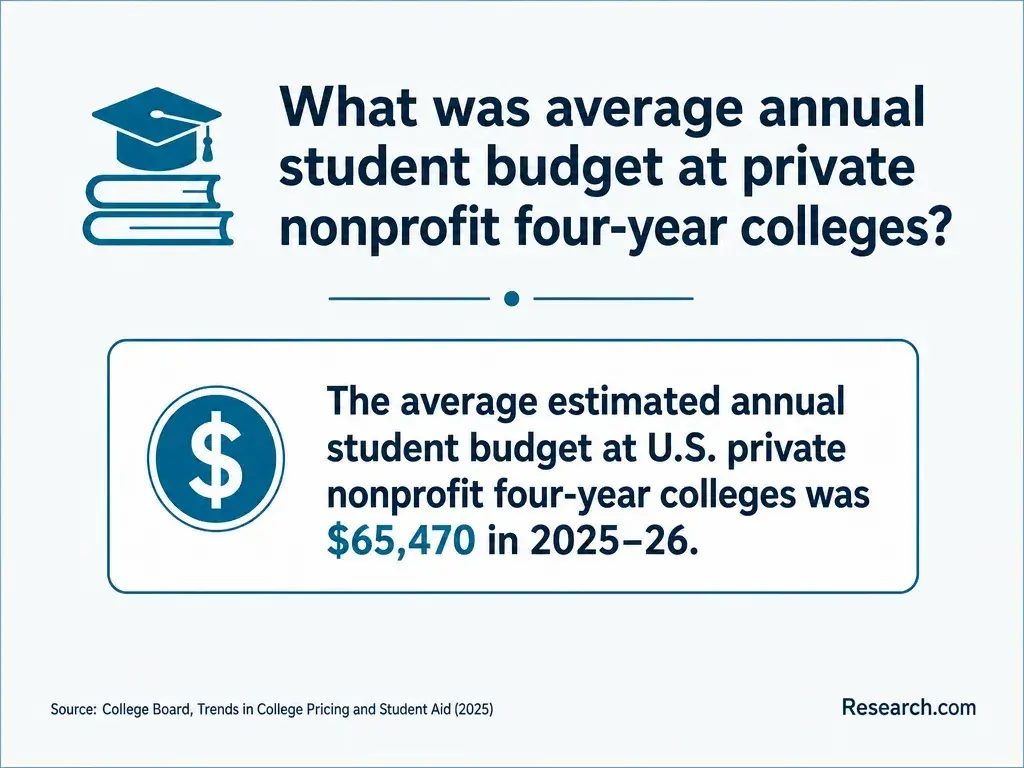
There is no reliable single price for an online psychology BA. Schools may charge by credit or term, set different rates by residency, and add technology, course, or payment-plan fees. The amount relevant to your decision is the remaining cost to finish, based on a school-approved degree audit - not the advertised price of one course.
The following components belong in a written comparison of each school's offer. They also show why a small advertised monthly payment can mask a higher overall cost.
| Cost component | What to confirm | Why it affects the comparison |
| Tuition | Rate, billing unit, and credits still required | Determines the largest part of the remaining balance |
| Required fees | Technology, course, graduation, and plan fees | Some charges are due upfront or excluded from installments |
| Learning expenses | Books, software, and any required travel | These may need to be paid before aid arrives |
| Time-related costs | Terms needed to finish and possible repeated courses | A lower payment per term may cost more if it prolongs enrollment |
If your target is specifically recovery-service work, compare the full price and job fit of alternatives, including affordable substance abuse counseling bachelor's costs and careers. Do not assume a specialized degree is cheaper, or that its title satisfies your state's credential rules.
Should You Choose Monthly Payments or a Term Payment Plan?
First, check the school's terminology: a "term payment plan" may itself consist of several installments within a term. Here, monthly payments means smaller, recurring payments, while paying by term means settling a term's balance in one larger payment. Neither choice reduces tuition automatically.
This comparison focuses on the conditions that can change which option is more affordable for your household.
| Consideration | Monthly installments | One payment per term |
| Cash flow | Spreads a confirmed balance across due dates | Requires more cash at once |
| Additional charges | May involve enrollment or late fees | May avoid plan fees; verify any available discount |
| Risk to watch | Income changes can make later installments difficult | A large payment can deplete funds needed for essentials |
| Best fit | Predictable recurring income and limited upfront cash | Available savings that can be used without sacrificing a reserve |
Before selecting a plan, ask student accounts for a dated schedule showing charges, confirmed aid, the first payment, every installment, and all fees. Compare the sum of what you will pay under each option, not only the advertised installment. Ask how added or dropped courses change the schedule and when an unpaid balance prevents registration.
If your longer-term goal requires graduate training, protect room in your budget for that separate expense. For example, shorter graduate counseling programs by cost and duration illustrate why an affordable BA installment should not be mistaken for the cost of the entire professional pathway.
General psychology programs typically cover psychological theory, development, social behavior, biological or cognitive processes, statistics, and research methods, alongside general education. The exact sequence matters to your budget: a statistics prerequisite or a required methods course offered infrequently can limit how many credits you can take in a term.
Ask the department which requirements are offered every term and whether any courses involve scheduled group work, supervised projects, or campus visits. If you hope to work in addiction services, distinguish general psychology electives from the specific coursework and supervised preparation required for a target credential; addiction counseling academic preparation is a separate comparison. Studying disorders or treatment does not authorize a BA student to provide therapy.
Completion time depends on the credits that apply to degree requirements, your course load, required-course availability, and any residency rules. Accepted transfer credit does not necessarily replace a psychology major requirement. A returning student should get a written degree audit before using a projected graduation date to calculate total costs.
Taking fewer courses can lower each term's bill but increase the number of terms in which you pay fees. Taking more courses may shorten the timeline while raising each term's balance and making monthly installments less manageable. Check how a changed course load affects aid before adjusting your pace. If graduate study follows the BA, psychology master's programs with intensive pacing are a distinct future time-and-cost decision, not a way to shorten undergraduate requirements.
Requirements depend on whether you enter as a first-year or transfer student. Schools commonly request prior academic records; transfer applicants should also ask for a formal evaluation showing which credits meet general education, psychology major, elective, and residency requirements. Admission to the university alone does not establish how many credits remain.
Before paying an enrollment deposit, ask whether the first term's charges are due before aid is finalized and whether your proposed course load qualifies for the aid you expect. Students planning a later specialization should check that pathway's admissions rules separately. For instance, comparing shorter online forensic psychology master's pathways does not replace checking each graduate program's prerequisites, and undergraduate admission does not guarantee graduate eligibility.
Confirm the institution's current accreditation with its recognized institutional accreditor and check the school's own disclosures for your location and entry term. Accreditation is relevant to federal aid eligibility and may matter to transfer or future graduate applications, but it does not guarantee that another institution will accept your credits.
Do not require APA accreditation of a general psychology BA: APA accreditation applies to specified professional psychology training programs, not ordinary undergraduate psychology majors. If comparing a specialized bachelor's, use the same institution-level check when choosing an accredited addiction psychology bachelor's, then separately verify any state credential requirements tied to the occupation you want.
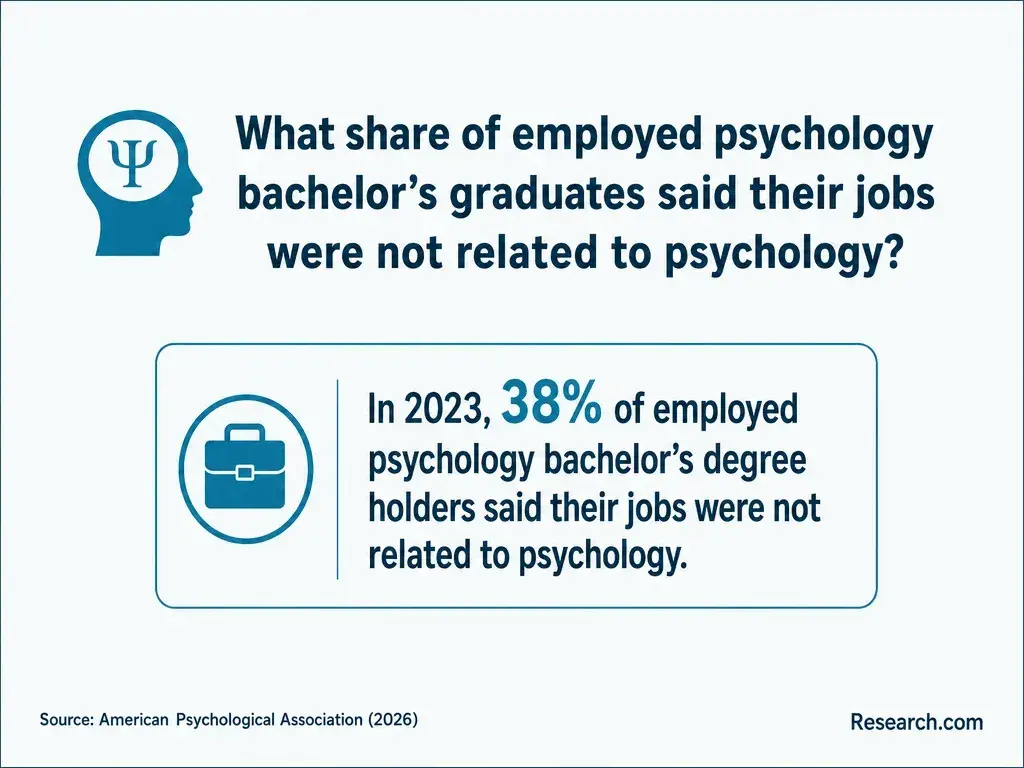
A psychology BA can support applications for nonclinical work in human services, research support, community outreach, recruiting, or program coordination. Employers may also require relevant experience, data skills, a driver's license, background screening, or a different credential. The degree alone is not a job qualification for every role with "behavioral health" in its title.
For recovery-related work, distinguish peer or service-support duties from substance-use-disorder counseling. Education routes for recovery-related careers vary by role and state. If you already have relevant work experience, compare the value of finishing the BA with targeted training or an employer-supported credential before committing to another term of tuition.
There is no single salary for psychology BA graduates: pay depends on the occupation, location, employer, and experience. An occupational median published by the U.S. Bureau of Labor Statistics describes people working in that occupation, not the expected starting pay of everyone with this degree. For a useful return-on-cost estimate, identify jobs you would actually pursue, check local postings and their required qualifications, and compare plausible pay with the remaining cost of your degree.
Be particularly cautious about adding graduate tuition to an earnings estimate without identifying the job it qualifies you to seek. Forensic psychology one-year program value considerations, for example, should be assessed against specific nonclinical roles or further training requirements - not an assumed forensic psychologist salary.
What Education and Licensure Do Psychology Careers Require?
A general psychology BA does not authorize independent diagnosis, psychotherapy, or psychological assessment. Licensed psychologist roles generally require advanced professional education and jurisdiction-specific supervised experience and examinations. Counseling, social work, and other regulated careers have their own qualifying degrees and state rules; a general psychology master's is not automatically interchangeable with them.
If therapy is your goal, identify the license and state first, then verify which programs meet its educational requirements. Compare the entire route - including supervised practice and its scheduling demands - rather than selecting a BA payment plan on the assumption that the bachelor's is the final expense. Accredited clinical counseling timelines for working students can help frame the later program search, but the relevant licensing board has final authority over eligibility.
Other Things You Should Know About Psychology
Possibly. Ask student accounts whether changes are allowed after enrollment, whether an enrollment fee is refundable, and how the remaining balance would be rescheduled.
Policies vary. Ask the school or its payment-plan provider whether enrollment involves a credit check and whether missed payments are reported to credit bureaus.
Reimbursement often arrives only after you meet your employer's conditions. Unless the school offers a separate employer-payment arrangement, plan to cover amounts due before reimbursement arrives.
Many plans permit extra payments, but confirm how the provider applies them and whether any enrollment fee remains payable. Request the terms in writing before relying on early payoff to reduce costs.
- Cost of Attendance (Budget) | 2025-2026 Federal Student Aid Handbook https://fsapartners.ed.gov/knowledge-center/fsa-handbook/2025-2026/vol3/ch2-cost-attendance-budget
- How Financial Aid Works | studentaid.gov https://studentaid.gov/h/understand-aid/how-aid-works
- Policy Protecting Students from Fees and Penalties Due to VA Payment Delay - Education and Training https://benefits.va.gov/gibill/fgib/transition_act.asp
- Payment Plans - The Hub - Colorado State University https://thehub.colostate.edu/billing/payment-plans/
- Terp Payment Plan | Student Financial Services and Cashiering https://billpay.umd.edu/TPP
- Glossary of Financial Aid Terms | Student Financial Services https://financialaid.wsu.edu/glossary-of-financial-aid-terms/
- Late payment consequences - One Stop Student Services https://onestop.umn.edu/finances/billing-and-payment/late-payment-consequences
- General Psychology | Online Bachelor's Degree | Capella University https://www.capella.edu/online-psychology-degrees/bs-psychology-program/bachelors-general-psychology/
- Payment Plan - Niner Central - UNC Charlotte https://ninercentral.charlotte.edu/billing-payments-refunds/payment-options/payment-plan
- Unpaid Bills, Late Fees, and Holds - Student Financial Services https://sfs.columbia.edu/content/unpaid-bills-late-fees-and-holds