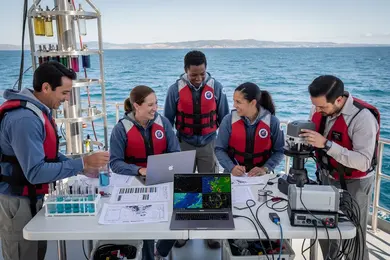
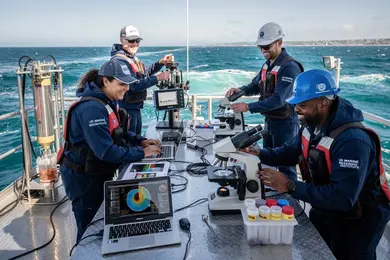
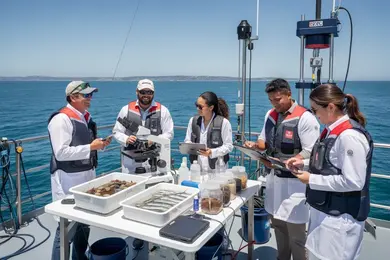
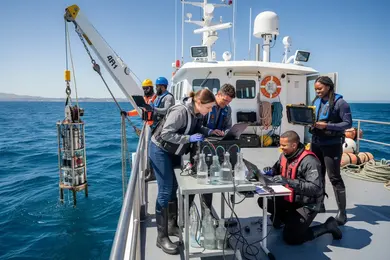
2027 Most In-Demand Marine Science Master's Specializations

Co-Founder and Chief Data Scientist
Shifts in environmental policy, technological innovation, and regulatory demands are reshaping employer expectations within Marine Science fields. Instead of relying on job posting volume or salary alone, prospective students must assess specializations through their alignment with durable career pathways, licensure or certification prospects, and skill transferability across sectors.
Regional and industry variations influence demand for expertise in areas like oceanographic data analysis or marine resource management. Specializations that embed applied skills, faculty-led research, and relevant internships often provide stronger entry to evolving roles. This article offers a strategic analysis of in-demand master's specializations, focusing on their impact on career advancement and adaptive capacity in a dynamic workforce.
Key Things to Know About the Most In-Demand Marine Science Master's Specializations
- Specializations in marine conservation ecology dominate demand due to rising regulatory focus; however, limited direct fieldwork opportunities may constrain skill application, affecting graduates targeting hands-on environmental roles.
- Employers prioritize graduates in marine data science and modeling, reflecting a sector-wide shift toward predictive analytics and resource management, pressuring programs to integrate advanced computational skills.
- Highly technical specializations often require longer, costlier training with scarce faculty expertise, posing access barriers that influence student decisions on balancing immediate employability versus specialization depth.
What Makes a Marine Science Master's Specialization "In Demand"?
Defining an in-demand master's specialization in marine science involves evaluating a combination of labor-market needs, specialized skill development, and alignment with enduring or emerging professional roles. Demand frequently depends on geographic region, employer type such as government agencies or NGOs, the specific industry sector, and the pace of technology adoption within those sectors.
For example, roles connected to environmental monitoring, compliance with regulatory frameworks, and climate resilience initiatives demonstrate sustained growth, reflecting employer requirements that extend beyond temporary hiring spikes. Prospective students focusing on in-demand marine science master's specializations in the United States should consider how those concentrations prepare them for roles with consistent employer interest rather than short-term popularity or market trends.
Relying solely on demand statistics can obscure important nuances when selecting a graduate program. Job-posting volume or broad salary claims may inflate perceptions of value without reflecting curriculum rigor, skill applicability, or credential relevance. Enrollment popularity and marketing may prioritize trendy specializations without guaranteeing depth in areas like quantitative modeling or ecosystem management, which employers increasingly emphasize.
Comparison across programs should include experiential learning opportunities, faculty expertise, alumni success in relevant roles, and how transferable the skills are to related but distinct marine science career paths. These factors help translate demand signals into meaningful, long-term advantage rather than a superficially appealing label.
Choosing a highly demanded specialization often offers the greatest benefit to working professionals, career changers, and advancement-focused learners who must align graduate study closely with employer expectations and evolving role requirements. This strategic alignment supports smoother transitions into new positions or sectors, especially in fields where continuous skills updates and interdisciplinary collaboration are valued.
A nuanced understanding of demand also guides learners toward specializations that respond to documented skill shortages, such as those identified by agencies like the National Oceanic and Atmospheric Administration, rather than general popularity. For those exploring such critical decisions, resources addressing costs and practical educational pathways, including insights on how much does it cost to become a medical billing and coding professional, can provide useful comparative context within rapidly evolving workforce landscapes.
The 10 Most In-Demand Marine Science Master's Specializations
Specializing within marine science master's programs demands attention to evolving labor market dynamics and practical skill sets that meet employer needs. The highest-demand fields emphasize expertise bridging environmental resilience, technological tools, and governance frameworks essential for managing complex marine challenges.
These specializations frequently intersect with regulatory shifts, interdisciplinary collaboration, and emerging data-intensive roles that affect long-term career flexibility.
Marine Ecology and Conservation remains critical as habitat degradation accelerates. Employers seek professionals able to integrate ecological monitoring with conservation policy, given consistent growth in environmental scientist roles focused on marine biodiversity protection, per recent U.S. labor projections.
Climate Change and Oceanography responds to the urgent need for specialists who analyze ocean-climate interactions. This specialization is pivotal for modeling future scenarios and informing mitigation strategies, driven by a notable increase in roles requiring advanced climate data interpretation.
Marine Geology and Geophysics addresses risks and infrastructure needs related to seabed mapping and natural hazard evaluation. Demand aligns closely with offshore energy development and marine engineering, reflecting workforce expansion in geospatial and geotechnical applications.
Fisheries Science and Management focuses on sustainable harvest under tightening global regulations. Job growth here is mostly in public agencies and NGOs steering policy compliance and ecosystem balance, creating opportunities for specialists who blend biological insights and resource economics.
Marine Biotechnology merges biology with innovation in pharmaceuticals, biofuels, and remediation technologies. Rising biotech demand reflects the sector's emphasis on applied science roles that drive product development and environmental solutions within marine contexts.
Marine Policy and Governance confronts the layered international and domestic regulations influencing marine resource use. The sector's expansion owes much to policy analysts who navigate climate law and maritime governance complexities, with a recent surge in governmental hiring.
Coastal Zone Management offers targeted expertise for addressing erosion, sea-level rise, and urban interface challenges. Increasing hiring by local governments reveals the persistent need for planners skilled in integrating environmental science with community resilience strategies.
Marine Renewable Energy specialization involves emerging sectors of tidal, wave, and wind energy development. Employment growth here is propelled by global renewable mandates, requiring cross-disciplinary knowledge in energy systems and marine environments.
Marine Spatial Planning blends ecosystem science with GIS technology to optimize marine resource allocation. The rising demand for spatial analysts reflects integrated management approaches favored by governments and environmental organizations.
Oceanographic Data Science and Modeling leverages AI and big data to extract actionable insights from complex ocean datasets. This specialization sees rapid growth in analytical roles emphasizing programming, statistical modeling, and decision-support systems for marine research.
These fields demonstrate that employer demand is shaped not simply by knowledge depth but by versatility in addressing scientific, technological, and regulatory challenges, with job stability tied to programmers offering interdisciplinary fluency.
One prospective master's candidate described their struggle to select between marine ecology and oceanographic data science, initially drawn to the high employment forecast for big data roles but concerned about the steep technical demands. After reviewing curricula and talking with alumni, they questioned whether the oceanographic data science path would remain accessible for someone less versed in computer science.
Conversely, marine ecology appeared more aligned with their fieldwork interests but seemed narrower in job roles. This reconsideration helped them weigh practical employability against personal strengths, ultimately guiding a decision that balanced passion with realistic workforce positioning.
Which Marine Science Master's Specializations Lead to the Highest-Paying Careers?
A master’s degree in marine science prepares professionals to study ocean systems, marine organisms, and coastal environments while addressing challenges such as climate change, conservation, and sustainable resource management. While salaries vary by employer type, experience, and geographic region, most marine science careers typically range from about $60,000 to $105,000 annually, with specialized roles in the offshore industry, environmental consulting, and ocean technology reaching $110,000–$140,000+.
As global focus on climate resilience, marine conservation, and offshore energy grows, demand is increasing for professionals with advanced technical and analytical skills. Specializations that combine oceanography with data science, engineering, environmental policy, or resource management tend to offer the strongest pathways to higher-paying roles and industry advancement.
Common marine science master’s specializations associated with higher-paying careers include:
- Marine Biotechnology ($80,000–$130,000+) – Focuses on using marine organisms for pharmaceutical, industrial, and environmental applications.
- Physical Oceanography ($75,000–$120,000+) – Studies ocean currents, climate systems, and large-scale marine dynamics using advanced modeling tools.
- Marine Environmental Science ($65,000–$110,000) – Addresses pollution, conservation, and ecosystem protection in coastal and ocean environments.
- Fisheries Science and Management ($70,000–$115,000+) – Focuses on sustainable harvesting, population management, and marine resource conservation.
- Marine Geology and Geophysics ($80,000–$125,000+) – Studies seafloor structures, tectonic activity, and underwater geological processes.
- Ocean Data Science and Modeling ($85,000–$135,000+) – Uses computational tools and big data to analyze ocean systems and predict environmental changes.
- Coastal Zone Management ($70,000–$120,000+) – Focuses on balancing development, conservation, and climate resilience in coastal regions.
- Offshore Energy and Marine Resources ($90,000–$140,000+) – Applies marine science to oil, gas, and renewable offshore energy industries.
Specializations in marine biotechnology, ocean data science, and offshore energy systems often lead to the highest-paying careers due to strong demand in industry-driven marine applications and climate-related research.
Which Marine Science Master's Specializations Offer the Best Job Growth?
Evaluating job growth in marine science master's specializations requires looking beyond surface-level popularity to factors like employment projections, employer demand, and evolving industry needs. Specializations aligned with regulatory changes, technological innovation, and emerging environmental challenges tend to offer stronger prospects. Transferable skills such as data analysis, GIS proficiency, and certification credentials also enhance employability across sectors.
According to the U.S. Bureau of Labor Statistics (2024), environmental scientists with marine expertise have projected growth of 11% through 2032, underscoring the expanding demand for specialized knowledge in areas linked to sustainability and conservation. This analytical approach is essential when identifying top marine science master's concentrations for career advancement.
However, relying solely on job growth can overlook critical nuances like regional hiring variability, cyclical demand fluctuations, and credential hurdles that influence real-world employment opportunities. Many roles require internships or specific portfolios that add time and cost to training. Furthermore, some specializations experience saturation in entry-level positions, limiting immediate job prospects despite promising long-term outlooks.
Prospective students must weigh how well a specialization supports both near-term entry and sustained career development, especially when balancing commitments like part-time study. For those considering a transition into related fields, examining programs similar to a PhD nursing for flexible, high-demand options provides a relevant parallel in navigating complex market dynamics.
Which Marine Science Master's Specializations Are Best for Career Changers?
Career changers pursuing marine science master's degrees find certain specializations more navigable when their existing abilities align with program demands. Fields emphasizing transferable skills like project management, policy analysis, or quantitative methods typically require fewer foundational science prerequisites, enabling smoother transitions.
Programs incorporating applied elements-such as internships, data-driven projects, or capstone work-facilitate substantive employer-relevant experience, which is crucial given that many entry-level roles now prioritize practical knowledge over pure academic credentials. According to 2024 labor market analyses, areas like marine spatial planning and coastal resilience exhibit a 27% rise in demand, making them especially strategic for those bridging into marine science from other sectors.
However, opting for seemingly high-demand specializations without fully accounting for technical requirements and credentialing hurdles can pose significant challenges. Specializations in marine biotechnology or technology-heavy disciplines often entail steep learning curves and prerequisite technical skills that career changers may lack, risking delays and limited competitiveness.
Additionally, candidates without prior industry-specific exposure might face network deficits and struggle to validate skills in hiring processes that increasingly value non-traditional credentials. Choosing a specialization based solely on market growth trends without weighing these factors could lead to protracted entry times and heightened competition from professionals with relevant experience.
One marine science graduate, previously working in environmental policy, initially questioned whether a specialization in coastal zone management would suit someone without a science background. After comparing the core skill overlap in regulatory frameworks and stakeholder engagement, they pursued a curriculum emphasizing applied fieldwork and completed an internship focused on local resilience planning.
The decision was tempered by concerns about gaps in technical training, but strategic networking with faculty and alumni helped secure a position that leveraged their strengths while building new competencies. This careful balance between prior experience and program demands ultimately bridged their career shift.
Which Marine Science Master's Specializations Are Best for Working Professionals?
Working professionals pursuing a master's in marine science must carefully assess specializations based on employer relevance, schedule compatibility, and applied skill development. Specializations like marine ecology, coastal resource management, and oceanographic data analysis are consistently in demand due to their direct applicability across industry, government, and nonprofit sectors.
A 2024 labor market analysis by the Coastal Workforce Institute highlights that expertise in marine data analytics leads to a 15% higher job placement rate within six months post-graduation, underscoring the importance of employer-valued skills. It is equally important to select a specialization that aligns with roles one can realistically pursue while working, avoiding options that require full-time immersion or extensive fieldwork incompatible with ongoing employment.
Specializations suited to working professionals often feature flexible marine science graduate programs for career advancement, offering online or hybrid formats that enable part-time study without disrupting career momentum. Asynchronous learning and project-based coursework tied to current job responsibilities provide practical advantages, enhancing immediate workplace impact.
Programs incorporating internship or practicum flexibility, as well as alignment with relevant certifications, help students build marketable expertise efficiently. Working professionals should weigh these operational factors carefully to ensure their chosen path facilitates steady professional development alongside education.
More technically intensive or research-heavy specializations may offer strong labor-market value but pose real-world trade-offs, including scheduling conflicts and demanding experiential requirements that challenge working students. Fields requiring substantial field placements or clinical hours can limit a professional's ability to maintain employment and balance family commitments.
Balancing these considerations with job market trends enables candidates to choose specializations that strategically leverage their circumstances rather than simply chasing perceived popularity. Those exploring how to combine ongoing work with graduate study might also consider options comparable to pursuing an exercise science degree online for flexibility and career-aligned learning models.
How Do Online and Flexible Marine Science Master's Specializations Compare?
Online and flexible marine science master's specializations differ significantly in delivery and academic engagement, impacting course sequencing, cohort dynamics, and access to experiential learning. Online programs typically emphasize asynchronous coursework, which broadens access but often limits real-time faculty interaction and hands-on opportunities like internships or field practicums essential in marine science.
Hybrid or accelerated formats try to integrate occasional face-to-face sessions that offer practical skill development valued by employers in oceanography and related fields, yet these require navigating complex schedules. Part-time options, while extending program duration, increase flexibility but may delay participation in intensive research projects or capstone experiences aligned with market demands.
Flexibility alone does not guarantee a program's strength; depth of curriculum, accreditation standards, and integration of applied learning are critical for employer recognition and job readiness. Many marine science roles demand demonstrated field competencies which purely online or loosely structured flexible formats struggle to provide. Career services access, mentorship quality, and technology platforms also influence graduate success in a competitive labor market.
According to a 2024 Council of Graduate Schools report, 68% of students in flexible graduate programs identified networking challenges as a key obstacle, underscoring the importance of program design beyond convenience. Prospective students should evaluate whether a specialization format aligns with skills prioritized by employers, such as data analytics coupled with field experience, rather than relying on flexibility as a proxy for quality.
For working professionals and career changers, flexible study models can support continued employment but require careful consideration of workload balance and pacing. Extended timelines in part-time or accelerated tracks may affect timely entry into advanced roles, while limited in-person engagement can restrict networking and mentorship critical for moving into leadership positions.
Ultimately, selecting a marine science master's specialization demands weighing how distinct formats influence practical preparation and long-term career trajectories rather than focusing solely on scheduling convenience or program accessibility.
What Skills Do Students Learn in In-Demand Marine Science Master's Specializations?
High-demand marine science master's specializations function as skill-building pathways deliberately aligned with labor market requirements, curriculum design, and employer expectations rather than mere concentration titles. These programs focus intensely on equipping students with applied competencies that ensure close alignment with evolving professional roles and sector-specific demands.
- Advanced Technical Proficiency: Students gain hands-on expertise with cutting-edge data collection technologies, including remote sensing, GIS mapping, and oceanographic instruments. Mastery of such tools is critical for roles that require precise environmental monitoring and data-driven decision-making in research institutions and industry, developed through rigorous labs and field deployments.
- Analytical and Modeling Skills: Programs emphasize advanced statistical modeling and ecological assessment to dissect complex marine ecosystems. This capability supports graduates' ability to forecast environmental shifts and conduct thorough impact evaluations, skills refined via coursework in environmental statistics and practical data analysis projects.
- Leadership and Interdisciplinary Coordination: Many curricula prioritize leadership development to prepare students for managing multidisciplinary teams and engaging stakeholders effectively. Through simulated project management and policy advocacy exercises, learners build competencies essential for navigating governmental, nonprofit, and private-sector marine initiatives.
- Research Design and Execution: Master's students develop robust capabilities in experimental design and fieldwork methodology, vital for both generating novel scientific insights and critically appraising existing evidence. This skillset is fostered via capstone projects and live research environments, ensuring readiness for scientific and applied marine careers.
- Specialized Sector Expertise and Communication: Specializations like marine biotechnology or conservation cultivate niche skills tailored to emerging industries, coupled with the ability to communicate technical findings across diverse audiences. Training includes translating complex data for policymakers and community stakeholders, a necessity underscored by a 15% job growth forecast highlighted in the Marine Environmental Workforce Council's 2024 labor analysis.
What Are the Admissions Requirements for Popular Marine Science Master's Specializations?
Admissions requirements for popular marine science master's specializations serve as both a basic eligibility filter and a reflection of the distinct professional and technical demands tied to each focus area. These criteria often signal how rigorously a program prepares students for specific career paths, influencing an applicant's strategic approach to selection and preparation.
Understanding these nuances is essential for prospective students targeting competitive or specialized tracks within marine science master's program admission criteria.
- Specialized Prerequisite Coursework: Many programs require a relevant undergraduate major or specific prerequisite courses, such as molecular biology for marine biotechnology or engineering fundamentals for underwater robotics. This ensures foundational knowledge aligns with specialization complexity, affecting both eligibility and readiness for advanced study.
- Work Experience and Applied Skills: Internships, fieldwork, or research assistantships significantly enhance candidacy in applied areas like marine policy or conservation. Such experience signals practical familiarity with professional environments, which many employers now consider integral for success beyond theoretical mastery.
- Standardized Testing Policies and Academic Performance: Over 60% of top marine science programs have dropped the GRE by 2024, reflecting evidence that the test poorly predicts graduate outcomes. Nevertheless, minimum GPA requirements typically range from 3.0 to 3.5, with more demanding programs emphasizing high performance in core science courses to ensure analytical and technical aptitude.
- Letters of Recommendation and Writing Samples: These materials provide qualitative evidence of an applicant's research capability and communication skills, crucial in specialized or competitive tracks that may also require interviews to assess interpersonal fit and professional judgment.
- Technical Competency and Certification Requirements: Proficiency in data analysis software, GIS mapping, or certifications such as SCUBA can be decisive in ecology- or field-focused programs. Additionally, physical fitness or clinical eligibility may influence admissions when extended offshore or underwater research is involved.
When evaluating how to navigate these requirements within marine science master's program admission criteria, applicants must weigh specialization fit against practical demands. Accessing resources explaining nuanced career pathways, such as how to get into pharmaceutical sales, can offer insight into structuring professional development across sectors influenced by similarly intricate admission and competency expectations.
How Should Students Compare Cost, Financial Aid, and ROI by Marine Science Specialization?
The cost versus financial aid for marine science master's programs should be evaluated as a specialization-specific consideration shaped by program design, labor-market alignment, and individual career context rather than a simple comparison of tuition and future earnings. Various factors influence the total investment and the return on investment for marine science specializations.
- Tuition Structures and Additional Fees: Different specializations may have distinct tuition rates and hidden costs such as lab fees, equipment, or travel for fieldwork. These extra expenses affect overall affordability and can extend financial burdens beyond base tuition.
- Internship and Practicum Requirements: Specializations emphasizing applied learning often require internships or practicums that may not be fully funded. These can generate opportunity costs through unpaid time commitments or relocation expenses, impacting the net financial value of the program.
- Certification and Credentialing Expenses: Some specializations prepare students for costly certifications or licensure, which entails exam fees and preparatory courses. Factoring these costs is essential for understanding the total investment and subsequent career mobility.
- Employer Tuition Support and Scholarship Availability: Access to employer reimbursement for tuition or specialized scholarships can significantly lower student debt exposure. However, eligibility often varies by specialization and is tied to workforce demand trends.
- Time-to-Degree Differences: Programs with sequential, intensive course sequences or research requirements might extend time to completion, increasing living costs and delaying return on investment. Weighing these tradeoffs helps calibrate long-term career fit.
Prospective students can refine their financial decisions by comparing cost and financial aid not in isolation but alongside expected career trajectories, incorporating long-term earning potential and specialization-specific growth. A well-informed choice also involves understanding the return on investment for marine science specializations within evolving environmental and technology-driven job markets.
For those researching parallel fields, useful context can be found in guides such as the bachelors degree in sociology online, illustrating how related disciplines address cost versus career outcomes in evolving professions.
What Do Graduates Say About Their Marine Science Master's Specializations?
- Louie: "After completing my master's in marine science with a focus on coastal ecology, I quickly realized that employers place more weight on real-world experience than on licensure. I made sure to dive into internships and build a solid portfolio of fieldwork, which opened more doors than a certification ever could. Navigating the job market required a pragmatic approach-flexibility to relocate also made a big difference in landing my current position."
- Zamir: "Graduating with a specialization in marine renewable energy, I found the career path was competitive but promising. Many roles favored candidates with certifications tied to technology and data analysis over traditional licenses. I accepted a remote contract initially, which helped me gain fast entry into the workforce, though salary growth has been slower than expected without further licensure or advanced credentials."
- Matthew: "My experience with the marine science program centered on marine conservation policy, and I quickly learned that advancement depends heavily on networking and proven project impact rather than formal licenses. Some employers required navigating challenging hiring processes with many qualified applicants, so I pivoted towards consulting roles where my skills and internships had the most influence. It's been a winding path, but understanding these practical realities gave me an edge in the field."
Other Things You Should Know About Marine Science Degrees
Certain specializations, such as marine policy or environmental economics, are more tightly linked to external partnerships with regulatory agencies, NGOs, or industry stakeholders. These connections can shape your networking and employment prospects but may also require adaptability to shifting policy priorities or funding cycles. If securing internships or post-graduate roles through partnerships matters, select a specialization known for active external collaborations, even if that means less time spent on independent scientific research.
Some marine science master's specializations emphasize extensive coursework to build interdisciplinary knowledge, while others push students towards a research thesis or applied projects from early on. Students aiming for academic or research careers should prioritize thesis-driven programs that foster deep expertise and publication opportunities. Conversely, those targeting industry or management roles might prefer coursework-intensive tracks with practical projects that develop immediate, applied skills.
Wider specializations offer exposure to multiple marine science subfields but may sacrifice focus on advanced technical skills that employers prioritize for specialized roles. Programs that emphasize technical depth often limit elective options to cultivate niche expertise, which can enhance employability in targeted sectors but reduce flexibility for broader career shifts. For students confident in their career path, prioritizing depth can yield stronger credentials, whereas those uncertain about their exact focus might benefit more from a broader curriculum.
References
- MSc International Marine Science https://www.hw.ac.uk/online/study/postgraduate/international-marine-science
- Study Marine Science - Experience, Job Opportunities, Salary + Survey https://jobtensor.com/uk/Studies/Marine-Science
- Top 16 Best Paying Marine Biology Jobs in 2026: Complete Career Guide for UK Professionals https://nextgenlearning.org.uk/highest-paying-marine-biology-jobs-2026/
- Reasons to Major in Marine Biology https://www.seamester.com/blog/8-reasons-to-major-in-marine-biology/
- College ROI: How to Compare Costs, Outcomes and Fit Counselor Guide: Which Students Thrive in Small Colleges https://oglethorpe.edu/post/college-roi-costs-outcomes-fit/
- Best Colleges for Marine Biology | Marine Biology Colleges https://www.collegeadvisor.com/resources/best-colleges-for-marine-biology/
- Master of Science in Marine Sciences https://www.une.edu/cas/schools/marine-environment/majors/ms-marine-sciences
- Top 10 Highest Paying Marine Biology Jobs 2025 (Inc Salaries) | Nexford University https://www.nexford.edu/insights/highest-paying-marine-biology-jobs
- 10 careers you can have with a Marine Science degree - SAMS UHI Student Blog https://blog.sams.ac.uk/10-careers-you-can-have-with-a-marine-science-degree/
- Top 5 Master Programs in Marine Sciences • Blue-Jobs • The online platform to find a job in marine sciences https://blue-jobs.com/2024/06/12/top-5-master-programs-in-marine-sciences/