2027 RN to BSN Programs With Rolling Admissions

Co-Founder and Chief Data Scientist
Mid-career registered nurses juggling unpredictable work shifts and family obligations often face tight windows to enroll in programs that match their schedules. This urgency is compounded by employer demands for BSN credentials, given evidence from the American Association of Colleges of Nursing showing that over 60% of healthcare employers now require or prefer BSN-prepared nurses.
Flexible admissions policies provide a vital solution to avoid lost time and income, but program selection remains complex. This article examines current RN to BSN programs with rolling admissions, equipping prospective students with detailed insights to navigate enrollment timing, program format, and practical trade-offs for career advancement.
Key Things You Should Know
- Nearly 60% of working RNs face wage stagnation without BSN credentials, yet rolling admissions in 2026 often correlate with accelerated program start times but slightly higher tuition averages, demanding careful cost-benefit analyses.
- Employers increasingly prioritize BSN-prepared nurses for leadership roles; hospitals tied to Magnet recognition show 25% lower patient mortality, pressuring RNs to segment their education timeline for strategic career pathways.
- Rolling admissions reduce wait times but can compress course sequencing, conflicting with full-time work; state boards report 14% higher attrition in accelerated RN to bsn programs, influencing candidate planning.
What are RN to BSN programs with rolling admissions, and who are they best for?
Rolling admissions in rn to bsn programs with flexible enrollment accommodate nurses juggling varying schedules by removing fixed start dates and allowing near-immediate enrollment. This flexibility mitigates downtime between application and coursework, which is critical for maintaining income and meeting employer expectations, especially in acute care or community health contexts where BSN credentials increasingly affect hiring and advancement.
A nurse working variable shifts can commonly transition into advanced study within weeks rather than months, preserving continuity in both clinical responsibilities and education. However, this adaptability introduces practical tradeoffs: coordinating clinical hours and prerequisite availability requires close attention given asynchronous course platforms and rolling timelines.
Prospective students should carefully verify credit transfer policies to prevent redundant classes, confirm technology supports part-time learners, and ensure their employer's tuition reimbursement aligns with the program's schedule. These details shape long-term educational outcomes and practical return on investment.
Nurses in rural or underserved areas particularly benefit from reduced bureaucratic delays, enabling quicker BN achievement that can influence licensure and promotion. Enrollment demand-up 9.6% between 2022 and 2023 according to the American Association of Colleges of Nursing-demonstrates preference for this flexibility. Those evaluating these programs should consult detailed cost data such as the RN to BSN online programs cost comparison to align financial and scheduling needs strategically.
How does rolling admissions work for RN to BSN programs and application timelines?
Rolling admissions in rn to bsn programs shift the traditional application model by offering continuous evaluation and quicker entry once candidates submit complete materials. This approach benefits working nurses who cannot pause employment for fixed deadlines, allowing enrollment often within two to four weeks. However, this flexibility requires timely preparation of key documents such as an active RN license, transcripts, and clinical hours verification. Delays in these can postpone enrollment by an entire semester, impacting workforce participation and financial stability.
Application deadlines and timelines for rn to bsn programs vary widely, but earlier submission remains critical to secure preferred start dates and avoid cohort limits. For example, a nurse pursuing a move into hospital management must juggle job responsibilities while applying early enough to begin summer or fall terms. Rolling admissions typically provide multiple start dates annually, sometimes quarterly or monthly, which addresses some scheduling challenges but presents tradeoffs.
Choosing programs with faster admission turnarounds may mean less academic support, whereas those with longer timelines often include enhanced advising but delay degree completion. Understanding these contrasts helps align program selection with personal career goals. The U.S. Bureau of Labor Statistics projects a 5% growth in registered nurse employment between 2024 and 2034, reinforcing the urgency for RNs to upgrade qualifications efficiently.
Prospective applicants also benefit from exploring options such as online ADN programs for non nurses, which sometimes inform pathways into rn to bsn programs through flexible sequencing and credit transfer. Preparing thoroughly maximizes the advantages of rolling admissions and mitigates unnecessary enrollment delays.
What admission requirements do RN to BSN programs with rolling enrollment typically have?
Admission prerequisites for RN to BSN programs with rolling enrollment demand a precise alignment between prior clinical experience and academic preparation, shaped by employer expectations and evolving healthcare benchmarks. Candidates must hold an active, unencumbered RN license along with an accredited associate degree or diploma in nursing. A key filtering mechanism is submission of official transcripts confirming a minimum cumulative GPA, often around 2.5, which serves as a baseline for baccalaureate readiness.
Programs with flexible admission typically require prerequisite coursework in foundational sciences-such as human anatomy, microbiology, and statistics-completed within a recent five- to seven-year window. This timeframe ensures applicants' knowledge meets current standards critical to patient care quality. Documented clinical experience, usually a minimum of one year in direct patient care, aligns with hiring preferences favoring practicing nurses transitioning into BSN roles.
Rolling admissions offer expedited evaluation but place added pressure on applicants to prepare comprehensive and accurate materials to prevent delays. Standardized tests like the TEAS are less commonly mandated, representing a shifting emphasis toward practical skills and references highlighting clinical competence and work ethic. This more selective approach mirrors real-world hiring where advanced credentials must coincide with demonstrable nursing acumen.
Given the median annual wage for registered nurses is $93,600, those pursuing RN to BSN programs with rolling enrollment should weigh how these criteria affect access to leadership or specialty roles. The nuances of enrollment criteria for RN to BSN programs with flexible admission create a balance between speed and quality of preparation, influencing longer-term employability and career trajectory. For nurses considering further advancement, exploration of online nursing doctorate programs represents a logical progression that builds on this foundation.
How do online RN to BSN programs with rolling admissions compare to campus options?
Choosing between online RN to BSN programs with rolling admissions and traditional campus programs involves weighing accessibility against experiential depth. Rolling admissions enable immediate enrollment, which can translate to faster degree completion and earlier salary improvements-Clarkson College reports BSN-prepared RNs earn an average annual salary of $86,070. This flexibility aligns with the realities faced by working nurses balancing shifts and family responsibilities, as online formats forego commuting and accommodate asynchronous coursework. Conversely, campus programs often impose fixed semester start dates and require on-site attendance, potentially elongating time to completion and complicating full-time employment continuation.
The flexibility and outcomes of RN to BSN programs with rolling admissions must be balanced against the networking opportunities and hands-on clinical experiences more readily available in campus settings. Working nurses leveraging online pathways should proactively secure local clinical placements to satisfy licensure and experiential requirements. The operational tradeoff lies in faster access to degree credentials versus potential limitations in community integration within healthcare systems.
Employers continue to value the combination of practical RN experience and BSN credentials, influencing hiring and compensation. For professionals seeking a pragmatic, expedited route to advancement, online options with rolling admissions present a compelling solution. Those evaluating their pathways might also consider related advanced certificates; for example, the shortest PMHNP certificate program offers accelerated specialization in a complementary nursing field.
How can nurses verify accreditation and program quality for RN to BSN degrees?
Accreditation status directly influences the practical value and employability outcomes of RN to BSN programs. Nurses who overlook verification from the Commission on Collegiate Nursing Education (CCNE) or the Accreditation Commission for Education in Nursing (ACEN) risk enrolling in programs that lack recognized rigor and fail to meet licensing board requirements. This gap can lead to credentialing setbacks and financial losses.
Employers increasingly demand graduates from accredited programs because such credentials verify a curriculum aligned with national nursing competencies and adherence to state regulations. Program transparency-demonstrated by accessible NCLEX pass rates, graduation statistics, and job placements-offers measurable indicators of quality rather than unverifiable claims.
Cost structure is another critical variable. Utah Tech University's uniform rate of $271 per credit for RN-BSN students, irrespective of residency, sets a clear affordability benchmark and reflects institutional commitment to workforce accessibility. For working nurses balancing education and employment, predictable tuition combined with accreditation status ensures both financial and professional investment payoff.
What coursework and clinical components are included in RN to BSN curricula?
RN to BSN curricula shift nursing roles from bedside care to complex interdisciplinary functions involving community health, informatics, and population management. This transition aligns with employer expectations for BSN-prepared nurses to lead prevention efforts, education, and case management rather than direct acute care. Clinical requirements typically range from 30 to 75 hours, often scheduled during evenings or weekends to accommodate working RNs, which can present logistical challenges.
Programs emphasize coursework in nursing leadership and research methods, sharpening skills in team supervision and critical evaluation of evidence-based practice. This focus builds competencies that correlate with increased preference for BSN credentials in approximately 70% of U.S. hospitals, impacting hiring and promotion prospects.
For working professionals balancing employment and study, cost-efficiency is a significant factor. Florida State College at Jacksonville, for example, offers a fully online RN-BSN track with tuition under $4,000 for the 30 upper-division credits required, illustrating a practical balance between affordability and clinical applicability.
The need to integrate theory with clinical practice in community or outpatient settings demands careful scheduling but prepares graduates for roles requiring advanced clinical judgment and systemic health interventions. This recalibrates the traditional hospital-based clerkship model toward a broader healthcare impact.
How long do RN to BSN programs with rolling admissions usually take to complete?
RN to BSN programs with rolling admissions offer flexibility but require careful time management to align with workforce demands. Completing the degree in 12 to 18 months full-time allows nurses to remain competitive, as employers favor candidates who finish promptly while maintaining clinical competence. Part-time study can extend completion to 24 months, often due to variable clinical placements and fluctuating work schedules.
Consider a hospital nurse reducing course load during peak periods; this pragmatic adjustment can lengthen program duration but keeps professional responsibilities balanced. Extended timelines risk knowledge obsolescence in fast-evolving healthcare fields and may slow access to roles requiring up-to-date credentials, such as leadership or specialty nursing.
Financially, California State University San Marcos exemplifies mid-range tuition costs with $360 per unit, totaling $12,600 for its 35-unit online curriculum. This cost structure underscores how program pacing-leveraging sequential summer and fall enrollments-can maintain momentum without significant breaks or expense escalation.
Ultimately, rolling admissions enable faster entry but demand disciplined scheduling to avoid prolonged programs that may undercut career advancement. Working professionals must weigh the tradeoff between accelerated completion and real-world clinical/practice constraints.
What are the typical costs, financial aid options, and employer tuition benefits?
Costs for RN to BSN programs fluctuate significantly, typically between $6,000 and $30,000 in total tuition, a range influenced heavily by whether a student attends a public or private institution and their residency status. Public universities usually charge from $7,000 to $15,000, while private schools often exceed $20,000. However, direct expenses often shrink through financial support options that working nurses must carefully evaluate against their career objectives.
For example, 60% of University of Virginia's RN to BSN class of 2024 paid no tuition due to scholarships and aid, revealing the impact of targeted funding on reducing barriers. Nurses employed in systems offering robust tuition benefits can minimize debt and accelerate role advancement, while those without employer support should weigh scholarship-heavy programs to mitigate unsustainable loans. This balancing of financial aid, workforce demands, and personal circumstances is critical in navigating the true cost and value of an RN to BSN education pathway.
How does earning a BSN impact nursing career paths, roles, and advancement?
The practical value of earning a BSN hinges on how it expands access to roles with increased responsibilities and distinct skill requirements. Nurses in larger urban medical centers frequently need BSN credentials to engage in interdisciplinary teams and uphold evidence-based protocols, whereas community hospitals may offer fewer advancement opportunities without this degree.
Specifically, positions such as nurse manager or clinical nurse leader often mandate a BSN, reflecting employer expectations for critical thinking, population health knowledge, and quality improvement capabilities. Registered nurses without a BSN generally face capped wage growth and promotion limits, constraining long-term career resilience within evolving healthcare systems.
Economic considerations also shape RN to BSN program choices. For example, some Wisconsin-based online programs charge total tuition fees under $10,000 for residents, with per-credit costs near $482.89, enabling working nurses to pursue advancement without relocation or excessive financial strain.
Employers targeting Magnet designation increasingly require BSN-prepared nurses to support higher quality care metrics and reduce turnover. This demand affects hiring and promotional pathways, often favoring BSN graduates over associate degree holders.
What salary increases and job outlook can RNs expect after completing a BSN?
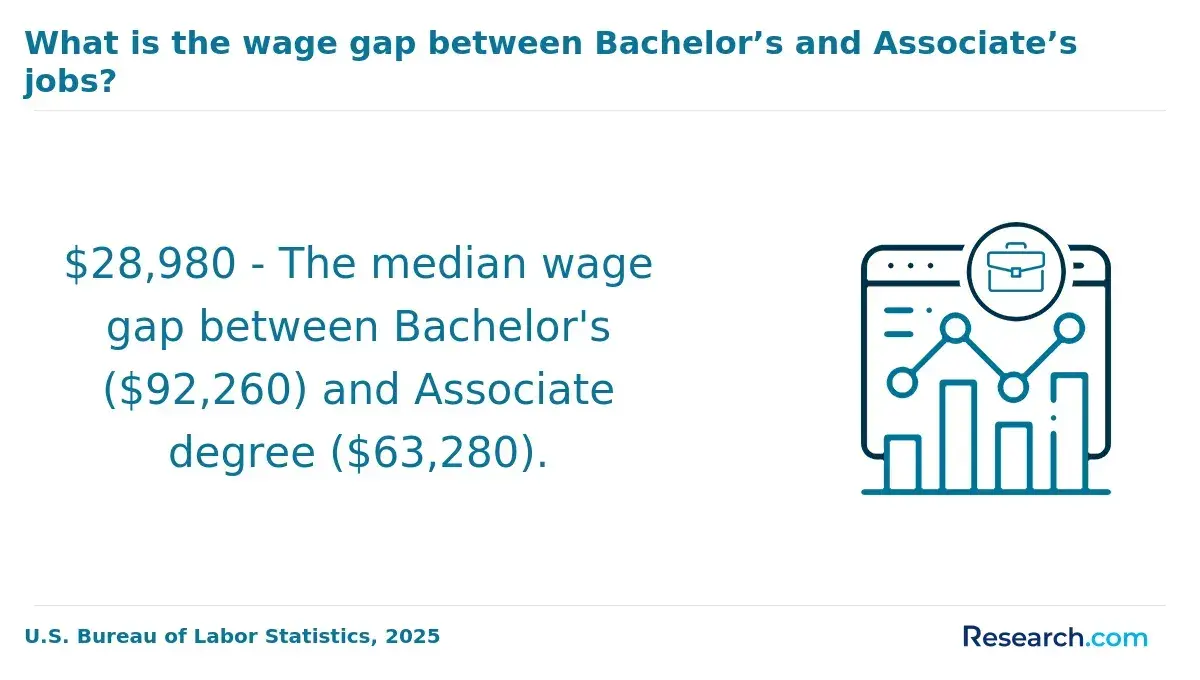
Registered nurses advancing from an ADN to a BSN can anticipate a 10% to 15% salary increase, with median earnings rising from approximately $77,600 to $89,000 or higher. This difference aligns with employers' preference for BSN-prepared nurses in specialized care, leadership roles, and facilities pursuing Magnet recognition, which often demand advanced qualifications. For instance, moving from an ADN position in a general hospital to a BSN role in a large, research-focused medical center typically results in both higher base wages and access to shift differentials and specialty bonuses.
Employment growth strongly favors BSN holders, especially in roles explicitly requiring the degree such as nurse managers and clinical specialists. The projected 15% to 18% expansion rate in these positions exceeds the overall 12% growth in registered nursing, reflecting greater demand for diverse skill sets beyond bedside care, including education, policy, and administration.
Programs offering multiple start dates and rolling admissions help working nurses balance continuous employment with education, minimizing income disruption during BSN completion. However, students must weigh the upfront cost and time investment against the sustained earnings and enhanced job security associated with BSN credentials in increasingly competitive healthcare markets.
Other Things You Should Know About RN to BSN Programs
Most RN to BSN programs do not mandate a specific amount of prior nursing experience, but having 1-2 years of clinical work can significantly improve a student's readiness and ability to manage accelerated coursework. Programs that require no experience often expect students to balance intense academics with work demands, which can increase risk of burnout. Prioritizing programs that recognize and integrate clinical experience into their curriculum tends to support better learning outcomes and smoother transitions into higher-level nursing roles.
Many programs are designed with working nurses in mind, offering flexible online formats and asynchronous classes. However, maintaining full-time work alongside the program may limit your ability to engage deeply or complete assignments on time, especially during clinical or practicum components. If career advancement is a key goal, prioritizing part-time work or employer-supported study leave improves the chance of successful completion and stronger academic performance.
Yes. RN to BSN programs accredited by the Commission on Collegiate Nursing Education (CCNE) or the Accreditation Commission for Education in Nursing (ACEN) are commonly accepted for state board expectations and employer review. Accreditation does not change RN licensure, but it confirms the BSN meets recognized nursing education standards.
Yes, most accredited programs require some clinical or practicum hours regardless of admissions style, but rolling admissions can offer greater scheduling flexibility for these components. Students should verify whether clinical placements must be arranged independently or coordinated by the school, as this responsibility affects workload and timeline control. Programs enabling self-arranged clinicals can be more adaptable for working professionals but demand stronger self-management skills.
References
- What is the Job Outlook for Nurses? | University of Bridgeport https://www.bridgeport.edu/news/what-is-the-job-outlook-for-nurses/
- How Long Is an RN to BSN Program Option? https://www.chamberlain.edu/blog/how-long-is-an-rn-to-bsn-program-option
- What’s the Deal with Accreditation? https://nursingcas.org/resources-for-current-schools/whats-the-deal-with-accreditation
- How Long Does BSN Nursing Degree Take? 8-48 Months | West Coast University https://westcoastuniversity.edu/blog/how-long-does-bsn-take-timeline-guide
- Tuition Assistance vs. Tuition Reimbursement: What's the Difference? https://guild.com/blog/tuition-reimbursement-vs-tuition-assistance
- BSN Salary Guide: Average Salary of a BSN Nurse by State, Entry-Level Salaries, and Highest Paying BSN Jobs in 2024 https://nightingale.edu/blog/bsn-salary.html
- Is the RN-to-BSN Program Worth It? Benefits & Career Impact https://learntastic.com/blog/understanding-the-rn-to-bsn-program-is-it-worth-it
- Tuition Reimbursement: How Do Employers Benefit from It? | KBI Benefits https://www.kbibenefits.com/tuition-reimbursement-benefits
- BSN Admission Requirements https://aurora.edu/academics/undergraduate/nursing/admission-requirements.html
- CCNE Accreditation https://www.aacnnursing.org/ccne-accreditation