2027 Graduation Rates for Online Marine Science Master's Programs: Completion Statistics

Co-Founder and Chief Data Scientist
Balancing an online marine science master's program with full-time work and family duties often leads students to question whether they can realistically finish their degree. In 2024, data reveal that only about 55% of online graduate students in science fields complete their programs within the expected timeframe. This low rate highlights the challenge of managing competing commitments alongside demanding coursework and research requirements.
Graduation rates matter profoundly because delayed or incomplete degrees can hinder career advancement and strain financial resources. This article examines how completion rates, student success outcomes, and influencing factors shape the likelihood of earning a marine science master's degree on time.
Key Things to Know About Graduation Rates for Online Marine Science Master's Programs
- Graduation rates in online marine science master's programs average around 55% within six years, reflecting the tradeoff between flexible pacing and prolonged enrollment that can increase total cost and time to degree.
- Employers emphasize research experience and project completion over program modality, so students should prioritize programs with robust capstone or thesis components that signal workforce readiness.
- Student persistence often dips during mid-program periods due to balancing fieldwork demands and coursework, signaling the need for tailored academic advising to mitigate attrition and optimize timely completion.
What Are the Graduation Rates for Online Marine Science Master's Programs?
Graduation rates for online marine science master's programs in the United States commonly reflect broader trends seen in STEM-related online graduate education, where about 60-65% of students complete their degrees within six years according to the National Center for Education Statistics and Online Learning Consortium data from 2024. This rate often signals the impact of balancing employment, family responsibilities, and geographic flexibility against program design and institutional support. For example, a student enrolled part-time while managing a full-time job may extend their time-to-degree significantly, which affects reported completion timelines and complicates direct comparisons to on-campus programs. Recognizing these factors is critical for interpreting completion statistics beyond surface-level percentages when evaluating online marine science master's programs.
Completion statistics of accredited online marine science graduate programs are nuanced by enrollment intensity and the level of academic advising and peer interaction available remotely. Unlike traditional programs with steady brick-and-mortar access, online learners may face obstacles such as limited hands-on fieldwork opportunities and delayed feedback, which can hinder steady progress. These realities mean that published graduation rates should be viewed as one input among many in student planning rather than guarantees of a fixed timeline. Candidates weighing an online marine science master's degree should also consider how attrition frequently stems from non-academic pressures, a factor that affects persistence more than program quality alone. For those interested in healthcare alongside scientific fields, examining options like an online healthcare administration degree may offer alternative pathways aligned with sector demand and program completion dynamics.
How Do Graduation Rates Compare Among Online Marine Science Master's Programs?
Completion outcomes across online marine science master's programs vary substantially due to factors like enrollment pacing, cohort design, and academic support. Programs with predominantly full-time cohorts typically report graduation rates near 80%, significantly higher than part-time models where rates can dip closer to 65%, reflecting extended timelines and competing work or family commitments. Selective admissions and cohort-based structures further influence persistence by fostering peer connections and enhancing faculty interaction, which mitigate isolation prevalent in remote learning. These dynamics mean that apparent graduation-rate differences often reflect program design tradeoffs between flexibility and structured engagement rather than intrinsic academic quality.
Students must carefully interpret graduation statistics in light of their own schedules and support needs, as raw completion percentages often obscure how stop-outs, transfer credits, or asynchronous course delivery impact timely degree attainment. For example, some programs with comprehensive tutoring and advising emphasize on-time graduation metrics, while others prioritize accommodating working professionals who may take longer to finish but still benefit from tailored pacing. Understanding these nuances helps prospective learners balance the risks of extended enrollment against potential benefits of flexibility, while recognizing that a lower graduation rate may not signal lower value for someone managing full-time employment or caregiving duties.
An online marine science graduate recalled comparing two programs where one advertised a 75% six-year graduation rate linked to full-time, cohort-based enrollment, while the other reported about 60% but allowed part-time pacing with more flexible course scheduling. She specifically questioned admissions about whether their cohort data included working students who paused studies for months, as this influenced perceived persistence. She ultimately chose the latter for its support services and adjustable timeline, accepting the tradeoff of a potentially longer path in exchange for managing her family responsibilities alongside coursework. Her experience underscores the importance of analyzing completion data beyond headline percentages to align expectations with one's real-world obligations.
How Do Online Marine Science Master's Program Graduation Rates Compare to On-Campus Programs?
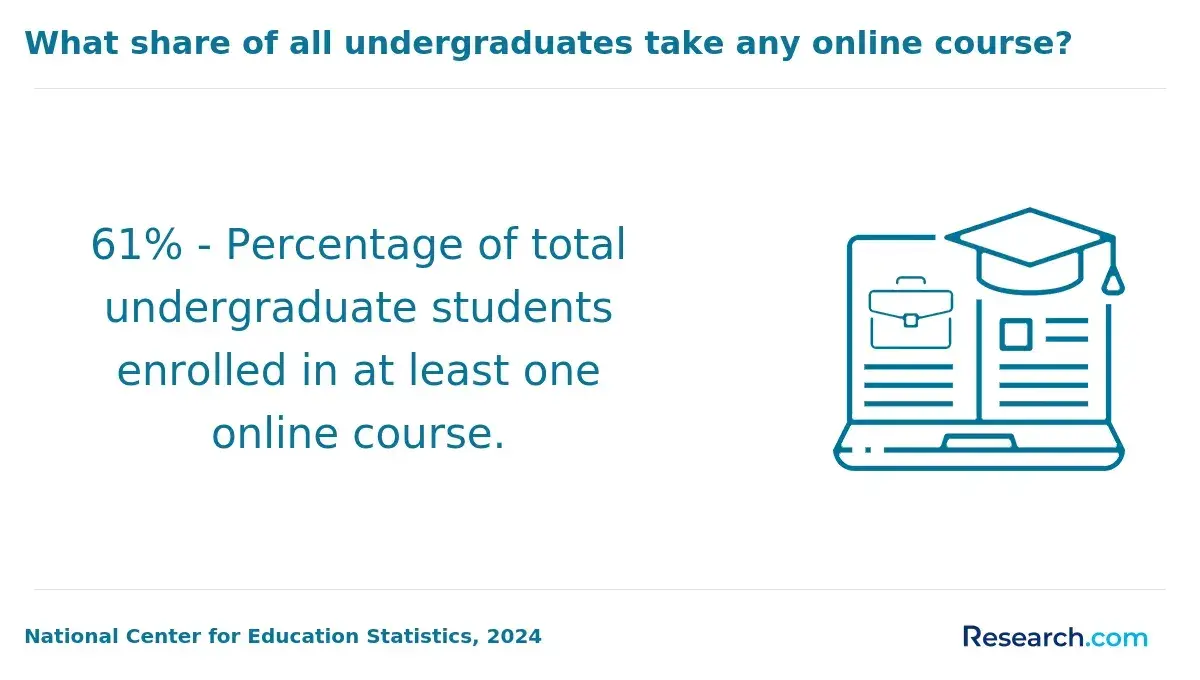
Graduation rates for online marine science master's programs often appear lower than their campus-based counterparts, but this comparison overlooks critical contextual factors. Online cohorts typically include more part-time students, working professionals, and adult learners managing competing responsibilities, extending their time to completion. For instance, data from the National Center for Education Statistics in 2024 show traditional on-campus programs graduate about 75% of students within six years, while fully online programs average closer to 65%; however, this gap largely reflects differing student demographics and enrollment patterns rather than program quality alone.
Institutional support, such as academic advising and synchronous mentoring, plays a notable role in narrowing online completion disparities, highlighting how course design and engagement influence outcomes. Online students often face challenges balancing family and career demands amid fewer opportunities for hands-on learning and community interaction, factors that can increase attrition risk. Therefore, prospective students should interpret online graduation rates with caution, recognizing the tradeoffs between offering flexible scheduling and the harder-to-quantify impacts of access to faculty, fieldwork, and peer networks-elements that remain more accessible in on-campus settings and heavily shape workforce readiness in this science-intensive field.
What Factors Influence Graduation Rates in Online Marine Science Master's Programs?
Graduation rates for online marine science master's programs are heavily shaped by how well students navigate enrollment patterns and institutional support. Part-time students who frequently reduce their course load or pause studies face higher stop-out risks, which lengthens time-to-degree and complicates workforce entry. Programs offering clear academic advising and structured course sequencing help minimize delays by guiding students through credit requirements and preventing unnecessary coursework repetition. This alignment is crucial because many employers value timely degree completion as an indicator of persistence and mastery, affecting early career opportunities and advancement.
Student support and retention strategies in marine science graduate programs must also address the realities of balancing academic and personal demands, especially as many adult learners juggle jobs and family. Flexibility in scheduling and asynchronous coursework significantly improves completion rates; a 2024 survey from the Online Learning Consortium found that 68% of online master's students rank flexible deadlines as essential to finishing. Additionally, efficient transfer credit policies reduce redundancy, accelerating degree progress and improving graduation statistics' reliability when comparing programs. Prospective students should evaluate whether program structures and support services align with their practical needs to better predict successful outcomes rather than relying solely on raw completion rates.
Programs that integrate comprehensive mentoring, timely faculty feedback, and cohort-based accountability tend to sustain engagement and retention more effectively. These elements, combined with administrative resources like counseling and time management support, strengthen persistence and reduce attrition. For those investigating graduate options, it is useful to consider how such factors correlate with employment pathways, as demonstrated by rising interest in fields supported by comprehensive planning and degree completion rates. Individuals weighing alternatives might also explore adjacent fields, such as pursuing credentials from medical billing and coding online schools that accept financial aid, where program design and financial aid availability differ markedly.
How Do Student Support Services Affect Graduation Rates for Online Marine Science Master's Programs?
Graduation rates in online marine science master's programs depend heavily on the scope and effectiveness of student support services, which directly affect a candidate's ability to manage coursework alongside personal and professional commitments. According to a 2024 report from the National Center for Education Statistics, programs with comprehensive support-including targeted advising, tutoring, and responsive faculty mentors-show completion rates roughly 15% higher than those lacking these resources. These services influence critical aspects like course sequencing, early intervention for struggling students, and access to technical assistance that prevents avoidable delays or stop-outs, all of which shape on-time degree attainment for adult learners balancing work and family.
Working professionals and career changers often confront the dual challenges of unfamiliar academic content and digital learning platforms. Programs that integrate cohort models and proactive retention efforts help build peer networks that reinforce motivation and accountability, mitigating isolation that frequently derails persistence in remote settings. Career services connected to marine science employment pathways also play a crucial role, ensuring students perceive the relevance of academic milestones amid competing obligations, thereby enhancing the likelihood of sustained enrollment and degree completion.
One former online marine science master's student recalled how regular academic advising helped reorganize her course load after she paused studies due to a family emergency. "My advisor didn't just reschedule classes but helped me prioritize prerequisites with available tutoring resources, which kept me from falling behind," she said. She credited faculty accessibility and responsive technical support with reducing frustration during complex lab assignments, while mental health check-ins during retention outreach calls helped maintain her confidence that finishing on time was realistic despite her full-time job and caregiving duties.
How Long Does It Take Students to Complete an Online Marine Science Master's Program?
Completion timelines for online marine science master's programs frequently extend beyond the commonly cited two-year full-time pathway, often ranging between 2.5 and 4 years depending on enrollment intensity and program design. Part-time enrollment is a dominant factor, with over 60% of students balancing studies alongside employment and family obligations, effectively doubling their time to degree compared to full-time peers. In practical terms, a working professional pursuing an online marine science master's part-time might face academic pacing restrictions, sequenced coursework, and capstone project deadlines that prolong completion but also foster integration of applied research skillsets valued by employers.
These dynamics critically influence graduation rates and persistence. Students who temporarily stop out to manage financial pressures or job demands reduce on-time completion rates, often leaving median time-to-degree closer to 5 or 6 years for re-enrollers, while some never finish. Thus, understanding the typical time to degree completion for online marine science master's students is essential for realistic academic planning and career timeline projections. Employers prioritizing timely credentialing alongside practical experience may view extended timelines as a tradeoff between adaptability and market readiness. Prospective students should weigh these factors carefully, especially given the field's competitive employment landscape and considerations such as geographic salary variations seen in related roles like psych NP salary.
How Do Graduation Rates Differ for Part-Time, Full-Time, and Working Professionals in Online Marine Science Master's Programs?
Graduation rates for online marine science master's programs vary significantly based on enrollment status, with full-time students generally completing their degrees within two to three years at rates between 60% and 70%. This higher success rate reflects the advantage of sustained academic focus and regular access to institutional resources and peer support, which help maintain momentum and reduce the risk of attrition. For professionals who enroll full-time but balance employment, outcomes depend heavily on employer support and program flexibility; those with tuition assistance and options for asynchronous learning tend to match traditional full-time students' completion rates, while others face greater challenges in managing competing demands.
Part-time enrollment, common among working adults juggling jobs and family, extends the typical degree timeline and sees completion rates closer to 40% to 55%. This cohort often struggles with slower course progression and maintaining consistent engagement, making academic advising and flexible scheduling crucial to persistence. Choosing part-time requires accepting a tradeoff between immediate professional and personal obligations and delayed graduation, with stop-out risk rising without strong support systems. Prospective students should carefully plan course loads and consider whether program features like asynchronous modules or cohort models will help sustain steady progress amid fluctuating work and life commitments.
What Is the Relationship Between Retention Rates and Graduation Rates in Online Marine Science Master's Programs?
Retention rates in online marine science master's programs provide crucial context for understanding graduation outcomes but should not be interpreted as straightforward predictors of degree completion. Many students balance demanding careers, family obligations, and part-time study, leading to stop-out patterns where enrollment pauses temporarily lower retention metrics. For example, a working professional may delay coursework during peak job periods yet still graduate on an extended timeline, a nuance obscured when retention is treated as binary persistence. Programs that offer flexible pacing, robust academic advising, and structured cohort models tend to support more consistent progression despite such interruptions.
Data from the National Center for Education Statistics (2024) shows online graduate programs average around 70% retention after the first year, with approximately 55% graduating within six years. These figures underline the gap between early-term engagement and eventual degree completion and highlight how program design influences outcomes. Clear milestones and responsive support systems mitigate attrition by addressing workload challenges and enrollment intensity common among adult learners. Prospective students should examine these factors alongside raw retention and graduation rates to assess whether a program's structure realistically accommodates their professional and personal demands without inflating success estimates.
How Do Graduation Rates Impact the Return on Investment of an Online Marine Science Master's Program?
Graduation rates critically determine whether students convert their investment of time and tuition into a tangible degree credential, especially in complex fields like marine science. When completion rates falter, students often face delayed degree attainment or even program discontinuation, which inflates total costs beyond base tuition through additional fees and extended opportunity costs. For example, a student who extends enrollment beyond the typical timeframe may spend 20-35% more in both direct and indirect costs, delaying workforce entry or career progression-a costly tradeoff with tangible impacts on the return on investment for an online marine science master's program.
Student persistence and program design substantially influence these outcomes. Programs that offer flexible pacing, robust support systems, and adaptive scheduling tend to mitigate risks associated with balancing academic demands alongside work and personal responsibilities. This support can improve graduation rates, which directly enhances employability and signals to employers a candidate's reliability and mastery of the material. Prospective graduate students should weigh these structural factors carefully when evaluating the return on investment for online marine science graduate completion rates, as the credential's value is closely tied to timely and successful completion.
Low or uncertain completion rates amplify the risk of sunk costs and complicate career planning, particularly for working professionals or career changers. Those considering remote STEM education might also review comparative fields; for instance, data on the online exercise science degree programs can offer insight into how program flexibility and completion support affect outcomes. Ultimately, understanding how graduation outcomes align with long-term career expectations is crucial for making informed decisions about pursuing an online marine science master's degree.
How Can You Use Graduation Rate Data to Evaluate Online Marine Science Master's Programs?
Graduation rates in online Marine Science master's programs serve as a vital measure of how well institutions accommodate the complexities adult learners face, particularly those balancing work, family, or part-time study. For example, programs with lower completion rates-often 6-10% below on-campus counterparts according to the National Center for Education Statistics (2024)-may lack the flexible pacing, advising, or academic resources necessary to support timely degree completion. Prospective students should interpret these statistics alongside enrollment intensity and retention trends to better judge which programs realistically align with their personal and professional commitments, rather than relying solely on headline completion percentages.
Using graduation statistics to assess student success in marine science master's programs helps set clear expectations about time-to-degree and institutional support. Many online students extend beyond the traditional two years, often requiring three to four years due to job obligations or family responsibilities. Recognizing whether a program permits part-time enrollment or offers leaves of absence policies without penalty can be a deciding factor in managing real-world tradeoffs between progress and life demands. Students comparing options should also be cautious of programs with deceptively high graduation rates that might recruit exclusively full-time students or limit admission pools.
Ultimately, integrating graduation data with knowledge of program flexibility and support services offers a clearer, more practical perspective for working professionals and career changers. Understanding these nuances can prevent unrealistic completion expectations and guide students toward educational pathways that respect their unique circumstances. Those interested in accelerated credentials might simultaneously consider fields with faster completion benchmarks, such as a fast track medical billing and coding certificate online, as complementary options for entering specialized sectors more rapidly.
What Do Graduates Say About Graduation Rates for Online Marine Science Master's Programs?
- Louie: "When I looked at the graduation rates for the online marine science program, I realized they didn't fully account for the challenges of juggling full-time work and family. The completion statistics gave me a baseline expectation, but the real takeaway was that persistence and good time management were crucial. The program's pacing allowed some flexibility, but those part-time semesters definitely extended my timeline beyond initial estimates."
- Zamir: "I approached the graduation rates cautiously because the published numbers didn't reflect the nuances of academic advising and cohort dynamics. In my experience, faculty responsiveness and the order of course offerings had a bigger impact on whether I stayed on track. It wasn't just about the rate itself but how the program supported students managing uneven workloads over multiple years."
- Matthew: "Graduation rates were one of several factors I considered when choosing the program, but I knew they wouldn't guarantee success given my circumstances. What stood out during my studies was how valuable the structured cohort model and proactive advising were for maintaining momentum. Staying on top of assignments amidst work travel challenges was tough, but those supports really made the difference in completing the degree on my own schedule."
Other Things You Should Know About Marine Science Degrees
The completion statistics for online marine science master's programs often reflect not just student commitment but the program's academic demands and structure. Programs with lower graduation rates may indicate more challenging coursework, comprehensive research components, or less flexibility in pacing. For students balancing jobs or family, prioritizing programs with more adaptable schedules or scaffolded milestones can improve on-time completion chances without compromising educational quality.
Graduation rates alone don't guarantee employment outcomes, but consistently high completion can signal that a program equips students with relevant skills efficiently. Employers in marine science fields often look for evidence of project-based learning and practical experience, which may be harder to gain in some online formats. Candidates should assess whether a program's curriculum emphasizes applied research and offers networking opportunities, as these factors often matter more than mode of delivery in hiring decisions.
Shorter programs may promise faster graduation but often demand heavier course loads or compressed timelines, which can deter those juggling work and personal life. Conversely, extended program durations typically allow part-time enrollment and greater flexibility, improving graduation rates among working professionals. Prospective students should critically evaluate whether a program's length aligns with their commitments and how that balance impacts their realistic chance of finishing.
In 2027, research requirements in online marine science programs can significantly impact graduation rates. Programs that offer robust research support and mentorship see higher graduation rates, as they provide students with necessary resources and guidance to complete their research projects successfully.
References
- Online master's degree guide: Programs, costs, and how to apply https://www.edx.org/resources/guide-to-online-masters-degrees
- Top 5 Master Programs in Marine Sciences • Blue-Jobs • The online platform to find a job in marine sciences https://blue-jobs.com/2024/06/12/top-5-master-programs-in-marine-sciences/
- The Graduate Program at William & Mary's Batten School of Coastal & Marine Sciences https://www.vims.edu/academics/graduate/
- Is Grad School Worth It? A Comprehensive Return on Investment Analysis - FREOPP https://freopp.org/whitepapers/is-grad-school-worth-it-a-comprehensive-return-on-investment-analysis/
- Study: Online learning improves retention, graduation rates https://www.highereddive.com/news/study-online-learning-improves-retention-graduation-rates/521271/
- View of WORKING PROFESSIONALS AS PART-TIME ONLINE LEARNERS https://olj.onlinelearningconsortium.org/index.php/olj/article/view/1902/733
- Graduate Student Retention and Graduation Rates https://www.airweb.org/article/2019/02/20/graduate-student-retention-and-graduation-rates
- Academic Institutions and Graduate Programs - Marine Mammal Commission https://www.mmc.gov/resources/career-resources/academic-institutions/
- MSc International Marine Science https://www.hw.ac.uk/online/study/postgraduate/international-marine-science