2027 Healthcare Administration BS: Planning Around Annual Employer Benefit Caps

Co-Founder and Chief Data Scientist
An employer tuition benefit can make a healthcare administration bachelor's degree more affordable, but its annual cap may not cover the courses you want to take when you want to take them. For working healthcare employees and other adults considering an online BS, the important decision is how to balance benefit timing, degree progress, and out-of-pocket cost.
This guide explains how to check your employer's rules, compare programs, and build an enrollment plan that uses the benefit without letting the cap dictate every academic choice.
Key Things You Should Know
- An employer's annual tuition cap is a plan limit, not a promise that every course qualifies; verify eligible expenses, reimbursement timing, and the date the benefit resets.
- Under federal educational-assistance rules, up to $5,250 per calendar year of qualifying employer assistance is generally excluded from an employee's taxable income; an employer may offer a different benefit limit.
- Compare the degree's full remaining cost and completion time after transfer credits. Slowing down solely to stay under a cap can delay graduation and career opportunities.
What Is a Healthcare Administration Bachelor's Degree?
A healthcare administration BS is an undergraduate degree focused on the business and operational side of healthcare. Students typically combine general education with coursework in healthcare systems, finance, information, policy, and organizational management. The degree prepares students to support how care organizations operate; it does not qualify someone to practice a licensed clinical profession.
It can fit a clinic employee seeking broader administrative responsibilities or a worker entering healthcare from another industry. Someone who already holds a bachelor's degree should compare the value of earning a second undergraduate degree with targeted coursework or graduate study. A master's degree has different admission and experience expectations, even when health administration graduate programs designed around one academic year appear faster on paper.
How Can Employer Benefit Caps Help Pay for a Healthcare Administration Degree?
An employer benefit cap is the maximum assistance available under a particular plan during its benefit year. It may reset by calendar year, fiscal year, or another period. Some employers pay an approved school directly; others reimburse employees only after a course ends and a qualifying grade is posted. A cap therefore affects both total cost and the cash you may need upfront.
Before registering, request the written policy and confirm which expenses qualify, whether part-time and online enrollment are covered, any grade or continued-employment conditions, and whether approval must come before the term begins. Ask which event determines the benefit year: the course start date, payment date, course end date, or reimbursement date. That distinction matters when a term crosses the reset date.
Federal tax treatment is separate from the employer's cap. Generally, up to $5,250 per calendar year in qualifying assistance under an eligible educational-assistance program can be excluded from income. Assistance above that amount may be taxable unless another exclusion applies; ask payroll or a tax professional how your benefit will be reported. Also ask the school's financial aid office how employer payments interact with your aid package. If you may later pursue graduate study, budgeting for a master's in healthcare administration is a separate decision because your employer may apply different eligibility rules.
What Does a Healthcare Administration Bachelor's Degree Cost?
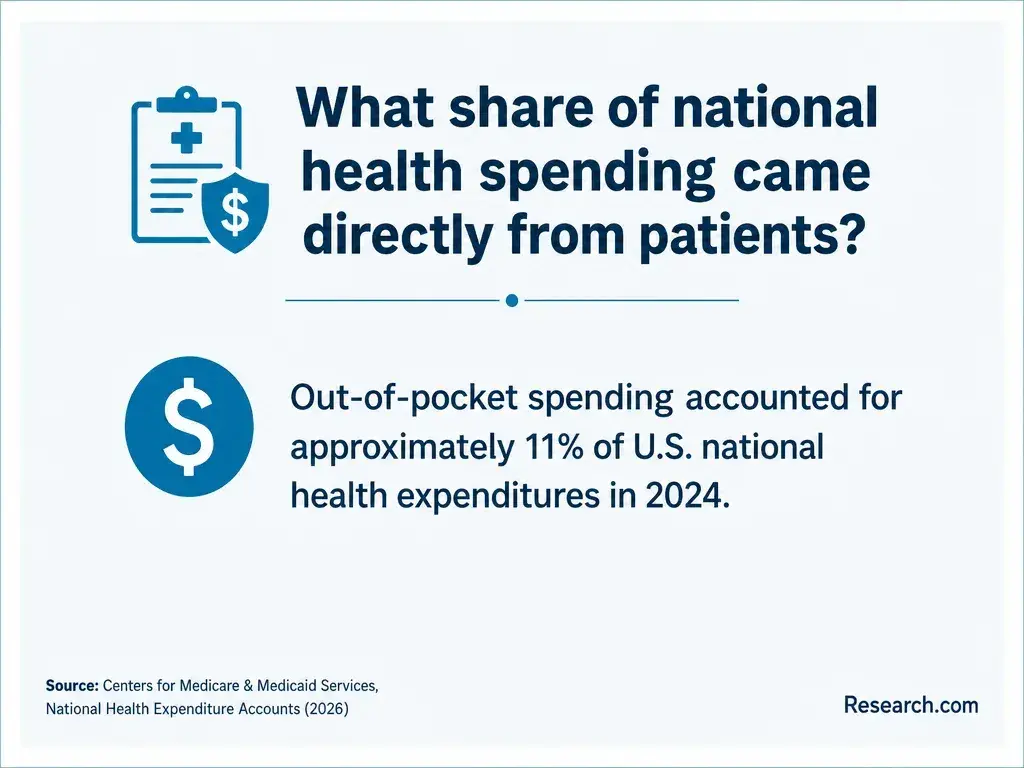
There is no single reliable price for a healthcare administration BS. Your cost depends on the school's tuition rate, credits accepted in transfer, mandatory fees, materials, and any required in-person experience. A published per-credit rate is not a total-degree quote, and an employer cap does not automatically cover fees or books.
Get an individualized degree audit and written cost estimate. Multiply the remaining required credits by the applicable tuition rate, then add mandatory fees and other required expenses. Subtract confirmed grants and employer funding only for expenses and terms they actually cover. Keep a separate estimate of cash needed before reimbursement arrives.
Compare two schedules: one that maximizes annual employer assistance and one that finishes at a pace you can sustain. The cheaper schedule on paper may involve extra terms or delayed advancement. Borrowing also adds financing costs. Longer-range plans deserve their own budget: cost-conscious doctoral education for healthcare administrators should not be treated as part of the bachelor's price comparison.
A student entering with no college credit often plans around a four-year undergraduate path; an adult learner's actual timeline depends on transfer credit, course availability, enrollment intensity, and required fieldwork. An online format does not guarantee that every needed course runs every term.
Annual caps create a timing trade-off. Taking fewer courses may preserve full reimbursement but lengthen the degree. Taking more may bring graduation closer while leaving some charges uncovered. Ask an advisor to map remaining requirements by term, including prerequisites and courses offered infrequently, then compare that map with your employer's reset dates. A delayed required course can matter more than a perfectly timed reimbursement.
Keep later credentials on a separate timeline. Resources on planning the duration of a healthcare administration doctorate address a different level of study and should not be used to estimate bachelor's completion.
Course names vary, but a healthcare administration BS commonly covers healthcare delivery systems, accounting or budgeting, human resources, quality improvement, health information, ethics, and healthcare law or policy. General education and business courses can account for a substantial share of the remaining degree, especially for students with few transfer credits.
Examine the catalog for applied projects, internships, or a capstone, and ask whether a current healthcare job can satisfy any experiential requirement. For someone hoping to manage clinic operations, courses that apply budgets, staffing, and quality measures to healthcare settings may be more useful than a catalog with many electives but little applied work.
Undergraduate management coursework is not interchangeable with advanced leadership study. For example, compare accelerated doctorates in healthcare leadership only if that later credential matches a defined career goal; it is not needed to choose a bachelor's curriculum.
An online degree can teach the same academic subject matter as a campus degree, but effectiveness depends on program quality and the learning opportunities you can actually use. Compare instructor access, feedback, group work, career support, and access to healthcare organizations—not just whether lectures are recorded. Confirm whether exams, meetings, internships, or a capstone require fixed hours or travel.
For a working student using an employer benefit, scheduling reliability is especially valuable: a required live session or placement that conflicts with work can interrupt the sequence of courses and the funding plan. If your eventual goal is graduate business education, healthcare-focused MBA scheduling and completion options illustrate another format comparison, but an MBA's broad management focus serves a different educational purpose than a bachelor's degree.
Requirements vary by school and by whether you apply as a first-year or transfer student. Expect to check the institution's rules for prior transcripts, high school completion or an equivalent credential, transfer-credit evaluation, and any program-specific prerequisites. An online program may have separate state authorization or placement restrictions even if its academic admission requirements are straightforward.
Apply early enough to receive a transfer evaluation before committing employer funds. Then confirm when admission, course registration, and employer preapproval must occur. If your benefit resets soon, online healthcare administration enrollment timing options may help you compare start dates—but a convenient start is useful only if your required courses are available afterward.
Start with the institution: verify its current accreditation through the U.S. Department of Education's accreditation database or the accreditor's own directory. Check that the status applies to the school awarding the degree, rather than relying on a marketing statement. Then ask whether the specific healthcare administration program holds any additional accreditation and whether that distinction matters to your intended employer or next degree.
Do not confuse healthcare administration with health information management (HIM). If your goal involves HIM-specific coursework or credentials, investigate online HIM programs accredited by CAHIIM instead of assuming a general administration degree meets the same expectations. Confirm any credential eligibility directly with the relevant credentialing organization.
Possible paths include clinic operations, patient access, revenue-cycle support, scheduling leadership, quality coordination, and administrative roles in hospitals, physician practices, or other care organizations. The appropriate entry point depends heavily on previous work. A patient-services employee may use the degree to compete for a supervisory opening; someone new to healthcare may first need an administrative or coordinator role to learn its workflows.
Review job postings in your local market for the experience, software knowledge, and supervisory responsibilities employers request. Use course projects or workplace assignments to show evidence of budgeting, process improvement, or team coordination. A bachelor's degree can support advancement, but it does not itself confer clinical licensure or immediate eligibility for a senior management position. For a substantial career transition, programs to consider for an MHA career change are worth comparing after you identify whether the target jobs favor graduate education, healthcare experience, or both.
What Are Healthcare Administration Salaries and Job Outlook Expectations?
Pay varies by occupation, location, organization, and responsibility level—not simply by degree title. The U.S. Bureau of Labor Statistics reports a May 2025 median annual wage of $126,520 for all management occupations. That broad figure includes experienced managers across industries; it is not an expected starting salary for healthcare administration BS graduates.
The BLS projects management occupations overall to grow faster than the average for all occupations from 2025 to 2035, but that projection is not specific to every healthcare administration role. For a useful personal estimate, compare local postings for the job you could reasonably pursue now with postings for the next role you want. Note required experience and responsibilities alongside pay. Healthcare administration roles and salary considerations can help frame that comparison without treating a high-paying title as an automatic degree outcome.
Other Things You Should Know About Healthcare Administration
Possibly, but the old benefit may end when your employment ends, and repayment rules may apply. Check your agreement before leaving and do not assume a new employer will cover courses already started.
No. Plans can impose approval and eligibility rules even for job-related education. Get approval in writing before enrolling in a course you expect the employer to fund.
Earned credits generally remain on your transcript, but readmission, catalog, and program requirements can change. Ask the school how a break would affect your degree plan and any employer funding deadlines.
No. Healthcare administration focuses on organizational operations; nursing programs prepare students for clinical practice and applicable licensure requirements. Choose based on the work you intend to do.
- Employer-offered educational assistance programs can help pay for college | Internal Revenue Service https://www.irs.gov/newsroom/employer-offered-educational-assistance-programs-can-help-pay-for-college
- Guide to Tuition Reimbursement and Education Benefits | stanford.edu https://online.stanford.edu/guide-tuition-reimbursement-and-education-benefits
- Online Healthcare Administration Degree | SNHU https://www.snhu.edu/online-degrees/bachelors/bs-in-healthcare-administration
- Strategic guide to tuition reimbursement - Purdue Business https://business.purdue.edu/graduate-programs/blog/posts/find-and-navigate-tuition-assistance.php
- and Ask For - Employer Tuition Reimbursement Benefits | Harvard Extension School https://extension.harvard.edu/blog/how-to-use-and-ask-for-employer-tuition-reimbursement-benefits/
- Company Tuition Reimbursement | Pepperdine University https://gsep.pepperdine.edu/student-life/services/student-accounts/companyreimbursement.htm
- Healthcare Administration Bachelor's Degree Program | Charter Oak State College https://www.charteroak.edu/health-care-administration/
- Employer Tuition Assistance: How to Use Your Workplace Education Benefits | American College of Healthcare Sciences https://achs.edu/blog/employer-tuition-assistance-workplace-benefits/
- Employer Tuition Assistance | Standard Healthcare Services, Inc. https://www.standardcollege.edu/financing-options/employer-tuition-assistance/