
2027 A Patient Complaint Theme Codebook: A Healthcare Administration Student Portfolio Project

Co-Founder and Chief Data Scientist
A patient complaint theme codebook can turn a healthcare administration assignment into evidence of how you define problems, handle sensitive information, and recommend operational improvements. The challenge is producing a project that is useful without treating private patient accounts as portfolio material. This guide is for students building a first project or strengthening an existing portfolio. It explains what to code, how to analyze patterns responsibly, what to show an employer, and when coursework or a graduate degree would add more value than another project.
Key Things You Should Know
- A strong portfolio project includes coding definitions, a privacy-safe dataset, an analysis of themes, and a recommendation - not just a chart of complaint counts.
- Use synthetic data unless you have appropriate authorization and institutional safeguards for real complaints; removing names alone does not necessarily de-identify patient information.
- The project can demonstrate quality-improvement and analytics skills, but it does not replace healthcare experience, clinical qualifications, or training for specialized roles.
What Is a Patient Complaint Theme Codebook in Healthcare Administration?
A patient complaint theme codebook is a documented set of labels and rules for classifying concerns expressed by patients or their representatives. Each code has a definition and boundaries: "access to appointments," for example, might cover difficulty scheduling a visit but exclude delays after a patient arrives. Analysts apply the rules consistently so administrators can distinguish recurring service issues from isolated accounts.
For a student portfolio, the codebook is one part of a larger project: a stated question, a permitted dataset, coded records, an explanation of the findings, and a proposed response. Complaint themes describe what people reported; they do not, by themselves, establish that an allegation occurred or explain its cause.
Students entering the field can build this project while exploring online bachelor's programs in health services administration. The project is a way to practice administrative reasoning, regardless of whether it is required by a particular program.
How Can Students Build a Patient Complaint Theme Codebook for Their Portfolio?
Start with a narrow operational question, such as which scheduling concerns appear in a fictional outpatient clinic's complaint narratives. A manageable scope makes coding decisions easier to defend. The following sequence produces a project that another analyst could understand and repeat.
- Define the setting and unit of analysis. Specify whether each record represents one complaint, one patient contact, or one concern within a contact.
- Choose a safe dataset. Write realistic synthetic complaints or use material your institution has explicitly approved for this purpose.
- Draft codes from the question and narratives. Give each code a short name, definition, inclusion rule, exclusion rule, and fictional example.
- Pilot the codebook. Code a subset, note ambiguous cases, revise definitions, and retain a dated record of changes.
- Analyze and report. Summarize themes, explain important limitations, and connect one feasible improvement to a process owner and a measure of success.
If you are moving from an associate program, check how project-based courses fit an associate degree transfer into healthcare management study. Credit transfer rules vary by institution; a portfolio artifact does not itself establish transfer credit.
Why Is Patient Complaint Analysis Important for Healthcare Administrators?
Complaints can reveal friction that routine operational reports miss: a scheduling process may meet its internal target while leaving patients confused about next steps. A consistent codebook helps administrators route concerns to the right teams, compare themes over time, and decide what needs investigation.
The distinction between signal and proof matters. Complaint volume depends on how easy it is to submit feedback, who feels comfortable doing so, and how staff record contacts. A rise in reports may reflect better access to the complaint channel rather than worsening care. Administrators should examine narratives alongside operational measures and follow applicable escalation procedures for urgent safety concerns; a student coding exercise is not a substitute for incident reporting.
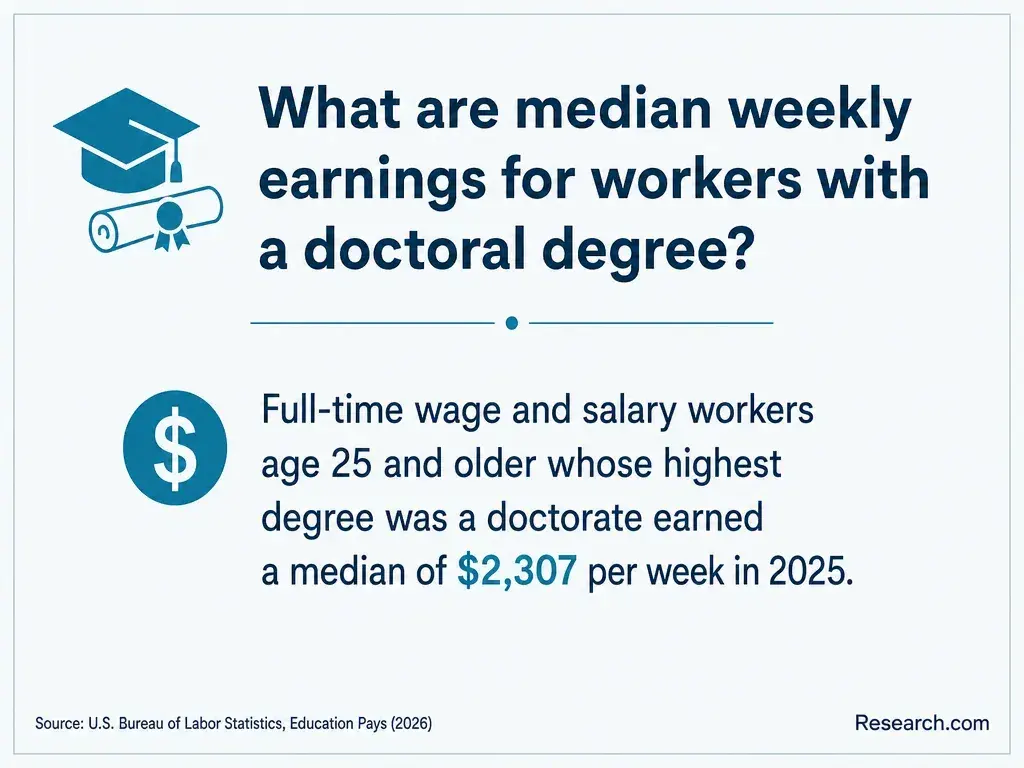
Systems-level quality improvement can eventually lead to research or executive study, but a doctorate is not necessary to perform an introductory complaint analysis. Professionals considering that longer path can compare advanced healthcare management degree pathways online against the research or leadership work they actually intend to do.
Categories should match the setting and decision at hand rather than follow a supposedly universal list. This example shows a workable starting taxonomy for general administrative complaints; the boundaries help prevent different coders from labeling the same concern inconsistently.
| Theme | Includes | Distinguish from |
| Access and scheduling | Difficulty obtaining, changing, or confirming an appointment | Waiting after arrival |
| Timeliness | Reported delays during a visit or in a promised response | Inability to book an appointment |
| Communication | Unclear explanations, unanswered messages, or inconsistent instructions | A disagreement solely about a charge |
| Respect and service | Reported discourtesy or dismissive interactions | Clinical conclusions about the encounter |
| Billing and coverage | Confusing charges, statements, or coverage communications | Appointment availability |
| Care environment | Concerns about cleanliness, wayfinding, noise, or accessibility of the space | Accessibility of booking or communication |
A complaint may need more than one theme. Document whether multiple codes are allowed and how to classify a narrative that contains too little information. Do not infer a clinical error from a patient's account of poor communication; preserve the reported concern and flag matters requiring qualified review.
Students without healthcare work experience can test these boundaries using fictional cases. If they later consider graduate training, healthcare administration master's entry without industry experience is a separate admissions question; project quality and program eligibility are not the same thing.
Synthetic complaints are the safest default for a public portfolio. Label them clearly as fictional. Real complaints may contain diagnoses, dates, locations, relationships, or unusual events that identify someone even after names are removed. Publicly posted reviews also deserve care: being visible online does not make a person's health story appropriate to copy into a student artifact.
If a course or employer offers access to actual records, use only the approved environment and permitted purpose. Follow its privacy, retention, access, and publication rules; ask who may approve excerpts or aggregate results before exporting anything. Where HIPAA applies, de-identification has specific standards, and deleting direct identifiers alone may not satisfy them. A research project may also require an institutional determination about review or exemption. Do not upload identifiable complaints to a personal account or an unapproved AI tool.
Protecting records is a professional competency, not merely a presentation choice. Students interested in deeper stewardship of health information can find online health information management programs accredited by CAHIIM; that specialized path differs from a general healthcare administration project.
A well-documented codebook shows that you can translate unstructured feedback into operational definitions, make consistent decisions, recognize uncertainty, and communicate findings to nontechnical stakeholders. A recommendation tied to a responsible team and a measurable process also demonstrates the beginnings of quality-improvement and change-management judgment.
Be precise about your contribution. A solo synthetic exercise demonstrates method and reasoning, not experience resolving actual patient grievances or leading a clinical team. If you are evaluating an MBA, distinguish its broad management core - such as operations, finance, and leadership - from the healthcare-specific knowledge this project practices. You can review fast-paced online healthcare MBA programs, but verify the actual curriculum and schedule before assuming a program develops complaint-analysis skills or fits your available time.
Count complaints by theme only after deciding what a count represents. If one complaint can receive several codes, theme totals will not equal the number of complaints. Show the reporting period and the volume of records reviewed, and avoid interpreting a small or selective sample as a reliable estimate of every patient's experience.
Compare like with like: changes in service location, complaint channels, or coding rules can create an apparent trend. Where approved operational data exists, an encounter-based denominator may add context, but it will not correct every reporting bias. Read representative narratives for process clues, then check a proposed explanation against other evidence - for example, scheduling logs or a documented workflow - before recommending a fix.
A useful final finding is conditional: "Repeated concerns about callback instructions suggest reviewing the messaging workflow," rather than "staff failed to return calls." Students who want more formal methods can consider comparing quicker routes to a healthcare management master's, while checking whether a particular curriculum actually teaches applied analytics and quality improvement.
Present the project as a short decision brief with a clearly labeled appendix. A hiring manager should be able to see the administrative question, data provenance, coding rules, main finding, limitations, and proposed next step without opening the full dataset. Include the codebook and a few fictional examples to make your judgment inspectable.
Separate observed themes from recommended action. State whether the work used synthetic data, whether anyone else checked the codes, and what additional evidence an organization would need before changing a workflow. Do not publish identifiable narratives, internal dashboards, or employer materials without explicit permission.
If you are choosing education partly to build a portfolio, compare the opportunities for supervised projects with total cost rather than assuming the most expensive degree produces the strongest artifact. Lower-cost graduate options for healthcare administration professionals may be worth examining when you need broader training but must limit education spending.
Look for courses that connect healthcare quality improvement with practical methods. Health informatics or introductory statistics can support data handling and interpretation; operations courses can help trace a complaint theme to a workflow; healthcare law and ethics can clarify responsibilities around privacy and escalation. Communication and organizational behavior matter when findings must be discussed with teams rather than merely charted.
Course titles alone are weak evidence. Ask whether students work with narrative data, document coding decisions, receive feedback on analysis, and complete an approved applied project. An MHA may offer more focused healthcare administration study than a general MBA, while an MBA may better fit someone seeking broader business management preparation. Students can use online MHA programs for advancing healthcare administration education as a starting point, then inspect individual course descriptions and project requirements.
How Can This Portfolio Project Support Healthcare Administration Career Goals?
For a student or early-career administrator, the project can supply a concrete interview example for patient experience, quality support, practice operations, or administrative analyst roles. Explain the decision you made, an ambiguity you resolved, and what you would verify before acting on the result in a real organization. Pair the artifact with relevant work experience, internships, or supervised projects where possible.
Career expectations should remain grounded. The U.S. Bureau of Labor Statistics reports a $126,520 median annual wage for management occupations in May 2025. That broad occupational figure is not an entry-level healthcare administration salary, a patient-experience salary, or a return promised by this project or an MBA. Employers may require experience, technical proficiency, or credentials beyond a portfolio example.
Choose further education according to the gap you need to close: targeted coursework for a specific method, an MHA for broader healthcare administration preparation, or an MBA when general management responsibilities justify its cost and time. Doctoral study is usually a later decision tied to advanced research, teaching, or leadership aims; those weighing it can investigate affordable healthcare administration doctoral pathways online without treating the degree as a prerequisite for complaint analysis.
Other Things You Should Know About Healthcare Administration
No. A spreadsheet and a text document can support a clearly defined, small-scale student project. Use only tools permitted for the type of data you handle.
Use a qualified, institution-approved translation process when accuracy matters. Record that translation occurred, and avoid interpreting ambiguous wording as a definite finding.
AI may assist with approved, nonidentifiable material, but its labels need human review against the codebook. Do not enter identifiable complaints into an unapproved tool.
No. Complaints are voluntarily reported accounts; surveys use their own questions and sampling methods. The two can provide complementary evidence, but their counts should not be treated as interchangeable.
- Six Domains of Healthcare Quality | Agency for Healthcare Research and Quality https://www.ahrq.gov/talkingquality/measures/six-domains.html
- Medical Error Prevention and Root Cause Analysis - NCBI - NIH https://www.ncbi.nlm.nih.gov/books/NBK570638/
- Patient complaints in healthcare systems: a systematic review and coding taxonomy - PubMed https://pubmed.ncbi.nlm.nih.gov/24876289/
- Descriptive Statistics for Summarising Data - PMC - NIH https://pmc.ncbi.nlm.nih.gov/articles/PMC7221239/
- Disclosure of Consumer Complaint Narrative Data | Federal Register https://www.federalregister.gov/documents/2015/03/24/2015-06722/disclosure-of-consumer-complaint-narrative-data
- Guidelines and quality criteria for artificial intelligence-based prediction models in healthcare: a scoping review https://www.nature.com/articles/s41746-021-00549-7
- Human Participant Data Considerations | Data Management and Sharing https://beckerdms.wustl.edu/resources/human-participant-data-considerations/
- Intercoder Reliability in Qualitative Research: Debates and Practical Guidelines - Cliodhna O'Connor, Helene Joffe, 2020 https://journals.sagepub.com/doi/10.1177/1609406919899220
- Project Planning - Institute for Healthcare Quality Improvement | UNC School of Medicine Office of Student Affairs https://www.med.unc.edu/ihqi/resource-center/project-plan/
- De-identification and Confidentiality of Research Data | ucsf.edu https://irb.ucsf.edu/content/de-identification-and-confidentiality-of-research-data


