2027 From Veterinary Receptionist to Human Healthcare Administration

Co-Founder and Chief Data Scientist
Veterinary receptionists already manage appointments, sensitive records, payments, and difficult conversations. Moving into human healthcare administration can build on that experience, but human healthcare has different privacy rules, insurance processes, and hiring expectations.
This guide explains which skills transfer, where to enter the field, and when a bachelor's degree, MHA, or healthcare-focused MBA is worth considering. It also covers online study, costs, credentials, and realistic career outcomes so you can choose a next step without assuming another degree is always necessary.
Key Things You Should Know
- Start with adjacent roles: Patient access, medical office coordination, and scheduling offer more realistic entry points than an immediate move into hospital management.
- Choose education for the job you want: A bachelor's degree may help meet entry or advancement requirements; an MHA or MBA usually makes more sense after you have human healthcare experience.
- Interpret pay data carefully: The May 2025 median wage of $126,520 for all U.S. management occupations describes a broad occupational group, not the likely starting pay for a veterinary receptionist changing fields.
What does a veterinary receptionist need to move into healthcare administration?
Healthcare administration is the business and operational side of care: coordinating patients, staff, records, finances, and services rather than diagnosing or treating patients. A veterinary receptionist's scheduling, client service, payment handling, and practice-software experience can transfer. The main gap is familiarity with human healthcare workflows, particularly health insurance, referrals, medical terminology, and patient privacy.
Employers may use "healthcare administration" for both front-office support and management jobs. Read the duties and experience requirements, not just the title. If you enjoy records and data quality more than daily operations, compare healthcare administration versus health information management degrees; they can prepare you for different work.
Which healthcare administration degree is best for veterinary receptionists?
The best choice depends on your current education and target role. You may not need a new degree to apply for patient-facing administrative jobs. A bachelor's degree can help if job postings require one or you want a longer-term route toward supervision. Graduate study is usually a later decision, once you know which part of human healthcare you want to manage.
The comparison below separates credentials by their most useful purpose - not by prestige.
| Option | Potential fit | Main limitation |
| Short courses or employer training | Learning terminology, insurance basics, or office systems before applying | May not satisfy degree requirements |
| Bachelor's in healthcare administration | Meeting degree requirements and building broad operational knowledge | Requires more time and expense than targeted training |
| Master of healthcare administration (MHA) | Developing healthcare-specific management expertise, often after gaining sector experience | Does not replace experience or guarantee a management job |
| MBA with a healthcare management focus | Building broad finance, strategy, and leadership skills for management across settings | Healthcare-specific coursework varies by program |
An MBA's general business core is not the same as an MHA's healthcare-centered curriculum. A healthcare elective also does not necessarily constitute a formal MBA concentration. Compare actual required courses and total cost; budget-friendly MBA study with a healthcare management focus may be worth exploring only if its management content serves your intended role.
How can veterinary receptionists transition into human healthcare administration?
The most practical transition is often veterinary front desk to human healthcare front desk to operational responsibility. This lets you demonstrate transferable service skills while learning the processes employers are unlikely to expect you to know from a veterinary practice.
Use these steps to test the move before committing to graduate tuition:
- Collect several local job postings for patient access, medical receptionist, and practice coordinator roles; note recurring software, insurance, and education requirements.
- Rewrite your résumé around measurable responsibilities you actually held, such as scheduling volume, payment reconciliation, records accuracy, or handling escalated client concerns.
- Learn the basics of human medical terminology, referrals, insurance verification, and privacy practices, then apply for roles that offer training.
- After gaining human healthcare experience, seek responsibility for workflow improvement, onboarding, scheduling, or reporting before deciding whether a degree would remove a specific advancement barrier.
If a bachelor's requirement is the obstacle, investigate transfer-credit rules and accelerated bachelor's study in health services administration. "Accelerated" does not mean prior credits will automatically transfer or that the workload will be manageable alongside full-time work.
Bachelor's programs commonly introduce healthcare organizations, budgeting, operations, ethics, quality, and health policy. An MHA generally develops these subjects at a management level, with attention to healthcare finance, service delivery, and organizational leadership. An MBA teaches a broader management core - such as accounting, finance, operations, and strategy - while healthcare-specific content depends on its verified concentration or electives.
For a career changer, the most valuable assignments may be those that connect coursework to a real patient-access or practice-operations problem. Ask whether an online program offers applied projects and whether you can complete them through your employer. Compare tuition comparisons for MHA and related master's programs alongside curriculum depth: the lowest tuition is less useful if the program lacks the coursework or practical experience your target jobs require.
Online study can teach the same management concepts, but its value depends on program design and your access to practical experience - not the delivery label alone. Check institutional accreditation, and verify any programmatic accreditation that matters to your goals. Also ask about live classes, group projects, exams, required visits, career services, and opportunities to work with healthcare employers.
For a working receptionist, asynchronous classes may make scheduling easier; live sessions and team assignments can still limit flexibility. Online healthcare MBA options with compressed terms may shorten the calendar while making each term more intense. Compare the weekly commitments and required courses before treating speed as an advantage.
Requirements vary by school and degree. Bachelor's applicants typically need evidence of secondary education and, if applicable, transcripts from prior college study. MHA and MBA applicants generally need a bachelor's degree; schools may also request a résumé, statement, recommendations, or an interview. Testing policies, minimum grades, prerequisites, and professional-experience expectations are program-specific.
Veterinary experience can support an application, but do not assume a school or employer counts it as human healthcare experience. Some MHA degree options for applicants changing sectors may consider candidates without that background. Before applying, ask admissions staff how your experience is evaluated, whether foundation courses are required, and how graduates obtain healthcare-specific practical experience.
Time and cost depend on transfer credits, required credits, enrollment pace, tuition structure, fees, and any in-person requirements. A part-time program may fit employment better but extend the period over which you pay fees. An intensive program may finish sooner while leaving less time to build human healthcare experience alongside it.
Request a written estimate covering tuition for all required credits, mandatory fees, books or software, travel, and expected completion time at your planned course load. Then subtract only funding you reasonably expect to receive, such as confirmed employer assistance. Compare that remaining cost with the requirements of jobs you would realistically pursue - not with senior-management salaries. If speed matters, review one-year healthcare administration master's choices, checking whether their pace permits the work experience your transition may still require.
Most general medical-office and healthcare operations roles do not have a universal administrator license. Requirements depend on the job and state. Nursing home administrators, for example, generally face state licensure requirements; a healthcare administration degree alone does not grant that license. Verify the relevant state board's education, examination, and experience rules before choosing a program for a regulated role.
Optional credentials can demonstrate specific skills, but they should follow your target job - not substitute for checking its requirements. Even an advanced degree is not a license. Low-tuition healthcare administration doctorate options are relevant to some later academic or high-level leadership goals, not a necessary first step out of veterinary reception.
Near-term opportunities include medical receptionist, patient access representative, scheduling coordinator, and medical office assistant. With human healthcare experience and demonstrated responsibility, possibilities may expand to practice coordinator, office manager, or operations supervisor. Larger facilities may require more specialized experience for comparable titles.
When assessing management career pathways within healthcare organizations, distinguish a role you could apply for now from one you might reach after managing staff, budgets, or services.
What are healthcare administration salaries and job prospects?
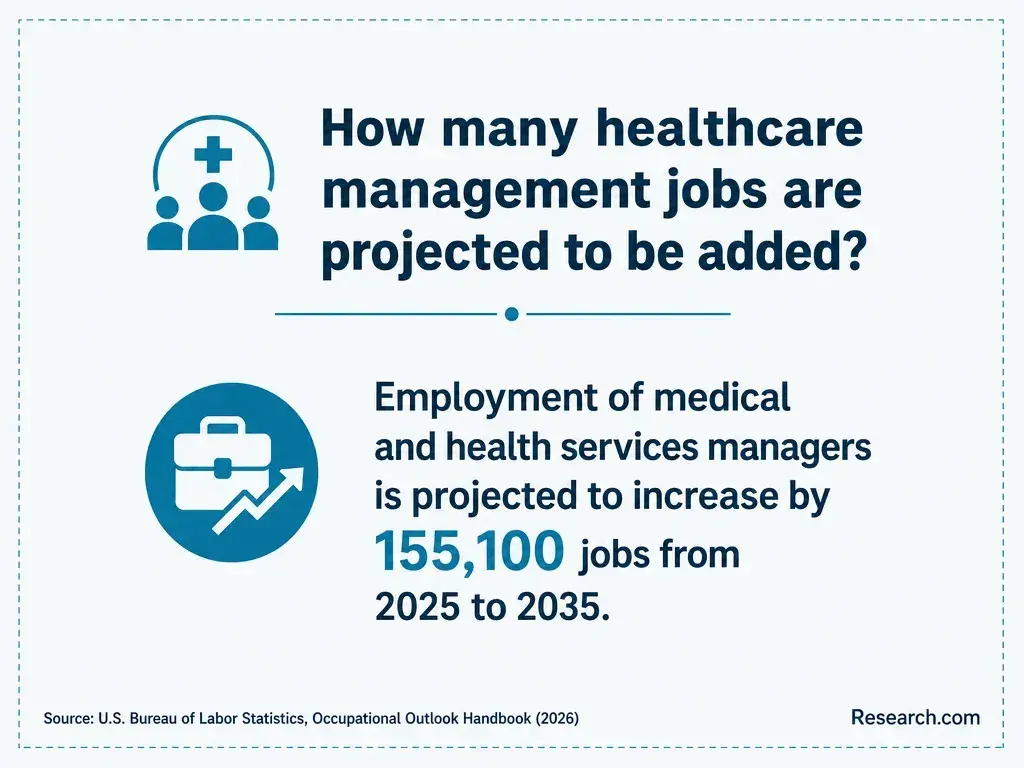
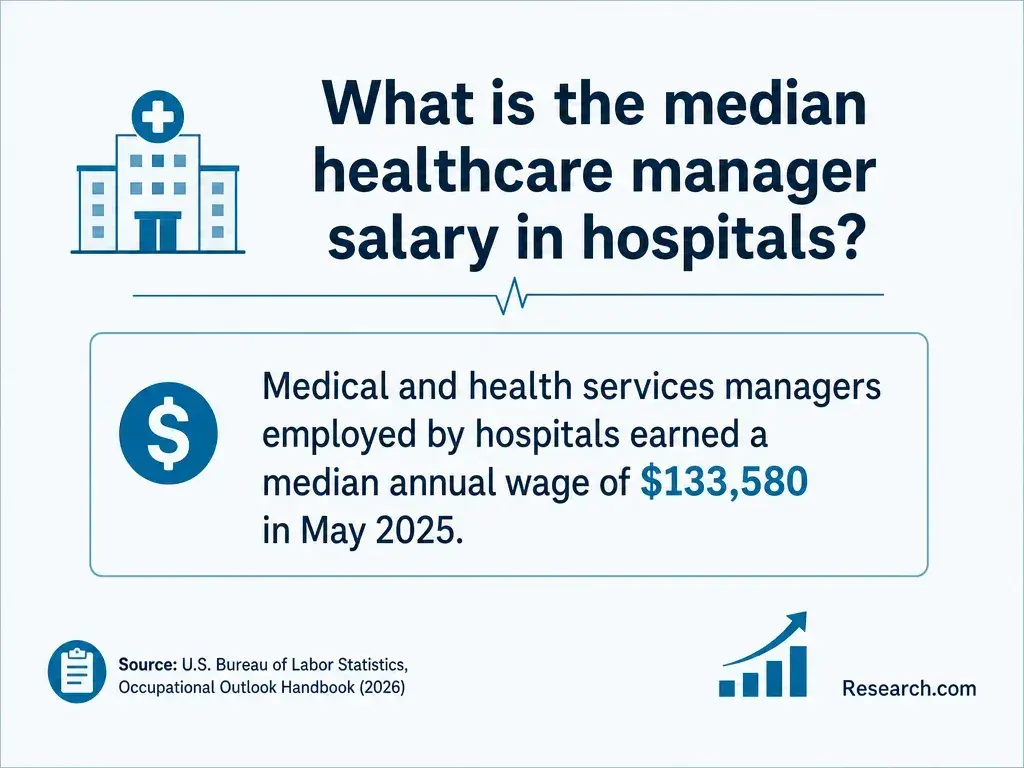
Pay varies substantially between front-desk work, office supervision, and senior management, as well as by employer and location. The U.S. Bureau of Labor Statistics reports a $126,520 median annual wage in May 2025 for management occupations overall. That figure covers many industries and experienced roles; it is not a healthcare-administration starting salary or an estimate of what an MHA or MBA will add to your pay.
BLS projects management employment overall to grow faster than the average for all occupations from 2025 to 2035, with about 1.1 million openings annually on average from growth and replacement needs. Those openings are not all in healthcare. For your own decision, compare local postings at your current experience level, their stated pay ranges and requirements, and the cost of any education needed to qualify. If a posting requires a bachelor's degree, rolling-start healthcare administration bachelor's programs may let you begin sooner, but a convenient start date should not outweigh cost, transfer-credit acceptance, and program fit.
Other Things You Should Know About Healthcare Administration
Yes, particularly if a supervisor can describe your reliability, confidentiality, accuracy, and work with distressed clients. A reference cannot attest to human healthcare skills you have not yet used.
No. Translate it into relevant duties, but identify the setting honestly. Calling veterinary scheduling "patient access" without explaining the context could mislead an employer.
Some scheduling, billing-support, and other administrative roles may be remote. Entry-level availability varies, and employers may require experience, specific systems knowledge, or a period of on-site training.
Compare job descriptions and speak with staff in each setting. Smaller clinics may offer varied front-office duties, while hospitals may divide scheduling, registration, and other functions among specialized teams.
- The interview process | VA Careers https://vacareers.va.gov/job-application-process/the-interview-process/
- Health insurance terms you should know | cms.gov https://www.cms.gov/initiatives/your-patient-rights/medical-bill-rights/get-help/guides-resources/terms-you-should-know
- Summary of the HIPAA Privacy Rule | hhs.gov https://www.hhs.gov/hipaa/for-professionals/privacy/laws-regulations/index.html
- A guide to a career path in health care administration | Capella University https://www.capella.edu/blog/health-sciences/how-to-start-and-grow-a-career-in-health-care-administration/
- Transferable Skills: How Past Jobs Boost Your Healthcare Career - Prism Career Institute https://prismcareerinstitute.edu/skills-from-your-old-job-that-will-help-you-in-healthcare/
- Healthcare Administration Salary Guide & Career Outlook | SIUE https://online.siue.edu/degrees/business/mba/healthcare-administration/hospital-administrator-salary/
- Healthcare Administration Certifications That Matter - Campus https://campus.edu/blog/healthcare/healthcare-administration-certifications
- Healthcare Administration Careers and Salaries | UW Online Collaboratives https://uwex.wisconsin.edu/stories-news/healthcare-administration-careers-and-salaries/
- Healthcare Administration Career Guide | American College of Education https://ace.edu/student-success/career-guides/healthcare-administration/
- Your Guide To Entry-Level Healthcare Administration Jobs | Noodle.com https://resources.noodle.com/articles/guide-to-entry-level-healthcare-administration-jobs/