2027 Public Health Policy vs Hospital Policy

Co-Founder and Chief Data Scientist
Public health policy and hospital policy both shape healthcare, but they solve problems at different levels. That distinction matters if you are choosing a degree, moving from clinical work into management, or considering a policy career. This guide compares the work, qualifications, online options, costs, and career prospects for each path. It also explains when an MPH, MHA, MBA, or another route is the better fit - so you can choose training for the decisions you actually want to make.
Key Things You Should Know
- Public health policy addresses population-level problems through government, community, and health-system action; hospital policy governs how an organization delivers care and operates.
- An MPH generally fits population-health policy work; an MHA or healthcare-focused MBA may better fit hospital management. None substitutes for experience or clinical licensure.
- The Bureau of Labor Statistics reports a $126,520 median annual wage for all management occupations in May 2025 - not a salary estimate for healthcare policy graduates.
What is the difference between public health policy and hospital policy?
Public health policy sets priorities or rules intended to improve health across populations. Examples include vaccination access, disease surveillance, injury prevention, and the distribution of public-health resources. Hospital policy consists of the rules and procedures a healthcare organization uses to manage care, staff, safety, finances, and compliance. A hospital may respond to a public-health requirement by changing its own procedures.
The comparison below shows where each type of policy is made and how success is judged. The boundaries overlap, but the primary decision-maker and population served usually reveal which field a role belongs to.
| Question | Public health policy | Hospital policy |
| Who is affected? | Communities or defined populations | Patients, staff, and operations within an organization |
| Who develops it? | Government agencies, legislators, and community or health-system partners | Hospital leadership and clinical, legal, compliance, and operational teams |
| What might it address? | Access to preventive services across a region | Procedures for infection prevention inside a hospital |
| How is it evaluated? | Population outcomes, equity, implementation, and public accountability | Patient safety, operational performance, compliance, and staff practice |
Hospital policy is also different from managing health records and information systems. If that distinction affects your degree choice, compare degree routes in healthcare administration and HIM.
Which degree prepares you for public health or hospital policy careers?
Choose a degree by the work you want to do, not by the word "healthcare" in its title. An MPH with policy coursework generally emphasizes population health, epidemiology, program evaluation, and policy analysis. It is often the more direct graduate route for work in health departments, advocacy organizations, and population-health programs.
An MHA is generally more focused on managing healthcare organizations, including operations, finance, quality, and regulation. A healthcare-focused MBA adds broad business training and may suit someone pursuing organizational leadership or a move between healthcare and other industries. Check the actual curriculum: a healthcare elective does not necessarily amount to a formal policy concentration. Readers comparing hospital leadership programs can explore MHA degree choices through online universities.
An MPP or MPA may fit work centered on government analysis, budgeting, or implementation. A graduate degree is not always necessary: relevant experience, a bachelor's degree, and targeted training may be a more direct route into an entry-level policy or operations position.
What careers can you pursue in public health and hospital policy?
Public health policy roles may involve researching proposed rules, analyzing community needs, evaluating programs, preparing briefings, or coordinating implementation. Employers can include health departments, government agencies, nonprofits, and healthcare systems. Hospital policy work may sit within quality improvement, compliance, patient safety, operations, or administration; responsibilities often include drafting procedures, consulting clinicians, training staff, and checking whether practice matches policy.
Your starting experience matters. A nurse may bring clinical credibility to a hospital quality team but still need budgeting or policy-analysis skills. A government analyst may understand regulation yet need direct healthcare operations experience to move into hospital leadership. For examples of organizational roles and progression, see healthcare administration employment paths and advancement. Treat senior job titles as potential destinations, not automatic outcomes of a degree.
Public health policy study commonly connects epidemiology and population data with policy analysis, ethics, equity, implementation, and program evaluation. Hospital-focused study typically emphasizes healthcare finance, operations, quality improvement, patient safety, regulation, and organizational leadership. Both paths benefit from the ability to interpret evidence, write usable recommendations, and work with people who have competing priorities.
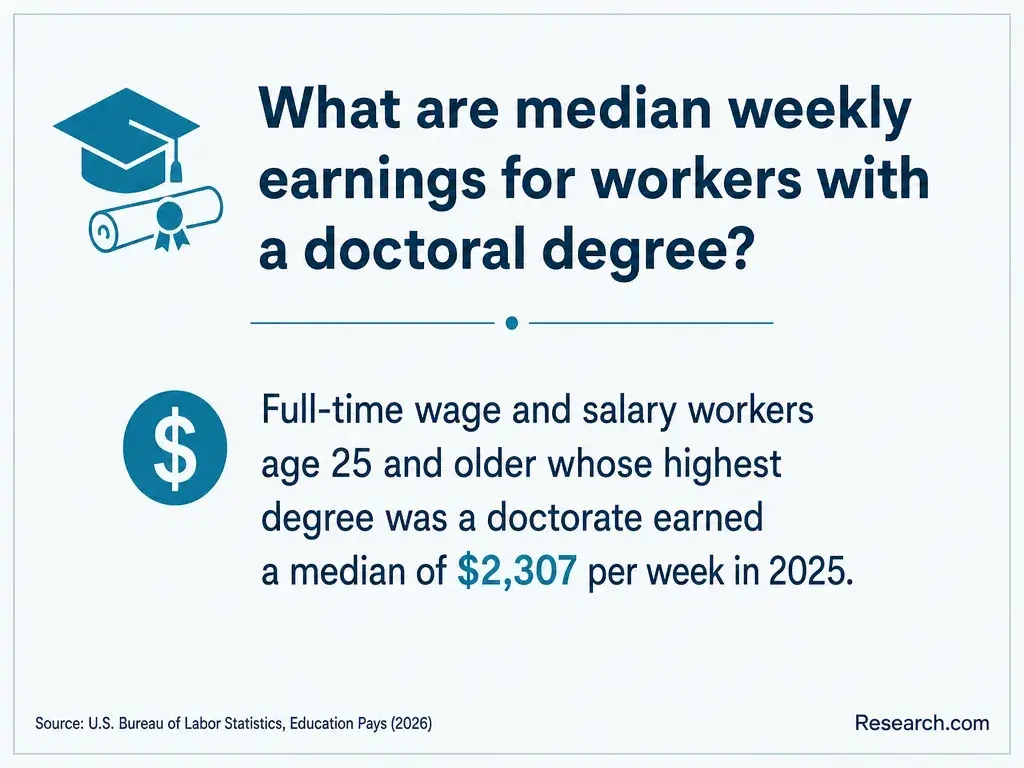
Program labels do not establish course depth. Compare syllabi and applied projects: a student aiming to assess a statewide prevention initiative needs different methods from one preparing to redesign a hospital discharge procedure. Doctoral study may support advanced research or leadership goals, but it is not the default preparation for either task. If you are considering that later step, examine what accelerated doctoral education for healthcare leadership roles actually requires.
Yes. Schools offer online public health, healthcare administration, and healthcare management degrees, though policy specializations and required activities vary. "Online" does not necessarily mean entirely asynchronous: a program may require live classes, group meetings, fieldwork, an internship, or campus visits. Ask whether placements can be completed near home and whether the school helps working students secure them.
For someone entering healthcare administration at the bachelor's level, online healthcare administration enrollment timing options may help with scheduling. Before applying, confirm that the particular start date, courses, and any practical requirements fit your work and caregiving commitments.
Completion time depends on the credential, required credits, enrollment pace, transfer credits, and whether fieldwork or a capstone is required. An accelerated calendar may shorten elapsed time without reducing the academic work. Working professionals should compare the published course sequence with their available time, especially if required classes are offered only in certain terms.
If speed is a priority for hospital-focused study, compare accelerated online healthcare management master's options against their credit load and practical requirements. Ask an adviser for a personalized completion plan rather than relying on the shortest advertised timeline.
Costs vary substantially by school, credential, residency status, and enrollment pattern. Compare total required credits multiplied by tuition per credit, then add mandatory fees, materials, technology, and any travel or placement expenses. Tuition alone is not the full cost. Part-time study may spread payments out, but it can also affect fees and the time available to earn a return on the investment.
For a hospital-focused route, lower-cost online degrees in healthcare administration can provide a starting point for comparison. Confirm each school's current charges and ask your employer about education assistance before borrowing. A policy analyst who does not need management training may spend less on a targeted course or certificate than on a full MBA.
Policy analysis and many hospital administration roles do not have a universal professional license. Requirements depend on the job: practicing medicine, nursing, or another regulated clinical profession requires the applicable license, even when policy work is part of the role. An employer may prefer a quality, compliance, or project-management credential, but a preferred certification should not be confused with a legal requirement.
Check the exact job posting and, for clinical duties, the relevant state licensing board. Neither an MBA nor a doctorate grants clinical authority. That distinction is worth keeping in mind when you review fast-track claims for healthcare administration doctorates: doctoral credentials have different purposes and should not be treated as interchangeable.
What are the salaries and job outlooks for policy professionals?
There is no single salary or employment forecast for "policy professional." Public-sector analysts, nonprofit staff, hospital compliance specialists, and senior executives have different responsibilities and pay structures. The Bureau of Labor Statistics reports that the median annual wage across all management occupations was $126,520 in May 2025. That broad figure describes management workers, not new graduates, public health policy analysts, or hospital policy staff specifically.
BLS projects management occupations overall to grow faster than the average for all occupations from 2025 to 2035, but that does not establish demand for a particular policy job. For a useful comparison, search openings in your location, note the required experience, and compare posted compensation with the full cost of your intended credential. If considering an advanced degree chiefly for earnings, financial planning for a healthcare administration doctoral degree can help frame the cost question; do not assume higher pay will result from enrollment alone.
Other Things You Should Know About Healthcare Administration
Approval authority depends on the hospital and the policy. Clinical leaders, executives, committees, or the governing body may review and approve different types of policies under the organization's governance rules.
It may be, provided the hospital's approach complies with applicable law and other binding requirements. Legal and clinical teams should review potential conflicts before a policy takes effect.
Look for a defined problem, access to appropriate data or stakeholders, a supervisor who can review your work, and a deliverable you can discuss with future employers without exposing confidential information.
Ask how policies are updated, who contributes to decisions, how staff receive training, and how the organization responds when a policy does not work as intended. The answers can reveal whether the role has meaningful input or mainly handles documentation.
- Health Policy - Healthy People 2030 https://odphp.health.gov/healthypeople/objectives-and-data/browse-objectives/health-policy
- Healthcare-Related Disaster Legal/ Regulatory/ Federal Policy | ASPR TRACIE https://asprtracie.hhs.gov/technical-resources/83/healthcare-related-disaster-legal-regulatory-federal-policy/1
- Policy Implementation | POLARIS https://www.cdc.gov/polaris/php/cdc-policy-process/policy-implementation.html
- Population health and public health: Commonalities... - PMC https://pmc.ncbi.nlm.nih.gov/articles/PMC11927948/
- Quality Indicator Resources | ahrq.gov https://qualityindicators.ahrq.gov/measures/qi_resources
- Office of Health Policy (HP) - HHS ASPE https://aspe.hhs.gov/about/offices/hp
- Infection prevention and control GLOBAL | who.int https://www.who.int/health-topics/infection-prevention-and-control
- What is Public Health Policy? | Columbia University Mailman School of Public Health https://www.publichealth.columbia.edu/news/public-health-policy-definition-examples-more
- Public Health Law as Administrative Law | lsu.edu https://biotech.law.lsu.edu/manual/adlaw-intro.htm