2027 Graduate Medical Education Director: Administrative Career Routes

Co-Founder and Chief Data Scientist
A graduate medical education (GME) director helps a teaching hospital run the systems behind residency and fellowship training. For professionals considering this career, the difficult decision is often whether to build experience first, pursue an MHA or MBA, or seek another qualification.
That choice matters because GME leadership combines healthcare operations with specialized accreditation and trainee-support responsibilities. This guide explains the role, realistic routes into it, and how to judge whether further education is worth the time and cost.
Key Things You Should Know
- A GME director usually leads administrative operations for residency and fellowship programs; the title does not automatically mean the person is an ACGME-designated program director or designated institutional official.
- Relevant GME experience and knowledge of accreditation requirements can matter more than an MBA alone; compare an MHA, healthcare-focused MBA, and employer-supported training against the duties in actual postings.
- There is no reliable national salary figure for GME directors specifically. The Bureau of Labor Statistics reports a $126,520 median annual wage for the much broader group of management occupations in May 2025, not for GME administrators.
What does a graduate medical education director do?
Graduate medical education is the supervised training physicians undertake in residency and fellowship programs after medical school. A GME director typically manages the administrative infrastructure that allows a teaching institution and its programs to recruit, train, support, and track those physicians.
Depending on the employer, the work can include supervising program coordinators, maintaining accreditation documentation, preparing for reviews, supporting the graduate medical education committee, managing budgets, coordinating contracts and onboarding, and improving trainee-support processes. Directors work closely with physician program directors, faculty, finance and human resources teams, and institutional leaders.
The title needs careful reading. An administrative GME director is not necessarily a physician. An Accreditation Council for Graduate Medical Education (ACGME) program director leads an individual accredited training program, while the designated institutional official (DIO) oversees the institution's ACGME-sponsored programs. Employers may distribute administrative responsibilities differently, so compare a posting's reporting line and decision-making authority - not its title alone.
For someone starting in healthcare administration rather than moving up from a residency office, a bachelor's degree can provide a foundation. A healthcare administration bachelor's transfer pathway is one route into entry-level administrative work, but it does not replace direct exposure to GME operations.
What are the requirements to become a graduate medical education director?
There is no single national license or degree requirement for the administrative title "GME director." Employers set their own qualifications, often seeking a bachelor's degree, progressively responsible experience in GME or academic medicine, supervisory ability, and familiarity with accreditation processes. Some prefer a graduate degree for broader institutional leadership roles.
Strong candidates can explain how they have handled deadlines, protected sensitive trainee information, supported program reviews, resolved operational problems, and worked with clinical leaders. Experience using an employer's residency-management systems may help, but proficiency in one product is less important than understanding the processes it supports.
If you do not yet have a degree, assess online healthcare administration bachelor's degrees at accredited universities alongside local opportunities to work in a teaching hospital. If you already have a bachelor's degree and substantial GME experience, another degree may be less urgent than obtaining budget or staff-management responsibility.

Which degrees prepare professionals for graduate medical education administration?
The best degree depends on the gap between your current responsibilities and the director job you want. None is a universal credential for GME leadership.
The comparison below separates broad management training from healthcare-specific study so you can match a program to the work you still need to learn.
| Education route | Most useful for | Main limitation |
| Bachelor's in healthcare administration or a related field | Building an administrative foundation and qualifying for many entry-level roles | Usually insufficient by itself for a director role |
| Master of Health Administration (MHA) | Healthcare operations, finance, policy, and organizational leadership | GME-specific content and practical placements vary by program |
| MBA, potentially with healthcare coursework | Budgeting, strategy, people management, and leadership across functions | A healthcare elective or concentration may not teach accreditation or residency operations |
| Targeted courses or employer training | Addressing a defined GME skill gap while continuing to work | Less breadth than a graduate degree |
Compare course lists and applied projects, not degree labels alone. An MBA can be valuable for a coordinator moving into institution-wide management; an MHA may fit someone seeking deeper healthcare-system preparation. Review online MHA options for healthcare administration study against the skills requested in the jobs you intend to pursue.
Usually, administrative degree programs do not require applicants to hold a clinical license. Admissions rules vary, however, and some programs expect professional experience or include placements that require access to a healthcare organization. Check each school's published requirements rather than treating a preferred background as a universal prerequisite.
Clinical experience and GME experience are different. A nurse or physician may understand patient care but still need to learn residency accreditation and administration. A nonclinician who has coordinated residency programs may already possess highly relevant operational knowledge. If you are entering healthcare from another industry, comparing MHA experience requirements for non-healthcare applicants can help you distinguish accessible programs from those better suited to established healthcare professionals.
For a substantial career change, look for a feasible way to gain teaching-hospital experience while studying. A degree alone is unlikely to make an applicant competitive for an institutional GME leadership post.
Healthcare administration programs commonly address budgeting, organizational leadership, quality, policy, ethics, and healthcare operations. These subjects transfer to GME decisions about staffing, training resources, institutional accountability, and process improvement. An MBA generally approaches them through a broader management core; an MHA generally places more of the coursework in healthcare settings.
Neither degree should be assumed to cover the detailed work of preparing ACGME documentation, interpreting institutional requirements, or administering residency recruitment. Examine syllabi, electives, capstones, and opportunities to complete a project in an academic medical center. Ask whether faculty or placement partners have GME experience.
Doctoral study is a different decision, generally more relevant to research, teaching, or certain executive goals than to routine eligibility for a GME director job. If those goals matter to you, choosing between healthcare management doctoral study routes requires attention to the research or applied-project work involved - not just the healthcare management topics advertised.
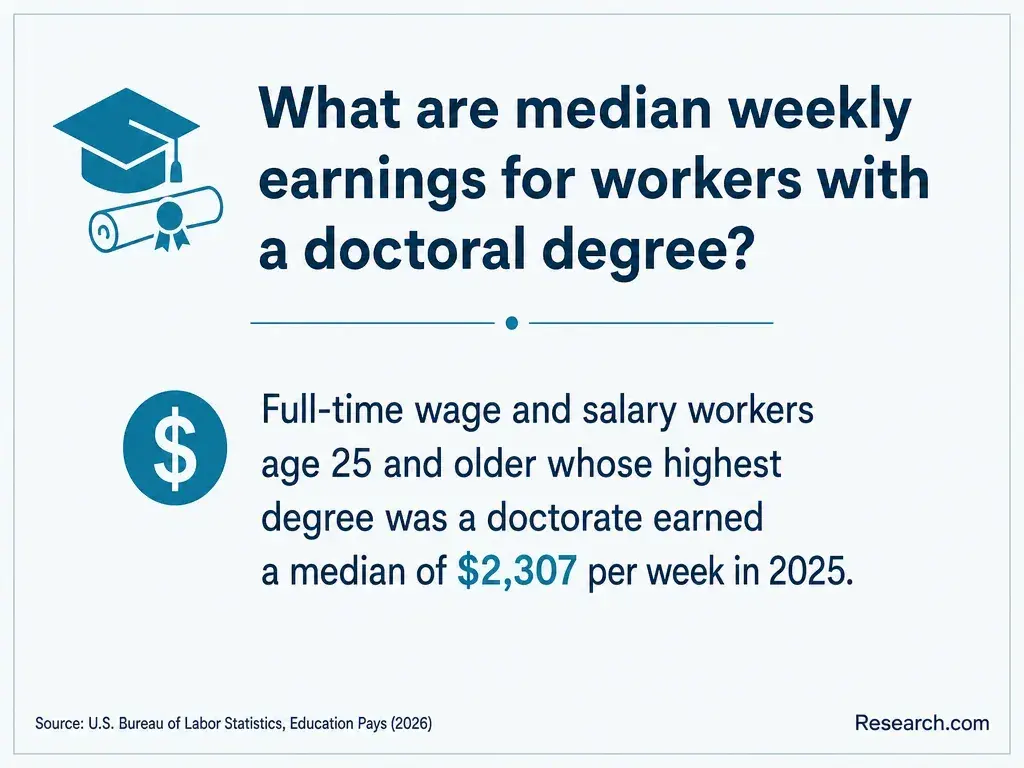
Yes, an online degree can suit a working GME coordinator or healthcare administrator who needs management education without leaving a job. Online delivery does not, by itself, establish program quality or scheduling flexibility. Confirm institutional accreditation, the curriculum, faculty expertise, and whether a relevant applied project is possible.
Before enrolling, ask whether classes have required live meetings, whether group projects create evening commitments, and whether any internship, residency, or campus visit is mandatory. A working professional should also check course sequencing and leave policies: a program that admits students part-time may still offer a needed course infrequently.
If you are considering an online doctorate rather than a master's degree, account separately for its research or final-project demands. A comparison of doctoral healthcare administration duration and project requirements may clarify that commitment, but a doctorate is not the default next step for administrative GME advancement.
Time and cost vary substantially by credential, required credits, enrollment pace, tuition policy, and fees. A bachelor's degree may take longer if few prior credits transfer. A working professional may complete a master's degree over several terms or take longer at a lighter course load. Do not use another school's advertised completion time as your own expected timeline.
For an MHA or MBA, request the required credit total and a written estimate covering tuition, mandatory fees, materials, and any travel or placement expenses. Ask how employer reimbursement, course load, and a pause in enrollment would affect your out-of-pocket cost. If an MBA appeals to you, a healthcare management MBA completion timeline comparison can help frame the scheduling question; verify the current format and total price directly with each school.
A useful personal comparison is the incremental cost of each route: what would you pay, and what work opportunities might you forgo, compared with staying employed and taking targeted courses? Without a credible estimate of your likely promotion prospects, a precise degree payback calculation would be misleading.
Certification can document specialized knowledge, but it does not replace experience or automatically qualify someone for a director position. Training Administrators of Graduate Medical Education (TAGME) offers a credential relevant to GME administrators; applicants should check its current eligibility and examination rules before planning around it. Healthcare leadership credentials may be useful for broader administrative goals, subject to their own experience and other requirements.
Choose a credential by the problem it solves. If you already manage accreditation workflows, a GME-focused certification may make that expertise easier to demonstrate. If your gap is budgeting or supervising multiple teams, a course, mentorship assignment, or graduate management education may be more useful.
A doctorate is not a substitute for a targeted certification or missing operational experience. Professionals weighing that larger investment should compare healthcare administration doctoral costs beyond advertised tuition with the requirements of the roles they actually want.
The most direct route often begins in a residency or fellowship office. Program coordinators learn recruitment, onboarding, documentation, trainee support, and accreditation cycles. Senior coordinators, GME managers, and assistant or associate directors may then gain responsibility for multiple programs, staff, budgets, or institution-wide processes.
An adjacent route can begin in medical education, academic hospital operations, or healthcare administration. Those professionals should seek assignments that expose them to residency governance and ACGME requirements rather than assuming general management experience will transfer without adjustment.
For someone already managing GME operations, a graduate degree may support a broader leadership application; for someone new to the field, relevant work experience is usually the more immediate priority. If formal study would fill a clear gap but a long program is impractical, consider healthcare administration master's options with a one-year format while checking whether the pace allows you to keep gaining experience.
What salary and job outlook can GME administrators expect?
Compensation varies with institution size, location, scope of responsibility, and whether a job manages one program or an entire GME office. There is no dependable Bureau of Labor Statistics salary series specifically for GME directors, so a broad management median should not be treated as an offer benchmark.
The Bureau of Labor Statistics reports that the median annual wage for all management occupations was $126,520 in May 2025. That figure covers many unrelated occupations and career stages. Its value here is limited to broad context; current GME director postings in your target market are more useful for setting salary expectations. BLS projects about 1.1 million management-occupation openings annually, on average, from 2025 to 2035, but that projection likewise does not measure GME openings.
Before paying for another degree, compare local job requirements with your existing qualifications and likely compensation change. If the missing qualification is a bachelor's degree, review lower-cost online degrees in healthcare administration. If you already meet education requirements, pursuing multi-program responsibility or supervisory experience may offer a more direct route to advancement.
Other Things You Should Know About Healthcare Administration
GME covers physicians' structured residency and fellowship training. Continuing medical education supports ongoing learning for practicing clinicians. The teams, reporting requirements, and administrative workflows can differ.
Not necessarily. Physician program leaders and selection committees generally make applicant-selection decisions. An administrative GME director may oversee recruitment systems, deadlines, policies, and coordination across programs.
No. Undergraduate medical education refers to medical school. GME follows medical school and covers residency and fellowship training, though the same academic health system may support both.
Some administrative tasks can be performed remotely, but the answer depends on the employer. Meetings, trainee support, reviews, and hospital relationships may require an on-site or hybrid presence; check the posting's location expectations.
- The Expanding Role of Designated Institutional Officials in Graduate Medical Education - PubMed https://pubmed.ncbi.nlm.nih.gov/39761519/
- The DIO Needs a Cabinet: Identifying and Supporting... - PMC https://pmc.ncbi.nlm.nih.gov/articles/PMC10829925/
- Program Director Position Description - UW Sites https://sites.uw.edu/uwgme/pds/program-director-position-description/
- Professional Development " Graduate Medical Education " | ufl.edu https://gme.med.ufl.edu/program-directors-corner/professional-development/
- gme-director-of-education-operations-manager-detailed-job-description-2019.pdf | U of U School of Medicine https://medicine.utah.edu/documents/gme-director-of-education-operations-manager-detailed-job-description-2019pdf
- The Role of the Designated Institutional Official | McGovern Medical School https://med.uth.edu/gme/general-information/the-graduate-medical-education-committee/the-role-of-the-acgme-dio/
- Guide to the Common Program Requirements | acgme.org https://www.acgme.org/education-and-resources/program-directors-guide-to-the-common-program-requirements/
- Glossary | acgme-i.org https://www.acgme-i.org/accreditation-process/glossary/