2027 Shortest Online Healthcare Administration Doctorate Programs: Fast PhD, DBA, EdD, DNP, PsyD, and Professional Doctorate Options

Co-Founder and Chief Data Scientist
Choosing the shortest online healthcare administration doctorate is really a choice between speed, workload, accreditation, and career fit. The stakes are high: the U.S. Bureau of Labor Statistics' May 2024 wage estimates place the median annual wage for medical and health services managers at $117,960, making advanced leadership credentials attractive for experienced professionals.
This guide is for healthcare managers, nurses, educators, consultants, and executives comparing fast PhD, DBA, EdD, DNP, PsyD, and professional doctorate pathways so they can identify the quickest realistic route without sacrificing quality or long-term value.
Key Things You Should Know
- The fastest online healthcare administration doctorates are usually professional or applied programs such as DHA, DBA, EdD, and executive DNP tracks, often designed around 2 to 3 years of full-time study after a master's degree.
- PhD and PsyD pathways are usually slower because they often require deeper research training, dissertation work, clinical requirements, practica, internships, or faculty-supervised scholarship.
- Speed should be compared against total cost, accreditation, faculty support, residency requirements, and the BLS May 2024 median wage of $117,960 for medical and health services managers, not just the school's advertised "fastest" completion time.
Which Online Healthcare Administration Doctorate Programs Can Be Completed the Fastest?
The shortest online healthcare administration doctorate programs are typically post-master's, professionally focused doctorates that replace a traditional dissertation with an applied doctoral project, capstone, or problem-of-practice study. Students who already hold a relevant graduate degree, have a clear research topic, and can enroll year-round usually move the fastest.
Many students searching for fast doctoral options are also comparing accelerated healthcare programs at earlier degree levels, because prior graduate coursework can affect doctoral readiness. At the doctorate level, however, "accelerated" usually means compressed terms, fewer electives, continuous enrollment, or an applied project structure rather than a shortened academic standard.
The table below summarizes the fastest common online healthcare administration doctorate pathways. These are not promises from specific schools; they are realistic ranges students often see when comparing full-time, post-master's programs:
| Doctorate type | Common online healthcare administration focus | Fastest realistic completion range | Why it may be fast or slow |
| DHA or professional doctorate in healthcare administration | Healthcare leadership, systems improvement, operations, policy, executive practice | About 2 to 3 years | Often built for working executives and may use an applied project instead of a traditional dissertation |
| DBA in healthcare management | Strategy, finance, organizational leadership, healthcare business analytics | About 2.5 to 3.5 years | Can be fast when coursework is structured in short terms, but the doctoral research project can still extend the timeline |
| EdD in healthcare leadership | Academic leadership, workforce development, interprofessional education, organizational change | About 2.5 to 4 years | Applied dissertations can move faster when tied to the student's workplace |
| DNP in executive leadership | Nursing leadership, quality improvement, systems leadership, population health | About 2 to 3 years for many post-master's tracks | Fast for advanced nurses, but practicum hours and DNP project requirements can be substantial |
| PhD in healthcare administration or health services | Research, policy analysis, academic scholarship, health systems science | About 3 to 5+ years | Research methods, comprehensive exams, and a dissertation usually make this less likely to be the shortest path |
| PsyD with healthcare leadership relevance | Behavioral health administration, integrated care leadership, clinical systems | About 4 to 6+ years | Usually designed for psychology practice, not healthcare administration alone, and may include clinical training requirements |
The key takeaway is that the fastest program is rarely the one with the shortest marketing claim. The fastest program is the one whose degree type, project model, credit requirements, and scheduling format match what you can realistically complete.
Which Type of Online Healthcare Administration Doctorate Offers the Fastest Path to Graduation?
For most experienced healthcare administrators, the fastest path is an applied professional doctorate rather than a research-first PhD. A DHA, DBA, EdD, or executive DNP is often designed around solving real organizational problems, while a PhD is designed to produce original scholarly research that can withstand academic review.
The best degree type depends on the role you want after graduation. The table below compares common doctorate options by career purpose, speed, and fit:
| Degree type | Best fit | Usually fastest for | Less ideal if |
| DHA or professional doctorate | Healthcare executives, directors, administrators, policy leaders | Students who want an applied leadership credential focused directly on healthcare systems | You want a tenure-track research career that strongly prefers a PhD |
| DBA | Healthcare business leaders, consultants, finance leaders, strategy executives | Students who want doctoral-level business training with healthcare applications | You want a clinically oriented or nursing-specific doctorate |
| EdD | Healthcare educators, academic administrators, workforce training leaders | Students whose doctoral project can be completed inside an education or training environment | Your goal is senior hospital operations rather than education, learning systems, or leadership development |
| DNP | Nurse executives, chief nursing officers, quality and safety leaders | Licensed nurses who already meet advanced nursing admission requirements | You are not a nurse or do not need a nursing practice doctorate |
| PhD | Researchers, policy scholars, faculty, health services researchers | Students with strong research preparation and a clear dissertation agenda | Your main priority is the shortest applied executive credential |
| PsyD | Clinical psychology leaders, behavioral health administrators, integrated care professionals | Students pursuing psychology practice with administrative interests | You want a general healthcare administration doctorate without clinical psychology requirements |
A fast PhD may exist, but students should be cautious with that phrase. PhD completion depends heavily on dissertation progress, data access, committee feedback, and research design. If your goal is executive advancement rather than academic research, a DHA, DBA, EdD, or DNP may offer a more direct and predictable timeline.
What Program Features Help Students Finish an Online Healthcare Administration Doctorate Faster?
Program design has a major impact on completion time. Students who already hold a relevant graduate credential, such as a masters in healthcare administration, may be better positioned for accelerated doctoral study because they have already completed graduate work in healthcare finance, policy, ethics, quality, and organizational leadership.
When comparing short online doctorates, look for features that reduce waiting time, administrative friction, and late-stage project delays. The most useful features are practical, not cosmetic:
- Post-master's entry: Programs built for students who already have a graduate degree often require fewer foundational courses than programs admitting bachelor's-prepared students.
- Year-round or multiple start dates: Six-, seven-, or eight-week terms can help students complete credits faster if courses are offered continuously.
- Embedded doctoral project milestones: Programs that require topic approval, literature review drafts, methods planning, and committee checkpoints during coursework can reduce the "all-but-dissertation" risk.
- Applied capstone or project model: A workplace-based improvement project may move faster than a traditional dissertation if the student has access to data, stakeholders, and leadership support.
- Clear residency expectations: Fully online or low-residency programs are easier to schedule than programs with frequent campus visits, especially for executives and clinicians.
- Dedicated dissertation or project mentoring: Fast programs usually provide structured faculty support instead of leaving students to locate committee members late in the process.
- Transfer or advanced standing policies: Some schools allow approved graduate credits to reduce total coursework, but policies vary widely and often exclude doctoral research courses.
A common mistake is assuming that short courses automatically mean a short doctorate. Accelerated terms help only when required courses are available in sequence and when the doctoral project is integrated early enough to prevent bottlenecks.
What Requirements Most Commonly Extend the Length of an Online Healthcare Administration Doctorate?
The requirements that slow students down are usually not the weekly readings or discussion boards. Delays most often occur during research approval, project design, residency scheduling, committee review, practicum documentation, or data collection.
The table below explains the requirements most likely to extend the timeline and why students should evaluate them before enrolling:
| Requirement | How it can delay graduation | What to verify before enrolling |
| Dissertation | Topic approval, data access, methodology changes, and committee revisions can add terms | Ask for average dissertation completion time, not only minimum program length |
| Applied doctoral project | Projects can stall if workplace access, leadership approval, or measurable outcomes are unclear | Ask whether project planning begins during coursework |
| Residency or immersion | Required campus weekends or intensive sessions can conflict with work, travel, or caregiving | Ask how many visits are required and whether virtual options exist |
| DNP practicum hours | Clinical or leadership practice hours require approved settings, preceptors, and documentation | Ask who secures placements and how hours are tracked |
| Comprehensive exams | Failed or delayed exams can postpone candidacy and dissertation enrollment | Ask about exam timing, retake policies, and preparation support |
| Institutional Review Board approval | Human-subjects review can take longer if the project uses patient, employee, or organizational data | Ask whether the school provides templates for low-risk administrative studies |
Students can avoid many delays by choosing a program where the final project aligns with their current workplace. However, that strategy works only if the employer allows access to data, staff interviews, quality metrics, or operational records needed for the project.
Before enrolling, ask the admissions team and program director direct questions that reveal whether the advertised timeline is realistic:
- What is the median time to completion for students who work full time?
- How many students finish within the advertised accelerated timeline?
- When are students assigned dissertation or project chairs?
- How often do committees meet with students during the final project stage?
- Are there extra fees for dissertation continuation, project extension, or additional research terms?
How Do Enrollment Choices Affect Completion Time in an Online Healthcare Administration Doctorate?
Enrollment pace is one of the biggest differences between an advertised fast doctorate and a realistic one. Full-time study may shorten the calendar, but it can also create workload pressure for healthcare professionals who manage rotating schedules, executive responsibilities, clinical shifts, or family obligations.
The table below shows how common enrollment choices affect completion time and risk. Use it to identify the pace that matches your actual availability rather than your ideal schedule:
| Enrollment choice | Typical effect on completion time | Best for | Main risk |
| Full-time, year-round | Fastest calendar path | Students with flexible work schedules, strong writing skills, and a defined project topic | Burnout, lower project quality, or course withdrawal if workload is underestimated |
| Part-time continuous enrollment | Slower but steady | Working executives, clinicians, parents, and students with unpredictable schedules | Higher total fees if the program charges by term or requires continuation enrollment |
| Cohort model | Predictable if the student stays on track | Students who benefit from structure, peer accountability, and fixed course sequencing | Falling behind can mean waiting for the next cohort course cycle |
| Self-paced or competency-based elements | Can be faster for highly independent students | Students with strong prior knowledge and disciplined study habits | Progress can slow without external deadlines or faculty interaction |
| Leave of absence or stop-out | Usually extends completion significantly | Students facing unavoidable work, health, or family disruptions | Curriculum changes, reactivation fees, or lost momentum |
Students often finish faster when they choose a sustainable pace from the beginning. A part-time plan that prevents withdrawal may be faster in practice than an aggressive full-time plan that leads to repeated breaks.
Which Online Healthcare Administration Doctorate Programs Are Best for Working Professionals?
The best online healthcare administration doctorate for working professionals is usually one that combines asynchronous coursework, predictable deadlines, limited residency requirements, and a final project connected to the student's current role.
Flexibility matters because healthcare leaders often work beyond standard business hours and may be responsible for compliance, staffing, budgets, accreditation readiness, or emergency response.
Different working professionals need different program structures. The following matches common professional profiles with the doctorate features that usually support faster, more realistic completion:
- Hospital and health system administrators: A DHA or DBA with an applied operations, finance, or quality improvement project can align well with executive responsibilities.
- Nurse leaders: A DNP in executive leadership may be the most relevant option when the student needs a nursing practice credential tied to systems leadership.
- Healthcare educators and training directors: An EdD focused on leadership, adult learning, or workforce development can be useful when the goal is academic administration or staff development.
- Consultants and strategy professionals: A DBA can support work in healthcare markets, organizational performance, analytics, and transformation initiatives.
- Future faculty or researchers: A PhD is usually the stronger fit when research productivity, publishing, and academic credibility matter more than speed.
Online learning trends also matter. Many programs now use synchronous video sessions, learning analytics, online research libraries, virtual simulations, and AI-use policies.
Students should ask whether live sessions are optional, whether proctored exams are required, and whether AI tools are permitted for administrative tasks such as citation management or literature organization.
Does Finishing an Online Healthcare Administration Doctorate Faster Affect Cost or Academic Quality?
Finishing faster can reduce total cost when the school charges term-based fees or when fewer semesters mean fewer technology, registration, residency, or continuation charges. But speed does not automatically mean better value. A cheaper or shorter program can become expensive if poor support causes extra dissertation terms, delayed graduation, or withdrawal.
Students comparing doctoral costs often start by reviewing the cheapest online healthcare administration degree options, but doctoral affordability requires a broader calculation. Include tuition, fees, residencies, books, software, travel, lost income from reduced work hours, and interest if borrowing.
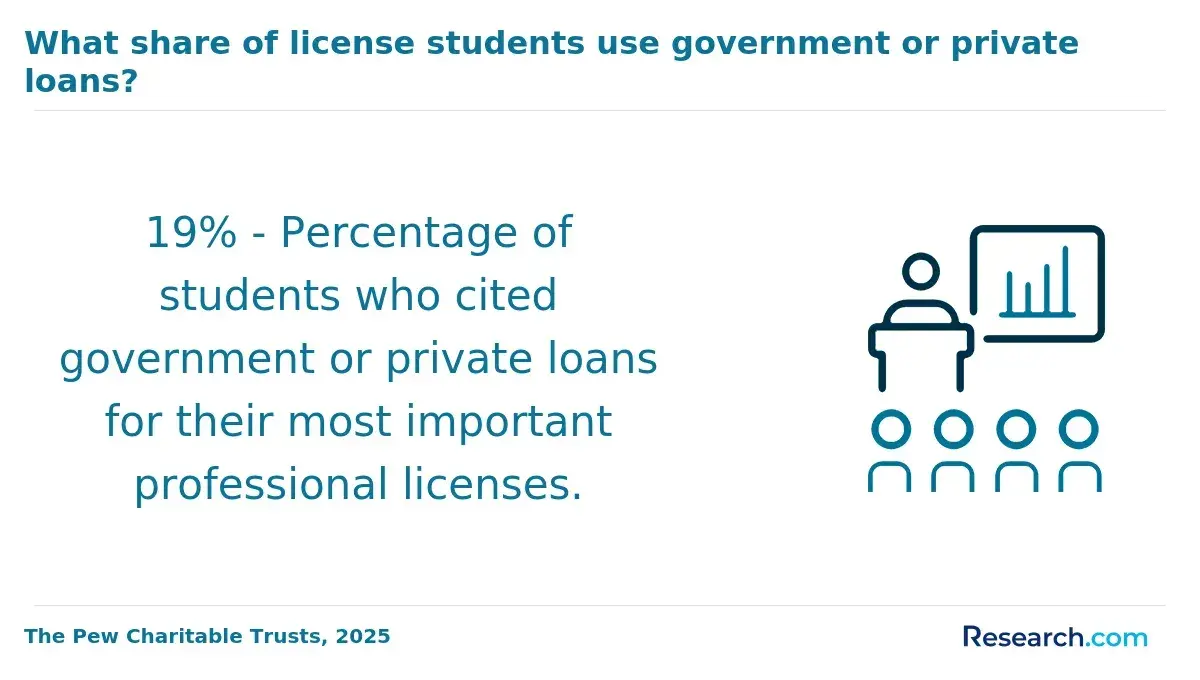
Federal borrowing costs also make timing relevant. For graduate and professional students, Federal Direct Unsubsidized Loans first disbursed in the 2024-25 award year carried a fixed interest rate of 8.08%, while Direct PLUS Loans carried 9.08%. That does not mean students should rush into the shortest program, but it does mean extra terms can have real financing consequences for borrowers.
Quality should be evaluated separately from speed. The most important quality checks are straightforward:
- Institutional accreditation: The college or university should hold recognized institutional accreditation accepted by employers, transfer institutions, and federal aid rules.
- Relevant programmatic accreditation: DNP students should verify nursing accreditation, while psychology students pursuing licensure should pay close attention to psychology accreditation and state board expectations.
- Faculty expertise: Review whether faculty publish, consult, lead, or research in healthcare administration, quality, policy, informatics, finance, or leadership.
- Student support: Strong writing centers, library services, statistics support, and project mentoring can make a fast timeline more realistic.
- Transparent outcomes: Ask for completion rates, average time to degree, attrition data, and career services information for doctoral students.
The best value is usually not the absolute shortest program. It is the shortest reputable program that you can finish without sacrificing the credibility, support, and learning outcomes needed for your career goal.
Which Careers Benefit Most From Completing an Online Healthcare Administration Doctorate Quickly?
Completing an online healthcare administration doctorate quickly can matter most when the credential supports a near-term promotion, executive transition, consulting role, faculty appointment, or specialized leadership path.
The BLS May 2024 median annual wage estimate of $117,960 for medical and health services managers shows why experienced professionals may weigh doctoral cost against leadership-market opportunity, but salaries vary by role, employer, region, experience, and responsibility level.
Healthcare administration also overlaps with informatics and data governance. Professionals exploring analytics-heavy leadership paths may want to compare doctorate options with career information on health information management salary, especially if their goal involves electronic health records, compliance, revenue cycle, privacy, or clinical data strategy.
The table below shows career paths where faster doctoral completion may offer practical value. It is not a salary guarantee; it is a way to connect doctorate type with professional timing:
| Career path | Doctorate types that may fit | Why faster completion may matter |
| Hospital or health system executive | DHA, DBA, DNP, EdD | May support advancement into senior operations, strategy, quality, or service-line leadership roles |
| Chief nursing officer or nurse executive | DNP, DHA, EdD | Can align with executive nursing leadership, quality improvement, and systems-level practice expectations |
| Healthcare consultant | DBA, DHA, PhD | Doctoral training may strengthen credibility in strategy, operations, analytics, change management, or policy consulting |
| Healthcare faculty or academic administrator | PhD, EdD, DHA | May support teaching, curriculum leadership, program administration, or applied scholarship roles |
| Quality, safety, or population health leader | DNP, DHA, EdD | Applied doctoral projects can directly support measurable improvement work in healthcare organizations |
| Health policy or research leader | PhD, DHA, DrPH | Research-oriented training may be useful for policy analysis, evidence synthesis, and program evaluation |
A fast doctorate is most valuable when the student already has substantial healthcare experience. For professionals without management experience, a doctorate alone may not substitute for operational leadership, budgeting responsibility, regulatory knowledge, or team management.
What Student Characteristics Lead to Faster Completion of an Online Healthcare Administration Doctorate?
Fast completion depends as much on the student as on the program. The students who finish shortest doctoral pathways on time are usually not simply "smarter" or less busy; they are prepared, organized, and realistic about the intensity of doctoral work.
The characteristics below tend to support faster progress because they reduce the most common causes of delay: topic changes, poor time management, weak writing, and lack of access to project data:
- Clear career goal: Students who know whether they want executive leadership, research, teaching, nursing leadership, or consulting can choose the right doctorate type from the start.
- Defined problem of practice: A specific workplace issue, such as readmissions, patient flow, staffing, quality metrics, or technology adoption, can become the foundation for an applied doctoral project.
- Strong academic writing habits: Doctoral progress depends heavily on synthesis, citation accuracy, revision, and clear argumentation.
- Access to organizational data: Students who can use approved workplace data, surveys, interviews, or quality metrics may avoid late-stage project redesign.
- Reliable weekly study schedule: Accelerated programs require consistent writing and reading time, not occasional weekend catch-up sessions.
- Comfort with statistics and evidence: Even applied doctorates usually require students to evaluate research, interpret data, and justify decisions.
- Supportive employer or supervisor: Flexibility for residencies, interviews, project implementation, or practicum hours can shorten the path to completion.
Students should be honest about readiness. If you are changing careers, rebuilding writing skills, or still deciding between clinical, administrative, and academic goals, a slightly longer program with stronger advising may lead to a better outcome.
How Should Students Compare the Shortest Online Healthcare Administration Doctorate Programs?
The right comparison process starts with career fit, then moves to timeline, cost, accreditation, and support. Students should avoid choosing a program based only on the phrase "complete in as little as" because that language usually describes an ideal path, not the average student experience.
Use the following steps to compare fast online healthcare administration doctorate programs in a practical order:
- Identify the role you want after graduation, such as executive administrator, nurse leader, faculty member, consultant, researcher, or policy leader.
- Choose the doctorate category that aligns with that role before comparing individual schools.
- Request the total number of credits, required terms, residency days, practicum hours, and final project requirements in writing.
- Ask for average and median time to completion for online doctoral students, especially those enrolled while working full time.
- Compare total cost, not just tuition per credit, including fees, continuation terms, travel, software, books, and borrowing costs.
- Verify institutional accreditation and any programmatic accreditation relevant to nursing, psychology, or licensure-sensitive pathways.
- Review faculty expertise, project support, writing resources, statistics help, and library access for online doctoral students.
- Ask how soon students begin the dissertation, capstone, or doctoral project process.
- Confirm whether the program is asynchronous, synchronous, hybrid, low-residency, or fully online.
- Choose the shortest program that you can realistically complete while maintaining strong academic work and professional responsibilities.
The table below offers a simple scorecard for comparing programs. It helps separate programs that are genuinely efficient from those that are merely advertised as fast:
| Comparison factor | Strong sign | Red flag |
| Timeline transparency | School shares minimum, average, and working-student completion times | Only advertises the fastest possible timeline |
| Final project support | Project planning begins early and faculty mentoring is structured | Students find chairs or committees late in the program |
| Accreditation | Institutional accreditation is clear, and relevant professional accreditation is addressed | Accreditation status is vague or difficult to verify |
| Residency requirements | Dates, costs, locations, and virtual options are disclosed before enrollment | Residencies are described generally without cost or scheduling details |
| Cost clarity | Total program estimate includes fees, project terms, and possible extension costs | Only tuition per credit is shown |
| Career alignment | Curriculum matches healthcare leadership, research, nursing, education, or consulting goals | Degree title sounds relevant but courses do not match the student's target role |
The strongest choice is usually a program that is short, transparent, accredited, well-supported, and aligned with your current experience. If one of those pieces is missing, the "fastest" option may not be the best option.
Other Things You Should Know About Healthcare Administration
No. Many healthcare administration roles require a bachelor's or master's degree plus management experience. A doctorate is usually pursued for executive leadership, teaching, consulting, research, policy, or specialized advancement rather than entry-level administration.
In many cases, diplomas do not state the delivery format, but policies vary by institution. Students should ask the school directly how the degree, transcript, and diploma identify the program.
Yes, an accredited online doctorate may support teaching roles, especially in applied or professional programs. Research universities and tenure-track positions may prefer or require a PhD, publications, and a strong research record.
Most healthcare administration doctorates do not lead directly to licensure. Licensure-sensitive fields such as nursing, psychology, long-term care administration, and clinical practice have separate state or professional requirements that students should verify before enrolling.
References
- 1-2 Year Doctoral Programs Online: Top Schools & More https://www.phds.me/online-programs/one-year-doctoral-programs/
- Online Doctorate in Health Administration https://www.healthadministrationdegrees.com/programs/online-doctorate-in-health-administration/
- 5 Reasons Why Professionals Consider an Online PhD in Public Health https://dblp.ucnedu.org/blog/5-reasons-why-professionals-consider-an-online-phd-in-public-health/
- Professional Doctorate SOP: How to Write for EdD, DBA, DNP, and PsyD Programs https://gradpilot.com/news/professional-doctorate-sop-edd-dba-dnp-psyd-guide
- Doctoral Healthcare Degrees | University of Phoenix https://www.phoenix.edu/online-healthcare-degrees/doctoral.html
- Virginia University of Lynchburg Ranked #1 by Forbes in the nation for Online Doctorate in Healthcare Administration https://www.vul.edu/dha/
- Best Online Doctorates in Healthcare Administration 2026 https://www.onlineu.com/degrees/doctoral-healthcare-administration
- Which Degree Should I Pursue https://www.ache.org/career-resource-center/special-groups/resources-for-students-and-early-careerists/which-degree-should-i-pursue
- How Long Does It Take to Get a Doctorate Degree or a PhD? https://legacyonlineschool.com/blog/how-long-does-it-take-to-get-a-doctorate-degree-or-a-phd.html