2027 Online Healthcare Administration Doctorate Programs with No Dissertation Requirement

Co-Founder and Chief Data Scientist
Choosing a doctorate in healthcare administration is often a question of format: do you need a traditional dissertation, or will an applied capstone serve your goals better? The decision matters because the U.S. Bureau of Labor Statistics reports a median annual wage of $117,960 for medical and health services managers in May 2024, and advanced leadership roles increasingly expect data-driven decision-making. This guide is for working healthcare professionals comparing online doctoral options. You will learn what "no dissertation" really means, how to verify quality, and how to choose a program that fits your career plans.
Key Things You Should Know
- Yes, some online healthcare administration doctorates do not require a traditional dissertation, but they usually replace it with a doctoral capstone, applied project, portfolio, consulting project, or practice-based research sequence.
- No-dissertation does not mean no research: legitimate programs still require advanced writing, evidence analysis, data interpretation, and a final project tied to healthcare leadership or operations.
- The strongest fit is usually for experienced healthcare professionals seeking executive, consulting, policy, quality improvement, or administrative leadership roles rather than tenure-track research careers.
Which Online Healthcare Administration Doctorate Programs Do Not Require a Dissertation?
Online healthcare administration doctorates without a traditional dissertation are most often professional doctorates rather than research doctorates. They are designed for practitioners who want to solve organizational problems, evaluate healthcare systems, lead change, or improve quality rather than produce an original theory-focused dissertation.
The exact requirement varies by school, so students should verify the current academic catalog before applying. The table below summarizes the doctorate types where dissertation alternatives are most commonly found and what to look for in program language.
| Doctorate type | Common online availability | Typical final requirement | Best fit | What to verify |
| Doctor of Healthcare Administration | Common | Applied doctoral project, capstone, portfolio, or practice-based project | Healthcare executives, administrators, operations leaders, and consultants | Whether the school explicitly says "no dissertation" or simply uses another name for a dissertation-style project |
| Doctor of Health Administration | Common | Capstone, doctoral project, or applied research project | Managers seeking senior leadership roles in hospitals, health systems, insurers, or healthcare organizations | Whether the final project must involve original data collection, committee defense, or publication-style chapters |
| Doctor of Public Health with healthcare leadership focus | Available at some schools | Applied practice experience, integrated learning experience, or practice-based doctoral project | Public health leaders, population health administrators, policy professionals, and nonprofit executives | Whether the program is CEPH-accredited if public health credentialing matters for your goals |
| DBA in Healthcare Management or Healthcare Administration | Available at some schools | Often a dissertation, doctoral study, consulting project, or applied business research project | Healthcare executives focused on strategy, finance, operations, analytics, or organizational leadership | Whether the DBA is truly dissertation-free, because many DBA programs still require a dissertation or dissertation-like study |
| EdD in Health Professions Education or Healthcare Leadership | Available at some schools | Capstone, dissertation in practice, or applied improvement project | Healthcare educators, academic program directors, clinical education leaders, and training executives | Whether the curriculum is administration-focused enough for healthcare management careers |
Students who are not yet ready for doctoral study may benefit from comparing a masters in healthcare administration before committing to a doctorate. A master's degree is often enough for many healthcare management roles, while a doctorate is usually chosen for executive advancement, consulting credibility, teaching, policy leadership, or advanced applied research.
What Replaces the Dissertation in an Online Healthcare Administration Doctorate?
In a no-dissertation healthcare administration doctorate, the final requirement is usually still substantial. The difference is that the work is applied to a real healthcare problem instead of being structured as a traditional dissertation focused on original scholarly contribution.
The following comparison shows how the most common completion models differ. This matters because two programs can both say "no dissertation" while requiring very different levels of research, writing, data analysis, and faculty review.
| Completion model | Main purpose | Typical work product | Research intensity | Common student challenge |
| Traditional dissertation | Create original scholarly research | Multi-chapter dissertation with committee review and defense | High | Narrowing the research question, collecting data, and completing revisions |
| Doctoral capstone | Apply research to a practical healthcare problem | Project report, presentation, implementation plan, or evaluation | Moderate to high | Choosing a feasible problem and connecting evidence to measurable outcomes |
| Applied doctoral project | Solve a leadership, quality, finance, policy, or operations issue | Organizational analysis, intervention proposal, quality improvement project, or practice-based study | Moderate to high | Securing site access, data permissions, or stakeholder cooperation |
| Professional portfolio | Demonstrate doctoral-level competencies across the program | Curated body of written work, reflections, artifacts, and final synthesis | Moderate | Maintaining strong documentation throughout the program |
| Consulting project | Produce an evidence-based recommendation for an organization | Client-style report, strategic plan, or operational improvement proposal | Moderate | Balancing academic rigor with practical business recommendations |
Before enrolling, ask the school to explain exactly what the final project requires. The most important questions are practical, not just academic.
- Does the final project require original data collection, or can students use existing organizational data, public datasets, literature review, or quality improvement evidence?
- Is there a formal oral defense, faculty committee, project chair, or external reviewer?
- Can the project be completed at the student's current workplace, and are employer permissions required?
- Are project milestones embedded into courses, or does the project begin only after coursework is finished?
- How many students complete the final requirement on time, and what usually delays completion?
Are Online Healthcare Administration Doctorate Programs Without Dissertations Legitimate and Accredited?
Yes, a no-dissertation online healthcare administration doctorate can be legitimate if it is offered by an institution with recognized accreditation and clear doctoral-level academic standards. Accreditation is more important than the presence or absence of a dissertation because it indicates that the institution has been reviewed for quality, governance, faculty qualifications, student support, and academic integrity.
For most healthcare administration doctorates, institutional accreditation is the first requirement to verify. In the U.S., students should confirm that the college or university is accredited by an agency recognized by the U.S. Department of Education or the Council for Higher Education Accreditation. For DrPH programs, programmatic accreditation through the Council on Education for Public Health may also matter, especially for public health leadership roles.
Healthcare administration is different from fields such as nursing, medicine, or psychology because a doctorate in healthcare administration does not usually lead directly to state licensure. However, licensure or certification may matter if your career path overlaps with nursing home administration, public health, health information, compliance, or clinical leadership. Requirements vary by state, employer, and role.
Legitimate dissertation-free programs usually share several features that students can confirm before applying.
- The academic catalog clearly names the final requirement, such as capstone, doctoral project, applied project, or portfolio.
- The curriculum includes research methods, statistics, evidence-based decision-making, leadership, finance, policy, ethics, and healthcare systems coursework.
- Faculty have relevant doctoral credentials, healthcare leadership experience, scholarly activity, or applied research expertise.
- The program explains residency, synchronous meeting, practicum, project-site, or defense requirements before enrollment.
- The institution publishes tuition, fees, transfer-credit rules, satisfactory academic progress standards, and doctoral completion policies.
Red flags include vague claims such as "finish a doctorate with no research," unclear accreditation language, unusually aggressive completion promises, pressure to enroll immediately, or refusal to provide the academic catalog. A trustworthy program should be able to describe the project sequence in plain language.
Are No-Dissertation Online Healthcare Administration Doctorate Programs Easier to Complete?
No-dissertation programs may be more practical for working professionals, but they are not automatically easier. The workload usually shifts from theory-building and dissertation chapters to applied research, organizational analysis, data interpretation, implementation planning, and executive-level communication.
The biggest difference is the type of difficulty. A dissertation-based program can be difficult because students must create an original scholarly study and sustain a long independent research process. A capstone-based program can be difficult because students must define a real healthcare problem, gather credible evidence, manage stakeholder expectations, and produce recommendations that can survive professional scrutiny.
Students often underestimate the rigor of dissertation alternatives. These common mistakes can lead to delays, higher costs, or poor program fit.
- Assuming "no dissertation" means no major writing requirement, when most programs still require doctoral-level papers, literature reviews, project reports, and presentations.
- Confusing a capstone with a simple class assignment instead of a multi-term project that may require faculty approval, project planning, and revision.
- Choosing the fastest advertised program without checking whether the final project is integrated into coursework or completed after classes end.
- Ignoring data access, privacy, and employer approval issues that can complicate projects involving healthcare organizations.
- Assuming a dissertation-free doctorate is ideal for academic research careers, when tenure-track roles may prefer or require traditional research preparation.
For many professionals, the appeal is not that the degree is easier; it is that the work feels more directly connected to healthcare leadership. If your goal is to improve patient access, reduce operational inefficiency, lead a service line, evaluate policy, or manage healthcare teams, an applied doctoral project may be more relevant than a traditional dissertation.
How Long Does It Take to Complete an Online Healthcare Administration Doctorate Without a Dissertation?
Most online healthcare administration doctorates without a traditional dissertation are designed for completion in about three to four years, although timelines vary by transfer credits, enrollment intensity, cohort structure, project scope, and whether residencies are required. The absence of a dissertation can reduce the risk of a long dissertation-only phase, but a poorly planned capstone can still delay graduation.
The table below shows typical completion patterns by pathway. Use it as a planning tool rather than a promise, because doctoral pace depends heavily on school policy and student availability.
| Program structure | Typical pace | Why it may be faster | What can slow completion |
| Course-embedded capstone doctorate | Often about three years for full-time or continuous enrollment | Project milestones are built into required courses | Limited course availability, missed milestones, or project-topic changes |
| Applied project after coursework | Often three to four years | Coursework may be predictable and online | Project approval, data access, revisions, or faculty review cycles |
| Cohort-based professional doctorate | Often fixed by the cohort schedule | Students move through courses in a structured sequence | Stopping out may require waiting for the next course rotation |
| Part-time online doctorate | Often four or more years | Better fit for full-time workers with demanding schedules | Slower credit accumulation and longer project development |
Students comparing faster pathways should also review accelerated healthcare programs to understand how compressed schedules affect workload, tuition planning, and academic expectations. Acceleration is most valuable when the program has strong advising and transparent project milestones.
To estimate your own timeline, ask the admissions office for a term-by-term degree plan and then compare it with your actual weekly availability. A realistic plan should account for work travel, family responsibilities, practicum or project-site access, and peak periods such as budget season, accreditation surveys, or major healthcare system initiatives.
How Much Do Online Healthcare Administration Doctorate Programs Without Dissertations Cost?
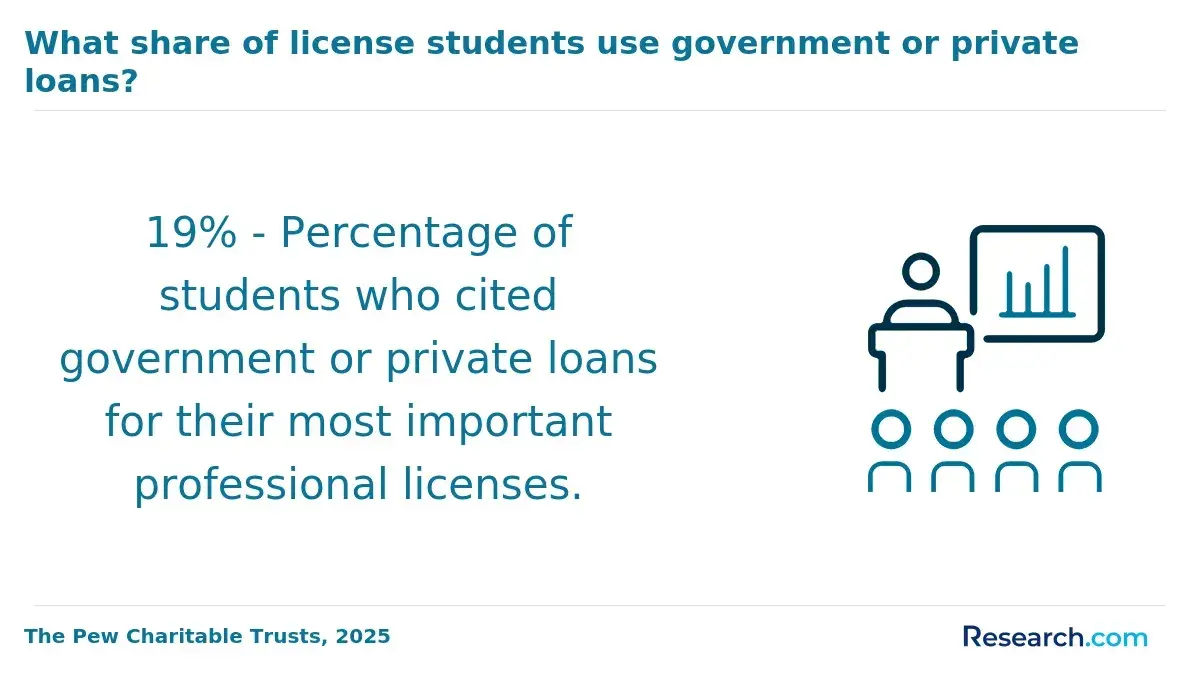
Costs vary widely because doctoral tuition is usually based on credit count, institutional pricing, residency fees, technology fees, and the number of terms needed to finish the final project. A dissertation-free format can reduce cost only if it helps you finish sooner; it does not automatically make the program cheaper.
One practical financing benchmark is the federal graduate Direct Unsubsidized Loan limit. Graduate and professional students may borrow up to $20,500 per academic year through this loan type, subject to eligibility rules, which means high-cost doctoral programs may require savings, employer tuition assistance, scholarships, payment plans, or Graduate PLUS borrowing.
When comparing affordability, do not stop at per-credit tuition. Students looking for lower-cost options can also compare the broader market for the cheapest online healthcare administration degree, then decide whether the added cost of a doctorate is justified by their leadership goals.
The table below outlines the cost categories that commonly affect the total price of a no-dissertation online doctorate. These are the items to request from each school before you calculate return on investment.
| Cost factor | Why it matters | Question to ask |
| Per-credit tuition | Usually the largest direct cost | Is tuition charged per credit, per term, or through a subscription model? |
| Total required credits | A lower per-credit rate may not be cheaper if the program requires more credits | How many credits are required after transfer evaluation? |
| Doctoral project or capstone fees | Some schools charge continuation, project, or doctoral supervision fees | Are there fees after coursework if the project is not complete? |
| Residency or intensive requirements | Travel, lodging, and missed work can raise the real cost | Are any campus visits, synchronous intensives, or in-person presentations required? |
| Technology and student fees | Small recurring charges can add up across multiple years | What mandatory fees are charged each term? |
| Time to completion | Extra terms can increase tuition, fees, and borrowing costs | What is the typical completion time for students who work full time? |
Use a total-cost approach before enrolling. At minimum, collect these figures from every school on your shortlist.
- Published tuition for the full program based on your expected transfer credits
- All required fees, including technology, graduation, residency, project, and continuation fees
- Estimated books, software, travel, and project-site costs
- Employer tuition assistance rules, including annual caps and repayment obligations if you leave your job
- Loan amounts needed after scholarships, grants, savings, and employer support
Who Benefits Most From an Online Healthcare Administration Doctorate Without a Dissertation?
The best candidates are experienced professionals who want doctoral-level leadership training but do not need a traditional research dissertation for their career path. These students often want to apply evidence to real healthcare problems, not spend several years developing a theory-driven study for academic publication.
A dissertation-free healthcare administration doctorate may be a strong fit for professionals in the following situations.
- You already work in healthcare management and want to move into executive, system-level, or regional leadership.
- You need advanced credibility for consulting, quality improvement, strategic planning, policy analysis, or organizational transformation.
- You prefer applied research that can be connected to a workplace problem, patient access issue, operational bottleneck, or leadership challenge.
- You want to teach in practitioner-oriented programs, especially as an adjunct or professional faculty member, rather than pursue a research-intensive tenure-track role.
- You are balancing doctoral study with full-time work and need a structured online format with clear project milestones.
Students should be more cautious if they want to become research faculty, pursue grant-funded academic research, or enter roles where a traditional dissertation is strongly valued. In those cases, a PhD or dissertation-based doctorate may provide stronger preparation in theory development, research design, publication, and scholarly methods.
The degree can also be useful for professionals moving from clinical roles into administration. Nurses, therapists, health information managers, practice administrators, public health professionals, and military healthcare leaders may find that an applied doctorate helps them translate frontline experience into executive-level strategy.
How Does a No-Dissertation Online Healthcare Administration Doctorate Affect Career Opportunities?
A no-dissertation doctorate can support career advancement when the role values applied leadership, systems thinking, finance, quality improvement, analytics, policy, and executive communication. It is less about the absence of a dissertation and more about whether the curriculum and final project build skills that employers recognize.
The healthcare management labor market remains favorable for experienced leaders. The U.S. Bureau of Labor Statistics projects employment for medical and health services managers to grow 29% from 2023 to 2033, much faster than the average for all occupations. For readers, this means leadership demand is strong, but competition for senior roles still depends on experience, achievements, industry knowledge, and organizational fit.
Career value varies by role. The table below summarizes how a dissertation-free doctorate may support different healthcare administration paths.
| Career direction | How the doctorate may help | When experience may matter more |
| Hospital or health system leadership | Builds executive skills in strategy, finance, quality, policy, and operations | Senior roles usually require a strong management record and measurable results |
| Healthcare consulting | Can strengthen credibility and provide applied project experience | Clients often value industry specialization, case results, and communication skills |
| Quality improvement and patient safety | Supports evidence-based process improvement and outcomes evaluation | Certifications, clinical knowledge, and project outcomes may carry significant weight |
| Health policy or population health leadership | Helps connect policy, data, equity, operations, and implementation | Public-sector and nonprofit employers may prefer relevant policy experience |
| Teaching in healthcare administration | May qualify graduates for adjunct or practice-oriented teaching roles | Research universities may prefer PhD holders or candidates with dissertations and publications |
| Health information and analytics leadership | Supports strategic use of data, compliance, and digital transformation | Technical credentials, analytics experience, and domain expertise remain important |
Professionals considering analytics-heavy leadership should also review how compensation varies across related roles, including health information management salary trends. A doctorate may strengthen advancement potential, but it should be paired with practical skills in data governance, privacy, interoperability, AI-enabled workflow improvement, and performance measurement.
Artificial intelligence and automation are also changing healthcare administration. Leaders increasingly need to evaluate AI tools, manage data risk, oversee workflow redesign, and make ethical decisions about automation. A strong doctoral program should help students analyze technology adoption, not simply discuss leadership in general terms.
How Do No-Dissertation Online Healthcare Administration Doctorates Compare With Traditional Doctorates?
The best choice depends on your goal. A no-dissertation professional doctorate is usually better aligned with applied leadership and organizational problem-solving. A traditional dissertation-based doctorate is usually better aligned with academic research, theory development, and research-intensive faculty roles.
The table below compares the two pathways across the factors that most often affect student decisions.
| Factor | No-dissertation professional doctorate | Traditional dissertation-based doctorate |
| Primary purpose | Apply evidence to healthcare leadership problems | Produce original scholarly research |
| Common degrees | DHA, professional DrPH, applied DBA, EdD | PhD, dissertation-based DBA, dissertation-based DrPH or DHA |
| Final requirement | Capstone, applied doctoral project, portfolio, consulting project, or integrated practice project | Dissertation with proposal, research, committee review, and defense |
| Best career fit | Executive leadership, consulting, operations, quality improvement, policy implementation, professional teaching | Research faculty, scholarly publishing, academic research, policy research, doctoral-level research roles |
| Research emphasis | Applied research and evidence-based practice | Original research design, theory, methods, and scholarly contribution |
| Completion risk | Project delays can happen, but milestones may be more structured | Dissertation phase can extend timelines if research design, data collection, or revisions stall |
| Employer perception | Often positive for practice-focused leadership roles if the school is accredited and reputable | Often preferred for research-intensive academic or scholarly roles |
A useful rule of thumb is this: choose the pathway that matches the work you want to do after graduation. If you want to lead departments, redesign systems, evaluate programs, manage healthcare strategy, or consult with organizations, an applied doctorate may be the better fit. If you want to publish original research, compete for tenure-track roles, or build a career around scholarly inquiry, a dissertation-based doctorate may be more appropriate.
How Should Students Choose an Online Healthcare Administration Doctorate Without a Dissertation?
Choosing a no-dissertation doctorate requires more than confirming that the word "dissertation" is absent from the website. You need to understand the full academic structure, the final project, the online format, the cost, and how the degree will be interpreted by employers in your target field.
Use the following process to evaluate programs in a practical, evidence-based way.
- Verify institutional accreditation through a recognized accreditor before reviewing curriculum, tuition, or admissions claims.
- Download the current academic catalog and identify the exact final requirement, including project courses, capstone credits, defense requirements, and continuation policies.
- Ask whether the final project is embedded across the curriculum or begins after coursework, because this strongly affects completion risk.
- Compare the curriculum with your career goal, especially courses in finance, strategy, policy, analytics, quality, ethics, leadership, and healthcare law.
- Request a total-cost estimate that includes tuition, fees, residencies, project expenses, books, and extra terms if the capstone takes longer than expected.
- Ask admissions or program faculty for examples of acceptable capstone or applied project topics, then compare them with the problems you want to solve professionally.
- Confirm online format details, including synchronous sessions, residencies, practicum expectations, group work, and time-zone requirements.
- Review faculty backgrounds to see whether they have healthcare executive experience, research expertise, policy experience, consulting work, or subject matter alignment with your interests.
- Ask how the school supports doctoral writing, statistics, research methods, IRB review if applicable, and project-site approval.
- Speak with current students or alumni when possible to learn where students struggle, how responsive faculty are, and whether the advertised timeline is realistic.
Several red flags deserve special attention because they can signal poor fit or weak transparency.
- The school says "no dissertation" but cannot clearly explain the capstone, doctoral project, or final assessment.
- The program promises unusually fast completion without explaining transfer credits, workload, or project requirements.
- Accreditation language is vague, outdated, or not connected to a recognized accrediting body.
- The program does not disclose residency, synchronous meeting, defense, or project-site expectations until late in the admissions process.
- Tuition is advertised in a way that excludes required fees, continuation costs, or extra terms for project completion.
- The curriculum is too general and does not provide enough healthcare administration depth for your target role.
The smartest choice is usually the program that offers the best alignment among accreditation, applied rigor, realistic timeline, total cost, faculty support, and career relevance. A dissertation-free doctorate is worth considering when it helps you produce doctoral-level work that directly supports the healthcare problems you want to solve.
Other Things You Should Know About Healthcare Administration
Many professional doctorates in healthcare administration do not require the GRE, especially programs designed for experienced working adults. However, admissions rules vary, and some schools may request graduate transcripts, a resume, references, a statement of purpose, writing samples, or an interview instead.
Most strong applicants have healthcare, public health, clinical, administrative, military health, insurance, consulting, or policy experience. A doctorate is advanced professional training, so students with little management experience may find the coursework and applied project harder to connect to real organizational problems.
Often, yes, but it depends on the school and employer. You may need approval to use organizational data, interview staff, evaluate workflows, or discuss internal processes. Always ask about privacy, compliance, and project-site rules before assuming your workplace can serve as your project setting.
No. A DHA is usually a professional doctorate focused on applied healthcare leadership, while a PhD is usually a research doctorate focused on theory, methods, and original scholarship. Both can be rigorous, but they are designed for different career goals.
References
- Doctor of Health Administration (DHA) | Doctor of Healthcare | University of Phoenix https://www.phoenix.edu/online-healthcare-degrees/health-administration-doctoral-degree.html
- A New Era of Doctoral Education: Beyond the Traditional Dissertation https://www.snu.edu/blog/a-new-era-of-doctoral-education-beyond-the-traditional-dissertation
- Capstone Options in Master's in Communication Programs (Thesis vs Project) https://www.mastersincommunications.com/features/guide-to-graduate-communication-capstone-options
- Masters Thesis vs. PhD Dissertation: Key Differences - Wordvice https://wordvice.com/blog/dissertation-vs-thesis-key-differences/
- Best Online Doctorates in Healthcare Administration 2026 https://www.onlineu.com/degrees/doctoral-healthcare-administration
- How to Pay for a Ph.D in 2026 - ELFI https://www.elfi.com/how-to-pay-for-a-ph-d/
- Best Online Doctor of Healthcare Administration Programs https://www.phds.me/online-programs/doctorate-healthcare-administration-dha/
- Capstone vs Dissertation? 5 Things to Consider Before Making a Decision - Dissertation Success https://dissertationsuccess.com/blog/capstone-vs-dissertation/
- Health Management Careers https://www.ache.org/Career-Resources/Start-Your-Career/Health-Management-Careers
- Online Resources & Scholarships for Healthcare Administration Students https://www.edumed.org/financial-aid/scholarships/healthcare-administration-degrees/