2027 Accredited MHA Programs That Accept Students Without Healthcare Experience

Co-Founder and Chief Data Scientist
You do not need years of hospital work to begin a Master of Health Administration (MHA), but choosing the wrong program can delay your career pivot. The U.S. Bureau of Labor Statistics projects 23% growth in medical and health services manager employment from 2024 to 2034, far faster than average. This guide helps career changers, new graduates, and business professionals identify reputable MHA options, understand realistic admission requirements, compare delivery formats and costs, and plan a practical route into healthcare leadership.
Key Things You Should Know
- Many accredited MHA programs accept students without healthcare experience, especially traditional, early-career, and competency-based programs; executive MHA formats are more likely to require substantial professional experience.
- Look for institutional accreditation and, when available, CAHME programmatic accreditation; accreditation alone does not mean a program has no-experience admissions or guarantees a management job.
- Medical and health services managers had a $117,960 median annual wage in 2024, according to the U.S. Bureau of Labor Statistics, but new MHA graduates commonly begin in coordinator, analyst, operations, or residency roles rather than senior executive positions.
What is a Master of Health Administration and who is it designed for?
A Master of Health Administration is a graduate business and leadership degree focused on how healthcare organizations operate, finance care, improve quality, manage people, and meet regulatory obligations. Unlike a clinical degree, an MHA generally prepares students to manage systems, teams, budgets, patient-access operations, and service lines rather than diagnose or treat patients.
An MHA can be a strong fit for a recent bachelor's graduate, a professional moving from business or public service into healthcare, or an employee seeking advancement from an administrative role. It is less suitable for someone whose primary goal is direct patient care, independent clinical practice, or a narrowly technical health informatics role; those goals may call for a clinical credential, an MPH, an MBA, or a specialized analytics degree instead.
Healthcare administration can be financially promising, but it is important to compare it with other masters degrees that make the most money based on the work you want to do, not salary headlines alone. An MHA is most valuable when its curriculum, internships, and employer network align with healthcare operations or leadership.
The program types below matter because the title "MHA" does not always signal the same intended student.
| Program type | Typical intended student | Experience expectation | Best use case |
| Traditional MHA | Recent graduates and career changers | Often no prior healthcare experience required | Building foundational management knowledge and completing an internship or residency |
| Professional or part-time MHA | Working professionals | May prefer experience but requirements vary | Changing fields while maintaining employment |
| Executive MHA | Established managers and leaders | Frequently requires significant work experience | Advancing toward senior leadership |
| MBA with healthcare concentration | Students wanting broader business mobility | Usually varies by school | Combining healthcare interest with cross-industry business options |
Can you get into an accredited MHA program without prior healthcare experience?
Yes. Many traditional MHA programs explicitly welcome applicants with bachelor's degrees in business, public health, social sciences, liberal arts, health sciences, and other fields. These programs teach healthcare terminology, policy, finance, and operations from the ground up. Prior experience can strengthen an application, but it is not universally an admission condition.
The important distinction is between a program that accepts students without experience and one that supports them after admission. Career changers should prioritize programs with foundational courses, advising, internship placement support, employer partnerships, and a capstone that produces work they can discuss in interviews.
Applicants without healthcare experience are usually most competitive when they show evidence of transferable skills. Admissions teams commonly look for the following signals of readiness.
- Academic preparation in writing, quantitative reasoning, economics, accounting, statistics, management, biology, or public health.
- Transferable work or volunteer experience involving customer service, project coordination, data analysis, team leadership, scheduling, compliance, or budgeting.
- A focused statement explaining why healthcare administration is the goal and how the degree fills a specific knowledge gap.
- Professional recommendations that can speak to reliability, judgment, communication, and leadership potential.
A common mistake is applying only to executive programs because their schedules appear convenient. Executive formats may offer excellent peer networks, but applicants without management experience may find that the discussion level, admissions rules, and career services are designed for a different audience. Ask whether the program has admitted career changers recently and whether an internship is required, optional, or unavailable to online students.
How do you verify that an MHA program is properly accredited and reputable?
Start with institutional accreditation. A school should be accredited by an institutional accreditor recognized by the U.S. Department of Education or the Council for Higher Education Accreditation. Institutional accreditation affects transferability, federal financial aid eligibility, and employer confidence in the degree.
For an MHA specifically, programmatic accreditation by the Commission on Accreditation of Healthcare Management Education (CAHME) is a strong quality signal. CAHME accreditation evaluates healthcare management programs against discipline-specific standards. However, not every reputable MHA is CAHME-accredited, and an institution's general accreditation does not mean its MHA holds CAHME accreditation. Verify the status directly with the school and the accreditor before enrolling.
Use this review sequence before paying an enrollment deposit. It helps separate a credible no-experience option from a program with vague claims.
- Confirm the university's institutional accreditation and verify that the credential is a master's degree, not a nondegree certificate marketed as equivalent preparation.
- Check whether the exact MHA program holds CAHME accreditation, is actively pursuing it, or has no programmatic accreditation; ask for the program's current status in writing.
- Read the admissions page for work-experience language, minimum GPA, prerequisite courses, standardized-test policy, and application deadlines.
- Review the curriculum for healthcare finance, quality improvement, policy, data analysis, ethics, operations, and experiential learning.
- Ask for career-outcomes information that distinguishes internships, first jobs, employer types, and reporting period rather than relying on broad placement claims.
- Calculate the full cost, including fees, travel, technology, books, health insurance, and any required on-campus immersion.
Red flags include unclear accreditation language, pressure to enroll before receiving financial-aid details, unsupported salary promises, missing faculty biographies, and an online program that cannot explain how students gain applied experience. Rankings can be useful context, but they should not replace accreditation, curriculum, total cost, and career-fit checks.
What admission requirements and prerequisites do MHA programs typically expect from applicants?
Requirements vary by university, but traditional MHA programs generally require a completed bachelor's degree from an accredited institution, transcripts, an application, a resume, a personal statement, and recommendation letters. Some schools request an interview, while others use a holistic review. GRE or GMAT requirements have become less common at many programs, but applicants should confirm the policy for their intended term rather than assuming tests are waived.
Most no-experience-friendly programs do not require a health-related undergraduate major. They may, however, expect comfort with quantitative work. Statistics, accounting, economics, finance, and spreadsheet skills can make the first term more manageable. If you lack these courses, ask whether the school offers prerequisites, foundation modules, or conditional admission.
Application costs can add up when you compare several schools. Applicants seeking ways to reduce that expense can also review colleges with no application fee, while still checking whether the specific MHA meets their accreditation and career goals.
The comparison below shows how applicants without healthcare experience can interpret common requirements.
| Requirement | What it evaluates | How a no-experience applicant can respond |
| Bachelor's degree and GPA | Academic readiness | Explain an upward academic trend, relevant coursework, or recent professional learning if applicable. |
| Resume | Professional maturity and transferable skills | Highlight operations, people coordination, analytics, service, budgets, and process improvement. |
| Personal statement | Career direction and fit | Connect a specific healthcare problem or role goal to the program's curriculum and experiential learning. |
| Recommendations | Leadership potential and reliability | Select supervisors, professors, or mentors who can provide concrete examples rather than generic praise. |
| Prerequisite coursework | Quantitative and business foundation | Complete missing courses early or ask whether approved alternatives are accepted. |
Do not overstate clinical exposure or assume volunteer work substitutes for professional experience. A clear, credible story about transferable skills is more persuasive than trying to appear clinically qualified when the program does not require clinical training.
How do online MHA programs compare with campus-based options for flexibility and outcomes?
Online and campus-based MHA programs can cover similar management competencies, but the student experience differs substantially. A high-quality online program can be a practical option for working adults, caregivers, rural students, and career changers who need to remain employed. Campus formats can be better for students seeking frequent in-person access to faculty, a local employer network, and structured recruitment into fellowships or administrative residencies.
Format alone does not determine outcomes. More important questions are whether the program provides live interaction, accessible faculty, local internship support, career coaching, networking opportunities, and transparent information about graduate roles. An online program with a required practicum may demand local placement work from the student, so confirm who secures the site and whether placements are paid.
This comparison highlights the trade-offs that matter most when experience is limited.
| Factor | Online MHA | Campus-based MHA | Decision consideration |
| Schedule | Often asynchronous or mixed-format | Usually fixed meeting times | Online can suit full-time workers; verify group-project and live-session requirements. |
| Networking | May span regions and employers | Often concentrated in the school's local market | Choose the network closest to where you expect to work. |
| Experiential learning | May require local placement coordination | May offer established local sites | Ask for placement policies and examples of recent sites. |
| Career transition support | Can vary widely | May include in-person recruiting and residencies | Career changers should examine services before relying on flexibility alone. |
| Travel costs | Lower for fully online programs, but immersions may apply | May include commuting or relocation costs | Include all required travel in the total budget. |
A frequent mistake is treating "100% online" as synonymous with fully flexible. Read the academic calendar and syllabus examples for synchronous sessions, team assignments, exams, residencies, and practicum hours. Select online delivery when flexibility is essential and the school can demonstrate robust career and field-experience support; select campus study when local networking and structured recruiting are your highest priorities.
What core courses and skills are covered in most health administration curricula?
MHA curricula combine management education with healthcare-specific systems knowledge. Core courses commonly address healthcare finance, accounting, economics, organizational behavior, strategic planning, health policy, law and ethics, quality improvement, operations, population health, informatics, and leadership. Programs may also include an internship, practicum, consulting project, or capstone.
For students entering without healthcare experience, the most useful programs explain how these subjects connect in real organizations. For example, a quality-improvement course should help you interpret performance measures and work across clinical and administrative teams, while a finance course should help you understand budgets, reimbursement, and investment decisions without requiring you to become an accountant.
Before committing to a full degree, some applicants use targeted learning to test their interests or strengthen an application. Relevant online courses with certificates can build basic data, project-management, or business skills, but they do not replace an MHA's graduate-level curriculum, network, or experiential component.
The skills below are especially valuable for entry-level healthcare administration candidates because employers need people who can turn information into coordinated action.
- Financial and operational literacy, including budget basics, productivity measures, reimbursement concepts, and resource allocation.
- Data interpretation, including dashboards, quality measures, spreadsheet analysis, and clear communication of findings.
- Process improvement, including workflow mapping, patient-access improvements, safety awareness, and change management.
- Communication and leadership, including meeting facilitation, stakeholder management, conflict resolution, and professional writing.
- Ethical and regulatory judgment, including privacy awareness, compliance culture, equity considerations, and appropriate escalation of concerns.
Artificial intelligence and automation are increasing the value of these skills rather than eliminating the need for administrators. Health systems use digital tools for scheduling, documentation support, forecasting, and analytics, but leaders still need to evaluate data quality, protect privacy, manage implementation, and make accountable operational decisions.
How long do MHA programs usually take and what do they cost to complete?
Most full-time MHA programs take about two academic years, while accelerated options may be shorter and part-time programs commonly take longer. Required internships, residencies, foundation courses, transfer-credit decisions, and course sequencing can change the actual completion timeline. A faster option makes sense only if you can manage the workload and do not lose access to the experiential learning that helps compensate for limited healthcare experience.
Published tuition varies widely by institution, residency status, delivery format, and total required credits. Compare the complete program price rather than a single per-credit figure. Include mandatory fees, technology charges, books, travel for any residency, lost income if reducing work hours, and interest costs if borrowing.
Applicants considering a lower-cost stepping stone should understand that an associates degree can help someone enter administrative support or health-information roles, but it is not a substitute for the graduate preparation usually expected for MHA-level management paths.
This cost framework can help you compare offers without assuming that the lowest tuition is automatically the best value.
| Cost or timeline factor | Why it changes total investment | Question to ask |
| Total credits required | More credits generally mean more tuition and a longer schedule. | How many credits are required after any approved transfer credits? |
| Program pace | Accelerated study can reduce elapsed time but may limit work capacity. | How many hours per week do students typically need for each course? |
| Internship or residency | A required placement can add unpaid time, travel, or scheduling pressure. | Is it paid, who arranges it, and can I complete it near home? |
| Online residencies | Some online programs require travel despite online coursework. | How many visits are mandatory and what expenses are not included in tuition? |
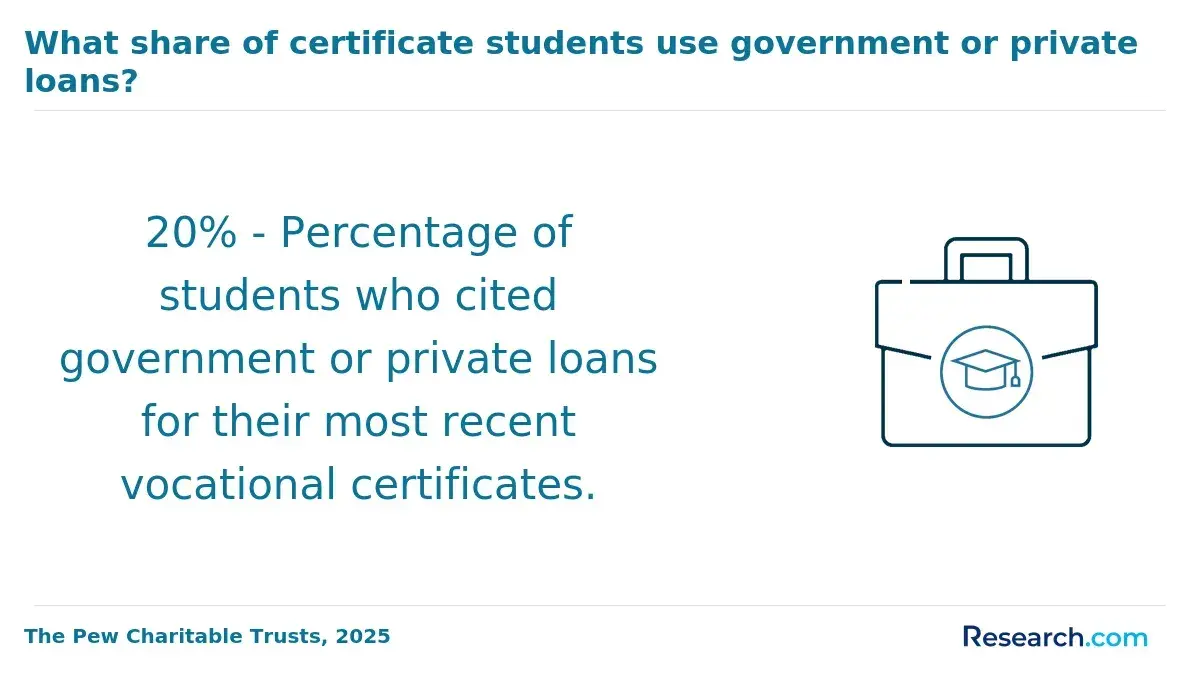
| Financial aid | Loans reduce immediate cost but increase the eventual amount repaid. | What scholarships, employer support, assistantships, and federal aid are available? |
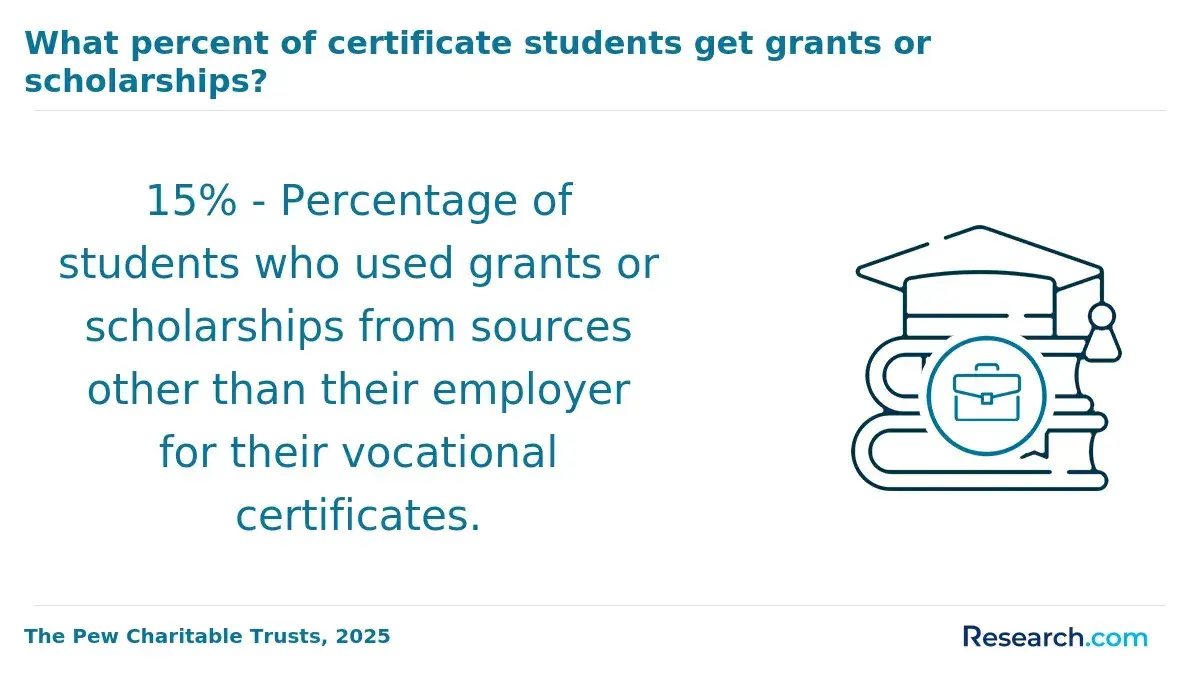
For ROI, compare the net price with the roles the program's graduates actually enter, not only the salary of experienced executives. Employer tuition assistance, scholarships, assistantships, and a part-time schedule may reduce borrowing, although each option can have trade-offs involving work commitments or a longer time to completion.
What entry-level and mid-level careers can an MHA lead to without prior experience?
An MHA can open doors, but a degree does not usually place a new graduate directly into a senior administrator role. Candidates without healthcare experience often begin in analyst, coordinator, project, patient-access, practice-management, or administrative residency positions. These roles provide the operational exposure employers commonly want before assigning responsibility for a department, budget, or service line.
Job titles differ across hospitals, physician groups, insurers, public agencies, long-term care organizations, consulting firms, and healthcare technology companies. The table shows a realistic progression rather than a guaranteed sequence.
| Career stage | Example roles | Typical focus | How an MHA helps |
| Early career | Healthcare operations coordinator, practice administrator assistant, patient-access coordinator, quality coordinator, healthcare analyst | Scheduling, reporting, process support, service operations, and project coordination | Provides healthcare context, analytics, and management vocabulary. |
| Transition role | Administrative resident or fellow, project manager, clinic operations manager | Rotations, strategic projects, workflow improvement, and supervised leadership work | Connects classroom learning to organizational decision-making. |
| Mid-level | Department manager, service-line manager, practice manager, quality manager | Staff supervision, budgets, performance metrics, and implementation | Supports advancement when paired with documented work results. |
| Advanced | Director, hospital administrator, vice president, executive leader | Enterprise strategy, financial accountability, governance, and cross-functional leadership | May be one part of a longer record of leadership and industry expertise. |
To improve your first-job prospects, pursue an internship or practicum in an area that hires entry-level administrators, such as ambulatory operations, revenue cycle, quality, patient access, population health, or data reporting. Keep a portfolio of projects showing the problem, your analysis, your contribution, and the result. This is particularly important for career changers whose resumes do not yet show healthcare employment.
A common misstep is applying only for "hospital administrator" titles immediately after graduation. Search for function-based roles and use the MHA to demonstrate readiness for a progression, not entitlement to an executive title.
What salary ranges and earning potential can MHA graduates expect in health administration?
Salary depends more on role, experience, employer type, region, organization size, and responsibility level than on the MHA title alone. The U.S. Bureau of Labor Statistics reported a 2024 median annual wage of $117,960 for medical and health services managers. That occupation-level figure includes experienced managers and leaders, so it should not be treated as an expected starting salary for every new graduate.
Early-career MHA holders may work in roles with lower pay while building healthcare-specific experience. Compensation can increase when an employee takes on budget ownership, direct reports, complex operational responsibilities, or leadership in a high-demand area. Hospitals and large health systems may have different pay structures from small physician practices, nonprofit organizations, insurers, government agencies, or long-term care providers.
Use salary information as an ROI input, not a promise. Compare local job postings, required years of experience, benefits, advancement pathways, and the cost of attendance. If a school publishes outcomes, ask whether reported figures are medians or averages, how many graduates are represented, what job titles are included, and whether salaries are self-reported.
Higher earning potential is most plausible when the degree is paired with measurable performance. Examples include reducing wait times, improving billing workflows, supporting quality initiatives, managing a successful project, or building expertise in finance, analytics, compliance, or operations.
How is the job outlook for health administrators and related leadership roles?
The outlook is favorable, although competition can be meaningful for prestigious administrative residencies and leadership-development programs. The U.S. Bureau of Labor Statistics projects 23% employment growth for medical and health services managers from 2024 to 2034. This reflects the need to coordinate care as the population ages, organizations manage complex reimbursement and regulation, and providers use more data and technology in operations.
Growth does not mean every location, specialty, or job title will have the same opportunity. Rural markets, metropolitan systems, outpatient networks, insurers, government agencies, and long-term care providers can have different hiring needs. Employers may also prefer candidates who already understand a particular environment, such as revenue cycle, ambulatory care, quality, behavioral health, or managed care.
Applicants without prior healthcare experience can respond to this market by choosing a focused first experience rather than waiting for a broad leadership opening. A practicum in a health system, clinic, insurer, public-health agency, or healthcare vendor can make the degree more legible to employers. Build familiarity with electronic workflows, performance metrics, privacy expectations, and interdisciplinary communication.
Technology is also reshaping hiring. Organizations increasingly value administrators who can evaluate dashboards, support responsible AI implementation, improve digital patient access, and translate operational data for leaders. The strongest candidates combine those capabilities with empathy, ethical judgment, and the ability to lead change among people affected by it.
Other Things You Should Know About Health Administration
No. Many traditional MHA programs accept applicants from non-healthcare majors. You may need to show quantitative readiness or complete foundation coursework in areas such as statistics, accounting, or economics.
CAHME accreditation is a valuable programmatic quality signal, especially for healthcare management education, but it is not the only marker of a reputable degree. Verify institutional accreditation, curriculum, faculty, experiential learning, career outcomes, and the requirements of employers you hope to join.
Often, yes, particularly in part-time formats. Review the expected weekly workload, live-class schedule, group projects, internship requirements, and any on-campus residencies before assuming the program fits a full-time work schedule.
Graduates of MHA programs without prior healthcare experience can pursue diverse roles such as healthcare manager, hospital administrator, and policy analyst. These positions may focus on operational efficiency, strategic planning, and policy implementation within various healthcare settings.
References
- Master of Health Administration - Online https://www.unthealth.edu/tcom/public-health/online-master-of-health-administration.html
- Online MHA Programs Ranked by Affordability (2025) https://www.mhaonline.com/blog/affordable-online-mha-programs-ranked
- 2025's Best Online MHA Programs: No GRE Required https://www.onlinemastersdegrees.org/best-programs/healthcare-administration-mha/no-gre/
- Online MHA https://www.publichealthdegrees.org/online/mha/