2027 From Medical Coder to Health Data Analyst: Degree Paths That Build on Coding Credits

Co-Founder and Chief Data Scientist
Medical coding experience provides a strong foundation for a move into health data analysis, but coding credentials alone may not meet employers' expectations for analytics, database, and reporting work. The U.S. Bureau of Labor Statistics projects 15% growth for health information technologists and medical registrars from 2024 to 2034, faster than average.
This guide helps coders compare degree paths that may recognize prior coursework, assess transfer-credit value, build technical skills, and choose a realistic next step.
Key Things You Should Know
- Medical coding courses may transfer into health information management (HIM) programs when their content, credits, grade, and recency match a school's requirements; an official transfer evaluation determines the actual award.
- A bachelor's degree in HIM is often the most direct bridge for coders targeting records, quality, compliance, registry, and health data roles, while analytics degrees usually require more statistics, database, and programming coursework.
- BLS reports a 2024 median annual wage of $67,310 for health information technologists and medical registrars, compared with $48,780 for medical records specialists, titles, location, experience, and employer requirements materially affect pay.
How can medical coding education apply toward a health data analytics or HIM degree?
Medical coding education can contribute to a degree because it covers clinical documentation, classification systems, reimbursement concepts, privacy, and data accuracy. These subjects overlap most directly with HIM curricula, where students learn to govern, protect, analyze, and use health information across care settings.
Transfer is not automatic. A college normally reviews an official transcript rather than a certification card or résumé. A course taken through an accredited college is generally easier to evaluate than proprietary training, although some institutions may award prior-learning credit through an exam, portfolio, or challenge process.
The comparison below shows where coding coursework is most likely to fit and where new learning is usually necessary.
| Prior coding knowledge | Possible degree application | Common remaining study |
| ICD-10-CM/PCS, CPT, HCPCS | Medical terminology, coding, reimbursement, or HIM electives | Data governance, statistics, leadership, informatics |
| HIPAA and documentation review | Privacy, compliance, legal health record, or quality coursework | Database design, analytics tools, research methods |
| Revenue cycle and claims knowledge | Healthcare finance or revenue integrity electives | Data visualization, SQL, population health analytics |
| Associate degree general education | English, math, social science, and science requirements | Upper-division HIM or analytics major courses |
Before applying, request a written preliminary review that identifies transferable credits, maximum transfer limits, required grades, and whether the school accepts credits from your original institution. Do not enroll based only on a verbal estimate from an admissions representative.
For coders who need a flexible credential before pursuing a full bachelor's program, reviewing degrees you can get online that pay well can help place shorter programs in the context of long-term career goals. A short program may improve employability, but it may not provide the quantitative preparation expected in analyst roles.
What degree pathways help medical coders transition into health data analyst roles?
The best pathway depends on the role you want, not simply the fastest credential available. Coders who enjoy healthcare rules, record quality, and compliance often benefit most from HIM. Coders who prefer dashboards, data queries, and statistical questions may need a health analytics, informatics, or data analytics curriculum with substantial technical coursework.
This comparison can help you match the degree type to a practical career target.
| Pathway | Best fit | Potential roles | Main trade-off |
| Associate degree in HIM | Coders seeking entry-level record or registry advancement | Health information technician, registry assistant, coding auditor | May not meet bachelor's-preferred analyst postings |
| Bachelor's completion in HIM | Coders with an associate degree and transferable credits | Health information manager, data quality analyst, privacy specialist | Requires upper-division management and analytics work |
| Health informatics bachelor's degree | Professionals interested in systems, workflows, and clinical data | Clinical informatics analyst, EHR analyst, implementation specialist | Program emphasis varies substantially by school |
| Health analytics or data analytics degree | Coders committed to SQL, statistics, and visualization | Healthcare data analyst, reporting analyst, business intelligence analyst | Usually has the largest math and technical gap |
| Graduate certificate or master's degree | Bachelor's-prepared professionals with focused goals | Senior analyst, informatics specialist, analytics manager | Not an efficient substitute for missing undergraduate foundations |
A bachelor's completion program is usually the strongest value proposition for a coder who already holds a related associate degree. It can preserve general-education and introductory health-information credits while adding the leadership, information governance, and analysis content employers often seek.
Choose a general data analytics degree only if you are prepared to build technical depth beyond healthcare coding. Employers may expect evidence that you can clean data, write queries, explain findings, and work with business stakeholders. A coding background supplies domain knowledge; it does not by itself demonstrate those analytics capabilities.
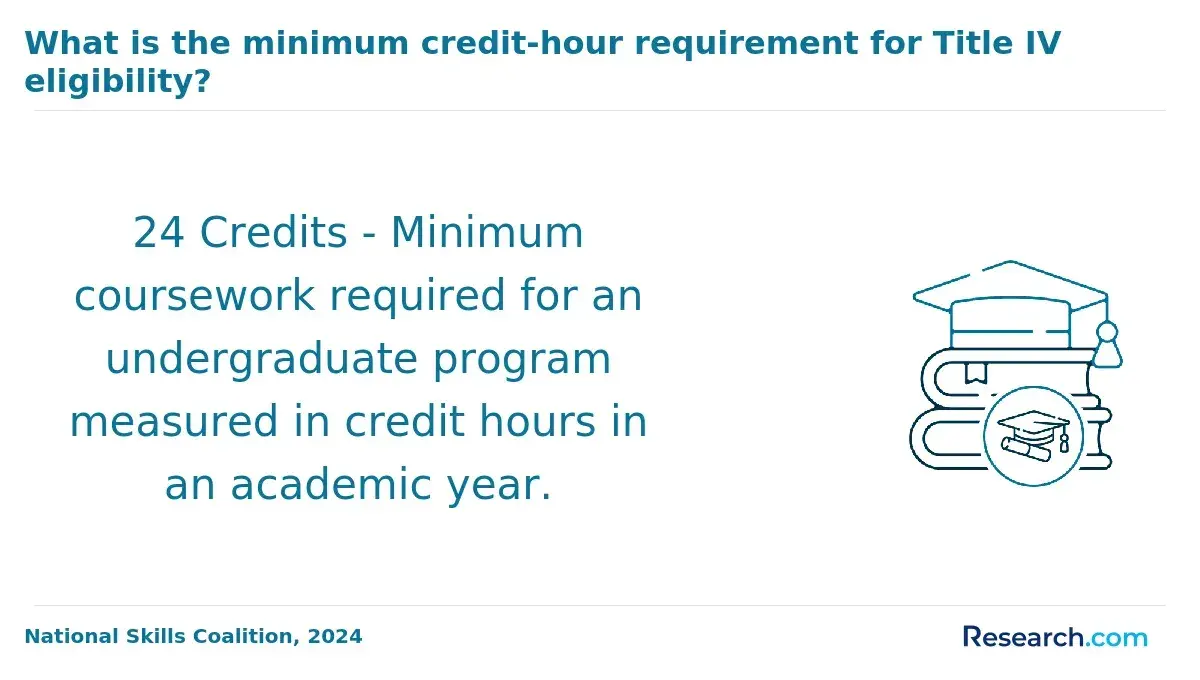
If cost and time are your immediate constraints, compare the credit requirements of HIM completion degrees with easy associate degrees that pay well. An additional associate degree can make sense for someone without college credit, but it may duplicate learning for a coder who already has an associate credential.
Which accredited programs accept prior coding credits toward health information management degrees?
Accreditation and transferability are separate questions. For HIM education, programmatic accreditation from the Commission on Accreditation for Health Informatics and Information Management Education (CAHIIM) is an important quality signal, particularly for students planning to pursue the Registered Health Information Administrator (RHIA) credential. Institutional accreditation also matters for federal aid and transfer review.
Several CAHIIM-accredited institutions offer HIM bachelor's programs or degree-completion formats that may evaluate prior college coding and allied-health coursework, including the University of Cincinnati, University of Illinois Chicago, Dakota State University, and the College of St. Scholastica. Their transfer decisions can differ by catalog year, course equivalency, grade earned, residency rules, and the number of lower-division credits already completed.
Use this screening framework when evaluating any program. It identifies evidence to collect before you apply rather than assuming a published curriculum guarantees credit acceptance.
| What to verify | Why it matters | Evidence to request |
| CAHIIM accreditation status | Supports eligibility planning for HIM professional credentials | Current program listing and accreditation status |
| Institutional accreditation | Affects aid eligibility and recognition of transfer coursework | Accreditor and institutional disclosure |
| Transfer-credit policy | Determines which credits count toward graduation | Written transfer evaluation |
| Residency requirement | Sets the minimum credits that must be completed at the new school | Catalog policy for your entry term |
| Professional-practice experience | May require placement hours, background checks, or site approval | Experiential-learning handbook |
A common mistake is confusing a school's overall accreditation with CAHIIM accreditation for the specific HIM program. Ask whether the exact degree and delivery format you intend to enter is accredited, whether its status is current, and whether it meets RHIA eligibility requirements at the time you graduate.
Also avoid choosing a school solely because it advertises a large maximum transfer allowance. The important number is how many of your credits apply to required courses and shorten time to degree. Ask for a degree plan showing remaining courses, not only a transfer-credit total.
What are the key differences between medical coders and health data analysts?
Medical coders and health data analysts both work with healthcare information, but they answer different questions. Coders translate documentation into standardized codes used for reimbursement, reporting, and records. Analysts combine, validate, query, and interpret data to support operational, clinical, financial, or quality decisions.
The distinction matters because it changes the degree, portfolio, and certification strategy that makes sense.
| Area | Medical coder | Health data analyst |
| Primary purpose | Accurate classification of diagnoses, procedures, and services | Meaningful analysis and communication of healthcare data |
| Typical daily work | Review charts, assign codes, resolve documentation issues | Query data, validate results, build reports, explain trends |
| Core tools | Encoder, EHR, coding references, claims systems | SQL, spreadsheets, dashboards, reporting platforms, EHR data tools |
| Key knowledge | Classification rules, payer guidance, documentation standards | Data structures, statistics, visualization, data governance |
| Common performance measures | Accuracy, productivity, compliance, audit results | Data quality, timeliness, reproducibility, usefulness to stakeholders |
The transition is especially logical for coders who like identifying patterns, investigating discrepancies, and explaining how documentation affects a measure or payment outcome. It may be less satisfying for professionals who strongly prefer individual chart review and do not want routine quantitative or technical work.
Automation is changing both occupations. Computer-assisted coding and AI-enabled documentation tools can speed routine tasks, but they increase the importance of auditing, exception review, data-quality controls, governance, and human interpretation. A durable career plan builds skill in validating outputs rather than relying on a single software platform.
How do online health information management and analytics programs compare to campus options?
Online and campus programs can lead to similar degrees, but the learning experience is not interchangeable. The right format depends on your schedule, technical confidence, need for faculty access, and whether the program requires supervised professional practice experiences that must be arranged locally.
This comparison focuses on factors that affect a working coder's ability to complete the program and build job-ready evidence.
| Factor | Online format | Campus format |
| Schedule | Often supports asynchronous study and continued employment | Usually follows fixed meeting times and commute requirements |
| Networking | Requires deliberate use of virtual office hours, groups, and internships | More spontaneous contact with peers, faculty, and local employers |
| Technical support | Depends on remote access to software, tutoring, and help desks | May include labs and in-person assistance |
| Professional practice | May require students to secure an approved local site | May have established regional partner sites |
| Cost considerations | Can reduce commuting and housing expenses but may charge distance fees | May offer local tuition advantages but adds travel and schedule costs |
Online study is often a strong choice for experienced coders who can manage deadlines independently and retain their current job while studying. Campus learning may be better for students who need frequent live interaction, access to labs, or structured recruitment opportunities.
Before choosing an online program, ask whether courses are asynchronous or scheduled live, how students access analytics software, whether internships are required, and who is responsible for finding a placement. Comparing the top 10 online colleges can provide a starting point, but confirm the accreditation and curriculum of the specific program rather than relying on an institutional list alone.
A red flag is an online program that uses "analytics" in its title but provides little information about SQL, statistics, dashboards, faculty expertise, projects, or career support. Request a course sequence and sample assignment descriptions before committing.
What coursework and skills are required to move from coding to health data analysis?
Successful transitions build on coding expertise while filling gaps in quantitative reasoning, data systems, and communication. HIM programs may emphasize health-data governance and management; analytics programs usually require more direct practice with queries, statistical methods, and visualization.
The following sequence is a practical way to identify and close the most important gaps.
- Compare job descriptions for your target titles and mark recurring requirements such as SQL, Excel, Tableau or Power BI, data quality, and healthcare reporting.
- Complete or transfer foundational coursework in college algebra or statistics, medical terminology, health information systems, and database concepts.
- Learn to retrieve and organize data with spreadsheets and SQL before focusing on advanced visualization tools.
- Build two or three de-identified projects that demonstrate a question, data-cleaning method, analysis, visualization, and plain-language recommendation.
- Use your coding experience to frame projects around documentation quality, denial patterns, utilization, coding variance, or quality-measure data.
Technical skills matter, but analyst roles also require data literacy: understanding where a data field came from, what it means, who can access it, and how missing or inconsistent documentation can distort a conclusion. Coders often have an advantage in this area because they understand the clinical and reimbursement context behind coded data.
Do not skip statistics because a program seems healthcare-focused. You may not need advanced mathematics for every entry-level role, but you should be able to describe distributions, compare groups appropriately, recognize limitations, and avoid overstating what data can prove.
What admission requirements apply to medical coders seeking HIM or analytics degrees?
Admission requirements vary by degree level and institution. Bachelor's-completion programs generally expect prior college credit, while a master's program typically requires a completed bachelor's degree. Coding certification can strengthen an application or support prior-learning review, but it rarely replaces formal prerequisites on its own.
Applicants commonly need the items below. Confirm requirements for the exact term and program because minimum standards can change.
- Official transcripts from every college attended, including the institution where coding coursework was completed.
- A minimum cumulative or transfer GPA set by the institution or program.
- Prerequisite coursework, often including English composition, math, statistics, anatomy and physiology, or computer applications.
- A personal statement, résumé, or documentation of healthcare experience when the program requests it.
- Background check, immunizations, drug screening, or site-specific paperwork if professional practice is required.
Students with a criminal record should review program placement rules before paying an enrollment deposit, particularly when required practice experiences occur in healthcare facilities. Educational access and employment eligibility can vary by employer and state; resources on degrees felons can get may help evaluate broader education options alongside an honest discussion with program staff.
Ask admissions offices four specific questions: Which courses are missing after transfer? Can coding training be reviewed for credit? Is a practicum required? Does the program prepare graduates for a named certification examination? Get answers in writing, especially if your decision depends on graduating by a certain date.
How long do bridge or completion programs for medical coders typically take, and what do they cost?
There is no standardized "medical coder to health data analyst" bridge degree. Time to completion depends primarily on the number of accepted credits, required prerequisites, course sequencing, enrollment pace, and whether a practicum is required. A coder with a completed associate degree may need substantially less time than a student beginning without transferable college credits.
The ranges below are planning estimates, not promises. Schools price programs by credit, term, or cohort, so use a personalized degree plan to compare total cost.
| Option | Typical planning timeline | Cost drivers | Best use |
| Targeted certificate | Often months rather than years | Per-course tuition, software, certification exam fees | Adding a specific skill such as SQL or visualization |
| Associate HIM degree | Commonly about two years before transfer credit | Credit load, general education, local tuition policy | Entering health information work without prior college study |
| Bachelor's completion degree | Often about two years after a relevant associate degree | Credits accepted, upper-division tuition, residency minimums | Advancing from coding into HIM or analyst-adjacent positions |
| Master's degree | Often one to two years after a bachelor's degree | Graduate tuition, prerequisite gaps, enrollment pace | Specialized informatics or analytics advancement |
Compare net price rather than tuition alone. Add mandatory fees, books, software, proctoring, travel for any residency, exam fees, and the income impact if you reduce work hours. Federal aid availability depends on enrollment and program eligibility; employer tuition assistance may have service commitments or annual caps.
The lowest-priced option is not always the lowest-cost option if it accepts few credits or lacks the coursework needed for your target job. Conversely, an accelerated program can be efficient only when you have enough weekly time to keep up with compressed assignments and can retain the material.
What certifications and professional standards support careers in health data analysis?
Certification is not universally required for health data analyst jobs, but the right credential can show structured knowledge and complement a degree. Choose one that matches the work you want to perform instead of collecting unrelated certifications.
These credentials align with different stages of a coder-to-data career path.
| Credential | Organization | Most relevant focus | Best fit |
| RHIT | AHIMA | Health information technology and operations | Associate-level HIM graduates |
| RHIA | AHIMA | Health information administration, governance, and leadership | Eligible baccalaureate or higher HIM graduates |
| CHDA | AHIMA | Healthcare data analysis and interpretation | Professionals building applied analytics experience |
| CCS, CPC, or similar coding credential | AHIMA, AAPC, or another issuer | Coding accuracy and classification knowledge | Coders retaining a coding, audit, or revenue-integrity focus |
Eligibility rules, examination content, and renewal requirements are set by the credentialing organization and may change. Verify the current candidate guide before selecting a degree based on examination eligibility.
Professional standards also matter. Analysts who work with protected health information need practical knowledge of privacy, security, minimum-necessary access, data stewardship, and data-quality documentation. Employers may value a candidate who can explain how an analysis was produced and who can recognize when a dataset should not be used for a particular decision.
What salary ranges and job outlook can medical coders expect after transitioning to health data roles?
Pay varies widely because "health data analyst" is not one standardized occupation. Employers use related titles for roles in hospitals, insurers, public health organizations, vendors, and consulting firms, and they may set different requirements for technical depth, degree level, and clinical experience.
The closest federal occupational comparisons provide useful context, though they do not guarantee what any individual career change will pay.
| Occupation | 2024 median annual wage | Projected growth, 2024-2034 | How to interpret it |
| Medical records specialists | $48,780 | 7% | Useful benchmark for coding and records-focused work |
| Health information technologists and medical registrars | $67,310 | 15% | Closest benchmark for technology, registry, and health-information advancement |
| Data scientists | $112,590 | 34% | Broad technical benchmark; many roles require stronger math, programming, and modeling skills than HIM jobs |
These U.S. Bureau of Labor Statistics figures are occupational medians, not starting salaries or a direct estimate for every healthcare analyst title. Use them to understand the direction and relative specialization of the market, then compare local job postings for education, software, and experience requirements.
A practical advancement sequence is coder or auditor, then data-quality, registry, reporting, revenue-integrity, or HIM analyst work, followed by more specialized analytics or informatics roles. Your fastest route may be an internal transfer: volunteer for reporting projects, denial analysis, audit trend summaries, or EHR data-validation work while completing coursework.
Do not assume a degree alone creates an analyst salary jump. The strongest candidates combine a recognized credential with demonstrable SQL, reporting, data-governance, and healthcare-domain experience. Keep a portfolio of de-identified work and quantify responsibilities carefully on your résumé without disclosing protected information.
Other Things You Should Know About Health Information Management
It is possible to move into limited reporting or data-quality duties through experience, but many analyst postings request a degree, SQL or reporting-tool skills, and evidence of analytical work. Coding certification is a valuable foundation, not a complete analytics qualification.
HIM is usually the more direct choice for coders interested in privacy, compliance, records, revenue integrity, and information governance. Health informatics may fit better if you prefer EHR systems, clinical workflows, implementation, and technology-enabled process improvement.
Some colleges may evaluate certifications through prior-learning policies, but many will not award direct credit. Send official documentation and ask for a written evaluation; do not assume certification reduces the number of required degree credits.
Not every role requires advanced programming. However, SQL is commonly useful, and comfort with spreadsheets, dashboards, data cleaning, and basic statistics is important. More technical analytics roles may also request Python, R, or advanced database skills.
References
- Health Data Analyst: Role, Skills & Healthcare Career Guide https://medicalbillingandcoding.school/careers/health-data-analyst/
- Healthcare Data Analyst - Career Path - GeeksforGeeks https://www.geeksforgeeks.org/blogs/healthcare-data-analyst/
- Health Information Management Degree: Career Paths, Timeline, and What to Expect in 2026 | Bryan University Online© https://bryanuniversity.edu/faq/health-information-management-degree-guide/
- What Jobs Can a Medical Coder Get? 40+ Career Pivots https://blossom-careers.com/medical-coder-career-pivot