2027 Oncology Infusion Nurse Workday: Patient Mix, Responsibilities, and Teamwork
Audited and Verified:
Our Editorial and Data Verification Process
Research.com uses government datasets, official education statistics and primary institutional information to support its career and degree guides. Our review process checks factual accuracy, occupational definitions, source dates and the requirements associated with the credentials discussed.
How This Article Was Fact-Checked
Our editorial team verifies salary estimates, employment projections, education requirements and program information against original data providers and official organizations. Salary figures are checked against the relevant occupational definitions and reporting periods. Information about licensure, accreditation and required in-person training is reviewed separately.
Fact-checked and verified on:

Co-Founder and Chief Data Scientist
An oncology infusion nurse's day involves more than administering cancer treatment. Each appointment calls for assessment, medication-safety checks, patient education, and coordination when symptoms or treatment plans change. For nursing students and RNs considering this specialty, the important question is whether the clinical work - and the pace and emotional demands of the setting - fit their skills and goals. This guide follows a typical infusion-center day, explains who receives care, and shows what preparation and workplace support to look for before pursuing the role.
Key Things You Should Know
- Infusion nurses assess patients before treatment, monitor them during administration, and respond to reactions; a scheduled appointment does not guarantee that treatment will proceed.
- The usual entry credential is an active RN license, followed by employer-supervised oncology and infusion training; a degree or specialty certification alone does not establish treatment competency.
- For pay and outlook comparisons, use registered nurse data - not a presumed oncology-infusion average. The U.S. Bureau of Labor Statistics does not publish a separate occupation-wide wage or growth projection for this specialty.
What does an oncology infusion nurse do during a typical workday?
An oncology infusion nurse cares for patients receiving intravenous or injectable cancer treatment and related supportive therapies, usually in an outpatient clinic or hospital-based infusion center.
Appointments vary from brief injections to infusions requiring extended observation. The nurse's schedule may be organized in advance, but patient assessment, laboratory results, access problems, and reactions can change it quickly.
The sequence below shows how one workday may unfold. It describes the workflow, not a fixed staffing ratio or treatment protocol.
| Part of the day | Typical nursing work | What can change the plan |
| Before appointments | Review orders, recent results, treatment history, access needs, and available emergency resources. | A missing order, concerning result, or unresolved symptom may require clarification. |
| During appointments | Assess patients, verify treatment, establish or access the prescribed route, administer medication, monitor, teach, and document. | A reaction, difficult vascular access, or new symptom may interrupt several appointments. |
| Between visits and at handoff | Coordinate follow-up, communicate changes, prepare for incoming patients, and hand over unfinished concerns. | Late treatments and urgent evaluations can extend the day. |
An RN-to-BSN program may help a working nurse advance academically, but RN-to-BSN pathways without standard hospital rotations should not be mistaken for the supervised, hands-on infusion orientation this job requires.
Which patients receive care in an oncology infusion center?
Patient mix depends on the center. An infusion nurse may see someone beginning treatment, someone returning for a later cycle, and someone receiving fluids or another supportive therapy on the same day. Patients may have solid tumors or blood cancers, different treatment goals, and very different levels of fatigue, infection risk, and need for assistance.
Not every patient receives conventional chemotherapy. Depending on the clinic and its policies, appointments may involve immunotherapy, targeted agents, blood products, injections, or treatments for therapy-related symptoms. The nurse must understand the ordered therapy and the individual's condition rather than assume that all infusion visits carry the same risks or monitoring needs.
Some patients also need specialized management of pain, mood symptoms, or other concerns outside the infusion nurse's role. Those exploring a future advanced practice position should distinguish that separate educational investment - such as planning the cost of nurse practitioner education - from the preparation needed to work as an infusion RN.
What responsibilities does an oncology infusion nurse handle?
The central responsibility is to deliver ordered therapy safely while recognizing when it should be questioned, delayed, stopped, or escalated under the care team's protocols.
Before administration, the nurse checks the patient's condition and relevant results, confirms required treatment details, and addresses discrepancies with the authorized prescriber and pharmacy. During treatment, the nurse monitors for adverse effects and problems with the intravenous line or implanted access device.
Patient teaching is equally important. Nurses explain what to expect during the visit, which symptoms to report immediately, and how to follow the team's instructions after leaving. Accurate documentation supports continuity across treatment cycles.
Handling hazardous medications also requires employer training, appropriate protective equipment, and adherence to current institutional safety procedures.
These are RN responsibilities, not an abbreviated route into prescribing. Preceptor assistance in online family NP programs may matter to an RN pursuing an advanced practice role, but NP clinical placements do not replace an infusion employer's validation of treatment-specific nursing skills.
Infusion care depends on timely communication. The oncology prescriber determines the treatment plan and addresses clinical changes; oncology pharmacists review and prepare medications within their responsibilities; infusion nurses assess, administer, monitor, document, and report findings. Scheduling staff, laboratory personnel, patient navigators, social workers, and other specialists help patients move through treatment and follow-up.
A useful example is a patient who reports a new symptom before a scheduled infusion. The nurse assesses and documents the concern, communicates it through the clinic's escalation process, and waits for any necessary treatment decision or revised order. Teamwork does not mean independently changing the regimen to keep the schedule moving.
Mental health concerns may also prompt a referral rather than being addressed solely during an infusion visit. For an RN drawn specifically to that advanced practice work, accelerated online PMHNP MSN programs represent a different career pathway, with their own clinical and credentialing requirements.
Oncology infusion nurses are generally RNs. A prospective nurse can pursue a prelicensure associate degree, diploma, or BSN pathway that meets the applicable state's requirements for RN examination eligibility, then obtain an RN license. An existing RN generally does not need an MSN, DNP, or oncology-specific degree to apply for an infusion position; the employer decides what experience and orientation it requires.
A new graduate may find an employer with a structured oncology transition program, while another clinic may seek prior acute-care, oncology, or infusion experience. Compare postings and ask whether training includes supervised patient care, progressively assigned treatments, and documented competency checks.
For someone entering nursing from another field, nursing master's entry routes without an RN license are a distinct prelicensure option to evaluate - not a shortcut to independent oncology practice.
An active RN license valid for the practice location is the foundational legal credential. Employers may also require life-support training and documented competencies for vascular access, hazardous-drug handling, and the treatments their center provides. Confirm the job posting and state rules rather than assuming every infusion position has identical requirements.
Oncology Nursing Certification Corporation credentials, including the Oncology Certified Nurse (OCN) credential, recognize eligible nurses who meet the certifier's current requirements; certification is distinct from RN licensure and employer authorization to administer a particular therapy.
Check the certifier's current eligibility and renewal rules before paying for an exam. Likewise, shorter psychiatric-mental health NP certificates prepare eligible nurses for a different advanced practice objective; they are not oncology infusion certifications.
Prelicensure nursing education builds the foundation: assessment, pharmacology, medication safety, infection prevention, clinical judgment, communication, and supervised patient care. Those skills help an RN recognize a change in condition, but general coursework does not establish independent competence with cancer therapies.
Specialty onboarding should connect that foundation to oncology treatment orders, vascular access, adverse-reaction recognition, hazardous-drug precautions, patient education, and the center's escalation procedures.
Ask prospective employers who precepts new hires, how skills are observed, and what happens if a nurse needs more time before taking a full assignment. An RN considering ADN-to-MSN bridge curriculum options should assess that academic goal separately from the immediate need for supervised infusion practice.
There is no single authoritative U.S. median wage for oncology infusion nurses as a separate occupation. The U.S. Bureau of Labor Statistics reports wages for registered nurses overall, a group spanning many specialties, employers, schedules, and experience levels. That figure is useful as a broad benchmark, not as a predicted infusion-center offer.
Compare actual openings by base pay, location, experience requirements, benefits, overtime rules, and whether the position includes weekends or on-call work. A higher-paying offer may also bring a different patient load or less orientation support.
If higher earnings are motivating an advanced practice move, compare the additional education expense as well as possible pay; comparing psychiatric NP program costs, for example, addresses a different credential and job market rather than an expected infusion-RN raise.
The Bureau of Labor Statistics projects employment for registered nurses as an occupation, but it does not publish a separate projection for oncology infusion nurses. RN-wide growth can provide context; it cannot tell an applicant how many infusion openings a particular city or clinic will have.
To judge local opportunity, review several employers' postings over time. Note whether openings accept new graduates, require oncology experience, or seek nurses who can work across infusion and other services.
If the role you ultimately want involves diagnosing or prescribing rather than administering ordered treatment, investigate advanced practice requirements separately. One-year family nursing advanced practice options should be evaluated against their actual admission, clinical, certification, and state-licensure requirements - not treated as a routine promotion from infusion nursing.
How can students choose an accredited oncology nursing program?
Students generally should choose a sound prelicensure RN program first, not search for a degree advertised as the one required for oncology infusion. Verify that the program's approval status supports RN examination eligibility in the intended state. Check institutional accreditation and any nursing-program accreditation separately; neither substitutes for the state board's licensure determination.
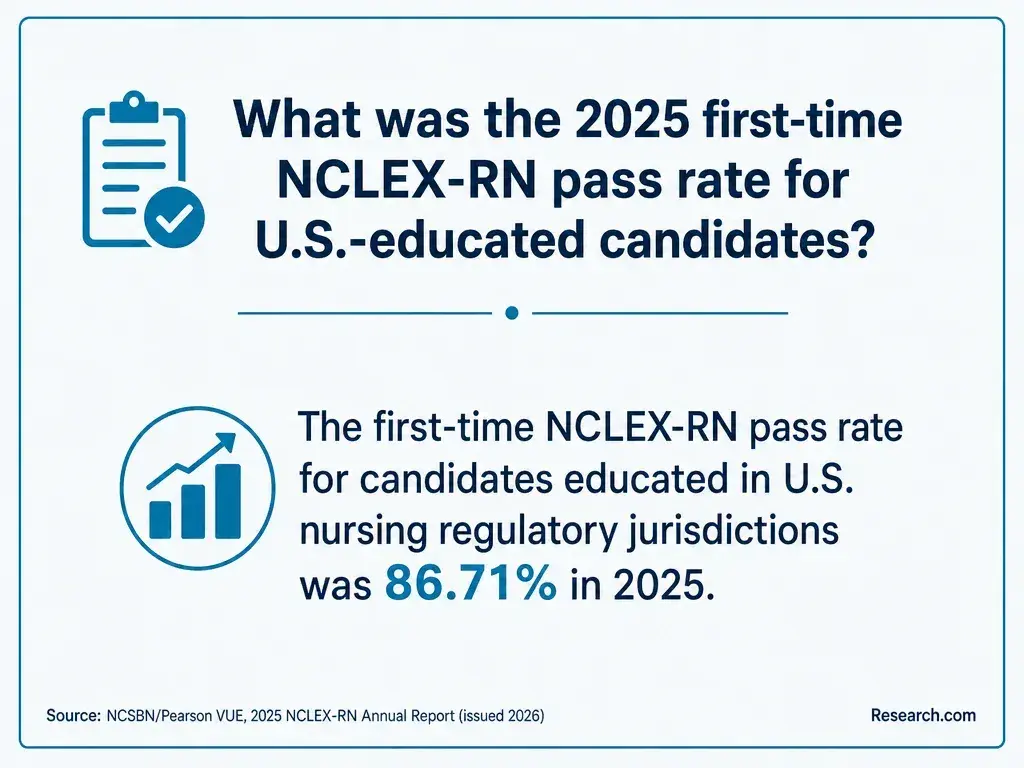
Then ask about oncology clinical exposure and partnerships without assuming a particular placement is guaranteed. Compare NCLEX outcomes using the school's reporting year and cohort, total cost and required on-site attendance, and access to faculty support.
After licensure, evaluate employers' oncology orientation just as carefully as the degree program. A short online Doctor of Nursing Practice degree is not necessary for entry into infusion RN work; consider doctoral study only if it serves a separate, clearly defined career goal.
Other Things You Should Know About Nursing
Some employers offer part-time or per-diem roles. Ask about minimum shifts, training availability, and whether the schedule still allows enough practice to maintain required competencies.
Employers should train staff on their hazardous-drug procedures and provide the required protective equipment and engineering controls. Ask how the center handles administration, spills, and exposure reporting.
It can be. Nurses may spend long periods standing, assist patients with mobility, and respond rapidly to urgent problems. The demands vary with staffing, clinic layout, and patient mix.
Yes. Assessment, medication safety, and patient education transfer well, but a new specialty may require additional orientation and competency validation. Ask the receiving employer what experience it accepts.
- Chapter 23 IV Therapy Management - Nursing Skills - NCBI https://www.ncbi.nlm.nih.gov/books/NBK593209/
- Basic Infection Control and Prevention Plan for Outpatient Oncology Settings | HAIs | CDC https://www.cdc.gov/healthcare-associated-infections/hcp/prevention-healthcare/outpatient-oncology.html
- Improving escalation of deteriorating patients through... - PMC https://pmc.ncbi.nlm.nih.gov/articles/PMC10882274/
- Practice - Texas Board of Nursing Position Statements https://www.bon.texas.gov/practice_bon_position_statements_content.asp
- Mental health at work | who.int https://www.who.int/news-room/fact-sheets/detail/mental-health-at-work
- Care Coordination | mercer.edu https://med.mercer.edu/library/Cancer/coordination.html
- ACCC | Oncology Nursing https://www.accc-cancer.org/education-and-resources/practice-management-operations/fundamentals/oncology-services/oncology-nursing