2027 Online Health Information Degrees for RHIT-to-RHIA Advancement

Co-Founder and Chief Data Scientist
RHITs considering a bachelor's completion degree need to know whether it will actually qualify them for the RHIA exam—not simply add credits. The U.S. Bureau of Labor Statistics projects 9% growth for medical records specialists from 2023 to 2033, while health information leadership increasingly requires stronger analytics, compliance, and management skills.
This guide explains RHIA eligibility, online degree formats, transfer-credit decisions, costs, career outcomes, and the questions to ask before enrolling.
Key Things You Should Know
- An RHIT credential alone does not qualify a candidate for the RHIA exam; candidates generally need a CAHIIM-accredited bachelor's or master's degree in health information management.
- Online bachelor's completion programs can be practical for working RHITs, but transfer-credit evaluations, required experiential learning, and course sequencing determine whether a program is truly accelerated.
- RHIA-aligned advancement can support movement into coding leadership, privacy, data governance, revenue cycle, and HIM management; medical and health services managers had a $117,960 median annual wage in May 2024, although not every RHIA role is a management position.
How does advancing from RHIT to RHIA change your health information career path?
The Registered Health Information Technician credential is generally associated with operational health information work, such as records processing, coding support, release of information, data quality, and registry functions. The Registered Health Information Administrator credential is designed for professionals prepared at the baccalaureate or graduate level to oversee information governance, analytics, privacy, compliance, workflow design, and HIM operations.
The comparison below shows the practical distinction readers should use when deciding whether bachelor's-level advancement fits their goal:
| Career factor | RHIT-oriented path | RHIA-oriented path |
| Typical education base | Associate-level HIM preparation | Bachelor's or master's HIM preparation |
| Common focus | Records operations, coding support, data integrity | Leadership, governance, analytics, compliance, strategy |
| Typical work scope | Individual processes and department workflows | Department oversight and organization-wide information practices |
| Best fit | Professionals building technical HIM experience | Professionals seeking management or advanced HIM responsibilities |
Choose the RHIA route if you enjoy translating regulations and data requirements into operational decisions, supervising people or projects, and working across clinical, financial, legal, and technology teams. Consider remaining in an RHIT-focused specialty if you prefer hands-on coding, records operations, or a faster return on a smaller education investment.
What online health information degrees support RHIT-to-RHIA credential advancement?
The most direct online option is a CAHIIM-accredited bachelor's degree in health information management or health information administration. Some schools offer degree-completion formats specifically structured for students with an associate degree in HIM, while others admit transfer students into a traditional four-year curriculum. The degree title matters less than the program's accreditation status and RHIA exam eligibility.
Programs commonly fall into the following categories. Each option has a different purpose, so applicants should not assume that any health-related bachelor's degree creates RHIA eligibility.
| Program type | Can it typically support RHIA eligibility? | When it makes sense |
| CAHIIM-accredited bachelor's HIM program | Yes, when graduation and other current exam requirements are met | Best direct route for RHITs seeking RHIA eligibility |
| CAHIIM-accredited master's HIM program | Yes, when graduation and other current exam requirements are met | Best for applicants who already hold a bachelor's degree |
| Health informatics, healthcare administration, or public health bachelor's degree | Usually not by itself | Useful for related careers, but verify certification alignment before enrolling |
| Post-baccalaureate certificate | Usually not by itself | Useful for focused skills, not a substitute for an eligible HIM degree |
A broader health informatics degree can be valuable for analytics or technology roles, but it may not include the HIM curriculum and accreditation required for RHIA certification. Likewise, students comparing easy degrees should be cautious: the quickest-feeling major is not necessarily the credential-qualifying choice for an RHIA goal.
Before applying, request written confirmation that the exact online program and anticipated graduation term meet current RHIA exam eligibility standards. Do not rely on a school's general statement that it is "accredited" or that it offers health information courses.
What are the education and experience requirements to sit for the RHIA exam?
RHIA eligibility is based primarily on education. Candidates generally must graduate from a bachelor's or master's degree program in health information management accredited by the Commission on Accreditation for Health Informatics and Information Management Education (CAHIIM). AHIMA administers the RHIA examination and sets the current application rules, so applicants should confirm requirements directly before submitting an application.
Professional experience as an RHIT, coder, registrar, or medical records specialist can strengthen your readiness and résumé, but it does not normally replace the eligible degree requirement. This is the most important distinction for experienced technicians considering a less expensive non-HIM bachelor's program.
Use this sequence to avoid investing in a program that does not lead to your intended credential:
- Confirm that the specific bachelor's or master's HIM program—not merely the institution—is CAHIIM accredited.
- Ask whether the online track, concentration, and expected graduation date are included within that accreditation.
- Obtain a transfer-credit review showing remaining HIM courses, general education requirements, and any practicum or professional practice experience.
- Review the current RHIA candidate guide and application policies before your final term.
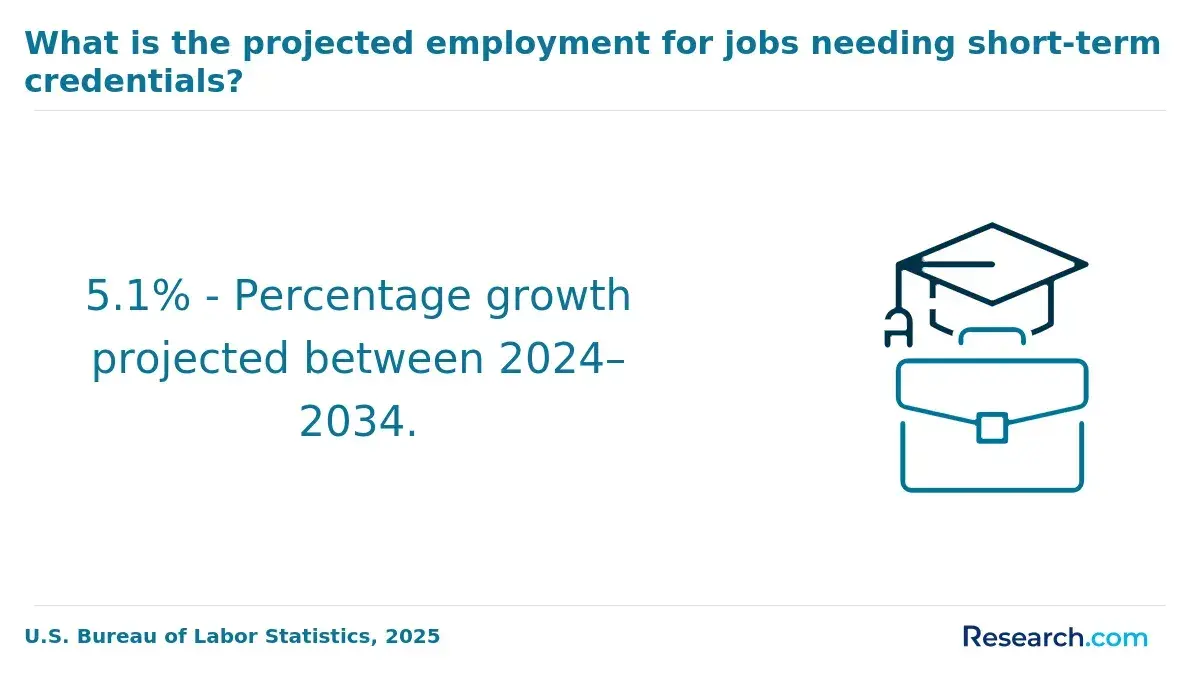
Short certificates can help an RHIT build a focused skill such as coding, privacy, or data analytics, but they should not be confused with an RHIA pathway. If your near-term goal is employability rather than credential advancement, compare relevant short term certificate programs alongside employer requirements and the cost of a full degree.
How do online RHIA-track health information programs compare to campus programs?
Online and campus programs can lead to the same degree and certification eligibility when the program is appropriately accredited. The meaningful differences are delivery, scheduling, access to faculty and peers, required field experiences, and how much self-direction you can sustain while working.
This comparison can help you identify the format that matches your work schedule and learning preferences:
| Factor | Online program | Campus program |
| Schedule | Often asynchronous, with assignment deadlines and possible live sessions | Usually fixed meeting times and commute requirements |
| Best for | Working RHITs needing location flexibility | Students who benefit from routine and in-person access |
| Networking | Requires intentional virtual engagement and local professional outreach | May offer more immediate peer and faculty contact |
| Experiential learning | May be arranged near the student's location or completed through virtual projects | May use local institutional partnerships |
| Primary risk | Underestimating weekly workload and group-project demands | Limited flexibility for full-time employment |
Online learning is usually the better fit for an employed RHIT who can reserve consistent study time and communicate proactively. Campus study may be stronger for someone changing careers, needing structured academic support, or seeking frequent in-person contact. In either format, ask how faculty advise students, how practicum placements work, and whether tutoring and career services are available remotely.
Which accreditation and program standards should RHITs verify before enrolling?
For RHIA advancement, CAHIIM programmatic accreditation is the central verification step. Institutional accreditation alone is not enough because it evaluates the college broadly rather than confirming that the HIM curriculum meets profession-specific standards. A school may be regionally or institutionally accredited while offering a health-related degree that does not qualify graduates for the RHIA exam.
Verify these points in writing before paying an enrollment deposit. They address the common errors that most often delay RHIA eligibility.
- Confirm the program's CAHIIM accreditation status and whether it applies to the precise degree and online delivery option you will complete.
- Ask whether graduates of the program are eligible to apply for the RHIA exam and request the answer by email.
- Review the curriculum for management, data analytics, privacy, coding, revenue cycle, information systems, and professional practice components.
- Check whether the school requires background checks, drug screening, immunizations, software purchases, travel, or unpaid experiential learning.
- Compare graduation, retention, certification-exam, and employment information when the school publishes it, while recognizing that outcomes do not predict an individual result.
A red flag is vague language such as "prepares students for healthcare administration careers" without a direct statement about RHIA eligibility. Another is an advisor who cannot explain how transferred associate-level HIM coursework will be applied. Pause enrollment until both accreditation and transfer details are documented.
What courses and competencies are covered in RHIA-focused health information curricula?
RHIA-focused curricula build beyond entry-level records and coding knowledge. Students learn how health information moves through an organization, how data quality affects care and reimbursement, and how leaders manage risk, people, systems, and change. Course names differ by school, but accredited programs typically cover similar competency areas.
The following course areas indicate whether a curriculum is developing administrator-level breadth rather than offering only general healthcare coursework.
| Curriculum area | Why it matters in RHIA-level work |
| Healthcare data management and analytics | Supports data quality, reporting, dashboards, and decision-making |
| Privacy, security, and legal issues | Supports compliant release, protection, and governance of health information |
| Revenue cycle and reimbursement | Connects documentation, coding, payment, and audit processes |
| Information systems and interoperability | Builds fluency with electronic health records, data exchange, and system workflows |
| Leadership and project management | Prepares students to supervise teams and implement process improvements |
| Quality improvement and population health data | Connects information management with organizational performance |
Artificial intelligence and automation are changing the work, especially in coding support, document classification, record retrieval, and data abstraction. That does not eliminate the need for HIM professionals; it increases the value of people who can validate data, oversee privacy controls, audit automated outputs, and translate regulations into safe workflows. Look for courses that teach governance and critical evaluation, not only software navigation.
What are typical admission requirements for online RHIA-qualifying bachelor's programs?
Admission requirements vary, but RHIT-to-RHIA applicants commonly submit an application, official transcripts, a minimum GPA, and evidence of prior college coursework. A current RHIT credential may be preferred or useful for admission at some schools, especially in degree-completion programs, but it is not universally required.
Applicants transferring from an associate HIM program should focus on the details below because they affect both time to completion and total cost.
- Request an official evaluation of general education, HIM, coding, and technical credits rather than relying on an informal estimate.
- Ask whether credits have an age limit, particularly for science, technology, or coding courses.
- Identify prerequisite courses in statistics, anatomy and physiology, English composition, or computer applications before selecting a start term.
- Confirm whether a separate application is required for the HIM major after university admission.
- Ask how practicum requirements are scheduled for online students and whether your employer can serve as an approved site.
If you already have a bachelor's degree in another field, a CAHIIM-accredited master's program may be more efficient than earning a second bachelor's degree. Compare program length, prerequisites, total charges, and RHIA eligibility. Some 1 year master's programs online may be appealing for speed, but an accelerated master's is only appropriate if it is CAHIIM accredited and you can manage its compressed workload.
How long do RHIT-to-RHIA online pathways take, and what do they cost?
Completion time depends more on accepted transfer credits and course availability than on the "online" label. A student entering with an associate degree in HIM may need roughly two additional years of full-time study, while part-time students often need longer. Missing general education prerequisites, limited upper-division course sequencing, and required professional practice experiences can extend the timeline.
Tuition is only one part of the investment. For context, average published tuition and fees for the 2024-25 academic year were $11,610 at public four-year institutions for in-state students and $43,350 at private nonprofit four-year institutions. Published price is not the same as net price, so use each school's financial-aid offer and total remaining-credit estimate to compare affordability.
Build a realistic budget using the categories below rather than comparing only a per-credit tuition figure:
- Tuition for all remaining credits after the official transfer evaluation
- Mandatory online, technology, graduation, and course-material fees
- Certification examination, application, and preparation costs
- Potential costs for background checks, travel, practicum compliance, or lost work hours
- Grants, employer tuition assistance, military benefits, scholarships, and federal aid for eligible students
An associate degree can be a cost-effective starting point for future advancement, particularly when credits transfer cleanly. Readers still exploring that foundation can compare 2 year degrees but should verify that the associate HIM program supports RHIT preparation and that the intended bachelor's program accepts its credits.
To assess return on investment, compare the net cost and expected completion date with the responsibilities you want next—not with a promised salary. An RHIA may improve access to leadership-track opportunities, but promotion often also depends on experience, local demand, management ability, and employer structure.
What jobs, responsibilities, and salary ranges can RHIA graduates expect?
RHIA preparation can support roles in hospitals, physician groups, health systems, insurers, government agencies, consulting firms, vendors, and public health organizations. Job titles are not standardized, and many employers list a bachelor's degree, HIM experience, or a related credential as preferred rather than mandatory.
The table summarizes common directions after RHIA-level education. Salary varies by location, seniority, setting, and employer, so titles should be treated as career examples rather than guaranteed outcomes.
| Potential role | Typical responsibilities | Common preparation beyond the degree |
| HIM manager | Oversees records operations, staff, policies, compliance, and department performance | Leadership experience and operational HIM knowledge |
| Privacy or information governance specialist | Supports policy, access controls, audits, release processes, and risk management | Privacy, compliance, and systems experience |
| Clinical data or quality analyst | Validates data, prepares reports, and supports quality measurement | Analytics skills and familiarity with healthcare data standards |
| Revenue cycle or coding operations supervisor | Manages coding workflows, denials, documentation quality, and staff performance | Coding and reimbursement experience |
| Health informatics project coordinator | Supports implementation, workflow redesign, testing, and stakeholder communication | Project management and EHR workflow knowledge |
The closest broad federal occupation for senior administrative roles is medical and health services managers, whose median annual wage was $117,960 in May 2024. That figure includes many managers outside HIM and generally reflects roles requiring substantial responsibility and experience; it should not be interpreted as an entry-level RHIA salary. Medical records specialists, a more operational occupation, had a $50,250 median annual wage in the same period.
The strongest career strategy is to pair the degree with progressively responsible work. Volunteer for privacy audits, data-quality projects, EHR upgrades, coding-denial analysis, committee work, or team-lead responsibilities while enrolled.
How is demand changing for RHIT and RHIA professionals in health information management?
Demand is being shaped by electronic health record use, interoperability requirements, cyber risk, reimbursement complexity, quality reporting, and the need to manage increasingly large health-data environments. Automation can streamline repetitive record tasks, but it also creates demand for professionals who can govern data, investigate discrepancies, protect patient information, and oversee compliant processes.
The U.S. Bureau of Labor Statistics projects 9% employment growth for medical records specialists from 2023 to 2033, faster than the average projected growth rate for all occupations. This supports a favorable general outlook for operational HIM work, although it does not measure RHIA-specific openings or guarantee local hiring conditions.
For management-oriented advancement, the outlook is also shaped by the broader medical and health services manager occupation, which is projected to grow 29% from 2023 to 2033. RHIA candidates should view this as evidence of expanding healthcare management demand, not proof that every manager role requires an RHIA. Employers may prioritize a combination of degree level, HIM expertise, leadership record, and familiarity with their systems.
To stay competitive, develop capabilities that complement automation rather than compete with it: data governance, privacy and security awareness, audit readiness, analytics interpretation, change management, and clear communication with clinical and technical teams.
Other Things You Should Know About Health Information Management
Usually no. RHIT experience is valuable, but RHIA eligibility generally requires graduation from a CAHIIM-accredited bachelor's or master's degree program in health information management. Confirm current rules before applying.
An online degree can be respected when it comes from an appropriately accredited program and you can demonstrate relevant skills and experience. Employers typically care more about eligibility, competence, work history, and the ability to handle HIM responsibilities than whether lectures were online.
Not necessarily. If you already hold a bachelor's degree in another field, a CAHIIM-accredited master's HIM program may be a better route. Compare prerequisites, total cost, length, and the program's written RHIA eligibility statement.
The biggest mistake is enrolling in a general health informatics or healthcare administration degree without confirming CAHIIM accreditation and RHIA exam eligibility. Obtain written confirmation and a formal transfer-credit evaluation before committing.
References
- Online Health Information Management Degrees: Top Schools https://www.edumed.org/online-schools/health-information-management-degrees/
- Online Bachelor's Degree-Completion Program (RHIT-to-RHIA) https://www.kumc.edu/school-of-health-professions/academics/departments/health-information-management/academics/health-information-management/online-bachelors-degree-completion-program-(rhit-to-rhia).html
- Online RHIT Programs - RHIT 101 https://rhit101.com/online-rhit-programs/
- Online Health Information Management Programs (2026) https://healthinformationmanagementprograms.com/programs/online-him-programs/