2027 Online Degrees With Employer Tuition Benefits That Reset by Calendar Year, Not Academic Year

Co-Founder and Chief Data Scientist
If your employer renews tuition assistance every January 1, when you start an online business administration degree can materially affect how much education you can fund. This guide is for working adults deciding whether to begin, accelerate, or pause coursework around a calendar-year benefit reset. The U.S. Bureau of Labor Statistics projects management occupations to grow faster than the average for all occupations from 2023 to 2033. Learn how annual benefit caps, reimbursement rules, program pacing, accreditation, and career goals fit into a practical enrollment plan.
Key Things You Should Know
- Employer tuition assistance commonly has an annual cap and may reset on January 1, so courses billed or paid in different calendar years can draw from separate benefit balances.
- The federal tax exclusion for employer-provided educational assistance is generally up to $5,250 per employee per calendar year; benefits above that amount may have tax consequences unless another exclusion applies.
- An accredited online business administration program with predictable term dates, employer-friendly billing, and transfer-credit policies can make it easier to use two annual benefit cycles without taking on unnecessary debt.
How do employer tuition benefits work for online business administration degrees that reset yearly?
Calendar-year tuition benefits are employer education programs that renew on January 1 rather than at the start of a college academic year. Your employer may pay the school directly, reimburse you after grades are posted, or combine both methods. The key detail is usually the employer's definition of when an expense counts: the course start date, payment date, invoice date, completion date, or reimbursement date.
For many employees, the central planning question is not simply whether a degree is eligible. It is whether a particular term uses the current year's allowance or the next year's allowance. A December payment for a course beginning in January may use the old balance at one company and the new balance at another. Get that answer in writing from HR or the benefits administrator before registering.
The following comparison shows why benefit design matters more than the label "tuition assistance."
| Benefit feature | What it means for enrollment timing | What to verify |
| Annual dollar cap | Limits the amount available in each calendar year | Whether fees, books, and technology charges count toward the cap |
| Grade requirement | May delay reimbursement until after the term ends | Minimum grade and whether pass/fail courses qualify |
| Preapproval rule | May require approval before registration or payment | Submission deadline and approved degree field |
| Service commitment | May require repayment if you leave soon after reimbursement | Repayment period, exceptions, and amount subject to repayment |
| Calendar-year reset | Can support a January start or strategic split of coursework | Which transaction date determines the benefit year |
Employer assistance can be especially useful for a business administration degree because many programs offer multiple starts, asynchronous classes, and part-time pacing. Still, do not assume the employer will cover every business course. Some plans require the degree to relate to your current role or a future role at the company, while others allow broader education.
The federal tax treatment is separate from your employer's reimbursement policy. Under Internal Revenue Code Section 127, eligible employer-provided educational assistance can generally be excluded from taxable income up to $5,250 per calendar year. Confirm treatment with your employer's payroll or tax team, particularly if your benefit exceeds that amount or includes non-tuition expenses.
What types of business administration degrees qualify for employer tuition assistance programs?
Eligibility depends on the employer plan, not only the school or degree title. Business administration is often a strong fit because it can support operations, finance, sales, project coordination, human resources, management, and entrepreneurship. However, a plan may limit funding to job-related education, accredited institutions, degree programs, or courses completed while you remain actively employed.
These options differ in time commitment and career use, so match the credential to the role you want rather than choosing solely by what appears easiest to fund.
| Credential | Best fit | Typical employer-benefit consideration |
| Business certificate | Employees building a targeted skill, such as project management or analytics | May be quicker to complete but may not qualify if the plan funds only degree-seeking students |
| Associate degree in business administration | New college students or employees seeking foundational business coursework | Can be a lower-cost starting point and may transfer into a bachelor's program |
| Bachelor's degree in business administration | Professionals seeking broader advancement or entry into many business roles | Usually aligns well with career-development policies, subject to grade and approval rules |
| Master of Business Administration | Experienced professionals pursuing management or strategic leadership roles | May require a stronger job-related rationale and can exceed annual caps quickly |
| Specialized business master's degree | Professionals focused on analytics, finance, accounting, or supply chain work | May be a better fit than an MBA when the curriculum directly supports a technical job path |
A bachelor's degree is often the most versatile choice for employees who need a recognized undergraduate credential and want broad access to business roles. An MBA is more appropriate when you already have a bachelor's degree, relevant work experience, and a clear reason to pursue management-level responsibility. If graduate admission is your concern, compare program requirements carefully; guides to easiest masters programs to get into can help you distinguish flexible admissions practices from programs that are simply a poor match for your goals.
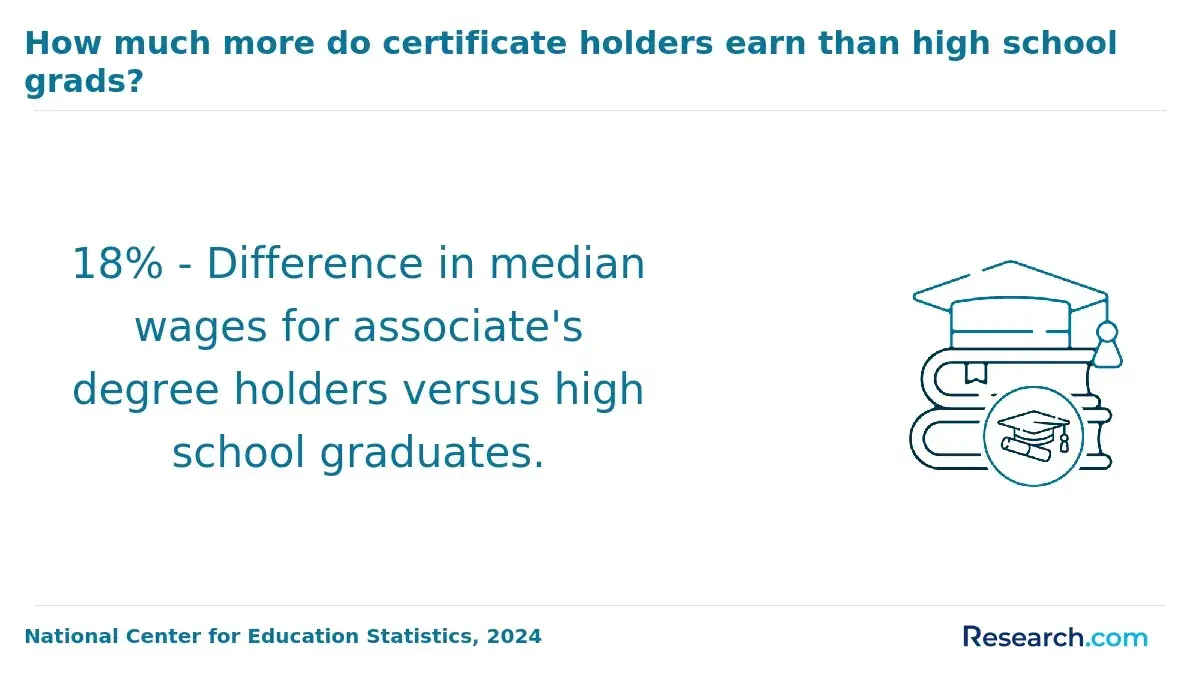
A certificate can be the smarter option when your employer's annual cap is modest and you need an immediate skill for a promotion. It may not replace a degree for positions that specify a bachelor's credential, so review job postings in your target field before choosing it as a substitute.
Which accredited online business administration schools align well with employer tuition policies?
The best school is not automatically the lowest-tuition or fastest program. For employer-funded students, a strong match combines recognized institutional accreditation, a business curriculum aligned with your goals, clear tuition billing, accessible student support, and term schedules that work with the employer's calendar-year rules.
Start by confirming institutional accreditation through an accreditor recognized by the U.S. Department of Education or the Council for Higher Education Accreditation. Programmatic business accreditation can be an added quality signal, but it is not required for every worthwhile business administration program or for most general business jobs. If you may transfer later, ask how credits will be evaluated rather than relying on accreditation alone.
Use this screening framework when comparing schools. It focuses on features that can affect whether your employer money is usable in practice.
| School feature | Why it matters with annual benefits | Question to ask |
| Accreditation status | Employers often require accredited institutions | Is institutional accreditation current, and will you provide documentation for my employer? |
| Term calendar | Course dates affect which benefit year may apply | When are tuition charges posted, and are January starts available? |
| Billing options | Direct billing can reduce out-of-pocket costs | Do you accept employer vouchers, letters of credit, or third-party payment? |
| Transfer-credit review | Transferred credits can reduce remaining tuition and time | What prior college, military, professional, or workplace learning may be reviewed? |
| Online course format | Working adults need realistic scheduling | Are classes asynchronous, scheduled live, or a combination? |
| Withdrawal policy | Withdrawal can create repayment or uncovered charges | What happens to tuition and employer billing if I drop a course? |
Public universities, private nonprofit universities, and private for-profit institutions can all offer online business programs. Institution type alone does not determine quality or return on investment. Compare net tuition after employer aid, graduation requirements, transfer rules, academic support, and whether the curriculum serves your intended occupation.
A common mistake is selecting a school because it advertises a short completion time without checking how accelerated terms affect workload, financial aid, and reimbursement timing. If short terms fit your work schedule, review options for 6 week college courses online, then confirm that compressed courses meet your employer's preapproval and grade requirements.
How should students time enrollment when employer tuition benefits reset on January 1?
For a calendar-year benefit, timing should be planned backward from the employer's approval, payment, and reimbursement rules. A January reset can make it possible to use one benefit balance for a fall term and another for a spring term, but only when the plan's qualifying date supports that approach. Do not register based on assumptions about the school calendar.
Follow these steps before enrolling to protect both your benefit and your cash flow.
- Read the current employer education policy, including the definition of the benefit year and the deadline for preapproval.
- Ask HR whether eligibility is based on the class start date, tuition payment date, invoice date, final grade date, or reimbursement date.
- Request the school's academic calendar, tuition due dates, refund schedule, and employer billing procedures.
- Map planned courses against the remaining annual cap, including required fees and books if those expenses are eligible.
- Submit degree and course information for written approval before making a nonrefundable payment.
- Keep enrollment confirmations, itemized receipts, final grades, and approval records until reimbursement is complete.
A December-to-January transition deserves special attention. If reimbursement occurs after grades are posted, a course ending in January could be charged against the new benefit year even if you registered earlier. Conversely, an employer may count tuition when paid, which could place a January course on the prior year's balance if you pay in December.
Employees pursuing a bachelor's degree often benefit from steady part-time enrollment: one or two courses at a time can preserve work performance and spread costs across multiple resets. Choose a heavier schedule only if the employer cap, course load, and personal obligations make the pace sustainable. Accelerating simply to use every available dollar can backfire if a lower grade causes reimbursement to be denied.
Also review what happens if you change jobs. Some policies end eligibility immediately upon separation, while others reimburse completed coursework if you were employed on the course start or end date. A service agreement may require repayment after a voluntary departure, so factor career mobility into the decision.
What admission requirements apply to online business administration programs using employer tuition funds?
School admission and employer benefit approval are separate processes. Meeting one does not guarantee the other. Most online associate and bachelor's business administration programs request an application, official or unofficial transcripts during review, and evidence of high school completion or an equivalent credential. Transfer applicants typically need college transcripts from prior institutions.
MBA and specialized master's programs usually require a completed bachelor's degree. They may also evaluate undergraduate GPA, professional experience, a résumé, recommendations, essays, prerequisite coursework, or quantitative readiness. Some programs do not require standardized test scores, but a test-optional policy does not mean all applicants are admitted.
Before applying, prepare documents that satisfy both parties. The school needs academic records, while the employer may need the program name, accreditation evidence, course descriptions, costs, term dates, and a written explanation of job relevance.
For employees with a prior conviction, admission and benefit eligibility can vary by institution and employer. Resources on online colleges that accept felons may help identify schools with clearer policies, but applicants should still ask about admissions review, internships, background checks, and career restrictions tied to their intended field.
Red flags include a school that will not clearly disclose accreditation, total graduation requirements, transfer evaluation procedures, or refund terms. Another frequent mistake is applying after an employer's preapproval deadline. Build enough lead time for transcript requests, school admission, and benefit authorization.
How do online and campus business administration programs compare for working adults using tuition benefits?
Online and campus programs can lead to the same degree level, but their day-to-day demands differ. For employees using annual tuition benefits, the better format is the one that lets you complete courses successfully within the employer's rules while maintaining work responsibilities.
This comparison highlights trade-offs that matter when reimbursement depends on satisfactory completion.
| Factor | Online program | Campus program |
| Scheduling | Often supports asynchronous work and reduced commuting | May offer more fixed meeting times and travel requirements |
| Course pacing | Can include accelerated or standard terms | Often follows a traditional semester structure, though evening options exist |
| Networking | Requires intentional participation in virtual discussions and events | May provide more face-to-face interaction with classmates and faculty |
| Employer compatibility | Useful for employees with variable shifts or remote locations | Useful when the employer, campus, and class schedule are geographically convenient |
| Learning fit | Best for self-directed students comfortable with learning platforms | Best for students who benefit from structured in-person routines |
Online study is not automatically easier. It requires time management, reliable technology, active communication, and enough weekly study time to complete reading, projects, quizzes, and group work. If your employer requires a minimum grade for reimbursement, select a course load you can realistically finish well.
Campus study can make sense if you value in-person networking, need access to local academic services, or learn better through scheduled meetings. Hybrid formats can be a practical middle ground, but confirm whether travel, parking, lab, or residency costs are excluded from your employer's benefit.
Working adults who need the lowest possible graduate-school cost should compare total tuition and required fees rather than format alone. A guide to what is the cheapest online master's degree program can help frame that comparison, especially when an annual employer cap covers only part of a master's degree.
What core courses and specializations are offered in online business administration degrees?
Business administration programs teach how organizations make decisions, allocate resources, serve customers, manage people, and measure performance. The exact curriculum varies by degree level and school, but an online bachelor's program commonly combines general education with foundational business coursework.
Core courses often provide the broad business literacy employers expect across industries.
- Financial and managerial accounting
- Microeconomics and macroeconomics
- Business finance
- Marketing principles
- Management and organizational behavior
- Business law and ethics
- Operations or supply chain management
- Business statistics, analytics, or information systems
- Strategic management capstone
Specializations can make the degree more relevant to a target role. Common options include accounting, finance, human resources, healthcare management, marketing, entrepreneurship, project management, supply chain management, information systems, and business analytics. Choose a specialization only after comparing it with actual role requirements; a general track can be better for employees who want flexibility across departments.
AI and automation are influencing business work, particularly in reporting, customer relationship management, forecasting, and routine administrative tasks. Look for coursework that develops data interpretation, ethical decision-making, communication, process improvement, and responsible technology use. These capabilities can remain useful even as software changes.
A common mistake is selecting a concentration because it sounds marketable without checking whether it includes the skills or prerequisites employers request. For example, finance and analytics paths may require more quantitative coursework than a general management concentration. Review course descriptions and speak with an advisor about sequencing before committing.
What is the typical length and total cost of online business administration degrees with employer funding?
Completion time depends on degree level, transfer credits, course load, program calendar, and whether required courses are available when needed. An associate degree commonly requires about 60 semester credits, while a bachelor's degree commonly requires about 120 semester credits. A master's program is typically shorter in credits but may require prior coursework or professional experience.
Total cost is more than published tuition. Employer-funded students should calculate the remaining balance after approved aid, then consider mandatory fees, books, software, proctoring, graduation charges, and any interest or financing cost created by delayed reimbursement.
The table provides a planning model rather than a price quote. Request a written estimate from each school because tuition and employer coverage vary widely.
| Degree path | Common pacing for working adults | Cost-planning issue with annual benefits |
| Associate degree | Part-time over multiple terms, potentially shorter with transfer credit | Lower overall credit requirement may fit within several annual caps |
| Bachelor's degree completion program | Often designed for students transferring prior college credit | Transfer evaluation can substantially reduce remaining employer-funded tuition |
| Traditional bachelor's degree | Multiple years when taken part-time | Annual resets can support steady progress if tuition stays within each year's allowance |
| MBA or specialized master's degree | Often completed part-time over several terms | A single term may exceed the annual cap, creating out-of-pocket costs |
To estimate affordability, subtract your confirmed annual benefit from eligible annual education charges, not from the program's advertised total price. Then model what happens if reimbursement arrives only after final grades. If you cannot comfortably front the cost, ask the school about employer direct billing, payment plans, and the effect of those options on registration.
Federal student aid may be available to eligible students, but borrowing should be considered carefully when employer funds can cover part of the cost. Complete the Free Application for Federal Student Aid if you may need federal aid, and avoid assuming that a tuition benefit replaces all financial-aid paperwork. Grants, loans, tax treatment, and employer assistance can interact differently based on the student's circumstances.
What business administration careers and job roles can graduates pursue with employer-backed degrees?
A business administration degree can support roles across private companies, government agencies, nonprofit organizations, healthcare systems, financial services, retail, logistics, and technology. It is most valuable when paired with work experience, demonstrated skills, and a specialization relevant to the target job. Employer funding can be particularly strategic when the degree supports an internal move into a role with clearer advancement potential.
These examples show how the degree can connect with different career directions. Actual qualifications vary by employer, industry, and level of responsibility.
| Role direction | Typical focus | Helpful degree emphasis |
| Operations coordinator or manager | Processes, scheduling, quality, and resource use | Operations, supply chain, or general management |
| Project coordinator or project manager | Planning, timelines, stakeholders, and delivery | Project management, operations, or management |
| Human resources specialist | Recruiting, employee relations, and policy administration | Human resources or management |
| Marketing specialist or manager | Market research, campaigns, customer engagement, and brand strategy | Marketing, analytics, or digital business |
| Financial analyst or budget analyst | Financial planning, reporting, and decision support | Finance, accounting, or business analytics |
| Sales manager or account manager | Customer relationships, revenue goals, and team performance | Marketing, management, or general business |
For current employees, the strongest case for employer funding is often an identifiable skills gap between your current job and a realistic next role. Document how specific courses develop capabilities your department needs, such as budgeting, team leadership, data analysis, process improvement, or customer strategy.
Do not treat a general business degree as a replacement for regulated credentials. Accounting roles may require specific coursework for CPA licensure, and some human resources, project management, or financial services roles may favor separate professional certifications. Check state rules, certification-body requirements, and job postings before assuming a degree alone meets every qualification.
What salaries and job outlook can business administration graduates expect in today's labor market?
Salary potential is tied more closely to occupation, experience, location, industry, performance, and technical skills than to the business administration degree title alone. The degree can broaden access to business roles, but it does not guarantee a specific job or pay level. Use occupational data to assess the particular career path you are considering.
The U.S. Bureau of Labor Statistics reports that management occupations had a median annual wage of $116,880 in May 2023, substantially above the median for all occupations. This figure covers a wide range of roles, many of which require significant experience in addition to education, so it should not be interpreted as an entry-level business graduate salary.
Management occupations are projected to grow faster than the average for all occupations from 2023 to 2033, according to BLS projections. That broad outlook suggests continued demand for people who can coordinate teams, budgets, operations, and strategy, but opportunities will differ by specialty. Analytics, supply chain, healthcare administration, finance, and technology-enabled operations can have different hiring patterns than general office management.
To evaluate return on investment, compare the remaining tuition you would pay after employer aid with the likely value of the next role, not only with a broad occupational median. Look at internal job descriptions, external postings in your region, advancement requirements, and whether the degree helps you qualify for a promotion already available at your employer.
Be cautious of schools or advertisements that imply a degree automatically creates a management career. A better approach is to combine coursework with measurable workplace experience: lead a project, improve a process, complete a budget analysis, build a dashboard, or participate in cross-functional work. Those examples make the degree more credible to employers.
Other Things You Should Know About Business Administration
Possibly, but the answer depends on your employer's plan. Ask whether the benefit year is determined by the course start date, payment date, invoice date, completion date, or reimbursement date. Obtain the answer before registering because a cross-year course can be treated differently across employers.
Some plans cover only tuition, while others include required fees, textbooks, or course materials. Review the eligible-expense definition and submit itemized documentation. School charges that are mandatory are not automatically employer-eligible.
Employers generally focus on the degree level, institution, accreditation, relevant skills, and your work experience. A clearly accredited program with rigorous coursework and a credential that supports your target role is usually more important than whether most instruction occurred online or on campus.
Waiting can make sense if a January start gives you a full new annual benefit balance and your employer counts costs at enrollment or payment. Starting earlier may be better if you have unused current-year funds that would otherwise expire. Compare both options using your employer's written timing rules and the school's billing calendar.
References
- Tuition Reimbursement Programs [A Guide for HR and Employers] https://compt.io/blog/employee-tuition-reimbursement/
- Frequently asked questions about educational assistance programs | Internal Revenue Service https://www.irs.gov/newsroom/frequently-asked-questions-about-educational-assistance-programs
- How to Use Your Employer's Tuition Benefit Before It Expires This Year https://www.calmu.edu/how-to-use-your-employers-tuition-benefit-before-it-expires-this-year