2027 Is an Online Information Security Doctorate Worth It? ROI, Salary Growth, and Career Impact

Co-Founder and Chief Data Scientist
An online information security doctorate can be a powerful credential, but it is not an automatic financial win. The U.S. Bureau of Labor Statistics projects information security analyst employment to grow 29% from 2024 to 2034, much faster than average, which makes advanced cybersecurity leadership increasingly important.
This guide is for experienced security, IT, risk, and technology professionals weighing doctoral study against cost, time, debt, and career goals. You will learn where the degree can pay off, where it may not, and how to calculate a realistic return before enrolling.
Key Things You Should Know
- An online information security doctorate usually has the strongest ROI for professionals targeting executive cybersecurity leadership, research, consulting, policy, or faculty roles-not for early-career analysts seeking their first security job.
- BLS data show a May 2024 median wage of $124,910 for information security analysts and $171,200 for computer and information systems managers, but those figures reflect occupations, experience, industry, and location-not a guaranteed doctorate premium.
- ROI depends on total program cost, completion time, employer tuition support, lost earnings, and whether your target employers reward doctoral-level expertise; a lower-cost master's degree or certification may be the better return for some goals.
What Is the ROI of an Online Information Security Doctorate?
The ROI of an online information security doctorate is the value you receive from the degree compared with what you spend to earn it. In practical terms, ROI includes direct financial return, such as higher pay or promotion potential, and nonfinancial return, such as credibility, research capability, policy influence, and access to senior roles.
For most students, the degree is worth considering only after they already have meaningful cybersecurity, IT, engineering, military, intelligence, risk, or compliance experience. If you are still building foundational skills, a lower-cost cybersecurity degree online may create a better first-stage return than moving directly into doctoral study.
A realistic ROI calculation should separate costs you can measure from benefits you can reasonably expect. The most useful framework is simple but strict:
- Estimate the full cost of attendance, including tuition, fees, books, residencies, technology fees, travel, and dissertation or project continuation fees.
- Subtract grants, scholarships, employer tuition assistance, military benefits, or other funding that does not need to be repaid.
- Add loan interest and any income you may lose if you reduce work hours.
- Estimate the salary increase you could realistically receive in your target role, not the highest salary you see advertised.
- Divide your net cost by your expected annual earnings increase to estimate your payback period.
For example, the financial case looks very different for a security architect whose employer pays most tuition and promotes doctoral-level research expertise than it does for a mid-career professional who borrows the full cost without a clear promotion path. The degree can improve long-term positioning, but ROI is strongest when the credential is tied to a specific role change.
This table summarizes the major ROI variables and how each one affects the decision.
| ROI factor | Why it matters | How it can improve or weaken return |
| Total program cost | Higher tuition and fees extend the time needed to recover the investment. | Lower-cost accredited programs and employer support improve ROI. |
| Current experience level | Doctorates usually reward professionals who can apply advanced expertise immediately. | Senior practitioners may see stronger returns than career changers. |
| Target role | Some roles value doctoral research and leadership more than others. | Executive, faculty, research, and consulting paths often make better use of the credential. |
| Time to completion | Longer enrollment increases opportunity cost and may add fees. | Structured programs with clear dissertation support can reduce ROI risk. |
| Employer recognition | Not every employer pays more for a doctorate. | ROI improves when the degree aligns with promotion criteria or leadership tracks. |
How Much Can Salaries Increase After an Online Information Security Doctorate?
Salary growth after an online information security doctorate can be meaningful, but it is usually indirect. The degree itself rarely causes a fixed salary jump. Instead, it may help a professional qualify for higher-responsibility work, chief information security officer pathways, security architecture leadership, cyber risk strategy, research leadership, government policy, specialized consulting, or postsecondary teaching.
The most reliable way to estimate salary impact is to compare your current role with the occupational category you are targeting. BLS May 2024 wage data provide a useful baseline, but these medians should be treated as labor-market reference points, not promises of doctoral pay.
| Occupation | May 2024 median wage | How a doctorate may affect access |
| Information security analyst | $124,910 | A doctorate is usually not required, but it may help analysts move toward strategy, research, or leadership responsibilities. |
| Computer and information systems manager | $171,200 | Doctoral study may strengthen executive credibility when paired with management results and security leadership experience. |
| Computer and information research scientist | $140,910 | A research-focused doctorate can be relevant for advanced security research, secure systems, cryptography, AI security, and applied cyber defense. |
| Software developer | $133,080 | The doctorate may help developers specialize in secure software, product security, or security research, but experience and portfolio still matter heavily. |
The strongest salary growth usually comes from moving into a different level of responsibility, not from adding letters after your name. A security engineer who earns a doctorate but remains in the same job family may see a smaller return than a professional who uses doctoral work to move into enterprise risk leadership or a high-value consulting niche.
Readers should also be careful with salary averages. Compensation varies by region, clearance requirements, industry, company size, bonus structure, and leadership scope. A doctorate can strengthen a promotion case, but it does not replace the need for measurable security outcomes, communication skills, and business judgment.
Which Career Paths Offer the Strongest Financial Return With an Online Information Security Doctorate?
The strongest financial return usually appears in roles where doctoral-level knowledge solves expensive, complex problems. Information security doctorates are most valuable when the work requires advanced research, systems thinking, risk governance, policy design, or the ability to lead security strategy across large organizations.
This comparison can help you identify where the degree is most likely to create financial leverage.
| Career path | Doctoral ROI potential | Why the return may be strong or limited |
| CISO or senior security executive | High for experienced leaders | The doctorate can support credibility in board-level risk discussions, but leadership track record is still the primary driver. |
| Cybersecurity professor or academic researcher | High when a doctorate is required | Faculty and research roles often require or strongly prefer doctoral credentials. |
| Security architect or enterprise security strategist | Moderate to high | The credential can help with complex architecture, governance, and emerging-technology risk, especially in large organizations. |
| Cyber policy, national security, or government research | Moderate to high | Doctoral research can be useful in policy, defense, intelligence, and critical infrastructure contexts. |
| Independent cybersecurity consultant | Variable | The doctorate can signal expertise, but revenue depends on reputation, client acquisition, specialization, and business development. |
| Entry-level analyst or technician | Low | Employers generally prioritize hands-on skills, certifications, and practical experience over doctoral credentials for these roles. |
If your immediate goal is tactical upskilling rather than research or leadership, a focused cyber security course may produce a faster return. Short credentials can be especially useful when you need a specific skill in cloud security, incident response, penetration testing, governance, or compliance.
The key question is whether the doctorate helps you compete for roles where advanced judgment is compensated. If your target job description lists a master's degree, certifications, and experience-but not doctoral research or executive-level strategy-the doctorate may be valuable personally but less efficient financially.
How Does an Online Information Security Doctorate Affect Career Advancement?
An online information security doctorate can affect career advancement by strengthening your credibility as a subject-matter expert, expanding your research skills, and helping you move from implementation to strategy. In many organizations, doctoral training signals that you can frame complex problems, evaluate evidence, write rigorously, and defend recommendations to senior stakeholders.
The career impact is usually strongest in four advancement patterns:
- Moving from technical contributor to security leadership, such as security manager, director of cybersecurity, or enterprise security strategist.
- Moving from practitioner to educator, including full-time faculty, adjunct teaching, curriculum leadership, or corporate training.
- Moving from operations to research, especially in secure systems, threat modeling, AI security, cryptography, privacy engineering, or critical infrastructure protection.
- Moving from employee to expert consultant, where a doctorate may support authority in court testimony, policy advising, board advisory work, or specialized assessments.
Online doctoral programs can also build professional networks through cohort models, residencies, faculty mentorship, and dissertation committees. That network may matter as much as the credential if it connects you with research partners, executive mentors, or consulting opportunities.
However, advancement still depends on performance evidence. Employers are more likely to reward the doctorate when your doctoral work connects to real problems: reducing incident risk, improving governance, designing security architecture, meeting regulatory expectations, or improving resilience. A dissertation topic that aligns with your organization's security priorities may be more valuable than a broad topic with little workplace application.
How Much Does an Online Information Security Doctorate Cost Compared With Its Potential Benefits?
The cost of an online information security doctorate can vary widely by institution, credit requirements, residency obligations, and whether the program charges dissertation continuation fees. For ROI, the important number is not the advertised per-credit tuition; it is the full net cost after aid and employer support.
NCES data published in recent federal higher education reporting show that average graduate tuition and required fees differ sharply by sector. These figures are useful for context, though doctoral cybersecurity programs may cost more or less than the averages depending on school, modality, and credit load.
| Institution sector | Average graduate tuition and required fees for 2022-23 | ROI implication |
| Public institutions | $12,596 | Often attractive for ROI, especially for in-state or public online rates. |
| Private nonprofit institutions | $29,931 | May be worthwhile if the program has strong fit, funding, faculty expertise, and career value. |
| Private for-profit institutions | $14,161 | Requires careful review of accreditation, completion support, reputation, debt, and outcomes. |
Cost should be evaluated against expected benefits, but the comparison must be specific. A $30,000 net cost with employer tuition assistance and a clear promotion path is a different decision from a $90,000 debt-financed degree with no identified role outcome.
When comparing programs, look beyond tuition and ask schools for details that affect total cost:
- Required credits, dissertation credits, and whether tuition changes after coursework ends.
- Residency, travel, lodging, conference, or campus visit requirements.
- Technology, graduation, library, assessment, and continuation fees.
- Transfer credit policies for prior graduate coursework.
- Employer partnership discounts, military benefits, fellowships, assistantships, or scholarships.
- Average time to completion and the kind of dissertation support available.
A common mistake is assuming the cheapest program automatically has the best ROI. Low cost helps, but only if the program is accredited, respected enough for your target employers, and structured well enough for you to finish.
How Does the Time Required for an Online Information Security Doctorate Affect Its ROI?
Time is one of the most underestimated ROI factors in doctoral education. Many online information security doctorates are designed for working professionals, but the workload can still affect consulting income, overtime, family responsibilities, professional development, and promotion timing.
The financial impact of time shows up in three places. First, longer enrollment may increase tuition exposure and fees. Second, delays postpone the career benefits you hope to gain. Third, heavy coursework or dissertation demands may reduce your ability to take on high-value projects while enrolled.
Use this break-even approach before applying:
- Calculate your estimated net cost after grants, tuition assistance, and discounts.
- Add any projected loan interest and income you may lose by reducing work hours.
- Identify the specific role or promotion you are targeting after the doctorate.
- Estimate a conservative annual compensation increase based on that role, not an optimistic outlier.
- Divide total net cost by the annual increase to estimate how many years it may take to recover the investment.
For example, if the degree mainly helps you qualify for a promotion you were already close to earning, the payback period may be short. If you need several years after graduation to move into a higher-paying leadership role, the return may take much longer.
Completion risk also matters. Doctoral programs require sustained writing, independent research, and faculty feedback cycles. A program with strong advising, milestone tracking, methods support, and realistic dissertation expectations may be worth more than a program that appears cheaper but leaves students without clear completion support.
Does an Online Information Security Doctorate Have the Same Career Value as a Campus-Based Degree?
An online information security doctorate can have the same career value as a campus-based degree when it is earned from a properly accredited institution, taught by qualified faculty, and aligned with the student's career goals. Employers usually care more about institutional credibility, program quality, research relevance, and professional experience than whether every course met in person.
That said, online and campus formats can differ in cost, networking, schedule, and research access. The best choice depends on how you learn, what support you need, and whether the program's faculty expertise matches your intended dissertation area.
| Factor | Online doctorate | Campus-based doctorate |
| Scheduling | Often better for full-time professionals and students with family or geographic constraints. | May require relocation or daytime participation. |
| Opportunity cost | Can reduce lost earnings if students continue working. | May involve greater work disruption, especially for full-time study. |
| Networking | Depends on cohort design, residencies, faculty access, and student engagement. | May offer more informal access to labs, seminars, and campus research groups. |
| Research fit | Strong when faculty support remote research methods and applied cybersecurity projects. | Strong when the student needs on-campus labs, funded research teams, or specialized facilities. |
| Employer perception | Generally strongest when the institution is accredited and recognized. | May help in fields or employers that strongly value traditional academic pathways. |
Online doctoral education is also becoming more common in adjacent advanced technology fields. Professionals comparing information security with AI-focused research may review options such as an online PhD in artificial intelligence USA pathway if their career goal is centered on machine learning security, adversarial AI, or automated threat detection.
Before enrolling, verify institutional accreditation through recognized U.S. accrediting bodies and ask whether the transcript or diploma distinguishes online delivery. Also ask employers or mentors in your target field how they view the specific institution, not just online education in general.
How Does an Online Information Security Doctorate Compare With Other Career Advancement Options?
An online information security doctorate is only one route to advancement. For many professionals, a master's degree, graduate certificate, vendor certification, management experience, or specialized AI training may produce a faster and less expensive return.
The best alternative depends on the gap you are trying to close. If you need technical depth, a certification or focused course may be enough. If you need management credibility, an MBA, MS in cybersecurity, or security leadership experience may be more efficient. If you want research, policy, or academic roles, the doctorate becomes more compelling.
| Option | Best fit | Typical ROI profile |
| Online information security doctorate | Experienced professionals seeking research, executive leadership, consulting authority, or faculty roles. | Potentially strong long-term return, but higher time commitment and completion risk. |
| Master's in cybersecurity or information assurance | Professionals seeking advancement into security management, architecture, or specialized technical roles. | Often faster ROI than a doctorate when the target role does not require doctoral study. |
| Cybersecurity certifications | Practitioners needing proof of hands-on skills or management knowledge. | Often strong short-term ROI, especially when tied to job requirements. |
| MBA or technology management degree | Security professionals moving toward business leadership, budgeting, governance, or executive communication. | Useful when advancement depends more on management capability than technical research. |
| AI or data-focused graduate study | Professionals targeting automated security, AI governance, threat intelligence, or secure AI systems. | Strong when paired with cybersecurity experience and demand for AI-risk expertise. |
AI is changing how security teams detect threats, prioritize alerts, model risk, and defend against automated attacks. Professionals who want to work at the intersection of cybersecurity and machine learning may also consider whether an artificial intelligence major or AI-focused graduate pathway better matches their career goal than a traditional information security doctorate.
A common red flag is pursuing a doctorate because it feels like the "highest" credential rather than because it is the most efficient credential. The right question is not which credential is most impressive. It is which credential gets you to the role you actually want with the least unnecessary cost and risk.
Which Professionals Are Most Likely to Benefit From an Online Information Security Doctorate?
The professionals most likely to benefit from an online information security doctorate are those who already have a strong foundation and need doctoral-level credibility for a defined next step. The degree is usually a capstone to a career strategy, not a substitute for experience.
You are more likely to see a strong return if you fit one or more of these profiles:
- You are a senior cybersecurity, IT, risk, or engineering professional seeking executive-level security leadership.
- You want to teach information security at the college level or move into academic program leadership.
- You plan to conduct applied research in areas such as secure systems, privacy, critical infrastructure, cyber policy, AI security, or digital forensics.
- You work in government, defense, intelligence, healthcare, finance, or critical infrastructure, where complex risk governance and advanced expertise can be valuable.
- You want to build a consulting, expert witness, or advisory practice where doctoral credibility supports client trust.
- Your employer offers meaningful tuition support and recognizes doctoral study in promotion or compensation decisions.
You may want to delay or avoid the doctorate if your main goal is to enter cybersecurity, qualify for a first analyst role, earn a basic promotion, or meet a certification requirement. In those cases, experience, labs, certifications, a master's degree, or targeted technical training may provide a better return.
The degree can also be a poor fit for professionals who dislike independent writing and research. Even applied doctorates require sustained reading, research design, data analysis, and long-form scholarly or professional writing. If those activities do not support your career goals, the credential may become expensive friction rather than leverage.
How Can Students Determine Whether an Online Information Security Doctorate Is Worth It?
The best way to decide whether an online information security doctorate is worth it is to connect the degree to a specific career outcome and then test the numbers. A doctorate can be worthwhile, but only if the expected benefits are large enough and likely enough to justify the cost, time, and risk.
Use this decision process before applying:
- Define the role you want after graduation, such as CISO-track leader, professor, researcher, policy expert, security architect, or consultant.
- Review job postings and professional profiles for that role to see whether doctorates are required, preferred, or rarely mentioned.
- Ask your current employer whether the degree could affect promotion, pay bands, leadership eligibility, or tuition reimbursement.
- Compare at least three accredited programs using full net cost, faculty fit, dissertation support, completion expectations, and residency requirements.
- Estimate your payback period using conservative salary assumptions and include debt interest if you plan to borrow.
- Compare the doctorate against alternatives, including a master's degree, certifications, management experience, or AI-focused training.
- Choose the lowest-risk path that credibly supports your target outcome.
Also watch for common mistakes that can make doctoral ROI look better than it really is:
- Assuming a doctorate automatically leads to a large salary increase.
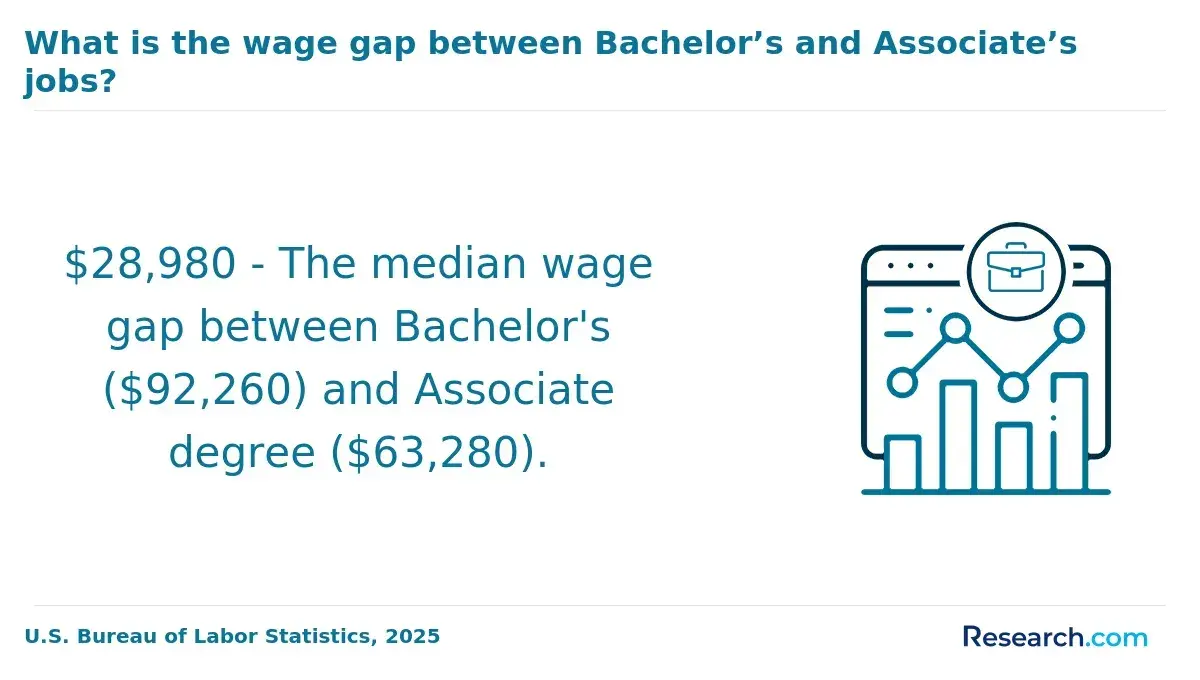
- Comparing doctoral outcomes with bachelor's-level salaries without accounting for experience and role differences.
- Ignoring fees, travel, residencies, dissertation continuation costs, and loan interest.
- Choosing a program based only on prestige, rankings, or low tuition without checking accreditation and completion support.
- Overlooking whether employers in your target industry actually value the credential.
- Using national salary medians without adjusting for location, clearance, industry, or leadership scope.
- Pursuing doctoral study when a certification or master's degree would meet the same career requirement faster.
A practical final test is this, if you can name the role, identify employers that value the credential, calculate a reasonable payback period, and explain why a lower-cost option is not enough, the doctorate may be worth serious consideration. If those answers are unclear, keep researching before committing.
Other Things You Should Know About Information Security
Information security is the broader discipline of protecting data in all forms, including digital, physical, administrative, and procedural safeguards. Cybersecurity focuses more specifically on protecting digital systems, networks, software, and online assets from cyber threats.
Often, yes. A doctorate can demonstrate advanced expertise, but certifications may still be required or preferred for hands-on, managerial, or compliance-oriented roles. Employers may look for credentials that validate specific skills, tools, or security frameworks.
It can strengthen your qualifications for certain research, policy, defense, or intelligence-related positions, but it does not replace clearance eligibility. Security clearance decisions depend on government or contractor requirements, background review, citizenship rules, and the sensitivity of the position.
Common areas include cyber risk governance, privacy protection, secure software, digital forensics, critical infrastructure security, cloud security, cryptography, insider threats, AI-related security risks, and human factors in cybersecurity. The best topic is one that matches faculty expertise and your career goals.
References
- How a Doctorate in Computer Science Leads to AI Leadership Careers https://www.euroamerican.eu/how-a-doctorate-in-computer-science-helps-move-into-ai-leadership-roles
- How PhD holders can find and secure an IT job – interview — Jobs On Toast https://www.jobsontoast.com/blog/feeling-like-a-failure-ebkkn-t6ey6-yyxps-fzxe4-rnnc4-phkm3-rjgyb-wj5ab-y4dna-e2w5f-3mxkx-xj5wz-kjda9-sybf3-2dyd7-zdrhw
- How can you assess the return on security investment and enhance it | Mindflow Blog https://mindflow.io/blog/return-on-security-investment
- Doctoral Degrees in Cybersecurity | ComputerScience.org https://www.computerscience.org/degrees/doctorate/cybersecurity/
- Top 15 Best Online PhD Cybersecurity Programs (2025) - Programs.com https://programs.com/programs/online-phd-programs/
- Cyber Security Salary: 7 Highest-Paid Cyber Security Jobs | NEIT https://www.neit.edu/blog/cyber-security-salary
- Top 10 Highest-Paid Cybersecurity Jobs (With Salaries) https://destcert.com/resources/highest-paid-cybersecurity-jobs/
- Calculating ROI on Cybersecurity Investment | Aftra https://aftra.io/blog/calculate-roi-cybersecurity
- What Can You Do With an Online Ph.D. in Information Technology? https://www.ucumberlands.edu/blog/what-can-you-do-with-an-online-phd-in-information-technology
- Explore Online Doctorates in Cybersecurity | CyberDegrees.org https://www.cyberdegrees.org/listings/doctorate-degrees-online/