2027 Online Information Security Doctorate Programs for Experienced Professionals Without Research Backgrounds

Co-Founder and Chief Data Scientist
If you have years of cybersecurity, IT, risk, or compliance experience but no formal research record, an online information security doctorate can still be realistic. The field needs advanced practitioners: the U. S. Bureau of Labor Statistics lists $124,910 as the median annual pay for information security analysts in 2024 and projects much faster-than-average job growth. This guide explains admissions expectations, research requirements, applied dissertation options, work-life fit, and program features so you can decide whether a doctorate supports your leadership, consulting, teaching, or technical strategy goals.
Key Things to Know About Information Security Doctorates for Professionals with No Research Background
- Prior research experience is usually helpful but not always required; many practitioner-oriented doctorates assess professional experience, writing ability, technical readiness, and fit with faculty expertise instead of expecting published research.
- The strongest fit for non-researchers is often a Doctor of Science, Doctor of Computer Science, DBA, or applied PhD track with structured research methods courses, dissertation milestones, faculty mentorship, and cybersecurity-specific project support.
- Labor-market demand supports advanced cybersecurity study, but the degree is not an automatic ROI win; BLS 2024 wage data shows strong pay in information security roles, while admissions, completion time, tuition, and employer recognition vary widely by program.
Can you get into Information Security doctorate programs without a research background?
Yes, it is possible to enter many online information security doctorate programs without having completed formal academic research before. The key distinction is that doctoral programs do not expect every applicant to arrive as a trained researcher, but they do expect evidence that you can become one. For experienced professionals, that evidence may come from technical leadership, policy analysis, risk management, security architecture, incident response, audit work, or graduate-level writing.
An information security doctorate is an advanced degree focused on creating, testing, or applying knowledge in cybersecurity, cyber defense, digital forensics, governance, privacy, secure systems, risk management, or related areas. A traditional PhD usually emphasizes theory-building and original scholarly research, while applied doctorates often focus on solving a real organizational or industry problem through rigorous methods.
- Graduate preparation: Many programs prefer or require a master's degree in cybersecurity, information technology, computer science, engineering, information systems, or a related field.
- Professional depth: Applicants with substantial security, IT, military, intelligence, audit, governance, or leadership experience can often show practical problem-solving maturity.
- Writing ability: Statements of purpose, writing samples, or prior graduate papers help schools assess whether you can explain complex issues clearly.
- Quantitative and analytical readiness: Programs may expect comfort with statistics, research design, data interpretation, systems analysis, or evidence-based decision-making.
- Research fit: Even applied programs want to know whether your interests align with faculty expertise and available supervision.
If your background is strong in practice but light in research, you may benefit from completing a cybersecurity degree online or graduate certificate before applying, especially if your prior degree is outside computing or security. This can help you refresh technical foundations and produce academic work that strengthens your application.
The strongest applicants without research experience usually frame their professional work as evidence of disciplined inquiry. For example, leading a zero-trust implementation, building a risk scoring model, designing a phishing-resilience program, or conducting cloud security assessments can show that you already define problems, gather evidence, evaluate trade-offs, and defend recommendations. A doctorate formalizes those habits into research methods.
Can you substitute work experience for research experience in Information Security doctorate admissions?
Work experience can sometimes compensate for limited research experience, but it rarely replaces research readiness completely. Admissions teams may value professional expertise because information security is an applied field, but doctoral study still requires literature review, methodology, data analysis, ethical research practices, and sustained writing.
The practical question is not whether your experience "counts" in a generic way. It is whether your experience proves you can identify a cybersecurity problem, investigate it systematically, and communicate findings at a doctoral level. The table below shows how professional accomplishments may translate into research readiness signals.
| Professional experience | What it can show admissions committees | What may still be missing |
| Security operations leadership | Ability to detect patterns, prioritize evidence, and manage high-stakes decisions | Formal research design and academic literature synthesis |
| Governance, risk, and compliance work | Experience with controls, audits, policy evaluation, and documented reasoning | Statistical methods or empirical validation |
| Incident response or digital forensics | Evidence collection, root-cause analysis, and defensible reporting | Human-subjects research rules or theory-based framing |
| Cybersecurity consulting | Client problem diagnosis, recommendations, and executive communication | Independent scholarly contribution beyond a single client context |
| Technical architecture or engineering | Systems thinking, experimentation, and secure design judgment | Academic writing and peer-reviewed source integration |
BLS employment projections for information security analysts show 29% growth from 2024 to 2034, far above the average for all occupations. For doctoral applicants, this supports the idea that the field rewards advanced problem-solving, but it does not mean programs will waive core research expectations.
To make work experience count, translate your experience into a research-oriented admissions narrative. A strong application does not simply say, "I have 15 years in cybersecurity." It explains the security problem you want to study, why it matters, what evidence you have seen in practice, and how doctoral training would help you investigate it more rigorously.

What are the best online Information Security doctorate programs for professionals without research experience?
The best online information security doctorate for a non-researcher is not automatically the most famous or the most technically advanced. It is the program that offers the right combination of research scaffolding, faculty access, cybersecurity relevance, flexible scheduling, and a final project format that fits your career goals.
Because program names, formats, and admissions policies change, use the comparison below as a decision framework rather than a static ranking. Verify delivery mode, accreditation, dissertation expectations, tuition, and faculty fit directly with each school before applying.
| Program model | Best fit for | Research burden | What non-researchers should verify |
| PhD in Cybersecurity, Cyber Defense, or Information Assurance | Professionals interested in university teaching, research roles, think tanks, or advanced technical inquiry | Usually highest, with dissertation and original contribution requirements | Whether the program offers structured research methods courses before the dissertation proposal |
| Doctor of Science in Cybersecurity or Information Assurance | Senior practitioners who want applied research tied to real security problems | Moderate to high, often applied but still rigorous | Whether faculty support practitioner-based problems and industry datasets |
| Doctor of Computer Science with cybersecurity concentration | Technical leaders focused on secure systems, software, networks, cloud, or architecture | Moderate to high, depending on dissertation or capstone format | Whether the curriculum includes both advanced computing and cybersecurity-specific research support |
| DBA or Doctor of IT with cybersecurity focus | Executives, CISOs, consultants, and risk leaders focused on strategy, governance, and organizational security | Often applied, with a business or organizational research lens | Whether the degree title and curriculum will be recognized for your target roles |
| Low-residency doctoral cohort | Working professionals who want online coursework plus periodic intensive faculty interaction | Varies, but mentorship may be stronger than fully independent models | Residency travel costs, attendance rules, and dissertation milestone support |
For professionals without research experience, "best" usually means the program has clear supports built into the path. Look for programs that provide the following features before the dissertation stage, not only after you are already struggling.
- Required research methods sequence: Courses should cover qualitative, quantitative, mixed-methods, design science, or case study methods relevant to cybersecurity problems.
- Early topic development: Strong programs help you refine a feasible topic during coursework instead of waiting until all classes are finished.
- Cybersecurity faculty availability: You need mentors who understand security-specific data, ethics, threat environments, and organizational constraints.
- Milestone-based dissertation process: Proposal, literature review, methods approval, data collection, analysis, and defense should be broken into manageable stages.
- Writing and statistical support: Doctoral writing centers, methods consultants, library specialists, and data analysis tutoring are especially valuable for non-researchers.
Red flags include vague dissertation expectations, no published faculty research areas, limited access to advisors, unusually fast completion claims, or pressure to enroll before you have reviewed the doctoral handbook. A legitimate online doctorate should be flexible, not opaque.
What does the curriculum look like for an online Information Security doctorate?
An online information security doctorate typically combines advanced cybersecurity content, research methods, doctoral writing, electives, comprehensive exams or portfolio milestones, and a dissertation or applied doctoral project. The curriculum is designed to move you from practitioner knowledge to evidence-based inquiry.
Course names vary by school, but non-researchers should expect the curriculum to build both technical depth and research capability. The table below summarizes common curriculum areas and why they matter.
| Curriculum area | Common topics | Why it matters for non-researchers |
| Advanced cybersecurity foundations | Cyber defense, secure architecture, network security, cloud security, cryptography, digital forensics | Refreshes technical knowledge and helps you frame researchable security problems |
| Governance and risk | Security policy, compliance, privacy, enterprise risk, cyber law, ethics | Connects technical security decisions to organizational and regulatory contexts |
| Research methods | Qualitative, quantitative, mixed-methods, design science, survey design, case study research | Teaches the formal research tools you may not have used in your career |
| Data analysis | Statistics, evidence evaluation, analytics tools, experimental design, model interpretation | Helps you move from experience-based claims to defensible findings |
| Doctoral writing and literature review | Scholarly argument, citation practices, synthesis, theoretical frameworks | Builds the writing discipline needed for proposals, dissertations, and publication-quality work |
| Dissertation or applied project | Original research, applied cybersecurity intervention, program evaluation, design artifact, organizational study | Demonstrates your ability to investigate a significant problem independently |
If your technical background is uneven, you may want to complete a targeted cyber security course before applying or during the admissions process. Short courses will not replace doctoral preparation, but they can help you close specific gaps in cloud security, threat intelligence, risk frameworks, or secure software concepts.
Most online programs are not self-paced in the casual sense. Even when coursework is asynchronous, doctoral study usually includes weekly readings, discussion posts, research assignments, advisor meetings, proposal deadlines, and long writing cycles. The flexibility helps working professionals, but the intellectual workload remains substantial.
How much research will you need to do in an online Information Security doctorate program?
You should expect significant research, even in an applied or practitioner-focused doctorate. The difference is the purpose of the research. A traditional PhD may ask you to extend theory or create new scholarly knowledge, while an applied doctorate may ask you to solve a real cybersecurity problem using rigorous, documented methods.
For non-researchers, it helps to understand the research journey as a sequence of capabilities. The work usually becomes more independent over time.
- Research literacy: You learn how to read peer-reviewed studies, evaluate evidence quality, and identify gaps in the cybersecurity literature.
- Problem formulation: You turn a broad professional concern, such as insider threat or cloud misconfiguration, into a focused research problem.
- Method selection: You choose an appropriate method, such as interviews, surveys, case study analysis, design science, experimental testing, or archival data analysis.
- Ethics and approval: You follow institutional review board rules when human participants, organizational data, or sensitive information are involved.
- Data collection and analysis: You gather evidence, analyze it systematically, and explain limitations clearly.
- Defense and revision: You present your findings, respond to committee feedback, and revise until the work meets doctoral standards.
The research load depends heavily on the degree type. A dissertation-based PhD may require deeper theoretical framing and a more extensive literature review. An applied doctorate may still require a dissertation-length project, but the contribution may be a tested framework, evaluated security program, validated process improvement, or evidence-based organizational recommendation.
A common mistake is assuming that "online" means "less research." Online delivery changes where and when you study, not the doctoral standard. If you dislike ambiguity, long-term writing, committee feedback, or revising the same chapter repeatedly, you should speak with current students before enrolling.
Can applied research projects replace traditional dissertations in Information Security doctorates?
In some programs, yes. Applied research projects, doctoral capstones, or practice-based dissertations may replace or reshape the traditional dissertation. However, they are not shortcuts. They still require a clear problem, literature support, method, evidence, analysis, and defensible conclusions.
The best choice depends on your career goal. The table below compares the two options in practical terms.
| Final project type | Best suited for | Main advantage | Main limitation |
| Traditional dissertation | Future faculty, researchers, policy analysts, or professionals seeking scholarly credibility | Strong alignment with academic research expectations | Can take longer and may feel less connected to immediate workplace needs |
| Applied dissertation | Cybersecurity leaders, consultants, CISOs, and senior practitioners | Connects doctoral research to real security problems | Still requires rigorous methods and may not carry the same weight for research-intensive academic roles |
| Doctoral capstone | Professionals focused on implementation, evaluation, or practice improvement | Can produce a practical deliverable such as a framework, model, or evaluated intervention | Not all doctoral programs or employers view capstones the same way |
An applied project may be a better fit if your goal is to improve cyber risk governance, evaluate a security awareness program, design a secure architecture framework, or study how organizations respond to ransomware readiness gaps. A traditional dissertation may be better if you want to publish, teach full time, pursue research grants, or compete for research-heavy positions.
Before choosing a program, ask whether the final project is called a dissertation, applied dissertation, capstone, doctoral project, or portfolio. The label matters less than the requirements, but it can affect how employers, faculty hiring committees, and licensing or credential reviewers interpret the degree.
How can you gain research skills to prepare for a Information Security doctorate?
You do not need to become a published scholar before applying, but you should build enough research literacy to understand what doctoral work will demand. Preparing before enrollment can reduce stress, improve your admissions essay, and help you choose a realistic topic.
Use the following steps if your professional experience is strong but your research background is limited.
- Read recent cybersecurity journals and conference papers: Focus on how authors define the problem, review prior work, choose methods, and discuss limitations.
- Take a basic statistics or research methods course: Prioritize applied courses that cover sampling, validity, reliability, surveys, interviews, and interpretation rather than abstract math alone.
- Practice literature synthesis: Choose one security topic and summarize what 10 to 15 credible studies agree on, disagree on, and leave unanswered.
- Write a short problem statement: Convert a workplace issue into a researchable question that can be studied ethically and realistically.
- Learn one analysis tool: Depending on your likely method, explore statistical software, qualitative coding tools, survey platforms, or data visualization tools.
- Ask for feedback from a mentor: A professor, doctoral graduate, or research-oriented security leader can help you identify whether your topic is too broad, too sensitive, or too operational.
AI tools can also lower the barrier to learning research mechanics, but they should not replace judgment. They can help you summarize unfamiliar terms, outline literature themes, or practice statistics concepts, yet you remain responsible for source accuracy, ethical use, and original analysis. If your interests combine cyber defense and machine learning, reviewing pathways such as an artificial intelligence major can also help you understand adjacent skills in data, modeling, and automation.
A practical readiness test is whether you can explain a cybersecurity problem without relying only on personal experience. If you can support your concern with credible studies, industry evidence, clear definitions, and a feasible method for investigation, you are closer to doctoral readiness.
What challenges will non-researchers face in Information Security doctorate programs?
Experienced professionals often bring confidence, domain knowledge, and discipline to doctoral study. The challenge is that professional expertise does not always translate smoothly into academic research. Doctoral programs require patience with ambiguity, careful citation, methodological restraint, and repeated revision.
The most common challenges are predictable. Knowing them early helps you avoid preventable mistakes.
- Choosing a topic that is too broad: "Improving cloud security" is not a doctoral study; a feasible topic needs a defined population, setting, method, and evidence base.
- Relying too heavily on personal experience: Your career insights matter, but doctoral arguments must be grounded in literature and data.
- Underestimating academic writing: Executive summaries and incident reports are not the same as literature reviews, methodology chapters, and committee-reviewed drafts.
- Misjudging access to data: Cybersecurity data may be confidential, classified, proprietary, or legally sensitive, so you must plan for ethical and practical access.
- Ignoring faculty fit: A program may be strong overall but weak in your specific area, such as usable security, digital forensics, cyber policy, or secure software.
- Focusing only on tuition: Low cost matters, but poor dissertation support can increase time to completion and total cost.
A major red flag is a program that promises an easy path for busy professionals without explaining research milestones. Supportive programs are transparent about difficulty. They tell you what will be hard and how they help students work through it.
Another challenge is identity shift. Many practitioners are rewarded for fast answers, decisive recommendations, and operational action. Doctoral research rewards careful framing, cautious conclusions, and evidence-based uncertainty. That shift can be frustrating at first, but it is also where much of the degree's value is built.
Is it possible to balance the demands of online Information Security doctorates with work responsibilities?
Yes, but balance depends on your job intensity, family responsibilities, program structure, and tolerance for long-term deadlines. Online doctoral programs are often designed for working adults, but they still require sustained weekly effort and periods of heavier workload during proposal development, data collection, and final defense preparation.
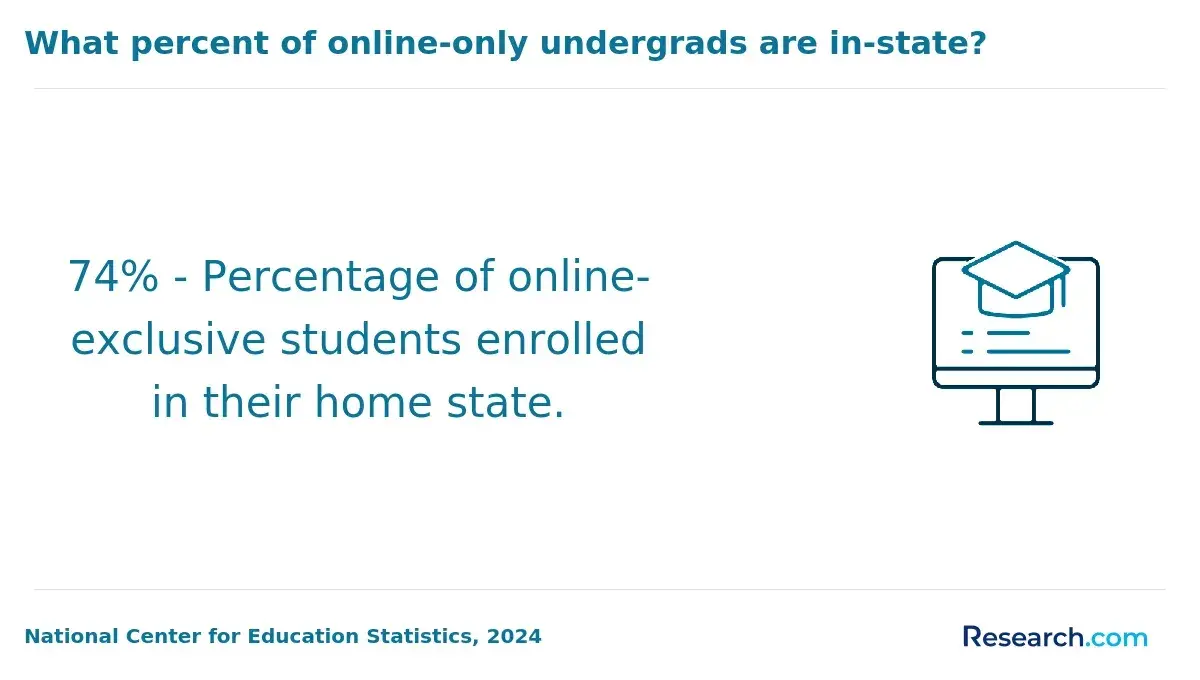
The latest federal distance education data reported by the National Center for Education Statistics shows that graduate-level online learning has become a mainstream option in U.S. higher education, not a fringe format. For working cybersecurity professionals, that matters because more programs now use asynchronous coursework, virtual advising, online library access, and remote dissertation meetings.
Before enrolling, compare your weekly life against the demands of doctoral study. The following planning steps can help you decide whether now is the right time.
- Map your real weekly availability: Count quiet reading and writing hours, not just general free time.
- Ask about course pacing: Eight-week terms may feel efficient but can be intense alongside incident response, audits, or travel-heavy roles.
- Plan for dissertation surges: Proposal revisions, data analysis, and defense preparation may require temporary workload adjustments.
- Discuss employer support: Tuition assistance, flexible scheduling, research access, or study leave can significantly affect feasibility.
- Protect writing blocks: Doctoral progress depends on consistent writing, not only weekend catch-up sessions.
- Build a support system: Family, supervisors, peers, and advisors should understand that the dissertation stage is often less predictable than coursework.
If your current role involves constant emergencies, rotating shifts, or high travel, you may still succeed, but you should choose a program with flexible deadlines, strong advising, and part-time pacing. If the program assumes uninterrupted weekly participation and your work cannot support that, waiting may be the wiser choice.
How can you select the best Information Security doctorate program for your career goals?
Start with the outcome you want, then work backward. An information security doctorate can support different goals: executive leadership, consulting authority, higher education teaching, government policy, research and development, security architecture leadership, or cybersecurity program evaluation. The right program depends on which of those outcomes matters most.
Use the criteria below to create a shortlist. These questions are especially important if you do not already have a research background.
- Degree type: Does the program offer a PhD, DSc, DCS, DBA, or Doctor of IT, and does that title fit your target employers?
- Accreditation: Is the institution regionally accredited or otherwise recognized by legitimate U.S. accreditation bodies?
- Research support: Are research methods, writing support, statistical help, and dissertation advising built into the curriculum?
- Faculty expertise: Do faculty members supervise topics close to your interests, such as cyber risk, secure systems, privacy, digital forensics, AI security, or governance?
- Final project format: Does the program require a traditional dissertation, applied dissertation, capstone, or portfolio?
- Schedule fit: Is the program asynchronous, synchronous, cohort-based, low-residency, or self-paced, and does that match your work life?
- Total cost: What are tuition, fees, residency costs, technology costs, and continuation fees if the dissertation takes longer than expected?
- Completion transparency: Does the school provide realistic time-to-completion expectations and clear dissertation milestones?
- Career alignment: Do alumni outcomes match your goals, or does the program mainly serve a different audience?
If your goals include AI security, automated threat detection, adversarial machine learning, or cyber-physical systems, you may also compare information security doctorates with an online PhD in artificial intelligence USA. The better choice depends on whether your central problem is cybersecurity practice or AI research applied to security.
When speaking with admissions advisors, ask direct questions. How many students enter without prior research experience? When is the dissertation chair assigned? What happens if your research topic changes? Are practitioner datasets acceptable? How often do students meet with faculty? Can you review the doctoral handbook before enrolling? Clear answers are a sign of a program that understands adult doctoral learners.
The degree is likely a strong investment if it connects to a specific goal that truly requires doctoral-level credibility, such as senior consulting, postsecondary teaching, executive thought leadership, research-based policy work, or applied security innovation. It may be less compelling if your main goal is an immediate salary increase, a first cybersecurity role, or skills that could be gained faster through certifications, a master's degree, or targeted technical training.
Other Things You Should Know About Information Security
Usually no, but certifications such as CISSP, CISM, CEH, Security+, or cloud security credentials can strengthen your profile if they match your professional goals. They do not replace graduate academic preparation or research readiness.
Many working professionals should plan for about three to seven years, depending on transfer credits, course load, dissertation pace, research access, and program structure. The dissertation or applied project often determines the final timeline.
Yes, especially for colleges that prefer or require doctoral credentials. However, full-time tenure-track roles may favor research-intensive PhDs, while adjunct or practice-focused teaching roles may value a practitioner doctorate combined with strong field experience.
It can be respected when the institution is properly accredited, the curriculum is rigorous, and the final research project is relevant to the employer's needs. Employers may care more about accreditation, skills, experience, and demonstrated expertise than whether coursework was online.
References
- PhD to InDusTry: from the degree to a job in cybersecurity https://davidebove.com/blog/phd-to-industry/
- Online Doctorate in Cybersecurity | CTU https://www.coloradotech.edu/degrees/doctorates/computer-science/cybersecurity-information-assurance
- Explore Online Doctorates in Cybersecurity | CyberDegrees.org https://www.cyberdegrees.org/listings/doctorate-degrees-online/
- 2026's Best Online PhD in Cyber Security Programs https://www.computerdegreesonline.org/phd-in-cyber-security-online/
- Doctoral Degrees in Cybersecurity | ComputerScience.org https://www.computerscience.org/degrees/doctorate/cybersecurity/
- Online Doctorate in Cybersecurity | IMET worldwide https://imetworldwide.com/online-doctorate-cybersecurity-certificate-program-usa/
- The most future-proof IT degree programs that won’t be replaced by AI. https://itcompare.pl/en-us/articles/68/the-most-futureproof-it-degree-programs-that-won-t-be-replaced-by-ai
- Prof Doc Information Security https://www.uel.ac.uk/postgraduate/courses/prof-doc-information-security
- Top 15 Best Online PhD Cybersecurity Programs (2025) - Programs.com https://programs.com/programs/online-phd-programs/
- Master’s vs. Ph.D. in IT: Which Degree Should You Pursue? https://www.ucumberlands.edu/blog/masters-vs-phd-it-which-degree-to-pursue