2027 Cybersecurity Degrees Awarding Credit for Military Cyber Training or Active Security Credentials

Co-Founder and Chief Data Scientist
Military cyber professionals and credentialed IT workers can lose time and money when a college treats proven technical training as elective credit instead of degree progress. Cybersecurity degrees may recognize documented military coursework, occupational experience, and industry certifications, but policies vary sharply by school. The U.S. Bureau of Labor Statistics projects 29% growth for information security analyst jobs from 2024 to 2034. This guide explains how credit reviews work, what to compare, and how to choose a program that fits your career target.
Key Things You Should Know
- Military cyber training can potentially convert into transfer, prior-learning, or course-equivalency credit, but an American Council on Education recommendation is not an automatic college award.
- Active credentials such as CompTIA Security+, CISSP, and GIAC may satisfy specific course requirements at some schools; ask whether they replace required courses or only add elective credits.
- Information security analysts had a $124,910 median annual wage in 2024, according to the U.S. Bureau of Labor Statistics, but degree choice, experience, location, clearance status, and role all affect outcomes.
What are cybersecurity degrees that accept military cyber training?
Cybersecurity degrees that accept military cyber training are associate, bachelor's, and graduate programs that evaluate documented service education, technical schools, occupational specialties, exams, or certifications for academic credit. They are designed to determine whether prior learning matches college-level outcomes in areas such as networking, systems administration, cyber defense, digital forensics, or information assurance.
The key distinction is between a school that is military-friendly and one that actually applies prior learning toward required cybersecurity courses. A school may accept military transfer credit yet place it only in general electives, which can reduce total credits needed without shortening the cybersecurity major itself.
Most applicants choose among the following degree paths based on their current education and target role.
| Degree path | Best fit | How military credit may help | Important trade-off |
| Associate degree | New entrants seeking foundational IT or support roles | May cover general education, networking, or technical electives | May not meet bachelor's preferences for some analyst roles |
| Bachelor's degree | Service members or veterans seeking analyst, engineering, or management progression | May reduce lower-division technical and elective requirements | Upper-division cybersecurity coursework is often completed at the institution |
| Master's degree | Applicants with a bachelor's degree and significant technical experience | Certification knowledge may support admission or prerequisite waivers | Graduate transfer credit is usually more limited than undergraduate credit |
For a lower-cost starting point, compare program outcomes and transfer pathways with best associates degrees to get. An associate degree can be a sensible first move when you need foundational college credit, but it is less suitable when an employer or long-term role clearly requires a bachelor's degree.
Military occupation alone does not establish equivalency. Schools commonly request a Joint Services Transcript (JST), a Community College of the Air Force transcript when applicable, official certification records, and sometimes course descriptions or syllabi.
Applicants from cyber, signals intelligence, communications, information technology, or network operations backgrounds may have the strongest documentation, but every evaluation remains institution-specific.
Which security credentials can count toward a cybersecurity degree?
Colleges most often consider certifications with clear, current exam objectives and recognized industry relevance. Credit can be awarded through a published certification-to-course crosswalk, a portfolio review, a challenge exam, or a faculty evaluation. An active certification is generally easier to evaluate than an expired one, especially where technology or security standards change quickly.
The credentials below are common candidates for review. They are examples, not universal transfer guarantees.
| Credential family | Potential academic alignment | Typical degree level where it may help | What to confirm |
| CompTIA A+, Network+, Security+ | IT fundamentals, networking, security foundations | Associate or bachelor's | Whether the credential replaces a required course or elective |
| CompTIA CySA+, PenTest+, CASP+ | Security operations, assessment, advanced technical security | Bachelor's or selected graduate prerequisites | Required score, active status, and credit limit |
| Cisco CCNA or CyberOps | Networking, network defense, infrastructure security | Associate or bachelor's | Whether lab requirements remain |
| ISC2 SSCP or CISSP | Security administration, governance, risk, and management | Bachelor's or graduate | Whether work-experience prerequisites affect recognition |
| GIAC certifications | Incident response, forensics, penetration testing, or defense | Bachelor's or graduate | Specific certification-to-course alignment |
Do not assume a difficult certification will earn more credit than an entry-level credential. Colleges award credit for demonstrated alignment with their own course outcomes, not simply for market reputation or exam cost. A certification may be valuable to employers even when it produces no academic credit.
Before applying, take these steps to avoid a costly mismatch between your credentials and degree plan.
- Download the school's current certification-credit policy and identify any expiration, score, or renewal requirements.
- Ask admissions for a preliminary written estimate showing the course number and credit category for each credential.
- Compare the estimate against the degree audit, not just the maximum transfer-credit total.
- Keep official digital badges, score reports, renewal records, and certification verification available for the evaluator.
A credential-first strategy makes the most sense if you already have experience and need a targeted promotion or career transition. A degree may be the better investment if you need broader computing knowledge, access to internships, or a credential that can support advancement into architecture, leadership, or specialized technical roles.
How do schools award credit for military training and certifications?
Schools generally use several prior-learning assessment methods. The process begins after admission or during application review and ends with credits posted to an official degree audit. The decisive question is not how many credits a school accepts in total; it is how many apply to your chosen program's remaining requirements.
These are the primary routes schools use to evaluate prior cyber learning.
- Military transcript evaluation: The school reviews JST or other official military education records and may use American Council on Education credit recommendations as guidance.
- Published articulation agreements: A college may pre-approve credit for named military courses, occupational specialties, certifications, or partner institutions.
- Credit by examination: CLEP, DSST, departmental exams, and other assessments may satisfy selected general education or technical requirements.
- Portfolio or prior-learning assessment: Faculty evaluate work products, training records, technical documentation, and demonstrated competencies against course outcomes.
- Residency and transfer rules: The school limits how much credit can transfer and requires a defined number of credits to be completed through that institution.
Ask for the evaluation in writing before committing to enrollment or using education benefits. A verbal statement that a school "accepts military credit" is not enough. Request the number of credits accepted, the courses waived, the credits that are electives only, remaining residency requirements, and whether the result changes if your certification expires.
A common mistake is enrolling before submitting every transcript and credential. Another is comparing schools only by their advertised maximum transfer limit. The better comparison is the estimated remaining credits, required sequence of courses, total program cost after eligible benefits, and realistic time to completion.
Which accreditation matters for cybersecurity degree programs?
Institutional accreditation is the first item to verify. It affects federal financial aid eligibility, credit transferability, employer confidence, and whether another accredited college is likely to recognize your degree. In the United States, students should confirm that the institution is recognized by an accrediting agency acknowledged by the U.S. Department of Education or the Council for Higher Education Accreditation.
Programmatic recognition can add useful evidence of quality, especially for technical programs, but it is not required for every cybersecurity career. ABET accreditation is one well-known programmatic benchmark for certain computing and cybersecurity programs.
The National Security Agency also designates qualifying academic programs through its National Centers of Academic Excellence in Cybersecurity initiative; this designation is not the same as institutional or programmatic accreditation.
This comparison clarifies what each quality signal can and cannot tell you.
| Quality signal | What it indicates | Why it matters for military-credit applicants | Limitation |
| Institutional accreditation | College-wide standards and eligibility framework | Supports financial aid and improves the likelihood of transferable coursework | Does not prove a cybersecurity curriculum is current or hands-on |
| ABET accreditation | Program-level review against discipline standards | Can help validate technical rigor for a specific program | Not every strong cybersecurity program seeks or holds it |
| NSA academic designation | Alignment with selected cybersecurity knowledge criteria | May indicate depth in cyber education and government-facing preparation | Does not guarantee credit awards, clearance eligibility, or employment |
Accreditation should be a screening tool, not the only deciding factor. Also review the degree audit, faculty expertise, laboratory access, internship support, veteran services, and the school's written credit policy. Avoid programs that cannot clearly identify their accreditor or that make broad employment claims without explaining their curriculum and student-support resources.
Are online cybersecurity degrees easier to transfer credits into?
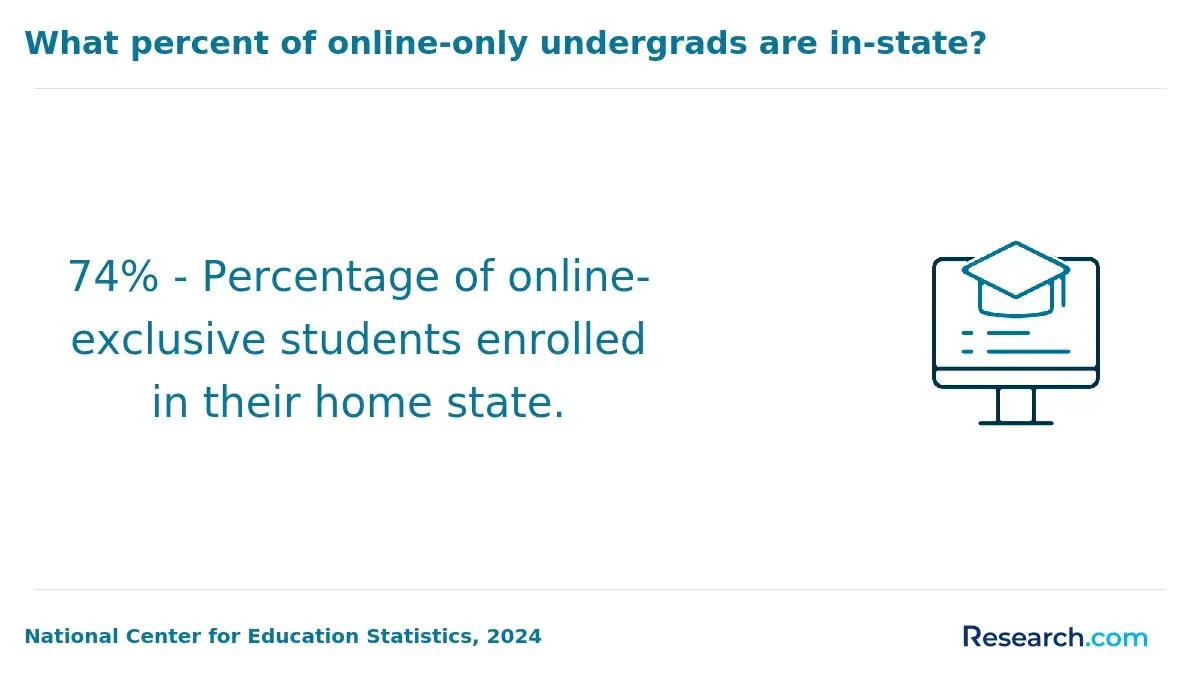
Online cybersecurity degrees are not automatically easier for transfer credit, but they can be more practical for active-duty personnel, reservists, veterans, and working professionals. Many online programs offer multiple start dates, asynchronous coursework, and centralized transcript evaluation, which can make the administrative process more manageable. The underlying rules for residency, course equivalency, upper-division credits, and certification age still apply.
Online delivery works especially well when your military or civilian schedule changes, you already have a quiet place to study, and the program offers accessible virtual labs. Campus or hybrid study may be better when you need face-to-face tutoring, structured lab access, local networking, or an internship pipeline tied to the institution.
Competency-based formats deserve separate scrutiny because they may let experienced learners progress after showing mastery rather than spending a fixed number of weeks in every course. A competency based masters degree may suit an experienced professional who can sustain independent study, but it may be a poor fit for someone who needs frequent live instruction or has little prior technical foundation.
Compare online options using the operational details that affect completion, not just whether classes are labeled online.
- Confirm whether labs run in browser-based virtual environments, require personal hardware, or have scheduled live sessions.
- Check whether proctored exams, group projects, or internships have fixed attendance requirements.
- Ask whether active-duty deployment, temporary duty, or training schedules qualify for leave, extensions, or reentry support.
- Request a degree plan that shows which transferred credits apply to major requirements and which remain elective-only.
Be cautious of "finish fast" marketing that does not account for prerequisite chains. A flexible online program can still take longer than expected if a required networking, programming, or mathematics course is offered only in sequence.

What cybersecurity courses are included in these degree programs?
Cybersecurity curricula usually combine computing fundamentals with defensive and offensive security concepts, legal and ethical responsibilities, and practical problem-solving. Prior military training may cover portions of the technical foundation, but degree programs commonly require students to complete advanced courses that integrate those skills in academic projects and labs.
Course titles vary, yet a sound program usually addresses the following areas.
| Curriculum area | Typical topics | Why it matters |
| Computing foundations | Programming, operating systems, databases, networking | Builds the technical context needed to investigate and secure systems |
| Security operations | Monitoring, incident response, threat intelligence, vulnerability management | Supports security operations center and analyst work |
| Security engineering | Secure architecture, cloud security, identity management, cryptography | Prepares students to design and improve controls |
| Offensive security and forensics | Ethical hacking, penetration testing, evidence handling, digital investigations | Develops assessment and investigative skills within legal boundaries |
| Governance and communication | Risk management, policy, compliance, project work, technical reporting | Connects technical findings to organizational decisions |
For military learners, the strongest program is not necessarily the one that waives the most courses. Choose one that fills your real gaps. A network defender may benefit most from cloud architecture, secure software, and governance courses; a technically advanced operator who wants leadership may need risk, management, and communication coursework.
Artificial intelligence is changing cybersecurity work by helping teams summarize alerts, identify patterns, automate routine investigation steps, and generate code. It also expands the attack surface through AI-enabled phishing, synthetic content, and insecure use of data. Look for programs that teach validation, privacy, adversarial thinking, and responsible use of automation rather than treating AI as a replacement for technical judgment.
What admissions requirements do these programs usually ask for?
Admissions requirements depend on degree level, institution, and program format. Military experience and professional credentials can strengthen an application or support a credit review, but they do not always replace formal entry requirements. Undergraduate programs usually focus on secondary-school completion or prior college work; graduate programs commonly require a bachelor's degree and may require prerequisite coursework.
Applicants should prepare the following materials early because military records and credential verification can take time to collect.
- Official transcripts from high school, colleges, military education systems, and the Community College of the Air Force when applicable
- Joint Services Transcript and documentation for military technical courses or occupational training
- Official certification score reports, digital verification, and current renewal status
- Identification, residency information, and any financial-aid or veterans' education-benefit documentation required by the school
- A resume and statement of purpose when applying to competitive bachelor's-completion or graduate programs
Some schools may request placement testing, proof of college algebra readiness, programming preparation, or prerequisite courses. Do not interpret a waived admission prerequisite as a waived skill need. If you have not used mathematics, scripting, or formal writing recently, refreshing those skills before the first term can make the transition substantially smoother.
Applicants should also ask whether the credit evaluation occurs before admission, after admission, or only after an enrollment deposit. A program that provides a preliminary unofficial review can be easier to compare, but the final evaluation should still be confirmed in the official degree audit.
How long does a cybersecurity degree take with transfer credit?
Completion time depends on how many credits apply to required courses, how quickly you take classes, and whether remaining courses have prerequisites. A transfer evaluation can shorten a program substantially when military coursework replaces general education or foundational technical classes. It may have less effect when most accepted credit is elective-only or when advanced major courses must be completed in residence.
Use the school's official degree audit to estimate time, rather than assuming that a large credit award equals a proportionally shorter program.
| Starting point | Typical remaining work to evaluate | Timeline factors |
| No prior college credit | Full degree curriculum, with possible military or certification credit | Course load, prerequisites, and whether general education credit transfers |
| Some military or civilian college credit | Remaining general education, major requirements, and residency credits | Equivalency decisions and availability of required courses |
| Associate degree or substantial transfer credit | Upper-division cybersecurity, capstone, and institutional residency requirements | Major alignment and whether credits meet lower-division prerequisites |
| Bachelor's degree holder pursuing graduate study | Graduate core, specialization, and project requirements | Prerequisite waivers, part-time enrollment, and capstone pacing |
Accelerated study is most realistic when your transfer credit is already mapped, you can devote consistent weekly time, and you have the required prerequisites. If graduate education is your objective, compare format and pacing options through fastest masters degree, while confirming that acceleration does not remove essential technical depth or employer-relevant project work.
A practical way to estimate your timeline is to request a term-by-term plan after transfer evaluation. Count required courses, identify any that are offered only once per year, and build in time for deployments, family responsibilities, certification renewal, and capstone work. This approach is more reliable than comparing advertised program length alone.
What jobs can graduates pursue after a cybersecurity degree?
A cybersecurity degree can support entry, transition, and advancement opportunities, particularly when paired with technical experience, a portfolio of lab work, relevant certifications, or an active clearance where required. Employers use different titles for similar work, so applicants should focus on daily responsibilities and skill requirements rather than title alone.
The roles below show how degree level, prior military experience, and specialization can shape an employment search.
| Role | Typical work | Helpful preparation |
| Cybersecurity analyst | Monitors alerts, investigates incidents, and improves security controls | Networking, SIEM practice, incident response, Security+ or similar foundation |
| Security operations center analyst | Triage alerts, document findings, and escalate threats | Log analysis, operating systems, threat intelligence, shift-work readiness |
| Information security specialist | Supports policies, assessments, access controls, and compliance work | Risk management, communication, governance, and documentation skills |
| Penetration tester | Tests systems with authorization and reports remediation priorities | Ethical hacking labs, scripting, networking, and clear report writing |
| Security engineer | Designs, implements, and maintains security tools and infrastructure | Cloud, identity, automation, systems administration, and engineering experience |
| Digital forensics analyst | Collects and analyzes digital evidence under established procedures | Forensics training, legal awareness, evidence handling, and investigative discipline |
Military cyber experience can be especially relevant for government contractors, defense organizations, and roles involving structured operations, documentation, and incident handling. However, clearance eligibility, citizenship requirements, background screening, and contract requirements vary by employer and role. A degree does not grant or renew a security clearance.
For people targeting research, faculty, senior technical leadership, or specialized security research positions, a doctoral route can be relevant after substantial education and experience. Explore pacing considerations for online PhD programs, but do not assume a doctorate is necessary for mainstream cybersecurity analyst or engineering work.
A common job-search mistake is applying only to positions titled "cybersecurity analyst." Broaden searches to security operations, vulnerability management, identity and access management, governance-risk-compliance, IT audit, cloud security, and incident response, then align your military achievements and coursework to the duties in each posting.
What salary and job outlook do cybersecurity graduates typically have?
Salary and job outlook are favorable indicators for cybersecurity, but they should be interpreted by occupation rather than treated as a promise for every graduate. The U.S. Bureau of Labor Statistics reports a 2024 median annual wage of $124,910 for information security analysts and projects 29% employment growth for the occupation from 2024 to 2034. This is a national occupation-level measure, not a starting-salary estimate or a result tied to one degree program.
Entry-level pay can be lower than the occupation median, particularly for candidates moving from general IT into security. Pay also varies with region, industry, employer size, shift work, clearance requirements, technical specialization, prior experience, and the ability to communicate risk to nontechnical stakeholders.
Use the following ROI questions to compare degree options before enrolling.
- What is the total estimated cost after transfer credit, employer assistance, scholarships, and eligible veterans' education benefits?
- How many remaining credits are required in the cybersecurity major, and what will those credits cost?
- Does the program include practical labs, career support, internship access, or projects that can strengthen your resume?
- Will the curriculum build skills that match your desired path, such as cloud security, incident response, governance, or engineering?
- What income, schedule, or promotion opportunity would you give up while completing the degree?
The strongest financial case for a degree is usually a clear gap between your current qualifications and the role you want. If you already qualify for target jobs through military experience and certifications, a focused credential or portfolio may be more efficient. If you are blocked by bachelor's-degree preferences, need broader technical depth, or want a longer-term advancement credential, a degree can offer more durable value.
Other Things You Should Know About Cybersecurity
No. A JST provides documented military learning, and colleges may consider American Council on Education recommendations, but each school decides whether and how credit applies. Request a course-by-course evaluation showing credits that meet degree requirements.
Some schools award credit or waive a foundational security course for an active Security+ certification, while others award only elective credit or no credit. Confirm the exact course equivalency, certification-age rule, and whether you must still meet a residency requirement.
Choose certifications when you need a targeted skill signal quickly and already have relevant experience. Choose a degree when job postings, promotion requirements, or your long-term plans favor broader academic preparation. Many professionals benefit from combining both.
Eligibility depends on the institution, program approval, your benefit chapter, enrollment status, and other individual circumstances. Contact the school's veterans-certifying official and review your benefits with the appropriate federal or service-related resource before enrolling.
References
- Why MyComputerCareer Is Ideal for Veteran Success https://www.mycomputercareer.edu/veteran-program-information/
- Most Affordable Online Cybersecurity Degrees - 2025 Guide https://www.mastersinai.org/degrees/affordable-online-cybersecurity-degrees/
- Cybersecurity Degree: Online Bachelor’s Program | National University https://www.nu.edu/degrees/cybersecurity-and-technology/programs/bachelor-of-science-cybersecurity/
- Transfer Credits & Military Affiliations https://online.norwich.edu/online/military/transfer-credits-military-affiliations
- Resources for Military Service Members and Veterans Transitioning to the Private-Sector Cybersecurity Workforce https://www.isc2.org/Insights/2023/11/Resources-for-Military-Veterans-Transitioning-Private-Sector-Cybersecurity-Workforce
- Cybersecurity Scholarships for Military and Veterans https://www.cyberdegrees.org/resources/scholarships-military-veterans/
- Cybersecurity Career Guide for Veterans - Programs.com https://programs.com/guides/veterans-guide-to-cybersecurity/
- Most affordable online cybersecurity degree programs https://cybersecurityguide.org/rankings/most-affordable-online-degree/
- Military Cybersecurity Careers & Training https://www.cybermission.tech/careers-and-training
- Membership | Military Friendly https://www.militaryfriendly.com/school/membership/