2027 Pathways From Human Services to Counseling or Social Work Licensure

Co-Founder and Chief Data Scientist
A human services degree can lead to meaningful behavioral health work, but it does not by itself qualify most graduates for clinical counseling or social work licensure. The next decision is choosing a graduate program that meets your state's rules. The U.S. Bureau of Labor Statistics projects 17% employment growth for substance abuse, behavioral disorder, and mental health counselors from 2024 to 2034. This guide explains the counseling and social work routes, what to verify before enrolling, expected time and cost, and how to choose a program that supports your intended license.
Key Things You Should Know
- A bachelor's degree in human services can usually meet the undergraduate-degree requirement for a master's program, but clinical counseling typically requires a licensure-track master's degree, supervised post-degree experience, and a state examination.
- For counseling, prioritize a 60-semester-credit clinical mental health counseling curriculum and verify that the program, practicum, internship, and online format meet the rules of the state where you intend to be licensed.
- The Bureau of Labor Statistics projects 17% growth in employment for substance abuse, behavioral disorder, and mental health counselors from 2024 to 2034; median annual pay for this occupational group was $59,190 in May 2024.
What is the pathway from human services to counseling licensure?
The standard pathway is human services bachelor's degree, qualifying master's degree, supervised clinical practice, examination, and state-issued license. Human services is a broad helping-professions field; it commonly includes case management, advocacy, prevention, community outreach, and client support. Counseling licensure is narrower and regulated: it authorizes qualifying professionals to provide mental health assessment and psychotherapy within their state's scope-of-practice rules.
Most states use titles such as Licensed Professional Counselor (LPC), Licensed Mental Health Counselor (LMHC), or Licensed Clinical Professional Counselor (LCPC). The title varies, but the core expectation is similar: complete graduate clinical training and demonstrate competency under supervision. A Master of Social Work (MSW) can instead lead toward Licensed Master Social Worker (LMSW) and, after clinical supervision requirements are met, Licensed Clinical Social Worker (LCSW) status in many states.
These are the usual routes to compare before applying.
| Goal | Typical graduate degree | Common entry-level license stage | Long-term clinical credential |
| Provide psychotherapy as a counselor | Clinical mental health counseling master's degree | Associate, intern, resident, or provisional counselor credential | LPC, LMHC, LCPC, or comparable state title |
| Provide clinical social work and systems-based services | Master of Social Work | LMSW or comparable master's-level social work license | LCSW or comparable clinical social work license |
| Remain in nonclinical human services work | Human services bachelor's degree, certificate, or targeted training | Employer-specific requirements | Varies; licensure may not be required |
Choose counseling if you want your graduate education centered on counseling theories, diagnosis, individual and group therapy, and clinical mental health practice. Choose social work if you want clinical practice combined with policy, community systems, resource navigation, and broader social-service roles. Neither route is automatically faster; state supervision rules and your enrollment pace often determine the total timeline.
A practical next step is to identify the state where you expect to practice before choosing a school. Contact that state's counseling or social work board, review its current educational requirements, and save the written response or published checklist. Licensure rules can change and may differ from the requirements of a school located in another state.
Which accredited counseling programs accept human services degrees?
Many clinical mental health counseling master's programs accept applicants with bachelor's degrees in human services, psychology, sociology, education, criminal justice, or another related field. Admissions committees generally look for evidence that you can succeed in graduate study and understand helping-profession ethics, rather than requiring a counseling major specifically.
For a counseling route, look first for programs accredited by the Council for Accreditation of Counseling and Related Educational Programs (CACREP). CACREP accreditation is not legally required by every state board, but it is a strong signal that the curriculum includes core counseling content and supervised field education. It can also simplify credential review for graduates who later move across state lines, although it never replaces checking the receiving state's rules.
If your undergraduate record needs strengthening, do not assume that graduate admission is impossible. Some low GPA colleges may offer undergraduate coursework or degree-completion options that help applicants demonstrate recent academic readiness; admission policies still differ by program.
Use the following comparison to determine whether a program is likely to fit a human services graduate's goal.
| Program type | Best for | Key credential to verify | Important limitation |
| CACREP clinical mental health counseling master's | Students seeking counselor licensure | CACREP status and state-board alignment | May require prerequisite coursework or a longer sequence |
| MSW program | Students seeking social work licensure or clinical social work | Accreditation by the Council on Social Work Education | Does not usually lead to an LPC or LMHC credential |
| Non-accredited counseling-related master's | Some non-licensure or specialized roles | Written confirmation from your licensing board | May not meet education requirements for clinical licensure |
Ask admissions staff whether human services graduates need prerequisites in psychology, statistics, research methods, human development, or abnormal psychology. Then ask a more important question: whether students living in your state have successfully completed required placements and pursued the license you want. Request the answer in writing when possible.
How do online and campus counseling programs compare?
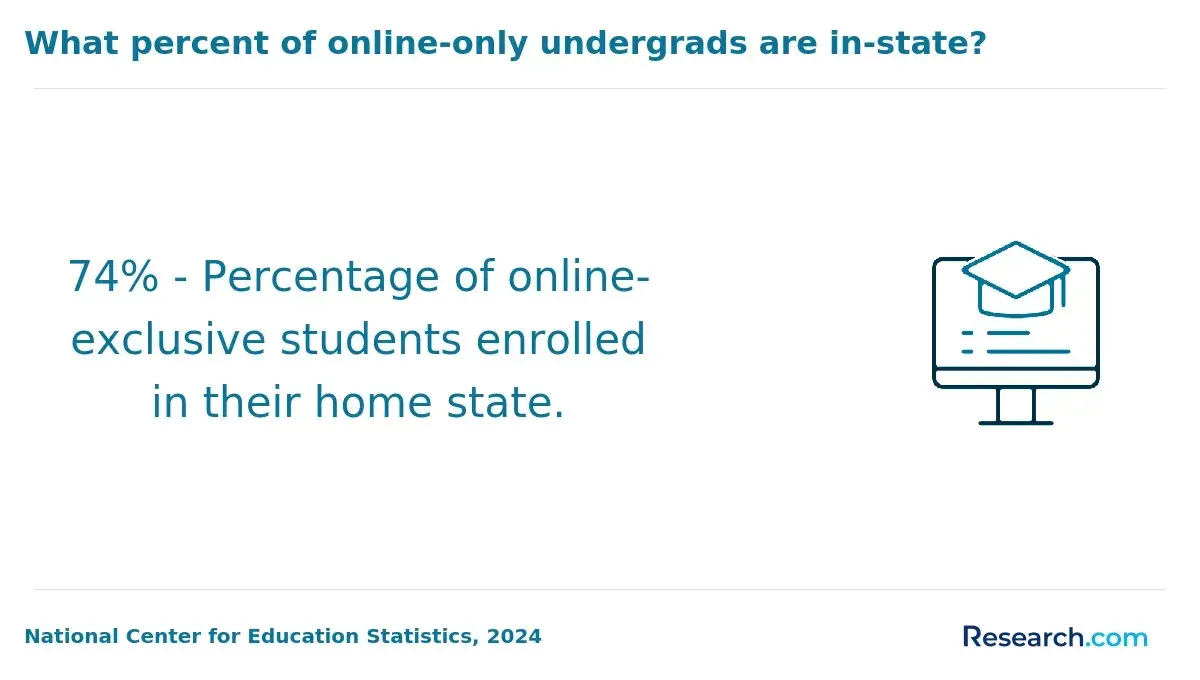
Online counseling programs can work well for employed human services professionals because lectures may be scheduled asynchronously or in evening blocks. However, counseling is not a fully remote profession-in-training. Licensure-track programs generally require live skills practice, supervised practicum experiences, and internships at approved sites. Some programs also require short on-campus residencies.
The right format depends less on where lectures occur and more on whether the school can support compliant clinical training where you live. An online program is a strong choice when it is authorized to enroll students in your state, clearly coordinates placements, and offers responsive faculty supervision. A campus-based program may be better when you need local networking, in-person skill practice, or direct access to a university-affiliated training clinic.
Students comparing flexible undergraduate preparation may encounter a cheapest self paced online college option, but self-paced coursework is generally not a substitute for the scheduled, supervised clinical experiences required in a counseling master's program.
This comparison highlights the trade-offs that matter most for future licensure.
| Factor | Online or hybrid program | Campus-based program |
| Lecture flexibility | Often better for working students, especially with asynchronous coursework | Usually fixed meeting times and commuting needs |
| Practicum and internship | Usually completed locally, subject to school and site approval | May be arranged through local school partnerships or university clinics |
| Professional networking | Can be strong but requires deliberate local engagement | Often easier through faculty, peers, and nearby agencies |
| Interstate eligibility | Must be verified before enrollment | Still must be verified if studying outside your intended licensing state |
| Best fit | Self-directed students with stable schedules and local placement options | Students seeking structured access to training and local contacts |
A common mistake is choosing an online program based only on convenience or advertised tuition. Before paying an application fee, confirm state authorization, residency requirements, in-person expectations, placement support, and whether the curriculum meets your board's educational standards.
What coursework bridges human services to counseling?
A human services curriculum often provides useful preparation in ethics, multicultural practice, crisis intervention, case management, and community resources. Counseling master's programs build on that foundation with clinically focused coursework and supervised practice. If you are missing prerequisites, schools may admit you conditionally, require courses before enrollment, or incorporate foundational content into the program.
CACREP-aligned clinical mental health counseling curricula commonly include at least 60 semester credit hours and cover professional counseling orientation, social and cultural diversity, human growth and development, career development, counseling relationships, group counseling, assessment, research, and evaluation. Clinical mental health specialization courses add diagnosis, treatment planning, psychopathology, crisis and trauma-informed care, and clinical intervention.
The coursework below shows where a human services background may transfer well and where additional preparation is usually needed.
| Area | Human services preparation may include | Counseling program typically adds |
| Helping relationships | Interviewing, advocacy, client support | Counseling microskills, therapeutic alliance, clinical documentation |
| Human behavior | Life-span development and social systems | Developmental theory applied to counseling assessment and treatment |
| Ethics and diversity | Client rights, cultural humility, service ethics | Professional counseling ethics, legal duties, diagnosis-related considerations |
| Research and assessment | Basic program evaluation or social science research | Psychological assessment, outcome evaluation, evidence-informed practice |
| Clinical practice | Case management or agency support | Supervised practicum, internship, direct counseling experience |
Do not assume that work experience replaces required graduate clinical hours. It can strengthen your application and help you find a placement, but licensing boards normally require supervised experience that meets specific educational and documentation standards.
To bridge gaps efficiently, request a transcript evaluation before applying. Prioritize credit-bearing prerequisites that appear in multiple target programs rather than taking unrelated certificates. Keep course descriptions and syllabi, because schools may use them when reviewing transfer or prerequisite equivalencies.
What admission requirements do counseling programs usually require?
Requirements vary by institution, but most master's programs require a bachelor's degree from an accredited institution, official transcripts, an application, a statement of purpose, recommendation letters, and a résumé. Many programs no longer require the GRE, though applicants should confirm the policy for each school rather than assuming it is waived.
Human services applicants should use the personal statement to connect prior work or coursework to a realistic counseling goal. Programs may want evidence of interpersonal maturity, ethical awareness, writing ability, and readiness for emotionally demanding clinical training. Some schools use interviews to evaluate communication skills, professional fit, and understanding of the counselor role.
The following items are commonly reviewed during admissions decisions.
- Undergraduate GPA and recent academic performance, including grades in psychology, statistics, research, or behavioral science courses.
- Statement of purpose explaining the intended counseling population, career goal, and reason for pursuing licensure.
- Recommendations from instructors, supervisors, or helping-profession colleagues who can speak to professionalism and readiness.
- Résumé showing relevant experience such as case management, crisis support, behavioral health work, community outreach, or volunteer service.
- Interview, background-check disclosures, immunization documentation, or other placement-related requirements where applicable.
Applicants with a lower GPA should avoid applying blindly to highly selective programs or submitting an unexplained record. A concise statement can acknowledge past performance, document improvement, and show current readiness through recent coursework, relevant employment, or strong recommendations. Do not exaggerate clinical duties you have not performed; ethical judgment matters in admissions and future licensure.
How long does a counseling degree and licensure path take?
For a person who already holds a human services bachelor's degree, a full-time counseling master's program often takes about two to three years, while part-time enrollment can take longer. After graduation, most states require a period of supervised post-degree practice before independent licensure. Because required hours, supervision rules, and examination timing differ by state, the total pathway commonly extends beyond the degree itself.
If you do not yet have a bachelor's degree, beginning with an associate degree can be an entry point into human services or social service work, but it is not a direct substitute for the bachelor's and master's education typically required for independent clinical counseling licensure.
This timeline separates educational milestones from state-controlled licensing steps.
| Stage | Typical timing | What happens | Decision point |
| Bachelor's preparation | Completed before graduate admission | Earn or confirm a qualifying undergraduate degree | Determine whether prerequisites are needed |
| Master's program | Often 2 to 3 years full time | Complete graduate coursework, practicum, and internship | Choose full-time, part-time, online, or campus format |
| Associate or provisional practice | Varies substantially by state | Work under approved clinical supervision | Confirm supervisor qualifications and hour tracking rules |
| Independent license application | After state requirements are met | Submit documentation, pass required examination, and obtain board approval | Review title, scope, renewal, and continuing-education rules |
Plan for delays around internship placement, supervisor availability, and licensing-board processing. Students who need the fastest practical route should compare programs by field-placement capacity and state alignment, not only by the number of advertised course months. An accelerated academic calendar can be helpful, but it cannot remove required supervised clinical training.
How much do counseling programs cost, and how can students pay?
The cost of a counseling degree depends on tuition per credit, required credit hours, fees, residency travel, books, technology, and potential reductions in work hours during practicum or internship. Compare the full estimated program cost, not just one term's tuition. A lower rate per credit can still produce a higher bill if the program requires more credits, adds mandatory residencies, or provides limited transfer-credit options.
Graduate students who qualify for federal aid may generally borrow up to $20,500 annually in Direct Unsubsidized Loans, subject to federal eligibility rules and aggregate borrowing limits. This can cover part of the cost, but students should compare the remaining gap with realistic repayment expectations rather than assuming borrowing will be manageable after graduation.
Doctoral study is not required for LPC, LMHC, LCPC, LMSW, or LCSW licensure. If research, teaching, leadership, or advanced specialization later makes a doctorate appropriate, compare cheapest online PhD programs in USA options separately from the master's-level clinical licensure decision.
Consider these funding sources in order of fit and likely long-term impact.
- Employer tuition assistance, especially for agency, hospital, community mental health, or government employees who may receive support in exchange for a work commitment.
- Institutional scholarships and graduate assistantships, which can reduce tuition but may involve competitive selection or work obligations.
- Federal grants or loans for eligible students, reviewed through the Free Application for Federal Student Aid process and the school's financial aid office.
- State workforce programs, service-based scholarships, or loan-repayment opportunities where available for behavioral health professionals in high-need settings.
- Part-time enrollment or a lower-cost public option, balanced against the possibility that a longer timeline delays licensure and earnings progression.
Before enrolling, ask for a written cost-of-attendance estimate covering all program years. Also ask whether practicum and internship schedules commonly require students to reduce paid work. The biggest affordability mistake is treating tuition as the entire cost while overlooking travel, unpaid training time, interest, and delayed completion.
What jobs can you get with a human services background?
A human services background can lead to entry-level and nonclinical roles in community agencies, behavioral health organizations, schools, residential programs, public services, and nonprofit settings. Job titles vary by employer and state, and some positions require additional credentials, background checks, or specialized training. These roles can provide valuable exposure to client populations and service systems while you decide whether graduate licensure is the right next step.
The roles below are examples of common directions. They are not all clinical counseling jobs, and requirements should be confirmed with each employer.
| Role | Typical work | How it supports a future license path |
| Case manager | Coordinates services, referrals, benefits, and care plans | Builds knowledge of systems, documentation, and client advocacy |
| Behavioral health technician | Supports clients in treatment or residential settings under supervision | Introduces clinical environments and team-based care |
| Community outreach specialist | Connects people with prevention, housing, health, or support services | Develops engagement and resource-navigation skills |
| Crisis line or peer support worker | Provides structured support, triage, or lived-experience-based assistance | Can build communication skills; certification rules may apply |
| Program coordinator | Organizes service delivery, data collection, and community partnerships | Supports leadership or administrative career interests |
Human services may be the better stopping point if you prefer direct support, program coordination, advocacy, or community work without diagnosis and psychotherapy responsibilities. Pursue counseling or social work licensure when you want a regulated clinical role and are prepared for graduate tuition, supervised practice, documentation standards, and ongoing continuing education.
Technology is changing administrative work in these settings through electronic records, telehealth platforms, scheduling systems, and AI-assisted documentation tools. These tools may reduce routine tasks, but they do not replace the ethical judgment, relationship-building, crisis assessment, and supervision required in clinical practice. Learn digital confidentiality practices and never enter client information into unapproved tools.
What salaries do counselors and social workers earn?
Pay varies considerably by occupation, license level, employer, setting, geographic area, experience, and whether a role involves independent clinical practice. Median wage data is useful for comparing broad occupations, but it does not predict an individual's starting offer or earnings after licensure.
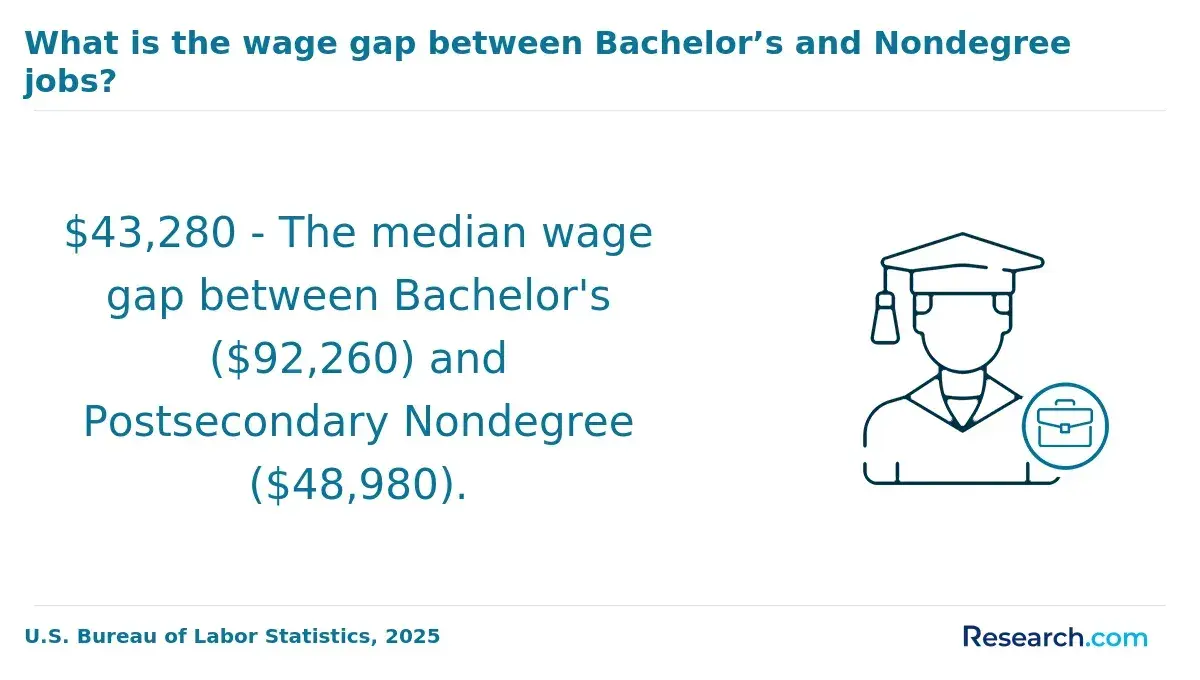
According to U.S. Bureau of Labor Statistics May 2024 wage data, the median annual wage for substance abuse, behavioral disorder, and mental health counselors was $59,190. The median annual wage for social workers was $61,330. These occupational groups include roles with different education and practice settings, so use the figures as market context rather than a guarantee.
The labor outlook can help explain why licensure remains valuable. The Bureau of Labor Statistics projects 17% employment growth for substance abuse, behavioral disorder, and mental health counselors from 2024 to 2034, faster than the average for all occupations. Demand may be particularly relevant to students interested in behavioral health, substance use treatment, integrated care, and community mental health, but openings and reimbursement structures remain local.
When comparing offers or career directions, evaluate compensation alongside the work conditions that shape real value.
- Confirm whether the role requires an independent license, accepts an associate-level credential, or provides supervision toward licensure.
- Compare salary with health insurance, retirement contributions, paid leave, caseload expectations, and reimbursement for supervision or continuing education.
- Ask whether productivity quotas, evening hours, crisis coverage, or documentation time are built into the schedule and compensation.
- Consider public agencies, hospitals, schools, private practices, and nonprofit providers separately because their pay structures and benefits can differ.
Higher pay alone should not determine the degree choice. Counseling may fit students focused on psychotherapy, while social work can create access to clinical, medical, school, policy, and community-based roles. The better return on investment is the route that matches your intended scope of practice and can be completed without unnecessary credits or avoidable debt.
How do you choose a reputable counseling program?
A reputable program makes its curriculum, accreditation, faculty qualifications, field-placement expectations, student-support systems, and state-licensure disclosures easy to evaluate. It should not promise a license, guarantee a job, or imply that online enrollment automatically qualifies students in every state. The licensing board - not the college - makes the final determination of eligibility.
Start by narrowing your intended license and state. Then use this process to compare only programs that can realistically support that objective.
- Identify the license title you want in the state where you expect to practice, such as LPC, LMHC, LCPC, LMSW, or LCSW.
- Review the state board's current degree, credit-hour, practicum, internship, examination, and supervised-experience requirements.
- Confirm the school's institutional authorization and, for counseling, whether its program holds CACREP accreditation or otherwise meets your board's standards.
- Ask whether the program accepts students in your state and whether it has established placement relationships or documented placement support there.
- Request the full program cost, expected sequence, required residency travel, transfer-credit policy, and typical fieldwork schedule in writing.
- Compare student outcomes carefully, including completion, field-placement, and licensure information, while recognizing that outcomes can reflect student circumstances as well as program quality.
The table below identifies common red flags and the safer alternative when evaluating a school.
| Red flag | Why it matters | Better approach |
| "Meets licensure requirements nationwide" claim | Licensing rules are state-specific | Get confirmation from your own state board |
| No clear practicum or internship information | Field training is central to licensure eligibility | Ask how sites, supervisors, hours, and approvals are handled |
| Tuition presented without total cost | Fees, travel, and extended enrollment can change affordability | Request a written multiyear cost estimate |
| Pressure to enroll immediately | Limits time to verify legal and financial fit | Compare at least two qualified programs before committing |
| Vague claims about accreditation | Institutional and programmatic accreditation are different | Verify the exact accreditor and program status independently |
Finally, speak with current students or recent graduates when possible. Ask whether they found placements, received timely feedback, and could obtain required supervision after graduation. Their experience cannot replace official board guidance, but it can reveal whether a program's support matches its marketing.
Other Things You Should Know About Clinical Mental Health Counseling
In most states, a bachelor's degree alone does not qualify you for independent clinical mental health counseling licensure. It may qualify you for support, case management, outreach, or behavioral health roles. Clinical counseling usually requires a qualifying master's degree, supervised post-degree experience, and a licensing examination.
It can prepare you for either route. Choose counseling if your primary goal is psychotherapy and mental health counseling. Choose social work if you want clinical practice plus training in social systems, advocacy, policy, and resource coordination. Compare the degree curriculum with the license you want in your state.
Some do, but only when the program's curriculum, clinical training, state authorization, and field-placement arrangements meet the requirements of your licensing board. Verify eligibility before enrolling, especially if the school is located in another state.
Apply for the associate, intern, resident, or provisional credential used by your state, then work in an approved setting with a qualified supervisor. Confirm supervisor credentials, direct-contact-hour definitions, documentation requirements, and deadlines before beginning hours.
References
- Potential Careers With a Master of Science in Human Services https://www.tuw.edu/health/master-of-science-in-human-services-potential-careers/
- Careers with a Degree in Human Services https://www.mhaonline.com/faq/careers-with-degree-in-human-services
- Humanity in Action: Understanding Human Services Degrees https://www.ucumberlands.edu/blog/humanity-in-action-understanding-human-services-degrees
- Human Services Careers | PublicHealthOnline.org https://www.publichealthonline.org/human-services/
- Complete Guide to Human Services Careers - The Visual Communication Guy https://thevisualcommunicationguy.com/2021/03/30/complete-guide-to-human-services-careers/
- What Are My Career Options After a Course in Human Services? https://columbia.ca/career-options-after-a-course-in-human-services/
- What Employers Should Look for in Accredited Qualifications https://www.internationaleducationboard.co.uk/post/what-employers-should-look-for-in-accredited-qualifications
- The Fastest-Growing Jobs in Health Care - USCI https://www.uscareerinstitute.edu/blog/the-fastest-growing-jobs-in-health-care
- Career Transition to IT | A Realistic Mid-Career Path | Skillcubator https://skillcubator.com/career-change-plan-into-it-for-mid-career-professionals/
- Career Change: A Practical Guide for Mid-Career Pros https://www.churchilleducation.edu.au/blog/career-change-a-practical-guide-for-mid-career-pros/