2027 CSWE-Accredited MSW Programs That Count Human Services Field Experience Toward Practicum Planning

Co-Founder and Chief Data Scientist
Human services professionals often want to know whether years of client-facing work can reduce the practicum burden of an MSW. The answer is usually more nuanced than "yes" or "no": CSWE standards require at least 900 field hours in a traditional MSW and 500 hours in advanced-standing programs.
This guide is for working adults comparing CSWE-accredited MSW options and explains how prior experience may shape placement planning, what it rarely replaces, and how to choose a program that supports licensure and career goals.
Key Things You Should Know
- Prior human services work can strengthen an MSW application and help a field office identify an appropriate placement, but it usually does not replace CSWE-required practicum hours; traditional MSW programs require at least 900 field hours.
- Advanced standing is generally based on a recent CSWE-accredited BSW, not employment history, and advanced-standing MSW programs must include at least 500 field hours.
- For social workers overall, the U.S. Bureau of Labor Statistics reports a $61,330 median annual wage and projects 6% employment growth from 2024 to 2034; licensure eligibility depends on the state and a qualifying MSW program.
What are CSWE-accredited MSW programs with human services field credit?
A CSWE-accredited Master of Social Work program has been reviewed against the Council on Social Work Education's educational standards. Accreditation matters because many state social work boards, employers, and advanced-standing admissions processes expect a degree from a CSWE-accredited program.
The phrase "human services field credit" needs careful interpretation. Some schools may consider prior case management, behavioral health, child welfare, housing, disability services, substance-use treatment, or community-outreach work when planning a practicum. They may use it to assess readiness, avoid duplicating basic tasks, or seek a placement aligned with the student's experience. That is different from awarding academic credit for completed employment or waiving required social work field education.
CSWE's Educational Policy and Accreditation Standards set a floor of 900 field education hours for a traditional MSW and 500 hours for an advanced-standing MSW. A school can require more. The field placement must also provide educational supervision, competency evaluation, and structured learning activities; ordinary paid employment does not automatically meet those conditions.
| Term | What it usually means | What it does not automatically mean |
| Prior human services experience | Relevant employment that may inform admission review and placement matching | Automatic practicum-hour reduction |
| Employment-based practicum | A current job site used as a field placement under an approved learning plan | Credit for all routine job duties |
| Advanced standing | A shortened MSW curriculum for eligible BSW graduates | An option available solely because of work experience |
| Transfer credit | Credit for approved graduate coursework completed elsewhere | Substitution of professional experience for field education |
For most applicants, the best question is not "Will my job erase practicum requirements?" but "Can this program design a compliant placement that builds on my job experience without repeating it?"
How does human services experience count toward MSW practicum planning?
Human services experience can count indirectly and meaningfully in practicum planning. A field education office may review your résumé, job description, client population, training, supervision structure, and career goals before assigning or approving a placement. Experienced applicants may be better positioned for specialized learning assignments rather than introductory observation-heavy roles.
When a school permits an employment-based placement, the job must normally be evaluated as an educational site rather than simply approved because it is convenient. The following factors often determine whether the arrangement is workable.
- A qualified field instructor or approved supervisor is available and has enough protected time for educational supervision.
- The learning plan includes new assignments, populations, methods, or responsibilities beyond the student's regular job duties.
- The agency can support competency-based evaluation and meet the program's documentation, seminar, and scheduling requirements.
- The student has an identified workplace supervisor or field instructor who can separate employment performance from educational assessment when required.
- The proposed arrangement satisfies the school's conflict-of-interest, confidentiality, liability, and state licensure policies.
For example, a case manager who already coordinates referrals might complete an employment-based practicum by adding supervised biopsychosocial assessment, group facilitation, program evaluation, policy advocacy, or clinical documentation. Approval is never automatic, and a school may require a different department, client group, supervisor, or agency.
A common mistake is assuming that job tenure equals field credit. Avoid committing to a work schedule or enrolling based on an informal statement from admissions staff. Ask the field education office for the written employment-based placement policy and confirmation that your proposed site could be reviewed after admission.
Which MSW programs accept prior work experience for field placement?
There is no reliable nationwide list of CSWE-accredited MSW programs that promise practicum credit for prior employment, because policies are school-specific and approval often depends on the proposed agency, job role, supervisor, and student learning plan. Programs that use terms such as employment-based field education, workplace practicum, agency-based placement, or field placement at place of employment are the most relevant options to investigate.
Prior work experience is most likely to be useful at programs that have robust field education staffing and a documented process for reviewing workplace placements. It can be a good fit for professionals already employed in social service agencies who need schedule continuity. It is less suitable for applicants seeking a major change of population, setting, or practice level, because an external placement may offer broader learning and stronger professional networking.
| Applicant situation | Placement approach to explore | Key trade-off |
| Employed in a community agency with a qualified supervisor | Employment-based practicum with distinct learning assignments | Convenience may be offset by limits on new experiences |
| Seeking clinical social work experience | External behavioral health or clinical placement | May require reduced work hours or schedule flexibility |
| Changing from administration to direct practice | New agency or different unit placement | Less convenient, but stronger skill transition |
| Working in a small agency | Partner-agency placement or outside field instructor model | More coordination may be needed |
Before applying, use the same questions with every school so the answers are comparable.
- Does the program allow a practicum at a student's employer, and is the policy published?
- What percentage of field learning must be new or separate from paid responsibilities?
- Who may serve as field instructor, and can a workplace supervisor fill that role?
- Can the program place students near their home, or must students secure an agency themselves?
- What are the daytime availability, travel, background-check, and insurance requirements?
Applicants completing an undergraduate degree first should understand that an accelerated bachelor's degree can shorten the path to graduate school, but it does not create advanced-standing MSW eligibility unless the bachelor's degree is a qualifying CSWE-accredited BSW.
Are online MSW programs eligible for field placement credit?
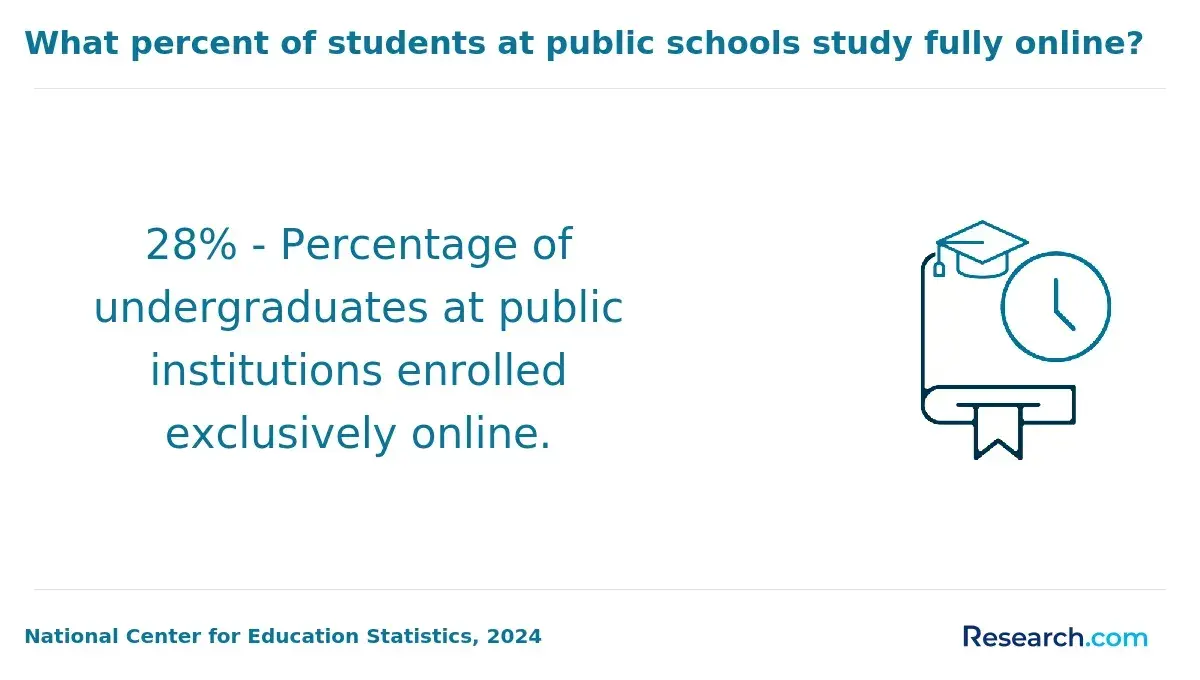
Yes. An online MSW can be CSWE-accredited and can include an approved field placement, but online coursework does not eliminate the in-person or agency-based practice requirements of field education. Students typically complete practicum hours with agencies in or near their communities while taking classes online.
Online delivery may work particularly well for employed human services professionals when the program has a local placement network, clear employment-based placement rules, responsive field staff, and required live class times that fit the student's schedule. It may be a poor fit when a student cannot be available during agency business hours, lives far from qualifying agencies, or needs a school to guarantee a specific specialty placement.
Online programs vary substantially in pacing. A program with scheduled classes and fixed placement milestones differs from best accredited self-paced online colleges, because MSW field education generally requires supervised hours, faculty oversight, and set evaluation deadlines rather than fully self-paced completion.
| Format factor | Online MSW consideration | Why it matters |
| Course delivery | Asynchronous, synchronous, or hybrid classes | Determines whether class meetings conflict with work shifts |
| Field placement location | Local agency, employer site, or school-arranged placement | Affects commute, networking, and access to specialties |
| Field-hour schedule | Often includes daytime agency availability | May require employer flexibility even when classes are online |
| Licensure alignment | Curriculum and placement requirements can vary by state | Protects eligibility for the state where you intend to practice |
Do not assume a program can place you in every state or that an online degree automatically meets your state's licensure requirements. Confirm both the program's state authorization disclosures and your licensing board's education rules before enrolling.
What are the admission requirements for CSWE-accredited MSW programs?
Admission requirements vary, but most CSWE-accredited MSW programs ask for a completed bachelor's degree, official transcripts, an application, a personal statement, résumé, recommendations, and evidence of readiness for graduate social work study. Some programs request a GPA threshold, prerequisite coursework, an interview, or a background disclosure. GRE requirements have become less common, but applicants should confirm each school's current policy.
Traditional MSW programs may admit students with undergraduate degrees in many disciplines. Advanced-standing programs usually require a BSW from a CSWE-accredited program, often earned within a school-defined recent time frame, along with a specified GPA. Human services employment can strengthen either application but does not generally substitute for the BSW requirement for advanced standing.
Use your application to connect experience to social work competencies rather than merely listing responsibilities. Strong materials explain the populations served, ethical challenges encountered, communication skills developed, supervision received, and the graduate-level skills you need next.
If you are comparing workload and admissions expectations across graduate fields, this overview of what is the easiest masters degree can provide context. "Easiest" is subjective, however, and should not be the deciding factor for an MSW intended to support professional licensure and client-facing practice.
Applicants should also disclose barriers early. A criminal record, prior professional discipline, immigration status, or inability to meet agency health and background-check requirements can affect field placement access and, in some cases, later licensure. A school may admit a student without being able to guarantee every placement or licensing outcome.
How long does an MSW program take with advanced standing?
Advanced-standing MSW programs commonly take about one year of full-time study, though exact timelines vary by curriculum, term structure, and field schedule. Traditional MSW programs commonly take about two years full time. Part-time pathways can take longer, particularly when field placements must be completed during standard agency hours.
Advanced standing is designed for graduates of qualifying CSWE-accredited BSW programs because their undergraduate education already covered foundational social work content and field learning. It does not mean skipping graduate field education: CSWE requires at least 500 field hours in an advanced-standing MSW.
| Pathway | Typical student background | Minimum CSWE field education requirement | Planning consideration |
| Traditional MSW | Bachelor's degree in social work or another discipline | 900 hours | Usually includes foundation and specialized curriculum |
| Advanced-standing MSW | Eligible graduate of a CSWE-accredited BSW program | 500 hours | Admission rules may include BSW recency and GPA requirements |
| Part-time MSW | Working adult or student needing reduced course load | Same applicable field-hour minimum | Longer calendar timeline may improve work-school balance |
Choose advanced standing only when you clearly meet the school's written eligibility rules and can manage the condensed pace. A traditional program may be the better investment for career changers, applicants with non-BSW bachelor's degrees, or students who want more time to develop foundational social work skills.
How much do CSWE-accredited MSW programs cost?
MSW cost depends on residency, public or private nonprofit status, online fees, number of required credits, and the time needed to complete field education. Tuition is only one part of the financial decision: practicum schedules can reduce paid work hours, and students may also face technology, transportation, background-check, immunization, books, and licensing-exam expenses.
National Center for Education Statistics data for the 2023-24 academic year place average graduate tuition and required fees at $20,513 across degree-granting postsecondary institutions. That broad figure is not an MSW price quote; use it only as a benchmark while comparing each program's published total required charges and the credits needed for your pathway.
To compare programs fairly, calculate the estimated full-program cost rather than comparing one term's tuition. The following cost categories can reveal why a lower advertised tuition rate is not always the lower-cost option.
- Required tuition and mandatory university or distance-learning fees for every credit and term.
- Field education costs, including commuting, parking, professional attire, background checks, and health documentation.
- Lost wages or reduced overtime if practicum hours occur during the workday.
- Financial aid, employer tuition assistance, scholarships, veterans benefits, and any conditions attached to them.
- Additional coursework, travel, or relocation costs if the program cannot arrange an appropriate local placement.
Applicants seeking lower undergraduate costs before pursuing graduate social work may find cheap online colleges useful for comparison. For an MSW, however, prioritize CSWE accreditation, field-placement feasibility, and state licensure alignment alongside affordability.
A practical ROI review compares total borrowing, expected ability to remain employed during practicum, local pay ranges, and the credential required for your target role. Avoid relying on a school's tuition alone or assuming that a higher-cost program produces higher earnings.
What careers can you pursue with a CSWE-accredited MSW?
A CSWE-accredited MSW can support work in clinical practice, behavioral health, child and family services, schools, hospitals, aging services, military and veterans programs, community organizations, policy, and administration. The exact roles available depend on state licensure rules, employer requirements, concentration, supervised post-degree experience, and the practicum experiences you complete.
For students who want direct clinical practice, the MSW is usually an educational step rather than the final credential. States commonly require additional supervised post-MSW experience and a licensing examination for independent clinical social work practice. Students focused on macro practice may instead prioritize policy, program evaluation, community organizing, or nonprofit-management placements.
| Career direction | Typical work setting | How practicum planning can help |
| Clinical or behavioral health social work | Clinics, hospitals, community mental health agencies | Builds assessment, treatment-planning, documentation, and referral experience |
| Child, family, and school services | Schools, child welfare agencies, family service organizations | Develops systems navigation and family-centered intervention skills |
| Medical social work | Hospitals, hospices, rehabilitation centers | Provides interdisciplinary-care and discharge-planning exposure |
| Community and policy practice | Nonprofits, public agencies, advocacy organizations | Develops program evaluation, organizing, grant, and policy-analysis experience |
| Administration and leadership | Human services agencies and health systems | Builds supervision, operations, and quality-improvement skills |
Choose a concentration and practicum setting based on the work you want after graduation, not just the job you have now. An employment-based placement can be efficient, but an external placement may be more valuable if it opens the specialty, population, or supervision experience you need.
What is the salary outlook for social workers with an MSW?
The U.S. Bureau of Labor Statistics reports that social workers had a median annual wage of $61,330 in May 2024 and projects 6% employment growth from 2024 to 2034. This occupational figure covers social workers with different education levels, specialties, employers, and locations, so it should not be interpreted as a guaranteed MSW salary.
An MSW may be particularly relevant for roles that require graduate education, clinical licensure progression, advanced assessment skills, or leadership responsibilities. Pay can vary substantially by state, metropolitan area, setting, union coverage, employer budget, specialty, and whether the position requires independent clinical licensure.
Use salary information as one part of an affordability decision. Compare local job postings and public wage data for the role you want, then weigh likely earnings against tuition, borrowing, and the work disruption caused by field education. Health care and government settings may have different pay structures from nonprofit agencies, while private practice income depends on licensure, referral volume, reimbursement, and business costs.
Technology is also changing practice expectations. Electronic records, telehealth platforms, data privacy procedures, and AI-assisted administrative tools can affect daily workflow, but they do not replace the ethical judgment, relationship-building, assessment, and accountable decision-making central to social work. Ask programs how they prepare students for technology use, confidentiality, and informed consent in field settings.
How do you verify CSWE accreditation before applying?
Verify accreditation directly through CSWE's official program directory and then confirm the exact degree level, delivery location, and program status with the university. A school can have an accredited BSW program without having an accredited MSW program, and a university name alone is not proof that a particular online or satellite pathway meets your needs.
Accreditation status may be listed as accredited, in candidacy, or another category. Candidacy can be meaningful, but applicants should understand the status, expected review timeline, and whether their intended state licensing board accepts graduates from that status. State boards make their own licensing determinations.
Complete these checks before submitting a deposit or accepting financial aid.
- Find the specific MSW program in CSWE's official directory and save the program-status information.
- Ask the school to confirm that your intended online, hybrid, campus, or extension option is covered by the program's accreditation.
- Read the field education handbook for minimum hours, placement process, employer-site rules, and required daytime availability.
- Contact the social work licensing board in the state where you plan to practice and verify educational and post-degree supervision requirements.
- Request a written estimate of total tuition, mandatory fees, and any costs that arise before or during field placement.
Red flags include vague answers about accreditation, a promise that previous work automatically replaces field education, no written field-placement policy, or reluctance to discuss state licensure disclosures. A reputable program should be able to explain its status and policies clearly, even when it cannot guarantee a particular placement or license.
Other Things You Should Know About Social Work
Possibly, if the MSW program approves an employment-based placement. Schools typically require a qualified supervisor, a formal learning plan, and duties that are new or distinct from your normal paid work. Approval depends on the agency and program policy.
Usually not by itself. Advanced standing is generally reserved for applicants with a qualifying BSW from a CSWE-accredited program. Relevant work experience can strengthen your application, but it does not normally replace the BSW requirement.
An online MSW may support licensure if the program is CSWE-accredited and meets your state's education rules. You may still need supervised post-degree experience and an examination. Confirm requirements with the licensing board where you intend to practice.
Choose a workplace practicum when it offers clearly new, supervised learning and helps you stay employed. Choose an outside placement when you need experience in a new specialty, population, or setting, especially if it better supports your long-term career or licensure goals.
References
- California Master of Social Work Practicum Education - CaliforniaSocialWorkEDU https://www.californiasocialworkedu.org/california-master-of-social-work-field-education/
- Online Master's in Social Work Programs https://onlinecounselingprograms.com/online-counseling-degrees/cswe-accredited-online-msw-programs/