2027 Online Mathematics Education Programs Meeting State Content Requirements

Co-Founder and Chief Data Scientist
Choosing an online mathematics education degree is not simply a matter of finding a flexible program: it must also satisfy the content, clinical-practice, and licensure rules of the state where you intend to teach. The U.S. Bureau of Labor Statistics reports a $64,580 median annual wage for high school teachers as of May 2024.
This guide helps aspiring and current educators compare online pathways, verify state alignment, estimate time and cost, and avoid enrolling in a program that cannot support their teaching goal.
Key Things You Should Know
- An online mathematics education program can meet state requirements when its coursework, supervised field experiences, and student teaching are approved or accepted for licensure in the state where the candidate will teach.
- A bachelor's degree plus a state-approved teacher-preparation route is usually required for initial K-12 licensure; a master's in mathematics education commonly serves licensed teachers seeking advancement, a content specialization, or an added endorsement.
- High school teachers had a $64,580 median annual wage in May 2024, according to the U.S. Bureau of Labor Statistics, but pay, vacancies, endorsements, and reciprocity rules vary substantially by state and district.
How do online mathematics education programs meet state K-12 content requirements?
Online mathematics education programs meet state K-12 content requirements by mapping required courses and assessments to a state's academic standards and teacher-licensure competencies. The online format generally applies to lectures, assignments, discussions, and assessments; state-required classroom practice still takes place in local schools under qualified supervision.
States typically separate two related requirements. Student content standards describe what K-12 learners should know in areas such as algebra, geometry, statistics, and mathematical modeling. Teacher licensure standards specify what an aspiring teacher must demonstrate, including subject-matter knowledge, pedagogy, classroom experience, background clearance, and testing.
A program designed for one state is not automatically approved in another. Many institutions offer placement support nationwide, but the candidate - not the school district - usually remains responsible for confirming that the program satisfies the intended state's rules before enrollment.
To verify alignment, take these steps before paying an enrollment deposit:
- Identify the exact license you need, such as elementary education, middle-grades mathematics, secondary mathematics, or special education with a math authorization.
- Check the state education agency's current approved-program and licensure requirements, including tests and grade-band rules.
- Ask the university for a written disclosure stating whether the program meets educational requirements in your state.
- Confirm who arranges field placements, whether a local district agreement is needed, and whether your school can host student teaching.
- Compare the degree plan against required mathematics credits and any state-specific course requirements, such as reading instruction or special education coursework.
A common mistake is assuming that "online" means clinical experiences can be completed independently. Legitimate preparation programs normally require documented observations, supervised practicum hours, and a full-time or near-full-time student-teaching placement. If a school cannot clearly explain how these requirements work in your location, treat that as a significant red flag.
What types of mathematics education degrees can you earn fully online?
The best online credential depends on whether you need initial licensure, already hold a license, or want to strengthen mathematics knowledge without becoming a classroom teacher. "Fully online" can be misleading in initial-certification programs because coursework may be online while school-based clinical work occurs in person.
The following comparison shows how common pathways serve different starting points.
| Credential | Best for | Typical licensure role | Important limitation |
| Bachelor's in mathematics education | First-time undergraduate teacher candidates | May lead to initial licensure, often middle or secondary mathematics | Requires in-person fieldwork and student teaching |
| Bachelor's completion program | Transfer students with general-education and math credits | May lead to initial licensure if state-approved | Transfer evaluation can change completion time |
| Master of Arts in Teaching or master's with initial licensure | Career changers with a bachelor's in math or a related field | May lead to initial certification | Admission and prerequisite requirements can be more demanding |
| Master's in mathematics education | Already licensed teachers | Usually professional advancement, not initial licensure | Does not automatically add a new state license or endorsement |
| Graduate certificate or endorsement program | Licensed educators seeking a targeted math credential | May support an added endorsement where approved | Rules for endorsement eligibility are state-specific |
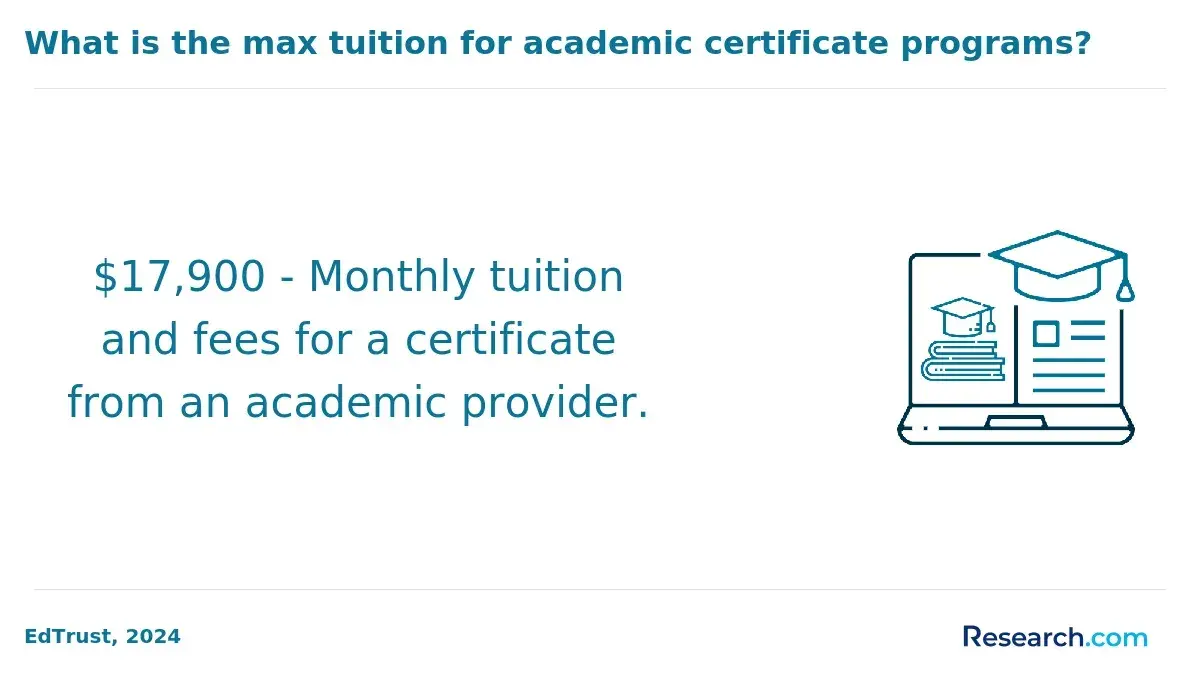
A bachelor's degree is generally the most direct path for someone entering teaching from high school or community college. An accelerated transfer route can make sense when prior credits fit the institution's degree plan; however, readers considering an associate degree in 6 months online should understand that an associate credential alone usually does not qualify someone for a standard public-school teaching license.
Licensed teachers should be especially careful with graduate programs. A master's in mathematics education can deepen instructional expertise and may support salary-lane advancement under a district contract, but it is not necessarily a route to secondary mathematics licensure. Ask whether the program results in a degree, an endorsement recommendation, both, or neither.
How do online and campus mathematics education programs compare for future teachers?
Online and campus programs can lead to the same credential when both are state-approved and include comparable clinical experiences. The better choice depends less on delivery mode than on your scheduling needs, access to local schools, learning preferences, and ability to complete required daytime classroom placements.
This comparison highlights the trade-offs future mathematics teachers should weigh.
| Factor | Online or hybrid program | Campus-based program |
| Course scheduling | Often offers asynchronous coursework and fewer commutes | Usually follows fixed class times and campus attendance |
| Clinical experience | Completed in a local school; placement support differs by institution | Often uses established nearby partner districts |
| Peer interaction | Requires intentional participation in virtual groups and coaching | Offers frequent face-to-face contact with faculty and peers |
| Best fit | Working adults, rural learners, and candidates far from a university | Students who prefer structured schedules and local networking |
| Main risk | Assuming flexibility applies to student teaching | Underestimating commuting, housing, and scheduling costs |
Online study is often a strong fit for organized adults who can manage weekly deadlines and have realistic access to an eligible placement school. It may be a poor fit for candidates who need extensive in-person academic support, cannot complete daytime field hours, or live in a state where the provider has no authorization or placement arrangement.
Technology is increasingly part of mathematics instruction in both formats. Candidates should expect to use virtual manipulatives, learning-management systems, data dashboards, accessibility tools, and AI-aware assessment practices. Programs should teach future teachers how to use these tools critically, protect student privacy, and assess mathematical thinking rather than relying on automated answers.
What accreditation should online mathematics education programs have for teacher licensure?
For teacher licensure, the most important approval is usually state approval of the educator-preparation program in the state where you seek certification. Institutional accreditation also matters because it affects credit transfer, financial-aid eligibility, graduate-school admission, and the credibility of the degree.
Look for these distinct forms of quality assurance and confirm them directly with the institution and state agency.
- Institutional accreditation: The college or university should be accredited by an accreditor recognized by the U.S. Department of Education or the Council for Higher Education Accreditation.
- State educator-preparation approval: The mathematics education pathway should be approved to prepare candidates for the relevant teaching license or endorsement.
- Specialized educator-preparation accreditation: Accreditation from organizations such as CAEP can provide an additional quality signal, but it does not replace state approval.
- Distance-education authorization: The institution should be authorized to enroll and supervise students in your state, particularly if it arranges clinical placements there.
Do not confuse a school's general accreditation with approval of a particular teacher-preparation program. A university can be institutionally accredited while a specific online route does not meet licensure requirements in your state. Similarly, a program may prepare teachers for one grade band but not another.
Short-form certification programs online can be useful for professional development or specialized skills, but they should not be assumed to substitute for a state-approved initial teacher-preparation program. Request the program's official licensure disclosure, then retain it with your enrollment records.
What math content and pedagogy courses are required in these online programs?
Online mathematics education curricula combine university-level mathematics with courses on how students learn, reason about, and communicate mathematical ideas. Exact requirements vary by grade band: elementary candidates typically study broad content and methods, while secondary candidates complete more advanced mathematics.
Most programs include course categories similar to the following, although course titles and credit requirements differ by institution and state.
| Course area | What candidates typically learn | Why it matters for licensure |
| Algebra and functions | Equations, functions, modeling, and algebraic structure | Supports middle- and secondary-level content competence |
| Geometry and measurement | Proof, spatial reasoning, transformations, and measurement concepts | Prepares candidates to teach required geometry standards |
| Statistics and probability | Data analysis, variability, probability, and statistical reasoning | Addresses growing emphasis on data literacy |
| Calculus or advanced mathematics | Limits, derivatives, integrals, discrete mathematics, or linear algebra | Often required for secondary mathematics preparation |
| Mathematics methods | Lesson design, questioning, formative assessment, and misconceptions | Connects mathematical knowledge to classroom practice |
| Educational foundations | Development, classroom management, inclusion, literacy, and assessment | Addresses professional and pedagogical standards |
| Clinical practice | Observation, tutoring, practicum, and student teaching | Provides supervised evidence of teaching competence |
For secondary licensure, examine the transcript-level mathematics requirements rather than relying on a broad program label. A degree called "mathematics education" may emphasize middle grades, while another may require calculus, abstract algebra, statistics, and geometry appropriate for grades 7-12 or 9-12.
Ask whether required courses address multilingual learners, students with disabilities, culturally responsive instruction, and mathematical discourse. These are not add-ons: they affect whether a teacher can make rigorous mathematics accessible to a diverse classroom.
What are typical admission requirements for online mathematics education programs?
Admissions requirements depend on whether you are applying to an undergraduate, transfer, graduate, or post-baccalaureate licensure program. Online delivery rarely lowers the academic or background requirements for educator preparation because candidates will eventually work with minors in school settings.
Applicants commonly need the following materials or milestones:
- A high school diploma or equivalent for undergraduate admission, or a completed bachelor's degree for most graduate-entry licensure programs.
- Official transcripts showing prior coursework, cumulative GPA, and - where required - mathematics prerequisites.
- An application, personal statement, and sometimes recommendations or an interview explaining interest in teaching.
- Background checks, fingerprinting, tuberculosis screening, and other district-required clearances before clinical placements.
- Proof of foundational skills or subject-matter competency when required by the state or program.
- A placement plan that meets the school, district, grade-level, and supervisor requirements for practicum or student teaching.
Transfer applicants should request a preliminary credit evaluation before committing. General education credits may transfer readily, but upper-level mathematics, methods courses, and clinical coursework frequently have tighter equivalency rules. A low advertised completion time is less meaningful than a written plan showing which courses remain after transfer review.
Career changers with a quantitative bachelor's degree may find a master's with initial licensure attractive, especially if they need a structured transition into teaching. Applicants who already have a teaching license should instead compare targeted endorsements and advanced degrees based on their district's salary schedule and career goals.
How long do online mathematics education degrees take and what do they cost?
Completion time and cost depend on transfer credit, enrollment pace, clinical-placement scheduling, residency, and whether the credential includes initial licensure. Online tuition can reduce commuting and relocation expenses, but it does not eliminate fees, textbooks, testing, fingerprinting, or the income disruption that may accompany full-time student teaching.
For context, the National Center for Education Statistics reported average published tuition and fees of $11,610 for in-state students at public four-year institutions in 2024. That figure is a national benchmark rather than the price of a particular online teacher-preparation degree, and it excludes living expenses and many program-specific costs.
The timeline below helps readers set realistic expectations.
| Pathway | Typical time frame | Cost variables to compare |
| Traditional bachelor's degree | About four years full time | Resident tuition, transfer credits, living costs, clinical fees |
| Bachelor's completion program | Often about two years after substantial transferable credit | Accepted credits, upper-division tuition, placement requirements |
| Master's with initial licensure | Often about one to two years full time | Graduate tuition, prerequisite courses, testing, unpaid clinical time |
| Master's for licensed teachers | Often about one to two years part time or full time | Employer tuition support, salary-lane value, course load |
| Endorsement or certificate | Often less than one year, depending on state requirements | Credit total, assessment fees, state application costs |
Compare net price, not tuition alone. Ask for a full estimate covering per-credit charges, technology fees, proctoring, licensure tests, fingerprinting, insurance, books, travel to placements, and graduation fees. Also ask whether scholarships, federal aid, employer reimbursement, or service-based aid apply to online students.
A graduate degree is most financially sensible when it supports a required credential, a realistic salary-schedule increase, a district leadership role, or a specialty you plan to use. For a broader comparison of return-oriented options, explore graduate degrees that are worth it, then verify how any credential would affect your local district contract rather than assuming a universal pay increase.
What math teaching careers can graduates pursue and in which school settings?
Graduates commonly pursue mathematics teaching roles in public, charter, private, online, and alternative schools. A standard public-school position normally requires the appropriate state license; private schools and some alternative settings may set different hiring rules, though strong mathematics preparation remains valuable.
The license grade band, your content preparation, and local hiring needs shape which roles are realistic.
| Career path | Typical setting | Common preparation expectation |
| Elementary classroom teacher | Public, charter, or private elementary schools | Elementary license with broad content and mathematics methods |
| Middle school mathematics teacher | Grades commonly spanning 5-8 or 6-8 | Middle-grades or secondary mathematics authorization, depending on state |
| High school mathematics teacher | Comprehensive, magnet, virtual, or alternative high schools | Secondary mathematics license and substantial mathematics coursework |
| Special education teacher with math focus | Inclusive classrooms, resource programs, or specialized schools | Special education license plus applicable math authorization |
| Instructional coach or math specialist | District curriculum offices or school-based coaching teams | Teaching experience; often a graduate degree or specialist credential |
| Adult education or tutoring professional | Community programs, test-prep organizations, or private practice | Requirements vary; state licensure may not always be required |
Teaching is especially suitable for people who enjoy explaining ideas, noticing patterns in student thinking, and building relationships over time. It may be less suitable for someone seeking solitary, highly autonomous quantitative work; those candidates may also wish to explore introvert jobs that pay well before making a major degree investment.
New teachers can improve their employability by seeking experience with tutoring, summer programs, substitute teaching, classroom observation, or paraprofessional work. Districts may also value preparation in special education, bilingual education, computer science, data literacy, or advanced mathematics, but added credentials should be chosen based on actual state rules and local vacancies.
What salary ranges and job outlook can math teachers expect across the U.S.?
Teacher compensation is primarily determined by state and district salary schedules, experience, degree level, union agreements, school funding, and assignment. Mathematics teachers may be eligible for hard-to-fill incentives in some locations, but these payments are not universal and should not be treated as guaranteed income.
The U.S. Bureau of Labor Statistics reported a median annual wage of $64,580 for high school teachers in May 2024. This national figure is useful as a broad benchmark, but it combines subject areas and does not show the salary schedule, benefit package, or local cost of living in a specific district.
BLS projects employment of high school teachers to decline 1% through 2033, while still anticipating openings caused by workers leaving the occupation or retiring. For prospective mathematics teachers, the practical takeaway is that national growth projections do not replace local research: shortages and hiring needs can differ sharply among urban, rural, high-poverty, and high-cost districts.
Evaluate earnings and outlook using local evidence:
- Find the district salary schedule for first-year, master's-level, and experienced teachers.
- Check whether mathematics, special education, rural placement, or bilingual assignments receive documented supplements.
- Compare contract days, retirement contributions, health insurance costs, and paid leave alongside base salary.
- Review regional vacancy notices and state shortage-area designations rather than relying only on national projections.
- Estimate the effect of student loans and unpaid student-teaching time on your first several years of earnings.
Salary is only one ROI factor. A lower-cost state-approved program that leads efficiently to a license can be a better investment than a higher-priced option with weak placement support, even if the latter advertises greater convenience.
How can you evaluate and choose a reputable online mathematics education program?
A reputable online mathematics education program should make its licensure pathway, state eligibility, curriculum, clinical placements, faculty support, and total cost easy to verify. Do not choose based solely on rankings, a short completion claim, or whether classes are asynchronous.
Use this sequence to compare programs before applying:
- Start with your target state and grade band, then identify the exact license or endorsement required for the job you want.
- Confirm that the institution is appropriately accredited and that the specific teacher-preparation pathway is state-approved or accepted for licensure in your location.
- Request a written state-authorization and professional-licensure disclosure for your state, not a verbal assurance from a recruiter.
- Review the degree plan for enough algebra, geometry, statistics, calculus, and advanced mathematics for your intended grade band.
- Ask how field placements and student teaching are arranged, what happens if a placement falls through, and whether you must stop working during clinical practice.
- Get a transfer-credit evaluation and itemized cost estimate before comparing financial-aid offers.
- Speak with admissions, the licensure office, and - if possible - a recent candidate or cooperating school partner about responsiveness and placement support.
- Compare the program against local district salary schedules and hiring needs to judge whether the investment fits your likely career path.
The most serious red flags are vague answers about state eligibility, promises of licensure without supervised teaching, unclear accreditation claims, pressure to enroll before a transfer review, and an inability to explain total costs. Another frequent mistake is choosing a degree that sounds mathematical but lacks the pedagogy and clinical components required for public-school certification.
The strongest choice is not automatically the fastest, cheapest, or most flexible program. It is the one that provides a documented route to the license you need, offers a workable clinical-placement plan, accepts the credits you can use, and fits your financial and employment circumstances.
Other Things You Should Know About Mathematics
Yes, if the degree includes a state-approved educator-preparation pathway and you complete all required in-person field experiences, student teaching, exams, background checks, and state application steps. An online mathematics degree without teacher preparation may not qualify you for a public-school license.
Initial licensure programs typically require supervised clinical practice, including student teaching or an equivalent residency. Coursework may be online, but teaching practice normally occurs in a real school or approved educational setting.
Possibly, but only if you already hold the required license or the master's program specifically leads to initial secondary mathematics licensure in your state. Many master's programs are designed for licensed teachers and do not provide initial certification.
For K-12 public-school teaching, mathematics education is often the more direct choice because it combines math content, pedagogy, and clinical preparation. A mathematics degree can be excellent preparation, but graduates may still need an approved teacher-preparation program to become licensed.
References
- Which States Are Overhauling Math Education? See Our Tracker https://www.edweek.org/teaching-learning/which-states-are-overhauling-math-education-see-our-tracker/2026/07
- NCTM 2025 Standards for Mathematics Teacher Preparation https://www.nctm.org/Standards_for_Teacher_Prep_Programs/
- Association of Mathematics Teacher Educators. (2025). Standards for preparing teachers of mathematics. https://amte.net/standards
- U.S. Department of Education. (2024). Teacher preparation programs. https://www.ed.gov/teaching-and-administration/teacher-preparation