2027 Community Health Center Nurse Workday: Patient Mix, Responsibilities, and Teamwork
Audited and Verified:
Our Editorial and Data Verification Process
Research.com uses government datasets, official education statistics and primary institutional information to support its career and degree guides. Our review process checks factual accuracy, occupational definitions, source dates and the requirements associated with the credentials discussed.
How This Article Was Fact-Checked
Our editorial team verifies salary estimates, employment projections, education requirements and program information against original data providers and official organizations. Salary figures are checked against the relevant occupational definitions and reporting periods. Information about licensure, accreditation and required in-person training is reviewed separately.
Fact-checked and verified on:

Co-Founder and Chief Data Scientist
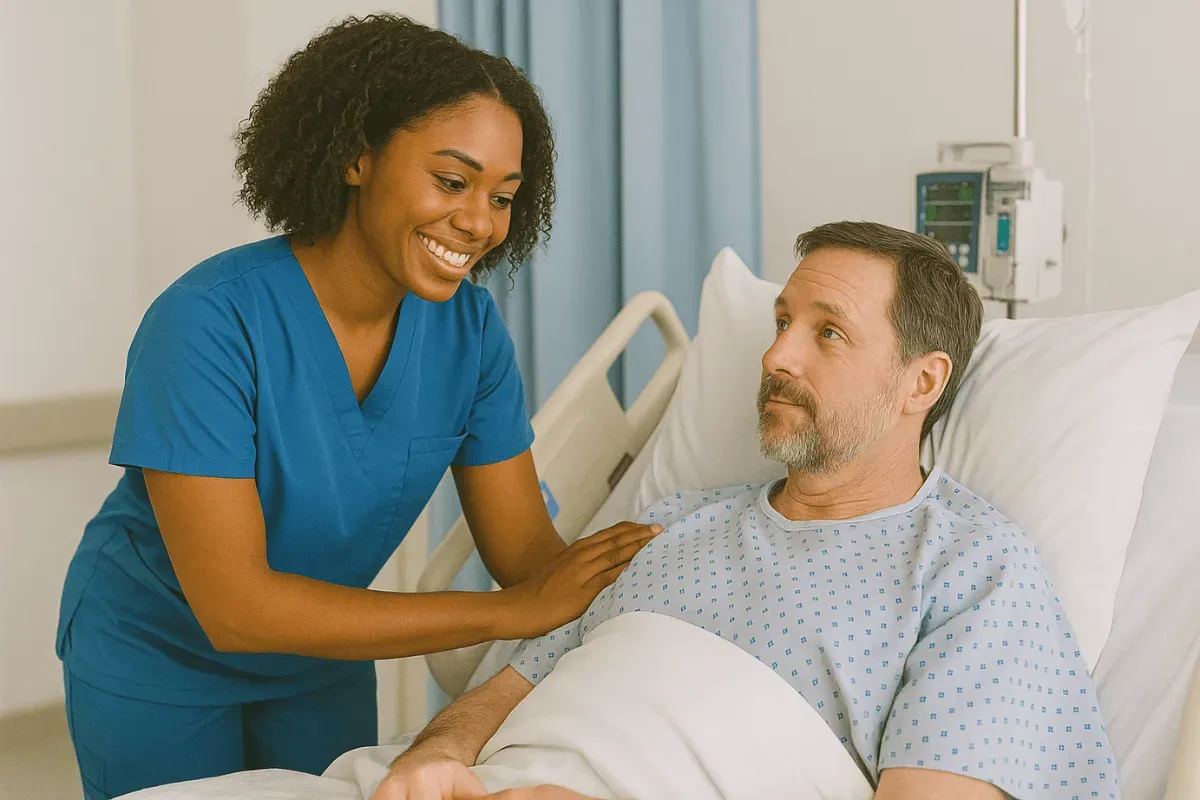
A community health center nursing job can look very different from a hospital shift. Appointments, phone triage, chronic-disease follow-up, patient teaching, and referrals may all compete for attention in one day. For nursing students and RNs considering the move, the important question is whether that mix of direct care and coordination fits their skills and goals. This guide walks through the workday, patient population, team relationships, credentials, and employment considerations so readers can assess the role before choosing a program or accepting an offer.
Key Things You Should Know
- A typical day combines scheduled visits with less predictable triage, follow-up, documentation, and care coordination; the balance varies by clinic and RN or LPN/LVN role.
- Community health center nursing generally requires an active RN or LPN/LVN license for the position advertised - not a specific community-health degree or universal specialty certification.
- Pay and workload require a clinic-specific comparison: national RN wage figures cover all settings, not community health centers, and a posted caseload may omit calls, messages, and outreach.
What does a community health center nurse do during a typical workday?
A community health center provides outpatient care to a defined community. Some centers are federally qualified health centers (FQHCs); not every clinic described as a community health center has that designation. Nurses commonly support primary care over repeated visits rather than managing a hospital unit's continuously occupied beds.
The following workflow illustrates where nursing time may go. It is not a fixed schedule: staffing, appointment types, walk-ins, and the nurse's license and assigned duties change the mix.
| Part of the day | Possible nursing work | What makes it variable |
| Before and between visits | Review messages and results, prepare for appointments, identify follow-up needs | Message volume, staffing, and EHR workflow |
| During visits | Assess concerns, provide ordered care, administer medications or vaccines when authorized, teach patients, document findings | Patient needs, standing orders, and professional scope |
| Throughout and after clinic | Telephone triage, coordinate referrals, follow up after hospital discharge, escalate urgent concerns | Unscheduled requests and access to outside services |
The work is not simply a series of appointments. A nurse may need to recognize when a phone concern cannot safely wait, then return to a scheduled visit and document both. Ask prospective employers who handles triage, how urgent calls are escalated, and whether documentation time is built into staffing.
An RN considering an advanced primary-care role can use short-format FNP program comparisons to explore a separate pathway; an FNP's diagnostic and prescribing responsibilities are not part of an RN job by default.
Which patients do community health center nurses commonly serve?
Patient mix depends on the center's location and services. A primary care team may see children needing preventive visits, adults managing diabetes or hypertension, patients seeking reproductive health care, and older adults coordinating multiple appointments.
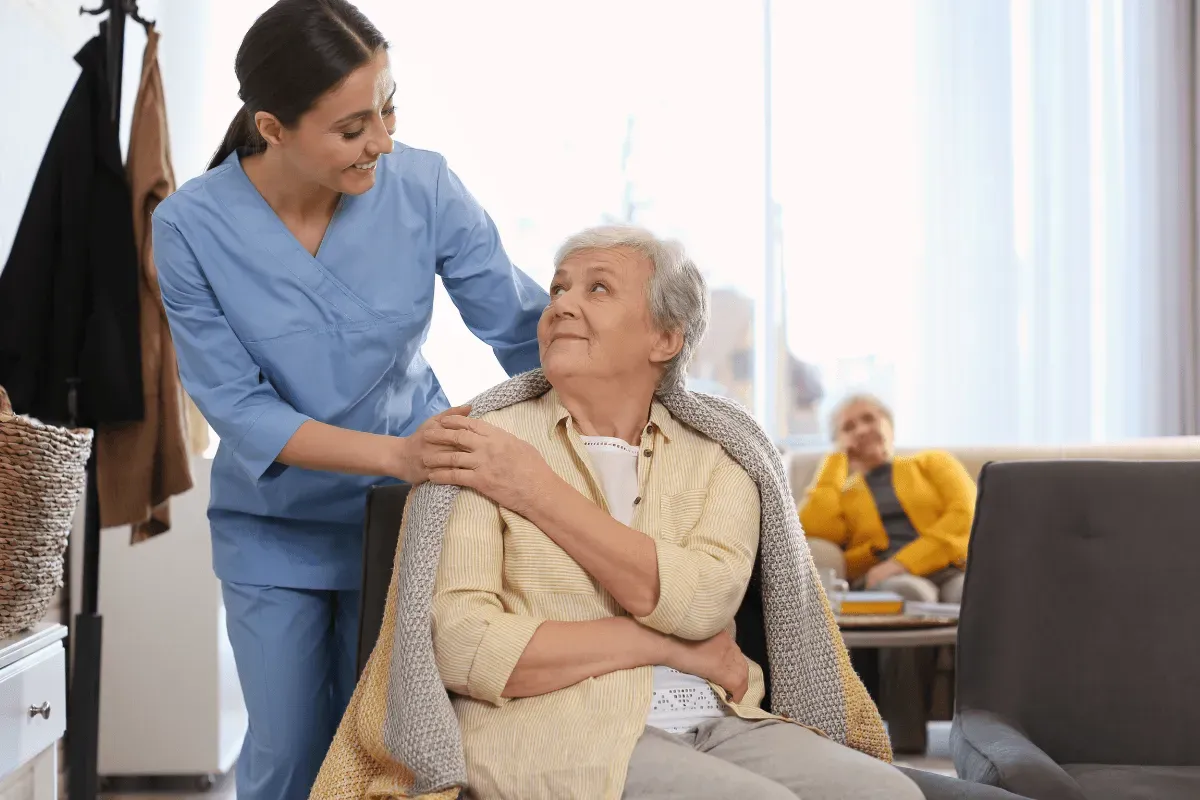
Many centers also serve patients facing language barriers, transportation difficulties, unstable housing, or gaps in insurance coverage. These circumstances affect whether a care plan is workable; they do not define any individual patient.
Some centers integrate behavioral health or substance-use services, while others refer patients elsewhere. A nurse may screen within their role, explain a referral, and help ensure follow-up without assuming the responsibilities of a mental health specialist.
RNs who want a psychiatric advanced-practice role should investigate formal population-focused preparation, including shorter postgraduate psychiatric nursing routes when they already meet the route's entry requirements. Community experience alone does not confer PMHNP eligibility.
How do community health center nurses collaborate with interdisciplinary teams?
Collaboration is part of the daily workflow, not an occasional referral. A nurse may relay an assessment to a primary care clinician, clarify a medication question with a pharmacist, coordinate a social-work referral, and use an interpreter to confirm that a patient understands the next step.
Depending on the center, the team may also include medical assistants, behavioral health clinicians, community health workers, dental staff, and care coordinators.
The key distinction is between sharing information and transferring responsibility. Nurses document what they observed, communicate concerns promptly, and follow up on assigned tasks; each team member acts within their own scope and the clinic's policies.
Students seeking team-based primary-care experience for a future FNP role should examine FNP programs with support finding preceptors, while confirming that a proposed placement meets the program's supervised clinical requirements. Working alongside an NP is not automatically an approved clinical placement.
There is no single degree required for every community health center nursing job. RN positions generally call for completion of an eligible prelicensure nursing program and an active RN license; LPN/LVN positions require the corresponding practical or vocational nursing education and license.
Job duties differ by license, state law, employer policy, and supervision arrangements. Some RN postings prefer a BSN or prior ambulatory experience, but those preferences should not be mistaken for a nationwide entry rule.
For someone who already holds a bachelor's degree outside nursing, a prior degree does not authorize nursing practice. Compare eligible accelerated BSN, associate-degree, and, where appropriate, shorter prelicensure MSN pathways by their initial-licensure preparation, clinical attendance, prerequisites, and total cost. A postlicensure MSN intended for existing RNs is not an alternative route to an initial RN license.
An ADN or BSN can prepare a graduate to seek initial RN licensure, subject to program and state requirements. A BSN may provide more room for population-health study and may match a particular employer's preference; an ADN may be a more direct entry route where local centers hire associate-prepared RNs. Neither degree alone grants a license or makes a new graduate independently ready for every triage or care-management assignment.
For a licensed RN, an RN-to-BSN program can add academic preparation without repeating initial licensure. An MSN may be relevant to a specific leadership, education, or advanced-practice goal - not simply to perform ordinary clinic RN duties.
Nurses comparing associate-degree RN to MSN options should verify the exact award and track: a non-APRN MSN does not qualify its graduate to practice as a nurse practitioner. If the immediate goal is a clinic RN position, experience and targeted onboarding may be more useful than another degree.
The essential credential is the active nursing license appropriate to the job and practice location. Graduating from a prelicensure program, becoming eligible for the NCLEX, passing the exam, and receiving a state license are distinct steps. Employers may also require or provide training in areas such as immunization workflows, life-support skills, telephone triage, and EHR use.
Requirements should be checked against the specific posting and state scope-of-practice rules. There is no universal community health center nurse certification. Specialty credentials can support a defined role, but they do not expand an RN's legal scope or replace orientation.
An RN seeking an FNP position instead needs the relevant graduate or post-graduate population-focused preparation, certification, and state APRN authorization. For an appropriately prepared graduate nurse, post-master's FNP certificate completion timelines are worth comparing against actual clinical-placement and eligibility requirements, not just advertised length.
Useful preparation combines general nursing judgment with ambulatory-specific practice: health assessment, pharmacology, chronic-condition management, patient education, population health, and communication across language and literacy needs.
Supervised experiences in primary care, public health, or other outpatient settings can help students practice follow-up and referral communication. Classroom work, simulation, volunteer service, and supervised nursing clinical hours are different forms of preparation; a program decides what satisfies its requirements.
New graduates should look for an employer orientation that includes observed triage, EHR documentation, escalation pathways, and feedback before they manage an assigned workflow more independently.
Licensed RNs considering RN-to-BSN capstone and practice requirements should check whether a project can address a real community-care problem and what site approval it needs. A project or course is valuable learning, not proof that the nurse has already mastered every clinic competency.
There is no single national wage series for "community health center nurse." As a broad benchmark, the U.S. Bureau of Labor Statistics reported a $93,600 median annual wage for registered nurses in May 2024.
That figure includes RNs across settings and experience levels; it is not a community health center pay estimate or a likely starting offer. An LPN/LVN posting also should not be compared with an RN wage benchmark.
Compare actual offers using base pay, hours, benefits, retirement contributions, loan-repayment eligibility if applicable, and time allocated for calls and documentation. Location and responsibilities matter more than degree title alone. Even accessible nursing practice doctorate pathways should be evaluated against a specific career goal and cost; a DNP is not normally required for a center RN job and does not guarantee a higher offer.
Community health centers hire within broader RN and LPN/LVN labor markets, so occupation-wide projections cannot predict openings at a particular clinic. For context, the U.S. Bureau of Labor Statistics projected 5% employment growth for registered nurses from 2024 to 2034.
That projection covers all RN settings, not community health centers alone. Local funding, turnover, service expansion, and hiring requirements can produce a very different picture in an individual market.
To judge prospects, review current local postings for license level, prior outpatient experience, language skills, scheduling, and orientation. Ask whether the clinic is hiring for direct visits, telephone triage, care management, or a combination.
Advanced study should follow the intended role rather than a general expectation of demand: post-master's DNP programs without traditional clinical rotations do not substitute for a clinic's RN onboarding or, by themselves, prepare someone for a new APRN population focus.
How can students choose an accredited nursing program for community health careers?
Start with the license and role sought, then check the program's fit. Institutional accreditation, nursing program accreditation such as ACEN or CCNE where applicable, and state board approval or recognition answer different questions. Confirm the specific prelicensure program's eligibility route with the relevant state board; do not rely on a university's general accreditation as proof of NCLEX eligibility.
Before applying, ask where supervised clinical placements occur, whether outpatient opportunities are available, who arranges them, and what on-site labs or simulation require attendance.
Compare total cost and scheduling against the time needed to complete the program - not just advertised flexibility. When comparing admission hurdles, nursing admission test policies are only one factor; a school without a particular test can still have selective admission, required science courses, and clinical-placement conditions.
Other Things You Should Know About Nursing
Some positions include outreach or home visits, but many are clinic-based. Check the posting for travel, vehicle, safety, and documentation expectations.
No. Some centers offer evening or weekend clinics, rotating coverage, or after-hours call. Ask about the actual schedule and whether call time is compensated.
It depends on the community and position. Language skills can be valuable, but nurses should use qualified interpreter services when required by policy rather than assume informal interpretation is sufficient.
It has different pressures, not necessarily fewer. Lower-acuity scheduled visits may coexist with urgent triage, high message volume, and limited referral access. Ask to shadow the role if the clinic permits it.
- Impact of the Work Environment on Nurse Outcomes - PMC https://pmc.ncbi.nlm.nih.gov/articles/PMC10903131/
- Community Health Registered Nurse | City of Philadelphia https://www.phila.gov/departments/office-of-human-resources/job-specs/4c02.htm
- Products - Data Briefs - Number 65 - July 2011 https://www.cdc.gov/nchs/products/databriefs/db65.htm
- Care Coordination | Agency for Healthcare Research and Quality https://www.ahrq.gov/ncepcr/care/coordination.html
- Electronic Health Records - Health IT Playbook https://playbook.healthit.gov/playbook/electronic-health-records/
- The Role of Nurses in Improving Health Care Access and Quality https://www.ncbi.nlm.nih.gov/books/NBK573910/
- Patient Safety Amid Nursing Workforce Challenges | PSNet https://psnet.ahrq.gov/perspective/patient-safety-amid-nursing-workforce-challenges
- The Nurse's Role in Preventative Care | Indiana Wesleyan University https://www.indwes.edu/articles/2025/04/the-nurses-role-in-preventative-care
- A Typical Day in the Life of a Nurse | Goodwin University https://www.goodwin.edu/enews/day-in-the-life-of-a-nurse/
- Nurse - Explore Healthcare Careers | Mayo Clinic College of Medicine and Science https://college.mayo.edu/academics/explore-health-care-careers/careers-a-z/nurse/