2027 SLP Programs That Let Career Changers Use Financial Aid for Leveling Coursework

Co-Founder and Chief Data Scientist
Career changers who hold a non-SLP bachelor's degree often face an expensive gap: completing communication sciences and disorders prerequisites before they can enter graduate school. The most affordable route is usually an aid-eligible, degree-seeking master's pathway that builds leveling courses into the program rather than a stand-alone, nondegree sequence.
This matters because speech-language pathologists had a $95,410 median annual wage in 2024, according to the U.S. Bureau of Labor Statistics. This guide explains how aid eligibility works, which program structures to compare, and how to avoid a pathway that does not support your licensure goal.
Key Things You Should Know
- Federal student loans usually require you to be enrolled as a degree-seeking student; stand-alone, nondegree SLP prerequisite courses often do not qualify, even when the courses are required for later graduate admission.
- For 2026 planning, integrated master's pathways are the clearest option: eligible graduate and professional students may generally borrow up to $20,500 annually in Direct Unsubsidized Loans, subject to aggregate limits and school cost-of-attendance rules.
- CAA accreditation, state licensure requirements, and a school's written confirmation of financial-aid status matter more than whether the leveling courses are online, accelerated, or marketed as "pre-SLP."
How can career changers use federal financial aid for SLP leveling coursework?
The key issue is not whether a course is called "leveling," "post-baccalaureate," or "prerequisite." Federal aid eligibility generally depends on your enrollment classification. Students admitted to an eligible degree program can typically use graduate federal loans for courses that the institution requires as part of that degree plan. Students taking the same courses as nondegree, visiting, or continuing-education students may not be eligible.
For a career changer, the most aid-friendly model is an integrated pathway: you are admitted to a master's program in speech-language pathology, assigned foundational communication sciences and disorders coursework, and remain degree-seeking while completing it. The school's financial-aid office must determine eligibility based on its approved curriculum, your enrollment level, satisfactory academic progress, and annual cost of attendance.
The following distinctions help explain why two apparently similar prerequisite options can produce very different financing results.
| Enrollment model | Typical federal-aid position | What to confirm before enrolling |
| Admitted to an MS-SLP program with built-in leveling | Often potentially eligible for graduate federal loans if courses count toward the degree | Written confirmation that leveling terms are included in aid-eligible enrollment |
| Degree-seeking undergraduate post-baccalaureate program | May be eligible for undergraduate aid, depending on program and student status | Whether the credential is eligible, your remaining loan eligibility, and enrollment requirements |
| Nondegree prerequisite or extension courses | Often not eligible for federal student aid | Whether institutional aid, payment plans, or employer benefits are available |
| Graduate certificate not tied to an MS-SLP degree | Varies and may be limited | Federal eligibility, transferability, and whether it fulfills intended graduate prerequisites |
Eligible graduate and professional students can generally borrow Direct Unsubsidized Loans up to $20,500 per academic year. Graduate students are not typically eligible for Pell Grants, so career changers should not assume FAFSA submission means grant funding will cover leveling costs. A credit-approved Direct PLUS Loan may be another option, but borrowing should be weighed against the full cost of the eventual master's degree.
Take these steps before paying an application fee. They reduce the risk of discovering too late that a program is academically suitable but financially inaccessible.
- Submit the FAFSA using the school code for every serious program under consideration.
- Ask financial aid whether you will be classified as degree-seeking from your first leveling term and whether each prerequisite term is aid eligible.
- Ask admissions for a sample sequence showing which courses are required before clinical graduate coursework begins.
- Request estimated direct charges, indirect cost-of-attendance allowances, loan eligibility, and scholarship deadlines in writing.
- Compare the total borrowing needed through graduation, not only the first prerequisite term.
Federal rules and institutional packaging policies can change. Always rely on the school's current financial-aid determination rather than an admissions conversation alone.
What are the main education pathways into speech-language pathology for non-SLP majors?
A bachelor's degree in communication sciences and disorders is helpful but not the only starting point. Career changers commonly enter from psychology, education, linguistics, health sciences, music, English, neuroscience, or unrelated majors. What matters is completing the prerequisite science and communication-disorders foundation required by the graduate program, then earning a qualifying master's degree and meeting state clinical requirements.
The right pathway depends on whether financial aid, speed, geographic flexibility, or a broad choice of graduate schools is your highest priority. The following comparison shows the practical trade-offs.
| Pathway | Best for | Main advantage | Main limitation |
| Integrated leveling plus MS-SLP | Career changers seeking one admission decision and potential graduate aid | Prerequisites are sequenced within a degree plan | Usually commits you to one university before exploring all MS-SLP options |
| Post-baccalaureate CSD program | Students who want to apply broadly to several MS-SLP programs | Builds a portable prerequisite transcript | Federal aid may be less available if the program is nondegree |
| Second bachelor's degree in CSD | Students needing extensive academic rebuilding or more time to strengthen grades | Provides a full undergraduate major and campus resources | Can take longer than a focused post-baccalaureate sequence |
| Individual prerequisite courses | Students missing only a few requirements | Potentially the least expensive academic option | Requires careful matching of each course to target-program requirements |
An integrated master's route makes sense when you are confident about the institution, need a clear aid pathway, and prefer structured advising. A post-baccalaureate route makes more sense when you want to improve your academic record and retain the option to apply to multiple graduate schools. A second bachelor's is usually worth considering only when you need substantially more preparation, want undergraduate aid options, or would benefit from a fuller academic reset.
Do not choose a graduate field solely because it appears easier to enter. Readers exploring broader graduate alternatives can compare easiest masters options, but SLP is a regulated clinical profession: the master's curriculum, supervised practicum, accreditation, and licensure pathway cannot be bypassed.
Which accredited SLP programs allow leveling students to be aid-eligible degree seekers?
The most promising programs for federal aid are not simply "online leveling programs." They are graduate programs accredited by the Council on Academic Accreditation in Audiology and Speech-Language Pathology (CAA) that admit students without a CSD bachelor's degree and formally place them in a degree-seeking pathway with required foundational coursework.
The institutions below are examples of programs that have publicly described pathways for students from non-CSD backgrounds. Admission structures, prerequisite sequencing, online availability, and financial-aid packaging can change, so treat this as a screening list rather than a guarantee of aid eligibility.
| Program | Non-CSD entry structure to investigate | Why it may fit an aid-focused career changer | Essential verification question |
| Emerson College MS in Speech-Language Pathology | Graduate pathway designed to include foundational preparation for eligible applicants without a CSD degree | Leveling can be connected to admission into the graduate degree pathway | Are all foundational terms treated as aid-eligible graduate enrollment? |
| Baylor University MS in Communication Sciences and Disorders | Graduate study options for students entering from varied undergraduate backgrounds | May offer a structured route rather than a separately purchased prerequisite package | Which prerequisite courses must be completed before enrollment, and which are in the degree plan? |
| New York University MS in Communicative Sciences and Disorders | Graduate admissions for applicants completing required background coursework | Useful for applicants seeking a clearly defined prerequisite review | Will prerequisite study completed through NYU be degree-seeking and eligible for federal aid? |
| University of St. Augustine for Health Sciences MS-SLP | Program structure intended to accommodate applicants without a CSD undergraduate major | Can be relevant for students seeking a cohort-based professional program | How are foundational coursework terms coded for FAFSA and loan purposes? |
CAA accreditation applies to the graduate program, not necessarily to a separate leveling certificate or individual course sequence. That distinction is important: a school can offer academically useful prerequisites, yet those courses may not carry the same financial-aid status as the CAA-accredited master's program.
Before accepting an offer, ask the program director and financial-aid office for answers to these specific questions.
- Will my acceptance letter identify me as a degree-seeking MS-SLP student from the first leveling term?
- Are the required leveling credits included in the program's published curriculum and cost of attendance?
- Can I receive Direct Unsubsidized Loans while taking only leveling courses, and what minimum enrollment is required?
- What happens to aid eligibility if I repeat a prerequisite, take a leave, or move from full-time to part-time enrollment?
- Does the program's coursework and clinical placement model meet educational requirements in the state where I intend to seek licensure?
A school that gives clear written answers is usually a safer choice than one that relies on broad statements such as "financial aid may be available."
An associate degree can support some healthcare or education-adjacent entry-level roles, but it does not qualify someone to practice as a speech-language pathologist. If a shorter exploratory credential is your goal, review available associate degrees while keeping the distinction between support roles and licensed SLP practice clear.
What prerequisites and academic background do you need before starting SLP leveling courses?
Most SLP leveling pathways welcome applicants with non-CSD majors, but they still expect evidence that you can manage graduate-level science, language, and clinical preparation. Requirements vary by institution, especially for statistics, anatomy, and social-science coursework. Graduate programs also commonly require the American Speech-Language-Hearing Association's foundational coursework in biological sciences, physical sciences, statistics, and social/behavioral sciences.
Many programs review more than your overall undergraduate GPA. They may pay close attention to prerequisite grades, recent academic work, writing ability, experience with people across the lifespan, and evidence that you understand the profession's clinical demands.
This overview separates common baseline preparation from items that often vary by school.
| Preparation area | Common expectation | How career changers can prepare |
| Academic record | Bachelor's degree from an accredited institution; minimum GPA varies | Calculate overall and recent-course GPA, then ask whether prerequisite GPA is reviewed separately |
| ASHA foundational areas | Biological science, physical science, statistics, and social/behavioral science | Match prior transcripts against each target school's course definitions |
| CSD foundations | Introduction to communication disorders, phonetics, language development, anatomy, audiology, speech and hearing science, and related courses | Use the target program's published prerequisite grid rather than a generic checklist |
| Experience and fit | Observation, volunteering, caregiving, education, healthcare, or advocacy experience may strengthen an application | Document what you learned about client-centered care, communication access, and ethical boundaries |
A common mistake is enrolling in the first low-cost online prerequisite sequence you find. Graduate programs may require particular lab components, credit amounts, or course content, and they are not obligated to accept another institution's course as equivalent. Get written preapproval from each intended MS-SLP program before taking expensive classes elsewhere.
Career changers with weaker academic histories should consider a route with room for grade repair and faculty references rather than the fastest advertised sequence. Speed is useful only if you can succeed in the courses and remain competitive for graduate admission.
How do online SLP leveling programs compare to campus options for flexibility and support?
Online leveling can be a strong choice for working adults, caregivers, and students who do not live near a CSD department. It can also create challenges: prerequisite science courses may have scheduled labs or exams, faculty access can be more limited, and online coursework does not eliminate the in-person clinical placements required later in the master's program.
The comparison below focuses on the decision factors that affect completion, support, and eventual licensure preparation.
| Factor | Online leveling | Campus leveling |
| Scheduling | Often offers asynchronous lectures and multiple start dates | Usually follows a fixed semester schedule |
| Work compatibility | Can be better for students maintaining employment | May require daytime attendance and commuting |
| Faculty and peer access | Depends heavily on virtual office hours, advising, and cohort design | Often provides easier in-person contact and academic community |
| Labs and examinations | May use virtual tools, proctoring, or occasional in-person requirements | Usually offers on-site facilities and conventional testing |
| Clinical exposure | May require the student to arrange local observation opportunities | May provide proximity to university clinics and local partners |
| Licensure planning | Requires careful confirmation for your intended state | May be designed around the university's home-state requirements |
Choose online study when you are disciplined, need geographic flexibility, and can verify that the program has responsive advising and a realistic path to graduate clinical placements. Choose campus study when you learn best through direct faculty access, need extensive academic support, or value connections to local clinics and research labs.
Online coursework should not be confused with a fully remote SLP career. Telepractice is used in some settings, but licensure, employer policies, client needs, and clinical supervision still shape whether work can be performed from home. Students interested in broader flexible career planning can explore degrees for remote jobs, while recognizing that SLP remains a hands-on licensed profession.
Ask online programs how they handle proctored exams, time-zone expectations, disability accommodations, tutoring, faculty response times, and clinical placement support. These operational details often matter more than whether lectures are recorded.
What typical leveling coursework bridges a non-SLP bachelor's degree to graduate SLP study?
Leveling coursework gives students the academic vocabulary and scientific foundation needed for graduate clinical training. It is not a substitute for an MS-SLP; instead, it prepares students to enter one. The exact titles differ, but schools commonly expect comparable content across core CSD areas.
The courses below are frequently included in a comprehensive leveling sequence. Use them as a planning tool, not as a universal admissions checklist.
| Common course area | Why it matters in graduate SLP study |
| Introduction to communication disorders | Introduces populations, service settings, scope of practice, and ethical issues |
| Phonetics and speech science | Builds skills for analyzing speech sounds, articulation, and motor speech |
| Anatomy and physiology of speech and hearing | Connects body systems to voice, swallowing, speech, and hearing function |
| Language development | Supports assessment and intervention planning across childhood and adulthood |
| Audiology or hearing science | Provides foundational knowledge of hearing, screening, and auditory disorders |
| Speech and language development or disorders | Introduces major diagnostic and treatment concepts before clinical graduate work |
| Research methods or statistics | Helps students evaluate evidence and understand clinical research |
Some applicants already have statistics, psychology, biology, physics, or chemistry from their first degree. Those credits may satisfy foundational requirements, but only the receiving graduate program can decide whether a particular course is equivalent. A transcript evaluation before enrollment can prevent duplicated credits and reduce cost.
Do not overload your first term simply to finish faster. Anatomy, phonetics, and speech science can be especially demanding for students without a science background. A sustainable course load can be financially smarter than repeating classes or delaying graduate admission after poor grades.
How long do SLP leveling plus graduate programs take and what do they cost?
Most career changers should plan for two stages: leveling coursework and a clinical master's degree. A focused prerequisite sequence may take about one to two years depending on transferred coursework and attendance pattern. A full-time MS-SLP commonly takes about two years after prerequisites, while integrated pathways can extend the timeline because foundational courses are built into the degree sequence.
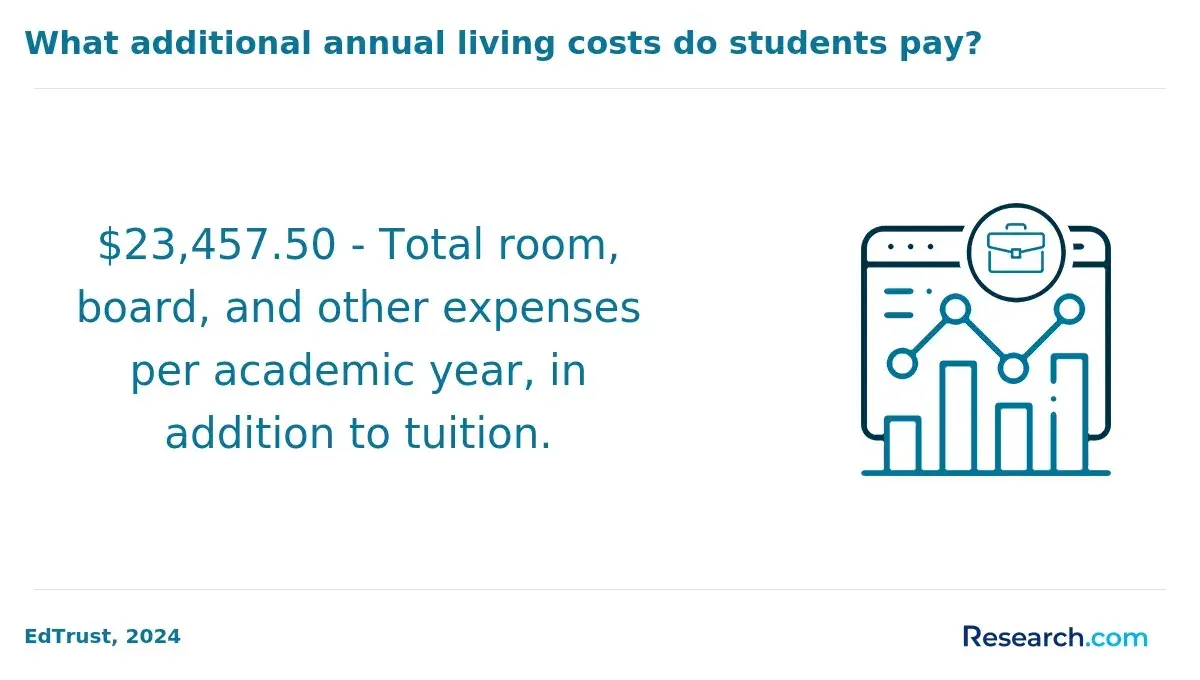
Total cost varies substantially by residency, delivery format, living expenses, prior coursework, and whether the program uses a standard semester calendar or year-round terms. The most useful comparison is total cost through graduation, including fees and clinical travel, rather than the per-credit tuition figure alone.
This planning framework shows the cost categories that deserve equal attention.
| Cost category | Why it changes the total investment | How to compare it |
| Leveling tuition | May be charged separately or folded into graduate tuition | Calculate required credits after transfer evaluation |
| Graduate tuition and fees | Usually the largest direct educational expense | Request a term-by-term estimate through program completion |
| Living costs | Housing, food, transportation, and health insurance can exceed expectations | Compare local cost-of-attendance budgets, not tuition alone |
| Clinical placement expenses | Travel, parking, background checks, immunizations, and possible relocation can add costs | Ask whether students are placed near home and what expenses are typical |
| Lost earnings | Reduced work hours can affect affordability even when tuition is financed | Model full-time, part-time, and employer-supported scenarios |
Public, private nonprofit, and online institutions can all be viable choices; institution type alone does not determine value. Public programs may offer lower tuition for residents, while private programs may offer a more predictable online schedule or scholarships. If you are comparing online nonprofit options, this overview of non profit colleges can help with broader institutional research, but each SLP program still requires separate accreditation and licensure review.
To estimate return on investment, build a conservative budget using expected borrowing, interest, time out of the workforce, and a realistic entry-level employment timeline. Do not treat the national SLP wage figure as a personal salary promise; pay varies by state, setting, experience, hours, and employer reimbursement practices.
How do accreditation and state licensure rules affect financial aid for SLP leveling students?
Accreditation, financial aid, certification, and licensure are related but separate issues. A school can be institutionally eligible to administer federal aid while a particular program does not meet your state's educational requirements for SLP licensure. Likewise, a CAA-accredited graduate program can be an excellent licensure choice even if a separate nondegree leveling option is not aid eligible.
For most aspiring SLPs, the standard professional pathway includes a CAA-accredited graduate degree, required supervised clinical experience, passing the Praxis examination, completion of a clinical fellowship, and state-specific licensure. Requirements vary by state, and school-based practice may also involve educator credential rules.
Use this distinction when evaluating claims made by admissions representatives.
| Requirement | What it addresses | Why it matters before enrolling |
| Institutional eligibility | Whether the school can participate in federal student-aid programs | Necessary but not sufficient for your individual aid eligibility |
| Degree-seeking status | Whether your enrollment is in an eligible academic program | Often decisive for financing leveling coursework |
| CAA accreditation | Quality standards for the graduate SLP program | Generally central to certification and licensure planning |
| State licensure rules | Authority to practice in a specific state | May impose requirements beyond the degree itself |
| State authorization for distance education | Whether the school may enroll students in your state | Can affect online enrollment and disclosures |
A major red flag is a program that cannot explain whether it meets educational requirements in your intended state. Another is an advisor who treats "accredited university" as proof that the SLP degree is CAA accredited. Verify the graduate program's accreditation status, review your state board's rules, and retain written confirmation of any state-specific disclosures.
Students planning to move should check licensure rules in both their current and intended states before choosing clinical placement locations. This is especially important for online or hybrid programs, where you may live in one state, study through a school in another, and complete placements in a third.
What speech-language pathology careers, salaries, and work settings can leveling students pursue?
Leveling students are preparing for a graduate professional pathway, not immediate independent practice. After completing a qualifying master's degree and the required certification and licensure steps, speech-language pathologists assess and treat communication, cognitive-communication, voice, fluency, feeding, and swallowing disorders.
The U.S. Bureau of Labor Statistics reports a $95,410 median annual wage for speech-language pathologists in 2024 and projects 18% employment growth from 2023 to 2033. The growth projection suggests continued demand, particularly as healthcare needs change with population aging, but it does not predict openings, wages, or hiring conditions in an individual city or school district.
Work setting affects schedule, caseload, documentation demands, and pay structure. The following comparison can help career changers picture the kind of work they are preparing to do.
| Setting | Typical focus | Career-fit consideration |
| Public and private schools | Speech, language, social communication, literacy-related support, and educational access | Often follows an academic calendar but may require educator credentials and large caseload management |
| Hospitals and rehabilitation facilities | Acute care, swallowing, neurological conditions, voice, and post-injury rehabilitation | May suit students interested in medical teamwork and adult populations |
| Skilled nursing and long-term care | Swallowing, cognition, communication, and functional independence | Can involve productivity expectations and medically complex clients |
| Outpatient clinics and private practice | Individualized pediatric or adult therapy | May offer specialty development but schedules can include evenings |
| Home health and telepractice | Services delivered in homes or through approved virtual systems | Can provide flexibility but depends on licensure, payer rules, and client needs |
Technology is changing documentation, telepractice workflows, hearing and speech assessment tools, and access to care. It is not replacing the licensed clinician's responsibility for assessment, clinical judgment, ethical decision-making, and individualized intervention. Students should seek programs that teach evidence-based practice and responsible use of clinical technology rather than programs that make broad automation claims.
If you want to work with communication disorders but do not want the time and cost of graduate licensure, consider adjacent roles such as behavior technician, education support professional, rehabilitation aide, or healthcare administration. Those roles have different training and scope-of-practice rules and should not be represented as SLP work.
How should career changers evaluate and choose a reputable SLP leveling program?
The best SLP leveling program is the one that meets your eventual graduate-school and state-licensure requirements while keeping financing and academic risk manageable. A low tuition rate is not a bargain if credits will not transfer, federal aid is unavailable, or the sequence delays admission by an extra year.
Use a consistent comparison process. It is more reliable than choosing based on advertisements, rankings, or the promise of a short completion time.
- Choose the states where you are most likely to live and practice, then review their SLP licensure and school-credential requirements.
- Make a list of CAA-accredited MS-SLP programs you would realistically attend and collect each program's prerequisite requirements.
- Request a transcript review before taking leveling courses, especially if you already completed statistics, science, psychology, linguistics, or education coursework.
- Confirm whether your preferred pathway makes you degree seeking from the start and obtain financial-aid eligibility details in writing.
- Compare total cost through graduation, including tuition, fees, clinical travel, insurance, lost work time, and likely borrowing.
- Ask about advising, faculty access, clinical placement support, attrition policies, and what happens if you need to repeat a course.
- Apply only after verifying that the course sequence, graduate program, and intended state all align.
The following red flags deserve serious attention because they can create expensive delays.
- The school will not state whether leveling students are degree seeking or eligible for federal loans.
- The program advertises "accreditation" without identifying CAA accreditation for the graduate SLP degree.
- Admissions staff promise that courses will transfer everywhere or that online study automatically satisfies every state's rules.
- The published price excludes required fees, clinical expenses, or the number of prerequisite credits you personally need.
- The program cannot describe how it supports clinical placements, academic advising, or students who need to pause enrollment.
For most career changers, an integrated aid-eligible MS-SLP pathway is the strongest choice when you are ready to commit to one school and can handle the program's pace. A separate post-baccalaureate sequence is usually better when you need to repair grades, want more graduate-school options, or have enough savings, employer support, or other funding to manage limited federal-aid access.
Other Things You Should Know About Speech Pathology
Possibly, but not automatically. FAFSA is the application for federal aid; eligibility depends on whether the school classifies you as enrolled in an eligible degree or certificate program. Students taking nondegree prerequisites are often ineligible for federal loans, while students in an integrated, degree-seeking MS-SLP pathway may be eligible.
No. Many MS-SLP programs admit students with unrelated bachelor's degrees if they complete required foundational and CSD prerequisite coursework. The exact courses, grades, and timeline vary by graduate program.
It can be, provided the receiving graduate program accepts the specific courses as equivalent. Before enrolling, send course descriptions and ask each target MS-SLP program for written guidance. Online delivery alone does not make a course unacceptable, but content and institutional standards matter.
A typical plan includes roughly one to two years of prerequisites, about two years for a master's degree, and a post-graduate clinical fellowship before full certification and licensure. Previous coursework, program design, state rules, and full-time versus part-time enrollment can change the timeline.
References
- Online Master of Science in Speech-Language Pathology - Leveling Pathway https://slponline.ithaca.edu/programs/online-ms-slp-leveling
- SLP Leveling Courses | USAHS https://www.usa.edu/college-of-rehabilitative-sciences/master-science-speech-language-pathology-ms-slp/leveling-courses/
- New SLP Leveling Curriculum Opens Doors to Speech-Language Pathology at RMU • Rocky Mountain University https://rm.edu/news/slp-leveling-curriculum-launches/