2027 RHIT vs. RHIA: Cheapest Accredited Education Path for Each Credential

Co-Founder and Chief Data Scientist
Choosing RHIT or RHIA starts with one costly question: is an associate degree enough, or is a bachelor's degree worth the added time and tuition? RHIT requires a CAHIIM-accredited associate degree, while RHIA requires a CAHIIM-accredited bachelor's or master's degree. The Bureau of Labor Statistics projects 7% growth for medical records specialists from 2024 to 2034, making credentials in health information management relevant as providers expand digital records, data quality, privacy, and revenue-cycle work.
This guide compares the cheapest legitimate path, career trade-offs, and enrollment checks before you commit.
Key Things You Should Know
- For the lowest-cost RHIT route, look first at an in-district public community college offering a CAHIIM-accredited associate degree in health information management; a certificate alone does not normally qualify you for the RHIT exam.
- For RHIA, the least expensive qualifying route is usually a public university's CAHIIM-accredited bachelor's HIM program, often after transferring low-cost general-education credits under a written transfer agreement.
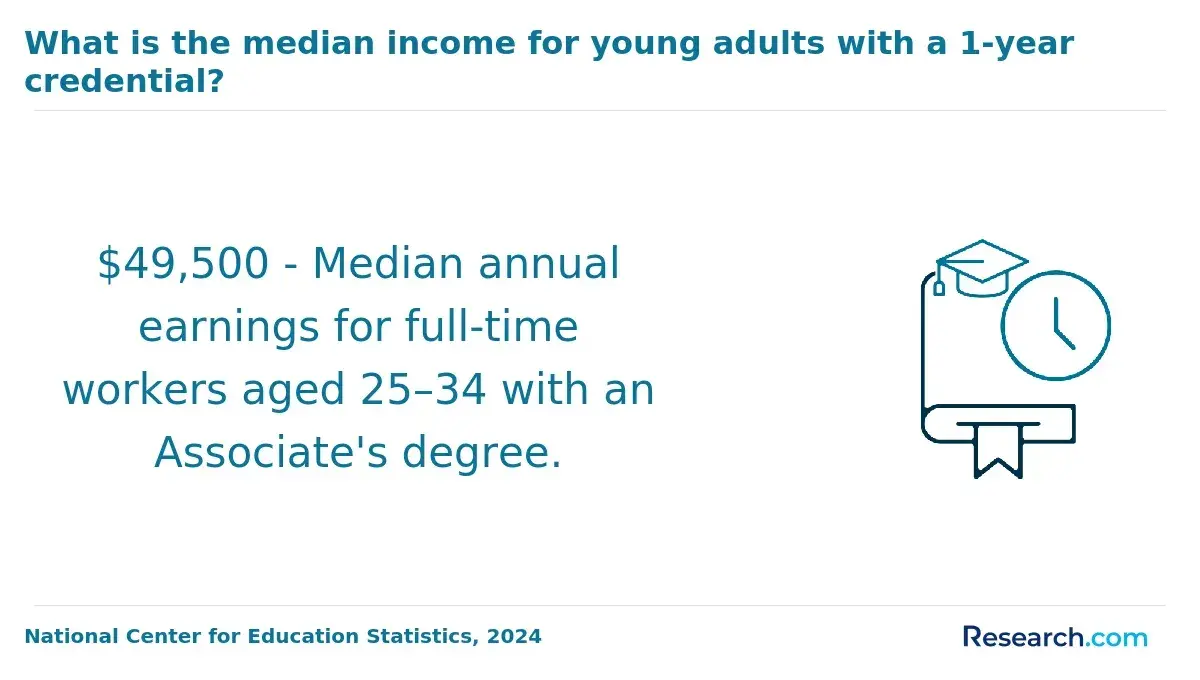
- BLS reports a $50,250 median annual wage for medical records specialists in 2024, while medical and health services managers had a $117,960 median; RHIA can support advancement, but neither credential guarantees a particular job or salary.
What are RHIT and RHIA credentials, and how do they differ in scope and roles?
RHIT means Registered Health Information Technician, and RHIA means Registered Health Information Administrator. Both are professional credentials administered by the American Health Information Management Association (AHIMA) for people working with health data, medical records, privacy, coding workflows, quality, reimbursement, and information governance.
The central difference is educational level and expected scope. RHIT is designed around technical and operational health information work after an associate degree. RHIA is designed for bachelor's- or master's-level preparation and is more closely associated with management, analytics, compliance, governance, and organizational leadership. Actual job titles vary substantially by employer; an RHIA is not automatically a manager, and many management jobs also require experience.
This comparison shows the practical distinction readers should use when choosing a path.
| Factor | RHIT | RHIA |
| Typical qualifying degree | CAHIIM-accredited associate degree | CAHIIM-accredited bachelor's or master's degree |
| Typical focus | Record accuracy, coding support, release of information, data integrity, revenue-cycle operations | Data governance, compliance, analytics, privacy, operations, leadership and strategy |
| Common early roles | Health information technician, records specialist, coding support specialist, data quality coordinator | HIM analyst, compliance specialist, privacy analyst, revenue integrity analyst, supervisor-track roles |
| Best fit | People seeking the faster, lower-cost entry into HIM | People targeting broader advancement and who can justify bachelor's-level investment |
Choose RHIT if your immediate priority is entering the field with the smallest qualifying degree. Choose RHIA if you want to compete for roles that increasingly expect a bachelor's degree, management preparation, or deeper analytics and governance coursework.
What education and eligibility requirements must you meet to sit for RHIT versus RHIA exams?
Exam eligibility is not based merely on a school calling its program "medical billing," "healthcare administration," or "health information." For the standard route, AHIMA requires graduation from the appropriate degree level in a CAHIIM-accredited health information management program. Students nearing completion may be eligible to apply under AHIMA's current student-testing policies, but they should verify the exact rules before registering.
The requirements below explain why accreditation should be checked before submitting an application or paying a deposit.
| Requirement | RHIT | RHIA |
| Degree level | Associate degree or higher through an eligible HIM program | Bachelor's degree or master's degree through an eligible HIM program |
| Program accreditation | CAHIIM accreditation is normally required | CAHIIM accreditation is normally required |
| Typical admissions preparation | High school diploma or equivalent; college placement or prerequisite courses may apply | High school admission or transfer admission; prerequisites and minimum GPA vary by institution |
| Prior clinical license required | No | No |
A common mistake is enrolling in a short medical coding certificate because it appears cheaper, then discovering it does not meet RHIT eligibility. Certificates can build a focused skill and may align with other certifications, but they are not interchangeable with a CAHIIM-accredited HIM degree.
Before applying, take these steps to protect your eligibility:
- Search the current CAHIIM directory and confirm that the exact degree level and delivery format are accredited, not just the college generally.
- Ask the program director whether graduates are eligible for the RHIT or RHIA examination and request the answer in writing.
- Confirm prerequisite courses, clinical or professional-practice expectations, transfer-credit limits, and graduation residency requirements.
- Review AHIMA's current examination application rules, fees, identification requirements, and retesting policy before setting a graduation timeline.
What is the cheapest fully accredited education path to earn the RHIT credential?
The cheapest legitimate RHIT path is usually an in-district public community college associate degree in health information management that holds current CAHIIM accreditation. It is generally less expensive than beginning at a private college or completing unrelated coursework before finding an eligible program. "Fully accredited" should mean both that the institution has recognized institutional accreditation and that the specific HIM program has CAHIIM accreditation.
For cost context, the College Board reported average published tuition and fees of $4,150 for public two-year colleges in the 2024-25 academic year. That national average is not a program quote: in-district rates, online fees, residence status, books, and required technology can move a student's actual total materially higher or lower.
The following route keeps the degree aligned with RHIT eligibility while controlling avoidable costs.
- Identify CAHIIM-accredited associate HIM programs within commuting distance and compare the total program cost rather than the per-credit price.
- Prioritize in-district tuition when possible, because residency pricing can matter more than a small difference in listed credit rates.
- Submit prior college transcripts before enrolling so the school can evaluate general education, anatomy, terminology, and computer-course transfer credit.
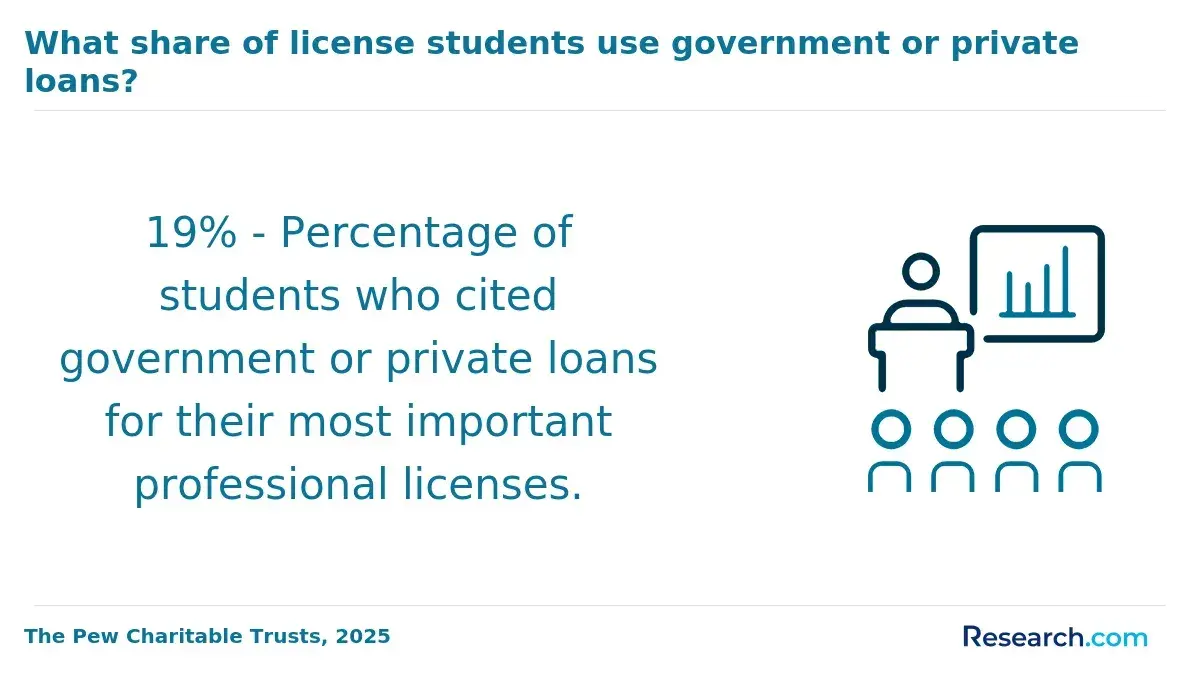
- Use federal aid, state grants, workforce funding, employer tuition assistance, and scholarships before considering private loans.
- Keep proof of program accreditation and confirm that the curriculum leads to RHIT eligibility before completing the final semester.
An associate degree can be a practical first credential for working adults, career changers, and students who want to test their fit in health information before committing to a bachelor's degree. Readers comparing other accelerated options can also explore fast online degrees that pay well, but should not assume that a fast program qualifies for RHIT unless CAHIIM accreditation is confirmed.
Do not choose the lowest advertised tuition if it excludes mandatory platform charges, proctoring, software, or clinical-placement travel. A slightly higher in-district program with transparent charges and strong transfer policies can be cheaper overall than a low-sticker-price program with repeated courses or nontransferable credits.
What is the cheapest fully accredited education path to qualify for the RHIA credential?
The lowest-cost RHIA route is commonly a public, in-state university bachelor's degree in a CAHIIM-accredited HIM program. Students who begin at a community college can reduce the first two years' cost, but only if the receiving university accepts the courses and the student can still complete all required HIM coursework, residency credits, and professional-practice requirements.
Starting at a community college is a cost strategy, not an automatic RHIA shortcut. The bachelor's degree itself must come from an eligible CAHIIM-accredited program. A general business, health administration, or information technology bachelor's degree may be useful professionally but does not necessarily establish RHIA examination eligibility.
Use this cost-focused comparison when evaluating the main RHIA routes.
| Route | Potential cost advantage | Main risk to check | Best for |
| Four years at an in-state public university | Simple enrollment and fewer transfer uncertainties | Higher cost for lower-division general education | Students who can enter the HIM major directly |
| Community college transfer plus public university HIM bachelor's | Lower-cost general education and prerequisites | Lost credits, course sequencing, and university residency rules | Budget-focused students with a formal articulation plan |
| CAHIIM-accredited online bachelor's | Can reduce relocation and commuting expenses | Distance fees, required synchronous sessions, and higher out-of-state rates | Working adults needing geographic flexibility |
| Private bachelor's program | May offer scheduling or support advantages | Higher total price and loan dependence | Students receiving enough grant aid to narrow the net-cost gap |
Apply broadly enough to compare net price, not just acceptance. Schools that waive application charges can reduce the cost of comparing options; an online college free application option may be useful when building a shortlist, provided the specific HIM program meets CAHIIM requirements.
Ask each university for a semester-by-semester degree map before transferring. The most expensive mistake is earning an associate degree with credits that do not apply to the RHIA program's major requirements, forcing extra semesters and delaying eligibility.
How do associate RHIT programs compare with bachelor's RHIA programs in curriculum and rigor?
Both degree levels cover core health information concepts, but the bachelor's curriculum generally adds more depth in management, finance, data analysis, research, policy, and organizational decision-making. Neither route is simply "medical filing": students work with electronic health record concepts, coding systems, privacy rules, data quality, reimbursement, and healthcare workflows.
This curriculum comparison helps clarify whether the lower-cost associate degree meets your target or whether bachelor's-level depth is worth the additional investment.
| Curriculum area | Associate RHIT preparation | Bachelor's RHIA preparation |
| Health data and records | Foundational collection, maintenance, analysis, and release processes | Governance, enterprise data use, quality strategy, and organizational oversight |
| Coding and reimbursement | Operational understanding of coding, classification systems, and revenue-cycle workflows | Broader reimbursement management, auditing, compliance, and financial analysis |
| Technology and analytics | HIM systems, data integrity, and introductory analytics | Advanced analytics concepts, information governance, and decision support |
| Leadership | Teamwork and workplace communication | Management, policy, project leadership, and strategic planning |
| Academic workload | College-level technical and general education coursework | Upper-division analysis, management, research, and more extensive major requirements |
RHIT is a strong fit if you enjoy detail-oriented work, systems, documentation standards, and operational problem-solving. RHIA is better suited to students who also want responsibility for teams, policies, data governance, or organizational outcomes. Students who dislike both technical record work and administrative accountability should investigate adjacent healthcare roles before investing in either degree.
Automation and AI are changing tasks such as document classification, coding support, and routine record review. That makes data validation, privacy judgment, workflow design, audit readiness, and the ability to explain data to clinicians and leaders more valuable - not less. Programs should teach students to use technology responsibly rather than treating software as a replacement for HIM judgment.
How do online RHIT and RHIA programs differ from campus options in cost and flexibility?
Online delivery can make an accredited program more accessible, especially for employed students or people who live far from a CAHIIM program. It does not automatically make the degree cheaper. Some schools charge a separate online rate, distance-learning fees, technology fees, or out-of-state tuition, while campus students may face commuting, parking, housing, and schedule constraints.
Compare formats by total cost and completion practicality, not by the label "online."
| Consideration | Online format | Campus or hybrid format |
| Scheduling | Often flexible, though some courses have live sessions or deadlines | More fixed class times and commuting demands |
| Location costs | May reduce moving and travel costs | May be lower-cost when an in-district college is nearby |
| Learning support | Requires comfort with learning platforms and proactive communication | Can provide easier face-to-face access to faculty and peers |
| Professional practice | May require local placement arrangements or travel | May have established local placement relationships |
| Accreditation check | Confirm the online pathway is included in the accredited program | Confirm the exact degree pathway is currently accredited |
Working adults should ask whether courses are asynchronous, how often classes are offered, and whether a missed sequence means waiting a full year. A low per-credit rate is not economical if required courses are available only once annually and extend time to graduation.
If RHIA is part of a longer leadership plan, a graduate degree may be useful later, but it is not required simply to hold RHIA. For readers comparing post-bachelor's options, this overview of the fastest online master's degree pathways can help frame timing; verify that any graduate program supports your intended specialty rather than choosing solely for speed.
Which accreditations and program approvals are essential for RHIT and RHIA eligibility?
CAHIIM, the Commission on Accreditation for Health Informatics and Information Management Education, is the critical programmatic accreditor to verify for standard RHIT and RHIA eligibility. Institutional accreditation is also important because it affects federal financial aid, transferability, and the general legitimacy of the college, but institutional accreditation alone does not make a degree RHIT- or RHIA-eligible.
Use the distinction below to avoid relying on incomplete marketing language.
| Credential or approval | Why it matters | What it does not prove by itself |
| CAHIIM programmatic accreditation | Shows the HIM program has met applicable educational standards and supports standard AHIMA exam eligibility routes | That every delivery format, concentration, or student circumstance is automatically eligible |
| Institutional accreditation | Supports transfer credit review and federal aid eligibility where applicable | RHIT or RHIA eligibility without CAHIIM accreditation |
| State authorization or distance-education approval | Helps confirm the school can enroll students in your location | Professional credential eligibility |
| Employer recognition | Can affect internships and hiring value in a local market | Official examination qualification |
Verify accreditation directly in the current CAHIIM directory and ask whether any warning, teach-out, or accreditation-status change affects your expected graduation date. Accreditation can change, and a school's general claims may not describe a specific online track, new campus, or degree-completion option.
Also distinguish certification from state licensure. RHIT and RHIA are national professional credentials, not general state licenses to work in healthcare. Certain job functions, privacy rules, and employer requirements can vary by state and setting, so review local postings before choosing electives or a specialization.
What typical tuition, fees, and hidden costs should RHIT and RHIA students budget for?
Budgeting should begin with the net cost to completion: tuition and mandatory fees minus grants and scholarships, plus the expenses needed to finish and sit for the exam. Published tuition can be misleading when a program requires special software, digital textbooks, background checks, proctoring, professional-practice travel, or an additional semester caused by course sequencing.
The table identifies expenses that students should request in writing before comparing programs.
| Cost category | RHIT impact | RHIA impact | How to control it |
| Tuition and mandatory institutional fees | Usually lower because the program is associate level | Usually higher because bachelor's completion requires more credits | Compare in-district, in-state, and net-price estimates |
| Books, software, and technology | May include coding tools, online platforms, and a suitable computer | May include analytics, management, and research resources | Request a program-specific supply list and ask about included licenses |
| Professional practice expenses | Possible travel, screening, immunization, or compliance costs | Possible travel, screening, immunization, or compliance costs | Ask whether placement is local and whether students pay related costs |
| Exam and credential expenses | AHIMA examination application and later renewal costs | AHIMA examination application and later renewal costs | Confirm current member and nonmember pricing directly before budgeting |
| Time-to-completion cost | Can rise when prerequisites are missing | Can rise sharply with failed transfers or upper-division sequencing | Obtain a written credit evaluation and graduation plan |
Ask financial aid offices for a net-price estimate based on your residency and enrollment status, then compare it with the academic plan. Federal grants, state aid, institutional scholarships, workforce-development programs, veterans' education benefits, and employer reimbursement may reduce out-of-pocket cost, but eligibility differs by student and school.
Be cautious about borrowing for an associate degree if the projected debt exceeds the likely early-career value of local entry-level jobs. For bachelor's students, calculate whether the added borrowing is supported by realistic advancement opportunities in your target market - not by the highest salary listed online.
What entry-level jobs, career paths, and advancement opportunities follow RHIT or RHIA certification?
RHIT can support entry into hospital HIM departments, physician groups, insurers, revenue-cycle vendors, public health organizations, and healthcare technology companies. RHIA can broaden access to analyst, compliance, privacy, governance, and supervisory-track roles, especially when paired with relevant experience. Employers may value the credential differently depending on their systems, patient volume, location, and job design.
The following progression is a realistic way to think about career development rather than a guaranteed promotion sequence.
| Career stage | RHIT-aligned examples | RHIA-aligned examples | What supports advancement |
| Entry level | Medical records specialist, release-of-information specialist, HIM clerk, data integrity technician | HIM analyst, compliance analyst, privacy coordinator, revenue-cycle analyst | Accuracy, EHR proficiency, privacy knowledge, communication, and reliable documentation |
| Developing specialist | Coding support specialist, audit assistant, chart analyst, quality-data coordinator | Data governance analyst, HIM supervisor, clinical documentation or revenue integrity analyst | Workflow expertise, audit skills, reporting ability, and domain specialization |
| Leadership or advanced practice | May progress with experience and further education | HIM manager, privacy manager, compliance manager, director-track positions | Leadership experience, finance knowledge, regulatory judgment, and project management |
New graduates should focus their search on job descriptions rather than credential names alone. Look for roles involving electronic health records, information release, data quality, coding operations, patient privacy, compliance, or revenue-cycle support. Build a portfolio of coursework projects, spreadsheet or reporting skills, and practicum accomplishments where permitted by privacy rules.
A frequent mistake is assuming RHIT or RHIA substitutes for specialty expertise. Coding, clinical documentation integrity, privacy, security, analytics, and revenue-cycle roles can each require additional training, experience, or employer-preferred credentials. Choose electives and internships around the work you actually want to perform.
How do RHIT and RHIA salaries and job outlook compare across health information roles?
Salary data should be interpreted by occupation, not by credential alone. The Bureau of Labor Statistics reported a 2024 median annual wage of $50,250 for medical records specialists, an occupation that can align with entry-level RHIT work. It also reported a $117,960 median for medical and health services managers, a broader management category that may include experienced HIM leaders but does not require RHIA in every job.
The gap illustrates the value of advancement potential, but it is not a promise that a bachelor's degree or RHIA alone leads to management pay. Management positions usually require experience, supervisory ability, healthcare operations knowledge, and employer-specific qualifications.
This comparison provides a cautious way to use national wage information in an education decision.
| Role category | Typical credential relationship | 2024 BLS median annual wage | How to use the figure |
| Medical records specialists | Often compatible with associate-level HIM preparation and RHIT-related work | $50,250 | Use as national context for early technical roles; local wages and duties vary |
| Medical and health services managers | May align with experienced RHIA holders and other healthcare leaders | $117,960 | Use as context for a broad management occupation, not an RHIA salary guarantee |
BLS projects 7% employment growth for medical records specialists from 2024 to 2034. Digital records, reimbursement complexity, data reporting, and privacy obligations can support demand, while automation may reduce repetitive tasks and increase the importance of quality control and systems knowledge.
Use local job postings to test return on investment before enrolling: count how many employers request an associate degree, bachelor's degree, RHIT, RHIA, coding experience, or analytics skills. If your priority is maximum earnings across bachelor's-level fields rather than HIM specifically, compare the broader landscape of highest paying careers before borrowing for a four-year program.
Other Things You Should Know About Health Information Management
RHIT generally has a lower education threshold because it is associated with an accredited associate degree, while RHIA requires an accredited bachelor's or master's degree. "Easier" depends on your strengths, but RHIA coursework usually includes more upper-division management, analytics, and governance material.
Yes. Many people complete an RHIT-eligible associate degree, work in the field, then transfer into a CAHIIM-accredited bachelor's HIM program to qualify for RHIA. Confirm transfer credits and degree-residency rules before relying on this plan.
Yes, if the specific online HIM degree pathway is currently CAHIIM-accredited and meets AHIMA eligibility requirements. Do not assume that all online healthcare degrees, coding certificates, or health administration programs qualify.
RHIA is usually the more direct academic fit for management, privacy, compliance, analytics, and governance roles because it requires bachelor's- or master's-level preparation. RHIT can still be a sensible lower-cost starting point if you need to enter the workforce sooner and plan to build experience before completing a bachelor's degree.
References
- RHIT vs. RHIA: Which Certification is Right For You? - Article https://www.digidoc.tech/blog/rhit-vs-rhia-certification
- RHIA vs RHIT: Which AHIMA Credential Should You Pursue | Health Information Management Programs https://healthinformationmanagementprograms.com/guides/rhia-vs-rhit/
- RHIA vs. RHIT: Choosing the Right Health Information Certification https://www.hicertify.com/resources/rhia_vs_rhit