2027 Online HIM Programs That Include the RHIA Exam Fee and Review Course

Co-Founder and Chief Data Scientist
Choosing an online HIM degree is not just about convenience: the program must support RHIA eligibility and fit your budget. The U.S. Bureau of Labor Statistics projects 15% growth in medical and health services manager employment from 2022 to 2032, far faster than average. This guide helps prospective HIM students evaluate programs that include, reimburse, or help prepare for the RHIA exam, compare online and campus formats, verify accreditation, and assess the career value of the investment.
Key Things You Should Know
- RHIA eligibility typically requires a bachelor's degree from a CAHIIM-accredited Health Information Management program; an online format alone does not determine eligibility.
- Programs that include an RHIA review course or exam-fee support can reduce out-of-pocket certification costs, but students should obtain the exact benefit, conditions, and reimbursement rules in writing.
- Medical and health services manager employment is projected to grow 15% from 2022 to 2032, according to the U.S. Bureau of Labor Statistics, though RHIA holders work across a broader range of HIM, compliance, data, and revenue-cycle roles.
What is Health Information Management and how does RHIA certification fit into this field?
Health Information Management, or HIM, is the practice of organizing, protecting, analyzing, and governing health information across paper and electronic systems. HIM professionals help healthcare organizations maintain accurate records, meet privacy requirements, support reimbursement, improve data quality, and turn clinical information into usable operational insight.
The Registered Health Information Administrator, or RHIA, is a professional certification administered by the American Health Information Management Association. It is designed for graduates of qualifying baccalaureate-level HIM programs and signals knowledge of information governance, analytics, revenue cycle processes, privacy, compliance, and healthcare data management. It is a certification rather than a state occupational license, so requirements for jobs using RHIA can vary by employer.
RHIA is most useful for students who want to move beyond entry-level records work toward supervisory, analytical, compliance, informatics, or management roles. It may be less essential for someone seeking only a short-term administrative healthcare credential or a narrowly technical coding role, where a different education path or coding credential may fit better.
The comparison below shows how RHIA generally differs from other common HIM-related credentials. It can help students avoid selecting a credential that does not match their intended work.
| Credential or path | Typical education level | Primary focus | Best fit |
| RHIA | Bachelor's-level HIM education | HIM leadership, governance, analytics, compliance | Students targeting professional or management-track HIM roles |
| RHIT | Associate-level HIM education | Operational health information functions | Students seeking an earlier entry point into HIM |
| Coding credential | Varies by credential | Diagnosis and procedure coding | Students focused specifically on coding positions |
| Healthcare administration degree | Associate through graduate level | Broad healthcare operations | Students interested in administration beyond health data management |
What are online HIM programs that include the RHIA exam fee and review course?
Online HIM programs with RHIA exam support are bachelor's programs that deliver most academic coursework online while offering an RHIA preparation resource as part of the degree experience. The benefit may take several forms: an included review course, access to exam-preparation software, a voucher, a reimbursement after graduation, or payment of the application and examination fee under specified conditions.
These offers are not standardized. A school may advertise "RHIA preparation" without paying the exam fee, while another may cover a fee only for students who graduate by a stated deadline, complete a review module, or pass a program readiness assessment. Students should treat the inclusion as a value feature, not as proof that the degree qualifies them for the examination.
Before comparing tuition, ask each admissions representative for a written answer to the following questions. These details determine whether the advertised benefit is genuinely usable.
- Is the RHIA exam fee paid directly, provided as a voucher, or reimbursed after the student pays it?
- Which costs are covered: the exam application, examination fee, review course, study materials, retake fee, or only one of these items?
- Must the student graduate, pass an internal assessment, attend a live review session, or meet a minimum GPA before receiving the benefit?
- Is the benefit available to online students, transfer students, part-time students, and students using employer tuition assistance?
- Does the program hold current CAHIIM accreditation for the specific bachelor's HIM degree and delivery format?
- What percentage of eligible graduates take and pass the RHIA exam, and for what reporting period?
A bundled review course can be valuable because it creates a structured transition from coursework to examination preparation. Still, it should not outweigh stronger decision factors such as CAHIIM accreditation, total net cost, faculty support, practicum quality, transfer-credit policies, and graduate outcomes.
What accreditation and program quality standards should online HIM degrees meet for RHIA eligibility?
For most students, the central quality check is programmatic accreditation by the Commission on Accreditation for Health Informatics and Information Management Education, commonly called CAHIIM. Eligibility rules can change, and students should confirm current requirements directly with AHIMA before applying for the RHIA examination. A school's regional or institutional accreditation alone is not the same as CAHIIM accreditation for an HIM degree.
Verify the exact degree, campus or online delivery option, and accreditation status rather than relying on broad statements such as "accredited university." Some institutions offer multiple health-related degrees, but only a specifically accredited HIM program may meet the standard educational pathway for RHIA eligibility.
Program quality also depends on learning design and student support. The following indicators help distinguish an online degree that is merely convenient from one that is professionally aligned.
- Current CAHIIM accreditation listed for the precise HIM bachelor's program.
- A curriculum that covers data governance, coding and classification systems, reimbursement, privacy, analytics, leadership, and healthcare technology.
- Supervised professional practice experience, virtual practicum support, or clear placement procedures where required.
- Faculty with HIM, informatics, coding, compliance, or healthcare leadership experience.
- Published graduation, RHIA exam participation, exam-pass, and job-placement information when available.
- Accessible advising, tutoring, technical support, and a documented process for resolving concerns during online fieldwork.
A common mistake is assuming that "healthcare administration," "health informatics," and "health information management" are interchangeable. They overlap, but they can lead to different competencies and credential options. If RHIA is your goal, ask the school to confirm in writing that graduates of your catalog year meet the educational requirement to apply.
What education and prerequisite requirements must students meet to sit for the RHIA exam?
The standard route to RHIA examination eligibility is graduation from a CAHIIM-accredited baccalaureate-degree HIM program. Students nearing completion may sometimes apply under AHIMA's current candidate rules, but they should confirm deadlines, documentation, and graduation requirements before making employment or testing plans.
Admission to an online HIM bachelor's program is separate from RHIA exam eligibility. Schools commonly require a high school diploma or GED for first-year admission, while degree-completion programs usually require prior college credits or an associate degree. Transfer students may need prerequisite coursework in subjects such as anatomy and physiology, medical terminology, statistics, English composition, computer applications, or healthcare fundamentals.
Students considering a less demanding online major should remember that professional HIM preparation is specialized. Resources about easy college degrees online can help compare workload expectations, but a program selected primarily for ease may not include the accredited HIM curriculum needed for RHIA eligibility.
Use this sequence to reduce the risk of enrolling in a program that does not meet your goals.
- Confirm that the program is a bachelor's-level HIM degree and check its current CAHIIM accreditation status.
- Request a transfer-credit evaluation before committing, especially if you have an associate degree, military training, or previous healthcare coursework.
- Compare the degree plan with any missing science, general education, or technology prerequisites.
- Ask whether field experience can be completed remotely, locally, or through a school-arranged placement.
- Review AHIMA's current RHIA candidate requirements shortly before graduation because policies and fees can change.
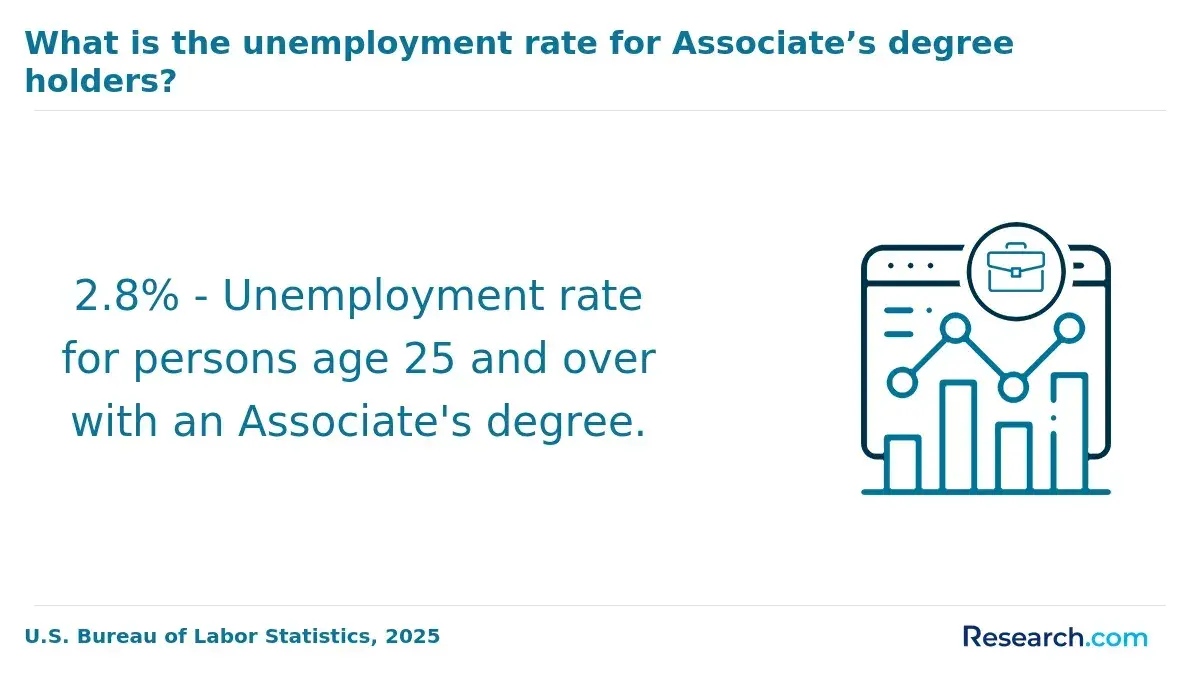
Students with an associate degree in HIM may find a degree-completion bachelor's program particularly efficient. Students starting without college credit should expect general education and prerequisite courses to extend the timeline, even when major courses are fully online.
How do online and campus-based HIM programs compare in flexibility, learning experience, and outcomes?
Online and campus-based HIM degrees can lead to the same RHIA eligibility when the specific program meets applicable accreditation requirements. The better format depends on your schedule, learning preferences, access to practical experiences, and need for direct academic support - not on a belief that one format is automatically easier or more credible.
Online programs generally suit working adults, caregivers, military-connected students, and learners who live far from a qualifying school. Campus programs can suit students who want scheduled in-person interaction, nearby faculty access, and a more traditional college environment. In either format, practicum expectations, group projects, exams, and deadlines can still require substantial time.
This comparison highlights the trade-offs students should evaluate before choosing a delivery format.
| Decision factor | Online HIM program | Campus-based HIM program |
| Scheduling | Often asynchronous, with fixed due dates and possible live sessions | Usually follows a set class schedule |
| Location | Coursework can be completed remotely; practicum rules vary | Requires commuting or relocation for most classes |
| Learning support | Relies on virtual office hours, learning platforms, and self-direction | Offers more immediate face-to-face access |
| Networking | May require intentional virtual networking and local placement outreach | Can provide in-person peer and employer contact |
| Best fit | Organized learners balancing work or family commitments | Students who prefer routine and live classroom interaction |
Do not confuse flexible scheduling with a reduced academic load. Students who want a manageable graduate-level option later may also compare what is the easiest masters degree to get online, but an HIM bachelor's should be chosen based on RHIA alignment and career preparation rather than perceived difficulty.
A red flag is an online program that cannot clearly explain practicum arrangements, instructor access, exam proctoring, or expected weekly workload. Ask for a sample course schedule and speak with a current student or graduate when possible.
What core courses and competencies are covered in HIM programs preparing students for the RHIA exam?
A strong HIM curriculum connects healthcare operations with information management. Rather than training students only to enter data or process records, a bachelor's program prepares them to understand how data moves through clinical care, billing, quality improvement, legal compliance, and organizational decision-making.
Course names vary by institution, but RHIA-oriented programs commonly develop the following areas. Reviewing these topics helps applicants determine whether a degree plan is broad enough for their goals.
- Healthcare data structure, data standards, database concepts, and information lifecycle management.
- Medical terminology, anatomy and physiology, pathophysiology, and clinical classification systems.
- Coding principles, reimbursement methodologies, revenue cycle management, and audit concepts.
- Privacy, security, confidentiality, release of information, and healthcare legal requirements.
- Quality improvement, data analytics, statistics, performance measurement, and population health reporting.
- Health information systems, electronic health records, interoperability, and technology evaluation.
- Leadership, project management, finance, communication, and organizational management.
AI-enabled documentation tools, automated coding support, and analytics platforms are changing routine workflows, but they increase rather than eliminate the need for people who can evaluate data quality, protect patient information, interpret regulations, and oversee governance. Students should look for programs that teach critical review of automated outputs and responsible handling of sensitive health data.
Coursework alone is not enough. Employers often value applied examples such as a privacy-risk analysis, data-quality project, workflow redesign, dashboard interpretation, or practicum experience. Ask how the online program helps students build a portfolio of work that can be discussed in interviews.
What are typical admission requirements, program length, and graduation timelines for online HIM degrees?
Online HIM bachelor's degrees commonly follow one of two models: a four-year undergraduate degree for students beginning with little or no college credit, or a degree-completion program for students who already hold an associate degree or substantial transferable coursework. Exact completion time depends on transfer credits, prerequisite completion, course availability, part-time enrollment, and fieldwork requirements.
The table summarizes typical planning ranges rather than guaranteed completion times. Applicants should rely on a personalized degree audit from each school before estimating graduation.
| Student starting point | Common program structure | Timeline considerations |
| No prior college credit | Full bachelor's degree with general education and HIM major courses | Often requires multiple academic years and prerequisite sequencing |
| Associate degree or substantial transfer credit | Online degree-completion HIM program | May be shorter if general education and prerequisite credits transfer |
| Working part time or full time | Part-time online enrollment | Offers pacing flexibility but can extend completion time |
| Accelerated-term student | Shorter course sessions with concentrated workload | Requires careful planning around work, family, and practicum demands |
Short-format coursework can help a student finish prerequisites or explore healthcare topics, and 6 week online courses with certificates may be useful for that comparison. However, a short certificate is not a substitute for the accredited bachelor's education generally associated with RHIA eligibility.
Before applying, verify minimum GPA rules, required transcripts, prerequisite grades, background-check policies for experiential learning, and whether the school accepts credits from your prior institution. Another common mistake is assuming all credits transfer simply because they are college-level; transfer decisions are made by the receiving school and may depend on course equivalency and age of the credit.
How much do online HIM programs cost, and how does including the RHIA exam fee affect total value?
Total cost is more useful than advertised tuition. An online HIM degree may include per-credit tuition, technology charges, textbooks or digital courseware, graduation fees, proctoring, background checks, travel for practicum if applicable, and the RHIA examination and preparation costs. Financial aid eligibility, employer education benefits, transfer credits, and residency policies can materially change what a student actually pays.
An included RHIA exam fee or review course can improve value, but it is usually a modest part of the full bachelor's-degree investment. It should be compared against the program's net price after grants, the number of credits required after transfer, and the cost of delaying graduation by taking unnecessary courses.
The following cost framework helps applicants request comparable estimates from schools. Ask for figures specific to your enrollment status and transfer evaluation.
| Cost category | What to confirm | Why it matters |
| Tuition | Per-credit rate, total credits remaining, and distance-learning rate | Usually the largest cost and highly dependent on transfer credit |
| Mandatory fees | Technology, course, graduation, and proctoring charges | Can make a low tuition rate less competitive |
| Learning materials | Books, access codes, coding tools, and review products | May be included in some programs but billed separately in others |
| Experiential learning | Site requirements, travel, insurance, background checks, and immunizations | Can create costs even in a fully online curriculum |
| RHIA support | Exact exam-fee amount covered, review resources, eligibility conditions, and retake policy | Determines the real value of the advertised bundle |
To control borrowing, complete the federal financial aid process early, ask about institutional scholarships, compare employer tuition assistance rules, and request a written estimate of the remaining credits after transfer. Do not choose a program solely because it covers an exam fee if its required credits or net price are substantially higher than comparable accredited options.
What jobs can RHIA-certified graduates pursue, and how does RHIA impact career advancement?
RHIA-certified professionals can work in hospitals, physician groups, health systems, insurers, consulting firms, government agencies, software vendors, and organizations that manage healthcare data. The credential can help demonstrate a broad HIM foundation, but hiring decisions also depend on experience, job-specific technical skills, location, and employer needs.
Common roles include health information manager, privacy officer or privacy specialist, clinical data analyst, HIM director, revenue cycle analyst, compliance analyst, data governance specialist, informatics coordinator, quality data analyst, and release-of-information manager. Entry-level job titles may not require RHIA, while supervisory and leadership-track roles may view it as preferred or valuable.
The career value of RHIA is strongest when paired with practical capabilities. This progression shows how students can build toward more advanced responsibilities.
| Career stage | Possible roles | Skills that strengthen advancement |
| Early career | HIM specialist, records analyst, release-of-information specialist, revenue cycle support | Workflow accuracy, privacy awareness, electronic health record proficiency |
| Developing professional | Compliance analyst, data-quality analyst, coding or revenue cycle analyst | Auditing, reporting, coding knowledge, spreadsheet and analytics skills |
| Leadership track | HIM manager, privacy manager, data governance lead, HIM director | Staff leadership, budgeting, policy development, project management |
For professionals who later want executive, academic, or research-oriented advancement, graduate education may be relevant. Some learners compare doctoral programs online no dissertation when exploring applied doctoral options, although a doctorate is not required for most HIM management positions.
A frequent mistake is expecting RHIA alone to qualify a new graduate for a director title. A smarter approach is to pursue a role that builds applied experience in privacy, revenue cycle, analytics, compliance, or operations, then use RHIA and documented results to compete for larger responsibilities.
What are salary expectations and job outlook for RHIA-certified Health Information Management professionals?
Salary varies widely because RHIA holders work in many occupations rather than one standardized job title. Compensation depends on the role, employer type, region, leadership scope, years of experience, technical expertise, and whether the position manages people, budgets, compliance risk, or enterprise data systems.
The U.S. Bureau of Labor Statistics reports that medical and health services managers had a median annual wage of $110,680 in May 2023. This figure is useful as a benchmark for management occupations related to healthcare operations, but it should not be treated as an entry-level RHIA salary or as a salary guarantee for every HIM role.
BLS projects 15% employment growth for medical and health services managers from 2022 to 2032. Aging populations, expanding healthcare services, electronic records, reimbursement oversight, privacy obligations, and demand for data-informed decisions all support the broader need for healthcare management and information professionals. Individual job prospects can still differ substantially by local market and experience level.
To evaluate return on investment realistically, compare the program's net cost with the salary range for the specific roles you can reasonably pursue after graduation - not only senior management median pay. Ask schools for graduate employment outcomes, identify entry-level employer requirements in your area, and consider whether the program offers experience that can shorten the transition into the field.
Other Things You Should Know About Health Information Management
No. Online delivery does not automatically create RHIA eligibility. Confirm that the exact bachelor's-level HIM program holds current CAHIIM accreditation and verify current examination eligibility rules with AHIMA before enrolling.
No. Fee coverage or a review course reduces a certification expense and may provide structured preparation, but it does not guarantee a passing result. Ask whether the benefit includes a retake and what readiness support is available.
An associate degree may support RHIT eligibility and can be an excellent transfer pathway, but RHIA generally requires baccalaureate-level HIM education through the applicable accredited route. A degree-completion HIM program may be the next step.
Neither is universally better. RHIA is broader and aligns with HIM administration, data governance, privacy, compliance, and management. A coding credential is more directly aligned with coding-focused roles. Choose based on the work you want to perform.
References
- FHIMA | Online Certification Exam Prep - 12-week course - RHIA/RHIT | eLearningConnex https://www.elearningconnex.com/courses/fhima-online-certification-exam-prep-12-week-course-rhia-rhit-3/
- Online Health Information Management Degrees: Top Schools https://www.edumed.org/online-schools/health-information-management-degrees/