2027 From Military Logistics to Supply Chain Management: Credit and Certification Pathways

Co-Founder and Chief Data Scientist
Military logistics experience can translate into civilian supply chain careers, but the best route depends on your documented training, target role, and education benefits. The U.S. Bureau of Labor Statistics projects 17% employment growth for logisticians from 2023 to 2033, much faster than average.
This guide helps service members, veterans, and military spouses evaluate transfer credit, certifications, degree formats, costs, and career outcomes so they can build a practical transition plan rather than paying for coursework they may already know.
Key Things You Should Know
- Military occupational training may earn college credit through a Joint Services Transcript, but each school - not the military - decides how many credits apply to a supply chain degree.
- For civilian supply chain roles, a bachelor's degree can support advancement, while targeted credentials such as ASCM CPIM, CSCP, or CLTD may help validate specialized knowledge sooner.
- Logistician employment is projected to grow 17% from 2023 to 2033, according to the U.S. Bureau of Labor Statistics, making transferable planning, procurement, transportation, and inventory skills especially relevant.
How can military logistics credits count toward supply chain degrees?
Military logistics credits can count toward a supply chain degree when a college accepts recommendations listed on your Joint Services Transcript (JST), evaluates official military coursework, and determines that the learning matches its curriculum. Credit is not automatic: an ACE credit recommendation is evidence for a school's review, not a guarantee of degree credit.
Commonly documented military learning areas include transportation, warehouse operations, inventory control, procurement, distribution, leadership, information systems, and safety. These areas may satisfy elective, lower-division business, or operations requirements. They are less likely to replace advanced courses in analytics, strategic sourcing, finance, or supply chain technology.
The comparison below shows how different forms of military learning may be applied. Use it as a planning guide, then request a written transfer evaluation before enrolling.
| Military learning record | Possible degree application | What to verify |
| Joint Services Transcript coursework | General electives, management, logistics, or operations courses | Whether credits apply to major requirements or only free electives |
| Military occupational specialty experience | Prior-learning assessment or portfolio review | Portfolio rules, fees, and evidence requirements |
| Defense Acquisition University learning | Procurement, contracting, or acquisition-related credit | Course equivalencies and recency limits |
| Industry exams or certifications | Credit by examination or elective credit at some institutions | Accepted credentials and minimum exam scores |
Before applying, take these steps to avoid losing usable credit.
- Request your official JST and collect course completion records, evaluations, and certification documents.
- Ask each school for a preliminary transfer-credit review tied to the specific supply chain major, not just general admission.
- Compare the number of credits accepted with the number that actually reduce required major courses.
- Confirm residency requirements, because many colleges require a minimum number of credits to be completed through that institution.
A common mistake is choosing the school that advertises the highest number of transfer credits. A school may accept many credits as electives while still requiring nearly all core supply chain courses. The more useful measure is how many accepted credits shorten your remaining path to graduation.
Which certifications help veterans enter supply chain management?
Certifications can help veterans translate operational experience into terms civilian employers recognize. They are most useful when they match a target function - such as planning, procurement, transportation, project delivery, or continuous improvement - rather than serving as a general résumé addition.
The following credentials have different purposes, experience expectations, and career uses.
| Credential | Best fit | What it signals |
| ASCM CPIM | Production, inventory, materials, and planning roles | Knowledge of inventory management and internal operations planning |
| ASCM CSCP | End-to-end supply chain and management-track roles | Broad understanding of suppliers, customers, risk, and supply chain strategy |
| ASCM CLTD | Transportation, warehousing, distribution, and fulfillment roles | Logistics and distribution expertise |
| Lean Six Sigma Green Belt | Process improvement and operations roles | Structured problem-solving and process-improvement methods |
| PMP | Project-based logistics, implementation, and leadership roles | Formal project management capability, subject to eligibility requirements |
Choose a certification after reviewing job descriptions in your preferred location and industry. CPIM is often a stronger match for inventory and production planning, CLTD for transportation and distribution, and CSCP for professionals seeking broader supply chain leadership responsibilities.
Veterans should also check whether credential exams, training, or renewal costs are eligible for education benefits or workforce funding. Do not assume that a certification replaces a degree for every employer; it can be a fast skills signal, while a degree may remain important for analyst, management, and corporate advancement paths.
What supply chain degree options fit military experience?
The right degree depends on your existing education, the level of role you want, and how much military credit a school will apply. An associate degree can support entry-level operations work, while a bachelor's degree is commonly more useful for analyst, procurement, planning, and management-track positions.
This comparison can help you select a level that matches your transition timeline.
| Program type | Best for | Typical outcome | Key trade-off |
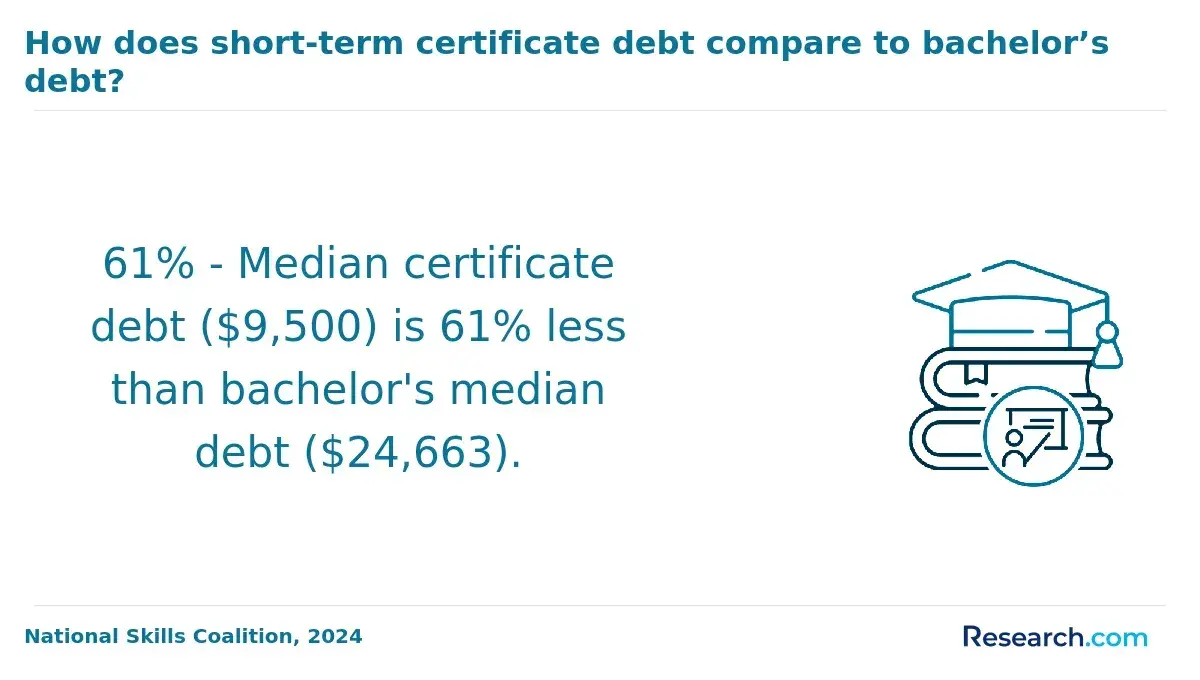
| Certificate in supply chain or logistics | Quick skill validation or career exploration | Focused knowledge in logistics, procurement, or analytics | Usually does not provide the breadth of a degree |
| Associate degree | Entry-level career change or transfer preparation | Operations, dispatch, inventory, warehouse, or purchasing support roles | May need further study for advancement |
| Bachelor's degree | Analyst and management-track goals | Broader preparation in business, analytics, and supply chain strategy | More general education and upper-level coursework |
| Master's degree | Experienced professionals seeking advanced business or leadership roles | Strategic supply chain, operations, or management specialization | Best value when supported by clear career goals or employer demand |
If you need a short starting point, an accelerated associate degree may be worth comparing with a traditional transfer pathway. Confirm whether its pace allows enough time for technical courses and whether credits transfer to a bachelor's program if you later want to continue.
A business administration degree with a supply chain concentration can be a good fit if you want flexibility across management functions. A dedicated supply chain management degree is usually better if you are certain you want planning, sourcing, logistics, operations analysis, or distribution as your primary field.
Are online supply chain programs better than campus programs?
Online supply chain programs are not automatically better than campus programs; they are often better for active-duty members, reservists, veterans with work obligations, and students who need predictable scheduling. Campus programs may be stronger for students who want in-person recruiting, laboratory access, internships, and regional employer relationships.
Compare delivery format based on the support and experiences you need, not only on convenience.
| Consideration | Online program | Campus program |
| Schedule | Often supports asynchronous study and part-time pacing | Usually follows scheduled meetings and semester calendars |
| Military mobility | Can reduce disruption from relocation or deployment | May require transfer or leave arrangements after a move |
| Networking | Requires intentional use of virtual events and professional groups | May provide easier access to local employers and career fairs |
| Hands-on learning | May use simulations, projects, and virtual collaboration | May provide more in-person labs, clubs, and employer projects |
| Best fit | Self-directed learners with schedule constraints | Students seeking structured access to campus resources |
For military-affiliated learners, compare policies on deployment withdrawals, term length, credit evaluation, tutoring, career services, and VA certification before choosing a format. Reviewing online military colleges can help narrow programs designed around service-related scheduling needs.
A common red flag is an online program that offers limited faculty access, no clear career support, or vague information about internships and employer partnerships. Flexible delivery is valuable, but it should not come at the expense of recognized accreditation, transparent outcomes, or academic support.
What courses are included in supply chain management programs?
Supply chain management programs teach how products, information, and money move from suppliers through production, distribution, and customers. Military logistics experience provides a useful foundation, but college programs typically add business analysis, commercial procurement, financial decision-making, and private-sector technology concepts.
Most associate and bachelor's programs combine business fundamentals with specialized operations courses. The exact course titles vary by school, but the curriculum commonly covers the following areas.
- Supply chain fundamentals, including sourcing, production, distribution, and customer fulfillment
- Inventory management, demand forecasting, and materials planning
- Transportation, warehousing, fleet operations, and distribution networks
- Procurement, supplier relationships, contracts, and strategic sourcing
- Operations management, quality control, lean systems, and process improvement
- Business analytics, spreadsheets, statistics, enterprise systems, and data visualization
- Accounting, economics, finance, business law, and management communication
- Supply chain risk, sustainability, cybersecurity, and global sourcing considerations
Automation and AI are changing routine planning, forecasting, and reporting work, so prioritize programs that teach data literacy and decision-making rather than only manual procedures. Ask whether students use current planning, enterprise resource planning, warehouse, or analytics tools in projects. Technology exposure does not eliminate the need for judgment; it makes communication, exception management, supplier coordination, and risk assessment more valuable.
What admission requirements apply to veteran students?
Admission requirements vary by institution and degree level, but veteran applicants generally apply under the same academic standards as other students. Schools may offer military-specific advising, credit evaluation, priority registration, and deployment policies, yet these services do not necessarily change GPA, prerequisite, or documentation requirements.
For undergraduate admission, schools commonly request a high school transcript or equivalent, prior college transcripts, and official military transcripts. Transfer applicants usually need every prior college record, even if they did not complete a credential there. Graduate programs commonly require a bachelor's degree and may request professional experience, recommendations, or a statement of purpose.
Prepare these items before speaking with admissions and veterans' services offices.
- Official Joint Services Transcript and official transcripts from every college attended
- DD Form 214 or current service documentation when needed for military benefits or residency review
- Proof of prerequisite completion for quantitative, business, or statistics courses
- Financial aid forms and benefit documentation required by the school's VA certifying official
- A written list of desired transfer credits, career goals, and preferred schedule format
Do not confuse admission with VA benefit certification. A school may admit you before all benefit paperwork is complete, and benefit eligibility can depend on your individual service record and program enrollment. Confirm details with the institution's VA certifying official and keep copies of all submitted records.
How long does a supply chain degree take to complete?
Completion time depends more on transferred credits, course sequencing, and enrollment intensity than on the degree title alone. A student with substantial applicable military and prior-college credit may finish faster than a student beginning with no transferable coursework, but schools should provide an individualized degree audit before making a timeline decision.
The ranges below are planning estimates, not promises. Internships, prerequisite math courses, credit-residency rules, and the availability of required classes can extend the timeline.
| Educational path | Typical planning timeframe | Factors that can shorten or extend it |
| Certificate | Often less than one year | Number of courses, term format, and prerequisite requirements |
| Associate degree | About two years of full-time study before transfer credit | Accepted military credit, general education completion, and part-time enrollment |
| Bachelor's degree | About four years of full-time study before transfer credit | Transfer evaluation, major-course sequencing, and residency requirements |
| Master's degree | Often one to two years after a bachelor's degree | Capstone requirements, work schedule, and program pace |
Students returning after service should avoid choosing speed as the only criterion. A compressed program can work well when you already have strong study habits and time for a heavy course load, but it may be a poor fit if you are balancing transition, employment, family care, or disability-related appointments.
Working professionals who eventually want research, executive education, or post-master's study can also explore online PhD programs for working professionals. That path is usually unnecessary for operational supply chain entry roles, but it may fit long-term academic, consulting, or senior leadership goals.
What jobs can veterans get in supply chain management?
Veterans can pursue supply chain roles that use planning discipline, mission coordination, inventory accountability, transportation knowledge, team leadership, and risk management. Civilian employers may use different terminology, so translate military duties into outcomes such as on-time delivery, inventory accuracy, cost control, vendor coordination, readiness, and process improvement.
Entry opportunities and advancement paths differ by industry, location, education, and experience. This table connects common civilian titles with the work they generally involve.
| Role | Typical responsibilities | Helpful military experience |
| Logistics coordinator | Tracks shipments, schedules deliveries, resolves exceptions, and communicates with carriers | Movement control, dispatch, transportation coordination |
| Inventory specialist | Monitors stock, reconciles records, supports cycle counts, and investigates variances | Property accountability, warehouse operations, supply support |
| Buyer or purchasing specialist | Supports purchasing, supplier communication, orders, and contract documentation | Acquisition, contracting, requisitioning, vendor coordination |
| Supply chain analyst | Uses data to improve planning, inventory, service, and operating decisions | Reporting, readiness analysis, systems use, problem-solving |
| Transportation manager | Oversees freight, routing, compliance, carrier performance, and distribution operations | Mobility, convoy, fleet, terminal, or distribution leadership |
| Operations manager | Leads people, processes, safety, productivity, and service performance | Supervision, training, operational planning, continuous improvement |
Industries hiring supply chain talent include manufacturing, retail, health care, defense contracting, e-commerce, transportation, energy, and food distribution. A veteran with deep hands-on experience may qualify for operations roles without immediately completing a degree, while analyst and corporate management pathways often benefit from a bachelor's degree plus evidence of data and business skills.
One frequent mistake is using military acronyms without explanation on a résumé. Replace them with plain-language accomplishments and quantify scope only when you can verify it. For example, describe managed inventory, coordinated transportation, supervised teams, or improved process reliability in civilian terms.
How much do supply chain management graduates earn?
Pay in supply chain management varies substantially by role, industry, location, education, technical skills, and years of experience. A supply chain degree does not produce one standard salary, because graduates may enter logistics coordination, purchasing, operations, analytics, or management roles with very different responsibilities.
As a broad labor-market benchmark, the U.S. Bureau of Labor Statistics reports a median annual wage of $80,880 for logisticians in May 2024. This figure is useful for evaluating the field's mid-career potential, but it is not an entry-level salary estimate and does not represent every supply chain occupation.
When evaluating return on investment, compare the program's total cost after grants, scholarships, employer support, and applicable education benefits with the roles it prepares you to pursue. Also consider the earnings you may forgo by studying full time, commuting costs, required software or books, and whether a part-time format lets you keep working.
A strong ROI review focuses on evidence rather than promises. Ask schools for career-services support, internship access, completion data when available, and the types of employers that recruit graduates. Then compare those answers with local job postings that match your intended specialty.
How do you choose an accredited supply chain program?
Choose a supply chain program by confirming institutional accreditation first, then evaluating transfer policies, curriculum, total cost, military support, and career relevance. Institutional accreditation matters because it affects credit transfer, federal financial aid eligibility, and employer confidence; programmatic business accreditation can add value but is not required for every credible supply chain program.
Use the following questions when comparing schools. Written answers are more useful than marketing claims, especially when benefits and transfer credit affect your budget.
- How many JST credits are accepted, and how many apply directly to the supply chain major?
- What will my individualized degree audit show after all military and college transcripts are reviewed?
- What is the total estimated cost after tuition, fees, books, technology, and required residencies?
- Does the program offer deployment accommodations, military advising, and VA benefit certification support?
- Which analytics, enterprise systems, procurement, or logistics technologies are used in coursework?
- What internships, employer projects, recruiting events, and career services are available to online and campus students?
- Are required courses offered often enough for students to finish on the expected schedule?
Older learners changing careers should prioritize clear advising and flexible pacing rather than assuming they need a separate type of credential. Resources on online degrees for seniors can be useful when comparing programs designed for adults returning to school.
Do not select a program based solely on low tuition, a fast advertised timeline, or a high transfer-credit claim. The strongest choice is the accredited program that applies the most useful credit, teaches the skills employers request, fits your obligations, and provides a realistic path to your target role.
Other Things You Should Know About Supply Chain Management
It can qualify you for some logistics, warehouse, transportation, and operations roles, especially when you can clearly explain your responsibilities. A degree may still help for analyst, procurement, corporate management, and advancement opportunities that list a bachelor's degree as a preferred or required qualification.
No. The JST documents military training and may include ACE credit recommendations, but each college decides whether to award credit and where it fits in the degree plan. Request an official evaluation from every school you are seriously considering.
Choose based on the role you want. CLTD aligns with logistics and distribution, CPIM aligns with inventory and production planning, and Lean Six Sigma can support process-improvement work. Review local job descriptions before paying for an exam.
Many approved online programs can be eligible, but eligibility, payment amounts, enrollment rules, and housing allowances depend on your benefit chapter, rate of pursuit, and school certification. Confirm details with the school's VA certifying official before registering.
References
- Military to Supply Chain Management: Complete Transition Guide for Veterans https://www.militarytransitiontoolkit.com/blog/military-to-supply-chain-management-career-guide
- Military to Supply Chain Management: Career Transition Guide https://bestmilitaryresume.com/blog/career-transition/military-to-supply-chain-management-career
- Military Supply Chain Manager Career Guide: Duties, Training, Salary, Outlook and MAPP Fit https://www.assessment.com/military-specific-careers/military-supply-chain-manager-career-guide