2027 Accredited Degree Programs That Issue a Binding Transfer-Credit Estimate Before Deposit

Co-Founder and Chief Data Scientist
Before paying a college deposit, transfer students need to know whether prior coursework will actually count toward graduation. NCES tracking of students who began postsecondary education in 2011-12 found that 38% transferred institutions at least once within six years, making credit portability a major enrollment and cost issue.
This guide explains what a binding transfer-credit estimate means, how to verify one, which policy language offers real protection, and when an online, hybrid, or campus program is the safer investment.
Key Things You Should Know
- A truly binding pre-deposit estimate identifies accepted courses, credits, degree requirements satisfied, remaining requirements, and the conditions under which the school may revise its decision.
- No single federal registry identifies colleges that guarantee transfer-credit awards before deposit; students must obtain a dated written evaluation from the institution and confirm its contractual status.
- Because lost or unusable credits can extend time to graduation, compare the estimate against the degree audit, total remaining credits, tuition rate, residency requirement, and state licensure rules before enrolling.
How do accredited degree programs issue binding transfer-credit estimates before a student pays a deposit?
An accredited degree program can issue a pre-deposit transfer-credit estimate after it receives official transcripts and, when needed, course descriptions, syllabi, exam scores, military records, or professional-learning documentation. The registrar, transfer-credit office, or academic department then matches prior learning to institutional equivalencies and the selected degree's requirements.
A binding estimate is stronger than an informal admissions conversation or an online transfer calculator. It should be a written institutional determination that the student may rely on if they enroll under the stated program, catalog, term, and disclosure conditions. Some colleges call this a transfer evaluation, preliminary degree audit, articulation review, or official credit evaluation; the label matters less than the actual wording.
The typical workflow has several decision points. Students should ask for the final written result before submitting a nonrefundable deposit, not merely before registering for classes.
- Apply or submit the materials required for a transfer review, including official transcripts from every previously attended institution.
- Select the exact major, concentration, modality, and anticipated start term because credit applicability can change across programs.
- Receive a course-by-course evaluation showing accepted credit and how each course applies to general education, major, elective, or prerequisite requirements.
- Request a written statement explaining whether the evaluation is guaranteed upon enrollment and identifying every condition that could permit revision.
- Compare the evaluation with a degree audit and financial-aid estimate before paying a deposit or signing an enrollment agreement.
Programs may reasonably reserve the right to revise an evaluation if a transcript is altered, a course was misrepresented, required documentation is missing, a student changes majors, or a licensure rule changes. Those limited exceptions differ substantially from language that allows the school to change any transfer decision at its sole discretion.
Students considering an online accelerated bachelor's degree should be especially careful: accelerated calendars can make a late credit reversal more expensive because replacement courses may be offered only in specific terms.
Which U.S. colleges and universities currently guarantee pre-deposit transfer-credit evaluations in writing?
There is no comprehensive, government-maintained list of U.S. colleges that guarantee a binding transfer-credit award before deposit. Colleges commonly publish transfer guides, articulation agreements, transfer databases, and estimated-credit tools, but those materials usually describe likely equivalencies rather than a legally enforceable individual award.
For that reason, a school should be treated as offering a binding pre-deposit estimate only when it gives the individual applicant a dated written evaluation containing explicit reliance language. A general website statement such as "we accept up to 90 transfer credits" is not a guarantee that a particular student's 90 credits will apply to a particular degree.
This comparison shows the difference between common transfer materials and evidence that is more useful for an enrollment decision.
| School-provided item | What it can establish | What it usually does not establish |
| Transfer-credit database | A course may have an institutional equivalency | That the course fulfills the student's major or graduation requirement |
| Community-college articulation agreement | Specified coursework may transfer under the agreement | That all requirements apply if the student changed catalog, major, or campus |
| Unofficial transcript review | An admissions estimate of possible credit | A final, enforceable credit award |
| Official course-by-course evaluation with guarantee language | Accepted credits and their degree applicability for the named program | Protection from changes outside the document's stated terms |
| Degree audit issued after matriculation | The current institutional record of remaining requirements | That a prior pre-enrollment promise was binding unless it matches the earlier document |
Instead of relying on a static list, ask each prospective institution the same question: "Will you provide, before I pay a deposit, an official written transfer evaluation that the institution will honor if I enroll in this program and term?" Ask the registrar or transfer-credit office to answer in writing, then retain the response.
Students exploring good online colleges should distinguish institutional accreditation from a promise about credit transfer. Accreditation can support quality and aid eligibility, but it does not require another college to accept a course or require the receiving college to honor an informal estimate.
What criteria define a "binding" transfer-credit estimate and protect students from later changes?
A binding estimate is a documented commitment, not simply a prediction. It should let a reasonable student determine what will count, what remains, and what limited events could change the decision. The strongest documents are issued by an authorized office, identify the student and program, and are incorporated into or acknowledged by the enrollment agreement.
Use the following criteria to evaluate whether the school's language provides meaningful protection.
- Specific student and program: The document names the student, degree, major or concentration, delivery format, catalog year, and intended entry term.
- Course-level disposition: It identifies each prior course as accepted, denied, pending, or requiring more documentation rather than giving only a total-credit range.
- Degree applicability: It states whether each accepted course meets general education, major, prerequisite, elective, residency, or graduation requirements.
- Authorized issuer: The registrar, transfer-credit evaluator, academic records office, or another designated institutional authority issues or approves it.
- Clear commitment language: Terms such as "will honor," "guaranteed," or "final evaluation" are more protective than "anticipated," "may transfer," "subject to review," or "preliminary."
- Narrow revision terms: Any permitted changes are tied to defined events, such as fraud, transcript correction, major change, missing records, or a mandatory external requirement.
- Appeal route: The document or catalog identifies who reviews disputes, the evidence required, and the timeline for a decision.
Even a strong estimate does not automatically lock tuition, fees, financial aid, course availability, or graduation timing. Treat credit acceptance and degree completion as related but separate commitments. A student with 60 accepted credits can still face additional coursework if those credits are electives rather than required major courses.
Read the enrollment agreement, catalog, and transfer policy together. If they conflict, ask the institution which document controls and request a written correction before depositing.
Institutional accreditors generally expect accredited colleges to publish accurate policies, maintain academic records, apply policies consistently, and provide students with clear consumer information. They do not ordinarily prescribe a universal rule requiring colleges to accept transfer credits or guarantee evaluations before a deposit.
The older shorthand of "regional" and "national" accreditation can be misleading. The U.S. Department of Education recognizes institutional accrediting agencies, while institutions independently establish their transfer-credit standards within applicable law, accreditation expectations, and academic-governance processes. A course from an accredited institution may be more readily reviewed, but accreditation alone does not compel acceptance.
For students, accreditation remains essential because it is a baseline quality and eligibility signal, not a substitute for a transfer guarantee. Confirm both the receiving institution's institutional accreditation and any specialized accreditation relevant to the intended field. This is especially important for programs leading to professional licensure, where state boards may impose coursework, practicum, or programmatic-accreditation requirements beyond the college's own degree rules.
Students comparing broadly career-focused options, including some best online degrees, should not assume that a faster or shorter path is automatically a better transfer destination. The better choice is the one that confirms how prior courses apply to the exact credential required for the student's career goal.
A college may need authorization to enroll distance-education students who live in particular states. State authorization, participation in interstate reciprocity arrangements, consumer-protection statutes, and institutional complaint procedures can all affect a student's options if a transfer-credit dispute occurs.
A binding estimate should identify the governing institution and the student's program location, especially when instruction is online. The school should also disclose whether it is authorized to serve students in the student's state and whether any program has state-specific restrictions. These questions are particularly important for nursing, teaching, counseling, social work, and other pathways involving supervised practice or licensure.
Before enrollment, keep the school's answer to these practical questions in writing.
- Is the institution authorized to enroll online students where I live?
- Which office has authority to issue and revise my transfer evaluation?
- Is the evaluation incorporated into my enrollment agreement or student record?
- What internal appeal process applies if the degree audit differs from the estimate?
- What state, accreditor, or institutional complaint channel is available after internal review is exhausted?
Consumer protections vary by state and by the facts of the dispute. Students should not assume that a complaint process will automatically restore credits, waive tuition, or establish licensure eligibility. The most practical protection is resolving vague terms before enrollment and preserving all communications.
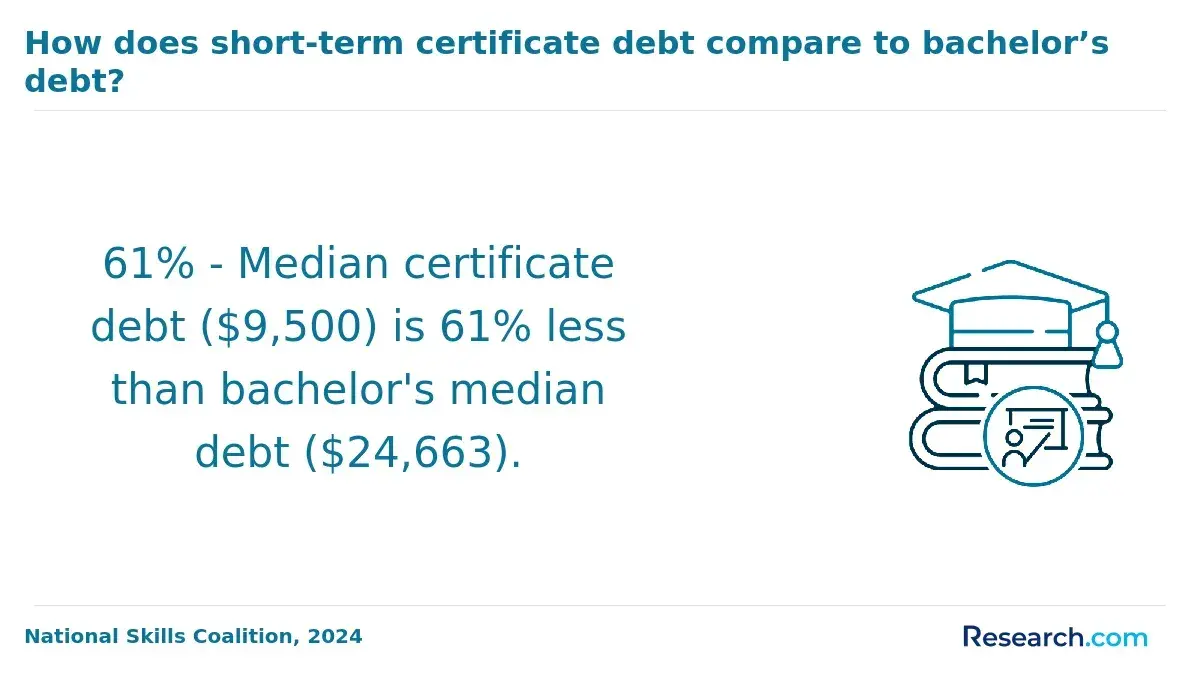
A binding guarantee does not itself create savings; its value is reducing the risk that a student enrolls based on credits that later do not apply. The financial effect depends on the number of avoided replacement credits, the tuition and fee rate, course sequencing, and whether the student loses aid eligibility or delays employment.
NCES found that 38% of students who began postsecondary education in 2011-12 transferred at least once within six years. That figure does not measure credit loss, but it shows why clear transfer decisions matter: transfer is a mainstream student pathway rather than an unusual exception.
The cost comparison below is a planning framework, not a prediction. Fill it in using the institution's written evaluation and published charges.
| Cost factor | How to calculate it | Why it matters |
| Credits that apply to graduation | Accepted credits minus credits usable only as excess electives | Shows the portion that actually reduces remaining degree requirements |
| Replacement-course cost | Remaining required credits multiplied by tuition and mandatory fees per credit | Estimates the direct price of courses not covered by transfer work |
| Residency requirement | Minimum credits that must be earned from the receiving institution | Sets a floor on the number of courses the student must still purchase |
| Course sequencing | Terms needed to complete prerequisites and required course rotations | Can extend completion even when many credits transfer |
| Lost income or additional living costs | Additional enrollment time multiplied by the student's own budget assumptions | Captures costs that tuition alone does not show |
Compare net price rather than transfer-credit quantity alone. A school with a lower per-credit price may still cost more overall if it applies fewer courses to the major, requires more credits in residence, or schedules needed courses infrequently. Conversely, a higher-priced institution can be competitive when its written evaluation removes a substantial number of required courses.
The legal and academic value of a binding estimate should not depend solely on delivery format, but the operational risks can differ. Online programs often serve students from many states and may rely on centralized evaluators. Campus programs may have clearer local advising access but may offer fewer sections or require physical attendance. Hybrid programs can combine both constraints.
This format comparison can help students identify the questions that matter most after they receive a transfer evaluation.
| Pathway | Potential advantage for transfer students | Key issue to verify before deposit |
| Online | May offer frequent start dates and flexibility for working adults | State authorization, online-course availability, virtual support, and any in-person practicum requirements |
| Hybrid | Can combine schedule flexibility with hands-on instruction | Required campus visits, local placement rules, and whether transferred labs satisfy program standards |
| On-campus | May provide direct access to departmental advisors and facilities | Course rotation, commuting or housing costs, and whether required courses are available when needed |
An online format is often sensible for employed adults who need schedule flexibility and have a clear, documented degree plan. It is less suitable when the program cannot confirm authorization in the student's state, requires hard-to-arrange placements, or offers only a nonbinding estimate. Adults returning after a long educational break may also benefit from comparing support services and transfer policies in programs designed among the best degrees for older adults.
Regardless of modality, ask whether the evaluation applies to the online version of the program specifically. A course that satisfies an on-campus requirement may not automatically meet a separately regulated online, clinical, or residency component.
Keep a complete, dated record from the first inquiry through registration. A dispute is much easier to resolve when the student can show exactly what was submitted, what the institution decided, and which terms were presented before the deposit was paid.
Create a secure digital folder containing the following records. Download portal documents because online dashboards can change after a student enrolls.
- The official transfer-credit evaluation, preliminary degree audit, and all attachments.
- Official transcripts, course descriptions, syllabi, catalog pages, and documentation submitted for prior-learning review.
- Emails from the registrar, transfer-credit office, admissions staff, academic advisor, and financial-aid office.
- The enrollment agreement, student handbook, applicable catalog, and transfer-credit policy in effect for the entry term.
- Proof of the deposit payment, enrollment date, and the program or concentration selected.
- Screen captures or PDFs of published guarantee language and articulation agreements relied on in making the enrollment decision.
- Later degree audits, registration records, billing statements, and notes from calls that include date, staff name, and summary.
If the school changes an accepted course to an unaccepted one, ask for a written explanation that identifies the policy provision and factual reason for the change. Request review through the designated registrar or academic appeal process first. Keep communications factual: identify the course, the earlier written decision, the conflicting later decision, and the resolution requested.
Verify the institution, the program, and the document separately. A legitimate college can still have a nonbinding transfer practice, and a valid course equivalency may not apply to the degree path a student intends to complete.
Use this sequence before sending a deposit.
- Confirm the institution's current accreditation status through the college's accreditation disclosure and appropriate official recognition resources.
- Confirm that the exact degree, concentration, and delivery format are available to students in your state and fit any licensure goal.
- Submit official transcripts and all requested supporting documents rather than relying on self-reported coursework.
- Ask for a course-by-course written evaluation and a degree audit showing remaining required credits.
- Ask directly whether the evaluation will be honored after enrollment, what policy makes it binding, and every circumstance that permits a revision.
- Compare the evaluation against the catalog year, residency requirement, tuition and fee schedule, and anticipated course sequence.
- Have the registrar or transfer-credit office resolve contradictions in writing before you accept an offer or pay a nonrefundable amount.
For students considering a licensed occupation, add one more check: contact the relevant state licensing board or review its published education rules. A college's transfer decision confirms degree applicability; it does not independently guarantee that a state board will accept the education for licensure.
What red flags suggest a degree program's transfer-credit "estimate" is nonbinding or misleading?
The most concerning transfer claims are broad marketing promises without student-specific documentation. Phrases such as "up to," "could receive," "transfer-friendly," or "fast evaluation" may be useful starting points, but they do not establish how many credits will apply to graduation.
Watch for the following red flags before committing money or time.
- The school will discuss likely credit totals by phone but will not provide a written, course-level review.
- The estimate lists accepted credits but does not show whether they satisfy major, general education, prerequisite, or elective requirements.
- Staff pressure the student to deposit before official transcripts are evaluated.
- The written document uses broad discretion language, such as "all credits are subject to change at any time," without defined exceptions.
- The school cannot identify the catalog year, degree, concentration, or delivery format covered by the estimate.
- The program advertises large transfer limits but has a high residency requirement or requires many upper-division courses that transferred credit cannot replace.
- Admissions staff make claims about professional licensure without confirming state-specific eligibility requirements.
- The published policy, enrollment agreement, and degree audit give inconsistent answers about transfer-credit treatment.
A nonbinding estimate is not automatically deceptive; institutions may need additional documentation or faculty review for legitimate academic reasons. It simply means the student should treat the estimate as uncertain and delay an irreversible financial decision until the school provides a final determination or the student accepts the risk knowingly.
Other Things You Should Know About Business Administration
It may be able to do so if its policy reserves that right or if a stated condition occurs, such as a transcript correction, missing documentation, a change of major, or evidence of misrepresentation. A written evaluation with narrow revision conditions gives the student stronger grounds to challenge an unexplained change.
No. Accreditation can be an important quality indicator, but receiving institutions set their own standards for course equivalency and degree applicability. Obtain an individual written evaluation for the exact program you plan to enter.
Not necessarily. An articulation agreement may guarantee treatment of specific courses or an associate degree when its conditions are met, but students should still confirm how the agreement applies to their transcript, major, catalog year, and remaining graduation requirements.
Generally, wait when the deposit is nonrefundable and transfer credit is central to your affordability or completion plan. If a deadline forces a decision, ask whether the deposit can be refunded if the official evaluation differs materially from the documented pre-enrollment estimate.
- Catawba College Catalog https://undergrad.catalog.catawba.edu/policies/transfercredit
- Transferology https://www.transferology.com/
- American Association of Collegiate Registrars and Admissions Officers, American Council on Education, & Council for Higher Education Accreditation. (2021). Joint statement on the transfer and award of credit.https://www.chea.org/joint-statement-transfer-and-award-credit
- Council for Higher Education Accreditation. (2024). Accrediting organizations in the U.S.: How do they operate to assure quality?https://www.chea.org/chea-fact-sheets
- U.S. Department of Education. (2025). History and context of accreditation in the United States.https://www.ed.gov/laws-and-policy/higher-education-laws-and-policy/college-accreditation/overview-of-accreditation-united-states/history-and-context-of-accreditation-united-states
- U.S. House of Representatives, Office of the Law Revision Counsel. (n.d.). 20 U.S.C. § 1092: Institutional and financial assistance information for students.https://uscode.house.gov/view.xhtml?req=%28title%3A20+section%3A1092+edition%3Aprelim%29