2027 Accredited Corrections and Rehabilitation Degrees With Human Services Pathways

Co-Founder and Chief Data Scientist
Choosing a corrections degree is not only about qualifying for a facility-based role; it can shape whether you can move into rehabilitation, case management, reentry, or probation work. The U.S. Bureau of Labor Statistics reports a $64,520 median annual wage for probation officers and correctional treatment specialists in May 2024.
This guide helps prospective students compare accredited programs with human services coursework, evaluate online and campus formats, estimate costs, and match a degree level to a realistic career goal.
Key Things You Should Know
- Accreditation is the first screening step: institutional accreditation affects federal aid, transfer credit, and graduate-school eligibility, while career-specific approvals may matter for counseling or social-work pathways. A human services pathway broadens a corrections degree beyond custody operations by adding case management, behavioral health, crisis intervention, ethics, and reentry planning.
- Career outcomes differ sharply by role: the May 2024 median wage was $64,520 for probation officers and correctional treatment specialists, while correctional officer jobs generally have separate agency hiring and academy requirements.
What are accredited corrections and rehabilitation degrees with human services pathways?
An accredited corrections and rehabilitation degree is a certificate, associate, bachelor's, or graduate program that studies the justice system, correctional institutions, offender supervision, rehabilitation, and community reentry. A human services pathway adds the helping-profession perspective: students learn how to assess needs, connect people with services, document progress, support behavior change, and work with families and community agencies.
These programs are best for students who want to work where criminal justice and social support overlap. Potential settings include prisons, jails, probation offices, treatment courts, juvenile justice agencies, nonprofit reentry organizations, substance-use programs, and community service providers. They are less suitable for someone whose sole goal is patrol policing, crime-scene investigation, or legal practice; those goals often call for a different major, academy route, or professional degree.
The word accredited usually refers first to the institution's recognition by an accrediting agency recognized by the U.S. Department of Education or the Council for Higher Education Accreditation. Some fields within human services also have programmatic accreditation or state approval requirements. A corrections major does not automatically qualify a graduate for clinical counseling, social-work licensure, or independent therapy.
| Program focus | Primary emphasis | Best fit |
| Corrections or criminal justice | Law, institutions, supervision, security, and justice policy | Students targeting correctional agencies, probation support, or justice administration |
| Corrections with human services pathway | Justice knowledge plus client support, referrals, intervention, and reentry | Students interested in rehabilitation, case management, and community-based work |
| Human services or social work | Direct services, populations in need, advocacy, and social systems | Students seeking broader community-service careers; licensure depends on degree and state |
The distinction matters because the degree title alone does not determine duties. Read the curriculum and practicum requirements to see whether the program genuinely prepares students for client-facing rehabilitation work.
How do corrections degrees with human services pathways prepare students for careers?
These degrees prepare students to understand both public safety responsibilities and the practical barriers people face after arrest, incarceration, or supervision. Students typically learn to interpret policy, maintain accurate records, communicate with diverse populations, identify risk and protective factors, and make referrals without exceeding their professional role.
Human services coursework is especially useful in jobs that require coordinated support rather than enforcement alone. It can strengthen preparation for reentry case management, youth services, community supervision support, victim advocacy, diversion programs, and program coordination. It does not replace the supervised clinical education required for licensed mental health professions.
Strong programs build career readiness through applied experiences. Look for the following features because they show whether classroom learning is connected to the work employers expect.
- Field placement, internship, observation, or service-learning opportunities with corrections, courts, treatment providers, or reentry organizations
- Training in professional documentation, confidentiality, ethics, trauma-informed communication, and de-escalation
- Courses that explain substance use, mental health, housing instability, employment barriers, and family reunification in justice-involved populations
- Career support that addresses agency hiring processes, background investigations, interviews, and public-sector applications
A practical limitation is that many government positions hire according to agency rules, civil-service examinations, physical standards, background checks, and training academies. A degree can improve knowledge and competitiveness, but it does not override an agency's separate eligibility rules.
What types of corrections and rehabilitation degrees are available at different levels?
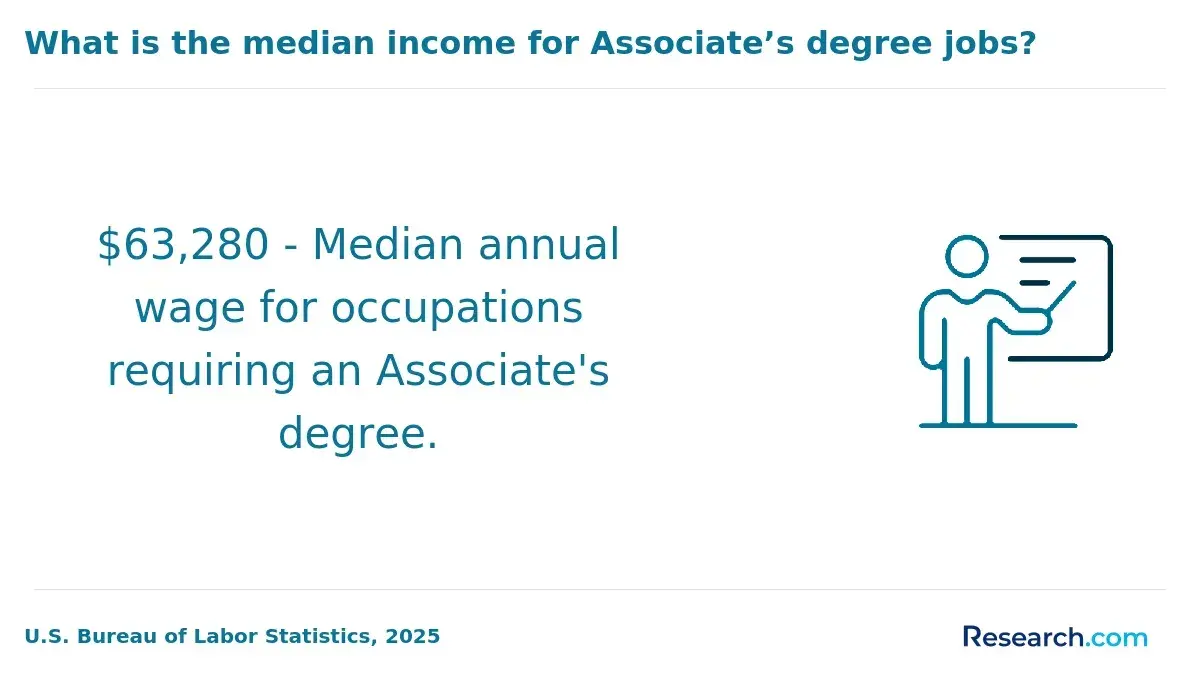
The right credential depends on the level of responsibility you want, how quickly you need to enter the workforce, and whether you may pursue graduate study later. Transfer-friendly associate programs can be economical starting points, while a bachelor's degree usually creates more options for administration, probation-related work, and advancement.
| Credential | Typical purpose | Human services value | Decision consideration |
| Certificate | Introduces corrections, security, or human services concepts | May add targeted skills for current workers | Usually not enough alone for positions requiring a degree |
| Associate degree | Prepares for entry-level support roles or transfer | Can include introductory case management and psychology | Confirm transfer agreements before assuming credits will apply to a bachelor's |
| Bachelor's degree | Provides broader theory, policy, and research preparation | Often offers internships and electives in rehabilitation or community services | Often the most flexible option for public-service advancement and graduate-school preparation |
| Master's degree | Builds advanced management, policy, counseling-related, or clinical knowledge | May support leadership or specialized service work | Check whether the program meets any state-specific licensure curriculum rules |
A bachelor's program is usually the better investment for students who want flexibility across justice, nonprofit, and community-service employers. Students who want the shortest route into an entry-level role may prefer a certificate or associate degree, provided the local employer accepts it and the credits remain transferable.
Students comparing workload and completion pace may also review options described as the easiest bachelor degree to get online, but should not equate an accessible format with weak academic standards. Corrections work requires sound judgment, communication, and ethical decision-making.
How can students verify accreditation for corrections and rehabilitation programs?
Verify accreditation before applying, paying a deposit, or accepting transfer-credit promises. Institutional accreditation is especially important because it can affect federal financial aid eligibility, credit transfer, employer confidence, and admission to many graduate programs. Do not rely on a school logo, an unverified ranking, or the word "accredited" in advertising.
Use this process to evaluate a program carefully.
- Identify the legal name of the college and the exact degree program, including the concentration or pathway.
- Check the college's institutional accreditor through official U.S. Department of Education or Council for Higher Education Accreditation directories.
- Ask the admissions office whether the corrections, human services, counseling, or social-work program holds any separate programmatic accreditation or state approval.
- Request written confirmation of transfer-credit policies, internship placement expectations, and whether the curriculum supports a specific credential or license you intend to pursue.
- Contact the relevant state licensing board or employing agency directly if your target job has regulated requirements.
For distance learners, compare the institution against lists of online universities that are accredited, then confirm the school's current status yourself. Accreditation can change, and recognition of an institution does not mean every concentration meets every employer or licensing requirement.
A common mistake is confusing institutional accreditation with approval for clinical practice. A graduate may hold an accredited criminal justice degree and still need a qualifying counseling or social-work degree, supervised hours, examinations, and state approval to become licensed.
What is the typical curriculum in corrections degrees that include human services?
A corrections and rehabilitation curriculum normally combines criminal justice foundations with human behavior and client-service coursework. The balance varies: some programs emphasize correctional administration and security, while others devote more credits to counseling concepts, rehabilitation, family services, or community intervention.
The course categories below show what to expect and what each area contributes to career preparation.
| Course area | What students study | Career relevance |
| Corrections systems | Jails, prisons, community supervision, institutional operations, and policy | Builds context for agency procedures and justice-system roles |
| Criminology and law | Crime theories, constitutional issues, courts, and sentencing | Helps students interpret the legal and policy environment |
| Human behavior | Psychology, sociology, development, trauma, and addiction concepts | Supports informed communication and referral decisions |
| Human services practice | Interviewing, case management, advocacy, ethics, and community resources | Prepares students for service coordination and client documentation |
| Research and data | Program evaluation, statistics, and evidence-informed practice | Useful for reporting, grant-funded programs, and administrative advancement |
| Experiential learning | Internship, practicum, simulation, or field observation | Tests career fit and develops professional contacts |
Review the catalog course by course rather than choosing based on the major name. Students hoping to work in rehabilitation should prioritize programs with supervised experiential learning, case-management content, and courses on behavioral health and reentry. Students seeking custody-oriented positions may prioritize correctional operations, emergency procedures, and agency-specific academy preparation.
Also ask whether internships require daytime availability, immunizations, drug screening, transportation, or a background check. These practical requirements can affect working adults more than the published course schedule suggests.
How do online corrections and rehabilitation programs compare to campus-based options?
Online and campus-based programs can cover similar academic content, but they are not interchangeable when fieldwork, networking, or agency training is central to your goal. Online learning often works well for employed adults who can manage reading, discussion posts, deadlines, and independent study. Campus study may be stronger for students who benefit from scheduled structure and nearby placement relationships.
| Factor | Online program | Campus-based program |
| Schedule | Often offers asynchronous coursework and reduced commuting | Usually follows fixed meeting times and location-based attendance |
| Field experience | May require students to secure an approved local placement | May provide closer access to local agency partners |
| Networking | Requires deliberate participation in virtual events and local professional groups | Can provide more spontaneous contact with faculty, peers, and agencies |
| Learning support | Depends on responsive online advising, tutoring, and technology access | May offer easier in-person access to support services |
| Best fit | Self-directed students with work or family obligations | Students needing routine, hands-on access, or local placement support |
Students who need maximum scheduling control can explore online college classes at your own pace. Before enrolling, verify whether "self-paced" applies to the entire degree or only selected courses; internships, group assignments, and term-based classes may still have fixed deadlines.
Do not choose online solely to avoid campus attendance. Ask whether the school arranges placements, whether faculty have corrections or human services experience, how live skills practice occurs, and whether students in your state can complete all required components. An online program is a good choice only when its delivery model supports your career target.
What are the admission requirements for corrections and rehabilitation degrees?
Admission requirements depend on the credential level and institution. Most undergraduate programs require a high school diploma or equivalent, an application, transcripts, and proof of English-language proficiency when applicable. Selective schools may also consider GPA, prerequisite coursework, essays, or placement results.
Graduate programs commonly require a bachelor's degree, official transcripts, a statement of purpose, and sometimes recommendations, a resume, or relevant professional experience. Programs focused on counseling, social work, or clinical services may impose additional prerequisites and suitability review because of practicum responsibilities.
Applicants should separate school admission from placement and employment eligibility. Corrections agencies and field sites may independently require background checks, fingerprinting, drug screening, medical clearance, driving records, or age and citizenship eligibility. A past record does not always make education impossible, but it can limit placement or hiring options; discuss concerns confidentially with the program and target employer before investing heavily.
Before applying, compare the following practical issues across schools.
- Minimum GPA and whether conditional admission is available
- Transfer-credit evaluation rules, maximum transferable credits, and expiration dates for prior coursework
- Whether criminal history can affect internships, practicum placement, or completion
- Required technology, residency visits, and availability of part-time enrollment
- Deadlines for financial aid, scholarships, and field-experience applications
A common mistake is applying to a broad criminal justice program without checking whether it contains the human services electives or fieldwork needed for the intended career. Request a degree map showing the actual courses you will take.
How long do corrections degrees take, and what do they cost?
Completion time depends on credits already earned, enrollment intensity, transfer policies, and required fieldwork. A certificate may take months rather than years, an associate degree is commonly structured around two years of full-time study, and a bachelor's degree is commonly structured around four years of full-time study. Part-time attendance, course availability, and internship scheduling can extend those timelines.
Published tuition is only one part of the decision. The National Center for Education Statistics reports that, in 2024, average undergraduate tuition, fees, room, and board at public four-year institutions were $24,920 for in-state students. This national average is useful for broad planning, but an online learner's actual cost can be much lower or higher depending on residency, transfer credit, fees, and living arrangements.
| Cost factor | Why it changes the total | What to ask |
| Tuition rate | May vary by residency, delivery format, and credit load | Is the quoted rate locked for continuing students? |
| Transfer credit | Accepted credits can reduce remaining coursework | How many credits will apply specifically to this major? |
| Program fees | Technology, graduation, lab, and online fees may add costs | What is the estimated all-in cost per term? |
| Fieldwork expenses | Transportation, screening, clothing, and lost work hours can matter | What expenses should practicum students expect? |
| Financial aid | Grants, scholarships, employer aid, and loans affect net price | What is the net price after typical aid for students like me? |
Compare net price, not just advertised tuition. Complete the FAFSA if eligible, ask about employer tuition assistance and workforce scholarships, and request a written estimate based on your transfer evaluation. Borrowing deserves particular care because correctional and human services salaries vary by occupation, location, and employer.
If speed is the priority, review highest-paying online degrees alongside your interests and local hiring requirements. A faster program can be worthwhile when it preserves accreditation, transferability, and the field experience required for your target role; otherwise, the apparent savings may create limits later.
What jobs, salaries, and advancement opportunities follow these corrections degrees?
A corrections degree with human services coursework can lead to institutional, community-supervision, nonprofit, and program-support work. The most suitable jobs depend on education level, agency rules, background eligibility, prior experience, and whether a role requires a specialized license.
The U.S. Bureau of Labor Statistics reported a May 2024 median annual wage of $64,520 for probation officers and correctional treatment specialists. This figure is a national occupational median, not a starting-salary promise; pay differs by government level, geography, union coverage, shift requirements, and experience.
| Possible role | Typical degree fit | Common responsibilities | Advancement direction |
| Correctional officer or jail officer | High school diploma or college coursework may meet entry requirements, depending on agency | Maintain safety, supervise residents, write reports, and enforce procedures | Training officer, classification, investigations, or supervisory roles |
| Probation officer or correctional treatment specialist | Often bachelor's degree, subject to agency requirements | Supervise cases, assess needs, prepare reports, and connect clients with services | Senior officer, specialist, supervisor, or administrator |
| Reentry case manager | Associate or bachelor's degree commonly preferred, depending on employer | Coordinate housing, employment, treatment, benefits, and referrals | Program manager, grant coordinator, or community-services leadership |
| Juvenile justice worker | Requirements vary by state and employer | Support youth supervision, programming, family communication, and documentation | Casework, program coordination, or specialized youth-services roles |
| Human services program coordinator | Bachelor's degree commonly useful | Organize services, track outcomes, coordinate partners, and support compliance | Program director or nonprofit management, often with experience or graduate study |
Technology is changing documentation, case tracking, scheduling, and data reporting in corrections and community programs. It is increasing the value of staff who can use secure systems, write clear records, protect confidential information, and apply professional judgment. It does not eliminate the need for relationship-based work, crisis response, and ethical decisions.
For the strongest return on investment, choose a program based on a target job posting rather than a degree label. Compare the posting's education requirement, preferred experience, licensing language, and location with the school's curriculum, internship support, and total net cost.
Are there certifications or licensing requirements for corrections and rehabilitation careers?
Most corrections careers are regulated through employer and state or local agency hiring standards rather than one nationwide professional license. Correctional officers may need academy training, firearms qualification, physical readiness testing, and recurring in-service training. Probation, parole, juvenile justice, and treatment roles may have agency-specific education, certification, or training requirements.
Licensure becomes more important when a role involves independent clinical practice. A corrections or human services degree alone generally does not qualify someone to diagnose mental health conditions, provide independent psychotherapy, or use a protected clinical title. Those careers may require a qualifying graduate degree, supervised experience, examinations, and state board approval.
Use this decision rule: seek agency requirements if you want custody, probation, parole, or public-sector supervision work; seek state board requirements if you want licensed counseling, social work, substance-use treatment, or clinical behavioral health work. Requirements can change by state and employer, so verify them before selecting electives or a graduate program.
These questions can prevent an expensive mismatch between a degree and a regulated career goal.
- Does the target job require academy completion, a civil-service exam, or a state-issued credential?
- Does the school's degree meet the educational requirement, or is a specific major required?
- Will required practicum hours be accepted by the relevant licensing board or agency?
- Are there background, residency, age, driving, or physical requirements beyond education?
- What continuing education or renewal obligations apply after hiring or licensure?
Certificates can be useful for specialized knowledge, but they should supplement - not substitute for - the degree, supervised practice, or official credential required for a regulated role.
Other Things You Should Know About Corrections
It can be worthwhile if the curriculum includes human services, behavioral health, case management, and field experience aligned with your target job. For licensed clinical work, however, you will usually need a qualifying graduate degree and state-specific licensure preparation.
Often, yes, if the degree is from an appropriately accredited institution and meets the employer's education requirements. You may still need in-person academy training, background clearance, physical testing, or local fieldwork.
Criminal justice is broader and may include policing, courts, law, and corrections. A corrections degree concentrates more directly on incarceration, supervision, rehabilitation, and reentry. A human services pathway adds client-support and community-resource skills.
School admission and employment eligibility are separate issues. A record may affect internship placement, agency hiring, or licensing eligibility, depending on the offense, state, employer, and role. Ask the school and prospective employer about requirements before enrolling.
References
- Human Services Careers and Education | All Criminal Justice Schools https://www.allcriminaljusticeschools.com/specialties/human-services/
- Bachelor of Science in Correctional Program Support Services | University of Phoenix https://www.phoenix.edu/online-behavioral-sciences-degrees/correctional-program-support-services-bachelors-degree.html
- Human and social services - community corrections https://www.starkstate.edu/academics/explore-all-programs/community-corrections/