2027 Accredited Career Programs With Certification Exam Fees and Retakes Included

Co-Founder and Chief Data Scientist
Paying tuition only to discover that a required certification exam, retake, background check, or licensing application costs extra can derail a career plan. Bundled programs can simplify budgeting, but "exam included" does not always mean an industry-recognized credential or unlimited retakes.
This guide helps prospective students compare accredited career training, verify exactly what is covered, and assess whether the credential fits employer and state requirements. The U.S. Bureau of Labor Statistics projects continued growth in many credential-dependent healthcare, technology, and skilled-trade roles, making credential quality - not just program speed - especially important.
Key Things You Should Know
- "Exam included" should mean the school pays the testing vendor directly or provides a documented voucher; ask whether it covers the first attempt only, remote-proctoring charges, and every retake.
- Institutional accreditation, programmatic accreditation, state approval, and an industry certification are different protections; a school can hold one without providing the others your target job requires.
- Compare total career-preparation cost, not tuition alone: include exam attempts, required equipment, books, clinical or lab charges, background checks, licensing fees, and lost income during training.
Which accredited career programs bundle certification exam fees and retake costs into tuition?
Programs most likely to bundle exam costs are short, occupation-focused certificates where a single industry exam is central to completion. However, there is no national standard requiring schools to include examination fees, and coverage can change by cohort, campus, delivery format, or employer-sponsored funding arrangement.
The comparison below shows common program categories and the credential students should confirm before treating a bundled exam as a financial benefit.
| Career program area | Common credential or examination | What "included" may cover | Important limitation |
| Medical billing and coding | CPC, CCA, CBCS, or another coding certification | One voucher, practice materials, or a school-selected exam | Employers may prefer a particular certifying body; certification is not the same as a state license. |
| IT support and cybersecurity | CompTIA, Microsoft, Cisco, AWS, or similar vendor certification | Exam voucher and sometimes one retake | Version changes and eligibility rules can affect when the voucher can be used. |
| Pharmacy technician | PTCB or NHA examination | Exam fee after program completion | State registration or licensure costs may remain separate. |
| Dental assisting | DANB component examination or state-required assessment | Selected exam components | State dental-board rules can require separate clinical, radiology, or jurisprudence steps. |
| Welding and skilled trades | Employer, code, or trade-specific performance qualification | One practical test or testing materials | A school certificate may not be a portable third-party certification. |
| Project management and business operations | CAPM, Microsoft Office, bookkeeping, or software certification | Voucher or test-prep platform | Experience prerequisites and membership-related costs may not be included. |
Programs with the clearest value usually name the testing organization, examination title, voucher amount, eligibility deadline, and retake count in writing. A vague promise of "certification preparation" is weaker because it may refer only to coursework designed to help students study.
Choose a bundled option when the exact credential is requested in local job postings or required by a regulator. Consider a program without a bundle when it offers stronger clinical placements, employer relationships, or transferability and the separately purchased examination better matches your intended employer.
How can students verify that a career certificate program's bundled exam is for a recognized certification?
A recognized certification is issued by an independent credentialing organization, has published eligibility and examination standards, and can be verified with the issuer. It is different from a certificate of completion issued solely by the school. Recognition is role-specific: a valid credential may still not satisfy an employer's preference or a state licensing rule.
Use the following verification sequence before paying an enrollment deposit. It separates a meaningful bundled credential from a marketing claim.
- Write down the credential's full name, acronym, testing organization, current exam version, and whether the school covers the initial attempt, retakes, or both.
- Check the certifying organization's published eligibility rules to confirm that the program qualifies graduates to sit for the examination.
- Review job postings from employers in the region and ask hiring managers which credential they accept or prefer for entry-level applicants.
- For regulated occupations, verify requirements with the relevant state board or agency; do not rely on an admissions representative's verbal assurance.
- Request the school's written voucher policy, including expiration date, passing-score consequences, scheduling conditions, and any requirement to complete internal assessments first.
For example, medical coding students should confirm whether the bundled test is the CPC, CCA, CBCS, or another examination, rather than assuming all coding certifications carry the same employer recognition. In information technology, confirm the exact vendor and credential level because entry-level and professional-level exams signal different skills.
Beware of wording such as "certification eligible," "certification aligned," or "exam preparation included." Those phrases can be accurate but do not establish that the testing fee is paid or that the credential is required for practice.
What inclusion criteria and data sources define a program as "accredited" with exam fees covered?
For a practical comparison, an accredited bundled-exam program should meet two separate tests: the institution or program has recognizable oversight, and the school makes a specific, documented financial commitment for the relevant certification examination. Neither feature should be inferred from advertising alone.
The following criteria distinguish stronger listings from claims that are too broad to evaluate.
| Criterion | What to confirm | Reliable evidence |
| Institutional status | The school's accreditor and current standing, where applicable | U.S. Department of Education database, CHEA records, and the accreditor's directory |
| Program approval | Whether the occupation requires state approval or programmatic accreditation | State licensing board, workforce agency, or specialized accreditor |
| Exam identity | The exact credential, issuer, and exam version | Certifying organization's official candidate handbook |
| Fee coverage | Voucher amount, first-attempt coverage, retake number, and expiration terms | Enrollment agreement, catalog addendum, or signed tuition schedule |
| Additional charges | Fees excluded from tuition and conditions that trigger student payment | Catalog, financial-aid disclosures, and itemized student account estimate |
Accreditation is particularly important when federal aid, transfer credit, clinical access, or employer tuition reimbursement is part of the plan. Students exploring flexible degree routes should also distinguish career certificates from online colleges with open enrollment and no application fee; an accessible admissions policy does not itself confirm program approval or exam coverage.
Some legitimate workforce programs are approved by a state or funded through a workforce board without holding the same institutional accreditation as a college. That can be appropriate for a narrowly targeted job, but students should understand the trade-off: credits may not transfer, and eligibility for federal student aid may differ.
Healthcare support, allied health, information technology, transportation, skilled trades, and office administration commonly use external examinations because employers need a consistent way to assess job-ready knowledge. Bundling is most useful where the exam is a predictable final step rather than a credential requiring years of supervised work experience.
Healthcare remains a major area to investigate carefully. The Bureau of Labor Statistics reports that medical records specialists had a median annual wage of $50,250 in May 2024, while projected employment growth and pay vary by location, employer, coding specialization, and experience. A coding certification can strengthen an application, but it does not guarantee placement or a particular wage.
These fields generally offer the clearest fit for students seeking a program-to-exam pathway.
- Medical billing, coding, and health information: Good for detail-oriented students comfortable with terminology, privacy rules, electronic records, and ongoing code-set changes.
- Pharmacy, dental, and medical assisting: Best for students who confirm state rules first, because clinical requirements and registration steps can be more important than the bundled exam itself.
- IT support, networking, and cybersecurity: Suitable for learners who can demonstrate hands-on troubleshooting; certifications help, but portfolios and practical labs matter too.
- Commercial driving, welding, HVAC, and electrical support: Often tied to skills testing, safety standards, or local licensing; verify whether the included test is portable across employers and states.
- Bookkeeping, project coordination, and software administration: Useful for career changers when the credential corresponds to the software or workflow used by target employers.
Students who want a role with independent practice authority - such as nursing, cosmetology, or certain technical trades - should prioritize state-approved education and licensure eligibility over an attractive voucher. The examination cost is small compared with the cost of completing a program that does not meet board requirements.
A bundle can reduce surprise costs and make it easier to finish the final credentialing step quickly, but it is not automatically the lower-cost option. Its value depends on whether students would otherwise buy that exact exam, whether they need a retake, and whether the tuition premium exceeds the independently purchased testing cost.
Compare the total cost using this simple calculation, tuition and mandatory school charges + excluded career-entry expenses, documented vouchers or reimbursements = estimated out-of-pocket preparation cost. Career-entry expenses can include uniforms, software, liability insurance, immunizations, drug screening, equipment, transportation, licensing applications, and proctoring fees.
The cost scenarios below show why the written policy matters more than the word "included." They are decision frameworks, not price estimates.
| Program policy | Budget benefit | Financial risk to check |
| First exam attempt included | Reduces the initial credentialing expense | A failed attempt, no-show, or missed deadline may shift all later costs to the student. |
| One retake included | Provides a defined safety net for a difficult examination | The school may require remediation, a waiting period, or a passing course grade before release. |
| Unlimited retakes during enrollment | Can lower risk for students who need repeated practice | Coverage may end at graduation, withdrawal, or a short voucher-expiration date. |
| Tuition reimbursement after passing | May reward successful completion | Students need cash upfront and may lose reimbursement eligibility if paperwork is late. |
Do not borrow more solely because a program advertises an exam bundle. Compare the net price after grants and employer assistance, then determine whether the extra tuition buys verified instruction, required approvals, lab access, career services, or only a voucher. Students with a longer-term academic plan may find that stackable college credit is worth more than a lower initial price.
Oversight has several layers, and each layer answers a different question. Institutional accreditors review a school broadly; specialized accreditors focus on particular disciplines; state agencies authorize education or occupational practice; and certification organizations administer voluntary or employer-valued examinations.
This distinction helps students avoid the common mistake of treating every seal, approval, and certificate as interchangeable.
| Oversight body | Primary role | Why it matters to students |
| Institutional accreditor | Reviews educational quality, governance, and student-support systems at a school or college | Can affect transfer options, aid eligibility, and employer confidence, depending on the institution and program. |
| Programmatic or specialized accreditor | Reviews curriculum, faculty, facilities, clinical experiences, and outcomes in a field | May be required for licensure eligibility or preferred by employers in regulated professions. |
| State education agency | Authorizes schools or regulates postsecondary career training | Provides a consumer-protection and complaint pathway, but approval is not necessarily accreditation. |
| Professional licensing board | Sets legal requirements to practice in a state | Determines whether education, examination, background checks, and supervised experience meet licensure rules. |
| Certification organization | Sets exam standards and awards a credential | Confirms whether a bundled voucher leads to a credential employers can recognize and verify. |
For non-licensed fields such as entry-level IT, the certifying body and local employers may matter more than specialized programmatic accreditation. For regulated clinical work, the state board's eligibility rules should control the decision. Ask the school to identify every oversight body relevant to your intended state, not just the organization it chooses to highlight in marketing.
School type influences scheduling, price structure, transferability, and how clearly fees are itemized, but it does not by itself predict instructional quality. Compare the individual program's written policies, outcomes disclosures, and regulatory fit rather than assuming that public, private, nonprofit, or bootcamp status determines value.
| Provider type | Typical strengths | Common exam-fee pattern | Best fit |
| Community college | Lower resident tuition, college credit, student services, and potential transfer pathways | Exam fees may be separate, built into course fees, or supported by workforce grants | Students who value transferable credit, a broader credential, or part-time pacing |
| Private career school | Focused schedules, equipment, and occupation-specific support | Bundles may be more prominently marketed, including first attempts and defined retakes | Students seeking a direct, structured route after confirming state approval and total charges |
| Bootcamp or online training provider | Accelerated format, technical projects, and flexible start dates | Voucher inclusion varies widely and may depend on completion or attendance rules | Self-directed learners who can verify employer demand and build demonstrable skills |
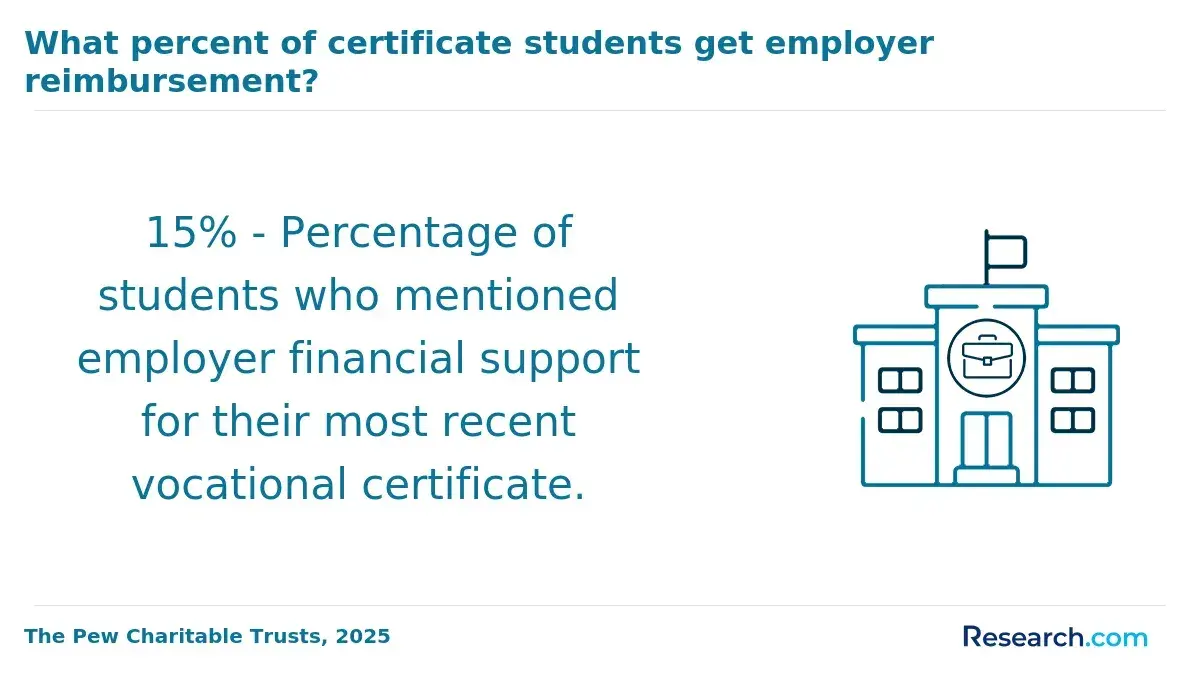
| Employer or workforce-funded program | Reduced tuition and direct alignment with local hiring needs | Exam reimbursement may be contingent on employment, completion, or retention | Applicants comfortable with the sponsor's work commitment and eligibility terms |
An accelerated option can be useful when you already have the prerequisites, can commit consistent study time, and only need a targeted credential. Students seeking graduate-level advancement should not assume a short career certificate is comparable to 1 year master's programs; the admission requirements, academic depth, and career purposes are substantially different.
Online programs deserve an additional check: determine whether examination vouchers work with remote proctoring, whether required labs or clinical placements are available near you, and whether the provider supports scheduling in your state. Flexible delivery is valuable only if it still meets the credential issuer's and regulator's requirements.
The largest risk is mistaking a promotional phrase for a contractual commitment. "Exam included" can mean a practice test, a conditional reimbursement, an exam fee embedded in tuition, a voucher for a lower-value credential, or coverage that disappears after a brief deadline. "Certification prep" can mean the school provides no voucher at all.
Watch for the following red flags and respond before enrollment, when you still have the most leverage to compare options.
- No named credential: Ask for the exam title, issuer, candidate handbook, and the school's eligibility basis.
- Verbal-only promises: Request the policy in the enrollment agreement or a dated catalog addendum signed by an authorized representative.
- Unclear retake language: Confirm the number of attempts, waiting periods, remediation requirements, and whether the student pays fees caused by absence or failure.
- Claims of "accreditation" without the accreditor: Obtain the accreditor's name and verify the school's current status independently.
- Pressure to enroll before reviewing disclosures: Pause and obtain the full tuition schedule, cancellation policy, refund calculation, and complaint process.
- Guaranteed job or salary language: Treat it as a warning sign; outcomes depend on the student, region, employer demand, experience, and legal eligibility.
Automation also changes the evaluation. In coding, billing, bookkeeping, and IT support, software and AI tools can streamline routine work while increasing the value of quality control, compliance judgment, security awareness, communication, and problem-solving. Ask whether the curriculum teaches students to work responsibly with current tools rather than presenting a certification alone as permanent job security.
Documenting promises before enrollment protects your budget and creates a clear record if a dispute occurs. Save materials in a personal folder rather than relying on webpages that may be updated after you start.
Complete these steps before signing an enrollment agreement or accepting financing.
- Request an itemized written estimate showing tuition, books, supplies, testing, proctoring, clinical fees, technology fees, and every charge that is not covered.
- Ask for the voucher policy in writing, including the credential name, test delivery method, deadline, eligibility conditions, retake limit, and replacement-voucher responsibility.
- Read the refund and cancellation policy closely, including how withdrawal, dismissal, leave of absence, or a course failure affects the voucher and any prepaid exam amount.
- Confirm whether the certification organization, state board, or employer requires costs outside the school's package, such as fingerprints, immunizations, applications, or continuing education.
- Keep dated screenshots, emails, catalog pages, the signed agreement, payment receipts, and notes identifying the representative who answered your questions.
- Compare the written terms with at least one alternative program before committing; a lower advertised tuition can become more expensive after exclusions.
Students considering a rapid academic transition should also compare the credential to the admission and workload demands of masters in 6 months. A short graduate program and an exam-focused career certificate may both move quickly, but they serve different occupations and have different return-on-investment assumptions.
If the school will not provide a clear answer, consider that a decision-relevant answer in itself. Do not assume financial-aid eligibility, workforce funding, or an employer reimbursement program will cover a testing fee unless the funding terms explicitly say so.
What questions should counselors, workforce boards, and employers ask about bundled exam career programs?
Advisors and hiring partners can improve program selection by asking for evidence that connects training, testing, and actual job requirements. The goal is not merely to maximize certificates earned; it is to help learners obtain credentials that are usable in the local labor market and sustainable within their budget.
These questions can identify whether a bundle is a meaningful workforce investment.
- Which exact certification examination is included, and which employers or regulatory bodies recognize it?
- Does the provider document first-attempt coverage, retake limits, eligibility deadlines, and excluded charges in the enrollment agreement?
- Is the institution accredited, state-authorized, programmatically approved where needed, and in good standing with relevant oversight bodies?
- What proportion of students become eligible for the exam, sit for it, and pass it, and how are those measures defined?
- What local occupations, entry-level titles, wage ranges, and employer partners correspond to the credential?
- Can participants transfer credit, access accommodations, obtain tutoring, and receive support if they need a retake?
- Does the curriculum address current workplace technology, including responsible use of AI-enabled tools and data-security practices?
For adult learners balancing work and family responsibilities, counseling should include schedule realism. A convenient program may be preferable to a faster one when it offers predictable study time, exam support, and a voucher window long enough for the student to test when prepared. Learners still exploring broad academic options can compare program workload with easy online college courses, while recognizing that "easy" should never replace career relevance, accreditation, or licensure eligibility as a selection criterion.
Other Things You Should Know About Medical Billing and Coding
No. The bundle generally covers a test attempt or voucher, not a passing result. Students must still meet the certifying organization's eligibility rules and earn the required score.
Choose the credential that matches the roles and employers you are targeting. Review local job postings and confirm whether hospitals, physician practices, insurers, or revenue-cycle vendors prefer a particular certification.
Certification and formal accreditation requirements vary by employer and role. Medical billing and coding is not generally licensed in the same way as many clinical professions, but school accreditation, program quality, and recognized certification can affect employer confidence and financial-aid options.
Ask how many retakes are covered, whether remediation is required, when the voucher expires, whether remote proctoring is included, and whether the school pays any fee if you miss the scheduled exam.
- American Council on Education. (n.d.). College credit recommendation service.https://www.acenet.edu/Programs-Services/Pages/Credit-Transcripts/College-Credit-Recommendation-Service-Credit-for-Prior-Learning.aspx
- CareerOneStop. (n.d.). Certification finder. U.S. Department of Labor.https://www.careeronestop.org/Toolkit/Training/find-certifications.aspx
- Council for Higher Education Accreditation. (n.d.). Accreditation resources for students.https://www.chea.org/accreditation-resources-students
- U.S. Department of Education. (2025). Accreditation in the United States.https://www.ed.gov/laws-and-policy/higher-education-laws-and-policy/college-accreditation/accreditation-in-the-us
- U.S. Department of Education, Federal Student Aid. (2026). Program eligibility, written arrangements, and distance education. Federal Student Aid Handbook, 2026–2027, Volume 2, Chapter 2.https://fsapartners.ed.gov/knowledge-center/fsa-handbook/2026-2027/vol2/ch2-program-eligibility-written-arrangements-and-distance-education
- U.S. Department of Education, Federal Student Aid. (2026). Consumer information and school reporting. Federal Student Aid Handbook, 2026–2027, Volume 2, Chapter 6.https://fsapartners.ed.gov/knowledge-center/fsa-handbook/2026-2027/vol2/ch6-consumer-information-and-school-reporting