2027 Health Assessment for Nursing Students: Background Knowledge and Readiness Questions
Audited and Verified:
Our Editorial and Data Verification Process
Research.com uses government datasets, official education statistics and primary institutional information to support its career and degree guides. Our review process checks factual accuracy, occupational definitions, source dates and the requirements associated with the credentials discussed.
How This Article Was Fact-Checked
Our editorial team verifies salary estimates, employment projections, education requirements and program information against original data providers and official organizations. Salary figures are checked against the relevant occupational definitions and reporting periods. Information about licensure, accreditation and required in-person training is reviewed separately.
Fact-checked and verified on:

Co-Founder and Chief Data Scientist
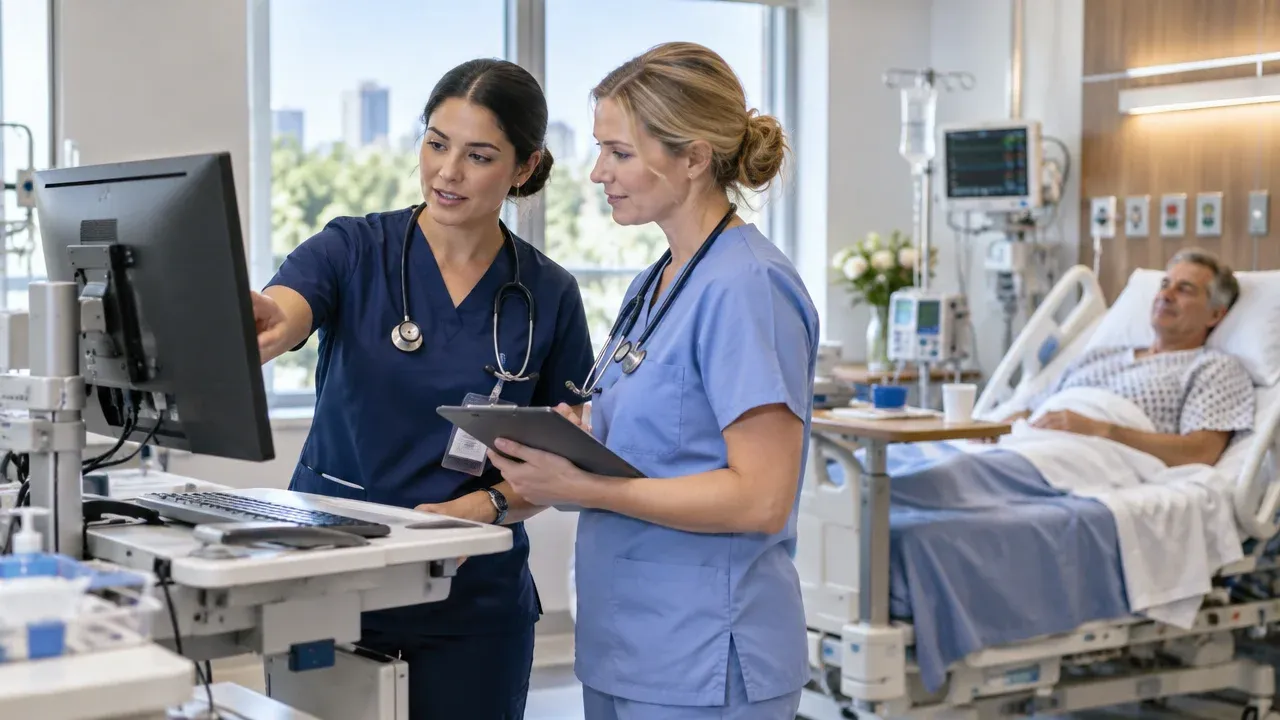
Health assessment is where anatomy and physiology become observations a nursing student must describe, document, and communicate safely. If you are approaching your first assessment course or clinical placement, you do not need to perform like an experienced RN—but you do need a workable foundation and a way to spot gaps before they affect your learning.
This guide explains what to review, offers readiness questions, shows how programs evaluate progress, and identifies the program features worth checking before you enroll.
Key Things You Should Know
- Review the four basic physical-examination techniques—inspection, palpation, percussion, and auscultation—alongside anatomy, vital signs, and patient communication; your program will teach when each is appropriate.
- Test readiness by explaining a finding, distinguishing an expected variation from a concern, and stating when you would seek help—not by memorizing a head-to-toe script alone.
- Check both classroom and observed skills requirements: passing a written test, completing a simulation, and demonstrating safe performance with a patient are different milestones.
What health assessment knowledge should nursing students have before starting clinical courses?
Health assessment is the structured collection and interpretation of information about a person's health. It combines a health history, vital signs, focused or comprehensive physical examination, and communication of relevant findings. Before clinical courses, students should be able to identify major body structures, describe normal functions, use basic clinical terminology, and understand why a finding may need follow-up.
A useful starting point is the difference between subjective data—what a patient reports—and objective data—what the student observes or measures. Students should also know that an assessment finding is not automatically a diagnosis. Its significance depends on the patient's history, baseline, current condition, and clinical context; decisions about care require supervision and applicable protocols.
Prior patient-care experience can make interviewing and vital sign measurement feel more familiar, but it does not replace a program's assessment instruction or competency checks. That distinction matters for LPNs considering LPN-to-RN clinical training requirements: the receiving RN program determines which previous learning applies and what supervised assessment performance it still requires.
How can nursing students evaluate their readiness for health assessment coursework?
Use questions that require an explanation, not just recognition of a term. You are ready to begin learning assessment—not to practice independently—if you can answer most of the following at an introductory level and identify where you need instruction.
- Can I explain the purpose of a health history and ask an open-ended question before moving to focused questions?
- Can I locate the major organs and body regions involved in the system I am examining?
- Can I distinguish a patient-reported symptom from an observed or measured sign?
- Can I describe what inspection, palpation, percussion, and auscultation mean without assuming every technique is suitable for every patient?
- If a measurement or observation concerns me, can I explain why I would verify it and promptly report it to my instructor or supervising nurse?
- Can I document what I actually observed without labeling a condition I have not established?
If anatomy is the sticking point, review that system before drilling examination sequences. If you know the facts but struggle to interview someone, practice asking permission, listening, and summarizing. If you can recite steps but cannot explain the reason for them, work through faculty-approved cases and ask for feedback. Students comparing prelicensure nursing study options online should also verify how in-person assessment labs, skills checks, and clinical placements are scheduled; online lectures do not make hands-on requirements optional.
What background science courses prepare students for nursing health assessment?
Anatomy and physiology usually provide the most direct foundation: they help students connect an examination site with the structure and function being evaluated. Other sciences strengthen interpretation, but a school—not a general course list—decides which classes, labs, grades, and course ages satisfy its prerequisites.
This comparison shows what each subject contributes to assessment learning; it is not a universal admissions checklist:
| Subject | Connection to health assessment |
| Anatomy and physiology | Locating structures and understanding normal body functions |
| Microbiology | Understanding infection-related concepts and safe assessment practices |
| Chemistry | Supporting later study of body processes and laboratory findings |
| Pathophysiology, where included | Connecting altered function with possible signs and symptoms |
| Statistics, where required | Interpreting measurements and evidence, rather than performing an examination technique |
For a student entering from another major, a previous science credit is useful only if the nursing program accepts it for the specific requirement. Ask for a written prerequisite evaluation, including lab format and recency rules. This is especially important when comparing shorter direct-entry MSN programs for non-nurses, which prepare eligible non-nurses through a different sequence from postlicensure MSN programs that require an RN license.
Most courses teach students to obtain a history, measure and interpret vital signs in context, perform organized examinations, recognize findings that warrant attention, document accurately, and communicate concerns. Practice may begin with classmates, task trainers, or simulation before moving to supervised patient encounters. The exact examination sequence and scope of student activity vary by program and clinical site.
A central skill is deciding whether a comprehensive assessment or a focused assessment fits the learning situation. A comprehensive assessment surveys multiple systems; a focused assessment concentrates on a particular concern while still considering patient safety and relevant context. Students learn to explain their observations clearly, not to turn an isolated finding into a definitive diagnosis.
This course has a different purpose from postlicensure degree completion. An RN exploring BSN completion pathways with alternative practice experiences should check that program's requirements rather than assume they resemble the hands-on assessment instruction required in initial RN preparation.
Programs commonly use written questions to test concepts, practical examinations to observe technique, and case-based exercises or simulation to evaluate how students interpret and communicate findings. During supervised clinical learning, faculty may also evaluate preparation, patient interaction, documentation, and whether a student recognizes limits and seeks help. A program's handbook should specify its own passing standards and remediation rules.
Clinical judgment goes beyond remembering what to examine. For example, a student may need to notice a change, consider its context, decide what information to verify, and communicate the concern through the appropriate supervision channel. A technically correct measurement is not enough if the student fails to recognize that it needs timely attention. Conversely, simulation performance alone is not proof of independent clinical competence.
Students should request a skills rubric and sample expectations early, then use feedback to separate knowledge gaps from technique or communication gaps. These prelicensure checks should not be confused with later advanced practice preparation: nurses considering accelerated FNP certificate admissions and requirements face separate graduate-level, population-focused education and eligibility decisions.
For prelicensure ADN or BSN study, schools commonly review prior education, prerequisite coursework, grades, and an application to the nursing major; some also use an entrance exam, interview, or other selection criteria. Admission to a college does not necessarily mean admission to its nursing sequence. Clinical participation may separately depend on site-specific documentation and eligibility requirements.
Health assessment readiness is related to, but different from, admission eligibility. A strong prerequisite record does not prove observed assessment skill, while a student with patient-care experience may still need a missing science lab. Applicants comparing nursing admission options beyond highly selective programs should verify prerequisite equivalencies, nursing-major selection rules, progression standards, and available clinical placements—not rely on an admission label alone.
A prelicensure RN program brings together classroom study, skills instruction, simulation, and supervised clinical learning so students can develop and demonstrate entry-level competencies. Health assessment contributes to patient safety and clinical judgment throughout that sequence. Nursing program accreditation, institutional accreditation, and state board approval or recognition address different questions; applicants should verify each status for the specific program and location.
Graduation does not itself grant an RN license. The relevant state board determines licensure eligibility, including applicable education and other requirements, and applicants must meet examination and licensing requirements. Likewise, a graduate specialty course is not a shortcut around initial RN preparation. For example, accelerated mental health NP master's coursework concerns an advanced-practice pathway for eligible nurses, not a substitute for prelicensure assessment and clinical education.
Time and cost depend on the starting credential, accepted prerequisites, course sequence, enrollment pace, and clinical schedule. An ADN and a traditional BSN have different degree requirements; an accelerated prelicensure route may reduce calendar time for a student with prior coursework but can demand a heavier weekly commitment. Published tuition alone cannot show the full cost.
When comparing programs, request an estimate for your entry term that includes tuition and mandatory fees, assessment equipment, books, uniforms, required health and background documentation, travel to labs and clinical sites, and examination or licensure expenses. Also account for income you may forgo if the schedule limits paid work. Do not assume transferred credits will shorten the nursing sequence until the program applies them to a written degree plan.
Cost comparisons should stay tied to the credential you actually need. Information about affordable online nurse practitioner programs may help an already-licensed RN planning a later goal, but NP tuition is not a useful substitute for pricing the prelicensure assessment labs and clinical preparation needed now.
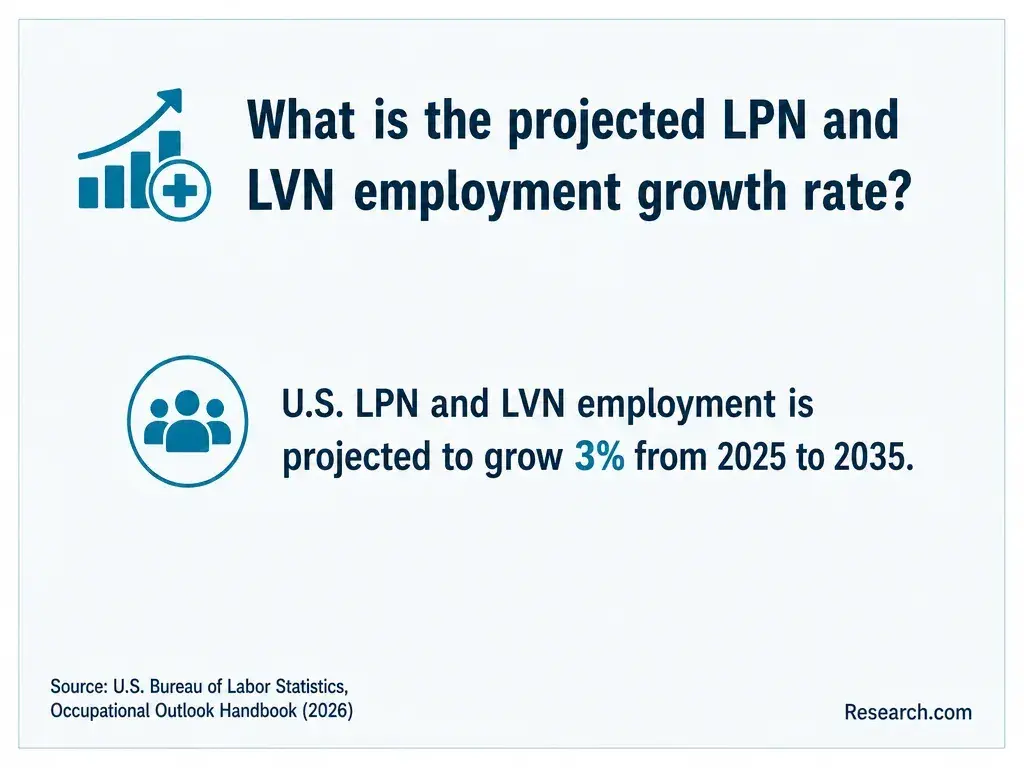
Assessment is foundational to RN work in hospitals, ambulatory care, home health, community settings, and other services, although the patient population, examination focus, and employer training differ. Completing an assessment course does not qualify someone for an RN position: the role requires the applicable license, and new graduates still need orientation and setting-specific competency development.
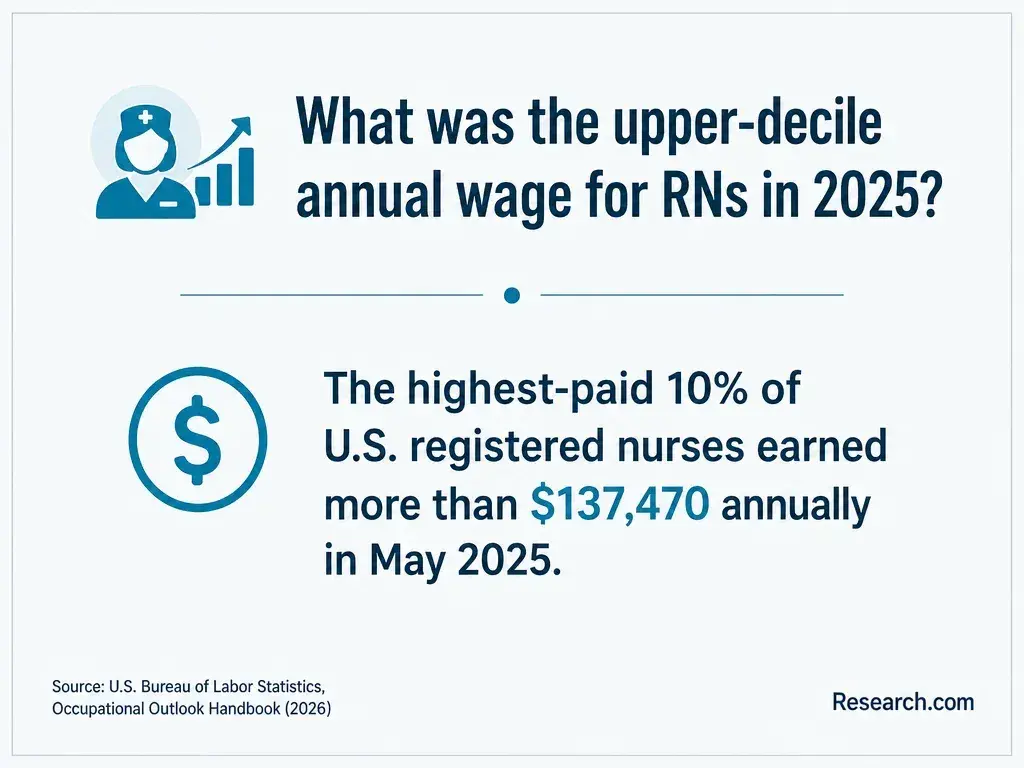
The U.S. Bureau of Labor Statistics reports RN wages for the occupation as a whole, not separate salaries for graduates of a health assessment course or a particular nursing degree. When reviewing its latest wage and employment projections, check the reference year and occupation, then compare local offers with the job's schedule, location, and experience requirements. Assessment skills can also support later career development, but an RN considering lower-cost master's nursing pathways after a BSN should choose further study for a defined role—not assume an additional degree is needed to become effective in an entry-level RN job.
How should students choose a nursing program that supports clinical readiness?
Look beyond the course title. Ask when assessment is taught, how often students practice before patient contact, who observes their skills, how feedback and remediation work, and how assessment learning carries into supervised clinical courses. Request the current curriculum, skills-evaluation policy, clinical scheduling expectations, and information on placement responsibilities before committing.
A useful comparison is whether the program gives students enough structured opportunities to move from explaining a finding, to performing an examination, to communicating its significance under supervision. Check state board status and the applicable accreditation scope separately, then confirm that required labs and clinical experiences are feasible from where you live. Advertised online flexibility should be tested against actual on-site dates and placement rules.
Match the program to your immediate credential. An applicant seeking an initial RN license should prioritize prelicensure clinical preparation; online DNP executive and organizational pathways address a different, later educational objective and should not be compared as substitutes for entry-level assessment training.
Other Things You Should Know About Nursing
Wait for the program's equipment list. Schools may specify features or provide equipment in lab, so buying early can mean paying for the wrong item.
Only within your instructor's guidance and with the person's informed permission. Practice is for learning technique, not diagnosing someone or collecting health information to share.
Contact the school's accessibility office early and ask how approved accommodations apply to labs, examinations, and clinical learning. The school can explain its process and essential requirements.
Follow your school's and clinical site's documentation and privacy rules. Do not put identifiable patient information in personal notes, study apps, or a portfolio unless its use is expressly authorized.
- Chapter 1 General Survey - Nursing Skills - NCBI Bookshelf https://www.ncbi.nlm.nih.gov/books/NBK593193/
- Clinical Readiness for Practice of Nursing Students - PMC - NIH https://pmc.ncbi.nlm.nih.gov/articles/PMC11675653/
- Vital Signs Measurement and Pain Assessment Across the Lifespan - Health Assessment Guide for Nurses https://pressbooks.montgomerycollege.edu/healthassessment/chapter/vital-signs-measurement-and-pain-assessment-across-the-lifespan/
- Developing Prelicensure Nursing Programs: Key Insights | European Society of Medicine - https://esmed.org/developing-prelicensure-nursing-programs-key-insights/
- QSEN Competencies https://www.qsen.org/competencies-pre-licensure-ksas