2027 CACREP Programs That Accept Applicants With a Low GPA Through Provisional Admission

Co-Founder and Chief Data Scientist
A low undergraduate GPA does not automatically end a future in clinical mental health counseling, but it does make program selection and licensure planning more important. CACREP-accredited programs generally include at least 60 graduate credits and extensive supervised clinical training.
This guide is for applicants seeking a second chance through provisional, conditional, or holistic admission. It explains how these policies work, what to verify before applying, how to strengthen an application, and how to choose a program that supports eventual counselor licensure.
Key Things You Should Know
- CACREP accreditation and provisional admission are separate issues: a program can be CACREP-accredited while still requiring applicants to meet specific GPA, prerequisite, interview, and remediation conditions.
- Many counseling programs use a 3.0 undergraduate GPA as the standard benchmark, but applicants below that threshold may be considered through conditional review, often with a required first-term GPA of 3.0 or higher.
- Clinical mental health counseling programs typically require at least 60 graduate credits, a 100-hour practicum, and a 600-hour internship; these requirements matter more for licensure than a school's provisional-admission label.
What are CACREP-accredited clinical mental health counseling programs that offer provisional admission for low GPA?
CACREP does not publish a national list of "low-GPA" or provisional-admission programs. CACREP accredits counseling programs based on educational standards; each university independently sets its admissions rules. As a result, applicants should search for terms such as provisional admission, conditional admission, probationary admission, individual review, and holistic review in a program's current graduate catalog.
Some CACREP clinical mental health counseling programs have historically described alternate admission pathways for applicants who fall below the usual GPA benchmark. Policies can change by term, campus, format, and applicant category, so treat these as starting points for direct confirmation rather than guaranteed options.
| Type of program policy | What a low-GPA applicant may find | What to confirm directly |
| Conditional or provisional admission | Admission below the standard GPA with academic performance conditions | Minimum GPA considered, first-term course load, required grade, and dismissal rules |
| Holistic or individual review | GPA considered alongside recommendations, work history, essay, interview, and recent coursework | Whether the review is available for the clinical mental health counseling specialization |
| Graduate GPA substitution | Strong post-baccalaureate or graduate work may offset a weaker undergraduate record | Number of credits required and minimum grades accepted |
| Prerequisite or nondegree pathway | Applicants complete selected courses before full program admission | Whether credits transfer into the counseling degree and whether financial aid applies |
Programs may use different names for the same basic concept. The key question is not whether a school says it accepts a "low GPA," but whether it will admit you to the CACREP-accredited clinical mental health counseling track and document a realistic path to good academic standing.
A strong candidate for provisional admission usually has a GPA issue that is explainable and no longer representative of current performance. Applicants with repeated recent academic difficulties, unresolved prerequisite gaps, or limited writing and interpersonal skills may benefit from taking post-baccalaureate coursework before entering a demanding clinical program.
How does provisional admission work in clinical mental health counseling programs?
Provisional admission is a restricted form of admission. The university allows a student to begin graduate study but requires them to demonstrate academic readiness within a defined period. It is not a promise of permanent enrollment, and it does not lower clinical, ethical, field-placement, or graduation standards.
Schools commonly use the following sequence to evaluate provisionally admitted counseling students:
- The applicant is admitted with written conditions, such as a specified minimum GPA or limited initial enrollment.
- The student completes designated foundational counseling courses, often during the first one or two terms.
- The program reviews grades, professional disposition, attendance, writing, and faculty feedback.
- The school removes the provisional status, extends conditions, or dismisses the student according to published policy.
Conditions often require a 3.0 graduate GPA, although a school may set a higher standard or require no grade below a designated threshold. A student may also be restricted from enrolling in practicum or internship until full admission is confirmed. This matters because fieldwork placements involve client contact and require programs to assess readiness beyond academic performance.
Ask for the policy in writing before paying an enrollment deposit. Specifically ask whether provisional students can receive federal financial aid, register for a normal course load, access advising, and progress to practicum on the same timeline as regularly admitted students.
What minimum GPA and other criteria do counseling programs require for provisional admission?
A 3.0 cumulative undergraduate GPA is a common graduate-school benchmark, but there is no universal provisional-admission cutoff for CACREP counseling programs. Some programs consider applicants below 3.0, while others set a lower floor, such as 2.5 or 2.75, or do not review exceptions at all. A school's graduate admissions policy may differ from the counseling department's policy, so both must be checked.
The table summarizes the factors that commonly determine whether a low-GPA application receives serious consideration. These are not interchangeable: a strong resume may help, but it cannot replace a state-required course or a program's nonnegotiable GPA minimum.
| Admissions factor | Why it matters | Strong evidence |
| Overall and recent GPA | Programs look for evidence that past academic struggles have improved | Higher grades in recent semesters, post-baccalaureate work, or graduate coursework |
| Relevant coursework | Psychology, human development, statistics, and writing can indicate readiness | Strong grades in recent behavioral science or helping-profession courses |
| Personal statement | Faculty assess reflection, communication, ethics, and fit for clinical work | A concise explanation of GPA context plus specific evidence of changed habits |
| Recommendations | Programs need credible evidence of maturity and professional potential | Letters from supervisors or faculty who directly observed helping skills |
| Interview and dispositions review | Counseling requires interpersonal competence as well as academic ability | Thoughtful responses, ethical judgment, self-awareness, and openness to feedback |
| Background and field-placement eligibility | Some placements conduct screenings before accepting interns | Early disclosure and discussion of any issue that could affect placement |
Do not assume that meeting a published minimum produces admission. Counseling cohorts can be small, and departments may prioritize applicants who demonstrate both academic recovery and readiness for emotionally demanding supervised clinical work.
How can applicants with a low GPA strengthen their clinical mental health counseling applications?
The best low-GPA application does not try to hide the transcript. It gives admissions reviewers clear evidence that the conditions behind earlier grades have changed and that the applicant can now manage graduate-level reading, writing, research, and client-facing responsibility.
Use these steps to create a credible application before applying:
- Calculate both your cumulative GPA and your GPA from the most recent 30 to 60 credits, then identify the exact courses or terms that lowered your record.
- Write a brief, accountable GPA statement that explains the context without oversharing, describes what changed, and points to recent proof of academic improvement.
- Complete relevant post-baccalaureate courses if your recent record is weak; prioritize psychology, human development, research methods, statistics, abnormal psychology, or academic writing when a program recommends them.
- Request recommendations from people who can discuss your reliability, communication, judgment, empathy, and response to supervision rather than simply confirm employment.
- Build documented helping-profession experience through behavioral health support roles, crisis services, case management, community organizations, or supervised volunteer work when appropriate.
- Ask admissions whether an interview, graduate entrance exam, writing sample, or additional coursework can strengthen an exception request.
- Apply to several programs only after confirming their CACREP status, admissions policy, clinical placement model, and state-licensure fit.
Short-term training can build experience or clarify whether the helping professions are a fit, but it does not replace a master's degree for independent counselor licensure. Applicants exploring lower-cost ways to develop job skills while preparing can compare short certificate programs that pay well, while keeping the distinction between a certificate and a CACREP graduate degree clear.
A common mistake is applying immediately after a weak undergraduate record without showing any recent academic success. Another is submitting a generic personal statement that focuses only on hardship. Programs need evidence of recovery, professional judgment, and a plan for meeting the demands of graduate clinical training.
What should students compare when choosing CACREP counseling programs with provisional admission?
For a low-GPA applicant, the best program is not necessarily the one with the lowest stated GPA threshold. A sound choice combines a transparent exception policy with a curriculum, clinical placement structure, cost, schedule, and licensure pathway that match your goals.
Compare these factors before applying or accepting an offer:
- CACREP status: Confirm that the specific clinical mental health counseling program and delivery location are CACREP-accredited, not merely that the university has another accredited program.
- Written provisional policy: Ask what grades, credits, timelines, and professional-disposition requirements apply before regular admission is granted.
- Clinical placement support: Determine who finds practicum and internship sites, whether local sites are approved, and whether placement delays can extend graduation.
- Licensure alignment: Compare the curriculum against the counseling board requirements in the state where you intend to practice.
- Total attendance cost: Include tuition, mandatory fees, residency travel, books, technology, background checks, liability insurance, and possible lost work hours during internship.
- Schedule realism: Consider whether evening, weekend, synchronous, and fieldwork requirements fit your employment and caregiving responsibilities.
- Student support: Ask about tutoring, writing assistance, disability services, faculty advising, and remediation procedures for provisionally admitted students.
School recognition can be useful, but it should not substitute for checking the program-specific details above. If you are broadly comparing distance-learning institutions, review options among the most popular online colleges and then verify whether each counseling program meets CACREP and state licensing requirements.
The largest red flag is vague language. If an admissions representative cannot explain the exact pathway from provisional admission to full standing, or cannot say how online students obtain local placements, request written clarification before enrolling.
How do online CACREP counseling programs for low-GPA applicants differ from campus options?
Online CACREP counseling programs can make coursework more accessible for working adults and applicants who live far from campus. However, they are not entirely remote. Students still complete face-to-face or live skills practice, supervised practicum, and internship experiences. Many programs also require scheduled video classes, on-campus intensives, or residency experiences.
This comparison highlights practical differences that can affect a provisionally admitted student's ability to succeed.
| Decision factor | Online or hybrid program | Campus-based program |
| Course scheduling | Often offers asynchronous content with scheduled live sessions | Usually follows fixed daytime or evening class times |
| Clinical placement | May require the student to develop local leads subject to school approval | May offer closer relationships with regional agencies and supervisors |
| Faculty access | Depends on virtual office hours, cohort design, and response practices | Often allows more informal in-person contact |
| Travel expectations | May include residencies, orientation, skills labs, or intensives | Requires regular commuting or relocation |
| Best fit | Working adults with strong time management and local placement access | Students who benefit from structure, nearby agencies, and in-person support |
Online learning is not automatically easier for a low-GPA applicant. The flexibility can help students balance work, but it also requires consistent self-direction, careful scheduling, professional communication, and dependable technology. A campus format may be the stronger choice if you need frequent in-person accountability or have limited access to local clinical sites.
Before choosing an online program, ask whether it accepts students from your state, whether it has placed interns near you recently, how supervisors are approved, and what happens if a placement falls through. Never assume an online CACREP degree automatically satisfies every state's post-graduation licensure rules.
What curriculum and clinical training do CACREP counseling programs with provisional admission provide?
Provisional admission does not change the academic or clinical expectations of a CACREP clinical mental health counseling degree. Students must complete the same core curriculum, demonstrate counseling skills, meet professional-disposition standards, and complete supervised field experiences required of regularly admitted classmates.
CACREP standards generally require at least 60 semester credit hours for entry-level clinical mental health counseling preparation. Programs commonly cover the following areas:
- Professional counseling orientation, ethical practice, advocacy, and legal responsibilities
- Social and cultural diversity, human growth and development, and career development
- Counseling theories, helping relationships, group counseling, assessment, and research
- Psychopathology, diagnosis, treatment planning, crisis response, and clinical mental health counseling systems
- Supervised skills practice, including recorded or observed counseling sessions and feedback
- A minimum 100-hour practicum and a minimum 600-hour internship under qualified supervision
The practicum and internship are especially important because they translate classroom knowledge into supervised client care. Students usually must meet academic and professional requirements before entering these courses. A provisional student who struggles early may need to pause progression, which can affect the expected graduation date and total cost.
Applicants should ask whether the program offers support for telehealth competencies, electronic documentation, crisis protocols, and evidence-based practice. These skills are increasingly relevant as behavioral health employers use virtual services and digital record systems, though technology does not replace the clinical judgment and ethical responsibilities required of counselors.
How do CACREP-accredited provisional admission programs affect licensure eligibility in different states?
CACREP accreditation can make it easier to demonstrate that a degree includes widely recognized counseling education standards, but it does not independently grant a license. Licensure is issued by state counseling boards, and each state sets its own rules for education, supervised postgraduate experience, examinations, background review, and continuing education.
A provisional admission decision usually has no direct effect on later licensure eligibility once the student completes the degree in good standing. Licensing boards generally focus on the completed degree, course content, supervised training, examinations, and post-degree clinical experience rather than whether the student entered through an admissions exception. Still, applicants should keep records showing that all degree and fieldwork requirements were completed.
Before enrolling, compare the program with your intended state's licensing rules using these practical checks:
- Confirm the degree is CACREP-accredited in clinical mental health counseling and identify the accreditation status for your expected graduation period.
- Ask the program whether it has determined that its curriculum meets educational requirements in your state.
- Review whether your state requires particular courses, such as diagnosis, substance use, suicide assessment, or family counseling, beyond the degree's standard curriculum.
- Understand the post-graduation pathway, including required supervised experience and the examination accepted by the state board.
- If you may move, compare both your current state and likely destination state before choosing a program format.
A common mistake is choosing a program based only on accreditation while overlooking state authorization and local placement eligibility. This is particularly important for online students, who may complete coursework in one state, internships in another, and later seek licensure elsewhere.
What are typical tuition, fees, and financial aid options for these counseling programs?
Total cost varies substantially by institution, residency status, delivery format, and time to completion. Because CACREP clinical mental health counseling programs are commonly at least 60 credits, the advertised per-credit rate is only one part of the decision. A lower tuition rate can lose its advantage if the program causes clinical-placement delays, requires expensive travel, or limits a student's ability to work during internship.
Use this cost framework to compare offers on an equal basis.
| Cost category | What to include | Why it matters |
| Direct tuition | Per-credit tuition multiplied by required degree credits | Shows the baseline cost of the degree rather than a single-term estimate |
| Mandatory institutional fees | Technology, clinical, graduation, student-service, and distance-learning fees | These can change the actual price materially |
| Clinical training expenses | Background checks, liability insurance, health requirements, travel, and professional memberships | These costs often rise during practicum and internship |
| Indirect costs | Reduced work hours, child care, commuting, and residency travel | They affect affordability even when they are not billed by the school |
| Financing | Federal aid, scholarships, employer benefits, payment plans, and loans | Determines the out-of-pocket and borrowing burden |
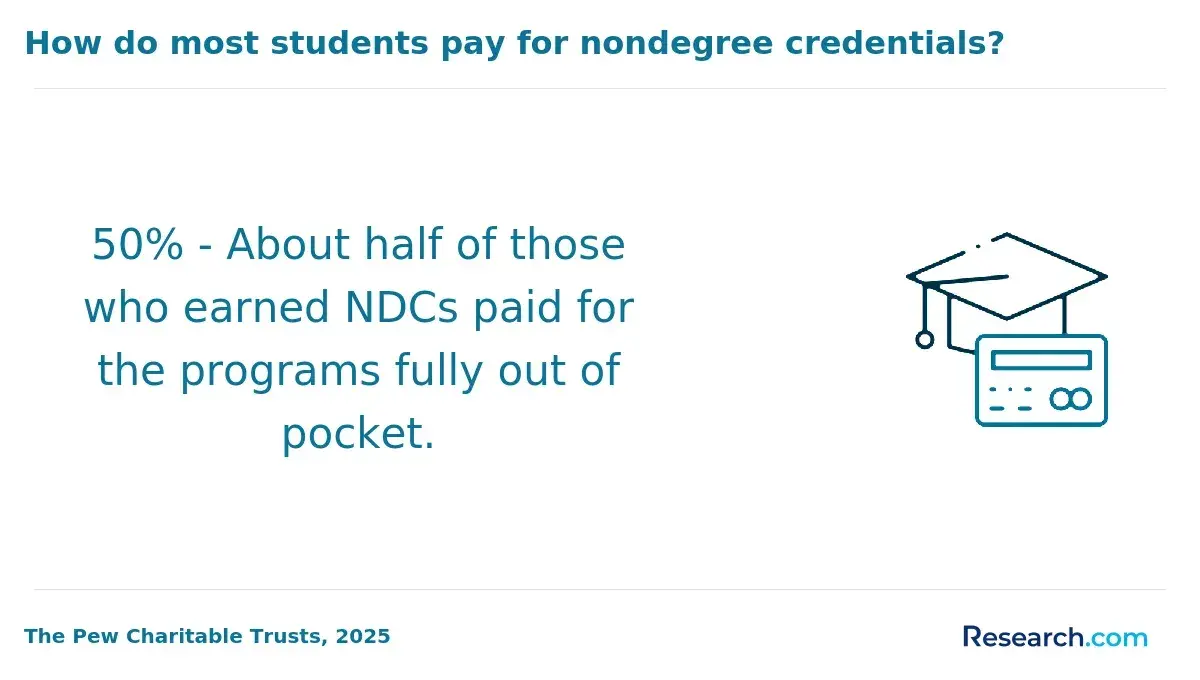
Provisionally admitted students should ask whether their admission category affects aid eligibility, scholarship consideration, or enrollment status. Most federal student aid decisions depend on eligibility and satisfactory academic progress rules, but institutional scholarships and program-specific awards can use different criteria.
Complete the FAFSA early, compare institutional aid letters rather than tuition alone, and ask about part-time enrollment rules. Students seeking broader guidance on aid-focused online options can review what online college gives the most financial aid before comparing counseling-specific costs and requirements.
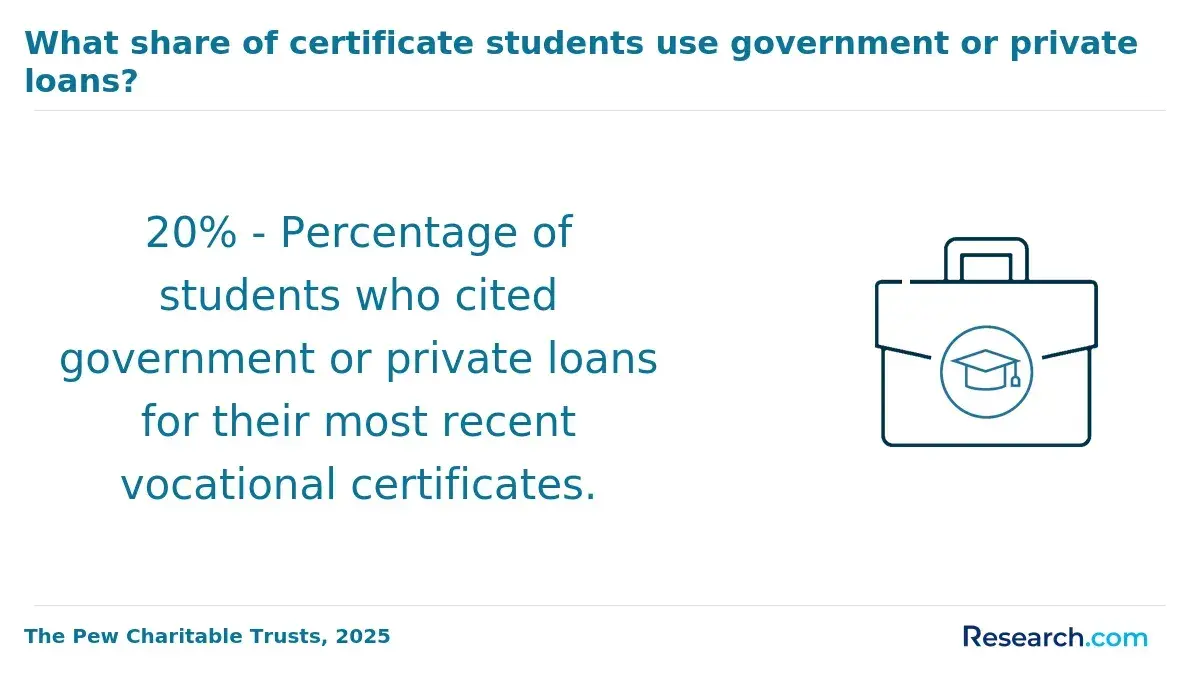
Be cautious with large private loans, especially if a program cannot provide clear information about clinical placement timing. Delayed internships can extend enrollment and increase both direct expenses and lost-income costs.
What clinical mental health counseling careers, salaries, and job outlook can graduates expect?
Graduates of a CACREP clinical mental health counseling program may pursue supervised post-degree roles in community mental health agencies, hospitals, substance use treatment settings, schools, employee assistance programs, private practices, telehealth organizations, and nonprofit agencies. Independent practice generally requires state licensure after completing supervised postgraduate experience and required examinations.
The U.S. Bureau of Labor Statistics reports a median annual wage of $59,190 for substance abuse, behavioral disorder, and mental health counselors in May 2024. Pay varies by setting, region, experience, credentials, caseload, and whether a role requires independent licensure; the median is a national reference point, not an expected starting salary.
The Bureau of Labor Statistics projects 17% employment growth for substance abuse, behavioral disorder, and mental health counselors from 2024 to 2034, faster than the average for all occupations. This reflects continued demand for behavioral health services, but local hiring conditions and licensure requirements still determine an individual job search.
| Career stage | Typical work setting | Common responsibility |
| Graduate intern | Approved practicum or internship site | Provides supervised counseling, documentation, assessment, and referral services |
| Post-degree associate or resident counselor | Community agency, group practice, hospital, or treatment center | Accumulates supervised experience required for independent licensure |
| Independently licensed counselor | Agency, integrated-care organization, private practice, or telehealth provider | Assesses, diagnoses where permitted, treats, and coordinates client care |
| Advanced leadership role | Clinical program, nonprofit, health system, or group practice | Supervises staff, manages programs, develops services, or trains counselors |
This path is usually a better fit for people motivated by sustained client relationships, documentation, supervision, ethics, and graduate study than for those seeking a quick route to high earnings. If you are still comparing undergraduate paths before committing to graduate counseling, reviewing highest paying bachelor degrees can help place the financial trade-offs of different education routes in context.
Technology is changing how counselors work through telehealth platforms, electronic records, scheduling systems, and AI-assisted administrative tools. Counselors remain responsible for confidentiality, informed consent, clinical judgment, and ethical use of technology; employers and boards may impose additional policies.
Other Things You Should Know About Clinical Mental Health Counseling
Possibly. Some programs use conditional, provisional, or holistic review, but policies vary widely. Contact each program to ask whether it considers exceptions, what minimum GPA applies, and what conditions would be required after admission.
Usually, licensure boards focus on your completed degree, required coursework, supervised training, examinations, and postgraduate supervised experience. Still, you should verify your intended state's rules and keep records of your completed program requirements.
Timing depends on credit load, course sequencing, and field-placement availability. Because programs generally include at least 60 credits plus practicum and internship, full-time and part-time timelines can differ substantially.
Yes, specific requirements for 2027 provisional admission can vary by program but often include a minimum GPA threshold (e.g., 2.5), completion of prerequisite courses, and submission of recommendation letters. Some programs might also require a personal statement or interview as part of the admission process.
References
- Directory - CACREP https://www.cacrep.org/directory/
- 12 CACREP Accredited Online Counseling Programs in California - California MFT https://californiamft.org/online-mft-programs/cacrep-accredited/
- Best CACREP-Accredited Online Master's In Counseling 2025 https://www.psychology.org/rankings/masters/online-cacrep-accredited-school-counseling-degrees/